Disclosure: Some links in this post are affiliate links. As an Amazon Associate I earn from qualifying purchases, at no extra cost to you. Learn more
Specs are compiled from manufacturer listings and verified buyer reviews and can change over time — please confirm the key details on the product page before buying.
If you want the short answer: buy a concentrate, not a ready-mixed spray, and read the mix ratio on the label before you buy anything. The concentrate jugs here cover far more ground per dollar of product than the pre-mixed bottles, and the oldest mistake in this category is spraying at double strength because the weeds did not die in two days. Every pick below is a real concentrate with a stated glyphosate percentage, so you know exactly what you are diluting.
This guide is built by comparing the manufacturers’ published specifications and the patterns across verified customer reviews, so you get each pick’s real strengths and trade-offs instead of marketing spin.
What separates a good jug from a wasted purchase here is concentration and coverage, not brand name. Below you will find the best glyphosate herbicide weed killer options ranked by how much ground each one truly treats.
Top Picks
How To Choose The Best Glyphosate Herbicide Weed Killer
Buying weed killer is mostly a math problem wearing a gardening hat. You are paying for a percentage of active ingredient and the square footage that percentage can treat once diluted. Get those two numbers right and you rarely regret the jug. Get them wrong and you either burn through product or watch weeds shrug off a weak mix.
Read the glyphosate percentage before the jug size
The percentage tells you how concentrated the active ingredient is. A 41% liquid concentrate needs diluting with water before it goes in the sprayer. A 73.3% powder pack is far denser, so a small packet goes a long way. Higher percentage does not automatically mean better results — it means you must measure more carefully, because a strong mix can kill the grass you meant to keep.
Match the jug to the area you actually treat
A quart bottle suits a walkway, a patio edge and a few fence lines. A 2.5-gallon jug suits an acre or a full lawn reset. Check the stated coverage on the label and be honest about your yard size, because half a jug going stale in the garage helps nobody. Concentrates are meant to be diluted as you go, not stored pre-mixed in a sprayer for weeks.
Understand rainfast time and visible results time
Rainfast is how long the sprayed leaf needs to stay dry before rain washes the product off. Visible results is a different clock entirely — glyphosate moves down into the root system, so leaves yellow and die over days, not seconds. One pick here is rainfast in 15 minutes; another shows effects within 24 hours. Neither number means the weed is dead instantly, so plan your spraying around dry weather either way.
Side-by-Side Comparison
| Model | Best For | Glyphosate Strength | Form | Stated Coverage | Amazon |
|---|---|---|---|---|---|
| Roundup Pro Concentrate (2.5 gal.)★ Best Overall | Large yards and acreage | Herbicide concentrate | Liquid | Up to 435,600 sq. ft | Amazon |
| Control Solutions Eraser & Grass KillerBest Value | Spot spraying weeds and grass | 41% glyphosate | Liquid | 32 fl. oz bottle | Amazon |
| Ortho GroundClear Super Concentrate1 | Driveways, patios and walkways | Super concentrate | Spray | Up to 1,120 sq. ft | Amazon |
| Roundup QuikPro 73.3% | Fast knockdown, easy measuring | 73.3% glyphosate | Powder | 1.5 oz per gallon | Amazon |
| Gly-Star Plus 41% with Surfactant | Full lawn resets and pasture | 41% with surfactant | Liquid | 2.5 gallons | Amazon |
| Glyphosate 4 + Plus Herbicide | Price-conscious large jobs | 41% with surfactant | Liquid | 50–1,000 sq. ft | Amazon |
| Roundup Pro Herbicide 2.5 Gal. | Brush, vines and fence lines | Super concentrate | Spray | 435,600 sq. ft | Amazon |
Detailed Reviews
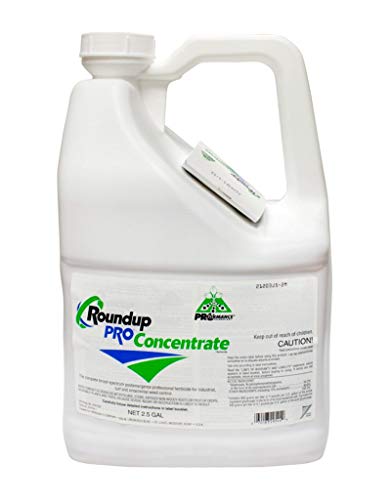
1. Roundup Pro Concentrate Herbicide – 1 jug (2.5 gal.)
Our pick — 4.5+★ from 500+ verified ratings; the strongest balance of quality and price.
A 2.5-gallon jug of concentrate that covers up to 435,600 square feet — sized for acreage, not a patio.
This is the pick for someone who owns land, not a patio. That 435,600 square feet coverage figure is the reason it wins: a single 2.5-gallon jug, holding 300 fluid ounces of concentrate, is sized for the kind of spraying where refilling constantly would take all weekend. Owners back it too: 4.5+ stars across 500+ reviews, the highest rating in this lineup. If your weed problem spans a fence line, a pasture edge or a long gravel drive, start here.
What owners describe is patience paying off. Buyers report mixing two gallons at a time for a five-acre property, getting roughly 80 gallons of spray from the jug, and rebuying it over six years. The other half of the story is timing: the leaf yellows and dies over roughly 7 to 10 days after spraying. It works through the root system, not on contact, so do not expect an overnight brownout.
The catch is real but manageable — this jug is heavy and awkward to pour from. At 15 pounds it is 7.5 times the weight of the Control Solutions quart below, and the wide throat makes funnel-pouring a mess. Plan on a hand pump or a spigot to dispense it. Treat the mix rate as law as well: a little goes a long way, and overspraying near shrubs will take out branches you wanted to keep.
Sized For Serious Ground
- 435,600 sq. ft stated coverage from one 2.5-gallon jug
- 300 fluid ounces of concentrate — four ounces more than the Roundup Pro Herbicide jug below
- Mixes easily into a pump sprayer at low ounces per gallon
- No residual soil activity, so you can replant once it clears
Where It Costs You Effort
- 15-pound jug is heavy and hard to pour accurately without a hand pump
- Results take 7–10 days, which tempts people into over-mixing
- Not available for sale in Wisconsin or New Jersey
Reach for this if: you have an acre or more and want one jug to carry you through the season.
Think twice if: you only have a patio to clear — a quart-size concentrate does the same job with less pouring.
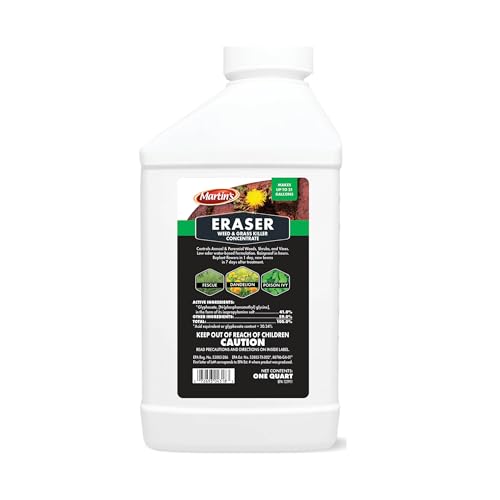
2. Control Solutions 82004318 1 Quart
The quart-size pick for spot spraying: 41% glyphosate, low-odor, and light enough to carry one-handed.
For a fenceline, a gravel drive and the weeds pushing through your patio joints, a quart is genuinely the smarter buy than a jug. You get 32 fluid ounces of 41% glyphosate liquid in a 2-pound bottle — the lightest carry in this lineup, and easy to slip into a tote. The low-odor, water-based formula is a real benefit for spraying close to the house.
Effectiveness is what wins people over here, by a wide margin over anything else about the product. It works on trees, vines and shrubs as well as annual and perennial weeds, and it leaves no residual soil activity — so the ground is usable again afterward rather than being locked out for weeks. It is also listed as rainproof in hours, which gives you some slack if the forecast turns.
Set your expectations on the clock, though. The product takes several days to show results, and that gap is the one thing buyers are split on — some find it lasts longer than other options, others get impatient waiting for brown leaves. Spray on a dry morning and leave it alone; that clock does not shorten because you used more.
The honest read: a 41% liquid at a quart size is the right amount of product for a suburban yard. You are buying range and shelf life here, not a giant jug you will spill.
One thing to plan for: it needs a few days and dry weather to work. If you need a garden bed cleared by the weekend, this is not the pick.
The one to grab if: your weeds live along edges, cracks and fence posts and you want a bottle you can carry all afternoon.
Not your jug if: you are clearing a full acre — you will go through quarts fast and want the 2.5-gallon above instead.
3. Ortho GroundClear Super Concentrate1 32 fl. oz.
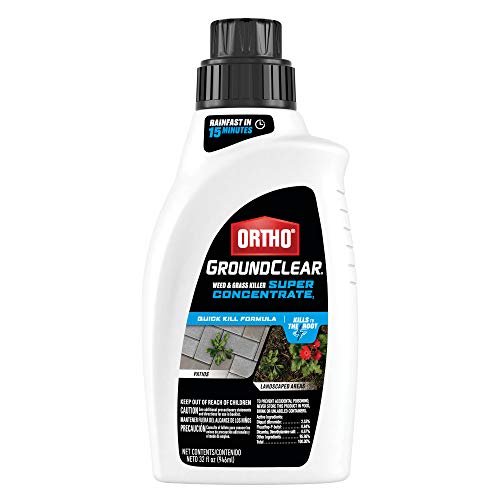
Rainfast in 15 minutes — the shortest dry window in this lineup, useful when you spray ahead of changing weather.
That 15-minute rainfast window is the standout spec on this bottle, and it solves a specific problem: you finish spraying a walkway and the clouds roll in. Most concentrates need the leaf to stay dry far longer. This 32 fl. oz bottle of concentrate treats up to 1,120 square feet, which fits driveways, patios, sidewalk cracks and the ground around shrubs and fences.
Where it earns its spot is speed and ease of use. It kills tough weeds to the root, naming clover, dandelion, oxalis, chickweed and crabgrass, and starts working immediately. Mixing it with water in a tank sprayer is simple, and the value-per-application lands well with people treating desert landscaping and rock beds. The label is also unusually clear about conditions: spray when weeds are actively growing and the air is above 60°F.
Here is the honest part — the effectiveness conversation is a mixed one, and the recurring theme is strength. Owners mention that at the recommended concentration roughly half the weeds died and some regrew weeks later, while a double-strength mix killed everything it hit. That means this bottle rewards careful measuring and may need a second pass, not that it fails. Go in expecting to re-spray stubborn patches and you will be happy.
What makes it worth carrying: a 15-minute rainfast window and a 1,120 square foot bottle is a practical combination for paved areas around the house.
The follow-up question you will have: do I need to spray twice? Sometimes yes — the weeds that survive the first pass usually go down on a stronger second mix.
Best fit: driveways, patios and sidewalk cracks where you might need to spray close to changing weather.
Look elsewhere if: you want one-and-done coverage of a large lawn in a single pass.
4. Roundup QuikPro Weed Killer Herbicide 73.3%, 5 Packs
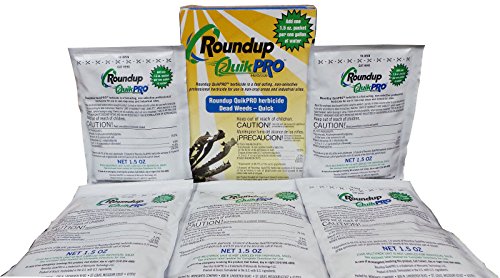
Powder packets at 73.3% glyphosate — the densest mix here, and the easiest to measure.
This is the opposite approach to the liquid jugs, and for a certain buyer it is the better one. The 73.3% figure is far above the 41% liquids in this lineup, and because it arrives as pre-measured powder you skip the guesswork that causes over- and under-mixing. One 1.5 oz packet goes into one gallon of water. Nothing to spill, nothing to eyeball, and the box holds 5 packs at 7.5 ounces total.
Speed is the second reason to pick it: results show within 24 hours, which is the quickest stated window among these picks. It also brings a surfactant along with the glyphosate, so the spray clings and spreads on the leaf rather than beading off. For a buyer who wants fast, visible knockdown on a lawn or landscaping bed, that combination is hard to argue with.
Two things keep it from the top spot on this list. Growth is the split issue — some customers note weeds staying healthy and green instead of dying, and duration gets mixed marks too, so timing and conditions matter. The other is that powder demands accuracy; a packet dumped into the wrong water volume either wastes product or overdoes it. Mix to the label and spray weeds that are actively growing.
What It Does Better
- 73.3% glyphosate is the strongest concentration in this lineup
- One 1.5 oz packet per gallon removes all measuring guesswork
- Results stated within 24 hours — the fastest here
- Includes a surfactant alongside the glyphosate
The Trade-Offs
- Some buyers see weeds stay green rather than die
- Duration of effect gets mixed feedback
- Powder leaves no room for sloppy water measurement
The precise option: pre-measured packets are for anyone who has ruined a mix by guessing at the ratio.
Skip the packets if: you prefer mixing by feel from a jug, or you want a long, repeatable supply you can pour straight into a sprayer.
5. Gly-Star Plus Herbicide 2.5 Gallons
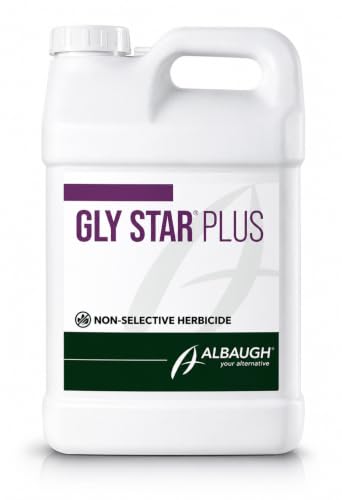
A two-and-a-half-gallon jug with surfactant already in it, built for wiping a lawn clean.
If the plan is a full lawn reset — kill everything green, wait, then reseed — this is the jug for it. It carries 41% glyphosate with a surfactant already blended in, which means the spray spreads across the leaf surface instead of beading off, and you do not buy a separate additive. It is non-selective and systemic, moving from the leaf down into the root system, so it does not just knock down tops.
Look at the raw numbers next to the Roundup QuikPro packets above: 2.5 gallons of liquid versus 1 gallon, and 320 fluid ounces versus 7.5 ounces of powder. Those are different products for different jobs, but the volume difference is why this jug suits a big reset rather than a spot spray. The stated timeline is effects in 2–4 days on most annual weeds and 7 or more days on perennials.
The practical warning is patience and aim. Vegetation sprayed for a full reset often needs two rounds over a couple of weeks before the ground is truly clear, and this is non-selective — anything it contacts goes. At 15 pounds the jug is heavy, and it is not for sale in CA, MT, NV, OR, WA or WY. One more note for pet owners: the product is toxic to animals, so keep them off treated ground.
Where it shines: a surfactant-loaded 41% concentrate in a 2.5-gallon jug is exactly what a kill-everything-then-reseed project needs.
What to know before you pour: it does not distinguish between a weed and the plant you love, so tape off or shield anything worth keeping.
Right pick for: homeowners resetting a lawn, clearing pasture, or reclaiming an overgrown bed from scratch.
Wrong pick for: touching up weeds beside prized shrubs — the non-selective action takes the shrub too.
6. Glyphosate 4 + Plus Herbicide 2.5 Gallon

A big jug of 41% with surfactant for people who mix their own and watch the ratio.
The mix instruction is the whole story here: 2 ounces per gallon of water for general application. That is a low rate, which is why 2.5 gallons — 320 fluid ounces — stretches into a lot of sprayer refills. For a large property where you are treating a lot of ground on a budget, this is the jug that keeps you supplied without buying small bottles over and over.
It arrives with a surfactant blended into the 41% glyphosate, and it is labeled for use in any area of vegetation as long as you protect non-target plants from drift. The people who like it tend to be repeat buyers who have mixed glyphosate for years — it does the job, it works fast on grass, and it is priced far below the pre-mixed bottles at the hardware store.
Be honest with yourself about the ratio. Concentration is the split issue in the feedback, and there are reports of it being slightly less concentrated than expected and of effects lasting around two weeks. Mixing at 3 ounces per gallon rather than the general 2 has taken out everything sprayed, branches included — so measure, and keep the spray where you want it.
The value case: 320 fluid ounces of 41% concentrate with surfactant is a lot of mixed spray for a large property, and the low 2 oz-per-gallon rate is what makes it go far.
The caution: under-mixing weakens results and over-mixing takes out shrubs. This jug rewards a measuring cup.
Buy it if: you already own a sprayer, know your mix ratio, and want volume without paying ready-mixed prices.
Pass if: you want a pre-measured, no-thinking mix — the QuikPro packets are the safer call.
7. Roundup Pro Herbicide Industrial Weed Control, 2.5 Gal.

Built for brush, vines and fencelines — the jug with the widest labeled weed list here.
Two-and-a-half gallons, 320 fluid ounces and coverage stated at 435,600 square feet. That combination puts this alongside the top pick in scale, but the label points it at a different job: industrial, turf, ornamental, forestry, roadside and utility work. It names crabgrass, foxtail, ragweed, ryegrass, bermudagrass, cattail and pampas grass, plus woody brush, trees and vines. If you have kudzu, poison ivy or stubborn root volunteers to deal with, this is the list to check against.
The value story is a strong one — this volume of concentrate goes a long way compared to buying ready-mixed gallons at the home store, which is why it is listed as a high-concentration option. It also dries relatively quickly, which matters if you are spraying a fence line and want to beat a summer storm. Painting undiluted product onto cut stumps is a method buyers describe for hard-to-kill species like Brazilian pepper.
What it will not do is keep working after the spray dries. There is no residual weed control — the active ingredient inhibits an enzyme found only in plants and microorganisms, so once the leaf takes it down into the root, the job is done and new seeds can still germinate. Weeds must be emerged when you spray. Expect browning in 2–4 days on annuals and 7 or more on perennials. And keep it off anything you want to keep: it drifts, and it kills what it touches.
Why it earns a spot: a 2.5-gallon industrial concentrate covering up to 435,600 square feet, with the broadest named weed and brush list in this group.
The limit you should know: no residual control means new weeds sprout in bare soil. It treats what is green now, not what comes up next.
Picked for: brush, vines, fencelines and larger properties where strength and coverage both matter.
Look past it for: a patio crack or a few dandelions — you would be paying for a jug you barely touch.
Know the Specs
Glyphosate Percentage
The percentage is how much active ingredient sits in the jug before you add water. A 41% liquid is a standard concentrate; a 73.3% powder is much denser and needs very careful measuring. Higher percentage does not automatically mean a better result — it means less product goes into each gallon of water, and mistakes are less forgiving. Check the label’s mix rate for your specific product every time.
Surfactant
A surfactant is an additive that helps the spray spread across the waxy leaf surface and stick instead of beading up and rolling off. Some concentrates here already include one; with others you mix your own. For waxy or hairy leaves, a surfactant often matters more than raw strength, because product that runs off the leaf never gets into the plant.
Rainfast Time
Rainfast means how long the sprayed leaf must stay dry for the product to be absorbed. One pick here states rainfast in 15 minutes; another is rainproof in hours. Miss that window and the rain washes the product off and you have wasted a pass. Spray on a dry morning when possible.
Residual Activity
“No residual soil activity” means the product breaks down and does not keep killing plants that come up later. That is good news if you want to reseed or replant after the weeds die. The flip side is that new weed seeds germinating next month will need their own treatment — this is not a season-long barrier.
Common Questions
How long before glyphosate actually kills the weeds?
Can I spray glyphosate near my vegetable garden?
What is the difference between a 41% liquid and a 73.3% powder?
Will this kill grass as well as broadleaf weeds?
Do I need a separate surfactant for these concentrates?
How much concentrate do I mix per gallon of water?
Are these products safe for pets after they dry?
Why do some weeds come back after spraying?
What temperature should I spray at?
Is a concentrate better than a ready-mixed spray bottle?
The Bottom Line
For most properties, the glyphosate herbicide weed killer winner is the Roundup Pro Concentrate 2.5-gallon jug because it pairs the highest rating here with up to 435,600 square feet of stated coverage from one carry. If your weeds are confined to edges and cracks, the Control Solutions Eraser & Grass Killer quart is the smarter size at 32 fluid ounces and 41% glyphosate. And for clearing brush, vines and fence lines, the Roundup Pro Herbicide 2.5 Gal. has the broadest labeled weed list. Whichever jug you pick, measure the mix and give the roots their week — the biggest mistake in this category is a strong spray that never had time to work.
How we choose
We do not accept paid placement. Every pick is matched to a real buyer and a real use-case; we do not hands-on test units.
Sources
Specifications: manufacturer listings and product documentation. Review insights: verified customer reviews, as of October 2026. Pricing: not shown on this page (it changes often); check the current price via the retailer link.
As an Amazon Associate, Aappliancez earns from qualifying purchases. This does not affect which products we feature.