Disclosure: Some links in this post are affiliate links. As an Amazon Associate I earn from qualifying purchases, at no extra cost to you. Learn more
Specs are compiled from manufacturer listings and verified buyer reviews and can change over time — please confirm the key details on the product page before buying.
You want a gluten-free shake that tastes like something you’d actually drink, not something you force down. That’s the whole battle in this category: most “healthy” protein bottles either taste like sweetened chalk or carry a texture that coats your mouth. The handful that get it right — real flavor, smooth texture, enough protein to matter, and a gluten-free label you can trust — are the ones worth your money. This guide separates them, explains what the numbers on the label actually mean, and tells you plainly which shake fits which kind of drinker.
This guide is built by comparing the manufacturers’ published specifications and the patterns across verified customer reviews, so you get each pick’s real strengths and trade-offs instead of marketing spin.
Flavor, protein per serving, and whether you can drink it every morning without gagging are the three things that decide your purchase — so start with taste, then let the grams sort the rest out. Here is the honest breakdown of the best gluten free protein shakes.
Top Picks
How To Choose The Best Gluten Free Protein Shakes
A gluten-free protein shake has to do two jobs at once: keep gluten off your plate and taste good enough that you finish the bottle instead of leaving half of it in the fridge. Most buyers make the same wrong assumption here. They grab a bottle stamped “gluten-free” and assume it’s healthy in every other way too. Gluten-free tells you nothing about sugar, protein quality, or whether the shake will sit comfortably in your stomach.
Read the protein grams before you read the flavor name
Protein per serving is the first number that matters, because it decides whether the shake works as a meal stand-in or just a snack. A 20g powder scoop is a light top-up. A 30g shake starts replacing breakfast. A 42g bottle is a serious protein hit for the day. Pick the number that matches how you plan to use it, not the highest one on the shelf — a 42g shake you can’t finish is worth less than a 20g shake you drink daily.
Whey isolate, plant blend, or ultrafiltered milk
The protein source changes everything about how the shake feels going down. Whey isolate is filtered to strip out most lactose, so it tends to sit lighter for people who usually get a heavy stomach from dairy. Plant blends built on peas, brown rice, and chia bring fiber along with the protein. Ultrafiltered real milk concentrates the protein while removing lactose sugar, which is how a bottle delivers high protein without a thick, syrupy texture.
Why texture and mixability decide whether you rebuy
A powder can taste fantastic and still fail you if it clumps into gritty pockets at the bottom of the shaker. A ready-to-drink bottle skips that whole problem — no scoop, no shaker, no cleanup — but you’re locked into the flavor and serving size the company chose. If you drink shakes in the car or at a desk, ready-to-drink wins by default. If you blend into smoothies or oatmeal, powder gives you the freedom.
Check what the “gluten-free” claim sits next to
If you have real gluten sensitivity, the gluten-free badge on the front matters less than what else is in the bottle. Check how the shake is sweetened, whether it uses artificial colors, and whether it contains dairy, soy, or nut ingredients you also avoid. Every shake in this guide is gluten-free by its own label. The real differences are in the sugar, the sweetener, and the protein source.
Side-by-Side Comparison
| Model | Best For | Protein Per Serving | Format | Added Fiber | Amazon |
|---|---|---|---|---|---|
| Premier Protein Coffeehouse Caramel Macchiato★ Best Overall | Caffeinated morning meal replacement | 30 g | Ready-to-drink, 12 bottles | — | Amazon |
| Premier Protein Powder Plus Fiber, ChocolateGut-Health Pick | Protein plus gut fiber in one scoop | 25 g | Powder, 17 servings | 7 g prebiotic | Amazon |
| Orgain Organic Vegan Creamy Chocolate Fudge | Clean plant-based ingredient list | 21 g | Powder, 20 servings | 6 g prebiotic + fiber | Amazon |
| Clean Simple Eats Whey Isolate Variety Pack | Flavor sampling before committing | 20 g | Stick packs, 10 single serves | — | Amazon |
| Dymatize ISO100 Fruity Pebbles | Fast-absorbing whey isolate after training | 25 g | Powder, tub | — | Amazon |
| OWYN Chocolate 30g Protein Powder | Vegan protein with greens and probiotics | 30 g | Powder, 2.96 lb | — | Amazon |
| Slate Milk Chocolate Ultra | Highest protein per bottle | 42 g | Ready-to-drink, 12 cans | — | Amazon |
Detailed Reviews
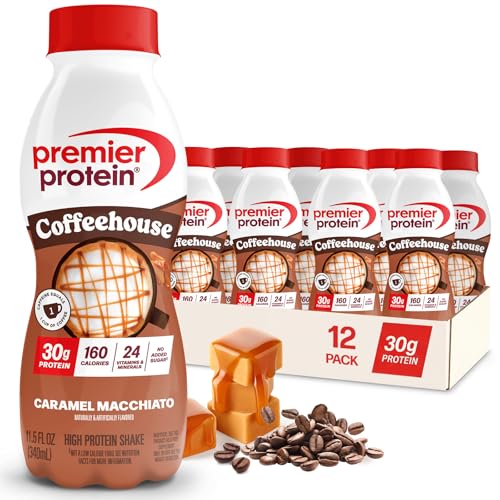
1. Premier Protein Caramel Macchiato 12 Pack
Our pick — 4.5+★ from 2,000+ verified ratings; the strongest balance of quality and price.
The bottle that replaces your coffee run and your breakfast in one grab.
Coffeehouse Caramel Macchiato is the pick for the person who already buys a flavored latte every morning — it just folds 30 g of protein into the habit. Each bottle carries caffeine roughly equal to one cup of coffee, so you’re not stacking a separate drink on top. The shake is gluten-free and carries 24 vitamins and minerals. That’s the everyday routine this thing was built around: one bottle, out the door, no scoop and no shaker to rinse.
Nobody buys a protein shake twice for the macros alone, and that’s exactly where this one wins. The review pages are dominated by flavor talk, and the milkshake-smooth texture keeps showing up next to it. Caramel Macchiato draws repeated praise for tasting like a coffeehouse treat rather than a supplement — one buyer spells out the appeal this way: “Delicious. It has caffiene…100 mg. Great for supplementing to get your 60-90 grams of daily protine. Low sugar low cal. Helps curl hunger. Great meal replacement on the go or for weight loss.” In practice, that means it curbs morning hunger and tastes like a caramel coffee drink, not a supplement.
The catch is price and one ingredient. The 12-pack has drawn cost grumbles from long-time buyers who remember cheaper days, and the formula uses sucralose, which puts off people who’d rather avoid artificial sweeteners entirely. Neither is a dealbreaker for most. But if you drink two bottles a day, the pack runs out fast and the per-bottle math starts to sting.
What wins people over
- Roughly a cup of coffee’s caffeine built into a 30 g protein bottle
- Milkshake-smooth texture that reviewers keep calling out
- Gluten-free with 24 vitamins and minerals
- Zero prep — grab, shake, drink
The honest trade-offs
- Sucralose sweetener puts off artificial-sweetener avoiders
- Cost per bottle adds up if you drink more than one a day
Grab this if: you want your morning caffeine and your protein in a single bottle that tastes like a café drink.
Think twice if: you read ingredient lists closely and want nothing artificial in your shake.
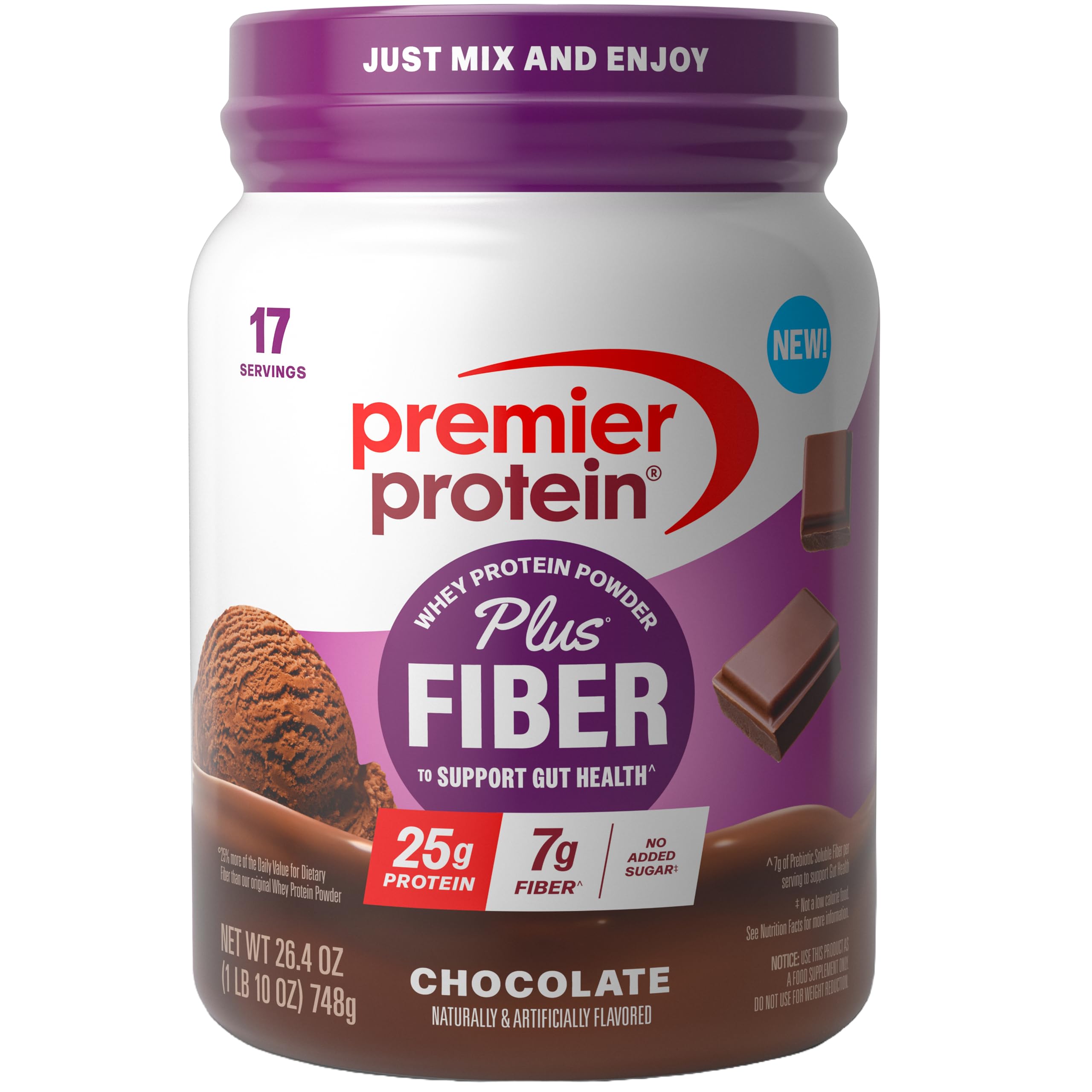
2. Premier Protein Powder Plus Fiber Chocolate
Two supplements in one scoop, so you can stop choking down a separate fiber powder.
Most protein powders make you buy a separate fiber product. This one packs 7 g of prebiotic fiber (fiber that feeds good gut bacteria) into a 25 g whey scoop, and it’s gluten-free with no added sugar. Compare it to the Orgain plant powder below, which has 6 g of fiber — and the Premier gives you 17 servings per tub versus Orgain’s 20, so you trade a few servings for more fiber per shake. If you drink a shake every morning, the 7 g of prebiotic fiber per scoop covers your gut fiber without a second powder.
The flavor side holds up better than a fiber-fortified powder has any right to. Chocolate is the front-runner, and the most-repeated compliment is that it drinks smooth rather than gritty. Mixability earns steady praise too, though a few buyers report a bit of residue that doesn’t fully dissolve — the kind of thing a blender bottle fixes. That gold-medal taste claim lines up with the review pages, where smooth texture and chocolate flavor draw the most praise.
Where it stumbles is texture consistency. A shaker alone can leave clumps, and the powdery aftertaste is noticeable to anyone blending it thin. Use a proper bottle or blender and it vanishes. This is also a whey product, so anyone steering clear of dairy needs to look at the plant options instead.
The daily-driver case: a 25 g protein chocolate scoop with 7 g of prebiotic fiber, no added sugar, and gluten-free labeling makes this a genuinely useful breakfast replacement rather than a dessert in disguise.
The one thing to know: it wants a blender bottle or a blender — water and a quick shake can leave clumps.
Reach for this if: your gut needs the extra fiber and you want it folded into your protein rather than bought separately.
Look elsewhere if: dairy whey doesn’t sit well with you — the plant picks further down cover that ground.
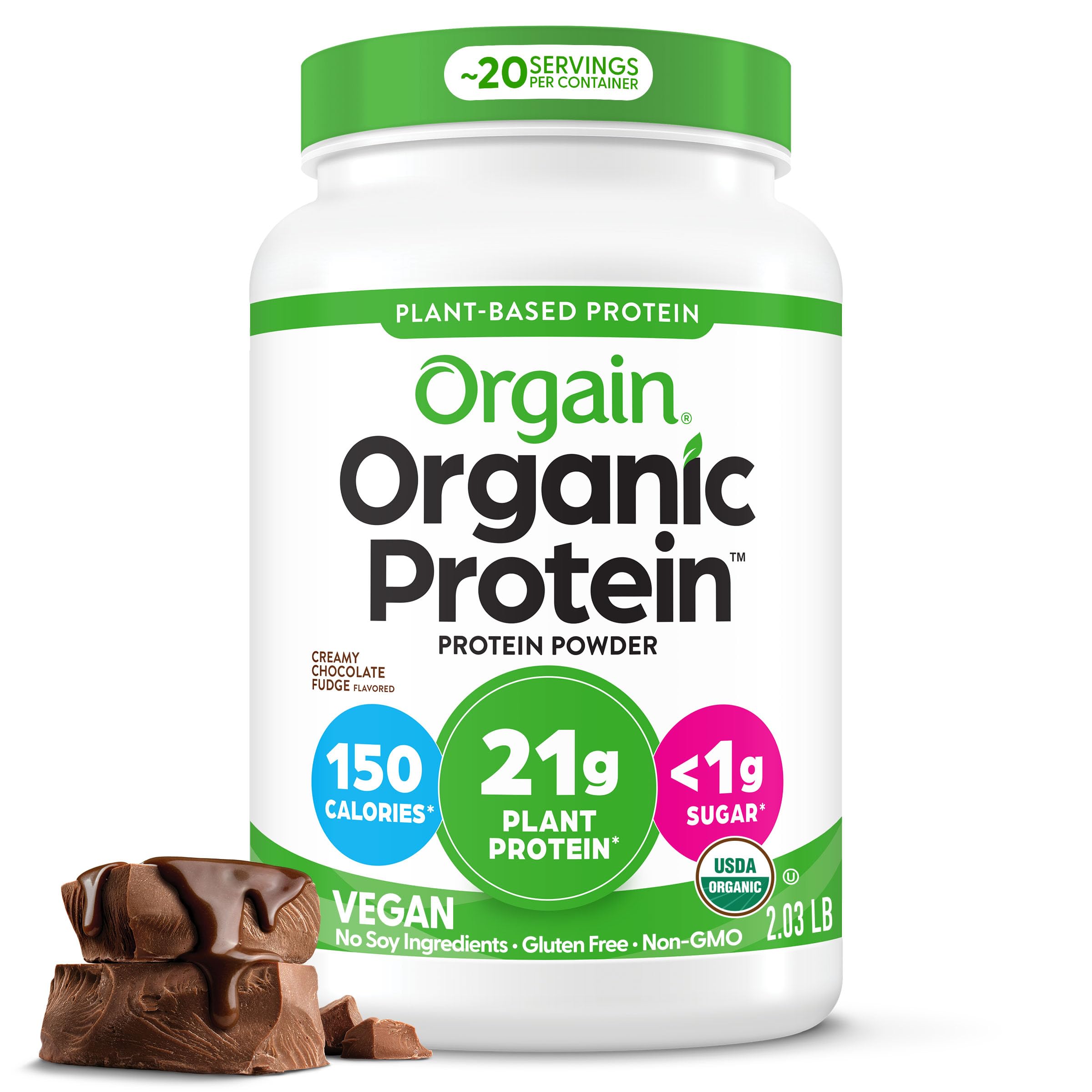
3. Orgain Organic Vegan Protein Powder 2.03 lb
The plant-based workhorse with the cleanest label on this list.
This is the pick for the buyer who reads the back of the tub before the front. Orgain builds its protein from organic peas, brown rice, and chia seeds, delivering 21 g per serving with all 9 essential amino acids. It’s USDA Organic, certified plant-based, gluten-free, kosher, and made without soy — no erythritol, no carrageenan, no artificial colors, flavors, or sweeteners. It also brings 6 g of prebiotic fiber for gut support. For anyone who wants a shake with no erythritol, carrageenan, soy, or artificial sweeteners, this is the shortlist answer.
Where it beats the whey competition is the drinking experience. The texture is thicker than a whey isolate, and buyers who’ve bounced off other plant powders say the grainy quality is far milder here. Chocolate fudge lands as a real cocoa flavor with no lingering aftertaste. It weighs 2.03 lb and yields 20 servings, which is more shakes per tub than the Premier fiber powder’s 17. It’s also a physical size difference that matters on the shelf — its 5.15 x 5.15 x 8.7 inch tub is noticeably more compact than the 10.13 x 7.69 x 7.25 inch case of Premier bottles.
The honest limit is sweetness. A stevia finish is detectable to anyone sensitive to it, and the amino acid profile is weaker than whey — one buyer who lifts simply adds BCAAs and creatine to close the gap. Neither is a flaw for the average smoothie drinker, but a serious lifter chasing maximum muscle protein synthesis should know going in.
Why it earns its place: an organic, non-GMO, gluten-free plant powder with 21 g of protein and 6 g of fiber that goes down smooth enough that repeat buyers keep restocking it for years.
Best for: vegans, dairy-avoiders, and label-readers who want every ingredient to justify itself.
Skip the party if: you lift heavy and want the stronger amino acid profile that only whey brings.
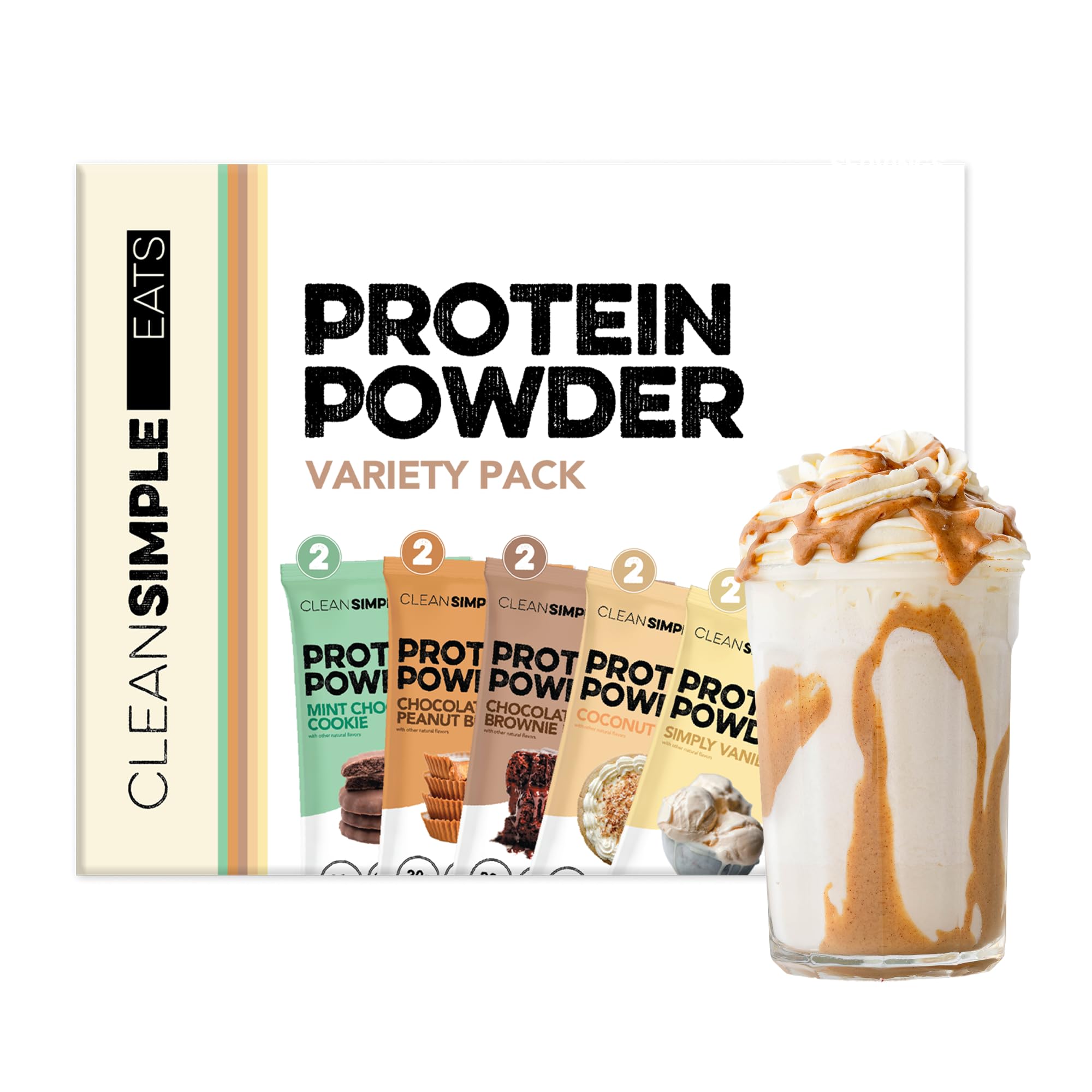
4. Clean Simple Eats Whey Isolate Variety Pack
Ten single-serve packets so you can find your flavor before you commit to a tub.
Ten packets, five flavors — Simply Vanilla, Chocolate Brownie Batter, Chocolate Peanut Butter, Coconut Cream, and Mint Chocolate Cookie. Each stick holds 20 g of cold-processed grass-fed whey isolate with a digestive enzyme blend, and every flavor is gluten-free, soy-free, and free of artificial flavors, sweeteners, and dyes. This is the smart entry point for anyone who’s been burned by a full tub of a flavor they hated — 10 sticks, 5 flavors, no tub.
The stick format is the real selling point. They slip into a gym bag or a carry-on, and buyers use them in water, milk, Greek yogurt, and coffee — the mint in hot coffee comes up repeatedly as a mint-chocolate-mocha substitute. Mixability draws steady praise, and the texture lands creamy rather than gritty. Digestibility is the one point that splits opinion. Most drinkers find the enzymes make it easy on the stomach, but a minority notice some discomfort, so treat the first stick as your test.
The honest catch is that some flavors blend more stubbornly than others. One disappointed buyer describes the end result as “basically like shaved ice with flavoring” after it refused to blend properly. A hand mixer or blender avoids it; a lazy shake in cold water may not. And the stick format costs more per serving than a bulk tub, which is the price of trying before you commit.
The case for the sampler
- Five flavors across 10 single servings, zero commitment
- 20 g grass-fed whey isolate per stick with digestive enzymes
- Gluten-free, soy-free, no artificial sweeteners or dyes
- Travel-friendly packets for gym bag or carry-on
What to weigh first
- Per-serving cost runs higher than a bulk tub
- A few flavors need a real blender, not a quick shaker shake
- Digestibility feedback is split among sensitive stomachs
Start here if: you’re new to protein powder and want to taste-test five flavors before spending on a full container.
Pass on it if: you already know your flavor and want the lowest cost per serving.
5. Dymatize ISO100 Fruity Pebbles
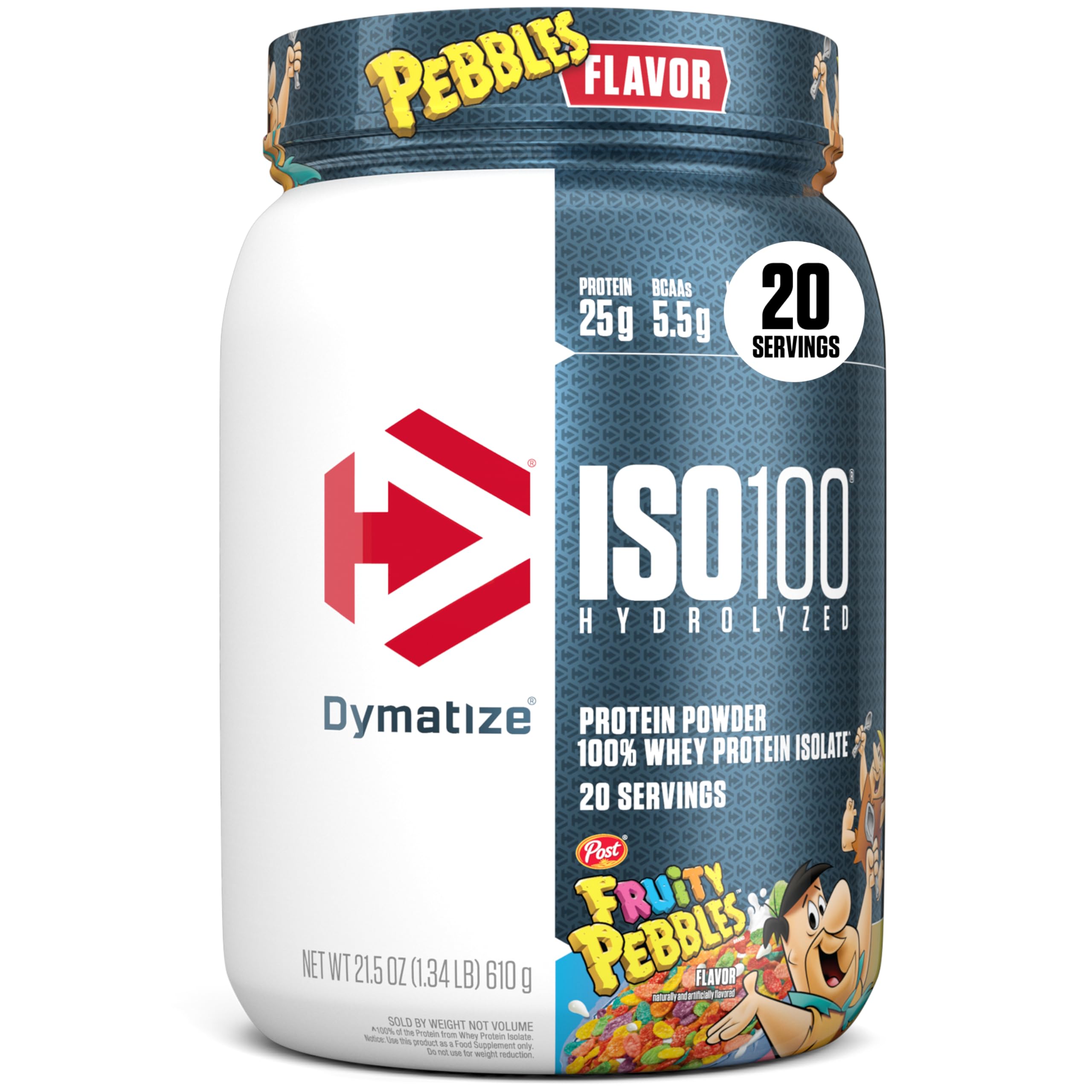
The powder people describe as drinking leftover cereal milk — and meaning it as praise.
ISO100 is made for fast absorption. The whey is broken into small peptides (short protein fragments) so it digests and absorbs quickly — useful right after a hard workout. Each scoop gives you 25 g of protein, 5 g of BCAAs (branched-chain amino acids, building blocks for muscle), 1 g of fat, and 1 g of sugar, all under 120 calories. It’s gluten-free and filtered to remove excess lactose, carbs, fat, and sugar. The tub is much smaller than the Premier bottles: 5.9 x 5.9 x 8.75 inches and 1.34 pounds, versus that 10.13 x 7.69 x 7.25 inch, 10.38 pound bottle case. Small tub, easy to store on a shelf.
The Fruity Pebbles flavor is the reason this powder has a following. It tastes like the milk left at the bottom of the cereal bowl, and buyers who are picky about protein flavor keep saying it converts them. It mixes clean and evenly with a proper shake, and the texture stays smooth with no chalk. The one recurring knock is sweetness — a few drinkers find it a touch too sweet and say so plainly, though most finish the jug anyway. If you already like the flavor profile, this is a low-risk bet.
The macro picture: 25 g protein and 5 g BCAA for under 120 calories is a genuinely lean profile, and the fast-absorbing peptide breakdown fits post-workout timing better than a slower plant blend.
Pick it if: you train regularly and want a fast-digesting isolate that tastes like a childhood treat.
Look past it if: you prefer a subtle, less sweet chocolate and want your protein to taste like health food.
6. OWYN Chocolate 30g Protein Powder, Vegan, 2.96 lb

Plant protein, greens, and probiotics in one scoop — more of a nutrition bundle than a shake.
OWYN pulls 30 g of plant protein from organic pumpkin seeds, chia, and pea, delivering all 9 essential amino acids and naturally occurring BCAAs. But the label goes further than most. Each serving adds 10 vitamins and minerals, omega 3, a superfoods greens blend of kale, spinach, and broccoli, and 2B CFU probiotics. It’s gluten-free, dairy-free, soy-free, sugar-free, peanut and tree nut free, egg-free, vegan, non-GMO verified, and free of artificial colors, flavors, and preservatives. For the buyer who wants one scoop covering protein, greens, omega 3, and probiotics, this is the dense option.
The 30 g of plant protein is the headline, and it beats the Orgain’s 21 g by enough to matter for muscle maintenance when you’re not eating meat. That higher protein pours out of a 2.96 lb tub and takes two scoops per serving — so factor that into how long it lasts. The 30 g and higher protein count is why some buyers make it their only shake, mixing it with soy milk, berries, and spinach for a low-calorie, high-protein breakfast they drink four to six times a week.
Texture and mixing are where it divides people. Some find it smooth and creamy with no grit; others describe it as gritty, and it doesn’t fully dissolve in hot coffee. There’s also a small packaging gripe — the scoop sits buried at the bottom, and a loose label can catch on the lid and cause a spill. Neither is a formula problem; both are easy to live with once you know.
The all-in-one argument: 30 g vegan protein, greens, omega 3, and probiotics in one scoop makes this the most complete plant formula here, especially for anyone who wants their nutrition stacked into a single drink.
The texture reality: expect to blend rather than stir, and skip adding it to a hot cup of coffee.
Choose it if: you want the highest plant protein per serving with greens and probiotics baked in.
Don’t choose it if: you need a powder that vanishes into coffee without a blender.
7. Slate Milk Chocolate Ultra 12 Cans
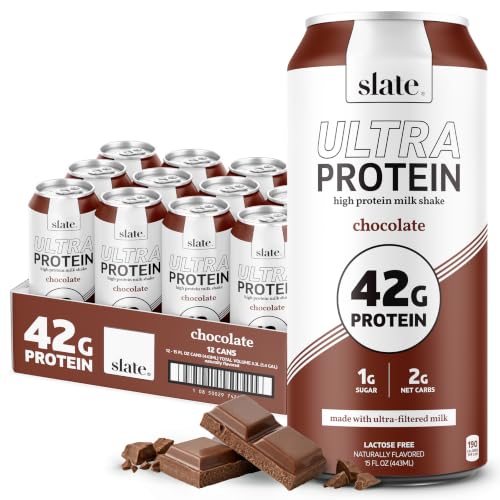
The highest protein number on this shelf, and it still drinks like chocolate milk.
42 g of protein for 190 calories is a serious ratio, and Slate gets there without powder. It uses ultrafiltered real milk to concentrate the protein naturally, remove lactose sugar, and keep the texture thin and drinkable. It’s gluten-free, lactose-free, keto-friendly with zero added sugar, and contains no artificial colors, flavors, carrageenan, or acesulfame potassium. If you want a single can to cover a big chunk of your daily protein, this 42 g can is the one.
The drinking experience separates it from the chunky-shake crowd. It’s thin rather than thick, so you can blend it with a banana and still sip it through a straw — an option bottle shakes rarely give you. Chocolate and lactose-free don’t usually sit together this comfortably, and buyers who avoid dairy for stomach reasons say this one leaves their digestion alone. The taste lands as classic chocolate milk rather than a supplement pretending to be dessert.
The honest trade-offs stack up around consistency and price. Texture comes up mixed — some cans pour smooth, others arrive with undissolved clumps that make the drink unappealing. And it’s priced at the top of this group, which is the cost of buying 42 g in a real-milk format. If the clump reports worry you, shake hard before opening and check the can date.
Why the 42 g number matters
- 42 g protein per can, more than the 30 g Premier bottles
- Ultrafiltered real milk, lactose-free, zero added sugar
- Thin texture that blends with fruit
- Gluten-free, no artificial colors or carrageenan
Where it asks patience
- Mixed reports of clumps in some cans
- Priced at the top of the ready-to-drink group
Worth it if: you want the most protein per can and a lactose-free shake that tastes like chocolate milk.
Hold off if: you can’t tolerate the occasional clump and want a consistent pour every time.
Know the Specs
Protein per serving
This is the grams of protein in one scoop, stick, or bottle — the number that decides whether the shake replaces a meal or just tops you up. A 20 g serving (Clean Simple Eats) is a light protein bump. A 42 g can (Slate) covers a big slice of a day’s target. Match the number to how you’ll use it, and remember that tall number means nothing if the shake tastes bad enough that you skip it.
Whey isolate vs plant blend vs ultrafiltered milk
Whey isolate is dairy protein filtered to strip most lactose, carbs, and fat — this is why ISO100 packs 25 g into under 120 calories. Plant blends (Orgain, OWYN) pull from peas, brown rice, chia, and pumpkin seeds and bring fiber along with the protein. Ultrafiltered milk (Slate) concentrates protein from real milk while removing lactose sugar, which is how it gets 42 g into a thin, drinkable can.
Added fiber and its role
Fiber in a protein shake is usually prebiotic — plant fiber that feeds the good bacteria in your gut. Premier’s fiber powder carries 7 g and Orgain carries 6 g, both per serving. If you already eat plenty of vegetables, this is a bonus; if your diet is thin on plant foods, a fiber-fortified shake closes a real gap without a separate supplement.
Gluten-free labeling
Every shake in this guide is labeled gluten-free by its maker, including the oat-based powders and the ready-to-drink bottles. For most buyers, that label is enough. If you have real sensitivity, read the ingredient list and check the protein source — plant blends and ultrafiltered milk (milk filtered to remove some lactose and water) take different routes to the same gluten-free result.
Common Questions
Are all the shakes in this guide actually gluten-free?
Should I pick a ready-to-drink bottle or a powder scoop?
How much protein do I need in a shake for it to work as a meal replacement?
Which of these is best for a sensitive stomach or lactose intolerance?
Do these protein powders contain artificial sweeteners?
Can I mix a protein powder into hot coffee?
Is a vegan protein powder as good as whey for building muscle?
How many servings should I expect from a powder tub?
What does 42 g of protein in one can feel like day to day?
Does a protein shake help curb appetite until lunch?
The Bottom Line
The best gluten free protein shakes pick is the Premier Protein Coffeehouse Caramel Macchiato, because it packs 30 g of protein and about a cup of coffee’s caffeine into one gluten-free bottle that drinkers call a coffeehouse treat. If you want fiber built in, the Premier Protein Powder Plus Fiber gives you 7 g of prebiotic fiber per scoop. And for the most protein per can with a lactose-free, chocolate-milk taste, the Slate Milk Chocolate Ultra delivers 42 g in 190 calories. Match the format to your morning — grab-and-go bottle, scoop-and-blend powder, or plant-based — and you’ll still be drinking it months later.
How we choose
We do not accept paid placement. Every pick is matched to a real buyer and a real use-case; we do not hands-on test units.
Sources
Specifications: manufacturer listings and product documentation. Review insights: verified customer reviews, as of October 2026. Pricing: not shown on this page (it changes often); check the current price via the retailer link.
As an Amazon Associate, Aappliancez earns from qualifying purchases. This does not affect which products we feature.