Disclosure: Some links in this post are affiliate links. As an Amazon Associate I earn from qualifying purchases, at no extra cost to you. Learn more
Specs are compiled from manufacturer listings and verified buyer reviews and can change over time — please confirm the key details on the product page before buying.
Glass and metal are the two hardest everyday surfaces to join, because a glue that grips one often slides right off the other. The quick answer: you want a two-part epoxy, not ordinary superglue. Epoxy is a resin-and-hardener mix that cures into a hard, gap-filling plastic, so it can bite into both the slick glass and the metal at once. Every pick below uses that chemistry or a close cousin, and each one suits a different job.
This guide is built by comparing the manufacturers’ published specifications and the patterns across verified customer reviews, so you get each pick’s real strengths and trade-offs instead of marketing spin.
Below you’ll find fast-setting syringes, weatherproof adhesives for outdoor repairs, and clear-drying formulas for visible glass. Each pick is explained in plain terms so you can match one to your repair. This is the practical shortlist of the glue for gluing glass to metal that actually holds.
Top Picks

How To Choose The Best Glue for Gluing Glass to Metal
The trouble with joining glass to metal is that the two surfaces pull in opposite directions. Glass is smooth and non-porous, so most glues have nothing to grip. Metal expands and contracts with heat far more than glass does, so a stiff bond can crack or peel under temperature swings. A good glass-to-metal glue has to grab both surfaces and stay slightly forgiving as they move.
Pick a structural adhesive, not a craft glue
Two-part epoxy is the workhorse here. You mix a resin with a hardener, and the chemical reaction turns the liquid into a hard solid that fills tiny gaps. That gap-filling is what lets it lock onto glass and metal at the same time. A urethane adhesive is the other proven option for glass-to-metal, especially in automotive and window work, because it stays a little flexible instead of turning brittle.
Read the working time before the cure time
The working time is how long you have to position the pieces before the glue starts to stiffen. A fast syringe epoxy can grab in minutes, which is great for a quick fix but nerve-wracking on a fiddly joint. The full cure time is when the bond reaches its final strength, and that can run much longer. Match the working time to how much adjusting your repair needs.
Clear or colored depends on where the joint sits
If the bond line will be visible, a clear-drying glue keeps the repair discreet. If the joint is hidden or structural, color and clarity matter far less than strength and water resistance. Check whether the glue is rated for indoor use or handles outdoor weather, since exterior glass-to-metal jobs need a formula that shrugs off rain, sun, and temperature change.
Side-by-Side Comparison
| Model | Best For | Type | Full Cure Time | Waterproof | Amazon |
|---|---|---|---|---|---|
| Loctite Epoxy Instant Mix 5 Minute (Pack of 2)★ Best Overall | Fast everyday glass-to-metal fixes | Two-part epoxy | 1 hour | Resistant to humidity and water | Amazon |
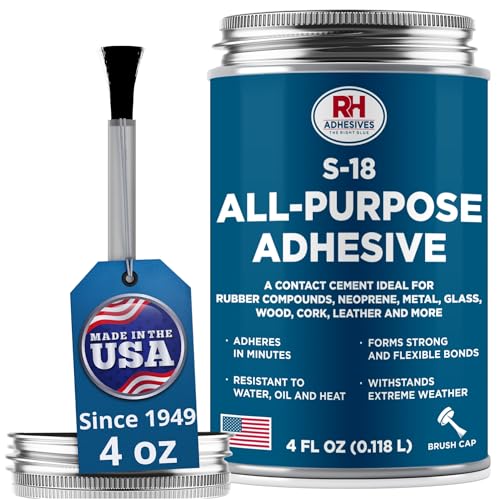
| S-18 All-Purpose Adhesive 4 ozBest for Fabric | Upholstery, headliners, flexible materials | Contact cement | 24 hours | Water resistant solvent | Amazon |
| Brampton Multi-Purpose Epoxy 4 oz | Outdoor and heavy-load repairs | Two-part epoxy | 1 hour | 100% waterproof | Amazon |
| Dow Automotive U-418 Beta Seal | Auto glass bonded to metal frames | Urethane adhesive | 24 hours | Cures with moisture in the air | Amazon |
| Loctite Glass Glue 2g (3 Pack) | Clear, discreet indoor glass fixes | Clear glass glue | — | Waterproof, dishwasher safe | Amazon |
Detailed Reviews
1. Loctite Epoxy Instant Mix 5 Minute
Our pick — 4.5+★ from 650+ verified ratings; the strongest balance of quality and price.
The syringe that mixes your epoxy for you and grabs a joint in minutes.
What puts this one on top for glass-to-metal is the dual syringe, not just the epoxy chemistry. It’s a two-part epoxy in a dual syringe, and the self-mixing nozzle joins the resin and hardener in equal amounts as you push the plunger. That means no guesswork, no stirring cup, and no uneven batches that cure soft on one side. It sets in just 5 minutes for a quick repair and reaches handling strength in 1 hour, which is where it beats the S-18 contact cement above — a 1-hour cure against 24 hours.
For glass bonding to metal, the gap-filling nature is what earns its keep. The cured epoxy does not shrink, and it resists humidity, water, and most common solvents while holding up to impact. You can sand it, drill it, and paint it once it’s hard, so a repair on a metal frame with a glass insert can be smoothed and finished like it was never broken. The listing also rates it for metal, glass, ceramic, stone, wood, and most plastics. And you get two syringes in the pack, so the second sits ready for the next job rather than one syringe against the S-18’s single bottle.
Where owners get the most satisfaction is overall build quality, with the speed and the built-in mixing running close behind. Glass and metal both need to be clean, dry, and free of oil before you apply, and a light scuff on the metal gives the epoxy something to bite. Give it the full hour before you load the joint, and it rewards you. Buyers confirm the 5-minute set and 1-hour handling strength.
What earns the top spot
- Self-mixing syringe delivers resin and hardener in equal amounts — no messy stirring
- Sets in 5 minutes and reaches handling strength in 1 hour
- Does not shrink and resists humidity, water, and most solvents
- Can be sanded, drilled, and painted after curing
- Two syringes per pack means a spare on hand
Where it asks more of you
- Adhesion on glass is the most divided point — clean, scuffed surfaces matter
- The 5-minute set leaves little time to reposition a fiddly joint
Right for fast repairs: anyone joining a metal frame or fitting to a glass piece who wants a strong bond without mixing by hand.
Prep is not optional: skip the surface cleaning and this epoxy will disappoint you on glass.
2. S-18 All-Purpose Adhesive 4 oz
A grabby contact cement for when the glass meets a fabric-wrapped metal panel.
This is the pick for the job the epoxy picks handle less gracefully: gluing glass to a metal surface that also carries fabric, foam, or vinyl. S-18 is a neoprene contact cement that holds both porous and non-porous materials, and the maker lists ceramics, cork, fabric, felt, glass, metals, and rubber compounds as compatible. Contact cement works differently from epoxy — you coat both surfaces, let them get tacky, then press them together, and the bond forms on contact. That fast grab is exactly why it holds a spot on a glass-to-metal shortlist.
The trade-off is cure time: a full 24 hours here. Full cure runs 24 hours here, against the 1 hour of the Loctite epoxy above. But the immediate grab is quick, and the reviews make that clear — a studio user fixed a drooping fabric-to-metal sample board in 15 minutes and it held through a client meeting. The formula is a water-resistant solvent that handles difficult temperatures and resists oil, which suits garage and marine-adjacent repairs. The 4 oz can is light to hold and the makers have been producing in the United States since 1949.
What wins people over is the hold — the grab is the thing buyers talk about, with bonding a smaller but steady second. The most-discussed aspect is adhesion itself, and that one is mixed: some find it excellent, others note it won’t stick to certain rubber surfaces. Plan ventilation around it too, because the solvent smell is strong and every review that mentions odor reminds you to work in an open, airy spot. Treat the rubber-to-metal claim as the one to test on a scrap first, and give it the full day to cure before stressing the joint.
The grab is the selling point: press-together contact cement holds a glass-and-metal-plus-fabric joint almost immediately, then cures over 24 hours.
Ventilate and test: the solvent odor is strong, and rubber is the surface to verify before you commit a whole repair to it.
Made for mixed-material panels: reach for this when glass sits against a metal panel that also has upholstery, foam, or vinyl in the joint.
Not a pure structural epox: if you need a rigid load-bearing glass-to-metal bond with no flexible materials involved, a two-part epoxy suits you better.
3. Brampton Multi-Purpose Epoxy

The weatherproof epoxy that lets you reposition a joint before it locks.
When the glass-to-metal joint lives outside, this is where I’d point you. Brampton’s two-part epoxy is a 100% waterproof formula built for indoor and outdoor use, and it’s rated for metal, glass, wood, concrete, tile, ceramic, porcelain, and most plastics. It has a 5-minute work life and a 30-minute set time, which gives you more room to line up a glass edge against a metal frame than a true 5-minute grab allows. Full cure comes in 1 hour, and it becomes sandable after 3 hours — handy if a metal fitting needs smoothing afterward.
The mix is simple: a 1:1 volume ratio in separate bottles, so you pour equal parts rather than fighting a clogging dual-plunger dispenser. The brand says it performs best at 72°F/22°C, so keep that in mind if you’re gluing in a cold garage. It’s made in the United States and comes in cartridges, syringes, and two-bottle sets depending on how you like to dispense. For a bonded joint that faces rain and temperature shifts, the waterproof rating is the headline spec — a bond that shrugs off weather keeps your glass seated through the seasons.
One installer used it on a bar stool leg with a stripped screw thread: generous application into the screw hole and joint, a 30-minute clamp, and a solid bond after an overnight cure. Being honest about the limits: the hardener carries a strong odor, so open a window, and a few owners have found the cured epoxy fairly rigid — one noted it isn’t flexible and questioned it for a shock-prone job like golf club heads. For a static glass-to-metal joint, that rigidity is a fair trade.
Built for the weather: choose this for outdoor glass-and-metal repairs where water and temperature swings are part of the job.
Clamp and let it sit: the strong odor and stiff cured bond mean this rewards a well-ventilated space and a joint that isn’t meant to flex.
4. Dow Automotive U-418 Beta Seal Glass Adhesive, Black

The urethane built for the one glass-to-metal joint that has to survive the road.
If your repair is a car window, mirror, or bonded windshield frame, this is the purpose-built option. Dow Automotive’s U-418 is a urethane adhesive in a gel form that cures by pulling moisture out of the air, which is how professional auto glass sealants set without a separate activator. It’s a black cartridge, primerless, and listed for glass as the compatible material. The maker calls the application process quick and easy with minimal odor, and it’s made in the United States.
Where it separates from the general-purpose epoxies above is temperature flexibility. Urethane stays slightly pliable instead of turning into a brittle plastic, so a glass-to-metal bond on a car body can flex with heat, cold, and vibration rather than crack at the seam. Full cure is 24 hours, and you’ll want a caulking-style gun to dispense the gel. Warm the cartridge in a water bath first if you’re working in cool weather — the gel flows more readily and lays down a smoother bead that way.
Effectiveness is what owners praise most, with material quality running level with it. The mixed signals sit in the stickiness and durability columns — some car-window repairs hold for years, while a few report the adhesive letting go at the glass interface, and a bad or expired tube can flummox any sealant. The applicator tip draws a fair share of grumbles because the spout is oversized: it can be awkward in a standard caulking gun, so have a larger gun or be ready to trim it with tin snips. Gloves are non-negotiable too, since this urethane is stubbornly sticky on skin.
Purpose-built flexibility: a urethane that bends with the car body instead of cracking is exactly what an auto glass-to-metal joint needs, unlike a stiff epoxy.
Dispensing takes a plan: the oversized spout and moisture-cure chemistry reward a proper gun, gloves, and warm weather or a pre-warmed cartridge.
For road-bound glass: this is the one to reach for when the joint is a car window, mirror, or bonded frame rather than a static display piece in a house.
Not a fine-craft glue: if you’re gluing a tiny glass ornament to a metal base, the oversized tip and black bead make this the wrong tool.
5. Loctite Glass Glue, Clear, 2g Tube, Dishwasher Safe, 3 Pack
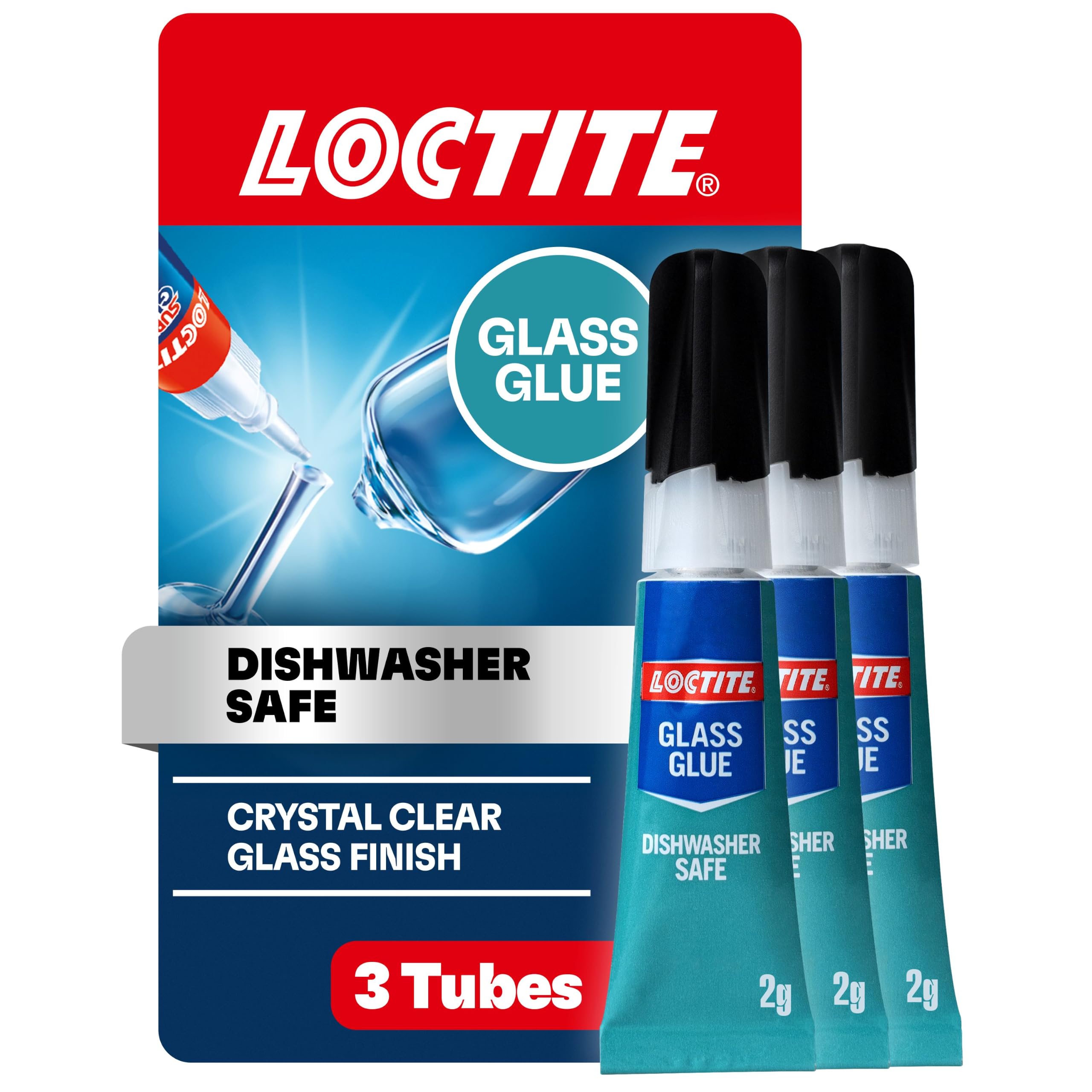
The invisible repair for a glass edge meeting a small metal fitting indoors.
For a visible joint that you’d rather nobody notices, this is the tidy answer. Loctite Glass Glue is a 2 g tube that dries clear and colorless, so a glass-to-metal repair on a stem, a fitting, or a display piece keeps its clean look. It bonds all types of glass to itself and to certain metals and plastics, and it does so with no clamping required — a real convenience when the joint is awkward to hold. It’s also heat resistant, waterproof, and dishwasher safe, and it handles clear, tinted, brown, opaque, and stained glass.
Speed is part of the appeal. It’s a fast-bonding liquid that grabs quickly, so you’re not standing there holding two pieces together for ages. The catch to read before you buy: it’s labeled for indoor use only and not recommended for exterior surfaces. Sun, rain, and freeze-thaw cycles are where this formula stays home. Think of it as the clean-finish pick, not the weatherproof structural pick — for an outdoor metal railing or a window, an epoxy or urethane above is the safer call.
What owners love is the clarity and the near-instant grab — pieces hold within about 15 seconds, and the bond dries completely clear for a finish that disappears into the glass. The most-discussed point is bonding strength, and that one splits: some find it holds hard and works beautifully on small and mid-size repairs, while others report it letting go after a while. Small repairs and tight joints are where it shines. As for storage, the screw caps lack friction and can unscrew themselves in a bag, so keep the tubes in a rigid container on their own to avoid pressure pushing the caps loose.
Why it earns a spot
- Dries clear and colorless, so visible glass repairs stay discreet
- Bonds glass to certain metals and plastics with no clamping required
- Heat resistant, waterproof, and dishwasher safe
- Grabs within about 15 seconds for a fast fix
- Three tubes in the pack keeps you stocked for small jobs
The limits to respect
- Indoor use only — not made for exterior metal or weathered glass
- The caps can unscrew themselves, so store the tubes carefully
- Bonding strength on glass is the most divided point among buyers
For a neat indoor job: pick this when a small glass-to-metal joint will be seen and you want the repair to vanish.
Keep it dry and indoors: an outdoor or load-bearing glass-to-metal bond needs a stronger, weather-rated adhesive from higher up this list.
Know the Specs
Working time versus full cure time
Working time is the window you have to position the pieces before the glue starts to stiffen. Full cure time is when the bond reaches its final strength. A fast epoxy may set in minutes but still want an hour or more to fully cure, so don’t load a joint the moment it feels stuck. Match the working time to how much adjusting your glass-to-metal repair needs — a fiddly alignment wants a longer work life.
Two-part epoxy versus contact cement versus urethane
Two-part epoxy mixes a resin and a hardener into a hard, gap-filling solid, which grips smooth glass and metal at once. Contact cement coats both surfaces and grabs on contact, which suits mixed-material panels. Urethane, like an auto glass sealant, stays slightly flexible so it moves with a metal body under heat and vibration. Match the type to the joint: rigid epoxy for static glass-to-metal, contact cement for fabric-backed panels, urethane for anything that moves on a vehicle.
Common Questions
What kind of glue actually bonds glass to metal?
Will regular superglue hold glass to metal?
How long should I clamp a glass-to-metal bond?
Can I use glass-to-metal glue outdoors?
Does the glue need to dry clear for a visible repair?
Is a two-part epoxy stronger than a one-part glass glue?
How should I prepare glass and metal before gluing?
Why does my glass-to-metal repair keep failing at the glass edge?
Is glass-to-metal glue waterproof once cured?
Can I sand or paint a glass-to-metal epoxy joint afterward?
The Bottom Line
The glue for gluing glass to metal that suits most repairs is the Loctite Epoxy Instant Mix 5 Minute — a self-mixing syringe that skips the mess, sets in 5 minutes, and holds rock-solid after an hour of cure. If your joint lives outdoors, grab the Brampton Multi-Purpose Epoxy for its 100% waterproof rating. And for a car window or flexible metal body, the Dow Automotive U-418 is the purpose-built one to reach for. Whichever you pick, clean both surfaces and scuff the metal first — prep decides as much as the glue does.
How we choose
We do not accept paid placement. Every pick is matched to a real buyer and a real use-case; we do not hands-on test units.
Sources
Specifications: manufacturer listings and product documentation. Review insights: verified customer reviews, as of October 2026. Pricing: not shown on this page (it changes often); check the current price via the retailer link.
As an Amazon Associate, Aappliancez earns from qualifying purchases. This does not affect which products we feature.