Disclosure: Some links in this post are affiliate links. As an Amazon Associate I earn from qualifying purchases, at no extra cost to you. Learn more
Specs are compiled from manufacturer listings and verified buyer reviews and can change over time — please confirm the key details on the product page before buying.
The hardest part of gluing glassware is not the break itself — it is picking a bottle that actually grabs smooth, non-porous glass and then dries see-through instead of leaving a cloudy scar. Most household glues fail on glass because they are built for wood and paper. The five adhesives below all work on glass, but they solve very different jobs, from a stained-glass repair you want invisible to a windshield you need to survive rain and heat.
This guide is built by comparing the manufacturers’ published specifications and the patterns across verified customer reviews, so you get each pick’s real strengths and trade-offs instead of marketing spin.
You will see which one handles everyday glassware repairs, which one is built for kiln work, and which one sits in a cartridge for a car window. Each entry gets a plain verdict so you can match the bottle to the break — the shortest route to the best glue for glassware.
Top Picks

How To Choose The Best Glue for Glassware
Glass is the awkward one. It has no grain for glue to soak into, so a product that anchors a wooden chair leg may simply peel off a drinking glass. The real question is what kind of glass job you have in front of you, because a repair to a decorative bowl and a reseal on a car window need completely different chemistry.
Does it actually bond glass to glass?
Look at the compatible-material list on the label. A bottle that names glass, ceramic and porcelain is built for non-porous surfaces like yours. A general craft adhesive that lists wood and fabric may still work, but you want the glass claim spelled out before you buy.
Clear finish matters more than you think
The one you regret is the one that dries yellow or cloudy on a visible glass piece. A glue that dries colorless lets a repaired wine glass or window ornament pass for intact. On a piece you plan to display, drying clear is the whole purchase.
Handling time versus full cure
Read the two timings separately, because they are not the same promise. Handling time is when you can let go; full cure is when the joint reaches its final strength. Some formulas let you release the piece within seconds, while others want it held or taped in place and then left for the better part of a day.
Will it survive water and heat?
A glass that lives near a sink or goes through a dishwasher needs a bond rated for water and heat. An ornament on a shelf does not. Match the water and temperature claims to where the finished piece will actually live.
Side-by-Side Comparison
| Model | Best For | Form | Dries Clear | Notable Spec | Amazon |
|---|---|---|---|---|---|
| Weldbond Multi-Surface Glue 14.2oz★ Best Overall | Everyday glassware and mosaic repairs | Liquid (PVA) | Yes — white turns invisible | Water resistant, non-toxic | Amazon |
| Bullseye Glastac Fusing Adhesive 4ozKiln-Ready Pick | Glass fusing and kiln work | Gel | Yes — clear gel | Burns away when fired | Amazon |
| FORTIVO Urethane Windshield Adhesive 310ml | Auto glass and heavy glass-to-frame bonds | Polyurethane paste | — | 310ml cartridge, non-sagging | Amazon |
| Loctite Glass Glue, 2g, 3 Pack | Small invisible repairs | Liquid | Yes — colorless | Dishwasher safe, heat resistant | Amazon |
| Lynn Manufacturing Sodium Silicate 4oz | High-heat glass and ceramic joins | Liquid (40% solution) | Yes — clear solid | 2000F rated | Amazon |
Detailed Reviews
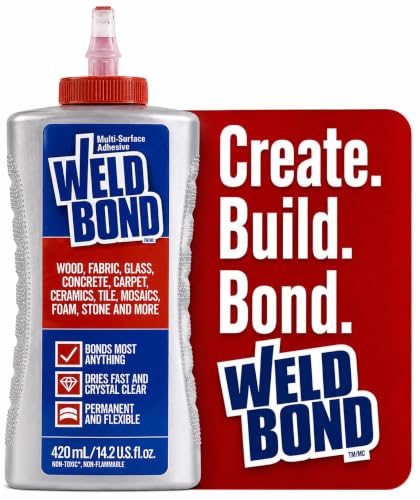
1. Weldbond Multi-Surface Glue 14.2oz
Our pick — 4.5+★ from 4,500+ verified ratings; the strongest balance of quality and price.
One bottle that quietly covers glass, tile, pottery and porcelain without a single harsh fume.
The number that decides this one for most people is 16 ounces of liquid PVA glue in a single bottle — enough for a full mosaic panel or a whole season of household repairs. It is a bonding adhesive, not an instant glue, so the piece sits undisturbed while it sets. What you get in return is a white glue that turns invisible as it dries, so a seam on a glazed or light surface simply disappears.
What wins people over is plain effectiveness across mixed materials. It grips wood, ceramic, glass, tile, pottery, porcelain, fabric and carpet from one bottle instead of a shelf of single-job tubes. One limitation written right on the label: it does not bond metal with ceramic, so a mixed-metal repair needs a different product. The finished bond is also water resistant, which covers indoor pieces and covered outdoor work.
The catch is patience. Handling comes at roughly 20 minutes with no clamping, but full cure takes 24 hours, and cool or humid weather stretches the holding time further. A buyer wanting a repair done in seconds will find that slow. For a glassware job you can leave overnight, the trade is a clear, low-odor bond that holds.
What earns it the top slot
- 16 ounces of multi-surface PVA that bonds glass, pottery, porcelain, tile and wood
- White glue dries crisp, so seams vanish on glazed surfaces
- No solvents and no harsh fumes — fine for a kitchen table or closed studio
- Water resistant finish holds its shape indoors and on covered outdoor pieces
Where it asks for patience
- Full cure runs 24 hours, and cold or damp air pushes that longer
- Not for bonding metal with ceramic, per the maker’s own note
- Slightly rubbery give if the two surfaces are not flush
Settle on this one: the best all-rounder for glassware, mosaic and mixed-material repairs where you can leave the piece overnight.
Pass it by: if you need an instant grab-and-go bond or you are joining metal to ceramic.
2. 49510-Bullseye Glastac Fusing Adhesive Gel Glue 4oz.
A glass-fusing aid that holds tiny pieces in place, then disappears in the kiln.
This is not a glue for mending a broken tumbler. It is a clear gel adhesive for glass fusing, and its job is to stop small pieces from sliding while you position them before firing. The 4-ounce bottle applies with a brush or applicator, and the gel dries clear for a clean look on the shelf and in the kiln.
Its real appeal, per buyers: it “prevents small pieces from sliding during kiln placement and burns away when fired.” That burn-away behavior is why it exists — the adhesive holds the layout, then leaves nothing behind once the glass fuses. It bonds glass, metal and plastic for general use too, so the bottle earns its shelf space beyond the kiln.
The honest trade-off is consistency and guidance. The gel is very thick, which some find helpful for holding a stack and others find a nuisance to spread. It also ships without instructions, so it rewards a buyer who already knows fusing technique. If you want hand-holding, this is not the bottle.
Who it is built for: glass fusing artists who need a temporary hold before firing and do not want residue baked into the finished piece.
What to expect going in: thick gel, no instructions in the box, and a technique you are expected to bring yourself.
Reach for this if: you lay out glass for the kiln and need small pieces to stay put until they fuse.
Look elsewhere if: you want a step-by-step guide in the package or a thin, easy-spread consistency.
3. Urethane Windshield Adhesive 310ml
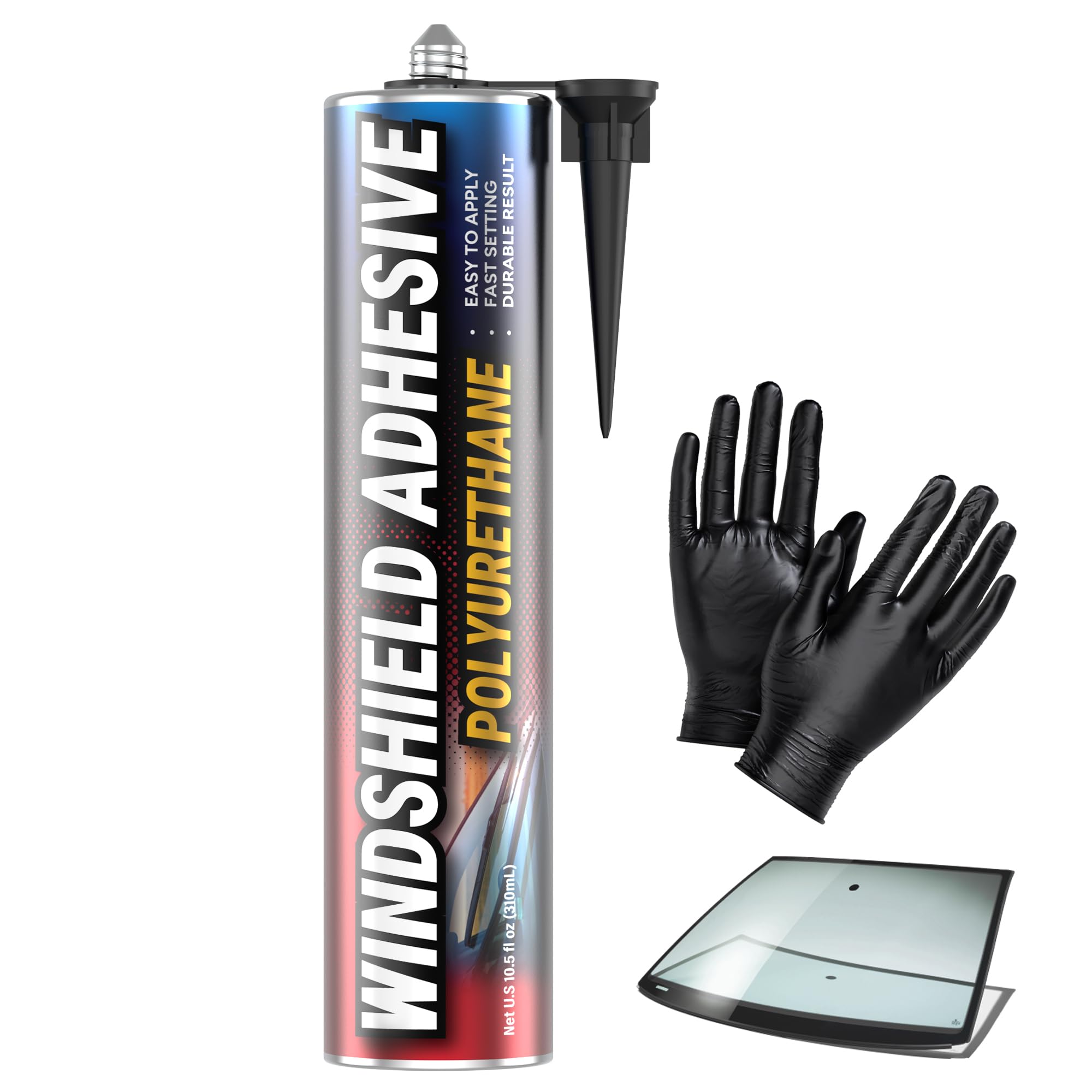
The glass bond you call on when gravity and rain are both working against you.
A 310ml cartridge of polyurethane paste is the difference between this and a craft squeeze bottle. It loads into a standard caulking gun, and the non-sagging formula stays put on vertical and overhead surfaces instead of dripping down the glass. That is the whole reason it exists: auto glass and heavy glass-to-frame jobs where a runny glue is useless.
The maker claims a watertight seal that holds in both high and low temperatures, and it needs no primer — gloves and an applicator tip come in the box. Beyond windshields, it bonds glass edges, backlights and sidelights on cars, trucks and RVs. Buyers have used it to reattach a fallen glass top to a Maytag washer frame and to set a replacement rear Tundra window.
Here is the honest catch: it skins over very quickly, so prep and alignment have to be right before the cartridge touches the glass. One reviewer noted that the tube must be heated to at least 140°F, per the instructions. The paste is also thick coming out of the dispenser, so smooth, thin control takes a steady hand. Get it right and the bond is rock-solid and leak-free.
Why it holds up to the weather
- Non-sagging polyurethane won’t drip on vertical or overhead glass
- Watertight seal keeps moisture and rain out of the joint
- No primer needed; gloves and applicator tip included
- Works on glass edges, backlights and sidelights for cars, trucks and RVs
The working conditions to plan for
- Skins over fast, so you get one clean shot at alignment
- Thick consistency means slower, more deliberate dispensing
- Needs a standard caulking gun, which is not in the box
The right call for: auto glass, RV windows and any heavy glass piece bonded to a frame that faces weather.
Not your fit: a small tabletop glassware repair — this is more adhesive than the job needs.
4. Loctite Glass Glue, Clear, 2g Tube, Dishwasher Safe, 3 Pack
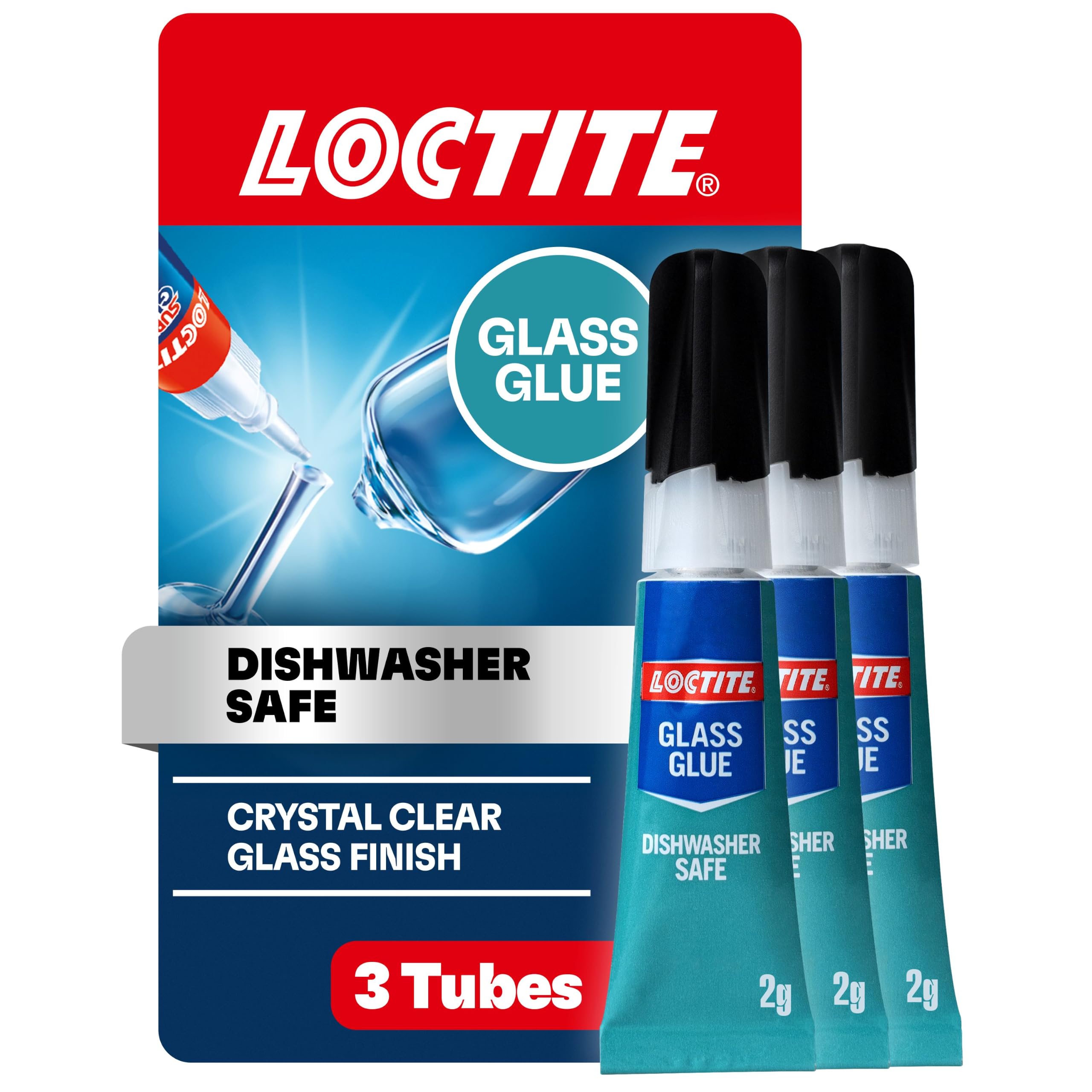
Three small tubes built to make a broken glass look like it never happened.
The 2-gram tubes are the point. This is a fast-bonding glass glue that needs no clamping, so you hold the pieces for a moment and let go. It dries clear and colorless, which is exactly what a visible repair needs — nothing to sand back, nothing to paint over. The 3-pack spreads the tubes around the house so one stays in the kitchen drawer and another rides in a toolbox.
Where it earns its place is glass-to-glass and glass-to-metal work, plus plastic. It is heat resistant, waterproof and dishwasher safe, so a repaired serving dish can go through a normal wash cycle instead of being demoted to display-only. One buyer repaired a vintage stained glass piece, holding the seam 30 to 45 seconds until it dried clear. Another used it to bond circuit boards to glass for guitar picks.
Two honest notes. It is for indoor use only and not recommended for exterior surfaces, so an outdoor window or garden ornament is the wrong job. The tubes are also small and the cap can work loose under pressure — store each tube alone in a rigid container. Use it sparingly too, because the glue runs fast.
Why it earns the shelf space: a colorless, dishwasher-safe bond that handles glass-to-glass and glass-to-metal repairs in seconds, across three tubes.
Plan the storage: indoor only, and the tubes need their own rigid container because the caps can open under pressure.
Made for this: stemware, stained glass, dishes and other indoor glassware where the repair has to read as invisible.
Skip the outdoor job: this glue is indoor only and not recommended for exterior surfaces.
5. High Temperature Adhesive 2000F 4oz

Liquid glass in a bottle, made for joints that get too hot for normal glue.
This is a sodium silicate solution — waterglass — a colorless, water-based liquid that dries to a clear solid able to take temperatures up to 2000F. The 4-ounce bottle holds a 40% solution, grade N, with a consistency the maker compares to maple syrup. It bonds ceramic, concrete and glass, so it is the pick for a glass joint that will face real heat rather than a shelf.
Buyers report it works on clean, gapless breaks. One buyer repaired a ceramic gas-torch flame guard broken into five pieces; it set hard and clear in 30 minutes and cured in 24 hours. The usual method is to brush a thin coat on each surface, join them, let them dry, then brush a small bead over the crack on both sides. A little goes a long way, and it cures glass-like and clear.
Know the limits before you buy. It is water-soluble until sealed and dissolves again in water unless you coat the joint, so it is not a dishwasher or sink-side product. It is also caustic alkaline, which means careful handling. On adhesion, reviews land mixed, so treat it as a high-temperature specialist rather than an all-purpose glass adhesive.
Where it shines: heat-rated glass and ceramic repairs, like firebrick, stove parts and flame guards, with a clear finish and a 2000F rating.
The real limitation: water dissolves it once the joint is soaked, so seal the repair or keep it dry.
Choose this when: the glass or ceramic piece will face intense heat and a normal glass glue would give way.
Think twice if: the repair will be washed or soaked — this bond needs to stay dry or sealed.
Know the Specs
Dries Clear vs. Dries Colorless
Both mean the joint should disappear on glass, but the wording differs. A glue that “dries clear” goes from a visible white or milky liquid to a see-through film. “Colorless” adds that no yellow or brown tint remains, which matters on a light glass or a decorative piece you plan to display. On a hidden seam, either is fine; on a wine glass stem, colorless is what you want.
Form: Liquid, Gel or Paste
The form changes how the glue behaves in your hand. A thin liquid runs into a crack fast and needs a sparing touch. A gel stays where you put it, which helps when you are positioning small pieces. A thick paste or polyurethane sits on a vertical surface without dripping. Match the form to whether your glass is horizontal on a bench or standing up in a frame.
Handling Time and Full Cure
These are two separate clocks. Handling time is when the joint holds on its own; full cure is when it reaches final strength. Some glass glues let you release a piece in seconds, while a PVA adhesive wants roughly 20 minutes before you let go and 24 hours before the bond is complete. Plan your repair around the slower number, not the faster one.
Water and Heat Ratings
A “waterproof” or “dishwasher safe” claim tells you the joint can handle a wash. A numbered heat rating, such as 2000F, tells you how hot the bond can get before it lets go. An indoor ornament needs neither. A serving dish needs water and heat. A stove part needs the heat number. Read the claim against where the finished piece will actually live.
Common Questions
What kind of glue actually sticks to smooth glass?
Will glass glue stay clear or turn yellow over time?
Can I put a repaired glass in the dishwasher?
How long do I need to hold glass pieces together while the glue sets?
Is a windshield adhesive safe to use on household glassware?
What is the difference between a fusing adhesive and a glass repair glue?
Can I use these glues on stained glass or tinted glass?
What temperature can a high-heat glass adhesive handle?
Why does my glass glue fail and how do I stop it?
The Bottom Line
For most glassware repairs, the glue for glassware winner is the Weldbond Multi-Surface Glue because one 16-ounce bottle covers glass, pottery and porcelain, dries crisp, and stays water resistant. If you need an invisible, dishwasher-safe fix on a serving dish or stemware, grab the Loctite Glass Glue 3 Pack. And for a heavy glass-to-frame bond that faces weather, the FORTIVO Urethane Windshield Adhesive is the one to reach for. Whichever you pick, match the glue’s water and heat claims to where the repaired piece will actually live — that single check saves more repairs than any other.
How we choose
We do not accept paid placement. Every pick is matched to a real buyer and a real use-case; we do not hands-on test units.
Sources
Specifications: manufacturer listings and product documentation. Review insights: verified customer reviews, as of October 2026. Pricing: not shown on this page (it changes often); check the current price via the retailer link.
As an Amazon Associate, Aappliancez earns from qualifying purchases. This does not affect which products we feature.