Disclosure: Some links in this post are affiliate links. As an Amazon Associate I earn from qualifying purchases, at no extra cost to you. Learn more
Specs are compiled from manufacturer listings and verified buyer reviews and can change over time — please confirm the key details on the product page before buying.
Here is the short answer before you read another word: if you want your glasses to actually stay findable, buy a tracker that clips to the frame or case and beeps loud enough to hear through a couch cushion. If you want your Glasses Tracker to be the thing that never gets lost, buy the version that clamps onto your shirt instead — because a tracker you forgot to transfer to a new pair of glasses is just a very expensive plastic square. The two jobs are different, and most buyers only realise that after the first pair of sunglasses goes missing.
This guide is built by comparing the manufacturers’ published specifications and the patterns across verified customer reviews, so you get each pick’s real strengths and trade-offs instead of marketing spin.
Some picks here use Bluetooth and Apple Find My, some use an old-school radio remote with no app at all, and one is not a tracker in the electronic sense at all — it is a magnet that stops you putting the glasses down. That third option sounds odd until you realise most lost glasses are not stolen, they are simply left somewhere. Reading the differences first will save you a return.
Top Picks
How To Choose The Best Glasses Tracker
Glasses are a genuinely awkward thing to track. They are thin, they slide off tables, they get folded into cases, and they live on your face rather than in a pocket. That is why the deciding question is not “which tracker is most accurate” but “which tracker will still be attached to my glasses next month”.
Where the tracker physically attaches
A tracker that sits on the temple arm needs to survive being folded, wiped, and occasionally dropped. A tracker that clips to your clothing moves the problem sideways — your glasses are only findable if you remember to clip them back on. An adhesive disc has its own weakness: heat, sweat, and repeated handling all attack the glue, which is why mounting quality matters at least as much as the electronics inside.
Audible alarm versus app map
An app map tells you the general area — a café, a car, an office. A beeping alarm tells you the exact centimetre, which is the part that actually costs you time. Look for both, and check the alarm figure in decibels (dB, a measure of loudness where normal conversation sits around 60). An alarm rated 90dB or above is generally the threshold where you can hear it from another room.
Which phone you carry decides half the list
Apple Find My works with iPhones, iPads, and Apple Watch and taps into a very large network of other Apple devices for location reporting. Android phones cannot use it. If your household is split between iPhone and Android, a radio-frequency locator with its own remote is the only type both of you can use without thinking about it.
The battery you can live with
There are two schools. A sealed battery lasts years and then the tracker is finished — you replace the unit, not the cell. A rechargeable cell needs plugging in every month or so and keeps going. Be honest about whether you will plug in a tracker every month or would rather swap a CR2032 cell twice a year.
Side-by-Side Comparison
| Model | Best For | Phone Requirement | Alarm | Battery | Amazon |
|---|---|---|---|---|---|
| Life360 Tile 2-Pack★ Best Overall | Keys and bags first, glasses case second | iOS and Android | 100 dB | 3 years | Amazon |
| Miroddi MFK02 KeychainTop Performer | Clipping to a glasses case or bag loop | iOS only (Find My) | 100 dB | Up to 4 months per charge | Amazon |
| SPEX Glasses Clips (2-pack) | Never setting your glasses down at all | None | — | — | Amazon |
| Simjar RF Locator (8 receivers) | Whole-house locating with no app | None | Up to 90 dB | 9 months (10 CR2032 cells) | Amazon |
| ORBIT x Glasses | Discreet on-frame tracking for iPhone users | iOS only (Find My) | Built-in speaker | Up to a month per charge | Amazon |
Detailed Reviews
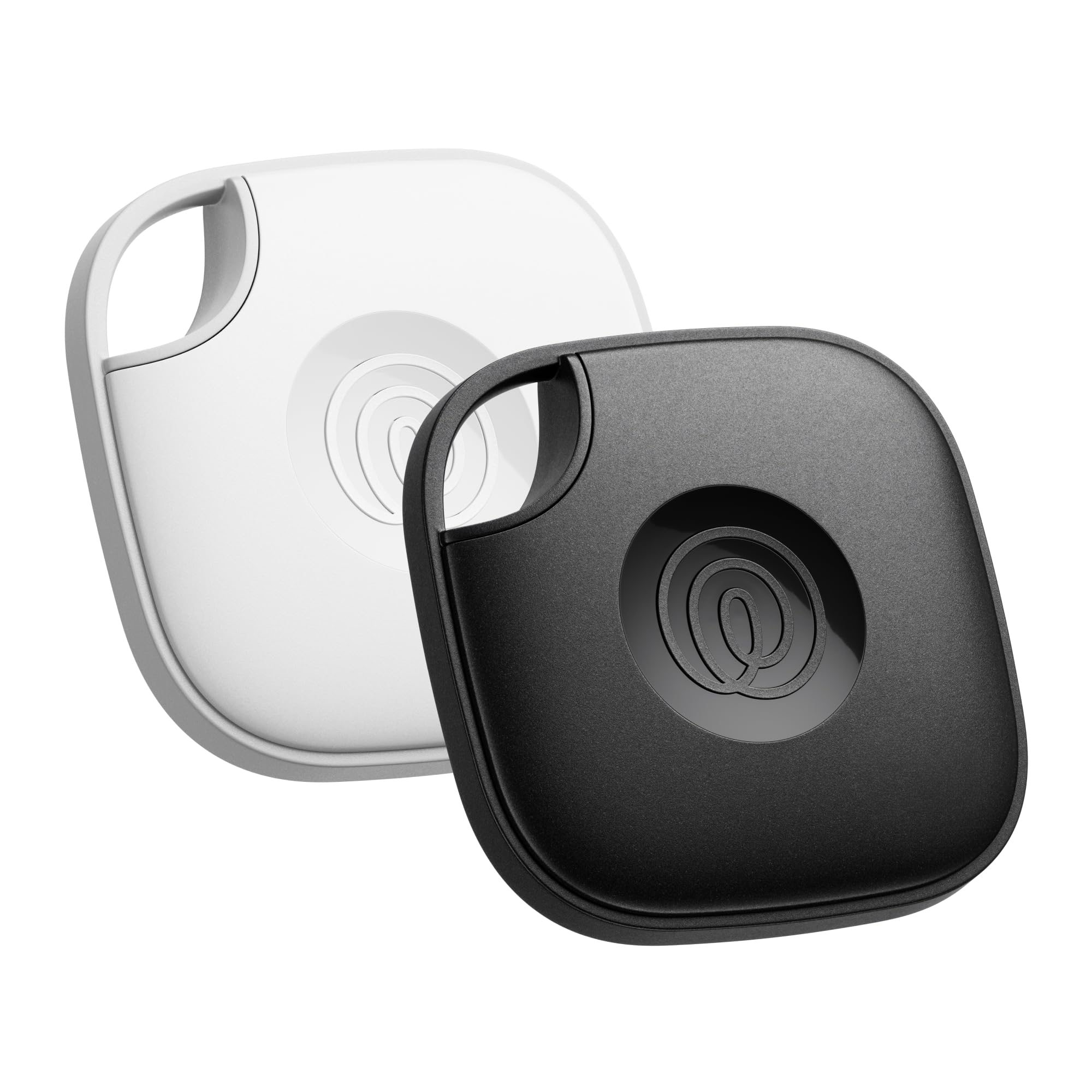
1. Life360 Tile 2-Pack
Our pick — 4.0+★ from 16,500+ verified ratings; the strongest balance of quality and price.
Two trackers you can leave alone for three years — no charging, no nagging, no drawer full of dead gadgets.
Two things make this the one to start with. The first is the number 3 — as in three years of battery life from a sealed cell you never touch. That is the whole appeal for glasses owners: the Tile lives in your glasses case permanently, and you never think about charging it. The second is the 100 dB alarm, which is loud enough to find a case that has slid under a car seat.
It works on both iOS and Android, which is rarer than it sounds in this category — most rivals in this list are Apple-only. Each Tile measures 1.49 inches square by 0.28 inches thick, so it drops into a glasses case, a bag pocket, or a keyring without crowding anything. The phone-finder direction works too: press the Tile and your phone rings even when it is on silent, which fixes the other half of the lost-item problem in one go. The crowd verdict backs the longevity story — one buyer’s first Tile lasting from 2023 into 2026 before the battery finally gave out is exactly the pattern that keeps people buying a second one.
The catch is the one you need to plan around. It goes in your glasses case, not on your glasses. If you habitually fold your frames into a shirt pocket and leave the case at home, this tracker is sitting on a shelf while your glasses are on a restaurant table. The app also pushes you toward a Life360 subscription — in-app history beyond the free window and an auto-renewing trial both sit behind it, and the sign-up asks for a fair amount of personal detail. Buy it for the case habit, not for on-frame tracking.
What earns it first place
- Three years of battery on a sealed cell — no charging routine to maintain at all
- 100 dB alarm carries across a room and through soft furnishings
- Runs on both iOS and Android, so a mixed-phone household is not locked out
- Works in both directions — find your glasses, or make your silenced phone ring
Where it stops short
- Tracks the case or bag, not the frames themselves
- The companion app nudges toward a paid Life360 tier for longer location history
- Sealed battery means the whole unit retires when the cell finally dies
Buy this if: your glasses live in a case and you want to stop thinking about the tracker for years at a time.
Think again if: you leave the case at home — nothing here clips to a temple arm.
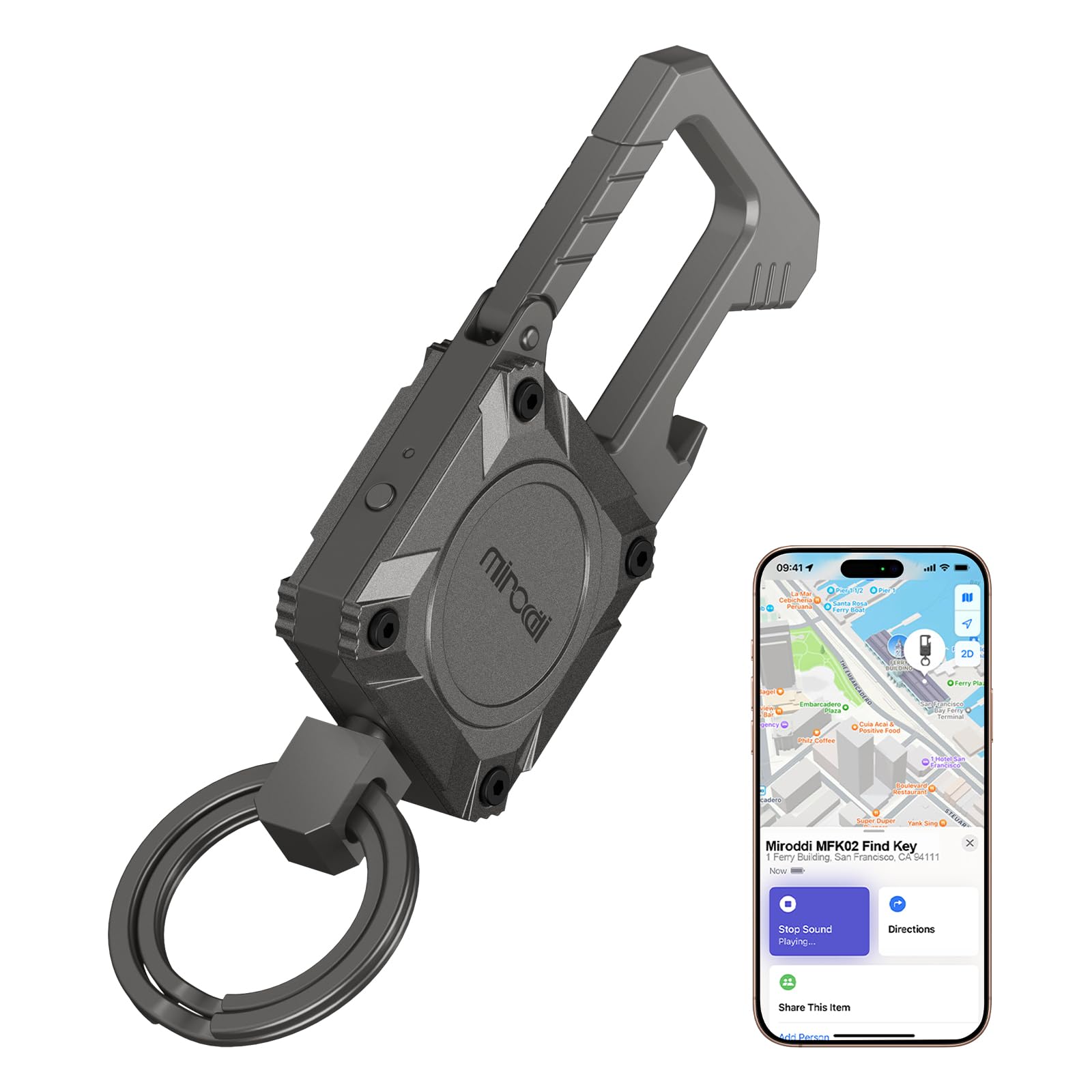
2. Miroddi MFK02 Keychain
A lump of plated zinc with a 100 dB alarm and a four-month charge — built like a keyring, not like a sticker.
The build is the headline here. This is a plated zinc alloy carabiner with a 360° rotating hook and two separate key rings — a smaller inner ring and a larger outer one — so you can hang a glasses case on one and car keys on the other without unpicking the whole thing. It shrugs off drops, scratches, dust, and water splashes, and there is a bottle opener folded into the body, which is either a genuinely useful extra or a mild insult depending on your sense of humour. Compared with the adhesive disc approach, a carabiner is far more forgiving of daily abuse.
Under the metal, it pairs with the Find My app on iPhone and iPad for real-time location, sound alerts, Left Behind notifications, and Lost Mode. Bluetooth reach is 50 metres in open air — roughly the length of a small car park — and the alarm is rated 100 dB, the same figure the top pick carries. The battery holds up to 4 months on a single 1.5-hour charge from the included USB-C cable, which is a far easier habit to keep than a monthly top-up. Quality is what buyers single out above everything else about this keychain, and the metal body is the reason.
The honest limitation is the wire connector where the cable retracts into the housing — a strain point that has failed under nothing more dramatic than a few keys and a short cable extension. Treat the ring as a carrying loop rather than a load-bearing clip and it should hold. Android is not supported at all, so this is an iPhone-household product or nothing.
Why it takes second: it beats the SPEX clips on electronics and beats the Simjar on pocketability, giving you an alarm, a live map, and a metal body in one piece you clip to a glasses case.
The one to watch: that retracting wire connector is the weak joint — hook it to something light.
Right pick for: iPhone owners who want a tracker solid enough to survive a bag, a pocket, and being dropped in the rain.
Not your fit: Android phones, full stop.
3. SPEX Glasses Clips 2-pack
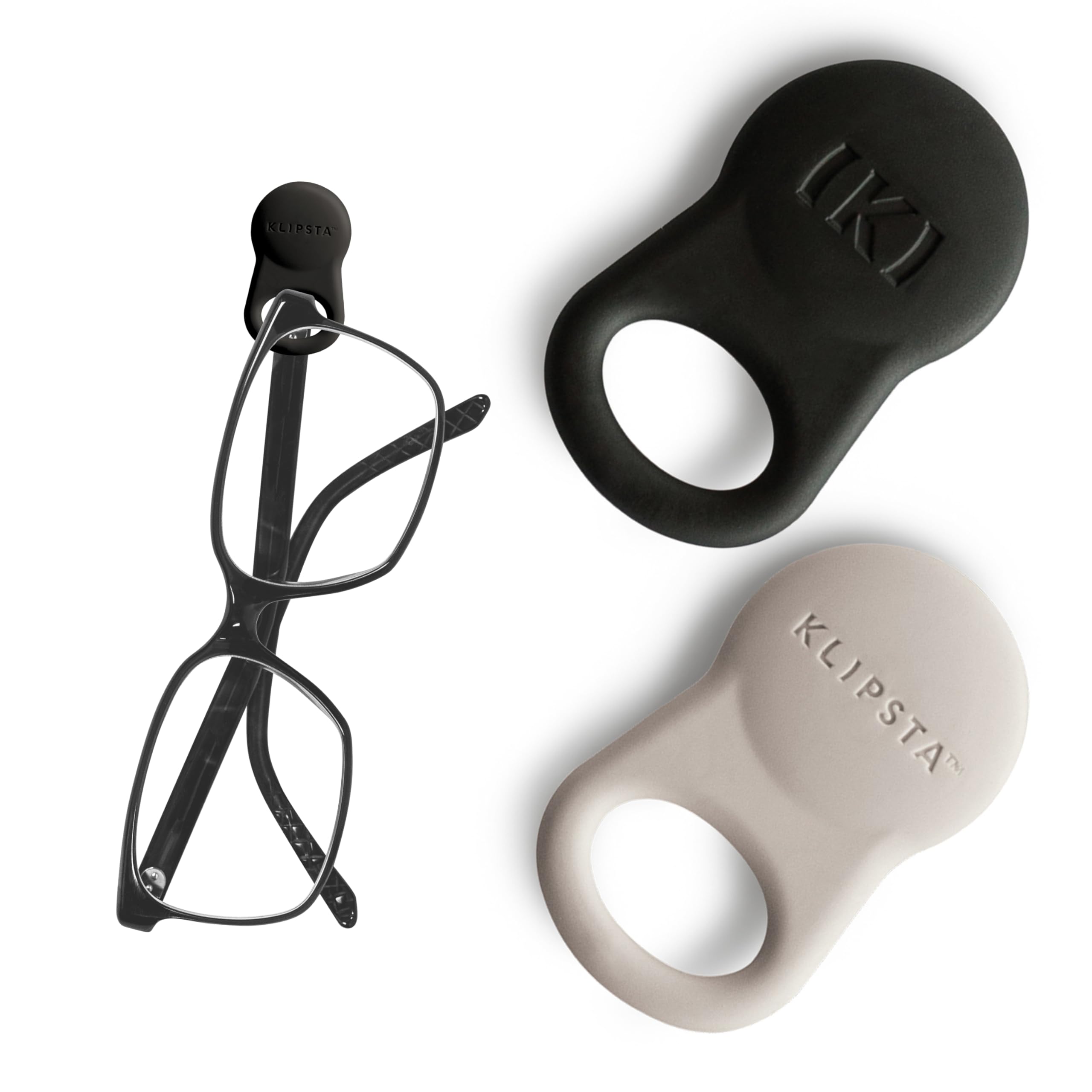
No battery, no app, no subscription — just a magnet that keeps your glasses on your shirt instead of on a table.
This one reframes the whole problem, and it is worth understanding before you dismiss it. Most lost glasses are not tracked-and-gone — they were set down and forgotten. A magnetic clip holds the frames against your shirt between uses, so the glasses never enter the lost state in the first place. There is nothing to charge, nothing to pair, and nothing that stops working when your phone model changes.
Two clips come in the pack, and the daily pattern is simple: pinch the magnet through a shirt, a work badge, or a lanyard, and your glasses hang there. Fun and function is exactly how buyers describe it — the design and appearance get the most goodwill of anything about the product, which is why it gets gifted so often. The same clip does double duty on an ID badge; it holds through the tugging of a badge reel without letting go. Buyers report it surviving a wash cycle or two, though that is luck rather than a rated feature.
Magnet strength is where the honest caveat lives. It is strong enough to hold glasses and stubborn enough to grab a fridge door, a toolbox, or a refrigerated dolly the moment you walk past, and a clip not removed before laundry can vanish into the drum. One smaller-framed wearer found the clips a touch on the small side, and frames that fold open on their own can slip out of the grip. Stow the clip in a fixed spot at the end of the day and it stays with you.
The preventive angle: it solves lost glasses by keeping them visible on your body, which no electronic tracker here can do.
The trade-off: strong magnets attract the wrong metal and disappear in the wash if you forget them.
Reach for this if: you are the person who takes glasses off a dozen times a day and sets them down somewhere new each time.
Skip the idea if: you want a beep and a map on your phone — this is a holder, not a locator.
4. Simjar Wireless RF Item Locator

Eight receivers, two remotes, and zero apps — the locator that works during a phone outage.
Eight hook-on receivers come in the box, each with its own colour-coded button on the transmitter. Press the colour, the matching receiver beeps. Pair it with a glasses case, a wallet, a remote, a keys set — the eight channels cover a whole household at once, and the whole thing runs on radio frequency rather than Bluetooth, so no pairing, no account, and no phone in the loop. That makes it the one option here that works identically for an Android user, an iPhone user, and someone who does not carry a phone around the house.
The alarm is up to 90 dB with a 100 ft wireless range in open air, though walls and obstacles will pull that range down — plan for one room of reliable reach. Two transmitters are included, so you can leave one by the door and one in the car, or treat the set as two independent locators in two locations. The beep fires from the side of the receiver, which is a small design detail that matters: it stays audible when the receiver is clipped under something or face-down. Battery power comes from 10 CR2032 lithium cells, replaceable, rated for 9 months of working life with a full year of standby.
Size is the recurring gripe. The receivers are roomy enough for an ageing wallet and repeat owners mention they are too large for glasses and phone cases — measure your case before committing to that job for it. Loudness gets mixed reactions too, with more than one buyer wanting a higher beep. Range is the one to verify yourself: separate the transmitter and a receiver by at least 15 feet and test before you trust it, because obstacles can be surprisingly unforgiving.
Strong points
- Eight receivers on one remote — a whole house of items on colour-coded buttons
- No app, no account, no phone compatibility to worry about
- Up to 90 dB side-firing beep stays audible when the receiver is covered
- Replaceable CR2032 cells rated for 9 months of use and a full year on standby
Limiting factors
- Receivers are bulky for a slim glasses case or a wallet
- Range drops sharply behind walls and doors
- The included double-sided tape does not hold well — hook it on instead
Fits best: a household that wants one locator covering glasses, keys, remotes, and wallets without touching an app.
Wrong tool for: a pair of foldable reading glasses with a slim case — the receiver will not sit inside it.
5. ORBIT x Glasses – Find Your Glasses with Apple Find My

The only tracker here made to sit on the glasses themselves — discreet, beeping, and Apple-only.
This is the purest answer to the category. It is engineered to integrate with a range of eyeglass styles so it disappears on the frame rather than hanging from it, and the whole point is that the trackable thing is the glasses, not the case beside them. A built-in speaker plays a sound through the Find My app when you cannot see where you put them, and the location is pulled from the very large Find My network of Apple devices rather than a single Bluetooth hop from your own phone.
The privacy design is unusually specific and worth noting. All communication inside the Find My network is fully encrypted and anonymous, and no location data or history is ever stored on the ORBIT device itself — it is location-by-reference rather than a log that sits on your eyewear. Charging is up to a month per single charge from the included USB cable, and the unit is small: 1.1 inches with a 0.2-inch face. For the right owner it is the neatest thing in this list, and the case for it is summed up neatly by a sunglasses wearer who reported losing multiple pairs of prescription sunglasses before this played a sound loud enough to find them quickly.
Then there is the part you have to weigh honestly. Reliability over time is the most-discussed theme in its feedback, and it splits both ways — plenty of owners get months of good service, while some units stop holding a charge or stop connecting after a few months. Adhesion is the other weak joint; a disc that lets go early loses the glasses entirely. Android is not supported. Buy it knowing that the return window matters and that a firm press on day one is not optional.
The on-frame advantage: it tracks the glasses you are wearing, not the case you left at home — nothing else here does that at 1.1 inches.
Weigh this honestly: long-term reliability is uneven and the adhesive needs a careful, firm mounting to hold.
Ideal owner: an iPhone user with prescription glasses who wants the tracker on the frames and accepts a monthly charge.
Look elsewhere if: you are on Android, or you want a tracker with no long-term reliability question attached.
Know the Specs
Alarm loudness in decibels (dB)
Decibels measure how loud a sound is, and normal conversation sits around 60 dB. The picks here run from a 90 dB beep up to 100 dB. That gap is not cosmetic — a 100 dB alarm is the sort of sound you can follow from another room, while a 90 dB alarm is comfortable within a room but struggles through a closed door. If you lose your glasses in the house, either works. If you lose them in a car park, the louder figure earns its keep.
Rechargeable versus replaceable cells
A rechargeable tracker needs plugging in — the Miroddi runs up to 4 months per charge and the ORBIT up to a month, while the Simjar uses replaceable CR2032 cells rated for 9 months of use. A sealed cell like the Tile’s 3-year battery needs no attention at all but ends the product’s life when it dies. Match the maintenance style to your own habits, because a tracker with a dead cell is a paperweight whether it took five minutes to charge or three years to expire.
Bluetooth and radio frequency range
Bluetooth range tells you how far your phone can reach the tracker directly — the Miroddi lists 50 metres in open air. Radio frequency, which the Simjar uses, lists 100 ft in open air with no phone involved. Both figures shrink dramatically through walls and furniture, so treat them as best-case numbers and test in your own home before relying on them for a rescue.
Find My network coverage
Apple Find My works by letting nearby Apple devices anonymously relay a location, which is why an ORBIT or Miroddi can report a position far outside your own Bluetooth reach. The catch is total: it needs an iPhone, iPad, or Apple Watch on your side of the fence. Android households should look at the Tile for cross-platform support or the Simjar for a phone-free option.
Common Questions
Can any of these trackers attach directly to a pair of glasses frames?
Will a Find My glasses tracker work with my Android phone?
How loud does a glasses tracker need to be to actually find my glasses?
Do I have to charge a glasses tracker, or can I forget about it?
Is a magnetic glasses clip better than an electronic tracker?
What happens when the ORBIT or Miroddi battery stops holding charge?
Will the Simjar locator find glasses inside a case?
Can a tracker survive being put through the washing machine?
Do I need a subscription to use these glasses trackers?
How many items can one of these track at the same time?
The Bottom Line
For most people hunting for a glasses tracker, the winner is the Life360 Tile 2-Pack — three years of sealed battery and a 100 dB alarm mean you set it and stop thinking about it, and it works whether the household runs on iOS or Android. It is the crowd favourite of this group at 4.0+ stars across 16,000+ ratings, and reviewers who replace a dead Tile with another Tile are the clearest signal that people come back.
If you want the tracker on the frames rather than in a case and you carry an iPhone, the ORBIT x Glasses is the only one built for that job. For a metal body that survives a bag and a carabiner that holds a case plus keys, go with the Miroddi MFK02. And if you would rather never set the glasses down at all, the SPEX Glasses Clips are the cheapest habit change on the list — a magnet in your shirt pocket beats any battery you have to remember to charge.
How we choose
We do not accept paid placement. Every pick is matched to a real buyer and a real use-case; we do not hands-on test units.
Sources
Specifications: manufacturer listings and product documentation. Review insights: verified customer reviews, as of October 2026. Pricing: not shown on this page (it changes often); check the current price via the retailer link.
As an Amazon Associate, Aappliancez earns from qualifying purchases. This does not affect which products we feature.