Disclosure: Some links in this post are affiliate links. As an Amazon Associate I earn from qualifying purchases, at no extra cost to you. Learn more
Specs are compiled from manufacturer listings and verified buyer reviews and can change over time — please confirm the key details on the product page before buying.
If you wear sunglasses or safety glasses daily, the lens material is the one choice that decides whether your view stays sharp for years or goes hazy with scratches in months. Glass gives you the clearest view and the best scratch resistance, polycarbonate gives you the toughest impact protection, and Trivex sits between the two with lightweight clarity. This article sorts all three for you and lines up seven real pairs so you can match the material to how you actually use your glasses.
This guide is built by comparing the manufacturers’ published specifications and the patterns across verified customer reviews, so you get each pick’s real strengths and trade-offs instead of marketing spin.
You will see where a premium glass lens genuinely pays off and where a budget polycarbonate pair does the same job for less. What matters most is matching the lens material to your face, your activity, and your budget.
Top Picks

How To Choose The Best Glasses Lens Material
Every pair on this list is built from one of three lens materials, and each one handles scratches, impact, and glare differently. What matters most is what you do while wearing them, not the brand on the arm.
Glass lenses for the clearest view
Glass is the material that bends light with the least distortion, so details stay crisp at a distance. It also resists scratching better than plastic, which is why a Corning glass lens holds up to keys and pockets far longer. The trade-off is weight, and a drop onto concrete can crack a glass lens where a plastic one would just scuff.
Trivex and polycarbonate for impact
Trivex is a lightweight lens material known for sharp optics and high impact resistance, which makes it a favorite for sport and golf. Polycarbonate is the toughest of the three and the standard choice for ANSI Z87.1 and Z87+ safety eyewear because it shrugs off debris and drops. Both are lighter than glass.
Polarized versus non-polarized
A polarized lens has a filter that cuts glare bouncing off water, snow, and roads. Non-polarized lenses still block UV but leave natural colors and contrast intact, and they never show the rainbow shimmer that some screens produce under a polarized lens. Neither one replaces UV400 protection — that rating is separate.
Side-by-Side Comparison
| Model | Best For | Lens Material | UV Protection | Polarized | Amazon |
|---|---|---|---|---|---|
| B.N.U.S Corning Glass Lens★ Best Overall | Everyday wear and screens | Corning glass | 100% UVA/UVB | No | Amazon |
| REKS Trivex Color BoostingBest for Sport | Golf and course play | Trivex | UV400 | Yes | Amazon |
| REKS Seafarer | Rough outdoor use | Polycarbonate (LUMOLUX) | UV400 (100%) | Yes | Amazon |
| BEASVFE Safety Z87 | Work and DIY | Photochromic | UV400 | Yes | Amazon |
| X Power Weekenders Z87+ | Workshop to beach | Shatterproof polycarbonate | UV400 | No | Amazon |
| Stoggles Rectangle Z87.1 | All-day lab and clinic wear | Polycarbonate | 100% UV blocking | No | Amazon |
| B.N.U.S Scratch-Resistant Polarized | Driving and glare | Corning glass | UV protection (anti-UV coating) | Yes | Amazon |
Detailed Reviews
1. B.N.U.S Sunglasses Corning Glass Lens
Our pick — over 4★ from 450+ verified ratings; the strongest balance of quality and price.
The everyday glass pair that keeps colors and screens exactly as they should look.
Start with what this pair does that a polarized one cannot. The Corning glass lens here is non-polarized, so it cuts overall brightness and blocks 100% UVA/UVB while leaving natural color and contrast untouched. That matters when you want your view to stay true rather than filtered. If you have ever tilted your head and watched a car dashboard or phone screen go dark and rainbow-streaked through polarized lenses, this is the pair that fixes that annoyance for good.
Glass is the material serious buyers chase for one reason: it holds clarity better than plastic over time. This lens also resists scratches far longer than a polycarbonate one, so it survives being tossed into a bag or pocket without hazing over. Compare that with the REKS Seafarer below, which leans on polycarbonate for impact rather than glass for optical purity — two different answers to the same problem.
The thing buyers rave about most is value, and that lines up with how this pair is built. The one honest caveat is the fit range. Amazon’s own buyer feedback flags the fit as the most-discussed point, and it swings both ways depending on your head size, so measure your current comfortable pair before you order. Style, clarity, and comfort all track positive in owner feedback, and the Wayfarer shape suits both men and women. At 4.4 stars across 480+ owners, it is the strongest all-rounder here.
Sits Right on Your Face
- Corning glass keeps natural color and contrast without the distortion a polarized filter can add.
- Non-polarized lens reads clearly on LCD screens, phones, and car dashboards with no rainbow shimmer.
- Scratch-resistant glass holds its clarity far longer than plastic in a bag or pocket.
The Trade-Off to Know
- Glass is heavier than polycarbonate or Trivex, so it feels denser on the nose over a long day.
- Fit is the most-discussed point in owner feedback and varies with head size, so try before committing.
- No glare filtering, which matters if you drive on wet roads or fish off bright water.
Best for: Daily commuters, screen users, and anyone who wants true, undistorted color and a lens that shrugs off scratches.
Think twice if: You spend hours on bright water or snow and need real glare reduction — a polarized pair serves you better.
2. REKS Trivex Polarized Sunglasses
A golf-first lens that makes the ball pop against grass and sky.
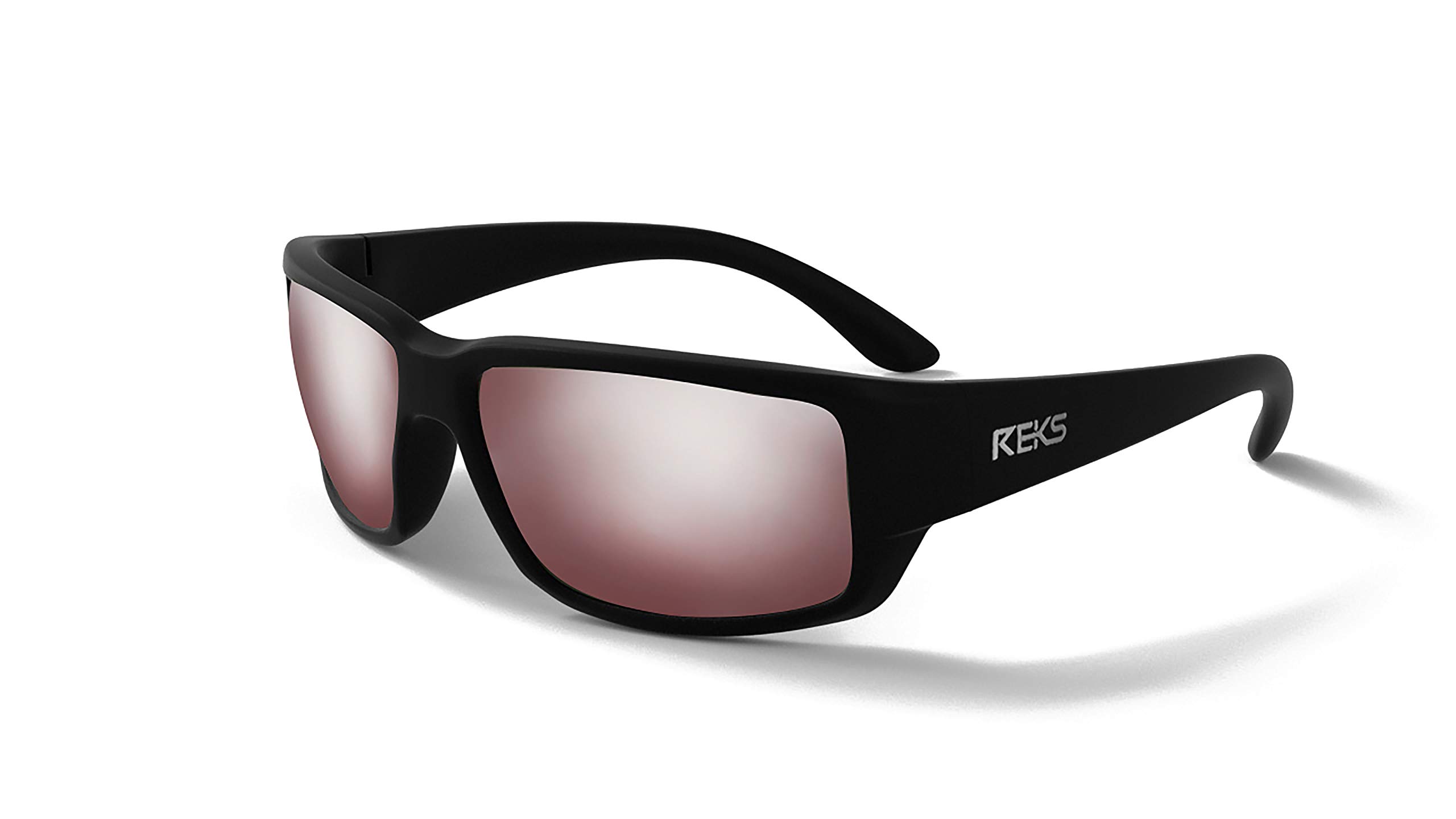
This pair is built for one job and nails it. The Trivex lens carries a rose amber tint under a multi-layer silver mirror, tuned with a light transmission of 30% for medium light and partly cloudy days. That lighter tint lets more light reach your eye, which sharpens the small details — the roll of a putt, a ball in flight. Color-boosting technology lifts contrast so greens and fairway lines read more distinctly than they do through an ordinary dark lens.
Trivex is the lightweight, high-impact material many sport lenses are made from, and it shows here in the clarity off the tee. Buyers report the ball stays visible at longer ranges than with other sunglasses, the kind of distance detail you notice on a long par five. Anti-reflective and oleophobic coatings round it out — the first reduces glare from light behind the lens, the second helps keep the surface free of smudges and dust.
The frame is the honest weak spot. Several owners find the arms a touch short and the shape less flattering than the lens deserves, so if you prize looks as much as optics, weigh that. The lens itself earns its place — one owner found they could even putt with them on.
Where it shines: A rose amber tint at 30% transmission is exactly the range you want when the sky is half cloud and the course is half shadow.
Frame caveat: Short arms and an ungainly shape turn up in owner feedback, so treat the frame, not the lens, as the compromise.
Reach for this if: You play golf or any sport where seeing the ball clearly beats looking fashionable.
Look elsewhere if: You need a frame that flatters — the optics here outclass the styling.
3. REKS Seafarer Sunglasses – Unbreakable frame
The pair you can sit on, stuff in a bag, and still pull out unmarked.
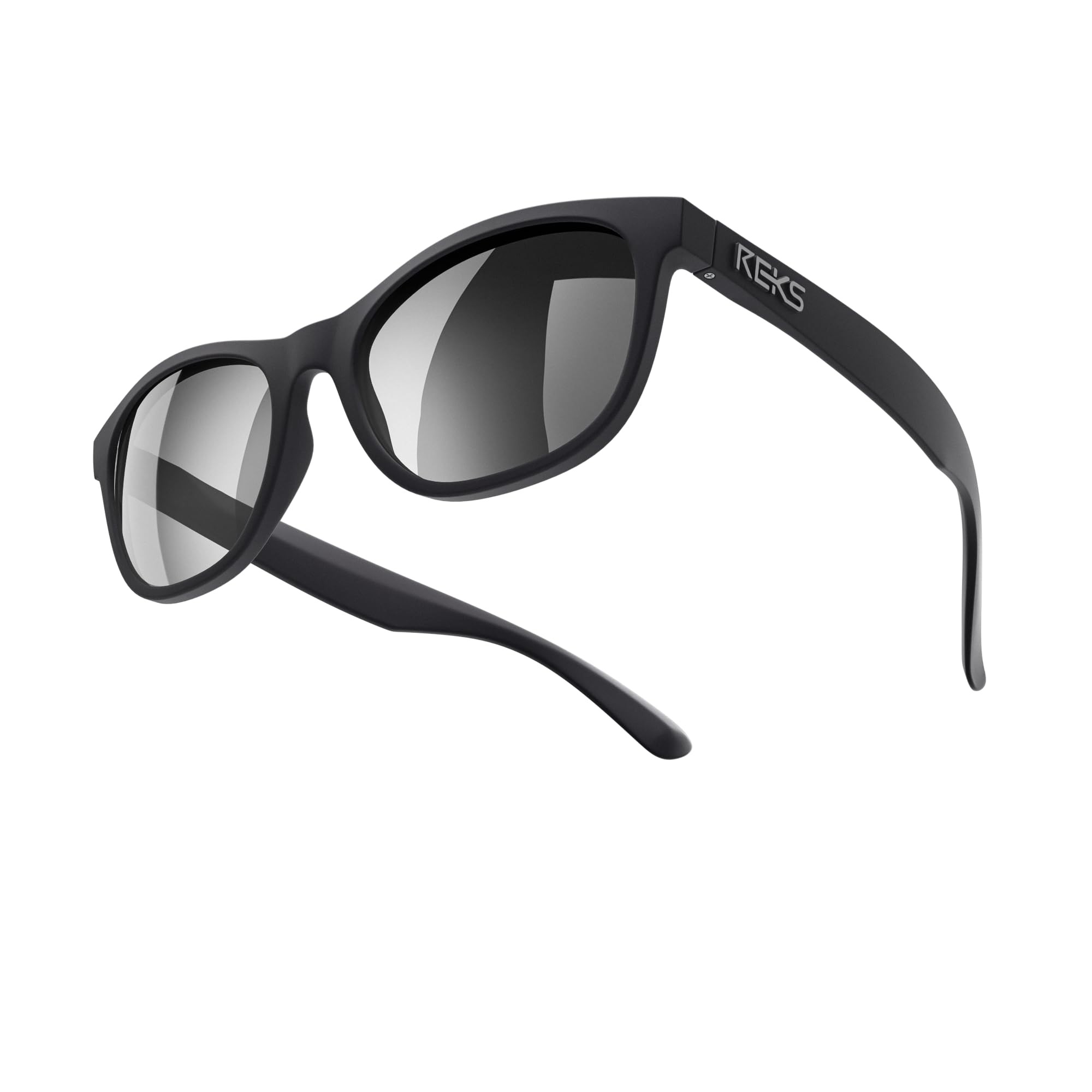
Owners mention these are the best sunglasses they have owned in twenty years, stress-tested for a month and dropped in ways that would have wrecked ordinary glasses. That reputation comes from the frame. It is forged from a memory polymer that flexes in any direction and returns to its original shape, so the Retro Square shape survives being sat on or tossed in a backpack.
The lens is the LUMOLUX polarized design in ultralight polycarbonate. It cuts 99% of glare from snow, water, roads, and sand, and the maker rates it ten times more impact resistant than glass or plastic. Anti-reflective and anti-scratch coatings come standard, and every pair meets ANSI Z80.3 safety standards. That combination makes this the pair to hand a teenager or carry on a boat, where a hard knock is a matter of when, not if.
The trade-off runs the other way from the glass pairs above. A polycarbonate lens like this one is tougher on impact but scratches sooner than a Corning glass lens, so you accept a shorter clear life in exchange for a frame that simply will not break. Durability and quality are the two things owners praise most, and the fit stays snug and bendable across head sizes.
The one to pack: Skiers, boaters, golfers, and anyone whose glasses live in a bag or a glovebox.
The honest catch: Polycarbonate scratches before glass does, so a sleeve or case earns its keep.
4. Polarized SafetyGlassesZ87 UV400 WorkSunglasses
Work-rated protection that doubles as a pair you would actually wear off the clock.
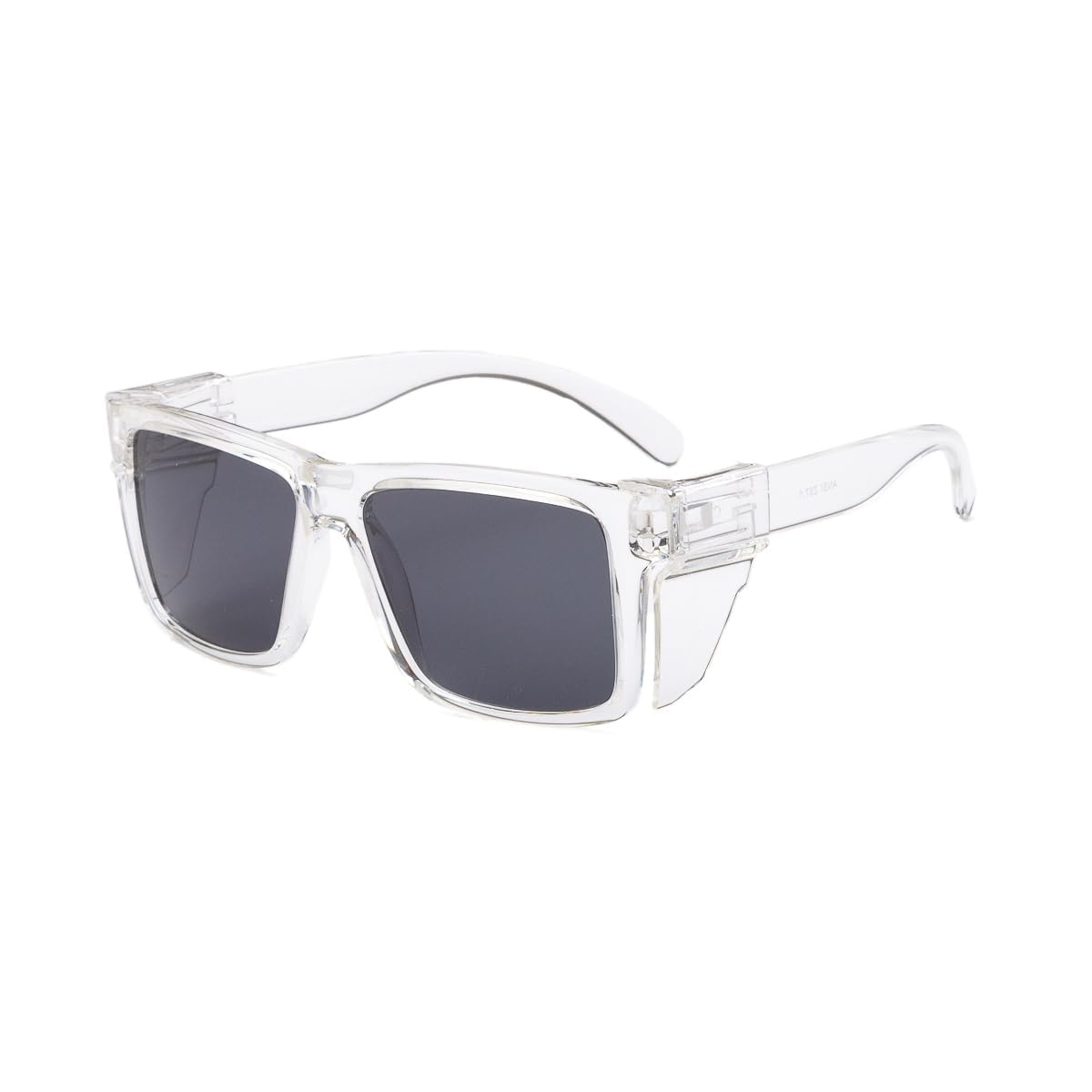
For anyone swinging a hammer or running a saw, the Z87 rating is the whole point — it means the lens and frame are built to take flying debris. This pair pairs that protection with a smoked lens and a UV400 rating, so it blocks the full UV range while cutting brightness. The lens comes in six mirror tints, and a photochromic version is also offered for guys who move between indoor and outdoor work.
At 1.41 ounces, this is a genuinely light pair for a work-rated frame, which means it does not leave dents on your nose by lunch. Wearers describe the transition from bright sun to indoors as a natural adjustment — no squinting while your eyes catch up. Owners call them better than expected and easy to keep clean, with the lens holding up rather than scratching at the first wipe.
There is one recurring gripe worth knowing before you buy. Customers note the hinges stiffen up after a few wears, so treat the arms gently rather than snapping them open. If you want a work pair that stays comfortable all shift and looks normal enough to leave on, this is the pick.
Why workers like it: A 1.41-ounce frame with a Z87 rating and a UV400 lens gives you protection without the bulky goggle feel.
Treat it kindly: The hinges tighten over time, so open the arms with a light hand and this pair serves you for seasons.
Best suited to: Construction, carpentry, cycling, and DIY work where the lens has to take a hit.
Not the one for: A pure dress-up pair — the styling is work-first, not fashion-first.
5. X Power ANSI Z87+ Safety Sunglasses

Extra-wide coverage that goes from the workshop straight to the weekend.
The defining feature here is size. This is a deliberately oversized, shatterproof frame rated to ANSI Z87+, which means both the frame and the lens are built to survive impact. A wider lens area shields your eyes from more angles, cutting the odds that dust, debris, or splashes sneak in around the edges. There is no metal in the design, so it is light on the face and will not rust or conduct heat in the sun. A UV400 rating covers the full UV range, and the clear-lens version carries the same UV protection.
This is a pair built to cover two lives — workbench and beach — without changing glasses in between. It is lighter than the bulk would suggest, and the wide shape suits bigger faces that smaller frames leave pinched. Owners like how they look and consider them solid value. Bear in mind that the fit and durability feedback both swing mixed: some find them ideal, others find them too large or reporting a break within a couple of months. It is a matter of matching the size to your head and treating the frame as a work tool.
Wide coverage, honest fit note: The oversized lens boosts protection from every angle, but if you have a smaller face, this is the pick most likely to feel loose.
Pick this if: You have a larger face and want one pair to cover both shop work and outdoor weekends.
Steer clear if: You have a narrow face or want a compact frame — the extra-large fit runs wide.
6. Stoggles Rectangle Z87.1 Safety Glasses

The safety pair that looks like glasses but protects like goggles.
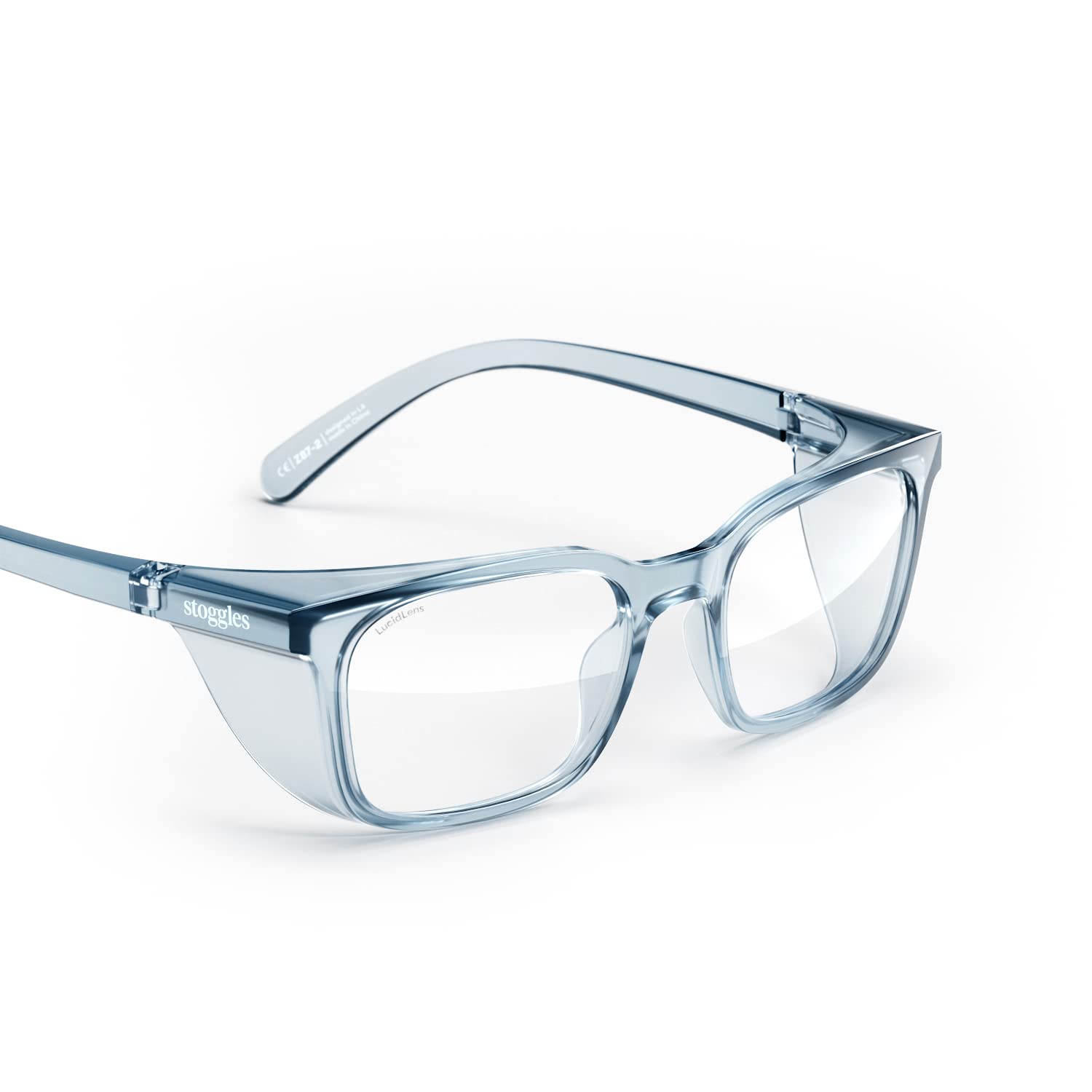
This is for the people who wear eye protection all day — clinic staff, lab techs, woodworkers — and want something that does not look like a pair of goggles. The lens is Z87.1 certified polycarbonate, so it is scratch and shatter proof, and it carries both blue-light and 100% UV blocking. The big draw is the dip anti-fog coating, which keeps your vision clear while you breathe under a mask. With proper care the coating lasts up to six months, so clean it only as directed and skip sprays and detergents.
Shape matters with this pair. The Rectangle frame is cut to balance oval, round, and heart-shaped faces, and it comes in a Low Bridge Fit measured at a 52mm lens, 21mm bridge, 145mm temple, and 142mm across. Top and side shields block splashes and debris, and the design is Rx friendly for anyone who wears a prescription. Owners call them stylish, comfortable, and non-fogging even with a mask on.
The honest weak spot is durability of the coating. The anti-fog finish is the most-cited concern, with reports of the surface flaking or delaminating, and a pair is described as having cracked on a drop. Treated as a maintenance item and stored in the pouch, these deliver day-long clarity — which is why they hold a devoted following in clinics and labs.
what separates it
- Z87.1 certified polycarbonate lens is both scratch and shatter proof.
- Dip anti-fog coating keeps vision clear under a mask, with up to six months of life if cared for.
- Blocks blue light and 100% of UV, and comes in a measured Low Bridge Fit and Rx-friendly design.
What to Watch
- The anti-fog coating is the most-cited weak point — some reports of flaking and delamination.
- A drop can crack the lens, so store it in the pouch every time.
- Clean only with the supplied microfiber, warm water, and no sprays or detergents.
Made for: Healthcare, lab, and workshop users who want all-day clarity and side protection in a wearable shape.
Handle with care if: You want zero maintenance — the anti-fog coating needs gentle cleaning to reach its stated lifespan.
7. B.N.U.S Scratch-Resistant Polarized Sunglasses
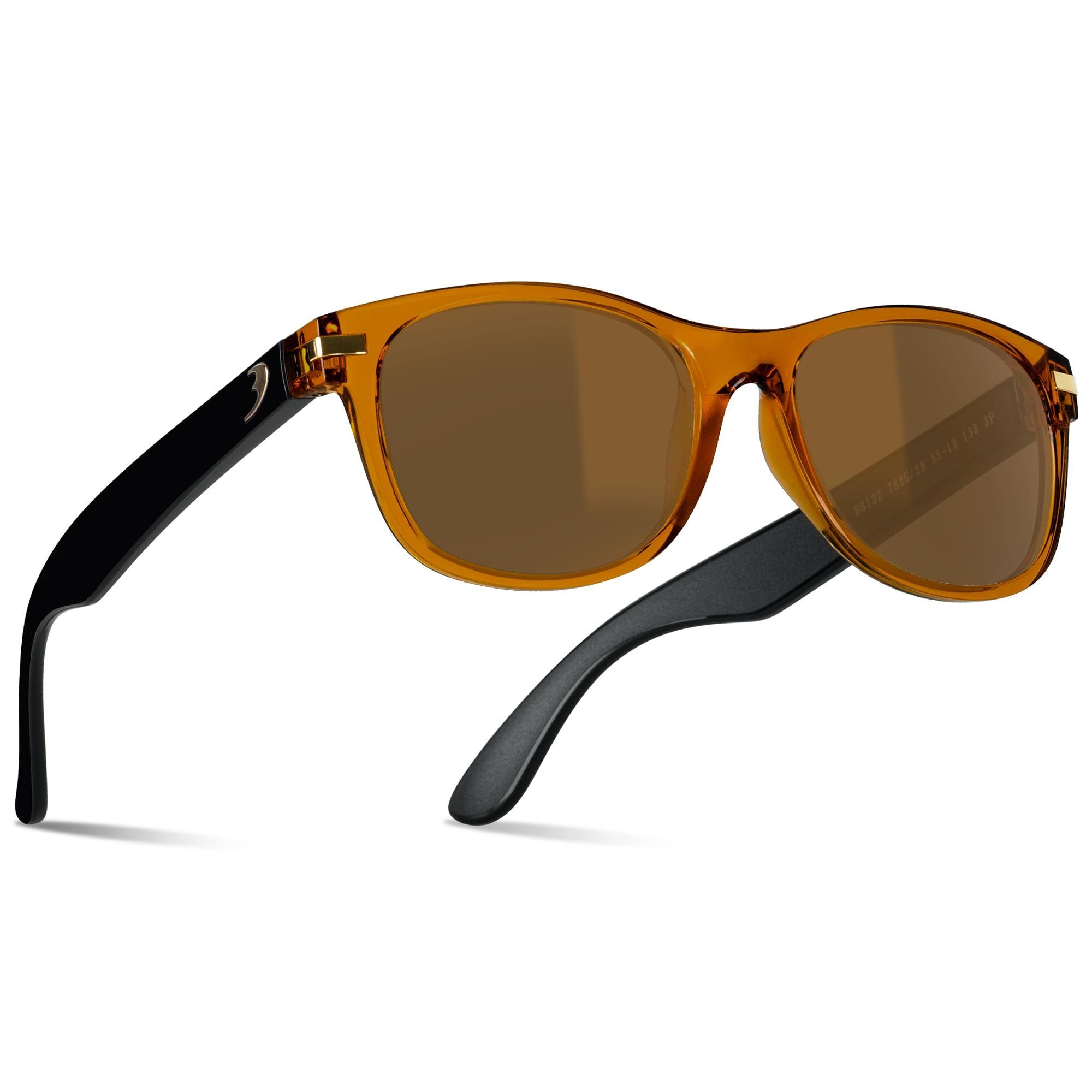
Premium Corning glass optics with the glare cut, and a frame that keeps the price honest.
This is the glass pair for drivers and anyone who fights glare off pavement, water, or snow. The polarized lens is made from premium Corning glass, and it pairs that optical clarity with a scratch-resistant and anti-UV coating. Where the non-polarized Corning pair earlier keeps colors natural, this one adds a polarization filter to knock down reflective glare — the shimmer off wet roads that tires you out on a long drive. The amber tint boosts contrast so detail stands out, especially in low, flat light.
The value story here is glass optics without the designer markup. Owners compare the clarity to Oakley and the feel to Ray-Ban, and the spring-loaded hinges snap firmly with no wobble. The lens is Corning glass, the same material that makes it resistant to scratching over the long haul.
Two things to know before you commit. The frame is sized for smaller faces — women, teens, and slimmer men — so if you take a wide fit, it will feel narrow. And the frame itself is the one part owners describe as feeling cheaper than the glass inside it, which is the trade-off on a glass-lens pair at this level. The lens, not the frame, is where the quality lives.
The clarity you pay for: Corning glass plus polarization and an amber tint gives drivers crisp, glare-free vision that plastic lenses struggle to match.
The frame caveat: The arms and fit lean narrow, so bigger heads should look to the oversized picks instead.
For the driver: Smaller-faced men, women, and teens who want real glass optics and glare reduction on the road.
skip it if: You wear a wide fit — the frame runs narrow and will not sit right.
Know the Specs
Lens Material
The three materials on this list behave very differently. Glass, like the Corning lenses here, gives the clearest, least-distorted view and resists scratching best, but it is the heaviest. Polycarbonate is the lightest and toughest on impact — the reason it carries ANSI Z87.1 and Z87+ safety ratings — but it scratches sooner. Trivex sits in the middle: light like polycarbonate, with the sharp optics sports shooters want.
UV400 and 100% UVA/UVB
UV400 means a lens blocks light wavelengths up to 400 nanometers, which covers the full UVA and UVB range. A 100% UVA/UVB rating says the same thing in plain terms. This protection is separate from polarization — a lens can be either polarized or non-polarized and still block UV fully. That is why a non-polarized glass pair still guards your eyes just as well as a mirrored polarized one.
Polarized vs Non-Polarized
A polarized lens has a filter that removes glare bouncing off water, snow, and roads, which is a real gain for driving and fishing. The cost is that some LCD screens and car dashboards go dark or rainbow-colored when viewed through them. Non-polarized lenses keep colors natural and screens crisp, which is why they suit screen-heavy commuters.
Safety Ratings and Anti-Fog Coatings
ANSI Z87.1 and Z87+ are the marks that say a lens and frame passed impact testing for eye protection at work. If you wear glasses under a mask all day, an anti-fog coating is what keeps your view clear — but it is a coating, not permanent. The dip coating is rated to last up to six months with proper care, so clean it only as directed.
Common Questions
Is glass or polycarbonate better for sunglasses lenses?
Do non-polarized lenses block UV rays?
Will polarized lenses make my car dashboard or phone screen look dark?
What does the ANSI Z87.1 or Z87+ rating mean on safety glasses?
How long does an anti-fog coating last on safety glasses?
Are glass lenses heavier than plastic ones?
What does a light transmission rating tell me about a lens?
Can I wear safety glasses over my prescription glasses?
Which lens material resists scratches best?
Does a bigger lens give better eye protection?
The Bottom Line
For most people, the glasses lens material winner is the B.N.U.S Corning Glass Lens because its non-polarized Corning glass keeps colors and screens true while resisting scratches better than plastic. If you want glass optics with a glare-cutting polarized filter for driving, the B.N.U.S Scratch-Resistant Polarized is the one to reach for. And if the situation calls for impact protection over optical purity, the REKS Seafarer with its unbreakable frame is ready for whatever you throw it into.
How we choose
We do not accept paid placement. Every pick is matched to a real buyer and a real use-case; we do not hands-on test units.
Sources
Specifications: manufacturer listings and product documentation. Review insights: verified customer reviews, as of October 2026. Pricing: not shown on this page (it changes often); check the current price via the retailer link.
As an Amazon Associate, Aappliancez earns from qualifying purchases. This does not affect which products we feature.