Disclosure: Some links in this post are affiliate links. As an Amazon Associate I earn from qualifying purchases, at no extra cost to you. Learn more
Specs are compiled from manufacturer listings and verified buyer reviews and can change over time — please confirm the key details on the product page before buying.
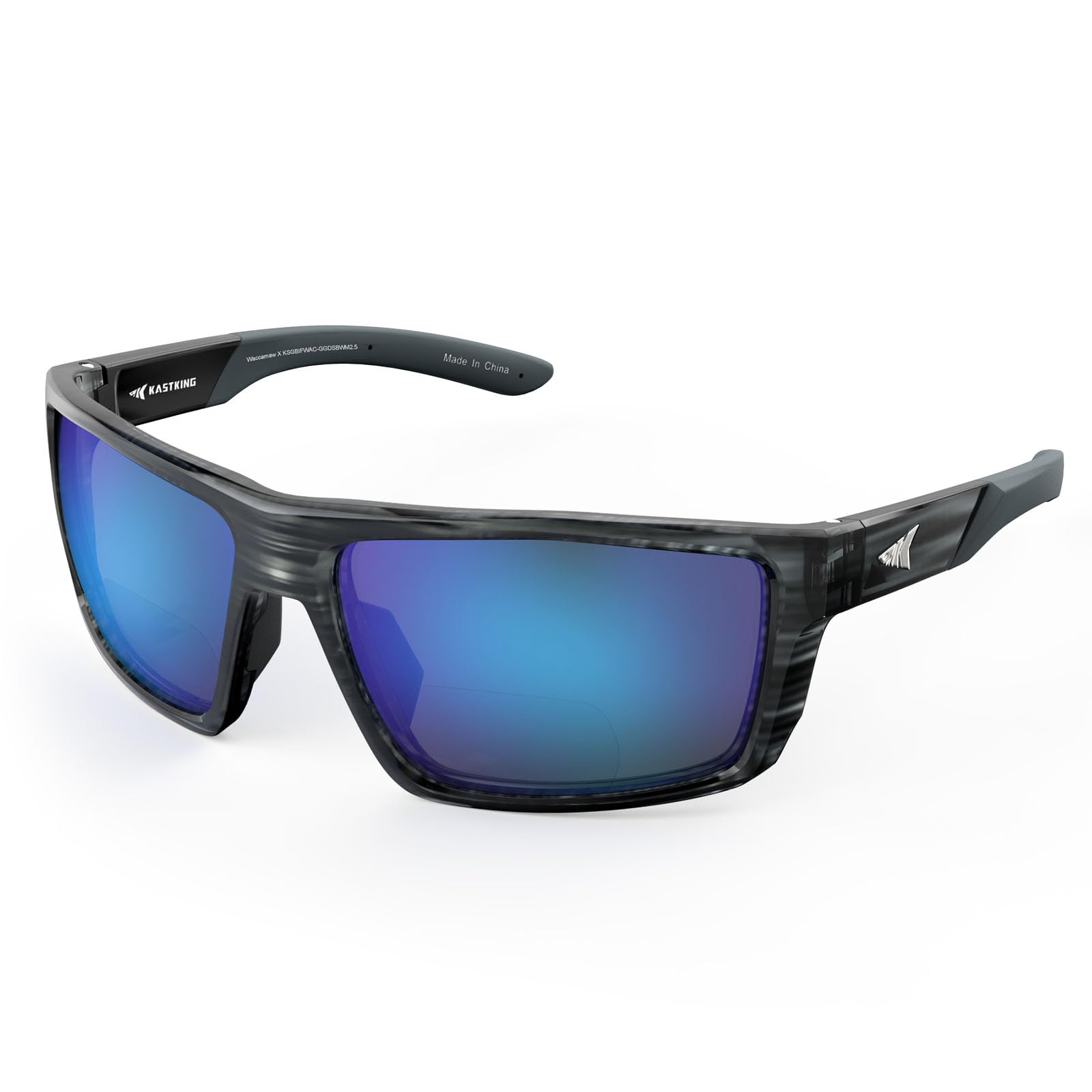
If you keep turning your whole head to see what is beside you, the problem is usually the frame, not your eyes. Glasses for peripheral vision work by wrapping the lens around the side of your face and holding it close to your skin. That way the wide view stays clear instead of falling into a gap beside the lens. The picks below are the ones that get that wrap right without slipping, fogging, or blocking the reader zone you actually need. One budget-to-mid pick, the KastKing Waccamaw, is the crowd favorite at 4.5 stars across 180+ ratings, so it sits at the top.
This guide is built by comparing the manufacturers’ published specifications and the patterns across verified customer reviews, so you get each pick’s real strengths and trade-offs instead of marketing spin.
Some of these glasses wrap a lens around your face to widen the view, while others shut the edges down on purpose to sharpen focus. Knowing which one your sport or your day actually needs is the whole decision. That single question is what this breakdown of glasses for peripheral vision answers.
Top Picks

How To Choose The Best Glasses for Peripheral Vision
Two buyers can ask for the same thing and need opposite glasses. One wants a wider, clearer side view for fishing, cycling, or driving. The other wants the sides blacked out so their eyes stop chasing movement and lock onto one target instead. Both are sold as vision glasses, and both are on this list, so you have to decide which job you are buying for before you read further.
Wrap coverage is the real peripheral spec
A wrap frame curves the lens toward your temple so the glass sits beside your eye, not just in front of it. That side coverage is what catches the vehicle in the next lane or the player coming at your shoulder. A flat frame can be wide and still leave a gap at the corner of your eye. So look at how far the lens curves back, not just how big it looks head-on.
Polarized versus plain UV filtering
Polarization is a filter that cuts the bounce of light off flat surfaces like water, wet asphalt, and car hoods. That is why polarized lenses are the norm for fishing and driving. UV protection is a separate job: it refers to how much of the sun’s ultraviolet light the lens blocks. A pair can block ultraviolet light fully and still not be polarized at all, so check both if glare is your problem.
Reader power and where the magnifier sits
If you need reading help, look for a bifocal design with a stated magnification. That number is the reading power, so a x2.0 lens magnifies close-up text to about twice normal size. Where that magnifier sits matters as much as its strength. Put low, it lets you glance down at a knot or a phone without dropping your distance view. Sit it high and you lose the distance lane you still need for traffic and water.
Grip, weight, and the frame material
A pair that slides down means a gap of bare face beside your eye, so the side coverage you paid for drains away the moment you start moving. Rubberized temples and silicone nose pieces are the two features that keep a frame planted. Frame material decides how much a pair weighs and whether it flexes instead of cracking. Lightweight flexible materials like Grilamid and TR90 are built for that job.
When blocking peripheral vision is the point
Some training glasses do the reverse of this list’s headline: they deliberately black out your side view. Strobe lenses flash between clear and dark so your eyes get a tougher signal to work with. Goggles with blocked sides force the eye onto one target at a time. These are practice tools for reaction and focus, not everyday vision glasses, and they belong in a separate lane.
Side-by-Side Comparison
| Model | Best For | Lens Protection | Frame Material | Frame Coverage | Amazon |
|---|---|---|---|---|---|
| KastKing Waccamaw Polarized Bifocal★ Best Overall | Fishing, biking and driving with close-up reading help | Polarized, blocks 100% UVA and UVB | Grilamid | Full Frame | Amazon |
| Applied Vision Sports Vision Training Strobe GlassesTop Performer | Reaction and hand-eye training in any sport | No UV rating listed | Not listed in data | Not listed in data | Amazon |
| Nllosa Real-Time Translation Smart Glasses | Travel and everyday use with live translation | No UV rating listed | Not listed in data | Not listed in data | Amazon |
| Knockaround Sport Sunglasses | Everyday sun coverage for a wide range of faces | UV400 | Not listed in data | Not listed in data | Amazon |
| TIJN Sports Sunglasses UV400 Wraparound | Cycling and running with adjustable bridge height | UV protection coating | TR90 | Full Frame | Amazon |
| Swivel Vision Sports Training Goggles | Ball-tracking practice and blocking distractions | No UV rating listed | Not listed in data | Not listed in data | Amazon |
| Rollens Post Mydriatic Roll Up Specs | Clinics and light-sensitive eyes after dilation | 100% UV protection | Not listed in data | Wrap-around | Amazon |
Detailed Reviews
1. KastKing Waccamaw Polarized Bifocal Sunglasses
Our pick — 4.5★ from 150+ verified ratings; the strongest balance of quality and price.
A full wrap you can fish, bike, and drive in without ever reaching for a second pair of readers.
This is the pair to buy if you need sunglasses that also let you read something close up. The Waccamaw is built on a full wrap frame, which means the lens curves back toward your temple instead of stopping flat in front of your face. That curve is what keeps the side of the road visible when you are pedaling, and what stops sun and wind leaking in at the corner of your eye. It comes in x1.5, x2.0, and x2.5 reading powers, so you pick the magnification that matches how close you actually look.
Two details do most of the daily work here. The lenses are polarized, which is the filter that cuts glare bouncing off water and wet roads, and the 1.8mm polycarbonate lens build resists impact better than a TAC lens of the same job. Polycarbonate is also the reason the optics stay clear for close detail work like threading a line or tying a knot. The Grilamid frame is the lightweight, flexible material you find in military and medical gear, and it holds up to heat and UV rather than going brittle in a hot car.
You spend less time wiping your lenses and more time looking through them, thanks to the oleophobic coating (a finish that repels oil and water). Saltwater spray, sunscreen, and fingerprints wipe off instead of smearing. Silicone pads at the nose and temples keep the frame from sliding when you break a sweat — and a wrap frame fails the second it slides down your nose and opens that side gap. The two lens colors do different jobs. The smoke-blue mirror suits bright sun and shows color most naturally, while the brown option lifts contrast and depth on cloudy days. Every pair blocks 100% of UVA and UVB rays (the two types of sun ultraviolet light) and comes with a hard case and a microfiber pouch.
Where This Wrap Shines
- Full wrap frame curves the lens toward your temple, so the side view stays covered instead of dropping into a gap.
- Polarized 1.8mm polycarbonate lenses cut glare off water and resist impact better than a TAC lens.
- Reading inserts sit low and stay invisible, so distance vision is not distorted.
- Oleophobic coating repels saltwater, oil, and sunscreen so the glass wipes clean.
What To Weigh First
- The smoke-blue mirror is very dark — it is a bright-day lens, not something to wear indoors.
- Reading power is fixed at purchase, so choose between x1.5, x2.0 or x2.5 with care.
The verdict: Buy this if you want one pair that widens your view on the water or on a bike and still lets you read a knot, a map, or a phone without swapping glasses.
Where it gives ground: It is a bright-light lens first, so anyone who needs a clear lens indoors should look at a different pick.
2. Applied Vision Sports Vision Training Strobe Glasses
The practice tool that makes a fast ball look slower by taking your vision away in flashes.
This is not a sunglasses pick, and it should not be judged like one. Strobe glasses run on Micro Crystal Lens Technology, which flips the lenses between clear and dark many times per second. That flashing removes pieces of what you are watching, so your eyes and brain have to work harder to fill in the gaps. Do that in practice often enough and game-speed action starts to feel like it is moving slower. The whole point is training, not blocking the sun, and the data backs the training use with functionality the most-discussed thing about it.
Buyers report using them across baseball, pickleball, and goalkeeper training. A parent bought a pair for a player who struggled catching fly balls hit behind him and charging grounders, and reports both problems eased almost immediately. A coach working with pro athletes uses the adjustable speed modes, changing settings on a phone while the athlete wears them, for reaction, hand-eye coordination, and body awareness work. Pickleball players describe the ball appearing to slow in flight, with spin readable and court gaps easier to see. Owners also use them for balance work, where the flashing creates a middle ground between eyes-open and eyes-closed. The build earns praise as sturdy enough to hold up on a balance board.
The honest catch is the app, and it is worth saying plainly because it shapes how you will actually use these. Owners who dug in found no device-connection guidance, no explanation of the modes, no onboarding, no progress tracking, no battery indicator, and no presets. On top of that, the visor is not built for wearing over another pair of glasses — an adjustable elastic can press awkwardly on a frame, and contacts are the smoother route. Comfort complaints show up in the mix, and the straps take some fiddling to sit right. Durability draws split feedback rather than a clear verdict.
What owners mention: Applied Vision glasses improved pickleball vision – ball appears slower, spin readable in flight, enhanced peripheral vision aids decision-making and seeing court gaps.
Reach for these if you want a rechargeable reaction trainer you can tune mid-drill from your phone, and you play a sport where reading cues early changes the play.
Think twice if you wear glasses during play or expect a finished companion app — you will be running these off the hardware and gritting through the straps.
3. Real-Time Translation in 139 Languages
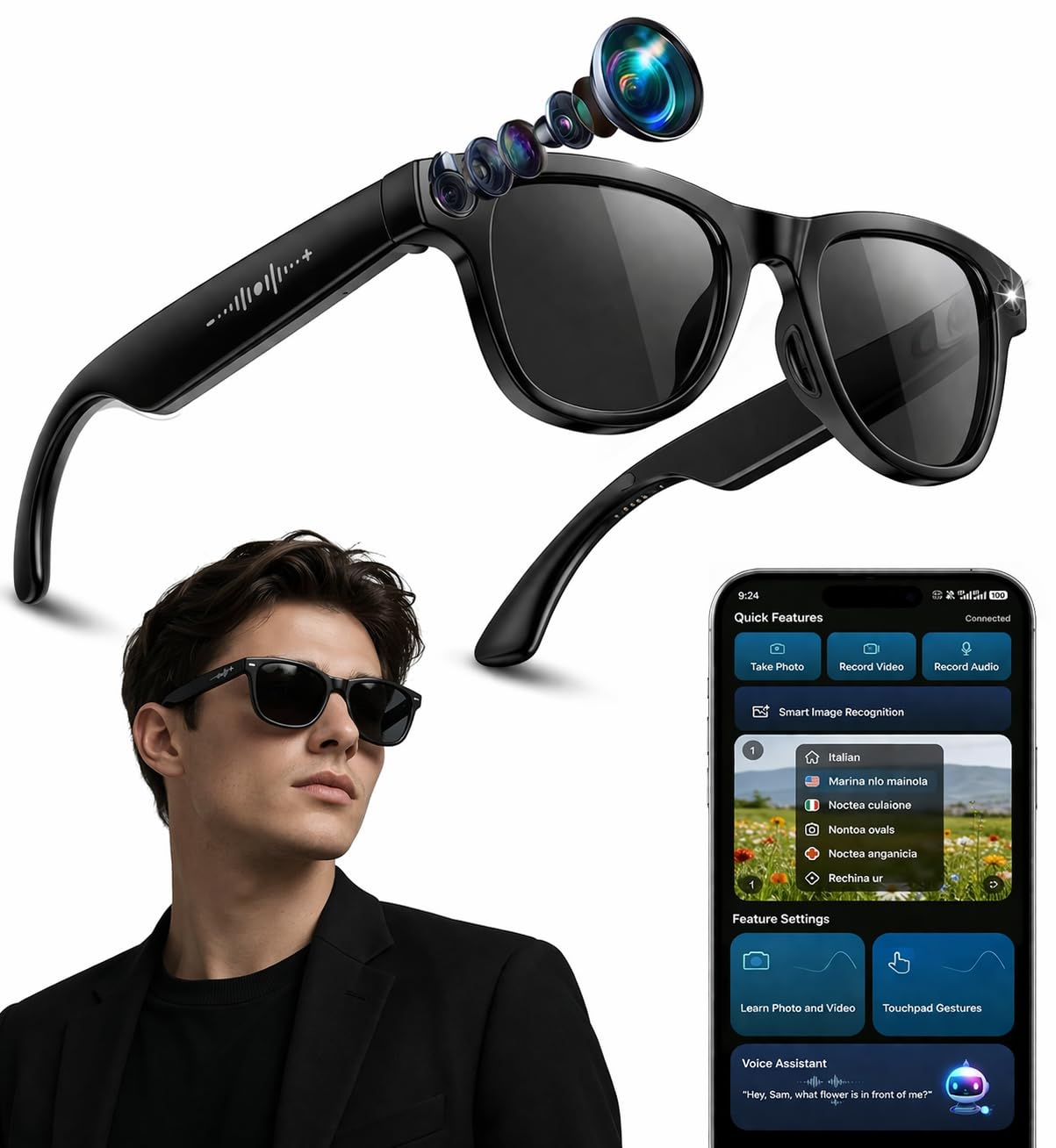
A camera-and-translation pair of AI glasses — a completely different job from sun coverage.
You are looking at a voice-activated pair with a built-in AI assistant, a camera, and real-time translation across 139 languages. It pairs over Bluetooth and Wi-Fi with iOS and Android phones, so the language work routes through the handset in your pocket. A 290 milliamp-hour lithium polymer battery charges in about 1.5 hours, which sets your session length before you need to plug back in. It ships with a cleaning cloth, a charging cable, and a user manual. Where the KastKing wraps glass around your face, this pair is about what the lenses help you capture and understand, and the overlap with peripheral vision is the camera’s field of view rather than a wrap frame.
The strongest owners lean on the storage and file handling. The glasses carry built-in storage with no memory card required, which means one less thing to lose on a trip. You can shoot photos and video, record voice memos, and pull files off wirelessly to a phone, tablet, or computer. One buyer had prescription and transition lenses cut into the frame and still called the look pleasing, which tells you the housing takes custom lenses. The sound side divides people cleanly — one owner rated the video quality good while finding the audio weak, and another wanted longer recording time per press of the button while noting hours of recording are possible overall.
The part every buyer should hear before ordering is the software. A reviewer who spent a year with these glasses pulled no punches about the companion app a competing pair shares, saying to avoid any AI glasses tied to that app because it is very poor. Another said the pair was fine for average photos and video and for music, then sent them back. One called the setup hard to figure out because the pictures were not showing up, and another described a unit that would not charge or connect and flashed randomly instead. Directional feedback, yes — but it is the pattern on this pick, and it lands on the same weak point each time: the app, not the glass.
The backdrop: This Nllosa pair sits at 2.3 stars from a small early group, so the mixed ratings reflect a product still finding its footing rather than a finished platform.
Who this suits: A patient early adopter who wants translation and a camera on their face and is willing to tinker through setup to get there.
Who should hold off: Anyone who needs a dependable app and clean audio on day one — that is exactly where the feedback turns sour.
4. Knockaround Sport Sunglasses
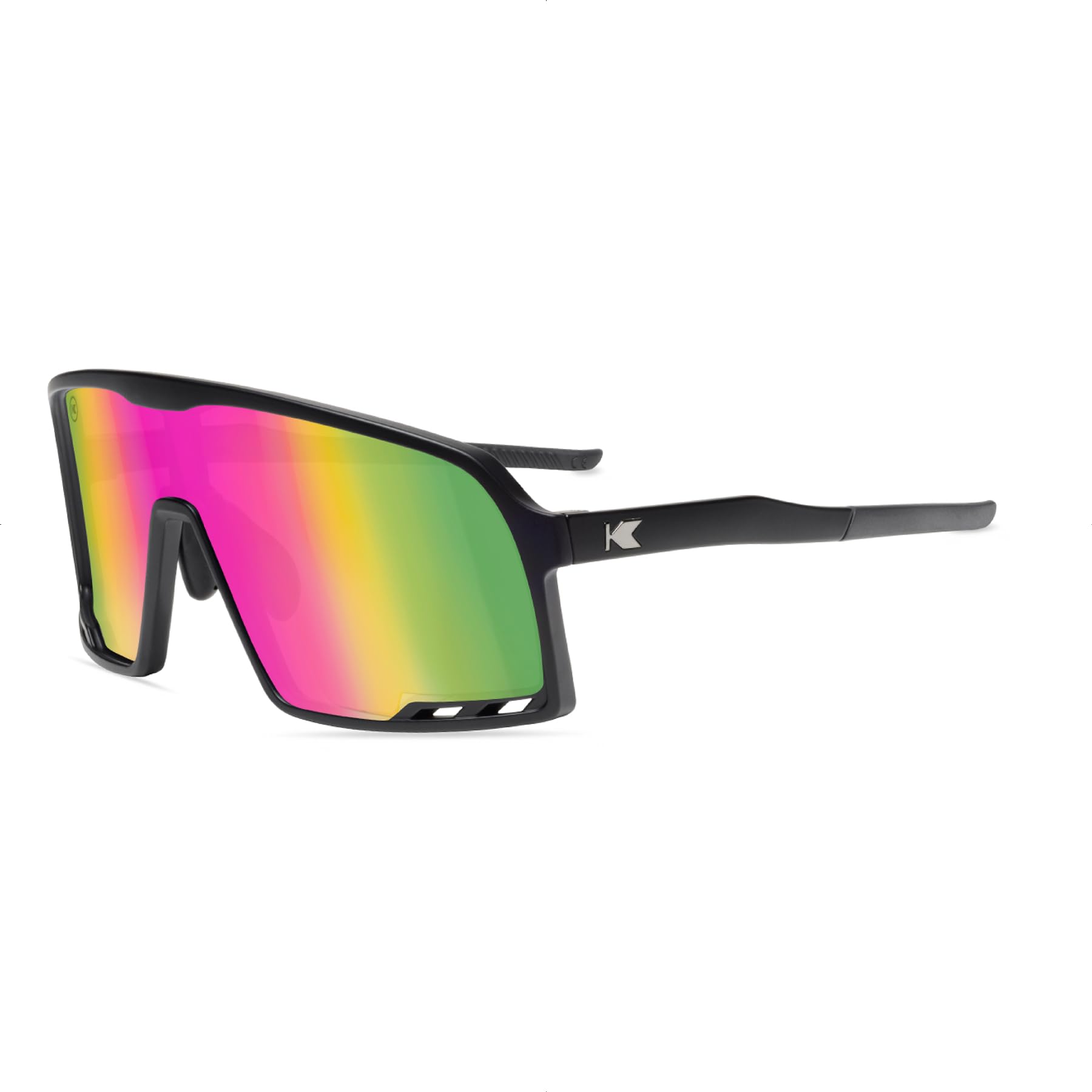
The unisex pair you grab for daily sun protection, where looks carry the case.
The Knockaround Sport is a unisex everyday sunglass with UV400 protection, which is the rating that means the lens filters the sun’s ultraviolet light across the full UV spectrum. It comes in a single broad fit from one date of first availability of May 15, 2023, and it is aimed at a wide spread of faces rather than one activity. This is not the wrap frame that widens your side view the way the Waccamaw does. Its strength is a quality build and a look people want to wear, which is why the pair earns its place as an easy daily grab.
What wins people over here is the build, and it is the loudest signal in the feedback. Buyers repeatedly describe the construction as great quality, and the styling draws its own steady praise. As an everyday piece of sun coverage, it does the simple job well — you put it on going out the door and forget about it, which is exactly what a casual sunglass should do. If you want a frame that gets out of the way and looks right doing it, this is the lane.
Plan around the fit, because the feedback is mixed. Some customers note it sits well, while others report a poor fit on their face. That is a shapes-and-sizes story, not a defect story, but it means you should try this one before committing if one-size frames have burned you before. The coverage is also in line with a standard sport sunglass rather than a full wrap, so if a wide, glued-down peripheral view is your actual goal, the Waccamaw is the stronger match and this one is the comfortable daily alternative.
Where it lands: The Knockaround holds a solid 4.4-star name among a steady crowd of buyers, with the unisex fit being the single thing people either love or bounce off of.
Best for: Anyone shopping a good-looking, UV400 everyday sunglass and willing to try the fit before leaning on it for sport.
Look elsewhere if: You need a true full wrap for side coverage under bright sun, because the frame here is a standard sport shape.
5. TIJN Sports Sunglasses UV400 Wraparound Vanta
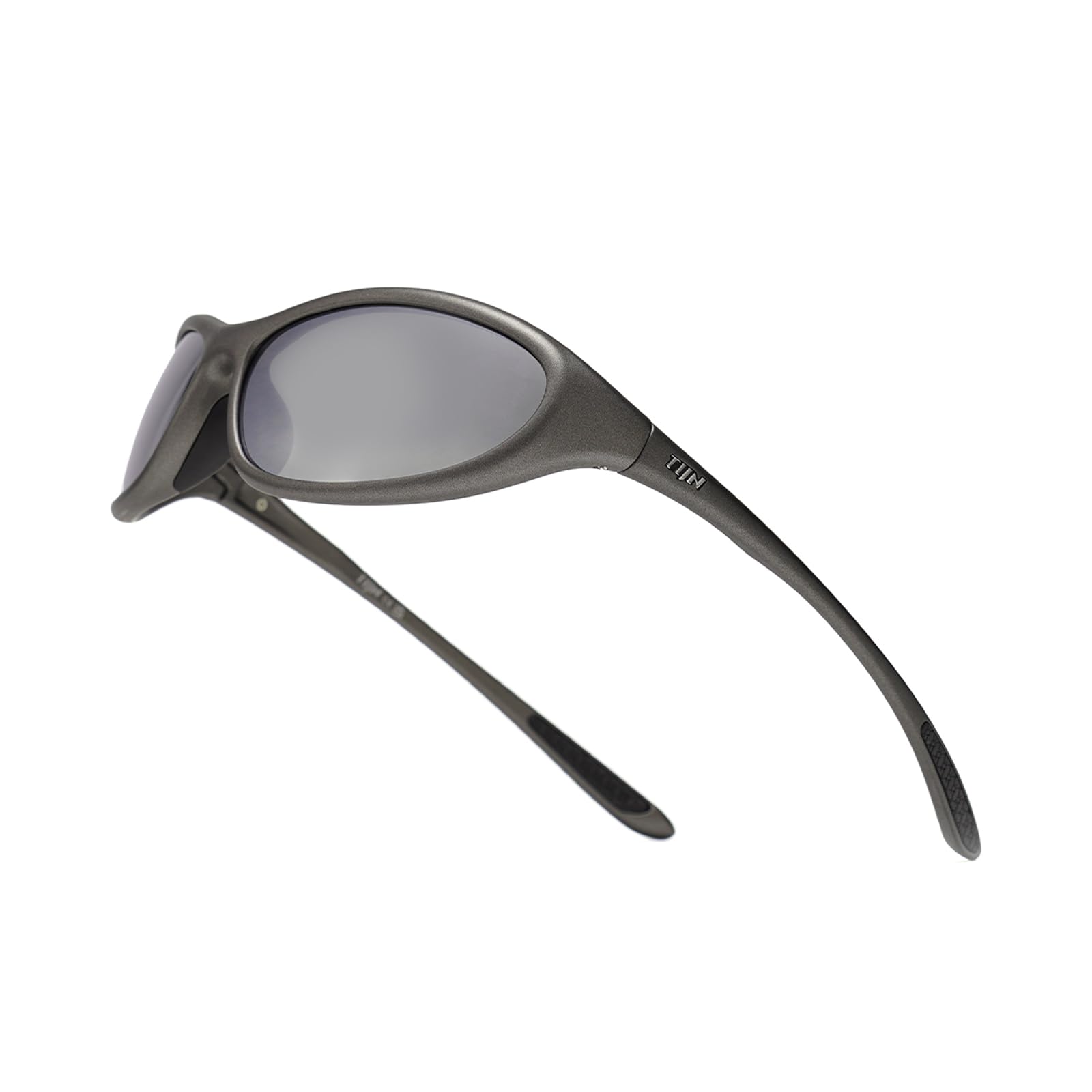
The wraparound that adjusts at the bridge so the lens sits where your face needs it.
You get a wrap frame that actually sits right, because the TIJN attacks the fit problem with two removable nose pads — one at 9.77 mm and one at 12 mm. Swapping the pad changes the bridge height, which shifts where the lens sits on your face. Move the glass higher or lower and the curve lines up with your eye instead of leaving a gap or riding the brow. The frame itself is a full wrap with an oval shape and mirrored nylon lenses under a UV protection coating (a layer that filters ultraviolet light), and it comes in Medium and Large sizes, so you have a real fit choice rather than a single guess.
TR90 does the heavy lifting on the frame. That material keeps the weight down and lets the arms flex, and rubberized temple tips are the second half of the grip story. Together they cut the slipping that turns a wraparound into a nuisance during running, cycling, and hiking. The curved design is what delivers the broader side coverage from sun and wind this pick is built around. It is a Full Frame design, and the styling is meant to work off the bike too — the same pair covers driving, travel, and daily wear, in several colorways.
Here is the practical note before you buy. This is a Standard Fit frame, and the nose pads are the only adjustment you get, so the size itself is set by which of the two you order. The bridge width is 17 millimeters and the arm length is 12.7 centimeters — check those against a pair you already own, because no pad swap will fix a frame whose width is simply wrong for your face. Do that homework and the two-pad system earns its keep. Skip it and you may find yourself sending a pair back that was the right design in the wrong size.
The spec that matters: Two nose pads at 9.77 mm and 12 mm give you a bridge you can tune, which is more fit control than most single-size wraps in this group offer.
Pick it if you want a lightweight wraparound with grip on the temples and a bridge you can actually adjust to your own face.
skip it if you need a fixed fit and no fuss, because the right size and pad combo takes a little thought up front.
6. Sports Training Goggles Ages 5 & Up

Goggles built to shut down your side view on purpose and force your eyes to one target.
This pair flips the whole premise of this list. Instead of widening your peripheral view, these Swivel Vision goggles block it, so your eyes stop chasing movement in the corners and lock onto the ball. That is the job: train focused tracking in warm-ups, tee work, and pre-game reps. It is a lightweight design with an adjustable strap, built for ages 5 and up, and it comes in a single model from a product line that dates back to August 7, 2013. For a young player learning to see the ball out of the pitcher’s hand, that is the whole point.
What wins people over is how well the focus training lands. A parent who started as a skeptic said the goggles forced their daughter to track the ball from the pitcher’s hand to the plate and improved her hitting, and they used them through warm-ups, tee work, pre-game, and catcher practice. A goalkeeper coach reported a player improved focus while tracking the ball in training. A family whose daughter had struggled to concentrate at the plate for two years used them in practice — never in games — and reported the first swing went for a triple. One clear note in that feedback: the goggles help with ball-tracking issues, not with other contact problems at the plate.
Two things to know before you rely on them. First, the foam padding is the recurring gripe — buyers describe it as cheap and poorly attached, with a sticky glue residue you can feel and a real chance it detaches over time, so treat the cushioning gently. Second, these are not a game-day accessory; every strong use case here happens in practice. The adjustability and light weight carry the ergonomics side well, though, and that is what lets a young player keep them on through a long rep session.
The word from the field: A verified owner reports that the product assisted in having a player improve focus while tracking the ball during goalkeeper training.
Made for: Parents and coaches running ball-tracking drills who want their player’s eyes glued to one target instead of the whole field.
Not the fit for: Anyone who wants a wearable sunglass or a pair to wear in a game, or who expects the padding to feel premium from the start.
7. Rollens Post Mydriatic Roll Up Specs 100 Count
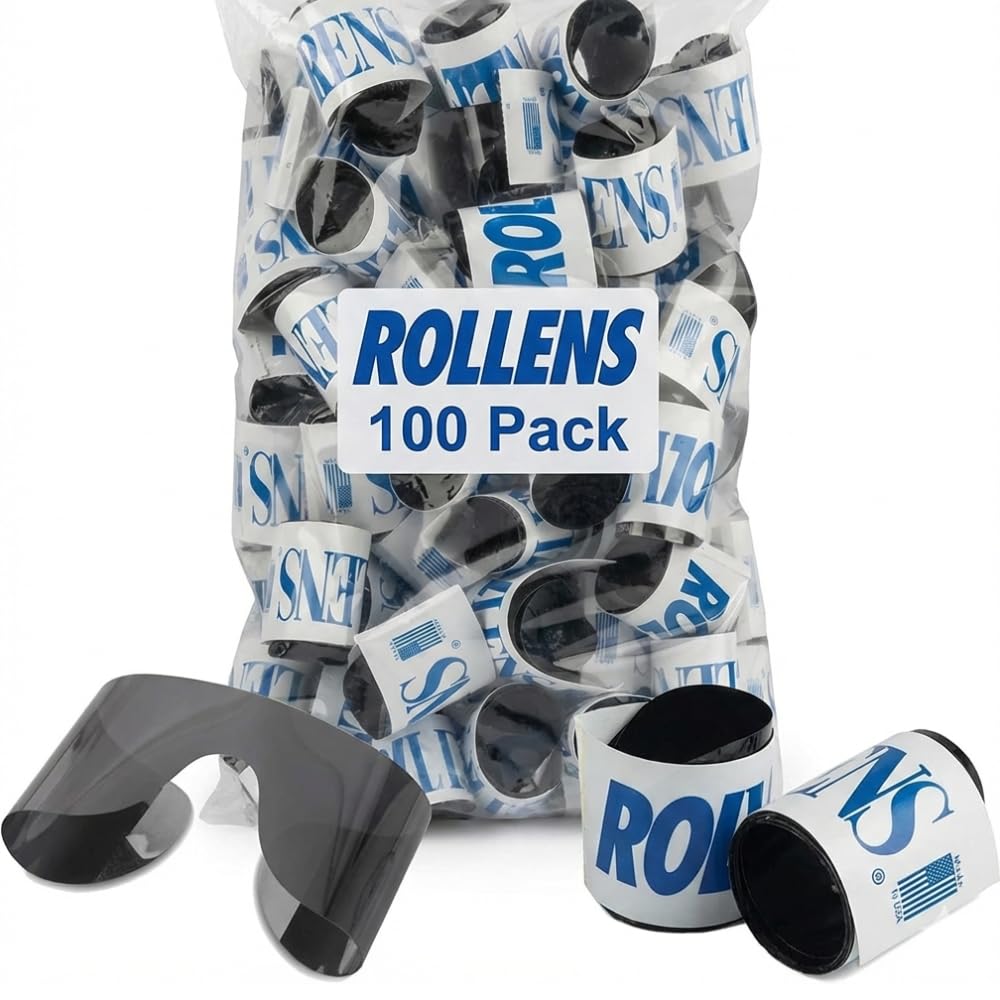
The feather-light roll-up wrap that a dilated, light-sensitive eye slips on and forgets.
This is the classic roll-up sun filter an eye doctor hands you after dilating your pupils, sold here in a large count for clinics and individuals who want spares everywhere. It blocks 100% of UV, and the whole design rests on that wrap shape. Owners describe the fit as wrapping close enough to the side of the eyes to be an effective wrap all the way around, which is the coverage a sensitive eye needs after dilation. It adjusts automatically to the contours of each face, and reviewers point out the wrap works well for light-sensitive eyes in exactly that situation. As eye protection for bright, punishing light, the wrap is the spec doing the work.
What customers praise most is how well it steps in where a regular pair of glasses falls short. One buyer who wears glasses and another who does not both called these the right choice for dilated eyes. The wrap-and-roll format is the reason it fits over a frame instead of fighting it. The reorder pattern says the rest: a customer uses them in an office and keeps them stocked, and one long-time buyer, after two retina surgeries left their eyes extremely sensitive to light, found the close wrap made a real difference in cutting glare — a strong sign that the coverage, not the price, is the draw.
Two honest bits for anyone ordering a bag. First, they are a thin disposable roll-up, so treat them that way; this is a light, flexible shade meant to be there when you need it, not a rigid frame you keep for years. Second, the count is the point and the trade-off: if you want one pair, a bag of this size is far more than you need, while clinics and offices will go through them without waste. Also note, this pick is the whole package rather than one pair — you are buying the ability to stash a wrap in every exam room, glove box, and drawer.
The consensus: A steady crowd of buyers finds these work well as mydriatic shades, and the automatic fit is the feature people lean on.
Stock these if you run a clinic or keep a car, a bag, and a drawer and want a roll-up wrap on hand wherever bright light catches a sensitive eye.
Skip if you are shopping a single everyday sunglass, because this order is built around having plenty of spares.
Know the Specs
UV400 And 100% UV Protection
UV protection is the amount of the sun’s ultraviolet light a lens filters out. A lens rated to block 100% of UVA and UVB, or one marked UV400, is filtering the full ultraviolet range before it reaches your eye, which matters on water, snow, and long drives where that light builds up. This is separate from polarization, so a lens can block 100% of UV and still let glare bounce through if it is not also polarized. Check both if bright reflected light is your real problem.
Full Wrap Versus Standard Frames
Frame coverage describes how far the lens and frame reach around your face. A full wrap curves the lens back toward your temple and keeps glass beside your eye, closing the side gap that a standard frame leaves open. That side glass is what a wide, clear peripheral view depends on, and it also keeps out wind and stray sun. A standard sport frame can look wide head-on and still leave that corner open, so coverage is the spec to read, not lens size.
Reading Power And Bifocal Lenses
You can do close work without a second pair, because a bifocal puts a magnified reading segment into the bottom of the lens. The power number is the magnifier strength, so x2.0 magnifies close-up objects to roughly twice normal size. Where that segment sits matters as much as its power: set low, it leaves your distance view clear so you glance down to read a knot or a screen; set high, it crowds the distance lane you still need outdoors. Pick the power that matches the work you do and the position that keeps distance clear.
Polarization Explained
Polarization is a filter in the lens that blocks light arriving in a certain orientation, which is exactly how glare bounces off flat, shiny surfaces like water, wet asphalt, and car glass. That is why polarized lenses are the standard for fishing and driving, where reflected glare is the thing tiring your eyes. It is not the same as UV blocking and does not replace it. If your day is spent around water or a windshield, polarization is the feature that changes how your eyes feel by the end.
Common Questions
Do glasses for peripheral vision actually widen your side view?
Can I wear the KastKing Waccamaw over my regular glasses?
What reading power should I pick in a bifocal sunglass?
Will sport sunglasses stay on when I am moving?
Are strobe glasses and training goggles the same as normal sunglasses?
How long does the strobe glasses battery last and how fast does it charge?
What is the difference between UV400 and polarized lenses?
Do the Rollens mydriatic wraps fit over prescription glasses?
What is the right frame size for a full wrap sunglass?
Are glasses that block peripheral vision a good idea for everyday wear?
The Bottom Line
For most people shopping glasses for peripheral vision, the pick is the KastKing Waccamaw Polarized Bifocal Sunglasses because it wraps the lens around your face for a real side view, cuts glare off water and road, and still lets you read close up with a x1.5, x2.0, or x2.5 magnifier. If you need a tuning bridge and a lightweight wraparound for cycling or running, reach for the TIJN Sports Sunglasses UV400 Wraparound. And for practice that sharpens tracking rather than widening your view, the Swivel Vision Sports Training Goggles put your eyes on one target at a time.
How we choose
We do not accept paid placement. Every pick is matched to a real buyer and a real use-case; we do not hands-on test units.
Sources
Specifications: manufacturer listings and product documentation. Review insights: verified customer reviews, as of October 2026. Pricing: not shown on this page (it changes often); check the current price via the retailer link.
As an Amazon Associate, Aappliancez earns from qualifying purchases. This does not affect which products we feature.