Disclosure: Some links in this post are affiliate links. As an Amazon Associate I earn from qualifying purchases, at no extra cost to you. Learn more
Specs are compiled from manufacturer listings and verified buyer reviews and can change over time — please confirm the key details on the product page before buying.
Most color blind glasses on the market will not work for you — and the ones that do depend entirely on your type of color blindness, not on how much you spend. That single fact is why so many pairs get returned. Red-green is the most common form, but blue-yellow and severe red deficiency each need a different lens, and a lens built for one can leave the other looking flat. Get the type right and shades you have never separated snap apart outdoors. Get it wrong and you are looking through a pink tint.
This guide is built by comparing the manufacturers’ published specifications and the patterns across verified customer reviews, so you get each pick’s real strengths and trade-offs instead of marketing spin.
Below you will find the pairs that genuinely shift color perception, sorted by which deficiency they suit, alongside honest notes on tint, fit, and indoor use. Every pair here has a documented lens type, so you can match it to your own test result before you spend a dollar on glasses for color blindness.
Top Picks
How To Choose The Best Glasses for Color Blindness
The wrong assumption most buyers carry in is that a color blind lens restores normal color vision. It doesn’t. These lenses filter out overlapping wavelengths so the colors you already see pull further apart. That is why the same pair can feel like a revelation to one person and like a mild tint to another.
Match the lens to your deficiency first
A lens built for strong red-green deficiency behaves differently from one built for mild red-green, and different again from a blue-yellow lens. Pilestone publishes a selection system where you look at printed numbers and pick the lens letter that matches what you see. EnChroma asks you to choose between Deutan and Protan before you order. Doing that step first is the difference between a pair that works and a pair that sits in a drawer.
Think about where you will actually wear them
Almost every pair in this list is a sun lens. Strong tint means the glasses perform best outdoors, where bright light gives the filter something to work with. Classrooms, offices, and screens are a different job, and a dark lens there will often dim more than it clarifies. If you need indoor wear, treat tint depth as your top filter.
Expect an adjustment window
One maker suggests wearing a new lens for two hours a day over one to two weeks and letting the effect build. Others say new colors can appear within five to ten minutes. Either way, the first thirty seconds in a shop doorway is not a fair test. Give your eyes real daylight and a few days before you judge.
Side-by-Side Comparison
| Model | Best For | Lens / Type | Deficiency Suited | Use Environment | Amazon |
|---|---|---|---|---|---|
| Oakley Radar EV Path OO9208★ Best Overall | Cycling and sport in bright light | Shield, Plutonite | UV protection, not a CVD lens | Outdoor sport | Amazon |
| DALURN YM-019Best for Gifting | Gifting and everyday wear | Special coated lens | Red-green | Indoor / outdoor | Amazon |
| DALURN YM-021Best Outdoor Tint | Full-sun outdoor use | Red-tinted sun lens | Red-green | Outdoor | Amazon |
| Pilestone GM-2 | Moderate to strong red deficiency | Type D, red lens | Moderate to strong red | Outdoor / indoor | Amazon |
| Pilestone TP-012 | Mild to moderate red-green | Type A, brown lens | Mild / moderate red-green | Outdoor / indoor | Amazon |
| Pilestone TP-006 | Winter driving and indoor use | Type A, brown lens | Mild / moderate red-green | Outdoor / indoor | Amazon |
| Pilestone TP-020 | Blue-yellow deficiency | Type E, bluish grey lens | Mild / moderate blue-yellow | Outdoor / indoor | Amazon |
| EnChroma Tilden Cx3 Sun | Most red-green types, generous lens | Cx3 Sun | Most red-green types | Outdoor | Amazon |
| EnChroma Ellis Cx3 Sun | Deutan and Protan, medium fit | Cx3 Sun / Cx3 Sun SP | Deutan and Protan | Outdoor | Amazon |
Detailed Reviews
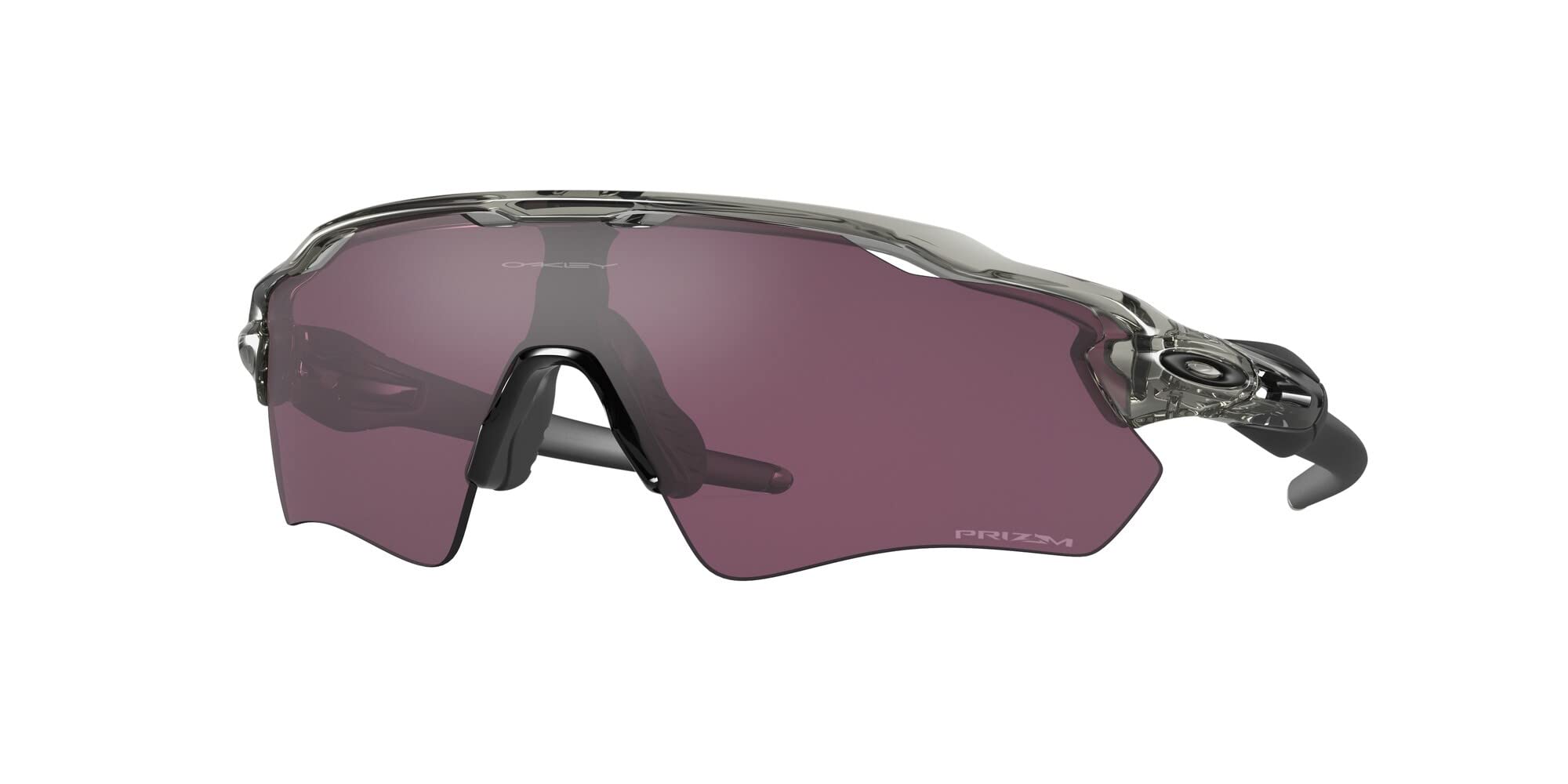
1. Oakley Radar EV Path OO9208 Shield Sunglasses
Our pick — 4.5+★ from 90+ verified ratings; the strongest balance of quality and price.
A wide Plutonite shield with extended range of view and Unobtanium pads that grip harder as you sweat.
Start here if your real problem is glare and eye strain on long rides rather than color separation. The Radar EV Path is a sport shield, not a color-correction lens, and its job is to keep your vision sharp across a wide field. Oakley builds the lens from stress-resistant Plutonite that eliminates 100% of harmful UV rays — the number that matters when you are outside for hours and want your eyes protected, not just shaded.
The frame geometry is the reason cyclists keep coming back. The taller lens and extended range of view (EV) push the upper edge of your vision outward, so checking over your shoulder for traffic needs less head turn. A semi-frameless design keeps the weight down and the Three-Point fit holds precise optical alignment, which is what stops the lens from drifting out of position mid-ride. Buyers describe “great FOV with these and they dont fog up as much as my cheaper branded ones,” and a heavy sweater adds the practical line: keep a cloth handy to wipe the lens when you stop.
Here is the part that keeps this from being a color blind pick in the strict sense. The lens is a sun filter with no lens letter and no deficiency type, and one owner expected “a little more red in the lens” than arrived. If your goal is passing an Ishihara plate test, this is not that product. What it is, is the sharpest everyday pair in this group for bright outdoor work and sport. The package comes in at 7 x 4 x 3 inches, against the 7.52 x 3.27 x 1.61 inches of the DALURN YM-021 — a slightly deeper box that stores more easily in a bag.
What the shield does well
- Extended range of view widens peripheral sight so blind-spot checks are quicker
- Unobtanium nose pads and earsocks grip harder as you sweat
- Plutonite lens blocks 100% of harmful UV rays
- Three-Point fit keeps optical alignment steady on long rides
Where it stops short
- No lens type or deficiency rating — it does not correct color vision
- Sport-shield styling reads as athletic rather than everyday
Buy this if: you ride or work outdoors in hard sun and want the widest, clearest view with real UV protection.
Pass if: you specifically need red-green separation for tests or matching shades at home.
2. DALURN Colorblind YM-019 Red-Green Sunglasses
The pair most often bought as a gift, with buyers describing first-wear reactions at the wrapping paper.
This is the pair people buy for someone else. The DALURN YM-019 uses a special coated lens built on complementary color antagonism — a filter that dials back the light wavelengths your eyes receive too strongly and lifts the ones arriving too weakly, so the ratio of the three primary colors entering your eye shifts closer to normal.
What buyers describe most is the moment of first wear. A parent reports giving them to an 18-year-old son with strong red-green color blindness and watching him pick out different shades of green in the grass and red in the porch paint. Another buyer says a husband “is color blind and these glasses helped him see colors for the first time.” Those moments are why the appearance gets so much praise — the frame looks like an ordinary pair of sunglasses, so nobody at the table knows it is a corrective lens.
The honest catch is that the coated lens splits wearers: some see a vivid shift, others a pink cast, a few nothing. Some wearers see a vivid shift, others report everything turning pinkish, and a few find no change at all. DALURN itself says the lens needs an adaptation period — about two hours a day for one to two weeks — before the effect builds. Sizing runs small, at 5.71 x 5.51 x 2.17 inches, which suits a slimmer face better than a broad one. If you are buying blind for someone whose deficiency you do not know, the return window is your friend here.
Why the gift angle lands: the lens looks ordinary from the outside, so it slots into daily life without announcing itself.
The adjustment curve: results build over days, not seconds, so a quick try-on at the door is not a fair read.
Reach for this if: you want a wrapped present that might genuinely surprise a red-green family member.
Look elsewhere if: you need a guaranteed result for a specific prescriptive use and cannot risk the pink-tint outcome.
3. DALURN YM-021 Color Weak Sunglasses, Indoor and Outdoor
Strong red tint that splits berries from leaves — and doubles as real sunglasses.
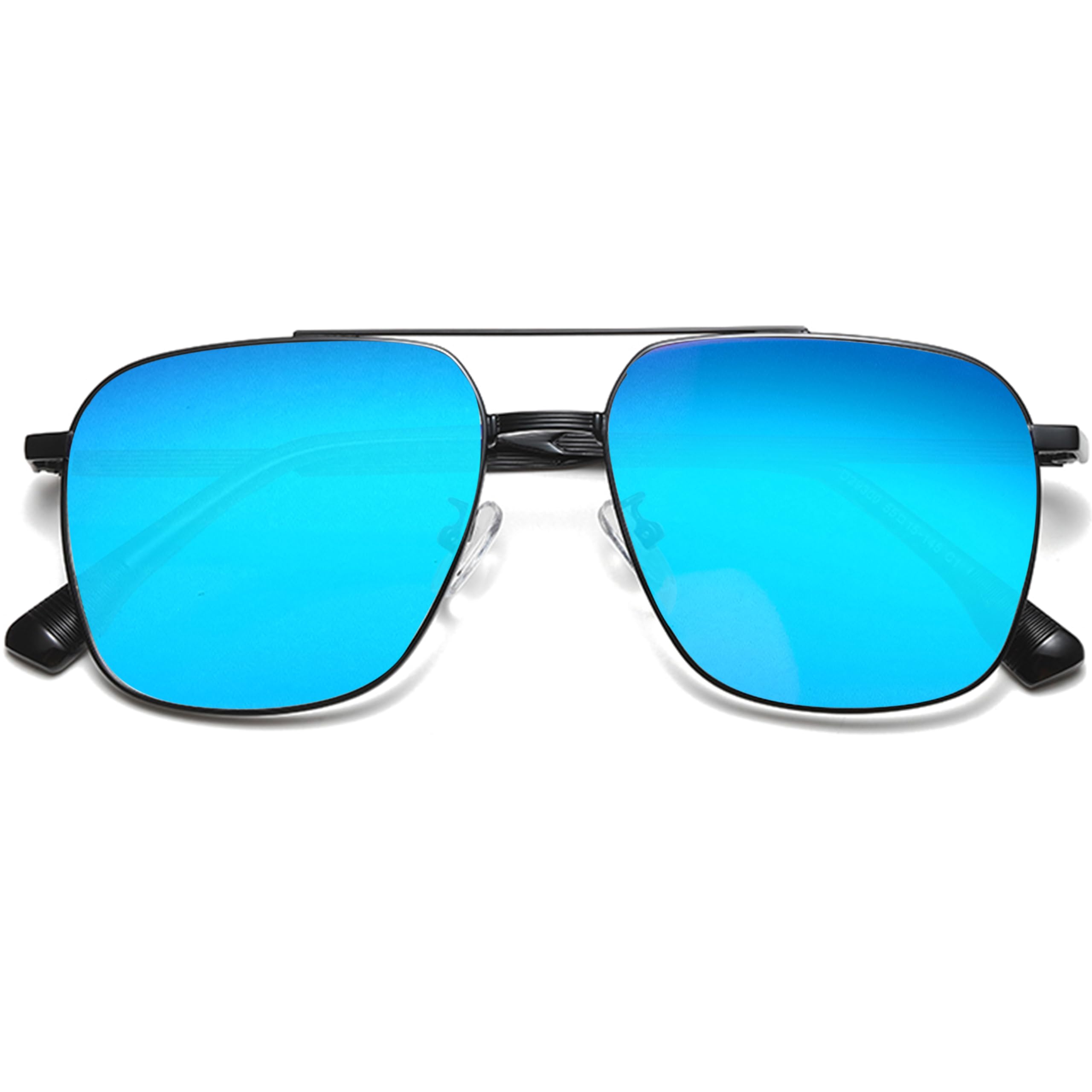
The YM-021 is the more aggressively tinted of the two DALURN models, and that tint is the whole point. Red-tinted lenses are what make a holly bush suddenly readable, with the red berries standing apart from the green leaves instead of blending into one mass. That kind of separation is exactly what a red-green deficiency hides from you.
What the lens gains in separation it sacrifices in subtlety. The tint is strong enough that colors shift dramatically and the glasses behave like proper sunglasses, which makes them a poor choice for night or constant indoor wear. One wearer notes that color blind boys can pass Ishihara test plates while wearing them, then adds the trade-off: they would like a clearer, lighter-tinted version for regular use. The kit itself is thoughtful — a colorblind test card, a protective case, and a cleaning cloth come in the box.
Fit is the friendly part. The unisex frame sits like normal sunglasses and looks sturdy, and at 7.52 x 3.27 x 1.61 inches the package stores flatter in a glovebox than the Oakley shield’s 7 x 4 x 3 inch box. Results do vary by wearer, and this is the lowest-rated DALURN lens in the group. Treat it as a bright-day outdoor tool rather than an all-day pair, and the value case is easy to see.
The separation payoff: red berries against green leaves is the exact scene this lens was tuned for.
Tint trade-off: the same strength that separates colors rules out dim rooms and evening wear.
Suits you when: the glasses will live in the car or garden and you want maximum color split in daylight.
Skip if: you need a pair that works under office lighting or after dark.
4. Pilestone GM-2 Type D Color Blind Glasses

A red-filter lens aimed squarely at people who lose red, not green.
Pilestone is the most established name in this category, founded in 2011 by Dr. Ben at UPenn to help a color-deficient friend. The GM-2 carries the Type D red lens, and Type D is the letter Pilestone assigns to moderate to strong red deficiency — a narrower target than the general red-green crowd.
That focus shows up in what wearers notice. Orange flowers that used to read as brown come back orange, the sky returns to a true blue, and everyday screens get livelier. The coverage has limits in the other direction: the lens does very little for green deficiency while making reds pop strongly. Prolonged wear can feel overstimulating, and the red tint has a knock-on effect on other objects — white drifts toward pink, blue toward purple, dark blue toward black.
Pilestone backs the frame with a 60-day return policy against manufacture defects, and the company ships support from the USA. The package comes in at 7.64 x 3.46 x 2.13 inches. This is the entry point into the brand’s lettered system, and for a red-dominant deficiency it earns its place ahead of the generic red-green lenses in this list.
The case for Type D
- Purpose-built for moderate to strong red deficiency rather than a catch-all red-green tint
- Restores red hues that previously read as brown
- Covered by a 60-day return policy against defects
- USA-based after-sales support
Where it asks patience
- Red tint shifts white to pink and blue to purple
- Little benefit for green deficiency, so get your type right first
Best match for: someone whose red perception is the weak link and who wants a lens named for that exact problem.
Think twice if: your deficiency leans green-led rather than red-led.
5. Pilestone TP-012 Type A Color Blind Glasses

The brown-lens starting line for mild red-green, in the narrowest fit of the group.
Type A is Pilestone’s brown lens for mild to moderate red-green color vision deficiency, and this is its narrow-frame version. The narrow build is a real consideration: the package measures 6.2 x 2.4 x 1.4 inches, the slimmest in this entire list, and a tight frame suits a narrower face far better than a broad one.
Wearers describe the effect in flashes. A husband who is red-green deficient tells his wife the glasses “work really good,” that the colors are more enhanced and that he can finally see how green the grass is. Other buyers describe the lens making everything warm grey, or adding a red cast that never resolves. For an extreme red-green case, the verdict is more blunt: the pair helps reds pop but sits too dark for indoor use, and the mirrored front hides your eyes from others.
Consider this the honest beginner’s purchase. It carries the lowest rating in this group, which tells you the results are genuinely hit-or-miss for a mild red-green lens — but the return process is described as quick and easy, so trying a Type A lens first is not a large gamble. Just go in knowing the tint is thick enough to limit daylight-only wear.
What the brown lens gives: a natural-tone filter that keeps colors from going garish while still adding separation.
The fit caveat: a small, narrow frame is lovely on a slim face and cramped on a wide one.
Start here if: you are new to corrective lenses, have a mild-to-moderate case, and want to test the concept without committing.
Reconsider if: your face runs broad or your case is severe on the red-green scale.
6. Pilestone TP-006 Type A Aviator Color Blind Glasses
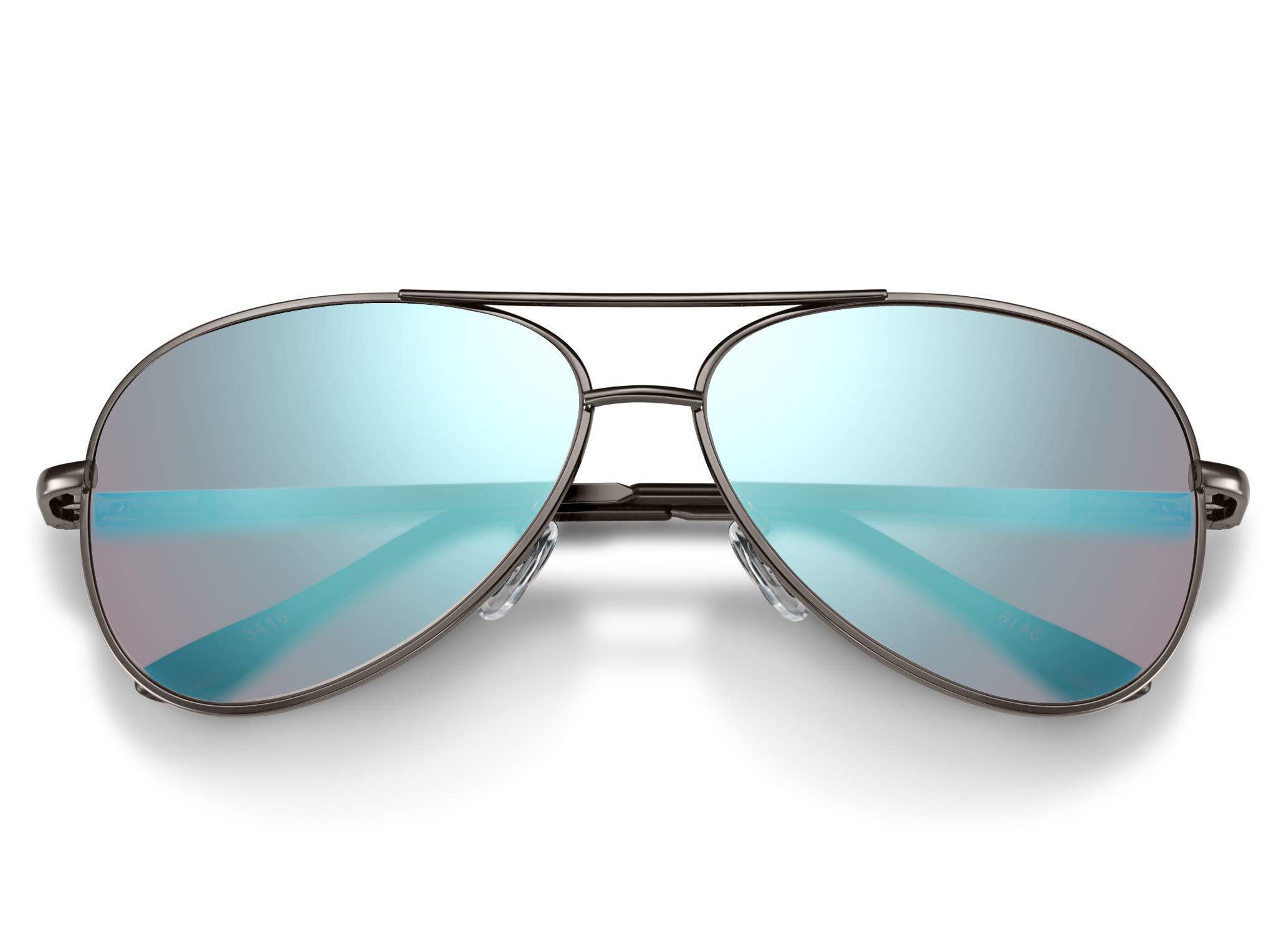
The aviator cut of the brown lens, tuned light enough for winter driving.
Same Type A brown lens as the TP-012 above, same mild-to-moderate red-green target, but built into an aviator frame with a broader 7.6 x 3.5 x 2.24 inch package. The frame shape is a big part of the appeal. Aviators read as ordinary eyewear rather than medical equipment, so this pair blends into a school run or a work commute without a second look.
What buyers like most is that the tint stops short of full blackout. One owner compares it directly to a rival brand and says these are “good for winter driving because they are not as dark as my enchromas,” while still being usable indoors. Outside is where the change feels strongest — green moss on trees, reds lifting to a truer red, and colors sharpening once your eyes settle. Several owners describe reaching for this pair as a Christmas gift and finding the reaction worth it.
The complaints cluster around fit and tint for school use. One wearer finds the frame uncomfortable after half an hour and the sizing too small; another notes a teacher objecting to the lens being as dark as sunglasses in a classroom. Parents with a red-green child who need classroom wear should factor that in. A broader fit on an adult face will suit this frame far better than the narrow TP-012.
Why it blends in
- Aviator styling looks like a normal pair of sunglasses
- Lighter tint than rival outdoor lenses keeps it usable in dull weather
- Wider package of 7.6 x 3.5 x 2.24 inches suits a broader adult face
What to plan around
- Some find the frame small and uncomfortable on extended wear
- Too dark for a classroom setting
The right pick when: you want a versatile brown lens that transitions from the car to the garden to the indoors.
The wrong one if: the pair is destined for a child who needs it during lessons.
7. Pilestone TP-020 Type E Color Blind Glasses

The bluish grey lens for blue-yellow deficiency, and almost nobody else makes one.
Almost every pair on this list is built for red-green. This one is not. The TP-020 carries Pilestone’s Type E bluish grey lens, designed for mild to moderate blue-yellow color vision deficiency — a deficiency where yellow and blue collapse into teal and magenta and the world loses a whole axis of color.
The freshest proof comes from a nephew with a blue-yellow deficiency who saw only teal and magenta before wearing them. Once he put them on, new colors arrived after five to ten minutes; yellow took longest, reading pink before the glasses and white at first with them on. Flowers and paint amazed him, and he recognized a yellow shirt through a car window. For a parent or partner of a blue-yellow deficient wearer, that report is worth more than any marketing copy.
The recurring complaint is the tint. One buyer says the pair made a huge difference for a green-blue deficient friend, who only wishes “they weren’t such darkly tinted sunglasses.” A few owners see no difference and return them, which is the nature of a lens tuned to one deficiency type. The package is compact at 6.5 x 2.4 x 1.4 inches. If your test result names blue-yellow, this is one of the very few off-the-shelf options that fits.
The rare lens: Type E is a genuinely uncommon offering, and this deficiency has the fewest off-the-shelf answers anywhere in this category.
The dark-tint note: strong filtering comes with strong shade, so the pair reads as sunglasses to everyone around you.
The one to take if: a test has told you blue-yellow is your deficiency and most lenses on the shelf did nothing.
Not the one for: red-green wearers looking for a broader filter — go with Type A or Type D instead.
8. EnChroma Tilden Cx3 Sun Glasses

A generous lens in a bold frame, built for red-green wearers who want a real pair of sunglasses.
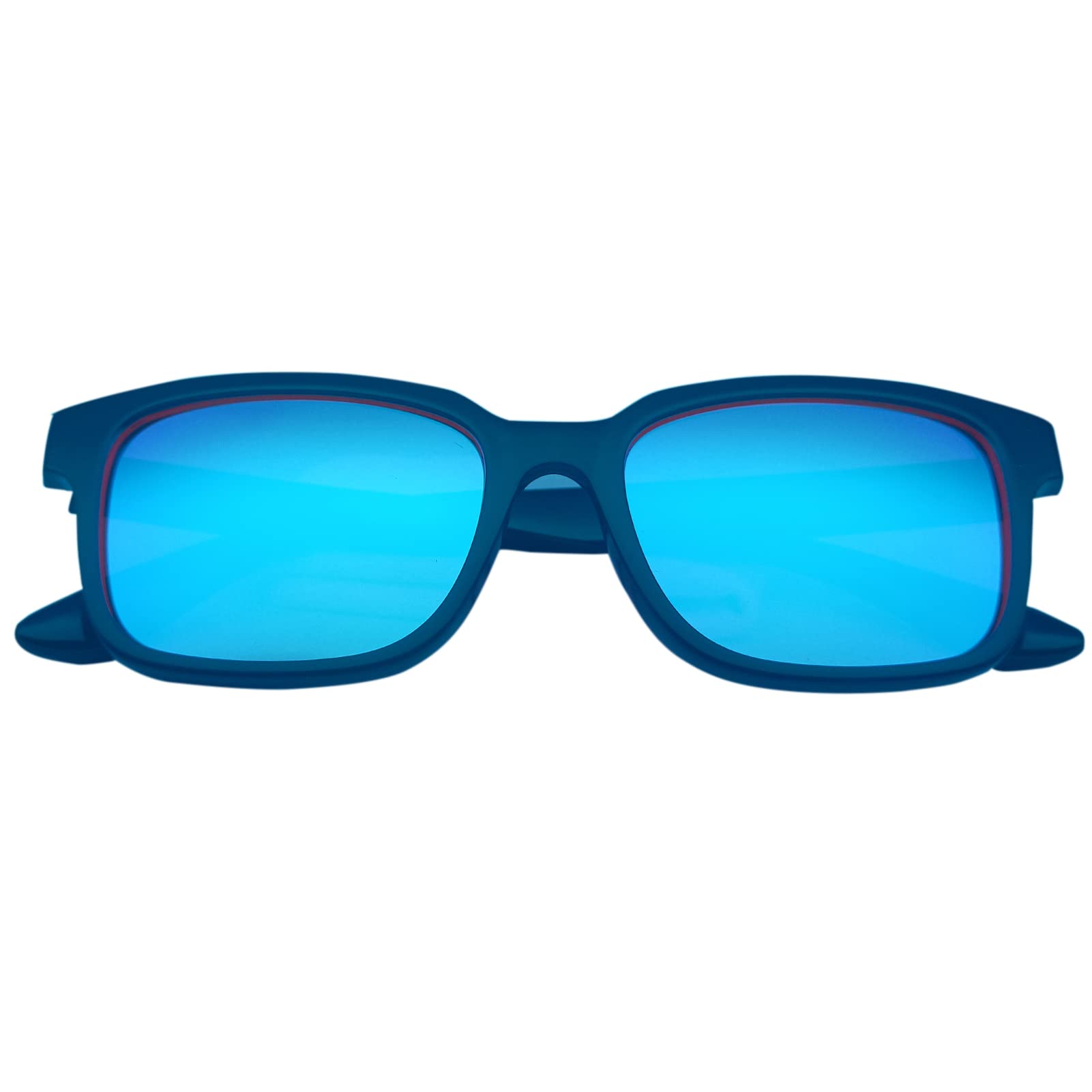
EnChroma’s Tilden is the most versatile frame in the brand’s red-green range. The generous lens delivers clear, vibrant color for most types of red-green color blindness, and the matte black polycarbonate frame is built for strength and lightness with rubberized inside temple tips and a saddle nose-bridge for a firm grip. If you have been burned by a flimsy lens, that construction detail matters.
The results wear unevenly. The most moving account comes from a parent of a 30-year-old son with strong deuteranopia, who saw bright red Mountain Laurel seeds and the colors in tree bark for the first time and cried. At the other end, a wearer with mild protan describes reds getting redder and greens greener but still failing a colorblind retest afterward, which is exactly what you should expect — the lens splits color, it does not cure the condition.
Two practical points. First, the brand’s own online exam can misjudge your type: one buyer was routed to Deutan lenses and needed Protan, a small inconvenience settled by returning one pair. Second, the case and appearance make this a popular gift, but a few owners describe a pink or rose tint and a lightweight build that left them returning it. Match the lens to your type and the Tilden delivers what the brand is known for.
Where the Tilden earns its place
- Generous lens covers a wide field for most red-green types
- Rubberized temple tips and saddle nose-bridge hold a firm fit
- Matte black polycarbonate keeps the frame light but sturdy
What catches people out
- Deutan versus Protan must be chosen correctly before ordering
- Some wearers report a rose tint rather than vivid separation
Worth it when: you know your red-green type and want a substantial outdoor lens in a frame that looks like a designer pair.
The honest limit: a retest after wearing them will still show color blindness, so buy it for the everyday viewing, not a cure.
9. EnChroma Ellis Cx3 Sun Color Blind Glasses

The Italian-made EnChroma frame with a medium fit and 100% UV protection.
The Ellis takes EnChroma’s Cx3 Sun lens, the same filtering technology built to reduce the red-green cone overlap causing color confusion, and puts it in a frame handcrafted in Italy from TR-90 — a flexible, durable material that holds its shape over time. The lens delivers clear, vibrant color and 100% UV protection for most types of red-green color blindness. It ships in a medium 54-18-145 frame size, which sits between the tight fits and the wide sport shields in this list.
What owners love is the quality and the frame itself. High-end black frames with a light tint and a protective case come in the box, and buyers describe them as durable enough to wear constantly. The color results are genuinely mixed, though. An artistic 18-year-old son found the change subtle at first and then vivid — flowers, pinks, lilacs all appearing differently to him — while a red-green wearer saw only a pinkish tint indoors and out with no discernible difference. A blue-green-capable friend who was not the target deficiency found the pair pleasant without seeing new colors.
The uncomfortable truth is that roughly one in five people do not respond to these lenses at all, and EnChroma’s own reviews reflect it. One owner puts it plainly: “I would recommend giving them a try if you’re colorblind unfortunately I was the 20% they don’t work for.” The Ellis is worth it because the frame and lens build are solid and the return is straightforward — but buy it knowing the response is individual, not guaranteed by price.
The build advantage: handcrafted Italian TR-90 in a medium fit gives the Ellis a quality feel the sport frames do not match.
The individual-response reality: some wearers see striking new colors, and a minority see nothing at all.
Picks the right buyer when: you want a beautifully made domestic-feeling frame and are willing to test your own response with a return in reserve.
Less suitable if: you need a guaranteed color shift and cannot tolerate a case where the lens simply does not work for your eyes.
Know the Specs
Lens type and deficiency match
Lens type is the single most important spec on a color blind pair. Pilestone prints a letter — A for mild to moderate red-green, D for moderate to strong red, E for mild to moderate blue-yellow — and a lens built for one deficiency often does very little for another. EnChroma splits red-green into Deutan and Protan. Before you buy, learn your type from a printed test or your own eye exam, because a mismatch is the most common reason a pair gets returned.
Tint depth and where you can wear them
Every corrective lens here filters light, and the strength of that filter sets where the pair is usable. A brown or grey lens stays usable indoors and in dull weather; a red or bluish grey tint behaves more like a full sun lens. If you need classroom or office wear, choose the lightest tint you can find or you will end up fighting the shade as much as the color confusion.
UV protection and eye safety
A pair used outdoors should protect your eyes as well as correct color. A Plutonite lens, for example, eliminates 100% of harmful UV rays. This is not the feature that sells color blind glasses, but it is the one that keeps long outdoor sessions from turning into eye strain.
The adaptation period
Most makers expect a period of adjustment. DALURN suggests two hours a day for one to two weeks before the effect builds, while other reports describe new colors appearing after five to ten minutes. Give yourself daylight and several days before deciding a pair does not work, and keep the original packaging in case it truly does not.
Common Questions
Do color blind glasses actually work?
How do I know which type of color blindness glasses to buy?
Can color blind glasses fix red-green and blue-yellow in the same pair?
Can I wear color blind glasses indoors?
How long until I see a difference after putting them on?
Are these colored sunglasses just tinted lenses with a high price?
Will color blind glasses work under sunglasses or a helmet visor?
Do these lenses give full UV protection?
What if they still look pink or orange?
Are color blind glasses safe to wear all day?
The Bottom Line
If the goal is sharper vision in hard sunlight and you want the widest field of view on the list, the Oakley Radar EV Path is the pair to grab — it eliminates 100% of harmful UV with a Plutonite shield. For the color correction itself, the Pilestone GM-2 is the strongest place to start, with its Type D red lens aimed squarely at a red-dominant deficiency. Nail your lens type before you buy anything, because in this category that single choice matters more than the price, and every pair here has a return window worth keeping intact until you have worn it in real daylight.
How we choose
We do not accept paid placement. Every pick is matched to a real buyer and a real use-case; we do not hands-on test units.
Sources
Specifications: manufacturer listings and product documentation. Review insights: verified customer reviews, as of October 2026. Pricing: not shown on this page (it changes often); check the current price via the retailer link.
As an Amazon Associate, Aappliancez earns from qualifying purchases. This does not affect which products we feature.