Disclosure: Some links in this post are affiliate links. As an Amazon Associate I earn from qualifying purchases, at no extra cost to you. Learn more
Specs are compiled from manufacturer listings and verified buyer reviews and can change over time — please confirm the key details on the product page before buying.
If wind, rain, or a thin strip of daylight is sneaking under your garage door, the fix is almost always a worn bottom seal. This guide picks five garage door bottom seals that actually close that gap, and it tells you which style fits your door before you buy.
This guide is built by comparing the manufacturers’ published specifications and the patterns across verified customer reviews, so you get each pick’s real strengths and trade-offs instead of marketing spin.
The biggest mistake is ordering the wrong end profile, because a slide-in T-track strip and a nail-on rubber strip are not interchangeable. Below you will find the best garage door bottom seal for your exact track and floor.
Top Picks

How To Choose The Best Garage Door Bottom Seal
You buy a bottom seal for one reason: to stop air, water, and pests from coming under the door. Everything else is about whether it will physically fit your door and stay put.
Match the end profile to your track before anything else
A T-end seal slides into a channel at the bottom of the door, so the T width matters first. The Holikme and the Nayotaa kit both take a 5/16″ T-track, while the Earthtec fits a 1/4″ T channel. Get that number wrong and the strip will not seat.
The Frost King is a different animal — it nails straight onto a wood door frame. If your door is wood, this option skips the channel entirely. For uneven floors, a thicker channel-style seal is the safer bet than a flat one.
Width and length do more work than most shoppers expect
A wider seal covers more of a sloped or cracked floor. The 10Ft threshold strip runs 3-1/2″ wide, and the Nayotaa kit comes in at 3.94″ wide — both sit on the floor rather than under the door. The Frost King delivers 16 ft of coverage against the 10 ft on the 10Ft seal, so measure your door first and cut the rest.
Side-by-Side Comparison
| Model | Best For | Material | Width | Track / Mount | Amazon |
|---|---|---|---|---|---|
| Holikme Garage Door Bottom Seal 22Ft★ Best Overall | Long doors, wet climates | EPDM Rubber | 3.74 in | 5/16″ Double T-End | Amazon |
| 10Ft Garage Door Threshold Seal StripBest for Uneven Floors | Uneven concrete floors | EPDM Rubber | 3-1/2 in | Adhesive Threshold | Amazon |
| Frost King G16H Nail-On Rubber Garage Door Bottom Seal | Wood frame doors under 16 ft | Rubber | 2-1/4 in | Nail-On | Amazon |
| Earthtec 3″ Garage Door Bottom Seal Weatherstrip in Grey | Wide 1/4″ or 5/16″ channels | Vinyl | 3 in | 1/4″ Double T-End | Amazon |
| Nayotaa Garage Door Seals Bottom Rubber Kit | Fast no-tool swaps | EPDM Rubber | 3.94 in | 5/16″ T-Track | Amazon |
Detailed Reviews
1. Holikme Garage Door Bottom Seal 22Ft
Our pick — 4.5+★ from 1,500+ verified ratings; the strongest balance of quality and price.
The 22-foot EPDM strip that swallows long doors and nasty weather.
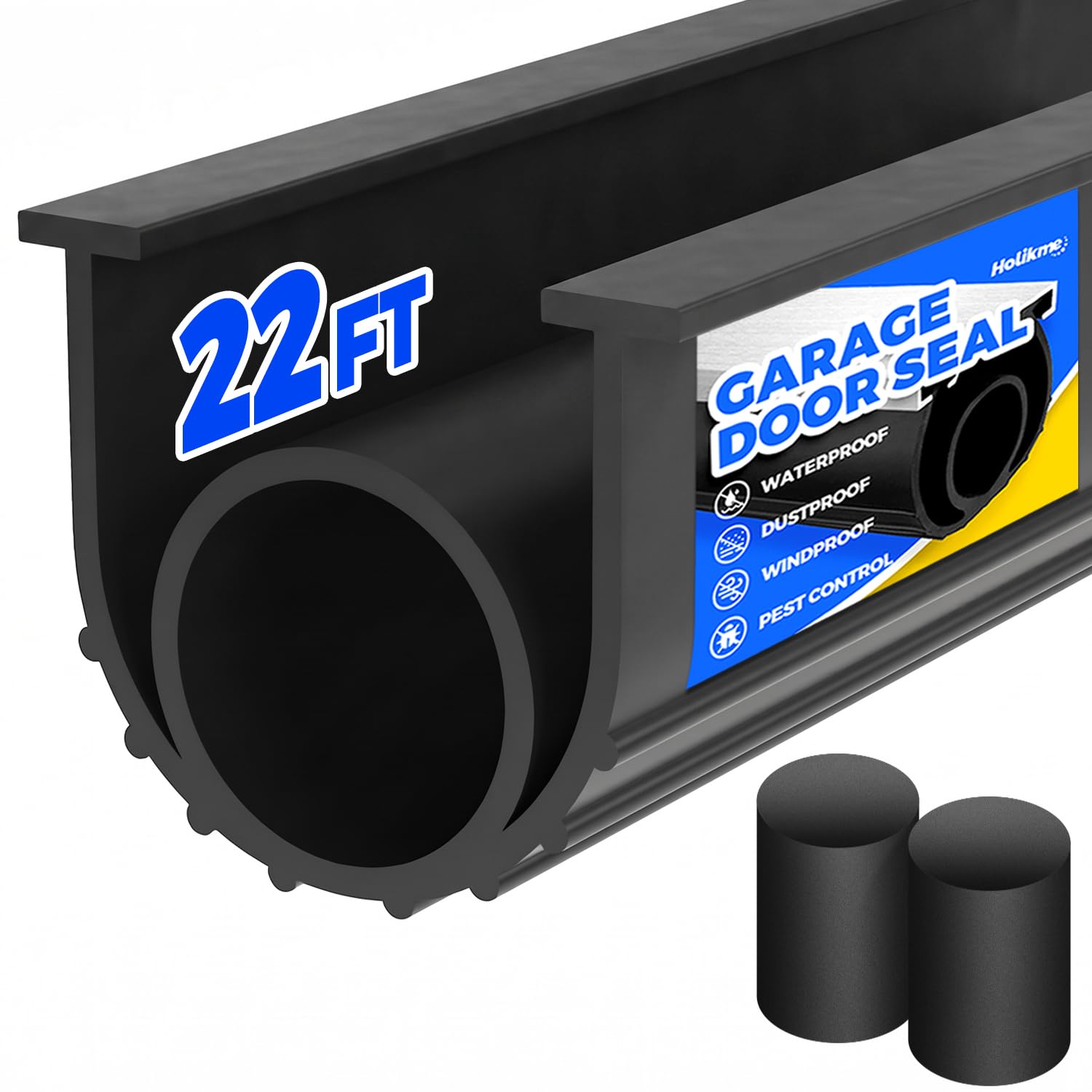
You get 22 ft of EPDM rubber here — that is a synthetic rubber built to shrug off ozone and sunlight — so you can cover an 18 ft door and still have spare. It holds 4.5+ stars across 1,600+ ratings — the highest score and the largest review base of the five picks.
At 0.08 in thick, this seal is roughly three times the thickness of the 0.25 in Frost King strip. That extra bulk flexes over uneven concrete instead of sitting on top of a high spot, which is exactly what you need when the slab is not flat.
The U-shape with an inner O-ring creates two barrier layers, and the kit ships with rubber end plugs to close the center channel. The double T-end slides into a standard 5/16″ track, so it is a direct fit on most residential doors. Set aside time for the install — lubrication in the track is what makes it easy, not force.
Where It Wins
- 22 ft of coverage with room to spare on long doors
- 0.08 in EPDM rubber flexes from -40°F to 240°F without cracking
- U+O dual-layer design plus end plugs for a tighter seal
The Honest Catch
- Tight tracks make the slide-in job a two-person task
- Metal tracks are not included with the kit
- Soft rubber wants soapy water or silicone spray to seat
Best for: Long residential doors and wet, cold climates where a durable rubber seal matters.
Skip if: You have a wood nail-on frame or no space beside the door to feed the strip in.
2. 10Ft Garage Door Threshold Seal Strip
A stick-down threshold that tames cracked, sloping concrete.
This one is not a slide-in strip at all — it is a threshold seal that glues to the floor so the door shuts down onto it. At 3-1/2″ wide it spreads across more of the slab than a narrow under-door seal, and the 1/2″ tall profile gives the door a raised edge to close against.
That width is the point: it beats the 2-1/4″ Frost King by a comfortable margin, covering floors where a thin flat strip only contacts a high point and leaves daylight at the edges. The EPDM rubber resists cracking, drying, and shifting through temperature swings.
Buyers report it bonds tight to concrete when the floor is cleaned and dried first, and the included gel glue holds the strip down. The recurring gripe is about adhesive — some kits arrive without it or with a tube that runs short, so keep a construction adhesive on hand as backup. It is sized for doors under 3 meters and cuts easily if yours is shorter.
Why it earns a spot: For garages with rough or sloped concrete, a glued threshold does what a slide-in strip cannot, since it lives on the floor and follows its dips.
What to plan for: Leave the door down for two days after applying the glue so the bond cures, and prep the surface properly or the strip lifts at the corners.
Reach for this if: Your floor is uneven and you want a wide barrier against wind-driven rain.
Look elsewhere if: You want a screw-free slide-in strip or your door already seals fine at the bottom.
3. Frost King G16H Garage Door Bottom Seal

The nail-on classic for wood doors and tight budgets.
No channel, no glue — this strip fastens straight to a wood door frame with roofing nails, at 2-1/4″ wide and 16 ft long. That covers the common single door with length left to trim, and at 16 ounces it is easy to handle while you work the top edge.
What wins people over here is pure sealing value: it blocks wind and rain, delivers a clean fit, and stays cheap. The 16 ft compared to the 10 ft on the threshold strip above means more door coverage from the start, and the soft rubber hugs a slightly uneven floor rather than fighting it.
The honest catch is the material. Owners expecting stiff hard rubber are often surprised to find a softer foam-like feel, and that softness leaves open questions about long-term wear. On a floor that drops more than 1/4″ across the width, this flat style will not bridge the gap — a channel-type sealed strip handles uneven concrete better.
The value read: For a wood-frame door and a simple swap, the price-to-usefulness here is hard to argue with, and the sealing performance draws steady praise.
One more thing to know: The included nails run a little short on a full 16 ft door, so count your run first and buy a few extra.
Right choice when: You have a wood door, a mostly level floor, and want the least expensive solid fix.
Not the pick if: Your concrete dips badly and you need a seal that springs back into a gap.
4. Earthtec 3″ Garage Door Bottom Seal Weatherstrip in Grey

A 3-inch vinyl seal that slips into the widest range of tracks.
This is a double T-style strip measuring 3″ overall with a 1/4″ T, and it is built to fit a 1/4″ or 5/16″ channel retainer. That dual compatibility is the neat trick — one seal covers the two most common track sizes, so you are less likely to guess wrong at checkout.
It comes in a grey finish and 8 ft of length, and it is longer than ordered so you can trim it down with scissors. Vinyl like this slides in cleanly, and the flexible profile presses down onto the floor to shut out wind, rain, and dust. The 8 ft length suits a standard single door; measure yours before you cut.
The trade-off is rigidity. Vinyl is more pliable than EPDM and can take the shape of the floor rather than springing back, so on a very crooked slab it may not bounce back into a gap. There are also reports of thinner strips working loose from the track over time — a clean, lubricated channel before you slide it in helps it stay seated. The crowd favorite among wider 1/4″ channels.
Mix of good and less good: When it seals, it seals well, and it holds up like the original on many doors. But durability and staying power split the crowd, so fit quality on your specific track matters more than usual here.
Best match: Doors with a 1/4″ or 5/16″ channel where you want the widest single-strip coverage.
Less ideal if: Your floor is badly uneven or you need a strip that refuses to flatten out.
5. Nayotaa Garage Door Seals Bottom Rubber Kit
The no-screws swap for a standard 5/16″ T-track door.
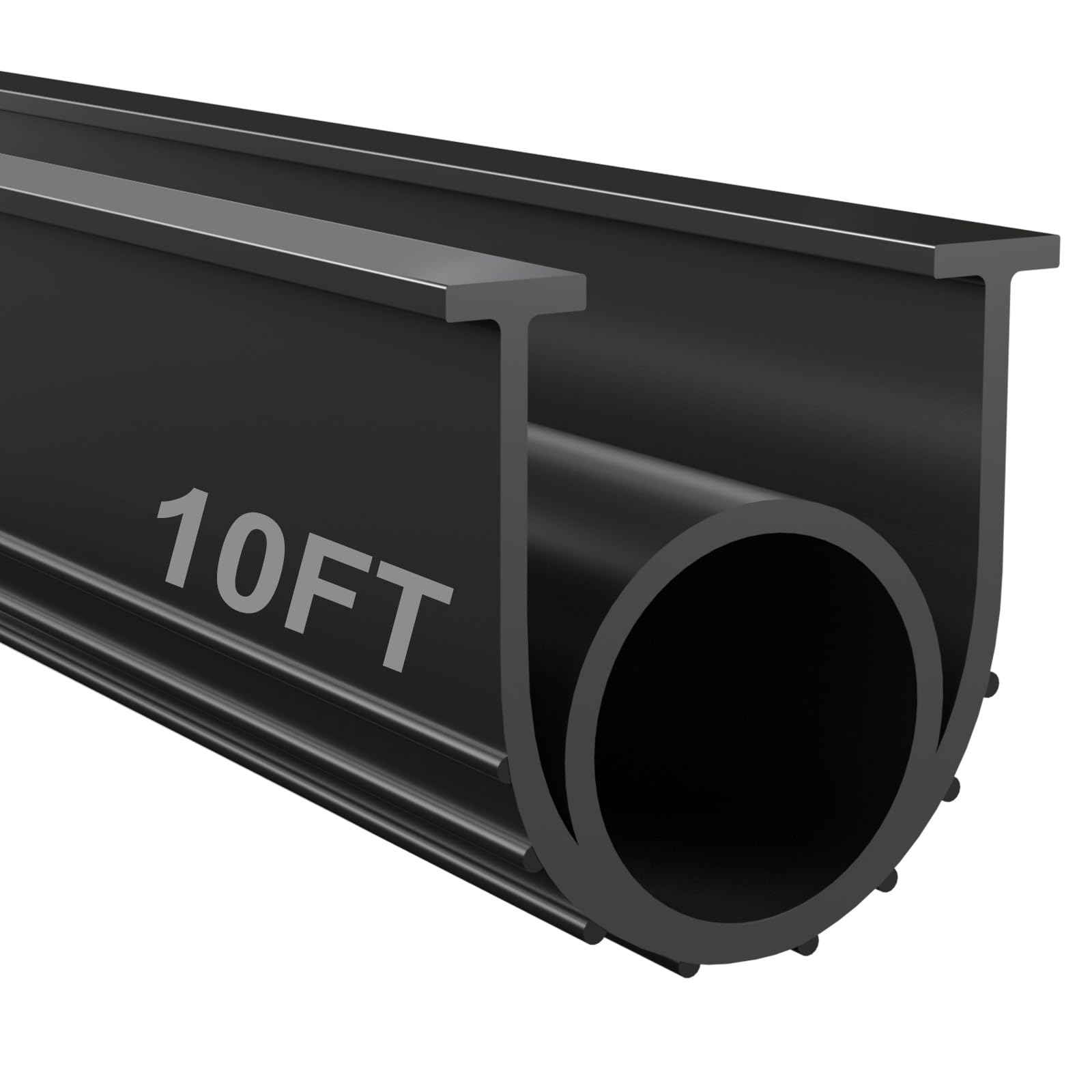
Designed for a 5/16″ T-style track, this kit slides in with no nails, screws, or pro help required — just remove the old seal, clean the channel, and trim the extra. That is the fastest route to a sealed door if your track matches.
It uses a U+O dual-seal shape with multiple contact points that press down on minor floor unevenness, and the EPDM rubber stays flexible from -40°F to 240°F. The strip runs 3.94″ wide — the widest in this group — so it blankets more of the slab than the narrower strips above.
The catch is fit and staying power: some buyers find the soft rubber does not lock into the tracks as firmly as they would like. On a clean, well-lubricated channel it seats better, and a snug track helps it stay put.
The one-line verdict: A quick weekend swap with genuine dual-seal coverage, and the widest contact patch of the five picks here.
Honest limitation: The flexible rubber can slip out of a loose or dirty track, so inspect your channel before sliding it in.
Pick this if: You have a compatible 5/16″ track and want a tool-free install you can finish in one sitting.
Think twice if: Your track is worn or loose and you need a strip that grips firmly and stays ridged.
Know the Specs
End Profile and Track Size
This is the measurement that decides whether your seal fits: the T width and the channel it slides into. A 5/16″ T-end (like the Holikme and Nayotaa) fits one track, a 1/4″ T (like the Earthtec) fits another. Always check the width of the T on your existing seal and the retainer channel before ordering.
Rubber vs Vinyl and the Temperature Range
EPDM rubber stays flexible from -40°F to 240°F and resists cracking and UV fading. Vinyl is a bit stiffer and more pliable, which shapes to the floor but may not spring back. A wider, softer seal helps on uneven concrete; a flat strip works best on a level floor.
Common Questions
How do I know if my garage door needs a T-end seal or a nail-on seal?
What width do I need for a crooked or cracked concrete floor?
Can I cut a garage door bottom seal to fit my door?
Why does the seal keep sliding out of my track?
Is EPDM rubber better than vinyl for a garage door seal?
Do I need adhesive if my seal slides into a track?
How long should a garage door bottom seal last?
Will a narrow seal stop wind-driven rain?
Can one person install a garage door bottom seal?
How much length should I buy for my garage door?
The Bottom Line
For most people, the garage door bottom seal winner is the Holikme 22Ft EPDM Seal because it delivers thick, flexible rubber that hugs uneven floors and leaves spare coverage on long doors. If you have cracked or sloped concrete, the 10Ft Threshold Seal glues down and covers more of the slab. And for a wood door on a tight budget, the Frost King G16H nails on and seals for very little. Measure your track and door width first — the right profile is what turns any of these into a draft-free garage.
How we choose
We do not accept paid placement. Every pick is matched to a real buyer and a real use-case; we do not hands-on test units.
Sources
Specifications: manufacturer listings and product documentation. Review insights: verified customer reviews, as of October 2026. Pricing: not shown on this page (it changes often); check the current price via the retailer link.
As an Amazon Associate, Aappliancez earns from qualifying purchases. This does not affect which products we feature.