Disclosure: Some links in this post are affiliate links. As an Amazon Associate I earn from qualifying purchases, at no extra cost to you. Learn more
Specs are compiled from manufacturer listings and verified buyer reviews and can change over time — please confirm the key details on the product page before buying.
Not every voice chat needs a boom arm dangling in front of your face. If you already run a standalone desk mic, a streaming setup, or a separate clip-on, adding another microphone to your headset is just extra clutter. That’s exactly who this guide is for: players who want serious sound quality for the games they play, the music they mix, and the voice work they already have handled elsewhere.
This guide is built by comparing the manufacturers’ published specifications and the patterns across verified customer reviews, so you get each pick’s real strengths and trade-offs instead of marketing spin.
Every pick here is wired, and none of them charge extra for the drivers.
Top Picks


How To Choose The Best Gaming Headset Without Microphone
Buying a headset you will never talk into changes the whole checklist. You stop paying for a mic you will not use and start paying for drivers, build, and comfort instead. Here is what actually moves the needle.
Driver size is the number you should check first
A driver is the speaker inside each earcup, measured across in millimeters. A larger driver moves more air, so you get fuller low end and better separation between footsteps, gunfire, and dialogue. A 50 mm driver is a common balance for gaming; a 40 mm driver is lighter and often more neutral. Neither is automatically better — they just suit different ears.
Open-back vs closed-back changes everything about how you play
Closed-back earcups seal around your ears and block outside noise, which keeps you locked in during a match. Open-back designs let air move freely through the cup, which widens the soundstage — the sense of space between sounds — but also leaks your game audio into the room. If you record with a separate microphone nearby, open-back cans will bleed into that recording.
Impedance and cable decide what can actually drive them
Impedance is electrical resistance measured in ohms, and it tells you how hard a headphone is to push. A 32 ohm set runs fine straight off a laptop or controller. A 63 ohm set wants a dedicated audio interface or DAC to sound its best. A detachable cable also matters more than people think — it is the first thing to break and the easiest thing to replace.
Side-by-Side Comparison
| Model | Best For | Driver Size | Impedance | Connectivity | Amazon |
|---|---|---|---|---|---|
| Audio-Technica ATH-M50X★ Best Overall | All-day reference listening | 45 mm | — | Wired, detachable | Amazon |
| HyperX Cloud IIBest Value | Multi-platform gaming value | 53 mm | — | Wired, detachable | Amazon |
| FIFINE H13BP | Streamers who want RGB | 50 mm | — | Wired USB-A | Amazon |
| Razer BlackShark V2 X | Lightweight all-night sessions | 50 mm | — | Wired 3.5 mm | Amazon |
| Linsoul Kiwi Ears Altruva | Audiophile music and mixing | 50 mm | 32 ohm | Wired 3.5 mm | Amazon |
| HyperX Cloud III | Comfort-first PC and console play | 53 mm | — | Wired, detachable | Amazon |
| Sony MDR7506 | Studio monitoring standard | 40 mm | 63 ohm | Wired, fixed cord | Amazon |
Detailed Reviews
1. Audio-Technica ATH-M50X Headphones
Our pick — 4.5+★ from 33,500+ verified ratings; the strongest balance of quality and price.
The 45 mm studio monitor that doubles as an all-day gaming headphone.
The ATH-M50X is the pick for anyone who wants one pair of wired headphones to do everything — game, edit, and listen. That versatility starts with its proprietary 45 millimeter large aperture drivers paired with rare earth magnets and copper clad aluminum wire voice coils. In plain terms, that combination is what gives these headphones their deep, accurate bass response and what keeps the clarity intact across an extended frequency range. So weapon swaps in a shooter and whispered dialogue in a cutscene both land clearly instead of blurring together.
Comfort is the second reason this one sits at the top. The circumaural design — that means the pads sit around your ears rather than pressing flat against them — keeps sound in and outside noise out, which is why so many owners wear them straight through the workday. The 90 degree swiveling earcups let you flip one side down to hear a knock at the door without pulling the whole set off. Both the earpads and the headband use professional grade material, and the cable detaches, so a snagged cord never means a dead headset.
Durability is where the long-term picture gets more textured. One owner who has run these for six years reports they still work, with pads replaced around the four-year mark and the headband starting to peel — normal wear for something used daily. Amazon reviewers mention durability as among the most-discussed topics, and it is a mix of “still going strong years later” and the usual pad-and-headband cosmetic wear. Fit gets a similar split: a glasses wearer describes a minor fit issue, while the same person reports wearing them comfortably for 12+ hours at a stretch. The 4.5+ star rating across 33,000+ owners backs up the overall verdict — this is a long-term tool, not a disposable accessory.
What earns the top spot
- 45 mm aperture drivers with rare earth magnets deliver deep, accurate bass and detail across an extended frequency range.
- Circumaural design contours around the ears for genuine sound isolation in loud rooms.
- 90 degree swiveling earcups make one-ear monitoring easy without removing the headset.
- Detachable cable plus foldable build turns a drop into a quick cable swap rather than a new purchase.
- The consensus from owners: comfortable enough to wear all day and clear enough to reveal details you missed before.
What to plan around
- Earpads and headband show visible wear over several years — both are replaceable, but plan to replace them.
- Not a bass-heavy headphone; one long-term user calls the sound “controlled” rather than boosted.
- Slight fit complaint from glasses wearers — worth trying on first if you wear prescription frames.
Made for: the buyer who wants one wired pair to mix, game, and work in for years.
Think twice if: you want thumping boosted bass straight from the start without an EQ tweak.
2. HyperX Cloud II Gaming Headset
53 mm drivers and an aluminum frame that buyers report lasting about ten years.
Owners mention this one lasting roughly ten years with the 7.1 surround sound and mic still performing. That is the whole story in a sentence — this is the headset you hand down or keep as a backup when the shiny thing fails. Sound is what wins people over here: 53 millimeter drivers push high-quality audio with enough separation that in-game details come through even when the fight gets loud.
The physical build is a big part of why it lasts. The solid aluminum frame is designed to survive daily use, and the memory foam ear cushions plus padded leatherette headband are tuned for long sessions rather than a quick match. Passive noise cancellation — the closed cups just block noise without any electronics — keeps the room out. Comfort and durability both land in the excellent column per owner reports, and the included leatherette or plush pads let you pick your own seal.
The honest trade-off is wear and tear over the long haul. Leatherette earpads on one long-running pair flaked inside the first year, and cheap replacements kept it going. The soft-touch coating also gets tacky over time and can be cleaned off with isopropyl alcohol to extend the shell’s life. Between the years of service and the range, that is a fair trade for the sound, not a flaw worth skipping the headset over. The 4.5+ star rating across 69,000+ ratings makes it among the most widely owned headsets in this whole category.
Why owners keep replacing it with another one: a wide soundstage, sturdy aluminum frame, and roughly a decade of use before replacement is a rare combination at this tier — and the leatherette-versus-plush pad choice lets you dial in the seal you prefer.
The catch: leatherette pads flake within about a year and the soft-touch coating can go tacky, so budget for replacement pads if you plan to keep it long-term.
Reach for this if: you want maximum sound per dollar and do not mind occasionally swapping pads yourself.
Look elsewhere if: a plug-and-forget finish with zero upkeep matters more than the driver size.
3. FIFINE H13BP Gaming Headset
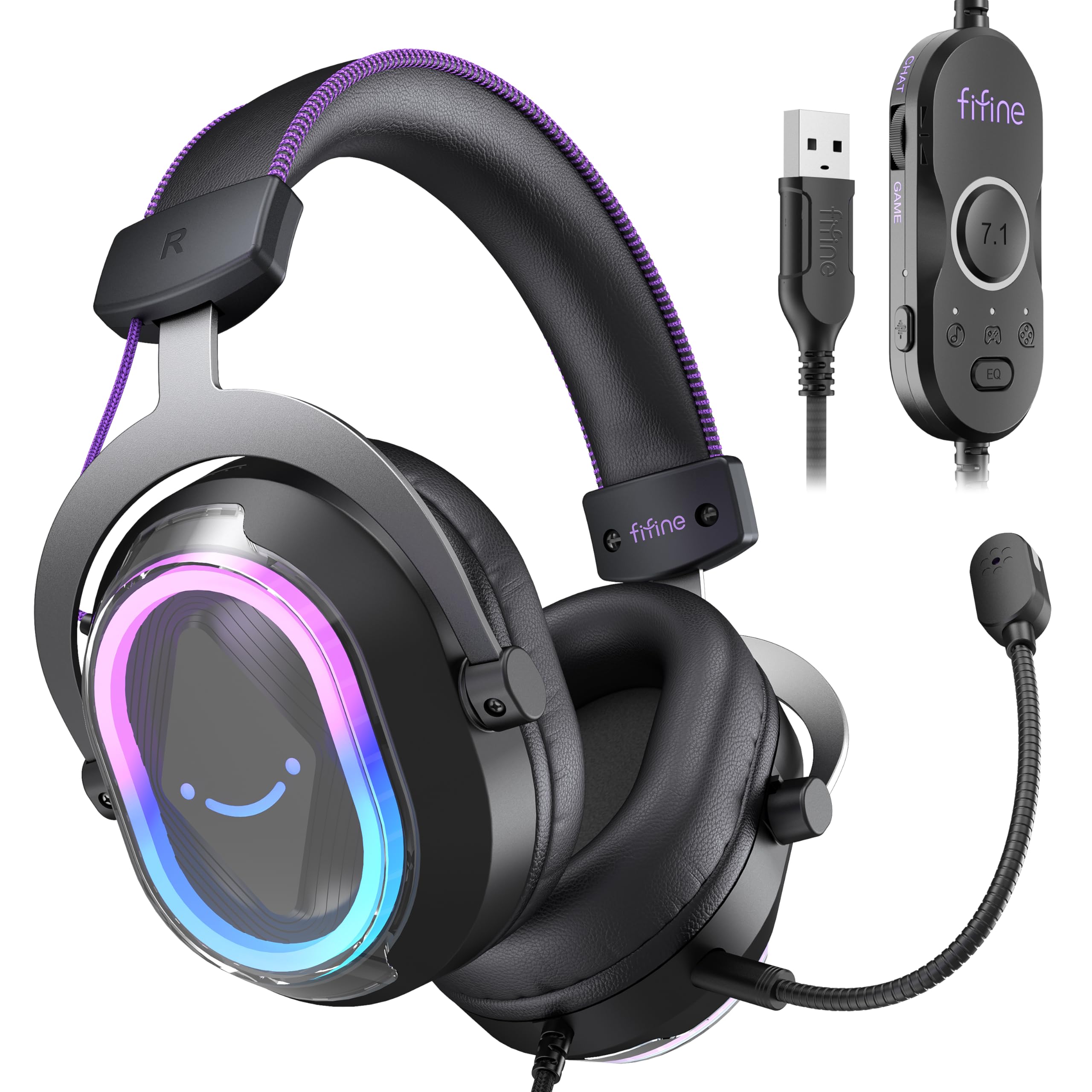
The USB-A streamer pick: rhombus shell, 11 RGB modes, 50 mm drivers underneath.
If your headset shows up on a stream, the FIFINE H13BP is designed with that in mind. The new-gen 50 millimeter dynamic driver delivers clear audio boost across high, mid, and low frequencies with details that stay readable in the mix. Its 7.1 surround sound widens the sense of where shots come from, useful in fast FPS or ARPG movement. The rhombus shell and transparent earcups with 11 selectable RGB lighting modes exist for the audience, and the on-board switch lets you toggle the lights off when you want to fade into the background.
Comfort gets real attention too. Protein skin ear pads and soft memory foam cushions are built for long sessions, and the adjustable headband accommodates different head shapes. The closed-back cups provide passive noise cancellation so the room around you drops away. In-line control via the USB control box handles volume, EQ modes, and a game/chat balance slider, and a 7.55 foot braided cable gives you slack to reach around a desk or console. The detachable noise-canceling mic is included even if you rarely use it, and the mic indicator glows red when muted.
Where it gets honest: the FIFINE is USB-A only and works on Windows and Mac, with PS4/PS5 support — it will not plug into Xbox consoles or PS controllers at all. That cable length is generous but ties you to a desk. Owners describe the audio as clear and the aesthetic as cute, and the RGB is a genuine highlight for people who stream. The 4.0+ star rating across 400+ ratings holds, though build balance and ear-cup foam placement do show up as recurring gripes from buyers who wear glasses or game for very long stretches.
Where it shines on camera
- 50 mm drivers tuned for high, mid, and low frequency clarity.
- 11 RGB lighting modes with a one-click switch and long-press toggle to turn the glow off.
- 7.55 ft braided USB-A cable reaches around a desk or console setup.
- In-line control box handles volume, EQ modes, and game/chat balance in one spot.
- Detachable noise-canceling mic with a visible red mute indicator.
Where it asks for patience
- USB-A only — no Xbox console support and no PS controller connection.
- Ear cup seal and balance are the recurring comfort gripes from longer owners.
- Closed-back design means less soundstage width than the open-back Altruva.
Built for: streamers and Twitch regulars who want their audio gear to look the part on camera.
skip it if: you split your time between PC and Xbox and need one set that works on both.
4. Razer BlackShark V2 X Gaming Headset

At 240 grams, the lightest 3.5 mm headset on this list.
Weight is the headline here. At just 240 grams, the BlackShark V2 X is engineered from the ground up for comfort, and that number is the one that matters after hour three of a session. Breathable foam ear cushions sit on top of that, so heat builds up slower than on sealed leatherette pads. For anyone who has ever flung a heavy headset off mid-match, the difference is real.
Audio is built around the proprietary TriForce Titanium 50 millimeter design, which splits the driver into three parts for independent tuning of highs, mids, and lows. That separation is what gives you brighter, clearer highs and more powerful lows. Stereo sound comes through straight off the 3.5 mm jack, and 7.1 surround is available through software on Windows 10 64-bit. Passive noise cancellation from the closed earcups keeps outside audio from bleeding in during a match.
Downsides to weigh before you buy: this one runs 3.5 mm only, so 7.1 surround requires a PC running Windows 10 64-bit, and Xbox One owners may need a separately purchased stereo adapter. Owners cite the sound and comfort as the standout strengths, but Amazon’s durability mentions lean mixed — a handful report failure after short use, while most wear it for long stretches without trouble. The 4.0+ star rating across 27,000+ ratings reflects that overall satisfaction, but the outlier durability reports are worth knowing about up front.
The thing that sells it: 240 grams and breathable foam cushions that make a four-hour session feel like a two-hour one.
The trade-off to accept: 3.5 mm only, and software surround is locked to Windows 10 64-bit — nothing works on Xbox without a separate adapter.
The right fit for: long-session PC and PlayStation players who want the lightest possible frame on their head.
Look past it if: you want a headset that will still be reliable years from now — durability feedback here is more uneven than the other picks on this list.
5. Linsoul Kiwi Ears Altruva Headphones
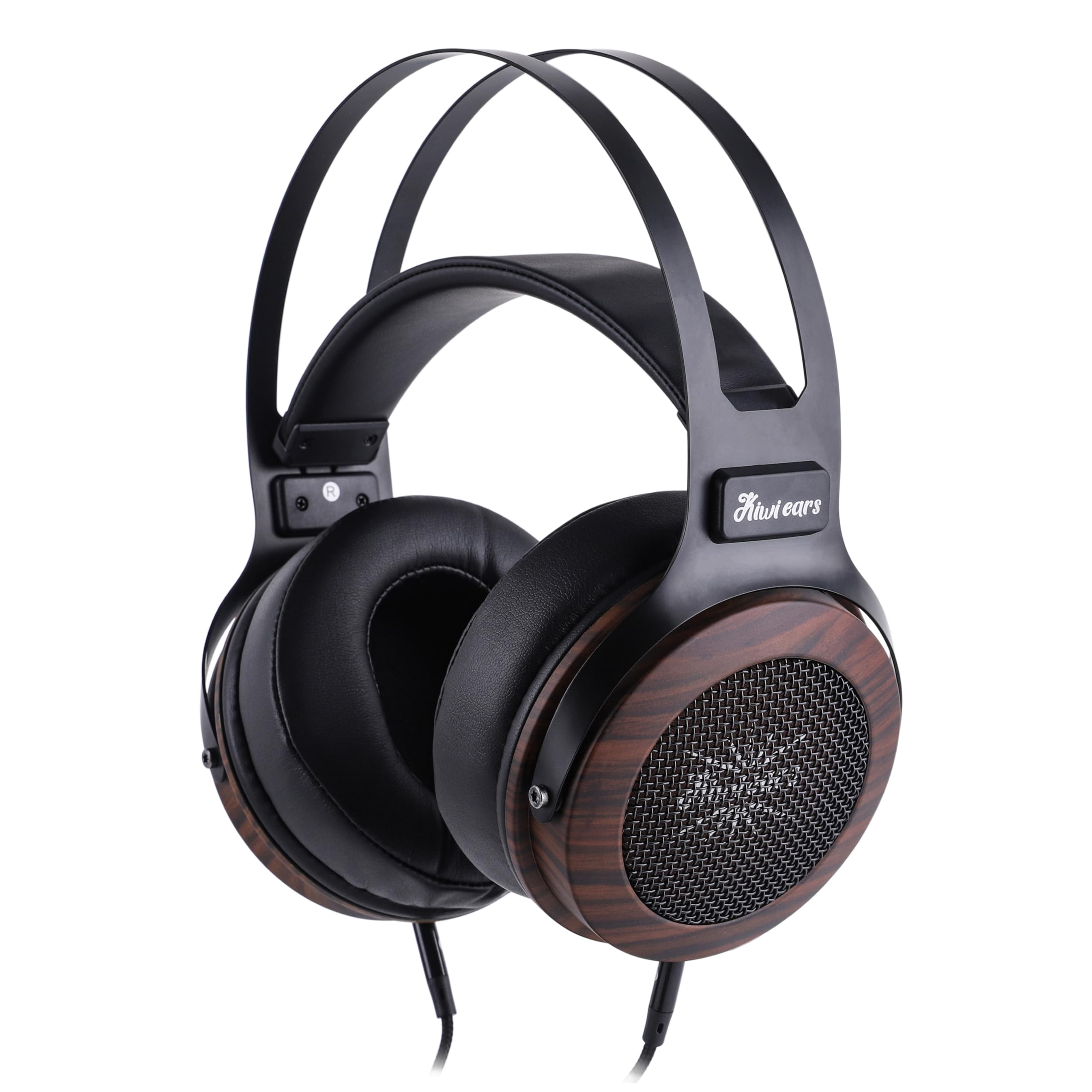
An open-back 50 mm monitor with a 32 ohm impedance that runs off a laptop jack.
This is the one to pick if you want your games and music to feel like a room rather than a pair of cups. The Altruva is tuned to a studio monitor-like profile: bass that hits hard and fast without crowding the midrange, natural midrange for instruments and vocals, and clear, transparent treble with excellent air. The full-size 50 millimeter dynamic driver uses stronger neodymium magnets, a stronger diaphragm, and custom PU and PEK composite materials with an ultra-pure copper ring. The result is a driver that performs especially well in the mid and upper frequencies. Compared to the closed-back Cloud II above, the open-back design trades isolation for a wider, more three-dimensional stage.
Build materials lean premium rather than plastic: PVD coated steel, wood, and vegan leather. The metal headband keeps it light, and buyers routinely describe it as the best audio spend they have made at this tier. A 32 ohm impedance rating means you do not need a dedicated amplifier — a laptop 3.5 mm jack can drive them, and a GameDAC2 or similar DAC opens up more of their potential. Two pad sets ship in the box, so you can swap to the texture you prefer.
Two honest caveats come with the open-back design. First, these leak sound — owners explicitly call out that they need to be used in a quiet room, and if you have a separate microphone on your desk, that bleed can reach it. Second, while the sound quality is what everyone praises, durability shows up as the more mixed topic. A long-term owner reports the head strap snapping within two weeks, and the included spare earcups run small. Most buyers keep them for years without trouble, but treat the strap with a bit of care. The 4.0+ star rating across 290+ ratings is thin but consistent, and the value-per-dollar story is the loudest thing these headphones say.
Why audiophiles reach for it
- Open-back design widens the soundstage and imaging for concert-like width.
- 50 mm OEM dynamic driver with neodymium magnets and PU/PEK composite diaphragms.
- Studio monitor tuning with hard-hitting bass that does not crowd the mids.
- PVD coated steel, wood, and vegan leather build — no plastic shell.
- 32 ohm impedance runs straight off a laptop or 3.5 mm port without extra gear.
What to factor in
- Open-back design leaks sound — it needs a quiet room and will bleed into a nearby microphone.
- Head strap durability is the recurring long-term concern.
- Included spare earcups run small and may not fit all ears comfortably.
Made for: desk listeners who mix, game, and stream in a quiet room and want maximum stage width.
Not for: anyone gaming in a busy room or recording with a nearby mic — open-back cans will leak.
6. HyperX Cloud III Gaming Headset
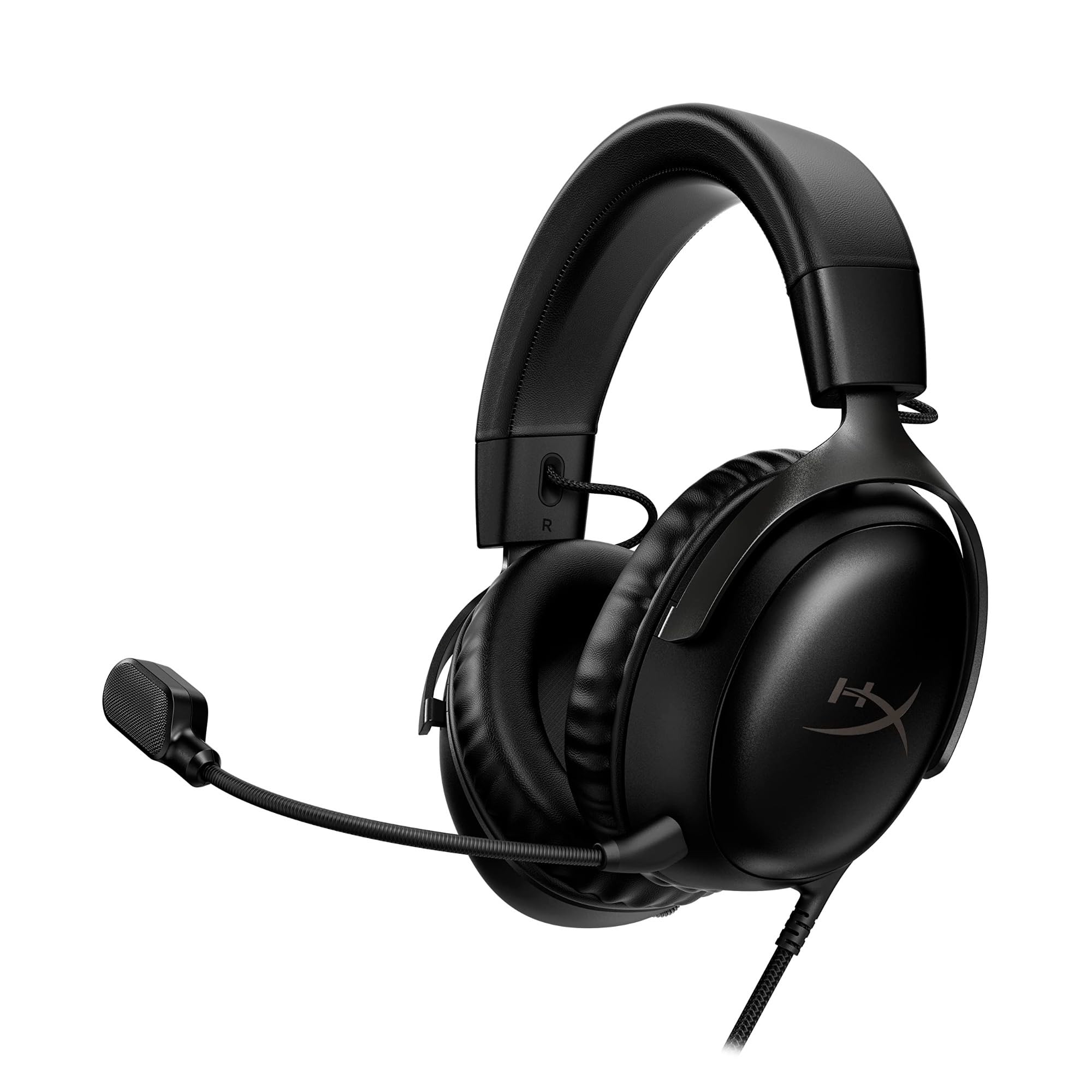
3.5 mm, USB-C, and USB-A in one headset, with angled 53 mm drivers and memory foam pads.
The Cloud III is the pragmatic pick for a buyer who plays on more than one platform. It connects over 3.5 mm, USB-C, or USB-A — a small thing until you are moving between a PS5, a laptop, and a console without juggling adapters. Angled 53 millimeter drivers are tuned by HyperX engineers for gaming-appropriate dynamics, meaning footsteps, dialogue, and the ambient score all land in a balanced mix without a single frequency stomping the others. The sturdy aluminum frame in key areas and the flexible headband are built for the accidents that happen when a match goes sideways.
Comfort is where this one earns its spot: the memory foam padding and soft ear cushions keep head pressure low enough that customers note wearing them through full workdays and long gaming sessions without trouble. The detachable mic is included for anyone who does want voice chat, but a buyer who already runs a standalone mic can simply leave it off. A durable honeycomb mesh filter, LED mute indicator, and side-mounted controls round out the ergonomics. Multiple connections have made it a favorite for plug-and-play on PC and console alike.
The honest read on sound here is more split than the rest of this list. Amazon’s own summary flags sound quality as mixed — some owners call it very good, others find it not great, and it is the single most-discussed topic in the review pool. Owners who love it describe clear balanced audio with dialogue and footsteps separating cleanly; a handful of others compare it against a more expensive category and find it a step behind. That is the fair way to say it: not a top-tier reference headphone, but a solid, comfortable headset at a budget-friendly tier. The 4.0+ star rating across 12,000+ ratings lines up with that even-keeled reputation.
What keeps it on desks: 3.5 mm, USB-C, and USB-A inputs in one headset, plus memory foam that owners wear all day without complaint.
Where it lets the group down: sound quality is the most mixed topic in the review pool — owners split between “clear and balanced” and “just fine for the tier.”
The one to grab if: you want one headset that covers PC, PS5, Xbox Series X|S, and mobile from a single box.
pass on it if: you consider yourself a competitive player chasing the sharpest possible positional audio — this one trades accuracy for comfort.
7. Sony MDR7506 Professional Large Diaphragm Headphone

The 40 mm, 63 ohm studio default with a 10 Hz to 20 kHz response.
There is a reason the MDR7506 shows up in more studios than any other name on this list. Neodymium magnets and 40 millimeter drivers deliver powerful, detailed sound with a frequency response that stretches from 10 Hertz all the way to 20 kilohertz — the full audible range, with headroom above and below for instruments and effects that live at the edges. The closed ear design provides comfort and noticeable reduction of external noise, and the foldable build stows into the included soft case for travel or a drawer.
Owners describe these as the headphones that reveal things. Compared to warmer consumer sets, the tuning is brighter and more neutral, which is exactly what you want when you are listening for position or separation rather than being punched in the chest by bass. The snug, comfortable ear pads fit over glasses, and the closed-back cups block outside noise during long editing or listening sessions. Bass is ample when you dial it in with an EQ, and treble is crisp without being harsh on most material.
The cable is the one thing that will test your patience. The 9.8 foot fixed cord ends in a gold plated plug and is not detachable, which means no quick swap if it snags. A 1/4 inch adapter is included in the box, so you can plug into an audio interface or amp directly. The 63 ohm impedance is higher than the Altruva above, so a dedicated amp or interface brings out its best. These earn their studio-standard name, and the 4.5+ star rating across 28,000+ ratings puts them near the very top of this list on owner satisfaction.
Why studios keep buying it: a 10 Hz to 20 kHz frequency response and a neutral tuning that reveals positional details amateurs miss.
The catch to consider: the 9.8 foot cord is fixed and soldered in — no detachable cable means no easy replacement if it fails.
For the buyer who wants: a reference-grade wired headphone for monitoring, editing, and serious listening with a neutral signature.
Look past it if: you want a detachable cable or prefer warm, bass-forward tuning straight from the box.
Know the Specs
Driver Size in Millimeters
The driver is the speaker inside each earcup, measured across in millimeters. A 40 mm driver is light and neutral, which suits long monitoring sessions. A 50 mm driver moves more air for richer bass and clearer separation between distinct sounds, which helps in-game footsteps stand apart from the ambient score. A 53 mm driver sits at the larger end of the common range and tends to fill a mix with more presence. None of these is inherently better — the size should match what you actually listen to.
Open-Back vs Closed-Back Earcups
Closed-back cups seal around your ears and block the room out, which keeps you focused during a match. Open-back cups let air move freely through the shell, which widens the soundstage — the sense of space between each instrument or effect — but also leaks your audio into the room. If a separate microphone sits on your desk, open-back models will bleed into that recording. If you game alongside other people or need isolation, closed-back is the safer choice.
Impedance in Ohms
Impedance is electrical resistance, measured in ohms, and it tells you how much power a headphone wants to sound its best. A 32 ohm set runs easily off a laptop, controller, or phone. A 63 ohm set rewards you with cleaner detail but benefits from a dedicated audio interface or amplifier. If you plan to run straight from a console controller or a basic 3.5 mm port, lower impedance takes the guesswork out.
Connectivity and Cable Type
Wired connections come in three common flavors: 3.5 mm analog jacks that work nearly everywhere, USB-A for desktops and laptops, and USB-C for newer consoles and phones. A detachable cable means you can replace it when a snag damages it, extending the life of the headset. A fixed cable is more secure in the cup but ties the lifespan of the whole headset to that one wire.
Common Questions
Can I use a headset without a microphone for voice chat in Discord or game lobbies?
Do I need an amplifier to drive a 63 ohm headphone like the Sony MDR7506?
Why does my open-back headset leak sound into my microphone?
Is a 3.5 mm headset or a USB headset better for PC gaming?
How long should a wired gaming headset last before I replace it?
Will a 240 gram headset really feel different from a heavier one during long sessions?
Does driver size really change the sound or is it marketing?
Can I replace worn earpads on a wired gaming headset?
Is a studio monitor headphone like the MDR7506 or ATH-M50X good for gaming too?
Do I lose anything by choosing a headset that has no microphone at all?
The Bottom Line
For most buyers, the gaming headset without microphone that earns the top spot is the Audio-Technica ATH-M50X. Its 45 mm aperture drivers with rare earth magnets deliver deep, accurate bass and clarity across an extended range, the 90 degree swiveling earcups let you flip one side up for a quick listen, and the detachable cable means a snagged cord is a two-minute fix, not a dead headset. If you want the widest soundstage and a music-first tuning, the Linsoul Kiwi Ears Altruva is the open-back pick that will change how you hear your games. And for anyone who wants a studio-standard neutral monitor for editing and mixing, the Sony MDR7506 is still the reference wired headphone its reputation promises. One nudge before you decide: the M50X’s 4.5+ star rating across 33,000+ owners is one of the strongest satisfaction records in this whole category, which is why it stays in the top spot even against picks with higher driver sizes on paper.
How we choose
We do not accept paid placement. Every pick is matched to a real buyer and a real use-case; we do not hands-on test units.
Sources
Specifications: manufacturer listings and product documentation. Review insights: verified customer reviews, as of October 2026. Pricing: not shown on this page (it changes often); check the current price via the retailer link.
As an Amazon Associate, Aappliancez earns from qualifying purchases. This does not affect which products we feature.