Disclosure: Some links in this post are affiliate links. As an Amazon Associate I earn from qualifying purchases, at no extra cost to you. Learn more
Specs are compiled from manufacturer listings and verified buyer reviews and can change over time — please confirm the key details on the product page before buying.
The hardest part of buying a full sun tree is not picking one — it is keeping it alive through its first summer. A live tree ordered online shows up in a box, spends days in transit, and lands in your yard already stressed. The seven trees below all want the same thing: an open spot with six or more hours of direct light a day. What separates them is how much punishment they will take after a bad shipping week, and how fast they reward you with shade or bloom.
This guide is built by comparing the manufacturers’ published specifications and the patterns across verified customer reviews, so you get each pick’s real strengths and trade-offs instead of marketing spin.
You will see the honest pattern in each listing: a healthy root system survives a long box ride, a weak one does not — and the right full sun tree for your yard depends on mature height, width, and how much water you are willing to give it. Below, this breakdown of the full sun trees worth planting covers every pick in plain terms.
Top Picks

How To Choose The Best Full Sun Trees
A full sun tree is one that wants six or more hours of direct light a day — not a plant that merely tolerates a bright spot. That single requirement narrows the shelf fast, because shade lovers like dogwood relatives sulk and scorch in it while prairie and woodland-edge species take it without complaint.
Mature height is the number you cannot undo
Read the mature height before anything else. A tree listed at 60 ft will own your sightline for decades, and pruning can slow it but never rewrites its genetics. A tree at 15 to 20 ft fits under power lines and beside a single-story window. Match the mature width to your setback from the house and fence line, not to the pot size in the photo.
Starting size versus patience
Mail-order trees ship small. A 7-to-10 inch sapling is cheaper per tree and often comes in multi-packs for a hedgerow, but it needs a season or two before it looks like a screen. A 2-to-3 ft tree costs more per plant and fills in sooner. Neither survives without water — both want consistent moisture for the first year while roots knit into native soil.
Hardiness zones and state shipping rules
Check the zone range against your address before you buy. Zones 5 through 9 cover a huge band of the country, and zones 3 through 8 reach colder. Some sellers also cannot ship live plants into California, Arizona, Alaska, or Hawaii because of agricultural laws. If you order to a restricted state, the nursery refunds the order — so read the title line carefully.
Water, soil, and sun in your own yard
Most of these trees want regular watering and well-draining soil. A weeping willow tolerates wet ground that would rot other species, while a magnolia and a maple prefer moderate to regular moisture and acidic soil. Sunlight is non-negotiable: put a full sun tree in shade and you get sparse growth and few blooms.
Side-by-Side Comparison
| Model | Best For | Mature Height | Mature Width | Hardiness Zones | Amazon |
|---|---|---|---|---|---|
| Perfect Plants Little Gem Magnolia Tree★ Best Overall | Compact front-yard focal point | 20–25 ft | 10–15 ft | — | Amazon |
| Perfect Plants Thuja Green Giant Arborvitae, 1 GallonBest For Privacy | Fast privacy screen | Up to 60 ft | 20 ft | 5–9 | Amazon |
| The Maple Autumn Blaze Tree | Fall color showpiece | 40–50 ft | 30–40 ft | 3–8 | Amazon |
| Weeping Willow, 2-3 ft | Moist low spots and pond edges | 45 ft | — | 5–9 | Amazon |
| 10 Thuja Green Giant Arborvitae 7-10 inches | Budget hedge in a multi-pack | Up to 40 ft | 15 ft | 5–9 | Amazon |
| Kousa Pink Dogwood, 1 gal | Pink bloom accent tree | 15–20 ft | — | 5–9 | Amazon |
| American Red Maple Shade Tree by DAS Farms | Large yard shade tree | 60 ft | — | 3–9 | Amazon |
Detailed Reviews
1. Perfect Plants Little Gem Magnolia Tree, 1-2 ft, Live Plant
Our pick — 4.0+★ from 650+ verified ratings; the strongest balance of quality and price.
The small footprint that still gives you glossy leaves and white summer flowers
The Little Gem is the rare magnolia that behaves in a small yard. It tops out at 20–25 ft tall and 10–15 ft wide, so it sits beside a patio or an entryway without eventually crowding them. Compare that to the Thuja Green Giant in this list, which reaches 60 ft tall and 20 ft wide — roughly three times the height and twice the width. On a narrow lot, that gap is the whole decision.
What it does for you is bloom. White flowers open every summer and carry a sweet note that drifts across a walkway. It is a compact grower, and the listing notes no pruning is needed to keep the shape. Plant it in a mulch bed, beside a patio for shade, or at a building corner and let it do the work.
Ordering a live plant online has a real risk, and this one shows it. Most trees land healthy, but a box that arrives upside down can damage the base of the plant, and one arrived with black fungal spots on its lower third after long storage. The stronger pattern is trees arriving larger than expected and pushing flowers fast, and one reviewer noted it held firm through hail and 100 mph wind. Snails and leaf spot both turn up when a plant sits too long in a box, so inspect the moment it arrives and spray if you see spotting.
Where it earns the top slot
- 20–25 ft tall and 10–15 ft wide fits tight front yards
- White summer blooms with a sweet aroma, arriving each year
- Compact growth means no pruning to keep its shape
- Easy-to-use plant food included with the order
What to watch for
- Rough transit can damage the base or trigger leaf spot on arrival
- Wants moderate watering and a sunny open bed
Reach for this if: you want a flowering evergreen accent in a compact bed, close to the house or patio.
Look elsewhere if: you need a dense privacy wall — the 10–15 ft width will not close a gap the way an arborvitae row does.
2. Perfect Plants Thuja Green Giant Arborvitae 1 Gallon
Sixty feet of dense evergreen, sold in a one-gallon pot
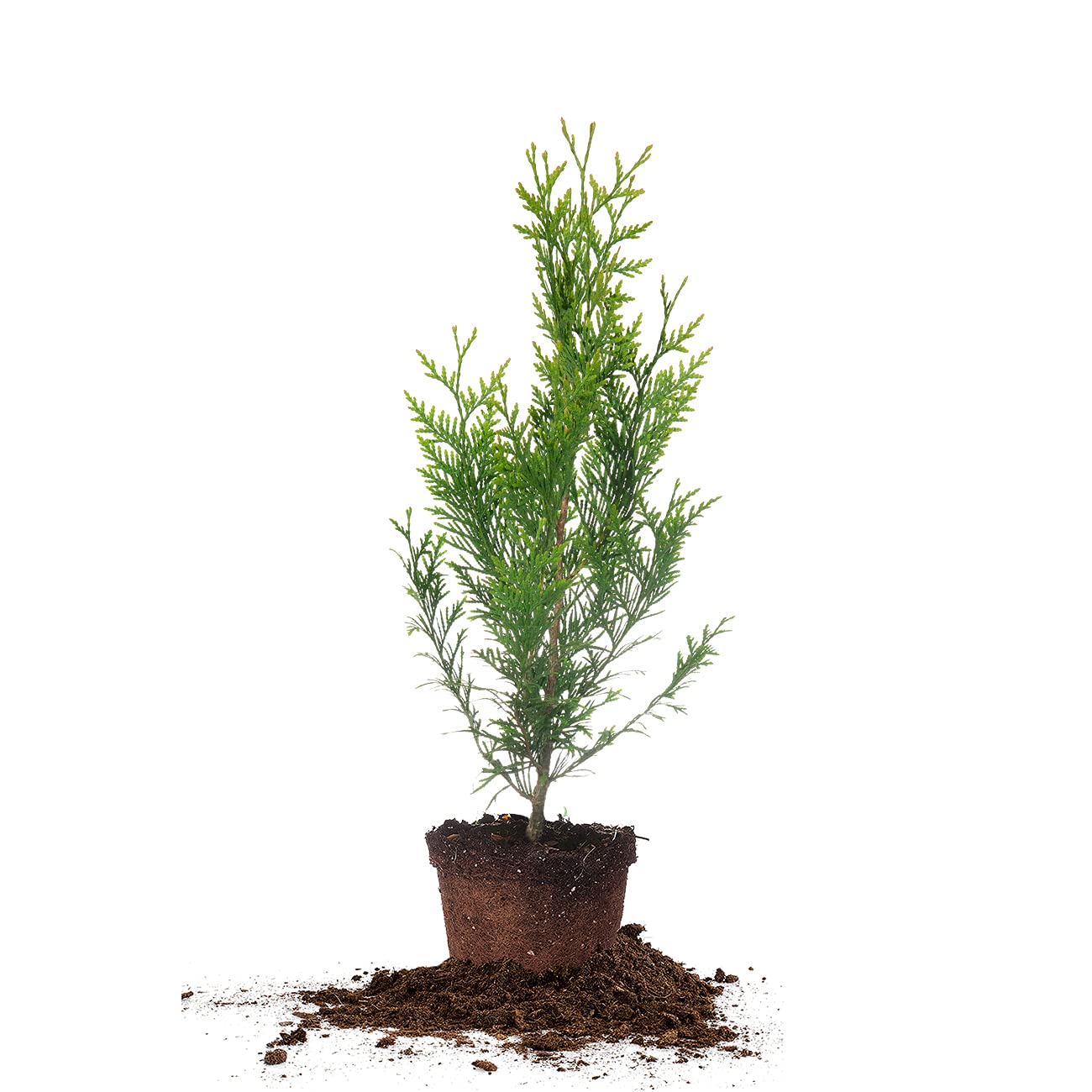
If your problem is a neighbor’s window or a road you can see from the kitchen, this is the tree. The Thuja Green Giant can reach up to 60 ft tall and 20 ft wide at full maturity — far bigger than the 20–25 ft magnolia above. It holds a wide-bottomed pyramidal shape, and you can prune it to the size you actually want. Dense dark green foliage is the draw, and the leaves carry a scent like Christmas trees when you break them.
Two things make it forgiving. It grows in zones 5 through 9, and the listing says established plants need little to no maintenance. Set them in a row and you get a screen that blocks sight and wind while staying green through winter. Because it holds a regular watering schedule in its first year, give it a dedicated hose or drip line while it settles.
The honest caveat is survival rate. Most arrive healthy and thriving, and plant healthiness is the most-praised quality in the reviews by a wide margin, well ahead of appearance and value. But the data also flags plant lifespan as mixed, and a mail-order evergreen is a gamble if it lands in extreme heat or cold. One buyer ordered a five-pack and got four plants; another found the “gallon” actually closer to a half-gallon. The root balls were fine on both, so treat the pot size as a label, not a promise.
Why it wins the privacy job: 60 ft tall and 20 ft wide of evergreen, prunable to your size, in zones 5–9.
The catch to price in: it is a live plant shipped in a box, so a small share of orders do not pull through — order when the weather is mild rather than during a heat dome.
Choose it for: a fast privacy wall across a long property line.
Hold off if: you have no room for a 20 ft spread and no way to prune it back each year.
3. The Maple Autumn Blaze Tree, 1 gal, Nursery Pot
Green most of the year, then a wall of orange and red in autumn
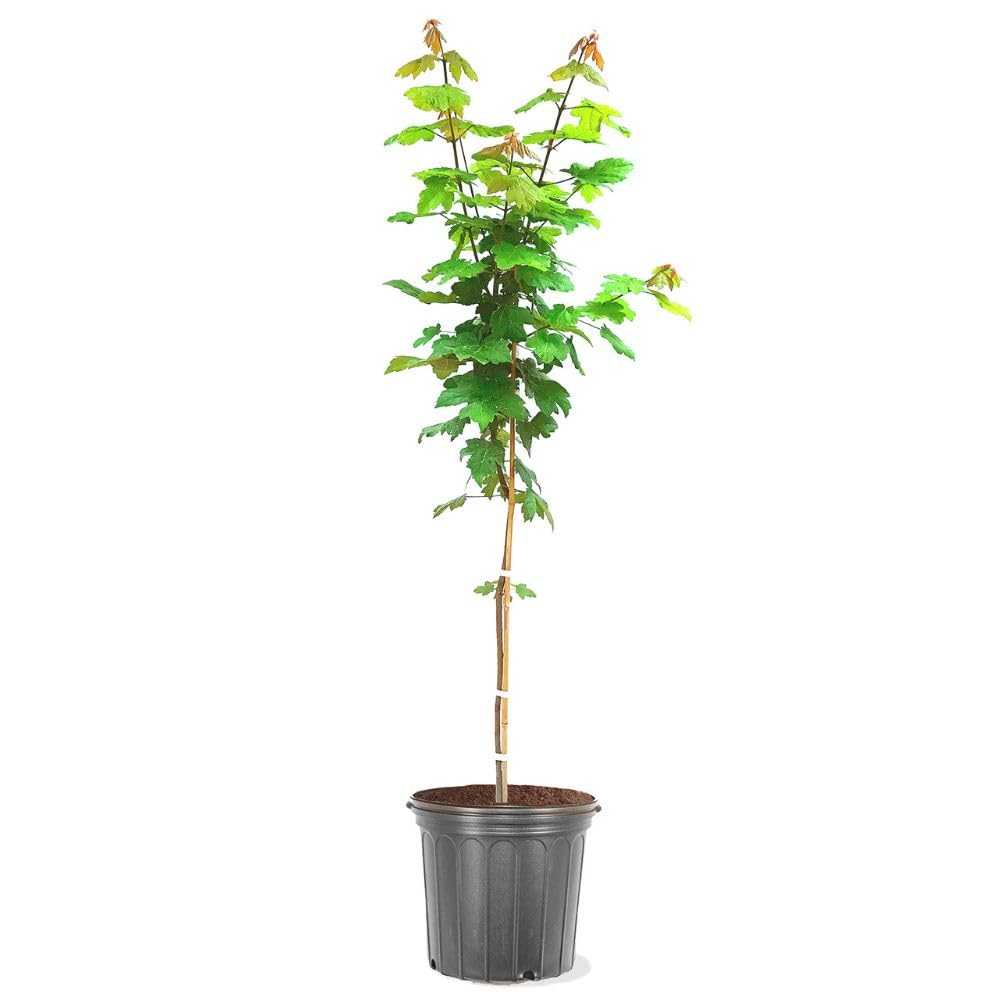
Plant this one where you will see it from a window in October. The Autumn Blaze throws leaves that shift from green to bright orange and red, and it grows fast enough that you get landscape impact in a reasonable stretch of years. At maturity it reaches 40–50 ft tall with a 30–40 ft spread, forming a rounded, symmetrical canopy. That spread is a full car-width in each direction, so give it real yard.
The care sheet is unusually clear for an online tree listing. Plant in well-draining soil in full sun, ideally in late fall or early spring. Water regularly for the first few years, then it turns moderately drought-tolerant once established. Prune in late winter for shape, feed with a balanced slow-release fertilizer in early spring, and mulch to hold moisture and keep soil temperature steady. Soil should be acidic.
Growth is the thing buyers talk about most here, and the reports back it up — trees arriving thriving, one already growing well in the yard after a quick two-day trip from Florida to Virginia. Another shipped as a bare stick and leafed out anyway. What you should know before ordering is geographic: because of agricultural laws, this tree cannot ship to California, Arizona, Alaska, or Hawaii. If you are in those states, the order is refunded and you need a local nursery source instead.
The care it wants: full sun, acidic well-draining soil, and regular water for the first few years.
Before you check out: confirm your zone sits in 3–8 and your state is one of the 46 that can receive it.
Pick this for: a big yard tree you want to watch turn orange and red each fall.
Skip if: your parcel is smaller than its 30–40 ft spread.
4. Weeping Willow, Deciduous, Fast-Growing Shade Tree, 2-3 ft
The tree that turns a soggy corner into a curtain of green
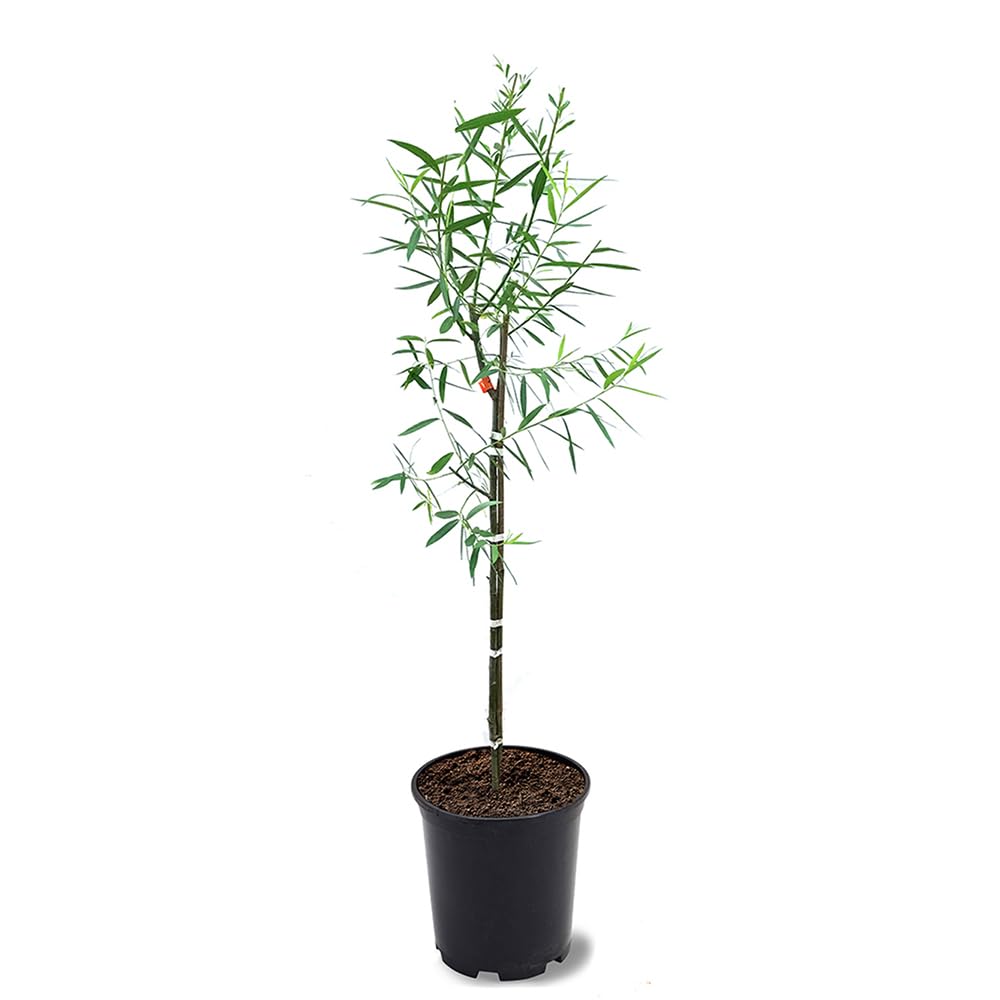
Most of the trees here want well-draining soil and moderate water. The weeping willow is the exception. It prefers moist, well-drained ground and tolerates a range of soil types, including loamy and sandy soils, and it will take the low spot in the yard that drowns everything else. It arrives at 2–3 ft tall, shrugs off a week in a box, and starts growing fast once it is in the ground.
Growth is the headline: it is the most-discussed and most-praised quality in the reviews, far ahead of appearance and healthiness. One buyer mentioned it more than doubled in size after a season, another saw two feet of growth in three months, and one survived an Oklahoma summer. It also attracts pollinators, which matters if you are planting a working landscape rather than just a view. It wants consistent watering, especially in dry spells, and a prune of dead or damaged branches when needed.
The real catch is that willows are a commitment in two directions. They grow into a 45 ft tree with a broad canopy, and they need water — a dry site defeats them. There is also a delivery complaint worth knowing: one order arrived with the tops snipped, which stopped those trees from growing taller. A single broken frond in transit is a minor repair, but a snipped leader is a permanent one, so check the top before you plant it.
Why people keep buying it
- Tolerates loamy and sandy soils, plus wet ground other trees refuse
- Fast growth — one tree more than doubled in a season
- Attracts pollinators and gives a 45 ft canopy of cascading branches
- Ships at 2–3 ft and rebounds quickly after transit
The honest trade-offs
- Wants consistent moisture and struggles in dry sites
- Some deliveries arrive with the top trimmed, which limits height growth
- Cannot ship to CA, AZ, AK, or HI
The buyer this suits: someone with a pond edge, a low wet corner, or a big lawn that needs a graceful centerpiece.
The buyer it does not: an arid lot or a yard under power lines, where a 45 ft tree and a dry season fight each other.
5. 10 Thuja Green Giant Arborvitae 7-10 inches Tall Trees

Ten tiny evergreen starts that grow three feet a year once they take
This is the multi-pack option for a whole hedge line, not a single specimen. You get 10 potted Thuja Green Giant starts at 7–10 inches tall, spaced 6–7 ft apart for a quick screen. They grow fast — the listing says 3 ft per year — and reach a mature height of up to 40 ft and about 15 ft wide. Compare that to the 60 ft, 20 ft-wide single-gallon Thuja above: this pack tops out shorter and narrower, but ten trees get you a hedge far sooner than one potted plant.
Quality is where this earns its place. Plant quality is the most-praised aspect here by a wide margin, with value for money second. Trees arrive healthy and often larger than promised. One grower bought them for a fence line and had them a year with all surviving and reaching about 3 ft. They are the plant-and-patience option: order them, get them in the ground, and let the growth rate do the rest.
Here is the trade-off to weigh before you click buy. These are very young, fragile starts compared to 2 ft trees, and one buyer who tried them said the larger trees took better. Some plants die despite careful watering, and a few reports note color and size arriving mixed. The seller’s guarantee runs five days from delivery and does not cover plants bought outside your zone, so confirm you are in 5–9 and open the box the day it lands.
The value read: ten starts, 7–10 inches each, spaced 6–7 ft apart, growing 3 ft per year into a 40 ft screen.
Who should size up: if you want an instant wall rather than a two-year project, buy larger stock and plant fewer.
Right for: a long fence line on a budget where the goal is a hedgerow you build over a season or two.
Wrong for: a single accent planting or anyone unwilling to nurse fragile starts through their first year.
6. Kousa Pink Dogwood, 1 gal, Nursery Pot

A 15–20 ft flowering tree small enough for a garden bed
Most of the trees on this list are chosen for shade or screening. The Kousa Pink Dogwood is chosen for the bloom. It carries heart-shaped green leaves through the growing season and pink flowers across its blooming period, then shifts foliage seasonally for interest year-round. It tops out at 15 to 20 ft — the shortest mature height in the group, shorter than the 60 ft Red Maple and the 45 ft Willow — so it fits a garden bed that cannot take a giant.
It ships in a 1-gallon nursery pot, ready for transplanting into a bed or lawn. Zones 5 through 9 suit it across a wide band of climates. Because it is a smaller tree, pair it with a structural planting behind it: a hedge or a taller shade tree gives it a backdrop and lets the pink read from the street.
The uncertainty here is sizing. Several reports describe a plant that is smaller than the listing photo, and one arrived in a large box with a very small plant inside. Packaging on the other hand is praised consistently — trees show up boxed, moist, and healthy, with no broken limbs. Think of the 1-gallon pot as a start, not a specimen. Read the plant’s size once it is from the start and give it a season in good sun before you judge it.
What you are buying: a pink-flowering garden tree at 15–20 ft mature, in zones 5–9.
The honest limit: it arrives small in a 1-gallon pot, and some orders look sparse next to the listing picture.
Best for: a front-bed accent where a pink spring bloom matters more than size on day one.
Not the pick for: anyone who needs an instant specimen or a shade canopy this year.
7. American Red Maple Shade Tree by DAS Farms, 2-3 ft

The one you plant for the next generation to climb
Every other tree here has a ceiling below 60 ft. The American Red Maple goes right to it. It is listed at an expected height of 60 ft, and it thrives from zones 3 through 9 in full sun — a wider cold-to-warm band than the Thuja and magnolia, which stop at zone 5. That range and that final size make it a long-term shade tree for a real yard, not a small garden bed.
The seller is specific about how to plant it. The tree ships at roughly 2–3 ft tall, and you put it straight into the ground with the included instructions. Do not move it into another container. The 30-day transplant guarantee holds only if you follow those instructions, plant in the correct location, and water as directed. Deciduous trees bought dormant in winter are expected to leaf out in spring. California orders are packaged to state regulations.
Growth is the main thing buyers talk about, with tree quality a close second. One grower had three branches and, after 30 days, made two reduction cuts to favor the leader — 12 inches of growth followed within the 60-day mark. Others describe trees arriving with moist soil and sprouting leaves within a week. Size is the mixed part: some report a tree smaller than expected, so set your expectation at the height printed in the title rather than the mature photos.
The long-term read: 60 ft of full-sun shade in zones 3–9, with a 30-day transplant guarantee when you follow the planting steps.
A reality check: it ships at 2–3 ft in a box, so your first year is about establishing roots, not canopy.
Choose it if: you have open lawn, all-day sun, and a spot you want shaded for decades.
skip it if: you need shade or color in a hurry, or you plan to keep it in a pot.
Know the Specs
Mature Height and Width
The size a tree reaches fully grown — not the size in the box. It is the number that decides where you can plant. A 15–20 ft Kousa Dogwood fits under a roofline; a 60 ft Red Maple or Thuja Green Giant needs open sky and a big setback. Width matters just as much: a 20 ft spread means your tree’s branches reach 10 ft in each direction.
USDA Hardiness Zones
A zone number tells you the coldest winters a plant survives. Zones 3–9 cover most of the country; a tree rated 5–9 will not survive a zone 3 winter. Before you order, check your zone against the listing. It is the single fastest way to know whether a full sun tree will live in your yard or die in its first cold snap.
Light Requirement
Full sun means six or more hours of direct light a day, ideally in an open site. Trees listed as tolerating or preferring full sun want that exposure to bloom and fill out. A shaded planting of a sun-lover usually means sparse leaves, few flowers, and slow growth — so pick the sunniest open spot you have.
Pot Size and Shipping Height
A 1-gallon nursery pot or a 2–3 ft shipped height is a starting size, not a finished one. Bigger starts settle in faster, while 7–10 inch saplings are cheaper and take a year or two to catch up. Standardize on the shipped height in the title, since listing photos often show mature plants.
Common Questions
How many hours of direct sun does a full sun tree actually need?
Can I plant a mail-order tree the day it arrives?
Why can’t some of these trees ship to California, Arizona, Alaska, or Hawaii?
Is a 10-pack of 7-10 inch arborvitae better than one larger tree?
How fast do these full sun trees actually grow?
Can a weeping willow go in dry ground?
What does deciduous mean for a tree I buy in winter?
How close to my house or fence should I plant a full sun tree?
Do I need two trees for the magnolia or dogwood to bloom?
What is the difference between the two Thuja Green Giant listings?
The Bottom Line
If you want the best all-around pick for a sunny yard, the Little Gem Magnolia is the one to buy — a flowering 20–25 ft tree that fits a small bed without swallowing it, and a quiet crowd favorite that holds a strong reputation across a large base of owners. Want a privacy wall instead? The Thuja Green Giant single gallon gives you 60 ft of dense evergreen in zones 5–9. For a low wet corner or a lawn centerpiece, the Weeping Willow handles the moisture other trees refuse. And if fall color is the whole point, plant the Autumn Blaze Maple and give it the biggest piece of sky you have.
How we choose
We do not accept paid placement. Every pick is matched to a real buyer and a real use-case; we do not hands-on test units.
Sources
Specifications: manufacturer listings and product documentation. Review insights: verified customer reviews, as of October 2026. Pricing: not shown on this page (it changes often); check the current price via the retailer link.
As an Amazon Associate, Aappliancez earns from qualifying purchases. This does not affect which products we feature.