Disclosure: Some links in this post are affiliate links. As an Amazon Associate I earn from qualifying purchases, at no extra cost to you. Learn more
Specs are compiled from manufacturer listings and verified buyer reviews and can change over time — please confirm the key details on the product page before buying.
If you have ever pulled on a full leg compression sleeve and had it creep down your thigh within twenty minutes, you already know what this list is about. A full leg sleeve is one long tube of stretchy, tightly knit fabric that runs from your ankle all the way past your knee to the top of your thigh. The point of wearing one is simple. It squeezes the ankle hardest and eases off as it climbs, so blood gets pushed back up the leg instead of pooling around the calf and knee. Buyers get this wrong in the same way every time: they size down because they think tighter equals better support, then the sleeve rolls, bites, or cuts off circulation. Sizing up and measuring the thigh — not the calf — is the fix.
This guide is built by comparing the manufacturers’ published specifications and the patterns across verified customer reviews, so you get each pick’s real strengths and trade-offs instead of marketing spin.
Two things decide whether a sleeve gets worn or ends up in a drawer — the compression grade at the ankle and whether the top band actually holds. Scroll on for the Full Leg Compression Sleeve picks worth your money this season.
Top Picks

How To Choose The Best Full Leg Compression Sleeve
Three numbers and one measurement decide almost everything about whether a leg sleeve works for you. Get them right and the sleeve becomes something you forget you are wearing. Get them wrong and it becomes the thing you peel off in a parking lot.
Compression grade — the mmHg number on the listing
mmHg stands for millimetres of mercury, a unit that measures how much squeeze the fabric puts on your leg. A 15-20 mmHg sleeve is a moderate, firm squeeze — the kind you can wear through a workday without thinking about it. A 20-30 mmHg sleeve is a medical-grade squeeze, noticeably tighter, and it is the grade you see on stockings meant for post-surgical swelling and vein support. A 20-30 mmHg sleeve squeezes about 33% harder at the ankle than a 15-20 mmHg one. If this is your first full-length sleeve, 15-20 mmHg is the safer starting point.
Measure your thigh, not your calf
Almost every sizing complaint on these listings traces back to the wrong measuring point. Because a full sleeve reaches the thigh, the thigh is where it either holds or rolls. Some makers tell you to measure 8 inches above the kneecap. Others size by the middle of the standing thigh. If a chart gives you a thigh circumference range and a separate length range, both matter — a sleeve that fits your thigh but comes up short on length will still creep.
Grip bands, seams, and skin
The top band is the part that fights gravity, and it is usually lined with silicone dots or waves to hold the fabric in place. That grip is what stops the roll-down. It is also the part most likely to irritate skin when worn for hours, so if you plan to sleep or work in your sleeve, check the top-band construction before you buy. smooth knitting keeps chafe down; a ribbed or paneled knit can target specific zones like the shin or the quadriceps.
Fabric and stretch
Nearly every sleeve in this category is a nylon and spandex blend, sometimes with copper-infused fiber woven in. That blend is what gives you 4-way stretch — the fabric pulls in both directions so it hugs the muscles without binding the joint. A copper content is a fabric additive, not a treatment; it appears in the yarn percentages and nowhere else. Breathability comes from the knit, so a 3D-knitted or lightweight ribbed sleeve runs cooler under trousers than a heavy-weight one.
Side-by-Side Comparison
| Model | Best For | Compression | Count | Care & Fabric | Amazon |
|---|---|---|---|---|---|
| KEKING Full Leg Compression Sleeves★ Best Overall | Everyday swelling and workout recovery | 20-30 mmHg graduated | 2 sleeves per pack | Nylon, Spandex | Amazon |
| NOSIDAK Copper Knee Sleeve Compression StockingBest Support | Knee and thigh support in warm weather | 20-30 mmHg graduated | 2 sleeves per pack | Hand wash only, 60% copper ions fiber | Amazon |
| Zensah Full Length Long Leg Compression Sleeve | Shin splint support during running | — | — | Lightweight ribbed knit with thigh grip elements | Amazon |
| Vive Full Leg Compression Sleeves | All-day wear for people on their feet | 15-20 mmHg graduated | Pair (2 sleeves) | Nylon/spandex, lightweight, smooth | Amazon |
| Tommie Copper Compression Leg Sleeve | Whole-leg coverage in a heavy-weight knit | — | 1 sleeve | 4D Lycra stretch, Copper Znergy fabric, unisex | Amazon |
| VS VITAL SALVEO Recovery Compression Leg Sleeve | Post-activity recovery and blood-flow support | — | 1 sleeve (1PC) | Hand wash only, anti-slip silicone band | Amazon |
| Incrediwear Leg Sleeves | Full-thigh coverage for swelling and recovery | — | 1 sleeve | Wash warm or cold, tumble dry low, unisex | Amazon |
Detailed Reviews
1. KEKING Full Leg Compression Sleeves
Our pick — over 4★ from 150+ verified ratings; the strongest balance of quality and price.
The medical-grade squeeze that still lets you pull your jeans on over it.
Here is the number that separates this sleeve from most of the field: 20-30 mmHg. That is a true medical compression grade, the kind that presses hardest at the ankle and loosens as it climbs toward the thigh. So blood gets pushed back up the leg instead of sitting in the calf. You feel it working most on a long standing shift or the hours after a hard run, when your legs would normally feel heavy. For reference, the Vive pair below runs 15-20 mmHg — about 33% less ankle pressure — which makes that one the gentler daily-wear choice and this one the recovery-and-swelling choice.
Durability is the question nobody can answer on day one, and KEKING’s own listing admits it — one early buyer had only used it a week and could not yet speak to how it holds up. On fit, the feedback is much more settled. Buyers report the sizing chart runs true and the sleeve stays put through a full leg day of lunges, squats and hamstring curls. Tall buyers specifically note it is long enough to cover the full leg, and post-ACL surgery wearers call it the best of four brands they tried because it supports without bulk — only slightly thicker than a TED stocking (a tight medical stocking used to prevent blood clots), so trousers still fit normally. That said, the recurring gripe is the top band, and it is worth knowing before you commit. One longer-term owner found the sleeve stayed up perfectly the first week, then stopped holding altogether and slid down during the second.
Material is a nylon and spandex knit with 4-way stretch, so it moves with the leg rather than fighting the knee. The knit is sweat-wicking, which keeps the calf and knee dry through a workout. It comes two to a pack, so you are not stuck washing one sleeve every night. That 20-30 mmHg grade is exactly why this one sits at the top — it is the only pick here at the medical end of the range that also stays comfortable enough to wear for hours. If you want a mild squeeze for an office day rather than genuine recovery compression, this is more sleeve than you need.
Graduated 20-30mmHg pressure
- 20-30 mmHg graduated squeeze — the strongest grade on this list, easing from ankle to thigh
- Two sleeves per pack, so one is always clean
- Long enough for tall wearers and slim enough to sit under normal trousers
- Sweat-wicking 3D knit keeps the knee and calf dry
Tight calf band
- The top band is the weak point — sustained grip over weeks is the honest unknown
- 20-30 mmHg is a firm squeeze and will feel tight if you expected a light sock
- Sold as a pack of two, so there is no single-sleeve option
Start here: the one to buy if you want real medical-grade compression for swollen legs, post-workout heaviness, or a knee that needs support from ankle to thigh.
Size up first: if your top band has to survive months of all-day wear, budget for the possibility that the grip softens — and size up if you are between sizes.
2. Full Leg Compression Sleeve Copper
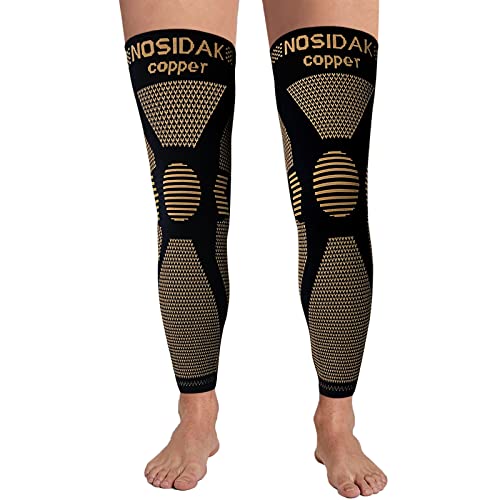
A 60% copper-ion knit with three silicone waves holding the thigh band in place.
Look at the fibre tag before anything else. This sleeve is built from 60% copper ions infused fibre, with 20% nylon, 12% polyester and 5% spandex rounding it out — a genuinely copper-heavy blend rather than a token sprinkle. The copper is a fabric content, not a coating, and it shows up in the yarn percentages. It is also a warm knit, which is exactly what you want on a cold morning run and exactly what you do not want mid-August, though one wearer specifically preferred these over full tights for the freedom of movement in heat. The compression is the same 20-30 mmHg graduated grade as the KEKING above, so the ankle gets the firmest squeeze and pressure fades toward the thigh. (mmHg means millimetres of mercury, the standard unit for measuring compression pressure.)
The standout engineering here is the top. Three anti-slip silicone waves run around the thigh band, and the brand claims those three silicone waves keep the thigh band from sliding down or rolling up. Knee support is the thing buyers talk about most positively, and the laundry list of daily complaints it is sold against runs long — varicose veins (twisted, enlarged veins), calf pain, shin splints, muscle soreness and joint inflammation among them. A post-knee-replacement wearer put it plainly: “These are great. They have really helped me after my knee replacements.” Another found the compression strong enough that they wear it after a workout and feel less stiff and sore hours later — and they noted it stays up for as long as they wear it.
Now the honest part, and it comes in two pieces. Fit is the mixed bag: some buyers land a perfect size and others find the sleeve too short, so measure your thigh circumference first — about 8 inches above the kneecap — against the listed ranges. And that anti-slip band has an edge. One wearer got thigh rashes from it that took weeks to clear, which is the classic trade-off of silicone grip against bare skin. If you have sensitive skin, wear it over a light layer or limit the hours. Hand wash only, and the copper-tan color is a love-it-or-not detail one buyer wanted a neutral alternative to.
Copper knee coverage: the copper-heavy 60% fibre content and the triple silicone wave band are the two features nothing else on this list duplicates, and the 20-30 mmHg graduated squeeze is the real medical grade.
Sleeve slips down: silicone grip and bare skin can disagree over long wear, so this is the pick for someone who values a band that holds over someone who wants the gentlest possible contact.
Pick for knees knee support is your priority and you want a copper-blend knit with a grip band engineered to stay put.
Check thigh fit your skin is reactive to silicone or you need a sleeve that runs long — the short-fit complaints are real on this one.
3. Zensah Full Length Long Leg Compression Sleeve

One sleeve doing three jobs — knee sleeve, calf sleeve and full-leg sleeve in a single tube.
Zensah’s angle in this category is shin splints. The whole design centers on treating the shin and calf together, because a sprain or strain there often comes with tension running down the whole lower leg. Ribbed zones are knitted throughout the sleeve to target different muscle groups as it travels from ankle to thigh, and the fabric is deliberately lightweight so the leg can still breathe during a run. Silicone gripping elements sit on the thigh portion to keep the top in place during hard activity or a full day of wear. If shin pain is your problem rather than knee swelling, this sleeve is the one on the list built around that specific complaint.
Post-op recovery is where it also earns its place. Knee surgery support is the strongest recurring note in the feedback, alongside general comfort and pain relief. Runners use it across the board — basketball, HIIT, cycling, cross-training and travel all appear in the same breath. The catch is fit, and it is the single most contested point in the reviews. Some wearers get a snug, staying fit. Others find it will not stay up on the leg at all, which is the classic thigh-band failure this category fights. Treat that as a sizing warning rather than a deal-breaker: if your thigh sits near the top of a size range, go up, because the band has less to grip on a shorter, thicker leg.
One odd detail worth flagging before you click — the listing carries a women’s department tag despite the unisex-style design, so pay attention to the size chart rather than the label. It is a single sleeve, not a pair, so factor in a second order if you want both legs covered. The lightweight knit means it layers under trousers without a visible bulge, which is why it works as a travel and workday sleeve as much as a training one. This is the running-and-shin-splint pick first, knee-recovery pick second.
Trust the brand runners, HIIT and cycling regulars chasing shin splint relief with a breathable sleeve that hides under normal clothing.
Measure twice your thigh measurement lands at the very top of a size band — that is where the roll-down complaints cluster.
4. Vive Full Leg Compression Sleeves
The gentlest squeeze here, and the one you can keep on through a whole shift.
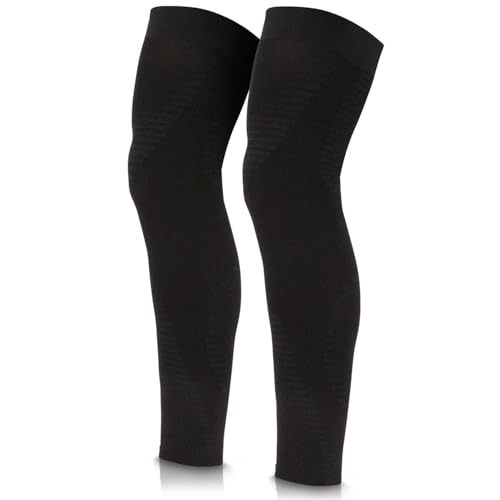
At 15-20 mmHg, the Vive pair delivers a moderate-to-firm squeeze rather than a medical one. That gap matters: compared with the 20-30 mmHg KEKING, this squeezes about 33% less at the ankle, which makes it the friendlier sleeve if you are new to compression or plan to wear it for eight hours straight. The knit is a lightweight nylon and spandex blend that stretches high, so it moves with you rather than cutting in. It covers quadriceps, hamstrings, knees and calves in one pull-on tube, and the smooth construction is there to stop chafe at the inner thigh on a long day. (mmHg means millimetres of mercury, the standard unit for measuring compression pressure.)
Sizing runs on thigh circumference, measured around the middle of the standing thigh: Small from 18 to 20 inches, Medium 20 to 24, Large 24 to 26, and X-Large 26 to 28. Getting that measurement right is the whole game, and the feedback reflects it. Effectiveness is what buyers talk about most, with quality and the compression itself close behind. Sciatica relief and varicose-vein support during workouts both come up as the reasons people keep them on, and one older athlete wearing them for senior softball said the fit was really good and they performed well. Volleyball and general training use appear too.
The honest wrinkle is the top band again, and it changes over time. A pair that stays put out of the wash can start creeping once the silicone dots soften — one long-term wearer noticed the grip weaken after repeated cold washes and the sleeves gradually slide down, though they still rated the compression the best they had found. A second, more practical catch: the ankle opening is tight, which makes these harder to pull on if your knee mobility is limited. A taller wearer also wished the sleeve ran higher toward the hip. None of that undoes the value of two sleeves in one order.
Unisex sizing options: a moderate 15-20 mmHg pair that trades medical-grade pressure for all-day comfort, with thigh-measured sizing that rewards a tape measure.
Thin under pressure: grip fades across many washes, so if a permanent hold is your must-have, this is the compromise you accept for the lower squeeze.
Good for couples you want two sleeves at a friendly price and a moderate squeeze you can wear from morning to night.
Watch the seams you need real recovery-grade compression or have limited knee mobility that makes a tight ankle opening a struggle.
5. Tommie Copper Compression Leg Sleeve, Unisex, Breathable

A heavy-weight knit that wraps the hamstring, quad, calf, knee and shin in one piece.
Tommie Copper built this sleeve around coverage rather than a single pressure number. The heavy-weight knit encases all the muscles of the leg and uses ergonomic paneling to target the hamstring, quad, calf, knee and shin separately as the fabric travels up. Two proprietary elements carry the fit: a 4D Lycra stretch that pulls in four directions, and a patented Copper Znergy fabric with contoured stitching and extra-soft stretch threads. That combination is what lets the sleeve conform to the whole leg rather than bagging at one spot. It is a pull-on, unisex, single-sleeve design in black with tonal branding.
What wins people over is straightforward — it does the job. Functionality is the single most-praised trait in the feedback, with overall quality right behind it. Recovery time after physical activity and relief during wear both feature heavily in what owners describe, and the compression is genuinely felt rather than advertised. If you want one sleeve that presses evenly from knee to calf to thigh, this is the paneled, purpose-built option on the list, and unlike the Vive pair it is not trying to be a light daily squeeze.
The trade-off centers on stability, and it cuts both ways. Some wearers find it will not fall down while others report it will not stay up at all — a sign that this sleeve is unusually sensitive to getting the size exactly right rather than roughly right. That is the pattern with heavy-weight paneled knits: there is less stretch forgiveness built in, so the correct size holds beautifully and the wrong size simply will not. Buy after you measure, not before. Wearers who land their size describe a snug, supportive pull they can keep on for a full activity.
Made for the buyer who wants even, full-length compression across every muscle of the leg and prefers a substantial knit to a thin one.
Wear all day: the heavy-weight fabric leaves less margin for a wrong size — measure the thigh and the calf and match both against the chart.
6. VS VITAL SALVEO Recovery Compression Leg Sleeve (1PC)
Built for the hours after activity — or right through it when your knee needs backup.
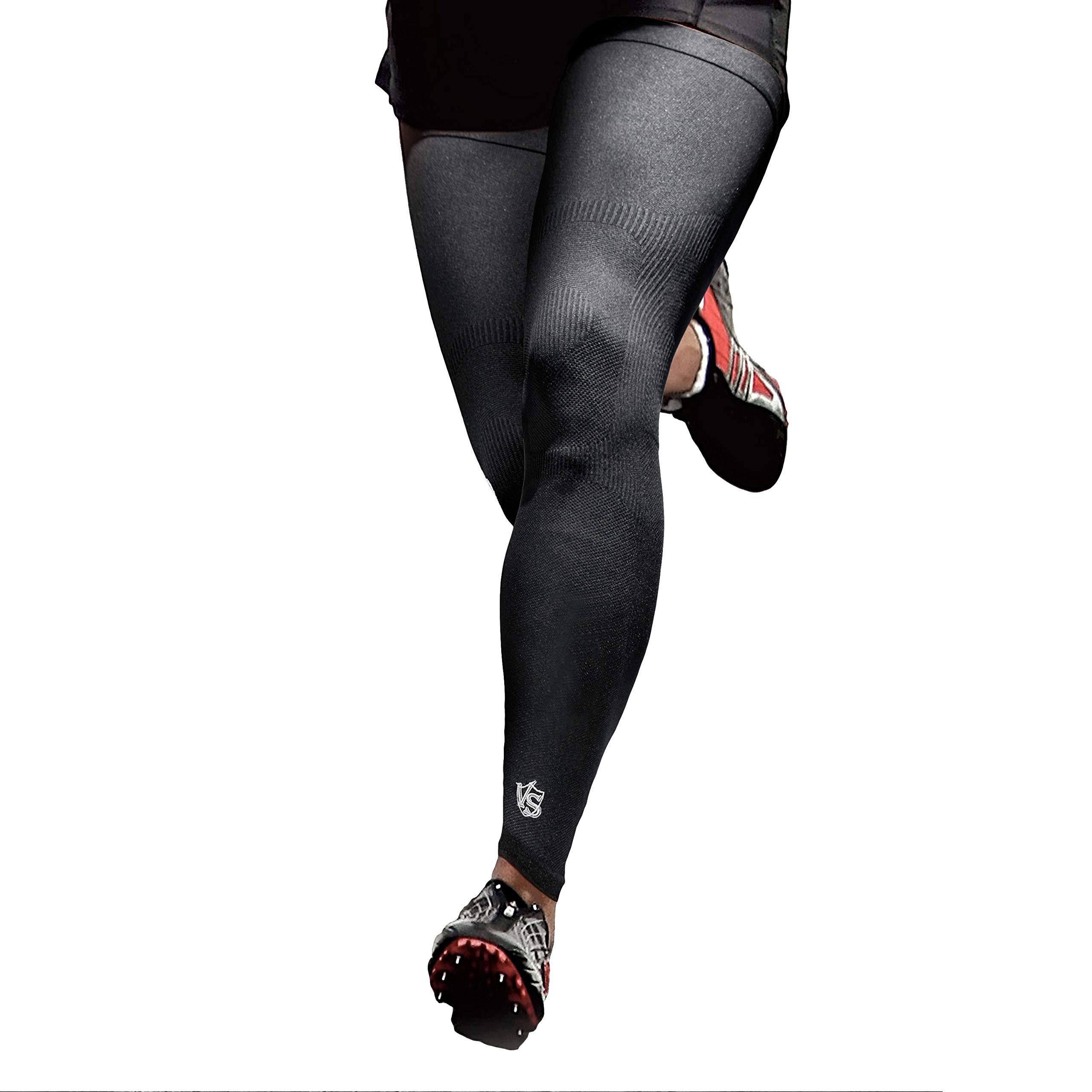
VS VITAL SALVEO pitches this sleeve at recovery, and the design follows that brief. A body-heat activated fabric warms with your own heat during recovery, and targeted compression supports circulation while you move. The anti-slip band keeps the sleeve seated on the thigh during activity. A note the brand is careful to make: because that band contains silicone, they recommend removing the sleeve after extended activity to let your skin rest, and taking it off immediately if any discomfort appears. Hand wash only with a mild neutral detergent, no bleach, no harsh cleaners, no high-heat drying.
Quality is what stands out most in the feedback, and effectiveness follows close behind — compression and support both register strongly as reasons owners stay with it. Recovery after knee surgery is the use case that shows up again and again, which is exactly the brief this sleeve was built to fill. If you are shopping a sleeve for post-operation recovery or the days after a heavy leg session, this is one of the more purpose-focused options on the list.
Two honest caveats belong here, and both are worth reading before you commit. Fit is contested: some owners mention it stays in place beautifully, while others find it rolls down from the thighs during a run — so accurate thigh measurement is not optional. And durability is the one place the feedback leans negative, with some wearers noting the construction does not last as long as they hoped. A recovery sleeve that lives in a gym bag is one thing; one that gets pulled on daily for months is another. Keep the care instructions to hand and treat it as a wear-and-replace item.
Buy for recovery: a recovery-first sleeve with a body-heat activated knit and a silicone band tuned for the thigh.
Order two pairs: that silicone band wants skin breaks, and this is the sleeve on the list most likely to need replacing sooner than the rest.
7. Incrediwear Leg Sleeves

The heavy hitter for swelling — a full-thigh sleeve built for all-day, all-night wear.
Incrediwear takes a different route to the same problem. Instead of squeezing the leg with pressure alone, the fabric is embedded with semiconductor elements that the brand says support blood flow and lymphatic drainage, which it positions as greater relief than traditional compression. Whatever you make of that, the practical advantage is real: this is not a tight compression sleeve in the mmHg sense, which is exactly why some wearers can keep it on around the clock. The knit is gentle enough for sleep and work, and the care is unusually forgiving — wash warm or cold, tumble dry low, no bleach, iron or dry cleaning. That is a far easier routine than the hand-wash-only sleeves above. It is a single unisex sleeve.
Swelling control is the headline in the feedback, and the stories around it are specific. Buyers reached for it after knee surgery, a femur fracture, a patellar tendon repair and a car-wreck injury, and they consistently report less swelling and more confidence walking. One college soccer player wore it alongside strengthening, rest and elevation after a third hamstring pull and was back in full practice within days. Another noted it fits large calves and thighs without trapping fluid the way a knee brace can — a genuinely different behaviour from a tight compression sleeve, and one of the more persuasive reasons to pick this one.
Sizing is the trap, and it is a sharper trap here than elsewhere on the list because the sleeve runs tight. Medium ran small against the manufacturer’s measurements for one buyer while Large fit perfectly, and a separate wearer pointed out that the official guidance says to measure 4.5 inches above the kneecap while the sleeve itself says to pull it up to the underwear line — for full-thigh coverage you measure the widest part of the thigh or it ends up too snug. The top band can also roll and, in one case, irritated the skin. Stitching has popped on a few units after heavy daily wear. Those are the honest edges on the most expensive pick here, and they do not change the fact that this is the one to look hard at if swelling and round-the-clock wear are your priority.
Infrared far fabric: an infrared, semiconductor-embedded knit that leans on the fabric rather than pressure, plus 24/7 wear and tumble-dry care that no mmHg sleeve here can match.
Premium price tag: it runs small, so the wrong size is uncomfortable fast — measure the full thigh if you intend to wear it pulled up high.
Best for swelling you are managing real swelling and want a sleeve you can sleep in, work in and machine dry.
Budget alternative your budget is fixed or you want a snug, high-pressure squeeze — this sleeve goes the other direction on purpose.
Know the Specs
mmHg (Millimetres of Mercury)
The unit that a compression sleeve is graded in. It measures squeeze at the ankle, where pressure is highest in a graduated design. A 15-20 mmHg sleeve is moderate and firm — good for all-day wear. A 20-30 mmHg sleeve is a medical grade and noticeably tighter. Anything above that is typically prescribed rather than bought off the shelf. The mmHg number tells you how hard the sleeve works, not how comfortable it is, so match the grade to your job: recovery and swelling lean toward 20-30, and a workday or first sleeve tends to favour 15-20.
Graduated Compression
Graduated means the pressure starts strongest at your ankle and eases as the fabric climbs toward your thigh. That down-the-leg drop-off is what helps move blood back up instead of letting it pool at the calf. A sleeve that squeezes evenly all the way up — or harder at the top — misses the point and usually rolls. When you read a listing, look for the word “graduated” next to the mmHg number. It is the difference between a sleeve that supports circulation and a sleeve that simply fits tight.
Copper-Infused Fiber
Some sleeves blend copper ions into the yarn — one pick here lists 60% copper ions fibre. It is a fabric content, listed among the percentages alongside nylon, polyester and spandex, and its job is to sit against the skin as part of the knit. When a listing names a copper percentage, that number is the yarn blend. It says nothing about the mmHg grade, so read the two specs separately rather than assuming a copper sleeve squeezes harder.
Sizing and Grip Bands
Full-length sleeves are sized by thigh circumference, and the thigh is where the band either holds or rolls. Measure around the middle of your standing thigh or roughly 8 inches above the kneecap, depending on the brand’s chart. The top band usually has silicone dots or waves to fight gravity. That band is the part to respect: it is what stops the roll-down, but a silicone grip against bare skin for long hours is what most often irritates, so plan your wear time around it.
Common Questions
What does mmHg mean on a full leg compression sleeve?
How do I measure my thigh for a full leg sleeve?
Is 20-30 mmHg too tight for everyday wear?
Why does my leg sleeve keep rolling down?
Can I wear a full leg compression sleeve all day and night?
What is the difference between a full leg sleeve and a knee sleeve?
How should I wash a compression leg sleeve?
Do copper-infused leg sleeves work better than plain ones?
Is a full leg compression sleeve worth it after knee surgery?
The Bottom Line
If you want one sleeve that does the most, the KEKING Full Leg Compression Sleeves are where I would start — a true 20-30 mmHg graduated squeeze, two sleeves in the pack, and knee-and-calf support without the bulk of a brace. If your priority is a copper-heavy knit with a grip band engineered to hold, the NOSIDAK Copper Knee Sleeve Compression Stocking answers that. And if swelling is the problem and you want a sleeve you can sleep in and tumble dry, the Incrediwear Leg Sleeves are the ones to look at closely — the infrared knit is the priciest route here, and the one most likely to fit you perfectly once you measure the whole thigh.
How we choose
We do not accept paid placement. Every pick is matched to a real buyer and a real use-case; we do not hands-on test units.
Sources
Specifications: manufacturer listings and product documentation. Review insights: verified customer reviews, as of October 2026. Pricing: not shown on this page (it changes often); check the current price via the retailer link.
As an Amazon Associate, Aappliancez earns from qualifying purchases. This does not affect which products we feature.