Disclosure: Some links in this post are affiliate links. As an Amazon Associate I earn from qualifying purchases, at no extra cost to you. Learn more
Specs are compiled from manufacturer listings and verified buyer reviews and can change over time — please confirm the key details on the product page before buying.
You have money sitting in a flexible spending or health savings account, and it has to be spent on qualified medical expenses. An eligible shoe counts. But a shoe only earns that status when it is built as therapeutic footwear — extra depth, a roomy toe box, removable insoles, and a design that accommodates orthotics. The trick is that eligibility and comfort are two separate things, and a shoe can pass one test while failing the other. This guide sorts the real therapeutic builds from the lookalikes, explains what depth and width actually do for your feet, and matches each pick to a specific kind of foot.
This guide is built by comparing the manufacturers’ published specifications and the patterns across verified customer reviews, so you get each pick’s real strengths and trade-offs instead of marketing spin.
The picks below range from recovery foam to double-depth leather, and each one solves a different problem for a different foot. Read on for the fsa/hsa approved shoes that genuinely earn their place.
Top Picks
How To Choose The Best FSA/HSA Approved Shoes
The single most useful thing to know before you shop: a shoe is only eligible when it is designed as therapeutic footwear, which in practice means extra depth, a wide toe box, and a removable insole you can swap for an orthotic. Everything else — the foam, the color, the laces — is comfort, not eligibility. So shop the build first and the looks second.
Depth Is The Spec That Decides Everything
Depth is the vertical room inside the shoe, and it is the number most buyers never check. Extra depth gives your toes clearance above the sole and leaves space for a thicker insert or a brace underneath. A shoe built a ¼ inch deeper than its stablemate, like the Dr. Comfort Winner-X is against the Winner Plus, buys you that clearance without changing the length. If you wear custom orthotics or deal with swelling, depth is the first thing to confirm.
Width Labels And Toe Box Shape
Width is measured across the ball of your foot, and most of these picks come in Medium, Wide and X-Wide. But width alone does not fix a bunion or a hammertoe — toe box shape does. Look for a shoe whose toe area is described as roomy or wide rather than simply listed as a wide size. The two often travel together, but not always.
Removable Insoles And Orthotic Room
A removable insole is your signal that the shoe was built to accept a custom insert. Pull it out and you gain that much depth for your orthotic. Some picks ship with a premium insole plus fitting spacers, so you can dial the volume to your foot instead of guessing.
Rocker Sole Or Firm Sole
A rocker sole curves upward at the toe so your foot rolls forward as you walk. That helps a stiff or painful foot keep moving. A firm, flat sole gives more ground feedback, which some feet prefer. Neither is better in the abstract — match it to how your foot actually moves.
Closure, Weight And Getting Them On
If bending to tie laces is hard, a hands-free step-in or a hook-and-loop strap changes your whole morning. Strap closures also let you loosen the fit when a foot swells during the day. Weight matters too on long shifts, so check the listed pounds before you commit.
Side-by-Side Comparison
| Model | Best For | Closure | Width Options | Standout Feature | Amazon |
|---|---|---|---|---|---|
| Brooks Women’s Glycerin 23★ Best Overall | All-day cushioning | Lace-up | — | Max cushion that doesn’t collapse inward | Amazon |
| OrthoComfoot Women’s OrthopedicBest Value | Wide toe room on a budget | Lace-up | Extra-wide available | Pillow-like padding | Amazon |
| OrthoComfoot Men’s OrthopedicMen’s Wide Pick | Men needing a deep toe box | Lace-up | Extra-wide available | Thick inner cushion with bounce | Amazon |
| OOFOS OOmy Zen | Post-work recovery | Slip-on | — | OOfoam impact absorption | Amazon |
| OOFOS Oomy Stride | High arches, no insole | Lace-up | — | Rocker-bottom propulsion | Amazon |
| Orthofeet Nira | Hands-free daily wear | Hands-free slip-on | Medium, Wide, X-Wide | Arch Booster plus fitting spacers | Amazon |
| Dr. Comfort Winner-X | Severe swelling and braces | Two contact closures | Wide and larger sizes | Double depth, ¼ inch deeper | Amazon |
| Brooks Addiction Walker V Strap 2 | Low arches and pronation | Hook-and-loop straps | — | MoGo midsole energy return | Amazon |
| Dr. Comfort William-X | Sensitive feet, easy closure | Easy closure | Wide | Removable insole for orthotics | Amazon |
Detailed Reviews
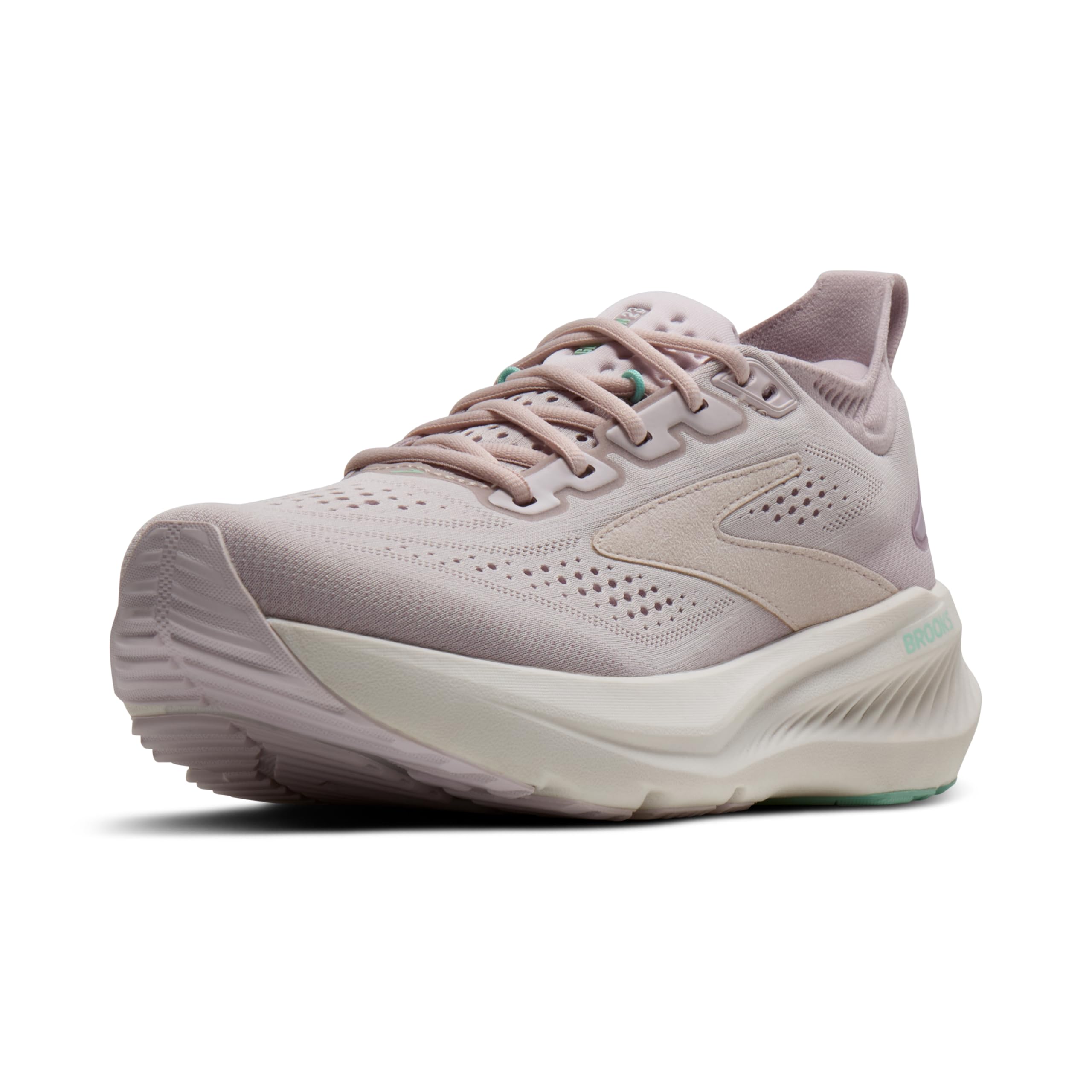
1. Brooks Women’s Glycerin 23 Running Shoe
Our pick — 4.0+★ from 950+ verified ratings; the strongest balance of quality and price.
Max cushion that stays stable instead of rolling inward under your weight.
Start with the cushioning, because that is what carries this shoe. It is a max-cushion build that holds its shape rather than collapsing inward, which is the difference between a plush shoe and a wobbly one. Buyers describe it as walking on a cushion. The foam keeps a springy feel through the toe-off, so the shoe pushes you forward instead of letting you sink.
Weighing 1.5 pounds, it is lighter than the OOFOS OOmy Zen at 1.59 pounds, which matters across a ten-hour shift. The package measures 13 x 9 x 6 inches against 12.91 x 9.69 x 5.39 inches on that same OOFOS. Those are close numbers, but they confirm this is a full-size running shoe, not a trimmed-down recovery slider. The roomy toe box shows up in review after review, and the fit holds up for people with a wide midfoot who normally wear a regular width.
Here is the honest catch: the fit is the split opinion on this shoe. Some feet find it runs small, and the sizing advice is not unanimous. Buyers report “Wide midfoot fits regular width; stable yet cushy max cushion that doesn’t collapse inward. No impact on knees/ankles, propels forward, 20k+ steps pain-free.” A handful of long-day wearers also flag the bulky tongue needing a pull-up before you tie. Try it on before a long walk rather than judging it on the first step.
What Earns It The Top Slot
- Max cushion that resists collapsing inward, so each stride stays steady
- 1.5 pounds keeps a max-cushion shoe from becoming a brick
- Roomy toe box that fits a wide midfoot in a regular width
- Springy toe-off that reads as a bouncier feel than comparable trainers
The Parts You Should Weigh First
- Sizing splits — a real share of feet find it runs small
- The tongue is on the bulky side and needs pulling up before you tie
- High arches and narrow feet do better with an in-person try-on
Fill the cart if: you log long days on hard floors and want a roomy toe box without giving up bounce.
Try before you commit if: your feet run narrow at the heel or high in the arch, since sizing splits on this pair.
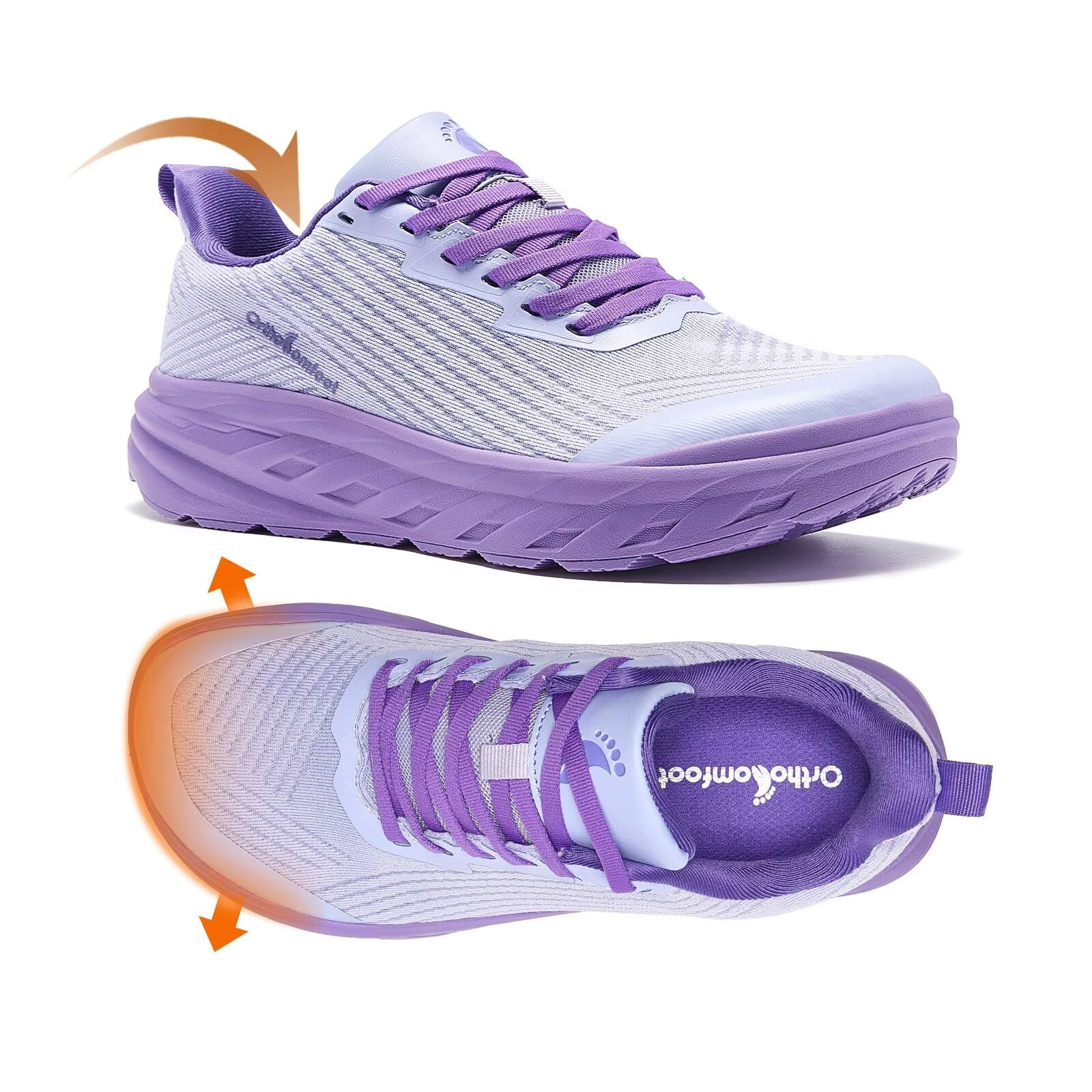
2. OrthoComfoot Women’s Orthopedic Diabetic Wide Running Shoes
The widest toe box on this list, shaped for toes that need to spread out and stay that way.
If your problem is width — a bunion, a hammertoe, toes that cross — this is the shoe built around it. It comes in extra-wide, and the toe area gets described as truly ample rather than merely wide. One buyer took it out on two separate three-mile walks, once with the factory insole and once with a TPU insert slid under it, and reported no complaints from foot or knee either time. The padding is the other headline: arch support, heel support and breathability, all before you add anything.
What wins people over here is the balance of cushion and support at an entry-level position. One CNA wore it through a twelve-hour shift with her toes spread the whole time. A buyer with neuropathy and a recent toe amputation found enough room and no stiffness. It slips on without a fight, which matters when you are managing a sensitive foot every morning.
What holds up: the padding and arch package are substantial enough that some buyers skip their own inserts entirely. The upper breathes, which keeps a long shift from turning into a sauna.
The black sole trim can leave marks on light flooring — worth knowing if you walk indoors on white tile. Fit is the other split, so size up a half if your foot runs long.
Reach for this if: your toes need room to spread and you want arch and heel support built in, not added later.
Look elsewhere if: a slim, low-profile look is a priority for you — this one wears its width openly.
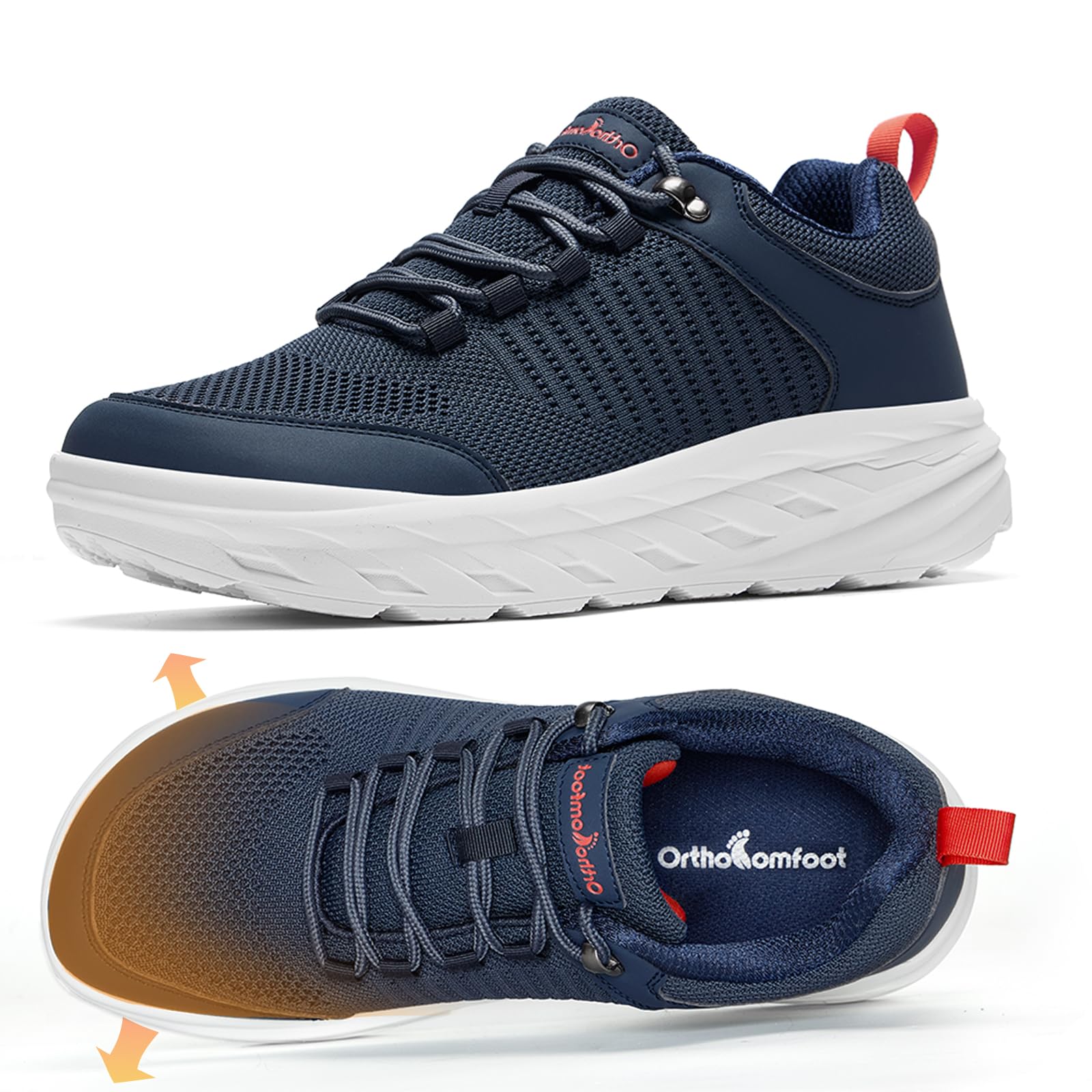
3. OrthoComfoot Men’s Diabetic Wide Shoes
A deep, wide toe box aimed at men whose feet have outgrown every standard sneaker.
For a man recovering from toe surgery or living with a foot that swells, the toe box is the whole ballgame. This shoe is described as wide and deep, with a thick inner cushion that gives a noticeable bounce underfoot. That depth is why buyers who had to clear out their old shoes after a big toe operation found these worked when nothing else did. It also handles a wide, high-volume foot without pinching across the top.
The cushioning earns frequent praise, and the arch support is called excellent by men who need it. Traction holds up too — one buyer kept steady footing on wet floors and found the shoe let him walk longer than before. Buyers with neuropathy call it one of the more comfortable pairs they have put on.
Now the trade-offs, sized honestly. Fit runs a full size small for some men, so order up if you are between sizes. Durability is the recurring note — a share of owners mention eyelets or soles giving out with heavy use, and one found the shoe lost its stability after a few weeks. This is a comfortable shoe that rewards careful wear, not a work boot built for daily abuse on concrete.
Why Men Keep Buying It
- Wide and deep toe box that clears swelling and post-surgery feet
- Thick inner cushion with a real bounce underfoot
- Arch support that buyers call excellent
- Solid traction on wet floors
Where It Gives Ground
- Runs a full size small for some feet
- Durability is the recurring note under heavy daily use
- Not built for constant standing on hard concrete
The ideal match: a man with a wide, deep or swollen foot who needs toe room above all else.
Keep looking if: you need one pair to survive years of standing shifts without showing wear.
4. OOFOS OOmy Zen Recovery Shoe – Women’s

Recovery foam built to take the pounding out of your next long shift.
This is a recovery shoe, and it says so. The OOfoam sole absorbs impact, which in practice means less pressure stacking up through your knees and lower back after hours on your feet. Nurses wear it through twelve- to fourteen-hour shifts and report less fatigue. Runners pull it on after a long run and feel the post-run ache in their feet ease. It weighs 1.59 pounds and is machine-washable, so a sweaty shift does not mean a ruined shoe.
It is also a slip-on with a wide toe box and enough breathability to stay wearable through a hot day. The 12.91 x 9.69 x 5.39 inch package keeps it compact enough to throw in a bag for the gym. The look is minimal and sleek rather than bulky, and it comes in colors that do not read as clinical. Comfort is the thing everyone raves about, with foot relief and arch support close behind.
The catch is the ankle opening. It is snug, and it is the single most repeated fit note. Feet with a high instep or a tight ankle have had to send it back and switch styles. The foam also runs warm in hot weather, and the recovery-shoe profile will not pass for a dress sneaker. Size runs true, so trust your normal number rather than sizing up to solve the tightness.
The daily payoff: if your feet ache by the end of a standing shift, this shoe is designed exactly for that recovery window. The machine-washable build makes it easy to keep fresh.
The fit note to respect: the sock-like ankle opening is snug, and a high instep can make it hard to get on. If your ankle runs thick, look at a different style in the same family.
Slip these on after: long shifts, hard runs, or any day your feet took a beating and need to recover.
Think twice if: you have a high instep or a thick ankle — the snug opening is the one recurring complaint.
5. OOFOS Womens Oomy Stride
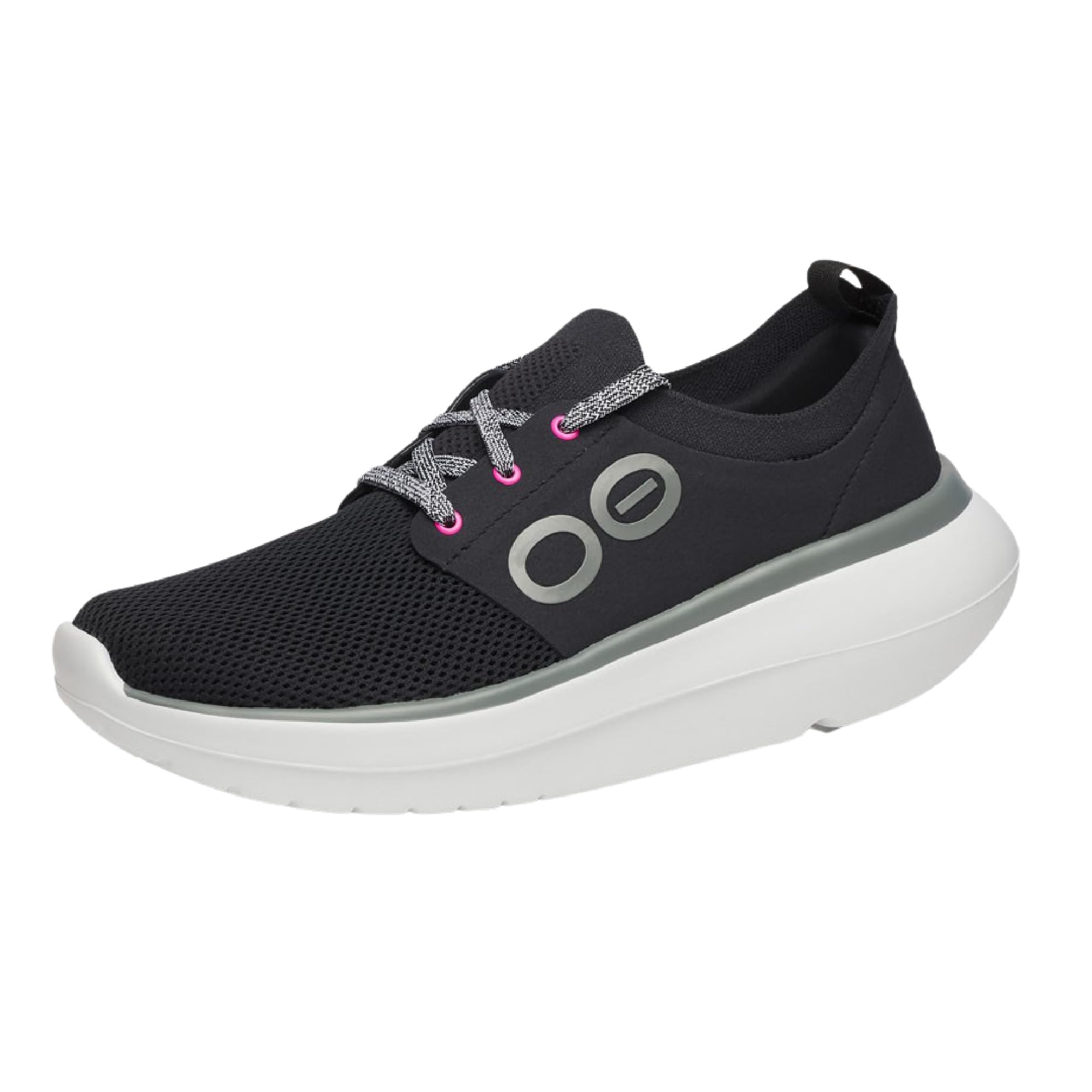
A rocker sole that keeps a stiff high-arched foot rolling forward without an added insole.
High arches are their own category of problem, and the Oomy Stride is built to answer it. The arch support is strong enough that buyers with high arches and a high instep wear it with no insole at all — the shoe does the lifting. The sole carries a rocker bottom that tips you forward with every step, which is exactly what a foot fighting plantar fasciitis or a healing tendon needs to keep moving. One buyer with plantar fasciitis got back to walking three miles a day, and another called it the best shoe they have owned for the condition.
The upper fits like a sock, the base is wide enough to feel stable, and the platform sits high but stays reasonable. Breathability is good, the toe box is roomy, and the faux tongue with adjustable laces keeps the fit dialed. It is light on the foot, which lets you wear it to indoor fitness classes without dragging. Comfort and arch support are the two things buyers praise most, and both are the reason this one earns its spot for high arches.
Two honest limits. First, the foam is light and, on a share of pairs, the tread wears through sooner than buyers expect — a couple of months of light walking is the worry some raise. Second, the elastic ankle can buckle or press on the top of the foot, and that bothers feet with neuropathy. Keep an eye on both if you wear the same pair every day.
The High-Arch Case
- Strong arch support that lets high arches skip an insole
- Rocker bottom that pushes the stride forward
- Wide, stable base under a high platform
- Light enough for fitness classes
What Needs Watching
- Light foam can wear through the tread faster than expected
- Elastic ankle can press on the top of the foot
- Not a shoe for anyone who wants a firm, flat sole
Made for: high arches and plantar fasciitis that want support from the shoe itself, with no insole to fuss with.
Not the one if: you walk the same pair hard every single day — the light foam needs a break now and then.
6. Orthofeet Nira Orthopedic Women’s Sneaker

Step in and go — no bending, no laces, no waiting on your hands to cooperate.
If tying a shoe is the hardest part of your morning, this is the pick. The Nira is a hands-free sneaker: you step into it and the heel construction holds the shoe in place, no bending required. That single feature changes the day for anyone with limited mobility or a painful back. Beyond the closure, the build is a full orthopedic package — a removable premium orthotic insole, anatomical arch support, max-cushion shock absorption, and an included Arch Booster plus two fitting spacers so you can dial the depth to your foot.
The upper is water-repellent and stretchable, so it adapts to a foot that changes shape through the day. It comes in Medium, Wide and X-Wide, and the roomy toe box is meant to ease pressure around bunions, hammertoes and swelling. The mild-rocker sole keeps the stride smooth, and the grippy rubber outsole holds on wet ground. One woman with balance issues and a history of broken feet called it the best athletic shoe she had worn in years, with a 6.5 wide giving her the toe room she needed.
Two things to plan around. The fit is the split opinion — some feet find it snug across the width. And it squeaks. The squeak shows up again and again, sometimes on the first step. Neither is a defect so much as a quirk of the design, but if a quiet shoe matters to you, that is the one to weigh.
The feature that sells it: hands-free entry plus a removable orthotic insole with fitting spacers gives you a custom-feeling fit with almost no effort. The water-repellent upper handles damp days.
The two quirks: a squeak underfoot that turns up on a lot of pairs, and a width that runs snug for some feet. The squeak does not affect function, but it is hard to ignore.
The easy-choice pick: limited mobility, back pain, or simply a hatred of laces — this shoe removes the bending entirely.
Weigh it if: a silent shoe matters. The squeak is real, and it is the most common note across the reviews.
7. Dr. Comfort Winner-X Men Sneakers

Built a quarter inch deeper so a swollen foot, a brace, or an AFO actually fits inside.
The Winner-X solves a problem most shoes ignore: volume. It is constructed a ¼ inch deeper than the Winner Plus and the standard Winner, and that extra depth is what makes room for severe edema, internal braces and AFOs. The full-grain leather upper carries a unique arch stabilizer for support and stability, and two contact closures let you open the shoe wide, slide the foot in, then tighten to fit. The wide toe box gives toes room to move, while the padded heel cup and tongue cut down on skin irritation. It weighs 2 pounds and ships with gel inserts.
For a man whose feet swell, the open-and-strap design is what makes the shoe wearable. One buyer described letting the swollen foot enter, then adjusting the straps to fit — leather upper, good looks, and a happy wearer. Another found the depth combined with the width was the best fit he had found. For men managing diabetic foot care, this is the shape that works.
Durability is the honest caveat. A share of pairs come apart within a month for some owners, and the interior can break down after a few months of heavy wear. There is also a note about the inserts: some buyers need the original inserts for balance and do not want the gel swapped in without a say. If that describes you, confirm the insert situation before you order.
The Volume Solution
- Double depth handles swelling, braces, and AFOs
- Two contact closures open wide and adjust to the foot
- Arch stabilizer for support and steadiness
- Padded heel cup and tongue reduce irritation
The Long-Term Question
- Durability is mixed — a share of pairs wear out within months
- Insert swaps can be a problem if you need the originals
- Heavier than the women’s recovery picks
Pick this when: a swollen foot, a brace, or an AFO needs depth that ordinary sneakers cannot give.
Plan for it if: you need years of hard wear — the build is comfortable, but it is not the longest-lived pair here.
8. Brooks Women’s Addiction Walker V Strap 2 Walking Shoe

Sturdy support for low arches that keeps pronation under control, with straps instead of laces.
This is the walking shoe for a flat or low-arched foot that rolls inward. The MoGo cushioned midsole returns energy with each step, and the build gives sturdy support that keeps pronation under control. The full-grain leather upper is a durable one that holds its shape over time. Instead of laces, it uses two adjustable hook-and-loop straps, which means you can open it wide, seat the foot, and tighten to fit. The non-slip sole adds grip on hard floors. It weighs 1.8 pounds.
For a long shift on cement, this shoe builds a case. One buyer’s black pair lasted eight years of eight-hour shifts on cement with no knee or foot pain. Buyers with plantar fasciitis and heel pain on hard surfaces found the support and cushioning held up. The two straps also keep a heel from sliding, and the wide base adds stability, which helps with balance.
The fit needs a willing try-on, though. A share of women find it runs big, and getting the right size can take a return or two. The shoe also runs clunky for slimmer feet, and a lip above the straps sits high for some. Comfort is the other split — a share of wearers report foot pain. Size up a half if you use an orthotic, and give the fit a real test before a full day.
What it does well: the MoGo midsole and non-slip sole handle hard floors and low arches with support that keeps pronation in check. The leather upper is built for years, and the straps make it easy to get on.
The fit variable: it runs big for some women, so the size that works might take a return to find. A half-size up helps if you wear an orthotic.
The match for: low arches, pronation, and long days on cement where support has to last.
Consider another pick if: you have a slim foot and want a low-profile look — this one runs clunky.
9. Dr. Comfort William-X Men’s Diabetic Shoe

A smooth interior and a roomy toe box for a foot that needs protection more than performance.
The William-X is a diabetic shoe built for sensitive feet, and the design choices reflect that. It has a roomy toe box, a cushioned interior, and extra depth with a removable insole so a custom orthotic or diabetic insert can drop straight in. The smooth lining cuts down on pressure points, which is the whole idea for a foot that cannot afford friction. The easy closure lets a wearer put the shoe on without help — one buyer’s 80-year-old diabetic father manages entirely on his own. It weighs 3.3 pounds.
Quality is what buyers praise most, with fit close behind. For a foot recovering from bunion surgery, the extra room handled swelling through the day. The shoe starts out stiff and breaks in over roughly a month, after which it settles into a comfortable daily fit. For a person who spends long stretches standing, that break-in is worth planning around rather than fighting.
The one honest limit: the sole is firm. For a foot with advanced numbness, a hard sole can be the wrong feel, and that buyer returned to their old shoe. If you need a soft, cushioned underfoot, this is not that shoe. Think of it as protection and structure first, plushness second.
The right call for: a sensitive or diabetic foot that needs a smooth interior, roomy toe box, and room for an orthotic.
Look elsewhere if: you want a soft, pillowy sole — this one is firm and built for structure.
Know the Specs
Extra Depth
Depth is the vertical space inside the shoe, measured from the insole to the top of the toe box. Extra depth leaves room for a thicker orthotic, a brace, or a swollen foot. A shoe built a ¼ inch deeper than its stablemate gives you that clearance without changing the length. When you wear custom inserts, depth is the spec to confirm first.
Width And Toe Box
Width is measured across the ball of the foot and usually comes in Medium, Wide and X-Wide. But the toe box shape is separate — a shoe can be wide yet still crowd the toes if the toe area is narrow. Look for a toe box described as roomy or wide, which is what keeps a bunion or hammertoe from rubbing.
Removable Insole
A removable insole signals a shoe built to accept a custom insert. Pull it out and you gain that depth for your orthotic. Some picks ship with a premium insole plus fitting spacers, so you can adjust the volume under your foot instead of guessing at it.
Rocker Sole Vs Firm Sole
A rocker sole curves up at the toe and rolls the foot forward, which helps a stiff or painful foot keep walking. A firm flat sole gives more ground feedback, which some feet prefer. Pick based on how your foot moves, not on which one sounds more advanced.
Common Questions
What makes a shoe eligible for FSA or HSA funds?
Can I use my FSA card for a pair of these shoes directly?
Do I need a prescription to buy diabetic shoes?
What is double depth and why does it matter?
Should I size up in a therapeutic sneaker if I wear orthotics?
How do I know if a shoe is wide enough for a bunion or hammertoe?
Is a rocker sole better than a firm sole for plantar fasciitis?
How long should a pair of therapeutic shoes last?
Can I machine wash these therapeutic shoes?
What if the shoe squeaks when I walk?
The Bottom Line
The strongest all-around pick for most feet is the Brooks Women’s Glycerin 23, because it pairs a max-cushion build that resists collapsing inward with a roomy toe box and a light 1.5-pound frame. If your priority is width and toe room at an entry-level position, the OrthoComfoot Women’s Orthopedic gives you extra-wide sizing and pillow-like padding. For a swollen foot or a brace, the Dr. Comfort Winner-X is the one to reach for, since it is built a ¼ inch deeper than its stablemate. And if bending to tie laces is the daily battle, the hands-free Orthofeet Nira solves it in one step.
How we choose
We do not accept paid placement. Every pick is matched to a real buyer and a real use-case; we do not hands-on test units.
Sources
Specifications: manufacturer listings and product documentation. Review insights: verified customer reviews, as of October 2026. Pricing: not shown on this page (it changes often); check the current price via the retailer link.
As an Amazon Associate, Aappliancez earns from qualifying purchases. This does not affect which products we feature.