Disclosure: Some links in this post are affiliate links. As an Amazon Associate I earn from qualifying purchases, at no extra cost to you. Learn more
Specs are compiled from manufacturer listings and verified buyer reviews and can change over time — please confirm the key details on the product page before buying.
You want a baby formula with no seed oils in the fat blend, and you want it to actually suit your baby’s stomach. The short answer: the Baby’s Only A2 Organic Milk Infant Formula is the strongest all-round pick here. It is built on A2 organic milk with a proprietary fat blend of organic oils, and it leaves out corn syrup, palm oil, GMOs, artificial colors, sweeteners and growth hormones. The other four picks each solve a different problem, and the notes below tell you which one matches your baby.
This guide is built by comparing the manufacturers’ published specifications and the patterns across verified customer reviews, so you get each pick’s real strengths and trade-offs instead of marketing spin.
Read the ingredient panel first, then check the protein type and the lactose level. That order gets you to the right tub faster than any brand name, and it is how the picks below are ranked in this guide to the best formula without seed oils.
Top Picks


How To Choose The Best Formula Without Seed Oils
Most parents start at the front of the tub and work backwards. Flip it around instead. The ingredient list is where the fat blend, the protein source and the carbohydrate source all live, and those three lines decide whether a formula suits your baby.
Read the fat blend before anything else
The fat blend is the oil section of the ingredient list, and it is the part you came here for. A formula that lists a proprietary blend of organic oils names and groups its fat sources. A formula that lists palm oil tells you something different. Both Amazon Basics tubs here state no palm olein oil (a palm-derived fat), and the Baby’s Only tub states no palm oil at all — those are the exact words on the packaging, so use them as your starting filter, not a marketing impression.
Do not stop at “organic”. Organic describes how an ingredient was farmed, not which oil it is. You can have an organic formula built around a fat source you would rather avoid. Read the oil names, then read the certifications.
Decide if you need A2 protein
A2 is a beta-casein protein — the protein family found naturally in mammal milks, including breast milk. Some formulas source milk only from cows that predominantly produce A2 beta-casein proteins. Two picks here are built that way: the Baby’s Only A2 and the Happy Baby Stage 1 A2. If your baby has been fussy on standard milk-based formula and you want to change one variable at a time, changing the protein type is a cleaner test than changing everything at once.
Then check the lactose level
Lactose is the sugar naturally present in milk, and it is the primary carbohydrate in breast milk. Standard milk-based formula contains it at full strength. A sensitivity formula drops it sharply — the Amazon Basics Sensitivity tub states 99% less lactose than standard milk-based formula, which is the largest single difference in this whole lineup. If your baby is currently on a sensitive formula and doing well, that number is the one to match, not the brand name.
Match the scoop ratio, not the habit
Scoop-to-water ratios are not universal, and getting this wrong is the most common preparation mistake. Baby’s Only specifies one unpacked, level scoop per 2 fl oz of water. Happy Baby uses a different ratio, with one scoop per ounce rather than the more common 2 oz per scoop — a detail that catches out parents switching brands mid-tub. Read the can every time you switch.
Side-by-Side Comparison
| Model | Best For | Protein Base | Stated Fat/Ingredient Position | Container Size | Amazon |
|---|---|---|---|---|---|
| Baby’s Only A2 Organic Milk Infant Formula★ Best Overall | Best overall clean-label start | A2 organic milk | Proprietary organic oil blend; no corn syrup, palm oil, GMOs | 21 oz | Amazon |
| Bobbie Organic Gentle Baby FormulaBest for Combo Feeding | Combo feeders and gassy babies | Milk based, smaller milk proteins | 100% lactose; no corn syrup, maltodextrin or sucrose | 14.1 oz | Amazon |
| Happy Baby Stage 1 A2 | Babies with hard, irregular poops | A2 organic milk | USDA organic with probiotics and prebiotics | 22.9 oz | Amazon |
| Amazon Basics Sensitivity Premium | Lactose-sensitive tummies | Milk based, 99% less lactose | Dual HMOs (2′-FL and LNnT); no palm olein oil | 2.07 lb | Amazon |
| Amazon Basics Advantage Premium | Big-tub everyday feeding | Milk based, dual HMOs | Double the HMOs of the previous formulation; no palm olein oil | 34 oz | Amazon |
Detailed Reviews
1. Baby’s Only A2 Organic Milk Infant Formula
Our pick — 4.5+★ from 350+ verified ratings; the strongest balance of quality and price.
Clean-label formula built on A2 milk and a named organic oil blend — the one to start with.
The ingredient panel is where this tub earns its place at the top. The fat blend is a proprietary mix of organic oils and A2 organic milk, so the fat sources are grouped and named rather than buried. The formula states plainly that it contains no corn syrup, no palm oil, no GMOs, no artificial colors, no artificial sweeteners and no growth hormones. For a parent reading a back label with a specific list of things to avoid, that is exactly the clarity you are shopping for.
The protein is A2 beta-casein, sourced from cows that predominantly produce A2 beta-casein proteins. That is a narrower sourcing standard than a generic milk-based formula, and it is the reason this pick shows up in conversations about gentler digestion. A 1.55-pound tub, in a 21 oz size, and the maker describes small-batch production at a facility in Ohio with each batch examined before release. Preparation is one unpacked level scoop per 2 fl oz of water, so a 4 oz bottle takes two level scoops and no arithmetic.
What wins people over is simply that the formula does its job — it is the single most-discussed strength in the feedback, and the cost per tub comes up almost as often as a reason to stay. One buyer summed it up: “This is a great formula with good ingredients, and my baby likes it. I don’t notice any gas or digestive issues.” The honest catch is digestibility, which splits opinion — most babies do fine, but constipation comes up often enough that you should watch your baby’s diapers in the first week rather than assume a smooth transition.
What the label delivers
- Proprietary organic fat blend of organic oils plus A2 organic milk
- Explicitly free of corn syrup, palm oil, GMOs, artificial colors and sweeteners, and growth hormones
- A2 beta-casein protein from cows that predominantly produce it
- Simple 1 level scoop per 2 fl oz ratio is easy to keep straight at 3 a.m.
What to watch
- Digestibility is the mixed point — constipation is a recurring theme in the feedback
- 1.55-pound tub goes fast if your baby is on full formula feeds
- No probiotics or prebiotics listed, unlike the Happy Baby pick
Start here if: your priority is a named organic fat blend, A2 protein and a label with nothing you have to squint at.
Think twice if: your baby already struggles with hard stools — the Happy Baby A2 is the pick built around that specific problem.
2. Bobbie Organic Gentle Baby Formula
The tub for the one bottle a day — built on lactose alone, with no corn syrup anywhere.
If you are breastfeeding and topping up with a single bottle, the carbohydrate source is the number to check first. This formula is made with lactose, the primary carbohydrate source in breast milk, and it states outright that corn syrup, maltodextrin and sucrose are not in human milk and so are not in the formula. That is a clean, specific position rather than a vague “natural” claim, and it is the difference most combo feeders are hunting for.
The proteins are smaller milk proteins, which is the “Gentle” part of the name. Each batch goes through 2,000+ quality checks, and the tub carries USDA and EU Organic plus Clean Label Project certification (a third-party contaminant test). It is a 14.1-ounce can — the smallest here alongside the Bobbie’s own 1.59-pound package weight — so buy it for a supplemental bottle or two a day, not for a baby drinking it exclusively from week one.
The consistency is the live debate. Some babies take to it easily and spit-up drops; others end up with stomach upset, and bowel movements can turn green and noticeably stronger-smelling, which is a normal-looking change rather than a red flag. One parent, combo feeding one bottle a day alongside breast milk, rates it plainly: “My gassy baby tolerates this so well! And I love that it’s organic.” Where it leads the field is the ingredient story; where it falls short of the Baby’s Only tub is the size — 14.1 oz versus 21 oz means more frequent reordering.
Where it earns its keep: a lactose-only carbohydrate source with no corn syrup, maltodextrin or sucrose, USDA and EU Organic, Clean Label Project Certified, and 2,000+ quality checks per batch. For a partial-feed baby, that is a compact, well-documented tub.
The honest catch: consistency divides people. It suits a lot of gassy babies and does not suit all of them, and at 14.1 oz the tub disappears quickly if you move to full-time feeding.
Made for: the breastfeeding parent adding one or two bottles a day who wants the carbohydrate list to look like breast milk.
Not the one for: a baby drinking formula as the whole diet — you will be reordering constantly at this can size.
3. Happy Baby Stage 1 A2 Organic Infant Formula
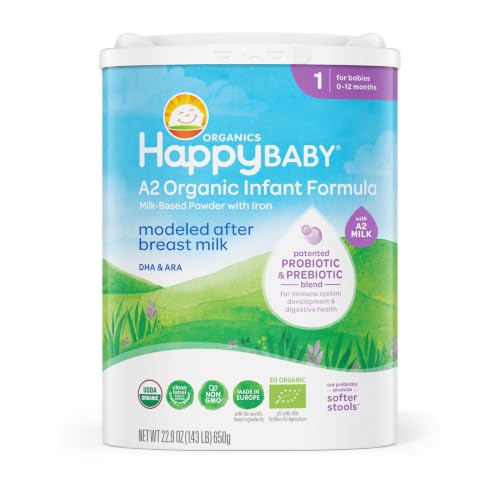
The only tub in this lineup adding probiotics and prebiotics to an A2 organic base.
The rest of the spec sheet is unusually tidy for the category. USDA and EU certified organic, made in Europe, Clean Label Project Certified (a third-party contaminant test), and DHA (an omega-3 fat) at levels found in breast milk. It also tailors key nutrient levels as baby grows, following the way breast milk changes over time. At 22.9 oz it is the largest organic tub here — bigger than the Bobbie’s 14.1 oz — and note the scoop ratio: one scoop per ounce rather than the common 2 oz per scoop, which trips up parents switching from another brand.
What parents describe most is the poop problem solving itself. Babies who had hard, irregular stools on other formulas settle into softer, more regular ones, and one parent of a 90th-percentile baby notes “Love the A2 for the extra protein.” Mixing is clean, gas is minimal, and the smell is mild. The packaging also earns praise — there is a spot to store the scoop instead of digging through powder — though the lid’s scoop holder is flimsier than the rest of the tub, and delivery has been known to send the wrong stage.
Built around one problem: constipation and irregular poops. Probiotics (live gut bacteria), prebiotics (fiber that feeds them) and A2 protein (a milk protein easier on some stomachs) all point the same direction, and the 22.9 oz tub is the biggest organic option in this guide.
What to accept going in: the value question is genuinely mixed — this is the priciest-style organic route per tub — and that per-ounce scoop ratio needs your attention on the first bottle, not the tenth.
Reach for this if: your baby has been straining, and you want probiotics plus prebiotics on an A2 organic base.
Look elsewhere if: you are feeding exclusively and watching cost per ounce — the Amazon Basics Advantage tub gives you far more powder per container.
4. Amazon Basics Sensitivity Premium Infant Formula Powder
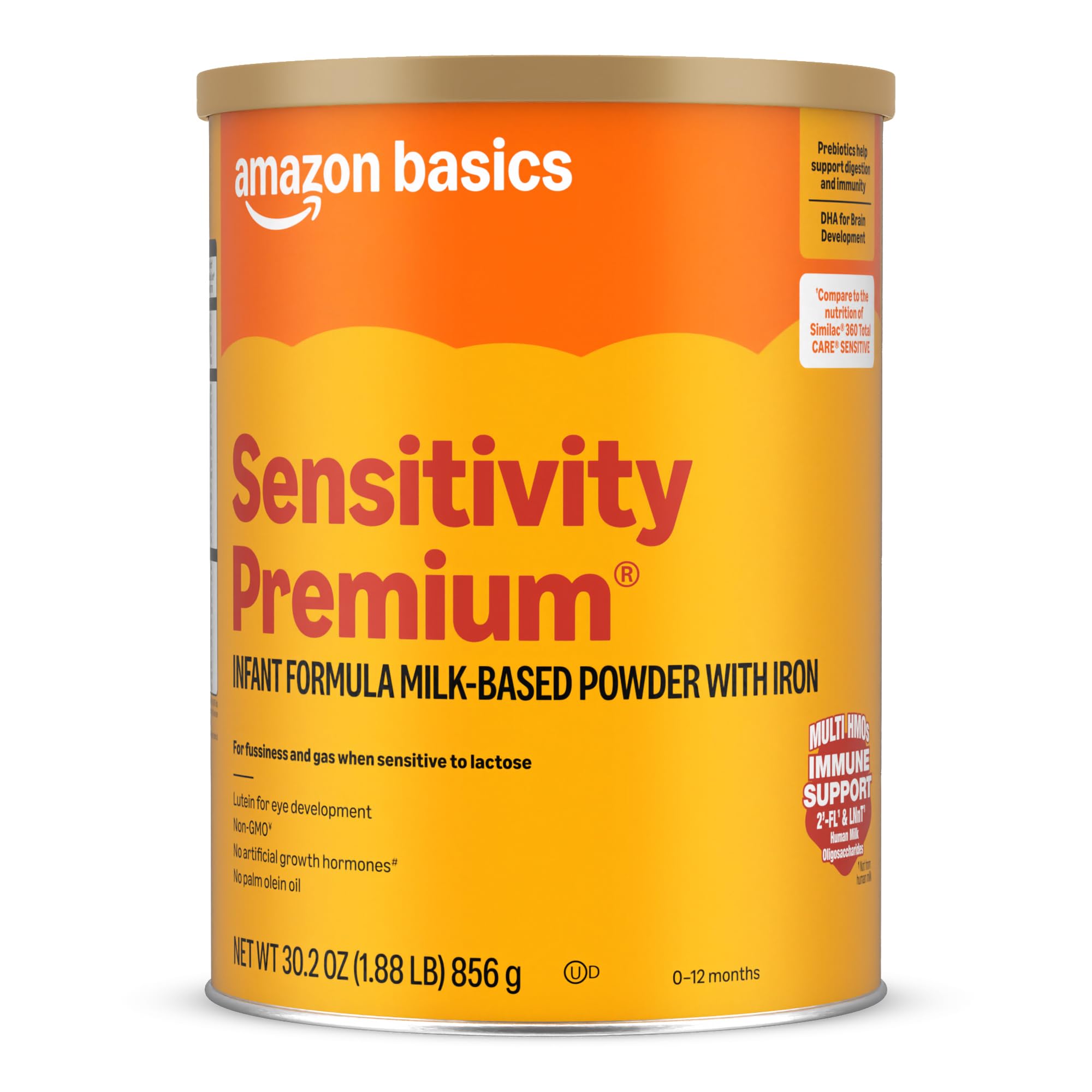
A sensitive-tummy formula that undercuts the name brands and mixes cleaner than most.
Two numbers tell the whole story here. The first is 99% — that is how much less lactose this formula carries than standard milk-based formula, which makes it the most aggressive lactose reduction in this entire lineup. If your baby is gassy or fussy specifically because of lactose, that figure is the reason to look at this tub and not an A2 organic one. The second is 2.07 pounds, which at 2.36 pounds shipping weight is a tub built to last a while rather than a supplemental can.
Beyond the lactose number, it is kitted out like a premium formula: dual HMOs (2′-FL and LNnT), which are immune-supporting prebiotics commonly found in breast milk that aid beneficial bacteria growth in the digestive tract. DHA, Lutein, Vitamin E and Choline are all in for brain and eye development. Non-GMO ingredients, no artificial growth hormones, no palm olein oil. It meets the same FDA and quality standards as national brands and is SNAP eligible — a detail that matters more than most spec lines to a lot of families.
Mixability is the quiet win. Buyers report it dissolves easily and mixes better than the national brands, which is unusual praise at this tier. The recurring gripe is constipation — it suits lactose-sensitive babies but does not suit every sensitive stomach equally, and one report of a foreign object in the tub is the kind of rare, serious defect worth checking your can for on arrival. Set against the Similac Sensitive comparison buyers keep drawing, the savings are the headline: “I was using Similac sensitive for my son, and it became very expensive. I found this, and I saved a lot of money prior to his first birthday!”
Why it converts sceptics
- 99% less lactose than standard milk-based formula — the biggest lactose drop here
- Dual HMOs at 2′-FL and LNnT for immune and digestive support
- Dissolves easily and mixes better than national brands, per buyer reports
- No palm olein oil, non-GMO, and SNAP eligible
Where it can disappoint
- Effectiveness splits opinion relative to a sensitive-brand formula your baby already knows
- Check the can on arrival; at least one report describes a foreign object
Choose this if: your baby is on a sensitive formula, doing well on it, and you want the same job done for noticeably less outlay.
Pass if: you are chasing a clean organic oil blend — this tub is built for lactose reduction, not for the organic label.
5. Amazon Basics Advantage Premium Baby Formula Powder
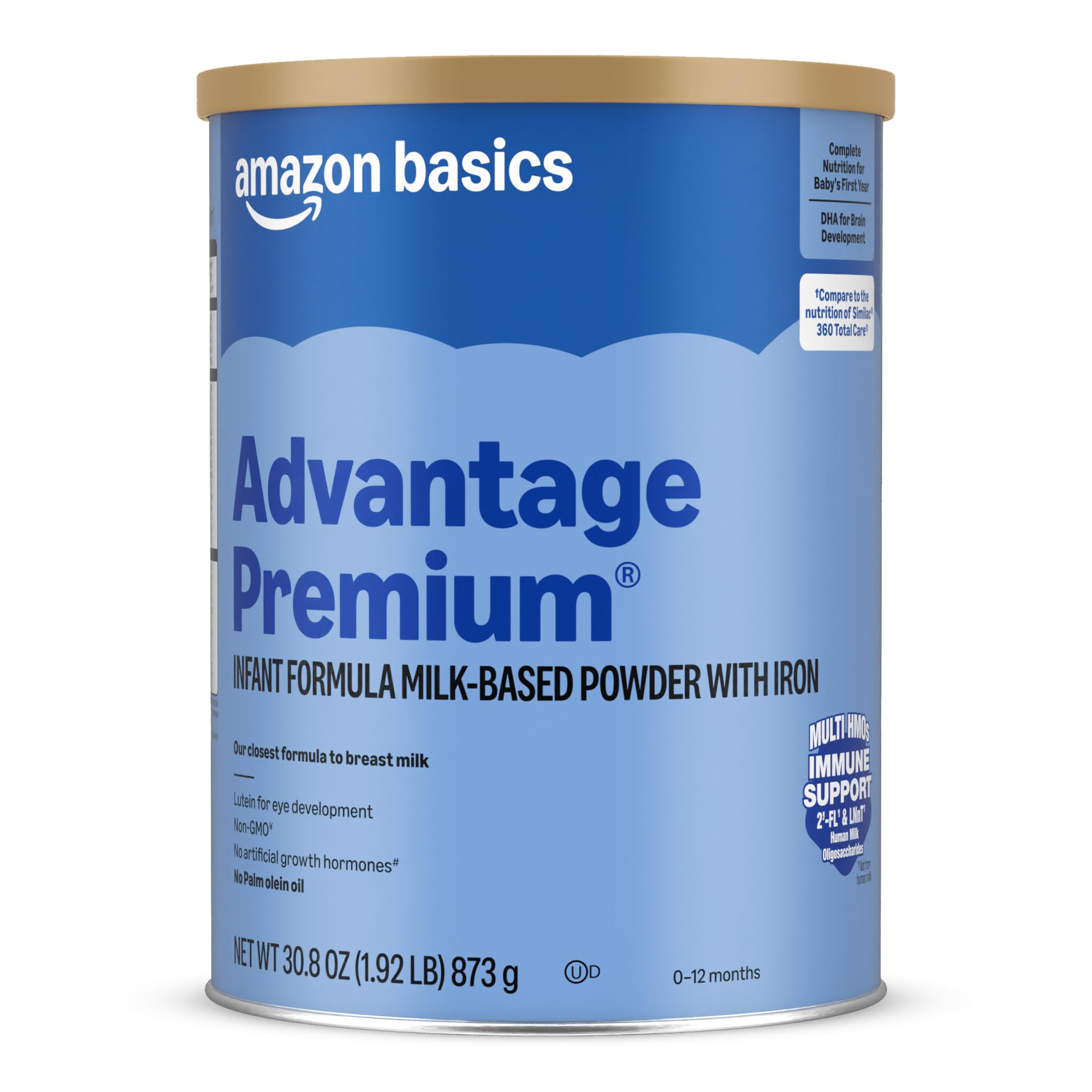
A 34 oz workhorse tub with double the HMOs — the full-time feeding answer.
Tub size is the first decision for anyone feeding formula as the whole diet, and 34 oz is the largest container in this guide by a wide margin — the Bobbie can is 14.1 oz and the Sensitivity tub is 2.07 pounds. That matters practically: fewer reorders, fewer runs to the store, fewer chances of running dry on a Sunday night. The maker says it is comparable in nutrition to Similac Pro-Advance, and it carries dual HMOs (human milk oligosaccharides, gut-supporting sugars) at 2′-FL and LNnT, described as double the HMOs of the previous formulation.
The rest is the standard premium kit done properly. DHA, Lutein, Vitamin E and Choline for brain and eye development, non-GMO ingredients, no artificial growth hormones, no palm olein oil, and SNAP eligibility. It also states plainly that, like all U.S. infant formulas, it meets the same FDA and quality standards as the national brands — a useful line if you are weighing a store brand against a name brand and wondering whether the standard actually differs.
Taste is what keeps people, which sounds trivial until you have a baby refusing a bottle. Owners mention their babies take to it, and the value line is that it behaves like the name brand for less. One parent notes their toddler prefers it and that “unlike Similac it is made with real milk.” The catches are practical: it foams more than ideal, and customers note cans arriving dented in transit — open the package the day it lands so you can flag damage before you need the powder. A few also find it does not sit right with every baby’s digestion.
The full-time-feeding case: 34 oz, dual HMOs, and the premium nutrient list at store-brand positioning. Fewer reorders and a familiar taste profile make it the low-friction everyday buy.
Two things to plan around: it foams, so give bottles a moment to settle, and inspect the can on delivery — dented arrivals come up often enough to check.
Best fit: a formula-fed baby going through a tub a week who wants the biggest container and a taste most babies accept.
Wrong turn if: your baby needs a lactose-reduced formula — the Sensitivity tub handles that, and this one does not.
Know the Specs
The Fat Blend and Why It Leads
The fat blend is the oil section of the ingredient panel — the actual sources of fat in the powder. It is the first thing to read because it is the one ingredient group that varies most between brands, and it is the whole reason you are shopping for a formula without seed oils. A formula that names a proprietary blend of organic oils gives you a defined list. A formula that lists palm oil gives you a different one. The Baby’s Only tub states a proprietary organic fat blend of organic oils and A2 organic milk; both Amazon Basics tubs state no palm olein oil.
A2 Beta-Casein Protein in Plain Terms
A2 is a beta-casein protein, and beta-casein is one of the protein types found naturally in mammal milks, including breast milk. Some formulas source their milk only from cows that predominantly produce A2 beta-casein proteins, which narrows the sourcing standard compared with a generic milk-based formula. Two picks here are A2: Baby’s Only and Happy Baby Stage 1. If you want to change one variable at a time while troubleshooting fussiness, switching protein type before switching brands entirely is the cleaner approach.
Lactose Percentage and Sensitive Formulas
Lactose is the sugar naturally present in milk and the primary carbohydrate in breast milk. Standard milk-based formula carries it at full strength. The Amazon Basics Sensitivity tub states 99% less lactose than standard milk-based formula, which is what makes it a sensitive formula rather than a standard one. If your baby is currently settled on a sensitive brand, match that lactose position rather than the brand name — the label tells you which is which.
HMOs, Probiotics and Prebiotics
HMOs are human milk oligosaccharides, immune-supporting prebiotics commonly found in breast milk that aid the growth of beneficial bacteria in a baby’s digestive tract. Both Amazon Basics tubs here carry dual HMOs at 2′-FL and LNnT. Probiotics are live cultures, and prebiotics are the fibre-like fuel that feeds them — the Happy Baby tub is the one in this lineup pairing both on an organic A2 base. If softer, more regular poops are your goal, that combination is what to look for on the panel.
Container Size and Scoop Ratio
Container size tells you how often you reorder, and scoop ratio tells you how carefully you need to read the can. Sizes here run from 14.1 oz to 34 oz, which is the difference between a supplemental tub and a full-time one. Ratios differ too: Baby’s Only specifies one unpacked level scoop per 2 fl oz of water, while Happy Baby uses one scoop per ounce. Get the ratio wrong and you are either over-concentrating or diluting the feed, so read the can every time you switch brands.
Certifications Worth Knowing
USDA Organic governs how ingredients are farmed. EU Organic applies a separate European standard, and a tub carrying both has cleared two sets of rules. Clean Label Project Certified relates to contaminant testing rather than farming method. “Non-GMO” means ingredients are not genetically engineered. None of these certifications tell you the fat source — you still read the oil list for that.
Common Questions
How do I know if a formula actually contains no seed oils?
What is A2 beta-casein protein and does it matter for my baby?
Is a sensitive formula the same as a gentle formula?
How much water do I mix with one scoop?
Can I switch my baby straight from a name-brand sensitive formula?
Do probiotics and prebiotics in formula actually help with constipation?
What are HMOs and do both Amazon Basics formulas have them?
Why do some cans arrive dented, and does it affect the powder?
Is it safe to use a store-brand formula instead of a national brand?
What does the tub size difference mean in practice?
The Bottom Line
For most families, the formula without seed oils answer is the Baby’s Only A2 Organic Milk Infant Formula — a named proprietary organic fat blend, A2 beta-casein protein (a milk protein easier on some stomachs), and an explicit no-corn-syrup, no-palm-oil, no-GMO label, all at 1 scoop per 2 fl oz. If your baby’s poops are the problem rather than the oil list, the Happy Baby Stage 1 A2 pairs probiotics and prebiotics on an A2 organic base and gives you the biggest organic tub at 22.9 oz. And if you just want a sensitive formula that behaves like the name brand for less, the Amazon Basics Sensitivity Premium with its 99%-reduced lactose and clean mixing is the workhorse to reach for.
How we choose
We do not accept paid placement. Every pick is matched to a real buyer and a real use-case; we do not hands-on test units.
Sources
Specifications: manufacturer listings and product documentation. Review insights: verified customer reviews, as of October 2026. Pricing: not shown on this page (it changes often); check the current price via the retailer link.
As an Amazon Associate, Aappliancez earns from qualifying purchases. This does not affect which products we feature.