Disclosure: Some links in this post are affiliate links. As an Amazon Associate I earn from qualifying purchases, at no extra cost to you. Learn more
Specs are compiled from manufacturer listings and verified buyer reviews and can change over time — please confirm the key details on the product page before buying.
If your puree still has lumps in it, the machine is the problem — not your recipe. The right food processor pairs a sharp blade with a bowl that keeps food tumbling back into it, so soup bases, hummus and baby food come out smooth instead of half-chopped. Below are eleven machines that do that, sorted by who they suit: big-batch cooks, small-kitchen cooks, and everyone in between.
This guide is built by comparing the manufacturers’ published specifications and the patterns across verified customer reviews, so you get each pick’s real strengths and trade-offs instead of marketing spin.
You’ll see wattage, bowl size and blade type explained in plain words, plus which machines owners keep coming back to. A good puree needs three things: enough motor force for your hardest ingredient, a bowl shape that keeps food cycling into the blade, and parts you can rinse without a fight.
Top Picks

How To Choose The Best Food Processor for Pureeing
A puree is food broken down so finely you can’t feel the pieces anymore. The machine has to do three things well: spin the blade fast, keep the food tumbling into that blade, and let you stop before you turn soup into paste. Most shopping mistakes come from buying the biggest motor and ignoring blade shape and bowl fill.
Watts: what the motor number actually buys you
Wattage tells you how much force the motor can push through dense food. A 200-watt mini chopper handles soft fruit and cooked vegetables fine. Tough fibers like raw kale, or cold chunks of squash, need more — think 350 watts and up. A 1500-watt machine won’t puree soft cooked vegetables any smoother than a 700-watt one; the extra power only shows on raw kale, cold squash or dense meat.
Bowl size changes how you puree, not just how much
Small bowls, in the 2-to-3-cup range, keep a small amount of food pressed against the blade. That’s why mini choppers make such even pastes. Big bowls need to be filled closer to their working line, or food just skates around the sides. If you’re pureeing single portions, a small bowl genuinely does a better job than a big one.
Blade shape and the vortex
Flat S-blades chop; angled, stacked or bi-level blades throw food upward and back down into the blade, which is what you want for a smooth puree. Reversible blades give you a second, blunter edge for grinding without over-processing. A single straight blade in a wide bowl tends to leave chunks near the rim.
Pulse control and stopping before it turns to paste
Short bursts let you watch texture and stop at the right moment. A machine with one continuous “on” button is easy to over-run — one extra second can take a chunky hummus to a gluey one. Two speeds plus a pulse button is the practical setup for pureeing.
Side-by-Side Comparison
| Model | Best For | Motor | Bowl Capacity | Weight | Amazon |
|---|---|---|---|---|---|
| Ninja Mega Kitchen System BL770★ Best Overall | Big-batch purees and smoothies in one machine | 1500 watts | 8 cups | 9.2 pounds | Amazon |
| Ninja Professional Plus BN601Top Performer | One-touch puree presets without guesswork | 1000 peak watts | 9 cups | 7.7 pounds | Amazon |
| Cuisinart DFP-14BCNYBig-Batch Pick | Restaurant-size batches of soup and sauce | 720 watts | 14 cups | 18 pounds | Amazon |
| Ninja Foodi Power Blender SS401 | Smoothie bowls, nut butters and purees together | 1600 peak watts | 4.5 pounds (capacity rating) | 12.1 pounds | Amazon |
| Hamilton Beach Power Elite Blender | Pureeing soups and smoothies on a lean budget | 700 watts | 40 fl oz jar | 16 ounces | Amazon |
| Ninja Food Chopper Express NJ110GR | Fast small-batch pastes, dressings and dips | 200 watts | 16 ounces | 2 pounds | Amazon |
| BLACK+DECKER FP4100B | Shred, slice and puree in one mid-size bowl | 450 watts | 8 cups | — | Amazon |
| Cuisinart Mini-Prep Plus DLC-2ABC | Small-kitchen chopping with a reversible blade | 250 watts | 24 ounces | 2.2 pounds | Amazon |
| Liebe&Lecker 8-Cup Food Chopper | Family batches in a stainless steel bowl | 350 watts | 8 cups | 3 pounds | Amazon |
| La Reveuse 2-Cup Mini Chopper | Single servings and baby food | 200 watts | 2 cups | — | Amazon |
| Hamilton Beach 3-Cup Chopper | Tiny jobs like onions, herbs and hummus | 350 watts | 3 cups | 2.1 pounds | Amazon |
Detailed Reviews
1. Ninja Mega Kitchen System BL770
Our pick — 4.5+★ from 43,000+ verified ratings; the strongest balance of quality and price.
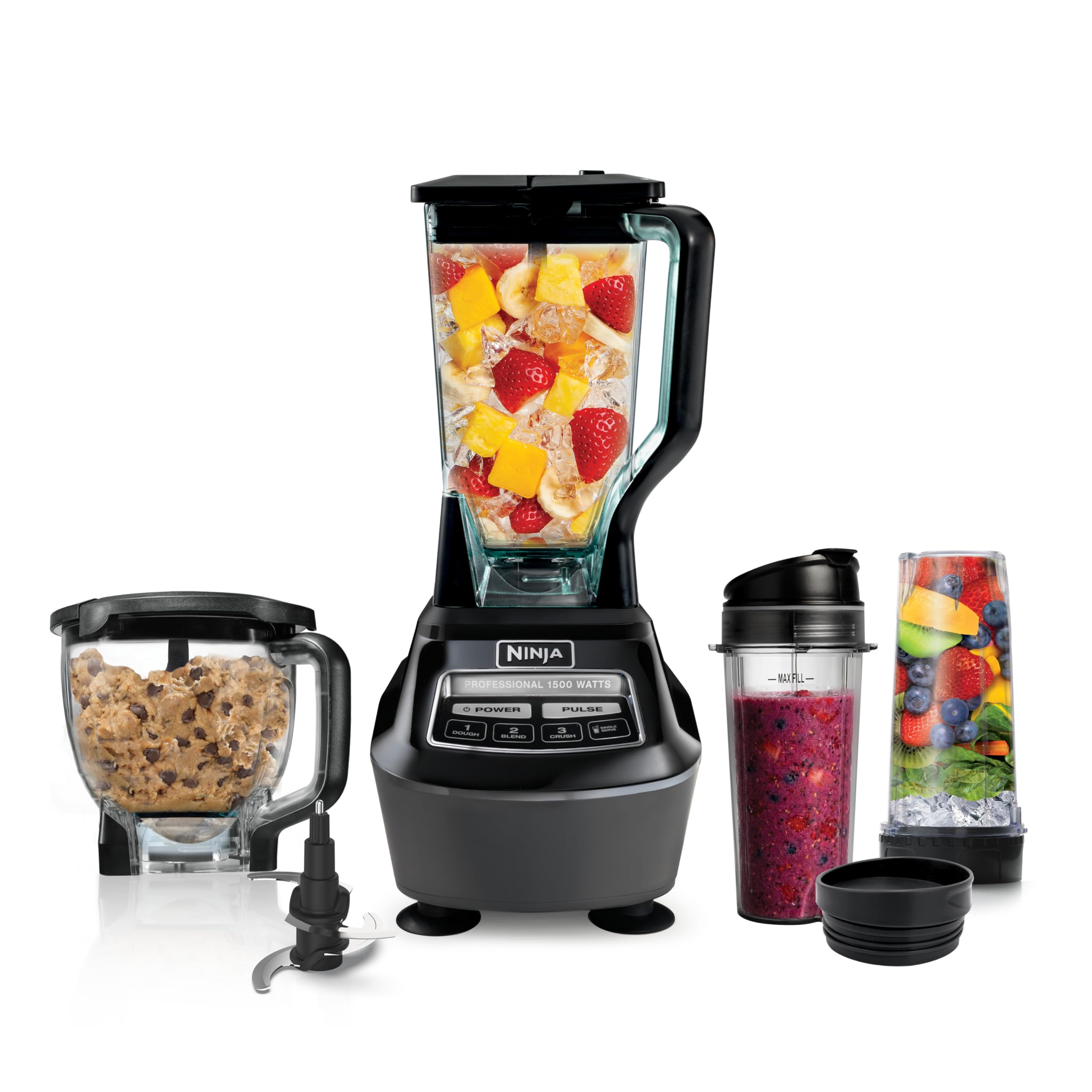
A blender and a processor sharing one 1500-watt base — so pureeing soup and crushing ice are the same job.
Buyers looking to make velvety soup one day and frozen drinks the next don’t want two machines on the counter. This one base runs a 72-ounce crushing pitcher, an 8-cup processor bowl and two 16-ounce to-go cups. The 1500-watt motor is the biggest number in this lineup by a wide margin — the La Reveuse mini chopper in this list runs 200 watts, and that’s a 7.5x gap.
Where the pureeing happens is the 8-cup bowl, which pairs a dedicated chopping blade with a dough blade that mixes up to 2 pounds of dough in 30 seconds. The pitcher’s Total Crushing Blades are the other half of the story — they’ll turn ice to snow, and the same action makes short work of cooked vegetables headed for a soup base. Four functions (Blend, Mix, Crush, Single-Serve) keep the controls simple.
The honest catch is weight and bench space. At 9.2 pounds and sized 15.75″D x 11.1″W x 18.07″H, it’s the opposite of a tuck-away appliance — for comparison, the Hamilton Beach 3-cup chopper below comes in at 2.1 pounds. It’s also a loud machine, which is expected from a motor this size. The suction-cup feet with release buttons hold it steady, and buyers report it’s held up for six years of steady use with easy cleaning and buttons gentle enough for arthritic hands.
What earns the top spot
- A 1500-watt motor with 2 horsepower that handles raw and frozen ingredients without bogging down
- Three containers in one system: 72-oz pitcher, 8-cup processor bowl, and two 16-oz to-go cups
- Dough blade mixes up to 2 pounds of dough in 30 seconds
- Suction-cup base with release buttons keeps it planted during heavy processing
- Bowls, blades and lids are dishwasher safe on the top rack
Where it makes you work
- 9.2 pounds and a tall footprint — it lives on the counter, not in a cupboard
- Loud in operation, which comes with a motor this size
- Blades are sharp enough to demand care when cleaning
- Using the blending cup on hard ingredients like brown sugar can scratch the interior
Reach for this if: you want one machine that purees soup, crushes ice and makes dough without adding a second appliance.
Look elsewhere if: counter space and quiet are higher priorities than raw power.
2. Ninja Professional Plus BN601
Press one button for a puree and let the machine time it for you.
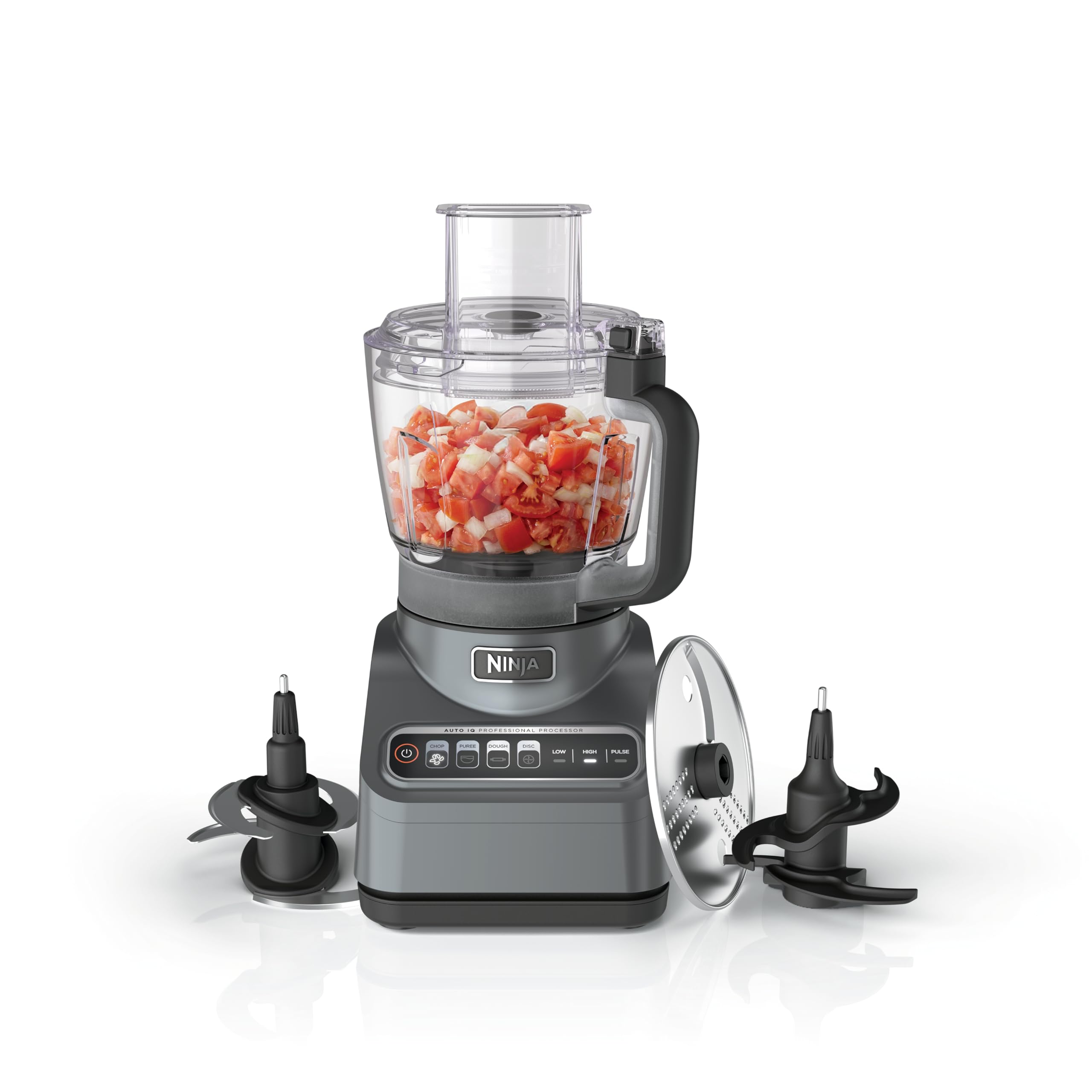
But the feature that sells it is Auto-iQ: four preset programs for chopping, slicing, pureeing and dough that run a set pattern of pulses and pauses. You don’t sit there tapping a button and second-guessing texture — the machine has already worked out the rhythm.
What wins people over is how much of the kitchen it replaces. Owners describe it chopping tomatoes, onions and peppers and shredding a block of cheese in the same session, with the dough blade pulling pizza duty afterwards. The base carries strong suction cups, the lid locks, and there are high and low speeds if you’d rather control it yourself. All removable parts are dishwasher safe.
Two trade-offs worth knowing. It’s 7.7 pounds and wants real counter real estate — the lid and feed chute make it tall. And the blades are genuinely sharp, sharp enough that owners warn about sponges and fingers. It runs on the noisy side too. That’s the price of a 1000-watt motor that doesn’t flinch at cold ingredients.
The preset payoff: pureeing is the task people most often get wrong by over- or under-pulsing, and Auto-iQ takes that decision out of your hands entirely.
Cleaning reality: dishwasher-safe parts cut the cleanup chores down, but hand-washing those sharp blades still needs attention.
Best match for: anyone who wants consistent results without learning processing times by trial and error.
Think twice if: you’re short on counter depth — the assembled unit sits tall with the feed chute on.
3. Cuisinart DFP-14BCNY Food Processor
Fourteen cups of bowl means one batch of soup puree feeds the whole table.
If you’re pureeing for a family of five or prepping a week of sauce at once, bowl size is the spec that decides it. This Cuisinart holds 14 cups — against the Liebe&Lecker 8-cup bowl in this list, that’s a 2.7x difference in one load. The 720-watt motor drives a stainless steel chopping and mixing blade, with a standard slicing disc (4mm) and medium shredding disc along for the ride.
You get steady, quiet power rather than the biggest motor number here, and owners say it never strains. What stands out most in their experience is consistency over the long haul — one chef-owner describes more than three decades of slicing, shredding, dough and puree work out of this model, and says they’d buy it again without hesitation. On the counter it stays rock solid, with the weight keeping it planted when you cut heavy items. A limited 3-year warranty covers the unit, and the motor gets a full 5-year warranty.
The catch is the physical footprint. It weighs 18 pounds and stands tall enough that it won’t tuck under a low cabinet. Several owners also note the safety-lock assembly and the pusher holes trap food bits and take effort to rinse out. And the slicing and shredding discs aren’t adjustable, so thickness is fixed by the disc you own.
The case for the big bowl
- 14-cup capacity handles family and meal-prep batches in one pour
- Quiet for its class, with a heavy base that stays put
- Slicing, shredding and chopping/mixing blades all included
- Limited 3-year warranty, plus a full 5-year warranty on the motor
- Dishwasher-safe parts for faster cleanup
Where it asks for patience
- 18 pounds and tall — this is a permanent counter resident
- Safety-lock mechanism and pusher holes collect food and need careful rinsing
- Shredding and slicing discs are not adjustable
Worth it for: households that puree in volume and want a machine built to take it for years.
Not ideal if: you puree single portions — a bowl this size needs filling to work well.
4. Ninja Foodi Power Blender & Processor System, SS401

The 1600-peak-watt system that switches between blending a puree and processing a batch without swapping machines.
Seven Auto-iQ programs cover smoothies, extractions, bowls, spreads, chopping, food processing and dough. That range is the point: a pureed sauce, a smoothie bowl and a nut butter all come out of one base. A 72-ounce pitcher handles the big batches, while an 18-ounce smoothie bowl maker with a built-in tamper pushes frozen fruit and nuts down with less liquid added.
Owners say the single pitcher for both blending and processing saves counter space, and swapping the lid or blade assembly changes what the panel’s buttons do. Cheeses are a strong showing — one owner describes grating a whole block in 30 seconds or less, hard parmesan included. The smartTORQUE motor is built to avoid stalling on thick loads, and the Hybrid Edge Blade Assembly breaks down frozen fruit, nuts, seeds and ice.
Two things you’ll notice. First, the motor’s cooling fan makes noise — a powerful fan has to move air. Second, 12.1 pounds and a tall body mean cabinet storage is awkward. On durability, the picture is split: plenty of owners mention two years of clean running, while a smaller group reports trouble early. Treat that as a build-date lottery rather than a guarantee either way.
Why cooks pick it: the interchangeable lids and discs turn one motor base into a blender, a chopper and a slicer, so you’re not buying three appliances.
The honest wrinkle: durability reports split between long service and early failure, so a protection plan is worth considering.
Go for this if: you want smoothie bowls and purees from one machine with preset programs doing the timing.
Steer clear if: a quiet kitchen matters — the cooling fan is audible whenever the motor runs.
5. Hamilton Beach Power Elite Blender

A 700-watt blender plus a 3-cup chopper attachment, for cooks who puree soups more than they crush ice.
Two containers, one base. The 40-ounce glass jar handles soups, sauces and smoothies, and a separate 3-cup chopper bowl covers smaller jobs. The patented Wave~Action System continuously forces ingredients down into the stainless steel blades instead of letting them sit on the walls — which is exactly the problem that leaves soup with chunks in it.
The glass jar is a real advantage for pureeing hot soup, since glass won’t hold onto the smell of last night’s curry the way plastic can. It’s also dishwasher safe, along with the blades and all removable parts. A lid with a pour spout lets you drizzle oil in mid-blend for dressings and dips. Customers note it disassembles easily for cleaning and handles daily smoothies and green drinks well, kale included.
Now the honest limit. It’s a 700-watt machine, and owners describe it struggling with ice, nut butter and cheese — it blends them, just not the way a much higher-wattage motor would. Some report the plastic build feeling light, and it’s loud in use. For pureed soups and sauces, though, this is a sensible budget-tier pick.
Where it earns its keep
- Glass 40-oz jar won’t retain flavors or stains
- Wave~Action System keeps food cycling into the blades
- Includes a separate 3-cup chopper bowl for small jobs
- Pour spout lid makes adding oil or liquid mid-blend easy
What to expect at this tier
- 700 watts runs out of steam on ice, nut butter and hard cheese
- Plastic housing feels lighter than premium builds
- Noisy during operation
- Thick mixtures may need a spatula to keep things moving
Pick it for: soups, sauces and everyday smoothies where the glass jar does the heavy lifting.
Don’t pick it for: nut butters or ice-crushing duty — that needs more motor than 700 watts delivers.
6. Ninja Food Chopper Express Chop, NJ110GR, 200-Watt, 16-Ounce

A 2-pound power pod you pull out of the cupboard for dressings, dips and pastes.
The ergonomic power head sits on top of a 16-ounce bowl, and the whole thing weighs 2 pounds. That’s the appeal: no counter footprint, no assembly ritual, just press down and pulse. It handles garlic, onion, zest, spices, herbs, cheese, bacon crumbles, nuts, chocolate, dressings, sauces and spreads — which covers most small puree jobs in a normal week.
The speed is the standout. Almonds turn to dust, ice crushes to snow-cone texture, and onions break down fast. It’s fast enough that owners warn about over-processing — pulse lightly, since a couple of extra seconds can take a dip past where you wanted it. Owners also report a previous unit lasting a decade of chopping before the base rubber loosened. The splashguard stops mess, the no-slip base keeps it steady, and it’s BPA free and dishwasher safe.
Where the 200 watts shows its limit is on dense, starchy or fibrous loads — it’s a chopper and small-batch pureer, not a blender substitute. And you need to learn your timings, as with most food processors, to get a consistent texture.
Everyday reality: dressings and dips come together in seconds, and rinsing the bowl afterwards takes almost as little time.
One caution: it’s quick enough to overshoot a coarse chop, so pulse in short bursts and check.
The right tool for: dips, dressings, spice and nut pastes where a full-size processor is overkill.
The wrong tool for: soup batches — 16 ounces is a small bowl.
7. BLACK+DECKER 8-Cup Food Processor, FP4100B, 450W

The bowl-to-base assembly takes seconds, and the 8-cup bowl covers hummus, nut butter and salsa at once.
The part buyers like most about this BLACK+DECKER is the setup. You set the workbowl on the base and the lid does the locking — no twisting and wrestling with a bowl collar. Once it’s together, the 450-watt motor drives a stainless steel chopping blade, and a reversible metal disc slices vegetables one way and shreds cheese the other.
Eight cups of bowl is the practical size for hummus, pesto or a salsa batch, with room to spare rather than forcing you to work in halves. In practice reviewers point out it shredding everything from soft to medium cheese cleanly, and handling hard parmesan better than older models they’d replaced. The non-slip base keeps the unit steady, and the parts go in the dishwasher.
On build quality, the reports are more mixed: a few mention a cracked lid or a small dent on the housing from the start. That’s a shipping and molding quality question rather than a motor problem, but it’s worth checking the unit over when it lands. Longevity is the other open question, given the plastic-heavy construction.
Why it fits mid-size jobs: 8 cups and 450 watts hit the balance where a batch of hummus is one pour and one pulse session.
Check it over on arrival: the plastic lid and housing occasionally arrive damaged, so inspect before first use.
A natural fit for: cooks who want shredding and slicing alongside pureeing without a premium footprint.
A mismatch if: you need a machine that feels metal-solid from day one.
8. Cuisinart Mini-Prep Plus Food Processor, DLC-2ABC, 3-Cup
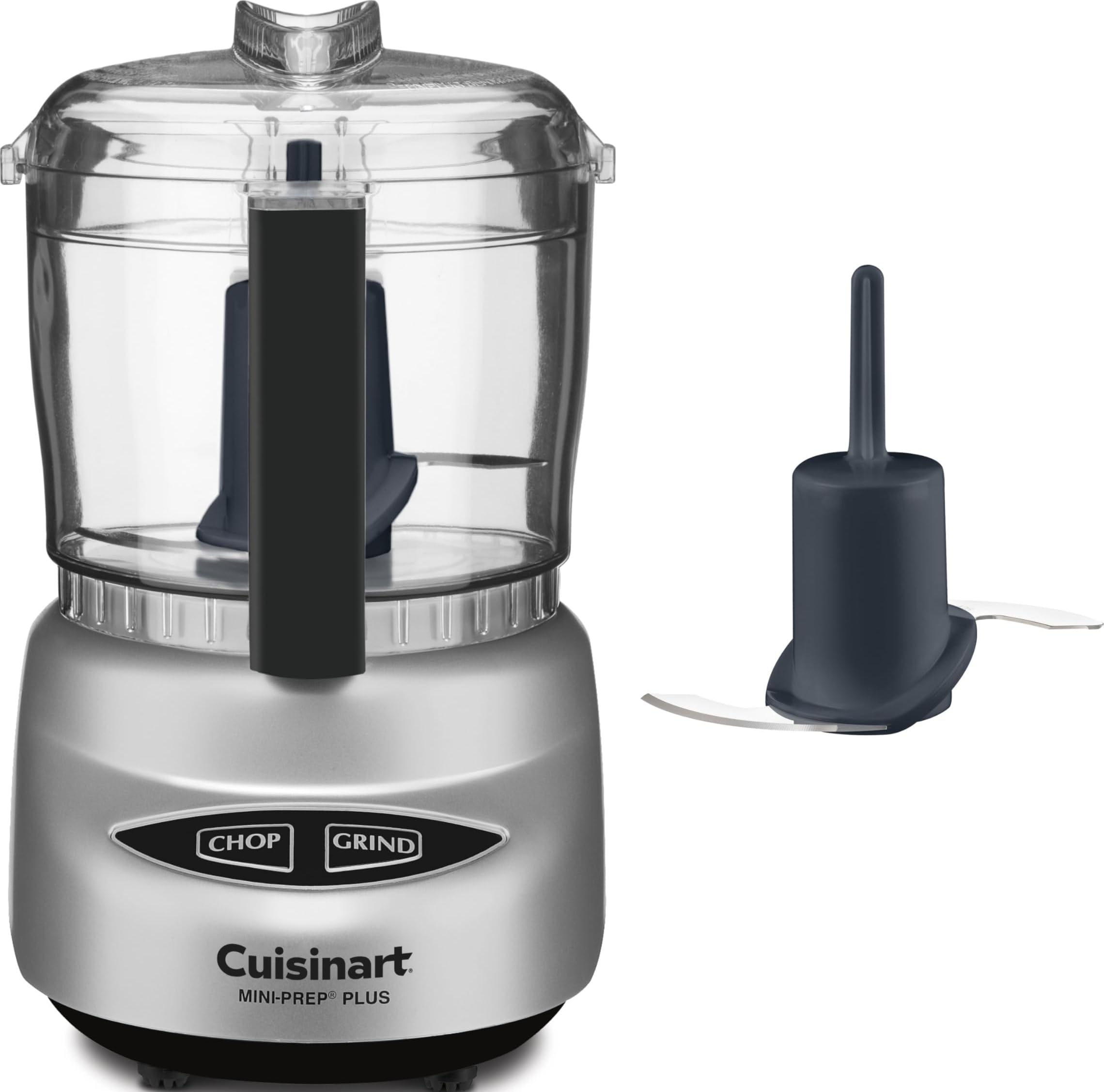
A reversible blade that spins one way to chop and the other to grind — in a 24-ounce bowl that fits a cupboard shelf.
The SmartPower blade is the whole idea here. One direction gives you a sharp edge for chopping herbs, dicing vegetables and grinding hard cheese; flip it and the blunt edge handles grinding tasks. Shoppers say that forward-and-reverse action means you can switch edge without pulling the lid and blade out mid-job. The 250-watt motor is small, but a 3-cup bowl keeps food against the blade, so it doesn’t need more.
What comes through from owners is the size working in its favor. It’s a 2.2-pound unit that fits small kitchens and cupboards, and it chops the components for a salsa evenly and quickly. One owner describes a first unit lasting eight years of daily heavy use, with the blade staying sharp and the motor running perfectly the whole time. The bowl and lid are dishwasher safe, the body wipes clean, and there’s a limited 18-month warranty.
Two honest notes. Don’t overfill it — the blade needs room to move, and a stuffed bowl gives you large chunks instead of an even chop. And the grinding function isn’t for beans, which the maker explicitly notes it will chop rather than grind. Durability feedback leans mixed, so treat it as a dependable small appliance rather than a lifetime one.
What makes it easy to live with
- Reversible blade gives chop and grind from one part
- 2.2 pounds and compact — sits in a cupboard without a struggle
- Bowl and lid are dishwasher safe; base wipes clean
- Limited 18-month warranty and a BPA-free bowl
Small bowl, small limits
- Overfill it and you get uneven chunks instead of a smooth chop
- Not recommended for grinding beans
- 250 watts only suits lighter loads
Made for: small kitchens and short jobs — herbs, salsa, cheese, dips.
Look up-market if: you need to puree thick batches in volume.
9. Liebe&Lecker Electric Food Chopper 350W
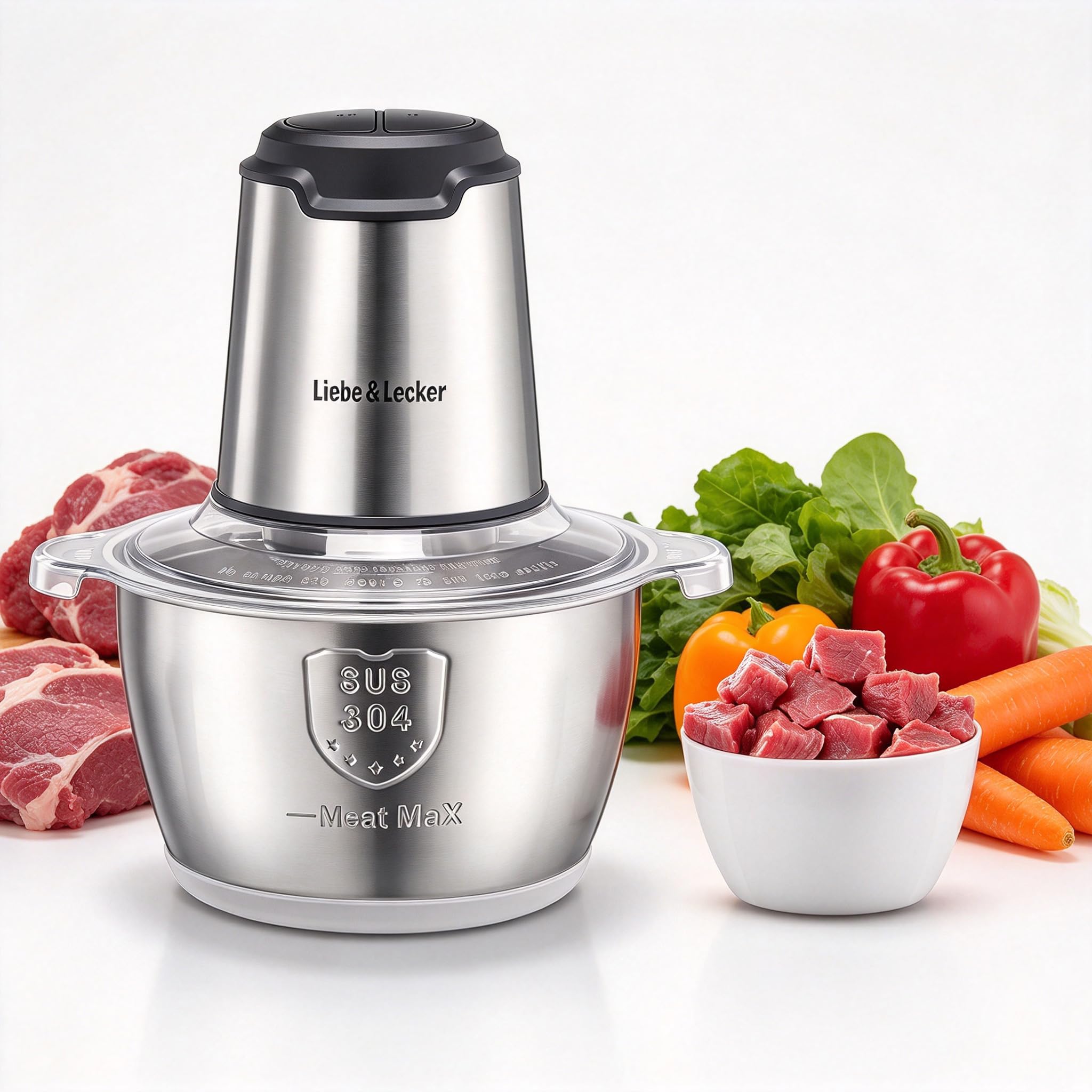
Eight cups of stainless steel bowl that won’t scratch, hold smells or shatter if it slips.
Most bowls in this lineup are plastic or glass. This one is 1.9 liters (8 cups) of stainless steel, which means it resists scratches and odors rather than absorbing them. That matters for anyone pureeing garlic-heavy pastes or meat fillings on repeat. Four bi-level 304 stainless steel blades sit on a high-torque 350-watt motor, and two speeds let you go gentle on herbs and berries or full speed on nuts, carrots and dense meats.
The thing buyers praise most is how easy it is to run — particularly for salad prep — and the power behind those blades. It also handles spinach, broccoli and cabbage without fuss. An internal overheat protection cuts the motor if it gets too hot, and a rubber mat on the bottom keeps the 3-pound body from sliding.
Every press is meant to run no longer than 30 seconds, and that’s a real rhythm to learn — this isn’t a hold-and-walk-away machine. The bowl needs to align properly to engage, which is the recurring gripe, and durability sits at the lower end of the report set. Keep loads moderate and it does its job.
The steel advantage: a stainless bowl sidesteps the scratching and odor-holding that plastic and glass can suffer over years of heavy pastes.
The habit to build: short presses of up to 30 seconds, with cool-down time if the thermal cutout trips.
The one to grab when: you puree meat fillings and strong-flavored pastes and want a bowl that shrugs them off.
Better to skip if: you want a machine you can hold down and forget about.
10. La Reveuse 2-Cup Mini Food Processor
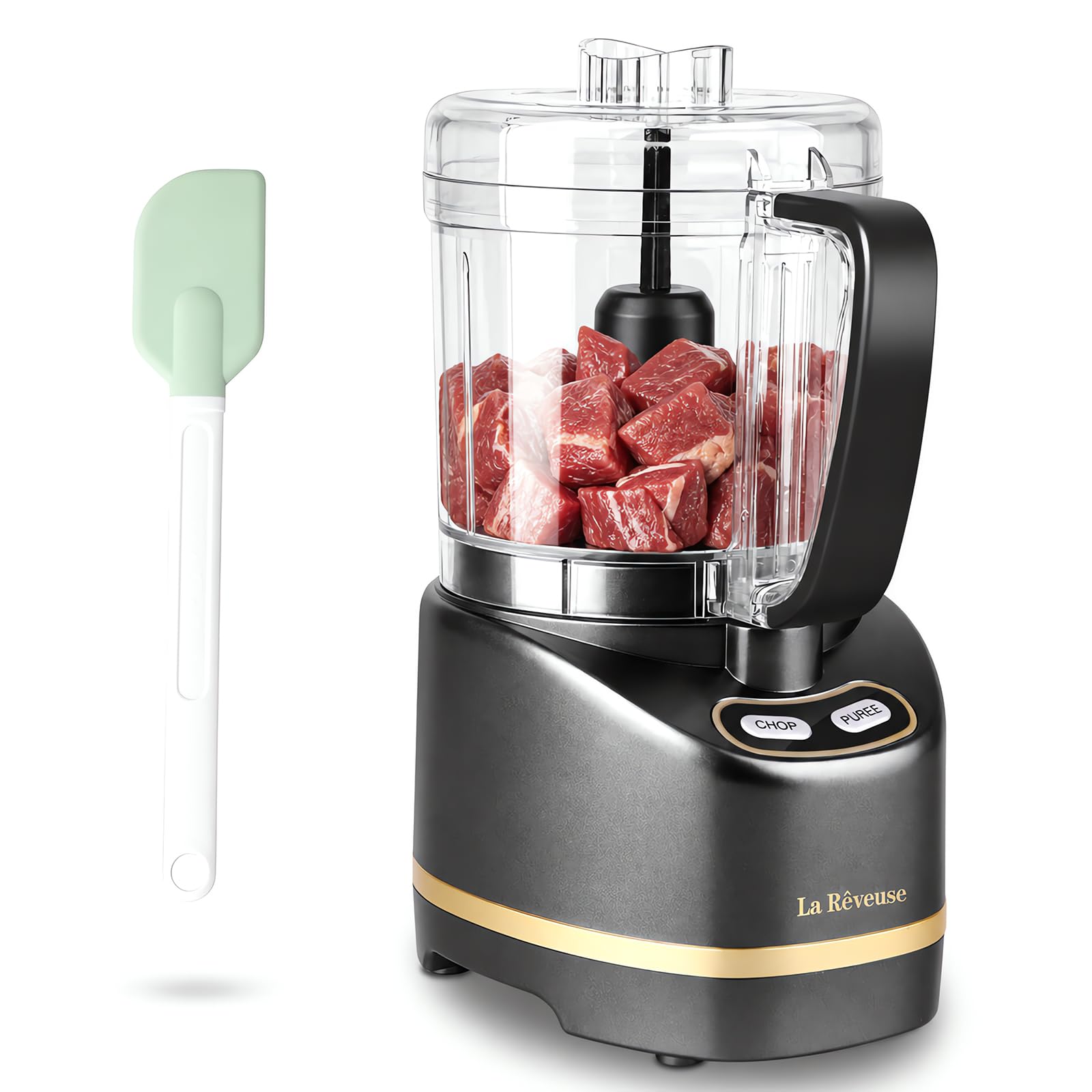
Two cups and 200 watts, sized for one serving of baby food or a single dip.
This is the smallest-capacity machine in the lineup at 2 cups, and the one-touch pulse buttons make chopping and pureeing a two-button operation. The stay-sharp stainless steel blade handles onion, veggies, fruit, herbs, chili and meat — everyday amounts rather than batches.
A built-in oil dispenser on the lid is the feature that earns it a spot for dressings and dips: you add liquid slowly during processing instead of pouring it in at the start. There’s a safe-locking lid, a spatula included for scraping down the bowl, and the bowl and lid are dishwasher safe on the top rack.
The trade-off to weigh is longevity. Durability is the weakest point in the report set, with some units failing within a week. That’s not the typical experience, but it’s enough that you should treat this as a light-duty appliance used within its limits rather than a daily grinder. Used for small jobs, it earns its cupboard space.
Right-sized for one: 2 cups means a single serving purees evenly, where a big bowl would just scatter the food.
Know the ceiling: 200 watts and a light-duty build, so keep to soft and small ingredients.
Fits best: tiny kitchens, single servings and baby-food portions where a compact machine beats a big one.
Wrong pick if: you need a machine that takes on raw root vegetables daily.
11. Hamilton Beach 3-Cup Electric Vegetable Chopper
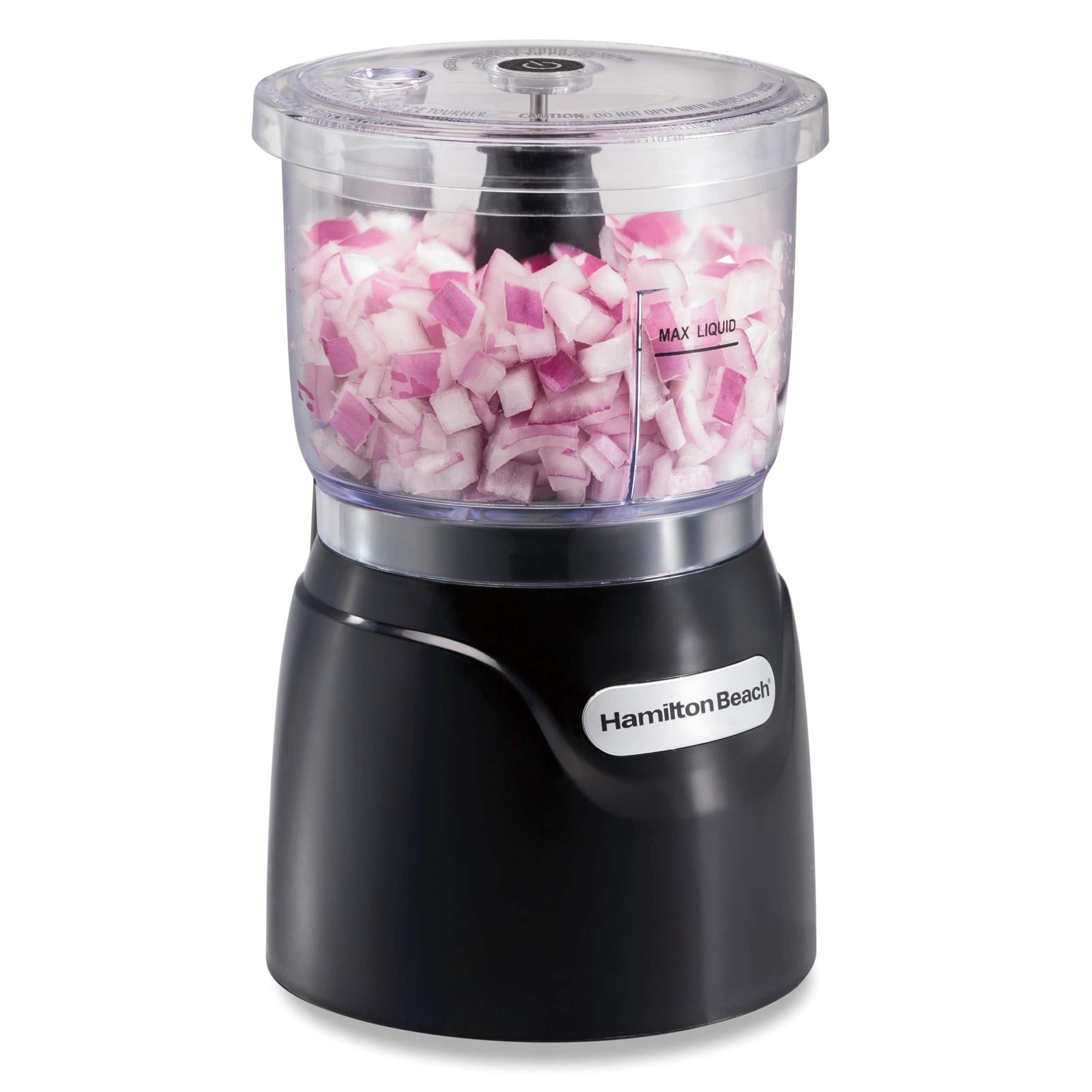
Press the lid to chop, let go to stop — no twist-locking, no assembly puzzle.
The patented stack & press design is the whole trick. The lid simply stacks on the bowl, and pressing it runs the blade; release and it stops. No collar to line up, no locking ring to fight with. At 2.1 pounds and sized 5.2″D x 5.9″W x 8.5″H, it’s the smallest full chopper here — the Ninja BL770 above is 9.2 pounds, and the two are not remotely in the same class for bench space.
Inside, a 350-watt motor drives stainless steel blades through onions, carrots, nuts, herbs, hummus and dressings. The 3-cup bowl covers a day of chopping without needing a second load. There’s an oil dispenser on the lid for emulsifying dressings and dips, and the bowl, lid and removable blades are all dishwasher safe. For homemade baby food and small purees, it’s the right scale.
Where it stops is volume and toughness — 3 cups is a single-meal bowl, and 350 watts suits everyday ingredients rather than heavy continuous grinding. It’s also the most basic control scheme here: on when you press, off when you release. That’s exactly what makes it easy.
Why it’s the value pick
- Stack & press lid — no twist-locking to wrestle with
- 2.1 pounds and compact enough to store in a drawer or cupboard
- 350 watts through stainless steel blades for onions, nuts and herbs
- Oil dispenser on the lid for dressings and dips
What it won’t do
- 3-cup bowl caps you at one-meal amounts
- Simple press-and-release control, with no speed selection
- Not built for heavy or continuous grinding
Ideal when: all you need is a quick chop or a small puree and you’d rather not own a full-size machine.
Skip it when: family batches are on the menu — that calls for an 8-cup bowl or bigger.
Know the Specs
Wattage and what it really controls
Watts measure motor force, not smoothness. A 200-watt mini chopper makes a perfectly smooth paste out of cooked vegetables or soft fruit because the bowl is small and the blade stays in contact. What more watts buy you is the ability to push through tough ingredients — fibrous raw greens, cold squash, dense meats — without the motor bogging down or stalling. So pick wattage for the hardest thing you’ll process, not the smoothest thing you want.
Bowl capacity and the working fill line
Fill the bowl right and you get smooth puree; fill it wrong and you get chunks. Too little food and the blade just spins through air; too much and the top half never reaches the blade. Small bowls in the 2-to-3-cup range puree single portions beautifully. Mid bowls around 8 cups hit a balance for hummus and dips. A 14-cup bowl is for when the whole batch goes in at once.
Blade geometry and the vortex effect
A flat S-blade chops whatever sits at its level. Angled and stacked blades throw food up the bowl wall and let it fall back through the blade — the vortex — which is what turns chunks into a smooth puree without you stopping to scrape down. Reversible blades add a second, blunter edge for grinding. If you puree often, blade shape matters more than the headline wattage.
Speed control, pulse and thermal protection
Two speeds plus a pulse button give you texture control. Low speed suits herbs and berries; high suits nuts, carrots and dense meats. Pulse lets you watch the texture and stop before a chunky dip turns gluey. Thermal protection is a safety valve: it cuts the motor if it overheats from long continuous loads. If your machine stops mid-job, unplug it and let it cool before restarting, and work in shorter bursts from then on.
Common Questions
What wattage do I need to puree soup smoothly?
Will a mini food processor puree as well as a full-size one?
Can a food processor handle hot soup straight off the stove?
What’s the difference between chopping and pureeing on a food processor?
Is 8 cups big enough for family meals?
Why does my puree come out grainy instead of smooth?
Are the bowls and blades dishwasher safe?
How long can I run a food processor before it overheats?
Can I puree meat in a food processor?
Do I need a separate blender if I already have a food processor?
What’s the difference between the Ninja BN601 and the Ninja BL770?
The Bottom Line
For most kitchens, the food processor for pureeing winner is the Ninja Mega Kitchen System BL770. Its 1500-watt motor drives an 8-cup processor bowl and a 72-ounce crushing pitcher from one base, so soup purees and frozen drinks come out of the same machine — and owners keep coming back to it years later. If you’d rather let a preset handle the timing, the Ninja Professional Plus BN601 takes that decision off your hands with its Auto-iQ puree program. And when the batch is genuinely big, the Cuisinart DFP-14BCNY and its 14-cup bowl is the one to reach for.
Here’s the trade-off before you decide: the BL770 carries fewer customer ratings than the budget-tier Hamilton Beach 3-cup chopper, but it holds the higher score — 4.7 stars to 4.6 — and the much larger motor to go with it. If small jobs are all you ever run, the Hamilton Beach 3-cup chopper at 2.1 pounds is the compact, press-and-go answer.
How we choose
We do not accept paid placement. Every pick is matched to a real buyer and a real use-case; we do not hands-on test units.
Sources
Specifications: manufacturer listings and product documentation. Review insights: verified customer reviews, as of October 2026. Pricing: not shown on this page (it changes often); check the current price via the retailer link.
As an Amazon Associate, Aappliancez earns from qualifying purchases. This does not affect which products we feature.