Disclosure: Some links in this post are affiliate links. As an Amazon Associate I earn from qualifying purchases, at no extra cost to you. Learn more
Specs are compiled from manufacturer listings and verified buyer reviews and can change over time — please confirm the key details on the product page before buying.
Your first decision is simple: do you want radio built into a stereo receiver, or a standalone tuner that feeds a mixer, DAC, or amplifier? If you mostly play vinyl and streaming and radio is a bonus, a receiver with a built-in tuner saves you a box and a cable. If great radio reception is the whole job, a dedicated component tuner wins every time. This guide covers both groups separately.
This guide is built by comparing the manufacturers’ published specifications and the patterns across verified customer reviews, so you get each pick’s real strengths and trade-offs instead of marketing spin.
Below you will find the receivers that include a tuner, the standalone tuners built for clean signal capture, and the portables for kitchen and campsite listening. Each entry explains what the radio section is really good at and where it falls short. The goal is to match you to the best FM tuner for how you actually listen, without paying for features you will never use.
Top Picks


How To Choose The Best FM Tuner
Start with the question that decides everything else: do you want the radio built into a stereo amplifier, or do you want a tuner-only box that feeds equipment you already own? A receiver with a tuner is the simpler path because one unit drives your speakers. A standalone tuner is the better path when you already have an amplifier, mixer, or DAC you trust and only the radio section needs upgrading.
Receiver With A Tuner, Or Tuner On Its Own
A stereo receiver bundles an amplifier and a radio section in one chassis, so you connect speakers and you are done. Those built-in tuners are often the weakest part of the package — good enough for strong local stations, less inspiring on distant ones. A component tuner has no amplifier at all; it outputs a line-level signal that you feed into something else. That extra box buys cleaner reception and more output options.
Presets, Mono Switching, And Bandwidth
Presets are the buttons that store a station frequency so you do not have to hunt for it again. Ten FM presets covers a normal local dial comfortably; a serious DX listener will want more. Mono switching is the quiet hero: forcing a weak stereo signal into mono cuts the hiss and static that stereo decoding creates on a marginal station. A narrow-bandwidth setting does a similar job by squeezing the tuner’s filter so a strong neighbouring station stops bleeding into the one you want.
Antenna And Outputs Decide Your Real-World Result
The antenna in the box is nearly always the limiting factor, not the tuner. A folded dipole wire (a simple T-shaped wire antenna) hung high and away from walls outperforms a stubby whip sitting on a shelf. If you chase distant stations, a directional outdoor antenna (one that points at the transmitter) is the single biggest upgrade you can make. On outputs, RCA line-out (the standard red and white plugs) suits most amplifiers, XLR balanced outputs (three-pin pro connectors) suit a mixing desk or long cable runs, and optical or coaxial digital outputs let you feed a separate DAC (a digital-to-analog converter) if you want the tuner to hand off a clean digital stream.
Side-by-Side Comparison
| Model | Best For | Type | Rated Power | Presets / Key Output | Amazon |
|---|---|---|---|---|---|
| Sony STRDH190 2-ch Stereo Receiver Bundle★ Best Overall | Vinyl and Bluetooth in one box | Stereo receiver | — | Phono input, Bluetooth | Amazon |
| Cambridge Audio AXR100 FM/AM Stereo ReceiverTop Performer | Power-hungry speakers and long listening | Stereo receiver | 100W per channel | Dedicated subwoofer output | Amazon |
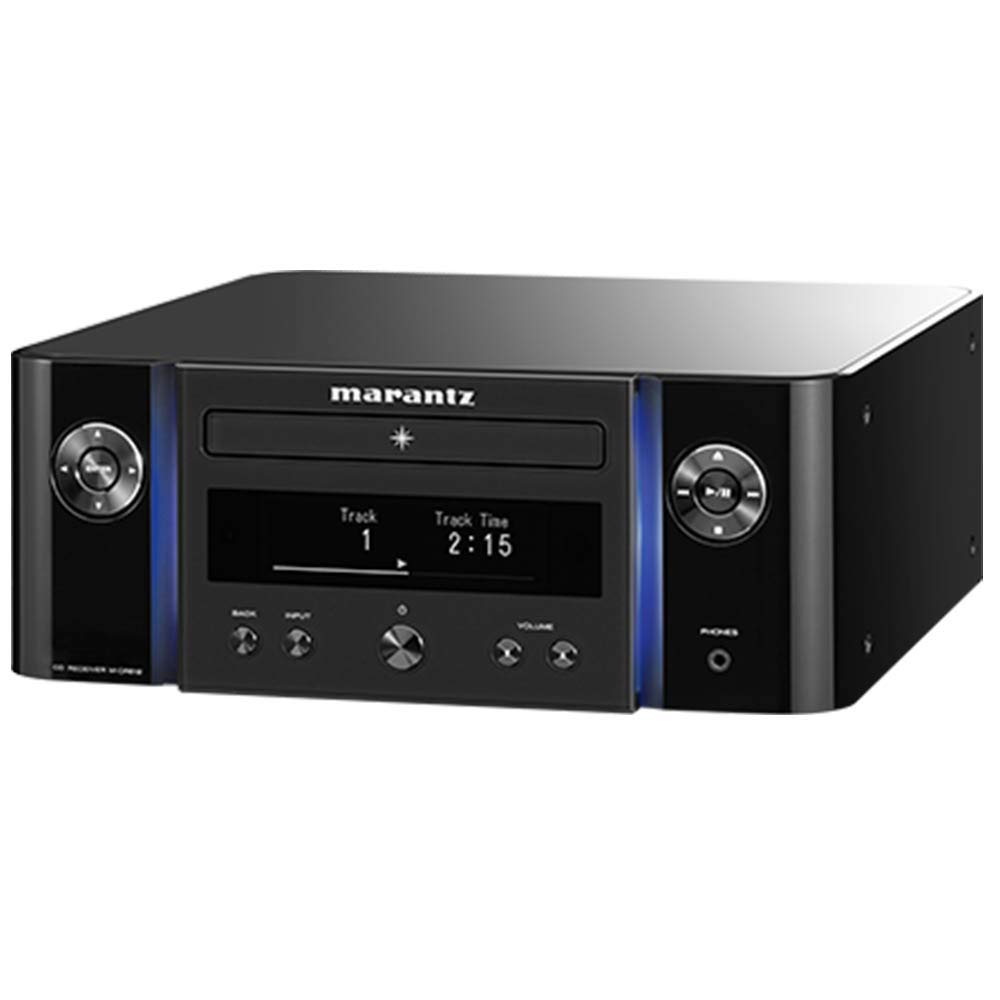
| Marantz M-CR612 Network CD ReceiverBest All-In-One | CD, streaming and radio in one shelf unit | Network receiver | 60W x 2 or 30W x 4 | HEOS, AirPlay 2, CD player | Amazon |
| Sangean PR-D19BK Portable Radio | Kitchen, garden and camping listening | Portable radio | — | 20 presets (10 AM, 10 FM) | Amazon |
| Rolls HRS84 FM Digital Tuner | Mixers, studios and remotes | Component tuner | — | XLR and RCA outputs | Amazon |
| Yamaha R-S202 Stereo Receiver (Renewed) | First proper stereo on a smaller budget | Stereo receiver | Up to 100W per channel at 8 ohms | 40 station FM/AM preset tuning | Amazon |
| Sangean HDT-20 HD Radio/FM Stereo/AM Component Tuner | Serious HD Radio reception into an existing system | Component tuner | — | 20 presets; optical and coaxial digital out | Amazon |
| Bose Wave Music System IV (Renewed) | One-box sound for a bedroom or kitchen counter | Integrated system | — | 12 presets, dual alarms, CD player | Amazon |
| Denon RCD-N12 Bluetooth CD Player | Small rooms that want CD, streaming and radio | Network receiver | — | HEOS, HDMI ARC, AM/FM tuner | Amazon |
Detailed Reviews
1. Sony STRDH190 2-ch Stereo Receiver Bundle
Our pick — 4.5+★ from 200+ verified ratings; the strongest balance of quality and price.
A receiver plus the wire and banana plugs you would otherwise buy separately, in one box.
The smartest reason to buy this Sony is that the box is already complete. You get the 2-channel stereo receiver, 50 feet of 14AWG speaker wire, and 5 pairs of gold-plated banana plugs — the fiddly bits most first-time buyers forget. The phono input means a turntable plugs straight in without a separate preamp. Four analog audio inputs and one output let you run a CD deck, a tape machine, and a phone alongside the record player.
Bluetooth pairing is quick, and Bluetooth Standby lets you wake the receiver from your paired phone or tablet instead of hunting for the remote. The amplifier’s foundation is a large-capacity power transformer, which is where the clean headroom begins. Sound is the part that wins people over here — this unit draws the deepest consensus in the lineup, and streaming through it sounds full rather than thin.
Radio is the honest weak spot. The FM section accepts a 30-inch indoor wire only, with no F-connector or RCA antenna option, so anyone wanting an outdoor antenna is stuck. Treat the tuner as a bonus for strong local stations rather than a DX instrument. The spring-loaded speaker terminals also draw grumbles from anyone used to proper binding posts. For a first real stereo that does vinyl, Bluetooth, and local radio, this is the safest place to start.
What earns its keep
- Speaker wire and 5 pairs of banana plugs included, so no extra shopping
- Phono input takes a turntable directly, no separate preamp needed
- Bluetooth Standby turns the unit on from your phone or tablet
- Four analog inputs and one output cover vinyl, CD, tape, and streaming
Where it asks patience
- FM antenna input takes only a 30-inch indoor wire — no F or RCA option
- Spring-loaded speaker terminals rather than binding posts
- Bass and treble are the only tone adjustments
Reach for this if: you want one box that plays records, streams from your phone, and catches local FM without buying a single extra cable.
Look elsewhere if: distant or weak FM stations are the priority — the antenna input here closes that door.
2. Cambridge Audio AXR100 FM/AM Stereo Receiver
The one that makes cheap recordings sound expensive and hard speakers sound easy.
Start with the number that matters: 100 watts per channel. That is enough to drive demanding floorstanders without strain, and it is the reason this receiver holds up next to far dearer hardware. A dedicated subwoofer output means bass goes where it belongs instead of being squeezed out of your main speakers. The phono stage, digital inputs, and analogue inputs cover a turntable, a TV, and a streaming source in one chassis.
Tone is what wins people over. Owners describe a sound that is accurate with a hint of warmth — the kind of character that flatters a rough MP3 and still keeps detail intact across a long evening. As buyers report: “After 100+ hours with Klipsch RP-600M II and SPL-120 sub: accurate sound with hint of warmth, great for long listening, flatters poor recordings.” The internal DAC gets used for TV streaming too, and owners consistently describe it running cool with no fan noise creeping into quiet passages.
On the tuner side, this is a proper FM/AM section with an included antenna rather than a token extra. The A/B speaker switching lets you run two pairs in two rooms. Where it asks patience is Bluetooth range — a few feet only, and easily interrupted — plus tone controls with no mid adjustment. The supplied remote also draws complaints for unlit buttons. Size-wise, the chassis is 4.33″D x 16.93″W x 13.39″H, which is a genuine 4.9x gap shorter in depth than the Sony bundle’s 21.1″D x 14.2″W x 7.6″H — an easier fit on a shallow shelf.
Power where it counts: 100 watts per channel with a dedicated subwoofer output handles hungry speakers and keeps bass separate from the main pair.
The honest catch: Bluetooth works only over a few feet and the remote is unlit, so plan on connecting sources by cable where it matters.
The verdict: pick this if you already own speakers that deserve real current and you listen for hours at a stretch.
Not for you if: you plan to stream over Bluetooth from across the room or need mid-range tone shaping.
3. Marantz M-CR612 Network CD Receiver
A whole hi-fi shelf shrunk to one slim box, CD slot and radio dial included.
If your shelf holds a CD player, a radio, a streamer, and an amplifier as four separate boxes, this unit replaces all of them. It delivers 60W x 2 or 30W x 4 channels, plays WMA/MP3 discs through the CD-R/RW drive, tunes AM/FM, and streams over Wi-Fi with AirPlay 2 and HEOS. HEOS lets you set up one pair of speakers in a single room or two pairs in two rooms with independent volume control. Two optical digital inputs take a set-top box or Blu-ray player.
Voice control is genuinely hands-free: Alexa, Google Assistant, or Siri can play music, skip tracks, and change volume. The unit’s real strength is footprint — owners consistently celebrate how little space it occupies. One thing to weigh honestly is the sound itself, which lands as fine rather than thrilling for the price bracket. A couple of units have arrived with faults, and CD eject only works from the remote, with no eject button on the face.
The tuning experience is also fiddly for people raised on knobs; internet radio works but is awkward enough that streaming from a phone becomes the default. Wired speakers are the reliable path — pairing with wireless speakers through the app caused a lock-up in at least one setup. As a compact hub for a small room it earns its place. As a purist FM tuner, it plays second fiddle to the dedicated boxes here.
Why it earns shelf space
- 60W x 2 or 30W x 4 channels from one compact chassis
- CD player, AM/FM tuner, Wi-Fi, AirPlay 2, and HEOS in a single box
- Two optical digital inputs for TV and Blu-ray sources
- Multi-room HEOS with independent volume for two speaker pairs
What to know before buying
- Sound quality lands as fine rather than standout at this tier
- CD eject works only from the remote
- Tuning internet radio and presets takes practice
Best fit: a small apartment or study where one slim box has to cover discs, radio, and streaming.
Think twice if: radio reception is your main pursuit or you want tactile knobs for tuning.
4. Sangean PR-D19BK FM Stereo/AM Digital Tuning Portable Radio

Book-sized, bumper-wrapped, and far louder and warmer than it looks.
For a radio that fits in a paperback-sized pocket of a bag, this Sangean puts out a surprising amount of sound. The rock-solid aspect here is tone — a warm, bass-leaning signature that owners describe as sounding bigger than the box. Digital AM/FM tuning across 20 presets (10 AM, 10 FM) with auto-seek makes finding a station quick. A built-in protective bumper shrugs off knocks, ideal for the garden, the workshop, or a tent.
Reception is the other standout. The tuner pulls in stations a cheap set would lose to static, and the wide/narrow bandwidth control lets you narrow the filter to cut adjacent-station bleed on a crowded dial. A mono lock tames hiss on a weak stereo signal. Power runs on 4 AA batteries with a battery status indicator, or an optional AC adapter that is not included.
The trade-offs are real but sized. Speaker distortion shows up at high volume, and the headphone output is quiet enough to frustrate private listening. The 26.5-inch whip antenna is the fragile point of the whole package, so treat it gently. Battery use is moderate, not marathon. That optional AC adapter is an extra purchase, and there is no tone control to dial back the warm bass if you find it heavy.
Reception that punches up: the wide/narrow bandwidth setting and mono lock let you clear interference on a crowded dial rather than settle for static.
The weak point: the 26.5-inch antenna is delicate and the headphone output is very low — private listening is the weak link here.
Worth grabbing for: the kitchen counter, the shed, or a campsite where you want real radio without a phone signal.
Skip the headphones: if you mostly listen privately, plan to use the speaker instead — the headphone jack disappoints.
5. Rolls HRS84 FM Digital Tuner with XLR Outputs

A tuner built for a rack, not a living room — balanced XLR out and no fuss.
This is the pick for anyone whose radio signal has to land on a mixing desk. XLR balanced outputs plus RCA give you two ways to feed a board, a mixer, or an amplifier, and there is a headphone jack on the front. A front output level control lets you trim the signal to match the gear downstream — a small detail that saves real setup headaches. Stereo and mono operation are switchable, so you can force mono when a station is weak.
What earns the praise is build and quietness of the electronics. It also saves every station it finds on a scan, so you are not re-tuning after every power cycle. Rack-mount capability and a metal-or-plastic enclosure keep it at home in a studio or OB kit.
Two things to know going in. The line-level output is hotter than expected — one owner’s unit acted as an audio blaster until the level was brought down, so start low. A first-batch unit also turned up with its coax connector not tight to the case; the replacement was fine. And you cannot delete a scanned station you do not want, which is mildly annoying on a crowded dial. At around the mid-range tier, it sits as the cheap-and-capable option against pricier tuners, but it earns that spend with clean, unhurried sound.
Studio-grade connections
- Balanced XLR plus RCA outputs feed a mixer or amplifier without adapters
- Front output level control trims signal to match downstream gear
- Stereo or mono switchable for weak stations
- Rack-mountable and heavy-built for a fixed install
Setup quirks to expect
- Line output runs hot — start the level low
- Scanned stations cannot be deleted from memory
- An outdoor or better antenna is a near-necessity for distance
The right buyer: anyone feeding a mixer, PA, or streaming rig who needs XLR out and level control in one box.
Wrong tool for: a living-room first stereo — it has no amplifier and expects speakers elsewhere in the chain.
6. Yamaha R-S202 Stereo Receiver (Renewed)

Forty presets and 100 watts a channel — the working stereo around the smallest spend.
Built-in Bluetooth means your phone becomes a source, and 40-station FM/AM preset tuning means the radio dial never needs re-hunting. Up to 100W per channel at 8 ohms gives you enough current to wake up tired speakers, and the A/B speaker selector runs two pairs in two systems. Four RCA inputs plus one output let a turntable, a CD deck, and a phone share the amplifier, and a front-panel 1/4-inch headphone jack is a thoughtful touch at this tier.
What wins people over is how safe a purchase this feels. The sound is rich for the money, the display is readable and dimmable, and the Bluetooth pairing is smooth from a phone. There is no subwoofer connection, so this runs passive speakers only — no separate bass box here. Volume needs a fair amount of turning to reach a listenable level, which is more a quirk than a problem once you know it.
Because it is a Renewed unit, it arrives factory-sealed and in owners’ experience looks entirely new — one buyer described zero dust or fingerprints and guessed it was warehouse overstock. The radio tuner here is genuinely good, not an afterthought, which makes it the better-loved receiver in this lineup for anyone whose primary source is FM.
The radio is the point: 40 AM/FM presets and a tuner owners describe as great make it the strongest FM receiver here.
One limit written in hardware: there is no subwoofer output, so bass has to come from your main speakers.
Best for: a first proper hi-fi where FM radio and a phone are the main sources, and the budget needs to stay tight.
skip it if: you plan to add a powered subwoofer — this receiver has no output for one.
7. Sangean HDT-20 HD Radio/FM Stereo/AM Component Tuner

The radio-first box: HD channels into your own amplifier, with digital out to spare.
If reception quality is the whole reason you are shopping, this is the shortlist answer. It is a component tuner with no amplifier, feeding analog line out or optical SPDIF and coaxial digital outputs into a receiver, preamp, or DAC you already like. 20 memory presets (10 AM, 10 FM) with direct frequency entry and an included infrared remote keep station selection fast. HD Radio support means you can catch the extra digital-only channels where they exist locally.
Owners with a good outdoor antenna report FM/HD reception close to CD quality, and one long-term owner has run the same brand of tuner for over 15 years without a complaint. The coax digital output hands off clean 48kHz/24-bit audio to an external DAC with no artifacts for a listener who cares about that chain. The included external FM telescopic antenna and AM loop antenna at least get you started.
Know the quirks before you commit. The menu system is genuinely complicated, the display is small, and the supplied wire antenna is useless for fringe reception — plan on a proper outdoor antenna if you are far from transmitters. There is no Bluetooth here, and the remote’s volume control only affects the headphone jack, not line-out. Presets cap at 10 per band. This is the pick for a fixed installation with a good antenna, not a plug-and-play bedside radio.
Why it wins on reception
- HD Radio plus FM stereo and AM in one component chassis
- Analog, optical SPDIF, coaxial digital, and headphone outputs
- Included external FM telescopic and AM loop antennas
- 20 presets with direct frequency entry and IR remote
Where it makes you work
- Menu system is dense and the display is small
- Supplied wire antenna is hopeless for fringe areas
- No Bluetooth, and remote volume works only on headphones
Built for: the listener with a good rooftop antenna who wants HD channels and a clean digital feed into a favorite DAC.
Skip it for: a casual kitchen radio — the setup effort and antenna demand would be wasted.
8. Bose Wave Music System IV (Renewed)

A one-piece system that fills a room from a box barely taller than a paperback.
This is the radio for people who want the whole job done by one small object. The advanced AM/FM tuner, CD/MP3 CD player, and dual alarms sit inside a unit measuring 4.5 inches tall, and waveguide speaker technology makes it sound much bigger than that footprint suggests. Twelve presets cover your main stations, and the touch-top on/off and snooze pad plus a slim remote keep daily use simple. A 2.4m (8 foot) AC power cable is included.
Sound is what people rave about here — a room-filling, beautifully crafted tone that makes a small bedroom or kitchen feel like it has a proper stereo in it. Ease of use is the second pillar; it is popular with older listeners who want one button for BBC Radio or the local classical station, not a menu tree. A 3.5mm input takes a phone or tablet by cable, and a text display shows song information where the station broadcasts it.
Two honest notes. There is no built-in Bluetooth — wireless streaming needs an optional adapter, so factor that in. And this is a Certified Refurbished unit, with the mixed reliability that comes with any refurb batch, so check it carefully on arrival. On top of that, the touch controls can be finicky — a light brush can switch it off. As a bedroom or kitchen companion, it is a lovely piece of kit.
The sound is the sale: waveguide speaker technology delivers room-filling tone from a unit just 4.5 inches tall.
Decide on Bluetooth first: there is no built-in wireless streaming — you need the optional adapter to stream from a phone.
Ideal for: a bedside table or kitchen counter where one small box should sound big and stay simple to use.
Avoid if: you want wireless Bluetooth from the start — that requires a separate adapter.
9. Denon RCD-N12 Bluetooth CD Player

Small-room hi-fi that folds a CD player, AM/FM tuner, and HEOS streaming into one stack-free box.
This is the most connected small system on the list. The AM/FM tuner sits alongside a CD drive, Wi-Fi and Ethernet streaming through HEOS, Bluetooth, AirPlay 2, and HDMI ARC for a TV. A phono input, audio pre-out, USB input, subwoofer output, and a headphone jack cover almost any source you own. Built for small rooms, apartments, and condos, the compact footprint suits a bedroom or study where a full rack will not fit.
Sound quality is the genuine strength — this is a satisfying and crisp-sounding system when it works, and long-term Denon owners upgrading from earlier models describe the tuning as an improvement. One useful note for anyone raising the volume: the default EQ is tuned for the bundled speakers, so switch it off if you are pairing your own. Support-earlier-model owners mention the company handled issues well.
The honest caveat is complexity and reliability. Setup is fussy, HEOS is required for Wi-Fi, and there is no firmware update path for this model. Some units have arrived with a dead display or a CD tray that hangs, and the remote volume only works over a wired speaker connection — wirelessly you are on the app. It is a capable system for the right small room, but factor that setup time in before you buy.
Connections everywhere: HDMI ARC, HEOS, Bluetooth, AirPlay 2, phono, USB, and a subwoofer out mean almost any source has a home here.
The honest trade-off: setup is fussy and Wi-Fi demands the HEOS app, and there is no firmware update path for this model.
Good match for: a small apartment where one box has to handle TV sound, CDs, streaming, and the radio.
Think hard if: you want simple plug-and-play setup — this one rewards patience and app tolerance.
Know the Specs
AM/FM Tuner Section And Presets
A receiver’s tuner section is the radio circuitry that grabs an FM or AM broadcast and hands the audio onward. Presets are stored frequencies so you do not re-tune each time — a set with 10 FM presets covers a normal local dial, while 40 presets gives room for distant catches. HD Radio adds extra digital-only stations where broadcasters offer them. If your listening is mostly strong local stations, any decent tuner section works. If you chase distant stations, the tuner and antenna matter far more than the amplifier.
Outputs, Watts, And What They Connect To
Rated power in watts per channel tells you how much speaker the amplifier can drive — 100W per channel handles demanding floorstanders where a lower rating would strain. RCA line-out is the everyday connection into an amplifier or mixer, XLR balanced out suits long cable runs and a pro desk, and optical or coaxial digital out feeds a separate DAC. A dedicated subwoofer output sends bass to a powered bass box so the main speakers do not have to reproduce it. Match your output types to your existing gear before you buy.
Common Questions
Do I need a separate FM tuner if my stereo receiver already has one?
What antenna do I actually need for good FM reception?
Can I connect an outdoor antenna to a Sony STRDH190?
What does HD Radio add over standard FM?
Is Bluetooth good enough for radio-quality listening?
Should I choose a radio with mono switching?
How many presets is enough for AM/FM tuning?
Do I need a subwoofer output on an FM receiver?
Can I connect a mixer to a home FM tuner?
What is the difference between a component tuner and an integrated system?
The Bottom Line
For most people, the fm tuner winner is the Sony STRDH190, because it combines a solid radio section with phono, Bluetooth, and the wire and plugs you would otherwise buy separately — the crowd favorite here, with a strong score across 200+ owners. If you want more power and a dedicated subwoofer output for hard-to-drive speakers, grab the Cambridge Audio AXR100. And for reception-first listening into an existing amplifier, the Sangean HDT-20 is the one to reach for.
How we choose
We do not accept paid placement. Every pick is matched to a real buyer and a real use-case; we do not hands-on test units.
Sources
Specifications: manufacturer listings and product documentation. Review insights: verified customer reviews, as of October 2026. Pricing: not shown on this page (it changes often); check the current price via the retailer link.
As an Amazon Associate, Aappliancez earns from qualifying purchases. This does not affect which products we feature.