Disclosure: Some links in this post are affiliate links. As an Amazon Associate I earn from qualifying purchases, at no extra cost to you. Learn more
Specs are compiled from manufacturer listings and verified buyer reviews and can change over time — please confirm the key details on the product page before buying.
If you need a glue that moves with the surface instead of cracking off it, the Bob Smith Industries BSI-203H Mid-Cure Epoxy is the pick worth starting with. Its 15-minute working time lets you align a joint before the epoxy grabs. That open window matters because rigid glues crack under vibration and temperature swing, while a slightly yielding formula moves with the joint.
This guide is built by comparing the manufacturers’ published specifications and the patterns across verified customer reviews, so you get each pick’s real strengths and trade-offs instead of marketing spin.
You will see how each formula handles a different kind of flex — from a boot sole that bends with every step to a headliner that sags in summer heat. Below are the five I would put in front of you, each matched to the job it does best, so you can match a formula to your repair.
Top Picks


How To Choose The Best Flexible Adhesive
Most first-time buyers grab the strongest glue they can find and assume strong equals better. A flexible adhesive has a different job: it has to hold two surfaces together while still allowing a little give, so the joint stretches under stress instead of cracking. Put a rock-hard formula on a surface that flexes and you will be re-gluing it in a month.
Start with working time, not strength
Working time is how long you have to position the parts before the glue grabs. A gap-filling epoxy that gives you 15 minutes lets you align a dowel or strap a joint and still nudge it into place. A gel super glue that sets in 30 seconds is wonderful for a tiny spot fix but unforgiving on anything that needs adjusting.
Match the cure time to your patience
Cure time is the full period before the bond reaches its final strength, and it varies wildly here. Some formulas reach full cure in 30 seconds, others need 24 hours. If you are fixing a headliner or a set of boots you can leave overnight, a slower full cure is fine. If you need the object back in service the same afternoon, watch the set time closely.
Check what the surface actually is
A flexible adhesive only works if it grips the material you are bonding. Rubber, vinyl, leather, fabric, wood, metal, and plastic all behave differently, and a formula built for porous surfaces may struggle with a slick non-porous one. Check the compatible-material list before you buy, then test a small hidden patch.
Side-by-Side Comparison
| Model | Best For | Form | Full Cure Time | Compatible Materials | Amazon |
|---|---|---|---|---|---|
| Bob Smith Industries BSI-203H Mid-Cure Epoxy★ Best Overall | Adjustable repairs that need setup time | Liquid (1:1 mix) | 2 hours | Fiberglass, wood, metal, glass, ceramics, plastics | Amazon |
| J-B Weld Superglue Gel 15g 2 PackFastest Set | Fast, no-drip spot bonds | Gel | 30 seconds | Leather, plastic, rubber, stone, wood | Amazon |
| S-18 All-Purpose Adhesive | Headliners, upholstery, and marine work | Liquid | 24 hours | Ceramics, cork, fabric, felt, glass, metals, rubber, tile | Amazon |
| Loctite Power Grab Ultimate crisp | Exterior and wet-surface construction bonds | Liquid | 24 hours | Wood, plywood, MDF, tile, plastic | Amazon |
| Loctite Vinyl, Plastic, and Fabric Adhesive, 2 Pack | Vinyl, fabric, and flexible-material fixes | Paste | 24 hours | Glass, paper, plastic, vinyl, wood | Amazon |
Detailed Reviews
1. BSI-203H Mid-Cure Epoxy 4.5 oz
Our pick — 4.5+★ from 900+ verified ratings; the strongest balance of quality and price.
The flexible epoxy that gives you 15 minutes to line up the joint before it grabs.
This is the pick for anyone who has ever glued something crooked and cursed the bottle. You get a 15-minute working time — the window before the epoxy starts to set — so there is room to position a dowel, strap a joint, or nudge a repair into alignment. The 1:1 mix ratio (equal parts resin and hardener) keeps the measuring simple, and the slightly thicker formula fills small gaps on uneven surfaces instead of running off. Once cured, it cures fully in 2 hours, which is far quicker than the 24 hours the S-18 needs to reach full cure.
Owners describe the cured result as a hard, lasting bond, and the working-time control is what they talk about most. The slight amber tint is the honest catch — on a visible joint it can show against a light surface, so keep it where the color won’t read. A few buyers also reported the resin cap arriving loose and leaking a little in shipping, which is a packaging quirk rather than a formula problem. And as a two-part epoxy it is rigid once set, so it is a precision-repair glue rather than a stretch-with-the-surface one.
Where it earns its keep
- 15-minute working time lets you reposition before the bond locks
- Simple 1:1 mix ratio and a gap-filling, thicker consistency
- Cures fully in 2 hours, well ahead of the overnight formulas
- Bonds wood, metal, fiberglass, glass, ceramics, and most plastics
What to weigh first
- The light amber color can show on pale or visible surfaces
- Occasional reports of a loose cap leaking resin in transit
- It sets rigid, so it is not the pick for a surface that must flex
Reach for this if: your repair needs a few minutes of adjustment before the glue sets, like model building, crafts, or a strapped joint.
Look elsewhere if: the seam will be on show against a white surface where the amber tint would read.
2. J-B Weld Superglue Gel 15g 2 Pack – SuperWeld Extreme Gel
The no-drip gel that sets in 30 seconds and comes two to a pack.
When the repair cannot wait, this is the one you grab. The gel formula sets in 30 seconds and holds a 3000 PSI tensile rating (how much pulling force the bond resists before it lets go — here, enough for everyday household breaks). Because it is a thick gel rather than a runny liquid, it stays where you put it instead of dripping down a vertical surface. You get two 15g tubes in the pack, so there is a spare on the shelf, and that is the same volume as a single tube of the S-18.
The quality of the bond is the standout here — it holds well on lighter plastics and metals, and the thick consistency makes it easy to control. It handles rubber and wood too, and buyers report things like a rearview mirror button that other glues failed on, still holding months later through summer heat and vibration. The honest caveat is skin: this bonds fingers instantly, so wear gloves. A few also found the cap can glue itself shut over time, so wipe the tip before it sets.
What wins people over: the gel consistency, which stays put on a vertical repair and allows a brief reposition before it locks.
The trade-off to know: adhesiveness gets mixed feedback — most bonds hold fast, but some surfaces just refuse to take it, so test on a hidden spot first.
Best for the impatient: a fast, drip-free bond on plastic, metal, or rubber where you cannot hold the part for long.
Skip the fussy surfaces: if you are trying to glue something slick and non-porous, this may not be the grip you want.
3. S-18 All-Purpose Adhesive 4 oz
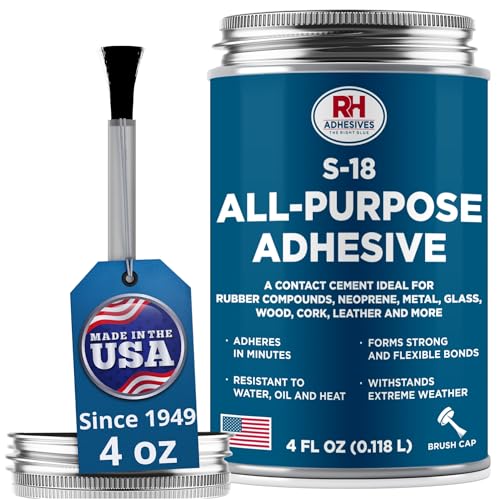
A contact cement built for sagging headliners and peeling upholstery, with a grip that grabs fast.
This is the formula for fabric, foam, and trim that has started to let go. It works as a contact cement — you coat both surfaces, wait a few minutes, then press — and it bonds porous and non-porous materials alike. The water-resistant solvent formula makes it a fit for marine jobs and tough temperatures, and it is made for bonding rubber to metal, like SBR rubber and neoprene to a metal panel. Full cure runs 24 hours, so plan to leave the repair overnight.
What people praise most is the hold: it grabs quickly and a little goes a long way, so the small can stretches across several fixes. A thin layer on both the foam and the liner, a few minutes of waiting, then a firm press is the working method, and it holds up in summer heat. The note to size honestly: adhesion gets mixed feedback, and a few found it did not grip smooth rubber well. It also has a strong smell, so work in a ventilated spot.
The working method that pays off: coat both sides thinly, let it get tacky, then press — rushing the wait is where contact cement goes wrong.
Ventilation is not optional: the solvent smell is real, so open a window or work outside.
Made for fabric and trim: headliners, upholstery panels, boot soles, and rubber-to-metal bonds that need a fast grab.
Test on slick rubber first: if your material is a smooth, non-porous rubber, do a small patch before committing the whole repair.
4. Loctite Power Grab Ultimate 1 Pack
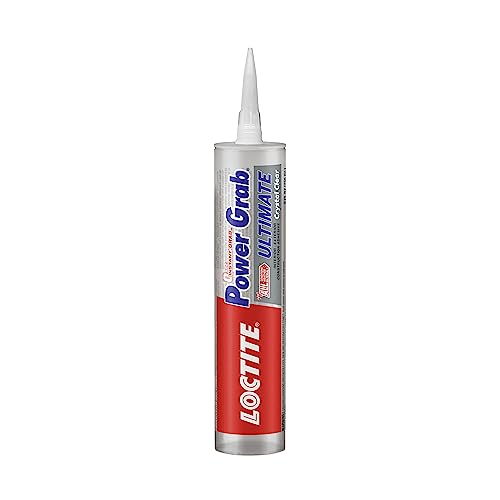
The clear construction adhesive that keeps its invisible look through weather and wet surfaces.
When the repair is on show and has to survive the outdoors, this is the pick. The formula stays crisp during application and after it cures, so a bonded joint on finished wood or tile does not show a yellow or white glue line. It is rated weatherproof and waterproof and works across a temperature range from 0°F to 140°F, which covers exterior projects from a freezing winter step to a hot summer panel. It even bonds two non-porous surfaces, and the quick initial tack cuts down on bracing and nailing.
The clarity is what people notice first — it dries hard and clear and cleans up with mineral spirits while fresh. It fills gaps, so a wobbly chair or a carved table repair locks up tight and invisible, and it holds pavers on a loose outdoor step through a full year of weather. The honest limit is cold: in near-freezing conditions it can stay tacky past a 24-hour cure without clamps, so warm-weather work is where it shines. Cap the tip well or it hardens in the tube.
Why it disappears: the glue dries crisp, so you get no residue line on finished wood—a standard PVA (white wood glue) would leave a visible mark.
Cold is the catch: below freezing it needs clamps and extra cure time, so save it for warmer jobs.
The invisible fix: exterior trim, pavers, tile, and finished-wood repairs where the glue line must not show.
Warm weather only: if you are bonding in freezing temps, this one wants clamps and patience.
5. Loctite Vinyl, Plastic, and Fabric Adhesive, Pack of 2 Clear

A waterproof paste for vinyl, fabric, and flexible fixes that need to bend, not snap.
For a repair on a material that has to keep moving — a vinyl seat, a fabric panel, a plastic trim — this is the one aimed at exactly that. It is a creamy paste that goes on where you put it, and it is built as a flexible, waterproof formula. It bonds vinyl, plastic, fabric, wood, glass, and paper, and full cure takes 24 hours. You get two 1 oz tubes in the pack, so a second repair is covered without a trip back to the store.
Effectiveness is what wins people over: it reattaches items like lawn-mower seat padding and holds through the whole mowing season once the surface is prepped properly. It dries clear enough that a fabric repair does not show, and it works on small flexible projects like bonding cloth and resin into a flexing mask. Durability is the mixed note — plenty of bonds hold up, while some buyers find the grip giving out over time, so clean and dry the surface thoroughly first. Give it the full cure before you put stress on the joint.
The reasons it works
- Flexible, waterproof paste that suits vinyl, fabric, and plastic
- Dries clear so a fabric or vinyl fix stays discreet
- Two 1 oz tubes in the pack for repeat repairs
- Holds seat padding through a full outdoor season with good prep
Prep it right
- Durability gets mixed feedback — some bonds loosen over time
- Surface preparation is essential for a lasting hold
- Full cure needs a full 24 hours before it takes load
Great for flexible materials: vinyl, fabric, and plastic repairs where a little give is the whole point.
Prep before you glue: clean and dry the surface thoroughly, because that is what separates a lasting bond from a peeling one.
Know the Specs
Working Time & Set Time
Working time is how long you can adjust the parts before the adhesive starts to grab; set time is when it will not shift anymore. A longer working time helps anything you need to line up, while a fast set is for a quick spot fix you can hold. Match this to how much adjusting your repair needs.
Full Cure Time
Full cure is when the bond reaches its final strength and you can put it under load. It runs everywhere from 30 seconds to 24 hours across these formulas, so plan the repair around your schedule. Leave a slow-curing joint overnight and keep stress off it until the cure completes.
Compatible Materials
Every formula here lists the materials it grips, and that list is the first thing to check. A glue built for porous surfaces may struggle with a slick non-porous one, and rubber and vinyl behave differently from wood and metal. Test a small hidden patch before committing.
Flex vs Rigid Cure
A flexible adhesive stays slightly yielding so the joint moves with the surface; a rigid one locks hard. Flexible suits fabric, vinyl, trim, and anything that bends. Rigid suits a precision repair where you need a hard, gap-filling lock. Pick the type by how much give your material has.
Common Questions
What does a flexible adhesive actually mean?
Will flexible adhesive work on rubber surfaces?
How long should I wait before putting weight on the bonded joint?
Can I use a flexible adhesive to fix a sagging car headliner?
Does a clear adhesive really stay invisible after it cures?
Will these glues hold up outdoors in hot and cold weather?
What is the difference between the epoxy and the superglue gel here?
Is a contact cement the same as a super glue?
How much adhesive do I need for a typical repair?
What should I do if the cap glues itself shut?
The Bottom Line
For most repairs that need a flexible adhesive, reach first for the Bob Smith Industries BSI-203H Mid-Cure Epoxy. Its 15-minute working time lets you line up the joint, and it cures fully in 2 hours. For a quick spot fix, the J-B Weld SuperWeld Gel is a fast, no-drip gel that sets in 30 seconds and comes as two tubes. For fabric, headliners, and trim, the S-18 Contact Cement gives you the grab you need for a lasting hold.
How we choose
We do not accept paid placement. Every pick is matched to a real buyer and a real use-case; we do not hands-on test units.
Sources
Specifications: manufacturer listings and product documentation. Review insights: verified customer reviews, as of October 2026. Pricing: not shown on this page (it changes often); check the current price via the retailer link.
As an Amazon Associate, Aappliancez earns from qualifying purchases. This does not affect which products we feature.