Disclosure: Some links in this post are affiliate links. As an Amazon Associate I earn from qualifying purchases, at no extra cost to you. Learn more
Specs are compiled from manufacturer listings and verified buyer reviews and can change over time — please confirm the key details on the product page before buying.
Most gym shoes quietly sabotage your lifting. A thick, squishy heel tilts you forward under a barbell, and a narrow toe box squeezes your toes together just when you need them spread for balance. Flat training shoes fix both problems at once: a level sole keeps your weight planted, and a wide toe box lets your toes splay for a wider base.
This guide is built by comparing the manufacturers’ published specifications and the patterns across verified customer reviews, so you get each pick’s real strengths and trade-offs instead of marketing spin.
You will see exactly where each shoe puts your heel relative to your toes, how much room the toe box gives, and which ones survive daily abuse. Below is a straight, plain-English lineup of the best flat training shoes for lifting, HIIT, and everyday gym work.
Top Picks

How To Choose The Best Flat Training Shoes
The single most useful thing you can check before buying is the offset — the height difference between the heel and the forefoot. A shoe with an 8mm offset lifts your heel slightly above your toes. A zero-drop shoe keeps them level. For squats and deadlifts, level is what you want, because your weight stays centred instead of drifting toward the balls of your feet.
Offset and why it matters under a barbell
An 8mm offset (like the Under Armour Charged Commit Trainer 4) suits general gym work and walking. A zero-drop sole suits lifters who want to feel the floor and drive through the whole foot. Neither is wrong — pick the offset that matches what you do most in the gym. If you spend most of your session under a bar, level wins. If you mix in walking and circuit work, a small offset is more forgiving on your calves.
Toe box width and foot shape
A wide toe box lets your toes splay out, which widens your base of support and helps balance during single-leg work. A narrow toe box pushes your toes together and, over a long session, can leave them aching. Some shoes in this list deliberately run wide; others are snug and expect you to size up. Know your own foot first — flat, wide feet do better in the roomier picks, while narrow feet can swim in them.
Sole firmness versus cushioning
A firm sole transfers force cleanly into the floor during a heavy lift. A soft, cushioned sole absorbs some of that force and makes the lift feel vague. The trade-off is comfort: firm shoes feel harsh on concrete, while cushioned shoes feel great walking but unstable under load. Decide which you need more of, because no single shoe delivers both at full strength.
Side-by-Side Comparison
| Model | Best For | Offset / Drop | Sole Feel | Width Note | Amazon |
|---|---|---|---|---|---|
| Under Armour Charged Commit Trainer 4★ Best Overall | All-round gym and walking | 8mm | Cushioned with flex grooves | Firm fit, slightly narrow | Amazon |
| Nike Men’s Metcon 8CrossFit Standard | CrossFit and heavy lifting | — | Rigid, flat platform | Roomy toe box | Amazon |
| MIFAWA Barefoot ShoesBudget Barefoot | Budget barefoot feel | Zero drop | Thin and flexible | Wide toe box | Amazon |
| WHITIN Women’s Wide Toe Box S24 | Everyday walking and work | Zero drop | Lightly cushioned EVA, firm outsole | Wide toe box | Amazon |
| WHITIN Men’s Barefoot W63 | Lifting and daily wear | Zero drop | Thin, flexible | Standard toe box | Amazon |
| Sisttke Wrestling Shoes | Mat work and light lifting | Zero drop | Firm, grippy | Wide widths available | Amazon |
| New Balance DynaSoft Nergize V2 | Casual wear and light gym | — | Plush DynaSoft cushioning | Runs small and narrow | Amazon |
| Xero Shoes Men’s Prio | Barefoot gym and running | Zero drop | Uncushioned, flexible | Slightly cramped in toes | Amazon |
| New Balance Minimus TR V2 | HIIT and functional training | — | Flexible, firm | Runs small, size up | Amazon |
| adidas Samba Indoor | Style and indoor court grip | — | Thin, low-profile rubber | Runs large, size down | Amazon |
| Reebok Nano X5 | CrossFit and interval classes | — | Flat, firm sole with cushioned insole | Toe box slightly narrow | Amazon |
Detailed Reviews
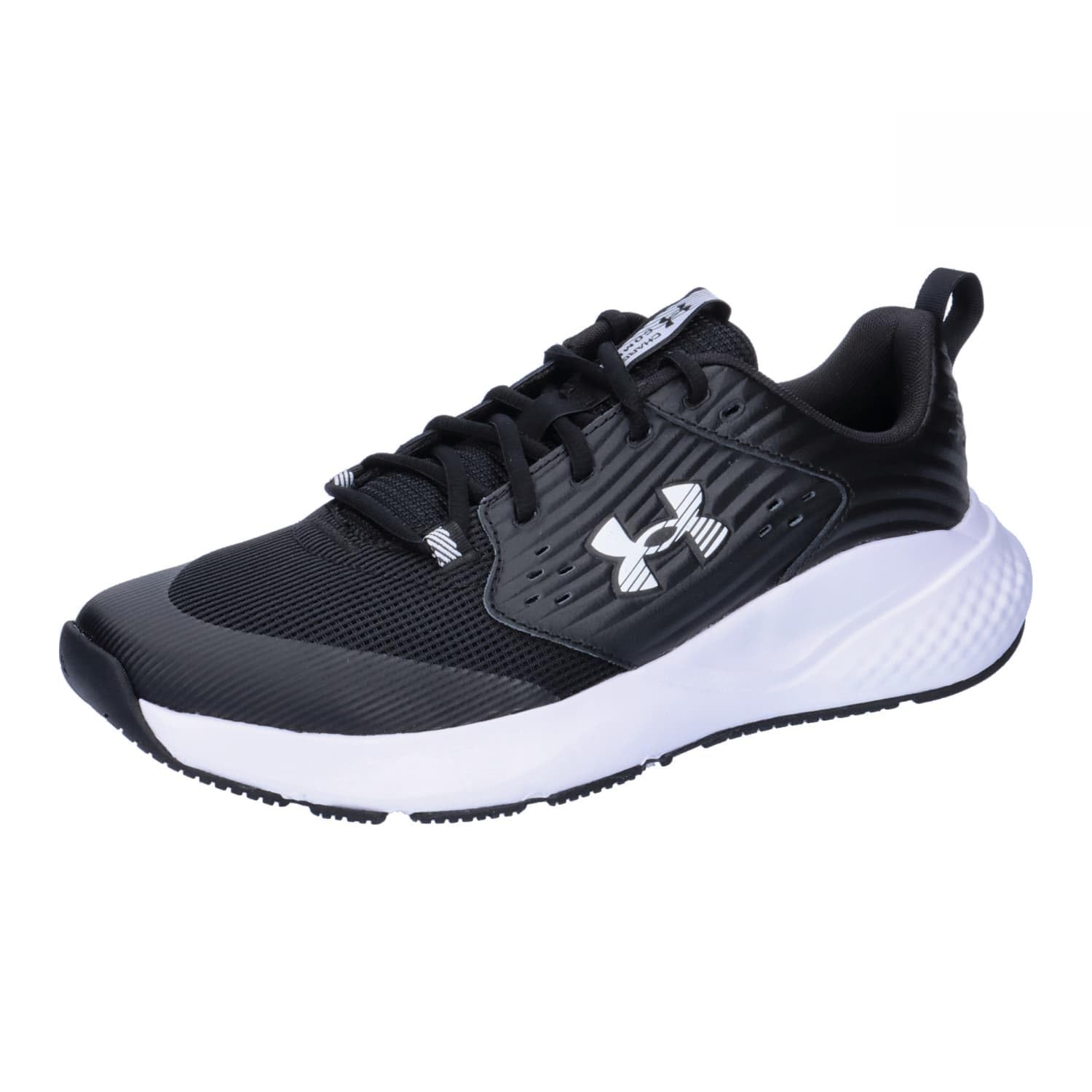
1. Under Armour Men’s Charged Commit Trainer 4
Our pick — 4.5+★ from 3,500+ verified ratings; the strongest balance of quality and price.
The gym shoe that stays stable under load and still walks you home comfortably.
This is the crowd favourite by a distance, and it earns that spot on versatility rather than any one a neat extra. The Charged Cushioning midsole absorbs impact and converts it into a responsive burst — put plainly, the foam soaks up the landing and pushes back as you drive up out of a squat. An 8mm offset (the heel sits 8mm higher than the forefoot) gives you a slight forward lean that suits general gym work, circuit training, and long walks. If you want one pair for the whole session, this is it.
Underfoot you get a full rubber outsole with flex grooves — channels cut into the sole that let it bend where your foot bends, so lunges and split squats do not fight the shoe. The upper is a lightweight mesh with textured overlays, and the Deluxe Comfort System sockliner moulds to the shape of your foot for easier step-in. At 11.92 oz it is not the lightest shoe here, but the trade-off buys you structure that holds up across multi-surface use.
The honest catch: the fit is firm and slightly narrow, and the shoe needs a break-in period before it feels soft. A couple of buyers also found the wide sizing runs generous — one said an 11 Wide felt like too much shoe and their foot slid inside despite tight laces. Ventilation is the recurring weak point in longer, sweatier sessions. Neither issue makes it a bad shoe; it just means narrow-footed lifters should stay true to size and give it a week.
gym traction grip
- Build quality is the headline — 180 owners single it out, and the firm support reads as durable rather than flimsy.
- An 8mm offset and full rubber outsole make it a genuine one-pair option for gym, trail, and walking days.
- The mesh upper and molded sockliner keep step-in comfortable straight from the box.
tight toe break-in
- Firm, slightly narrow fit from the start — break-in time is real.
- Breathability falls short in long sessions, and feet can squeak against the sides.
stable lifter: buy this if you want one versatile trainer for lifting, circuits, and daily walking with real support.
narrow fit: if you have narrow feet that hate a firm break-in, or you sweat hard through long sessions, a roomier shoe serves you better.
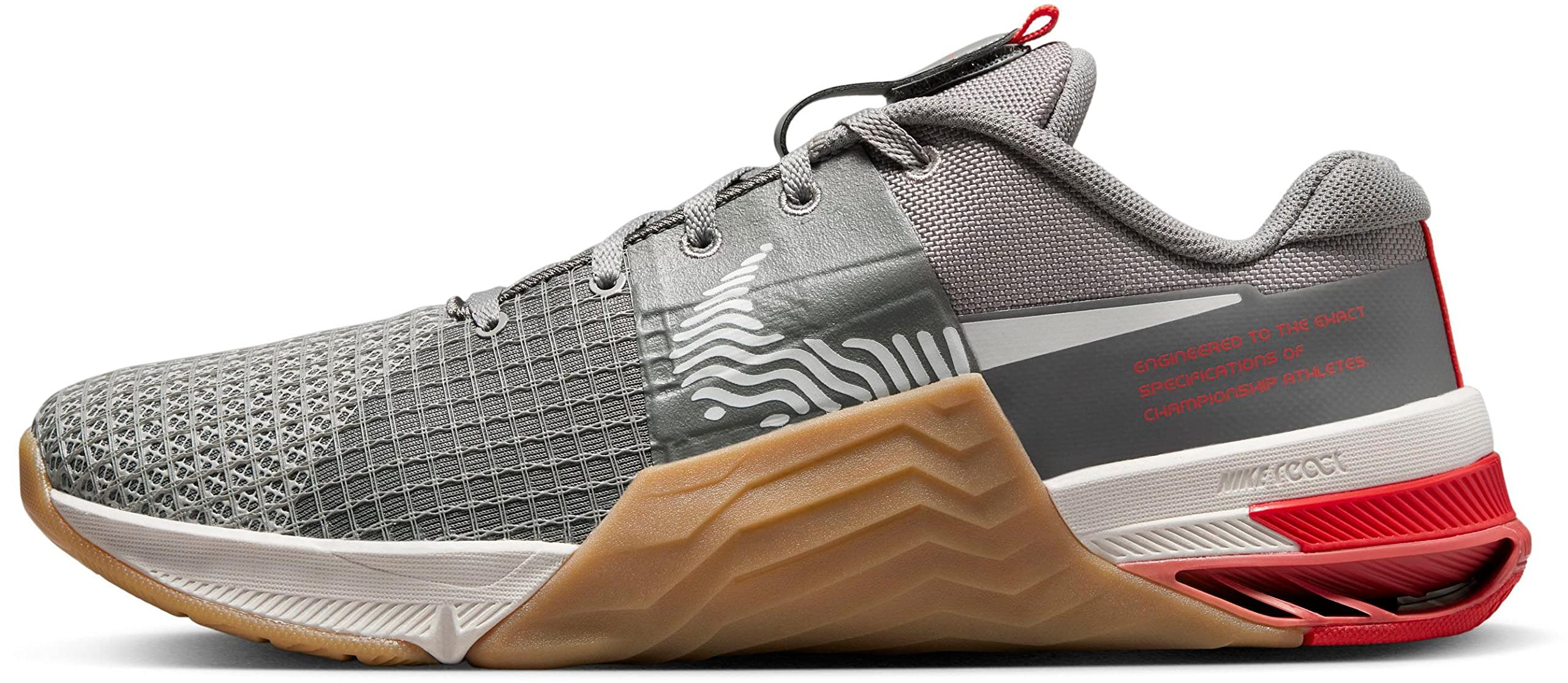
2. Nike Men’s Metcon 8 Sneakers
The rigid platform that turns your squat into a planted, locked-in push.
If your session lives around barbells and boxes, the Metcon 8 hands you the one thing that matters: a sole that barely flexes. That rigidity is deliberate — it stops your foot rolling inward under a heavy bar and gives your whole foot a flat surface to push against. The reinforced midsole and a rope wrap (a hardened patch that grips a climbing rope) make rope climbs and sled pushes easier on the shoe. Reaction foam adds cushioning for the cardio bursts between lifts.
Where this shoe differs from the Under Armour pick above is how little it bends. The Under Armour rolls with your foot; the Metcon resists it. For squats, deadlifts, lunges, and overhead presses that resistance is exactly what you want. For anything past a short run, it becomes the wrong tool — this is a trainer that will grind through a 3-mile jog but will not enjoy it.
Fit leans snug and secure rather than roomy, and a lace tuck loop keeps your laces pinned down so they cannot come loose mid-set. Buyers who wear them five times a week report the shoe holding its shape. The main gripes are predictable: the sole is stiff by design, and sizing is a mixed bag depending on foot width. Try your true size first; wide feet may want more room.
One buyer’s verdict sums up the durability story best: “Used 5x/week for ~8 months, still in great shape.”
heavy lift support: quality is what owners praise most, and the flat, unbending base makes heavy lifts feel grounded instead of wobbly.
stiff walking ride: a stiff sole and snug fit punish runners and very wide feet — this is a lifting-first shoe, not a hybrid you can jog in comfortably.
barbell days: the lifter whose week revolves around squat racks, rows, and conditioning circuits in one session.
casual wear: anyone who wants a single shoe to cover serious mileage alongside their training.
3. MIFAWA Barefoot Shoes Men Wide Toe Box
All the ground feel of going barefoot, minus the gravel under your arch.
This is the entry point for anyone curious about a flat, zero-drop sole — the forefoot and heel sit at the same height off the ground, so your body settles into a natural standing posture. The wide toe box lets your toes spread out, which improves balance during single-leg work and bodyweight drills. The sole twists and flexes with your foot, so your toes actually do the work of gripping the floor during lunges and squats. For a shoe in the entry-level tier, that is a lot of function.
The appearance is what buyers notice first, and comfort runs a close second — people describe the ride as close to walking barefoot with a protective layer underneath. The mesh upper is breathable and the material is soft against the skin. The Ortho insole adds support, and one golfer-turned-gym user praised the grip on wet and slippery ground, though they noted the padding dries slowly after a soaking.
Sizing is where you need to pay attention. Several buyers found the fit tighter than expected and recommend going half a size up, especially if you have wide feet. The insole durability is also hit-or-miss over heavy use — treat it as a replaceable part rather than an anchor of the shoe. For a small outlay, the trade-offs are reasonable.
wide feet: a first flat-sole shoe that gets you feeling the floor without a big commitment.
hard pavement: order up half a size and expect the insole to wear before anything else does.
4. WHITIN Women’s Wide Toe Box S24

A zero-drop sneaker that looks like a normal shoe, not a clown foot.
For women who spend the day on their feet and want a flat sole without a medical-looking silhouette, this is the pick. The wide toe box lets toes splay naturally, and the zero-drop platform keeps heel and forefoot level for a neutral standing posture. The look is what buyers rave about most — it reads as a retro athletic sneaker, so it pairs with jeans and workwear instead of shouting “orthopaedic”.
A cushioned EVA midsole gives a soft underfoot feel, and a rubber outsole adds grip across everyday surfaces like pavement and office flooring. The insole comes out entirely, so you can swap in your own orthotic or cushioning insert without cutting anything. That single feature makes the shoe far more adaptable than most in this tier.
Two things to size carefully. First, this is built for genuinely wide feet — if your feet are average or narrow, the extra room turns into slop. Second, cushioning and arch support are modest; this is a footwear middle ground, not a maximal cushioning shoe. A rare complaint about quality inconsistency between pairs exists, but the overwhelming impression is a comfortable, good-value daily shoe that handles miles of walking.
daily comfort fit: 176 owners highlight the look and 141 the fit — the wide-toe, zero-drop shape reads as stylish rather than corrective, which is rare at this level.
wide heel slip: it is cut for wide feet, so average-width wearers should not expect a snug, tailored feel.
all-day wear: you have wide feet and want all-day comfort in a shoe that looks like a normal sneaker.
sprint work: your feet are narrow — the wide toe box will feel roomy to a fault.
5. WHITIN Men’s Barefoot Shoes W63

A cheap, flexible flat shoe that some owners wear almost every day for years.
Comfort is the thing that carries this shoe — 1.2K buyers mention it, and quality runs a close second at 1.1K. The upper is a lightweight, quick-drying fabric, the sole is thin and flexible, and the zero-drop platform keeps you level for deadlifts and squats. Owners describe it as easy on, easy off, especially with the preset laces, and comfortable enough to forget you are wearing shoes at all.
Where it shines is durability for the money. Multiple long-term buyers report wearing a single pair for years of near-daily use — one racked up almost three years on paved ground before replacing, and another called it well worth the modest outlay. It washes with soap and water and dries quickly after rain, which makes it a good travel and gym-bag shoe.
Now the trade-offs, which are real. The toe box here is standard rather than wide, so this is not the pick for buyers who specifically need splay room. The thin sole transmits sharp rocks and gravel straight to your foot, and one owner recommends adding a puncture-resistant insert for rough ground. If you want cushioning underfoot, this is not it.
An experienced lifter summed up the use case cleanly: “Great everyday walking shoe or weight lifting zero drop shoe.”
barefoot start: if you want a light, flexible zero-drop shoe for lifting and daily wear without spending much.
long runs: if rocky trails or all-day concrete are on your schedule — the thin sole will let you feel every bump.
6. Sisttke Mens Wrestling Shoes Boxing Shoe Wide

A zero-drop mat shoe with grip firm enough to trust under a loaded bar.
Wrestling shoes have the profile flat-shoe lifters want: a low, grippy sole and a snug, locked-in fit. The zero-drop sole puts your heel and toe on the same plane, and the outsole grips mat and gym floor alike. The Velcro strap over the laces stops them coming loose mid-movement, which matters when you are upside down in a warm-up or driving out of a deep squat.
What separates this from the Nike and Under Armour trainers above is the fit philosophy. Those are built around gym movement and walking; this is built around being anchored to the ground. It comes in wide widths, and owners with broad feet say it beats other wide wrestling shoes on comfort because it does not clamp the sides. Lightweight construction and breathable material keep your feet from overheating during rounds.
The honest limits: there is no arch support and no heel cushioning, so if you need either, plan on adding an orthotic. The laces are short from the factory and some owners replace them. Durability has outliers — most pairs hold up for years, but a rare pair falls apart under hard use. For mat work, boxing, and light lifting, it does the job well for modest money.
mat grip control: firm floor grip and a wide-width option in one of the more affordable mat shoes you can find.
ankle support thin: arch support and heel cushioning — this is a bare-bones feel, not a supportive ride.
mat training: wrestlers, boxers, and gym-goers who want a wide, zero-drop mat shoe at a fair price.
heavy lifting: if you rely on arch support or need cushioning for long gym sessions.
7. New Balance Women’s DynaSoft Nergize Sport V2

Plush cushioning and a pretty colour, but not a heavy-lifting platform.
Comfort is the whole point here, and 629 owners say it delivers. The DynaSoft midsole feels soft and responsive underfoot, the mesh upper is breathable, and the slip-on lacing keeps your foot locked without fiddling with loops. For walking, light gym work, and everyday wear, it is a genuinely comfortable shoe that happens to look good in the tie-dye Terrarium colourway.
Compared with the rigid Metcon above, this is the opposite philosophy: soft, cushioned, and flexible. That makes it lovely for errands and easy on your feet through a workday. It also makes it the wrong choice for heavy squats or anything that demands a firm, loaded platform — the cushioning absorbs the very force you want to push into the floor.
Two things to know before ordering. The fit runs small and narrow — several buyers had to size up, and the toe box is slim, so wide-footed shoppers should look at the WHITIN S24 instead. And one buyer found the side of the shoe rubbed into the ankle even with thick socks. Neither is universal, but they are worth planning around.
light workouts: long days on your feet and light workouts where comfort outranks lifting stability.
agility drills: if you are building a platform for barbell work or have wide feet that need room.
8. Xero Shoes Men’s Prio Barefoot Sneaker

A flat, uncushioned sole that lets your foot do the work it was built for.
Quality is what owners praise most here, and the shoe backs it with a build that holds up across gym sessions and daily wear. The defining feature is the complete lack of cushioning — your foot sits right on the ground, and you feel the surface through the sole. For lifting, that means clean force transfer and a stable base. For balance work, it means your foot has to activate instead of relying on foam to prop it up.
This is not a shoe you break in over months. Owners describe it feeling natural from day one, with no forced arch and no raised heel. The wide toe box lets your toes spread, which helps tripod stability — the tripod being the three contact points under your foot that give you balance. One reviewer noted mild adjustment over about a week before hitting new personal bests.
The obvious catch: on hard pavement and rough ground, an uncushioned sole feels every rock. Some buyers who tried it on concrete added flat insoles for relief. Sole wear is also mentioned — this is a shoe that trades padding for feel, so plan to replace it when the sole thins out.
natural toe splay: a genuinely flat platform, zero break-in, and a footprint that packs small for travel.
pricey for minimal: hard ground and rough trails come straight up through the sole, so it is a gym and smooth-surface shoe at heart.
trail feel: you want a true minimalist shoe for lifting and want your foot to work, not be cradled.
flat arches: if cushioned comfort on concrete is a priority — your arches will feel every step.
9. New Balance Men’s Minimus TR V2

A flexible flat trainer that feels like being barefoot, but with a little more support.
Built for explosive gym movement, the Minimus TR V2 keeps the sole low and flexible so your foot can move naturally through HIIT and functional drills. Owners describe the feel as close to barefoot while still providing stability and grip. The flexible sole lets your foot roll and bend through lunges and step-ups, and the materials are durable enough that one regular wearer reports no wear problems across repeated sessions.
Sizing is the big thing with this shoe. The fit runs small — several buyers recommend sizing up a full size, and some needed extra width on top of that. Once you get the right fit, the stability and grip land where you want them for functional exercise. The trade-off is that the sole is firm and does not offer much support, and the tongue can bunch when you tie the laces.
Compare it with the Xero Prio above: both are flat and close to the ground, but the Minimus offers a touch more structure underfoot while the Prio is fully uncushioned. If you split time between gym and short runs, neither is a distance shoe — treat both as training-only tools.
gym circuits: the HIIT and functional-training regular who wants a flat, flexible sole with some structure.
standing shifts: anyone who wants a true-to-size fit or long-distance running — size up and keep the miles short.
10. adidas Unisex-Adult Samba Indoor Soccer

A flat court classic with a thin sole and more style than gym shoes usually get.
The Samba is the shoe you buy when you want the flat, low-profile feel with a look that works everywhere. The soft leather upper with suede overlays resists abrasion, and the rubber outsole grips hard on indoor courts and flat surfaces. That thin, flat sole gives you good ground contact, which is why so many lifters and gym-goers wear it as a daily shoe.
The trade-off that comes with that thin profile is minimal arch support and very little cushioning. For lifting and short sessions it is fine. For long standing days, an insole helps. The fit is the other thing to sort out — it runs large, and buyers who sized down half to a full size got a snug, true fit. The leather is stiff at first and breaks in quickly.
The squeak is a known quirk: the Samba has a reputation for loud squeaking when new, which fades with regular wear. Fit feedback is mixed overall, which is exactly what you would expect from a shoe that so many different foot shapes try to wear. Buy the right size and it is a comfortable, stylish everyday pick.
indoor courts: you want a flat, grippy shoe that looks sharp enough to wear beyond the gym.
outdoor miles: you need arch support and cushioning for long shifts or heavy mileage.
11. Reebok Nano X5 Men’s Shoes

A premium cross-trainer with a firm flat sole and a surprisingly cushioned insole.
Comfort is what owners rate highest on the Nano X5, and it earns that on the back of a cushioned insole sitting over a firm, flat sole. That combination is deliberate: the insole gives a little underfoot, but the sole underneath stays rigid enough to keep you planted. For interval classes like Orangetheory and F45, where you bounce between lifting and cardio, it holds up without feeling vague under a bar.
The sole is especially good for lateral movement — skater lunges, side shuffles, and single-leg work where you need the shoe to resist rolling. Owners upgrading from running shoes notice the difference in stability right away. The fit runs true to size for most, and the upper holds its shape through months of use.
Where it asks patience: the toe box is on the narrow side, so wide-footed lifters may need to size up and accept some heel slip, or look elsewhere. A few owners found the shoe uncomfortable for running beyond a kilometre, and the flat laces can feel flimsy. The sole is not a running sole, so keep your cardio short and stick to the gym floor.
powerlifting days: interval-class regulars who want stability under weight and cushioning for cardio bursts.
running days: your feet run wide or you want one shoe to carry you through longer runs.
Know the Specs
Heel-to-Toe Offset
The offset is the height difference between your heel and the ball of your foot, usually written in millimetres. A smaller offset (like 8mm on the Under Armour) gives a slight forward tilt that suits mixed training and walking. A zero-drop shoe keeps both ends level, which helps you push through the whole foot during a lift. If you are not sure, start with a small offset like 8mm and move flatter once you want more ground feel.
Zero Drop
Zero drop means the heel and forefoot sit at the same height, so your foot is flat to the floor. For lifting this keeps your weight centred and makes it easier to drive your heels into the ground. For walking and running, a zero-drop shoe can ask more of your calves as you adapt, so ease into it over a few weeks rather than wearing it all day from day one.
Wide Toe Box
A wide toe box is extra room across the front of the shoe so your toes can spread instead of bunching together. Spreading your toes widens your base and improves balance in single-leg and lateral movement. A narrow toe box squeezes your toes and can leave them aching after a long session. Wide-footed lifters should prioritise this; narrow feet can find it too roomy.
Sole Firmness and Cushioning
A firm sole is the gold standard for heavy lifting because it transfers force into the floor without sponging it away. Cushioning, on the other hand, adds comfort for walking and standing. If you lift heavy, lean firm. If you are mostly on your feet, lean cushioned. Choose based on where you spend most of your training time: heavy barbell work favors firm, long days on your feet favor cushioned.
Common Questions
Are flat training shoes better for lifting than cushioned running shoes?
What does zero drop actually mean and should I switch to it?
Do flat training shoes fit wide feet?
Can I run in flat training shoes?
How long do flat training shoes usually last?
Should I size up or down in flat training shoes?
Are barefoot shoes good for the gym?
What is the difference between a cross-trainer and a wrestling shoe?
Do these shoes work for HIIT and interval classes?
Will the adidas Samba stop squeaking over time?
The Bottom Line
For most gym-goers, the flat training shoes winner is the Under Armour Charged Commit Trainer 4 because it balances an 8mm offset, responsive Charged Cushioning, and a full rubber outsole in one versatile shoe. If you want a rigid platform for serious lifting, grab the Nike Metcon 8. And for a flat, flexible zero-drop shoe on a lean budget, the WHITIN Men’s Barefoot W63 is the one to reach for — a cheap, honest way to start training closer to the floor.
How we choose
We do not accept paid placement. Every pick is matched to a real buyer and a real use-case; we do not hands-on test units.
Sources
Specifications: manufacturer listings and product documentation. Review insights: verified customer reviews, as of October 2026. Pricing: not shown on this page (it changes often); check the current price via the retailer link.
As an Amazon Associate, Aappliancez earns from qualifying purchases. This does not affect which products we feature.