Disclosure: Some links in this post are affiliate links. As an Amazon Associate I earn from qualifying purchases, at no extra cost to you. Learn more
Specs are compiled from manufacturer listings and verified buyer reviews and can change over time — please confirm the key details on the product page before buying.
The bike you buy should match how you actually ride, not how you imagine the weekend will go. If your loop is flat, short, and city-bound, a gearless cruising frame will feel easier and lighter than a racing rig you never shift. If you are chasing speed on open pavement, you want the drop bars and the gear range. The trick is knowing which engine you are.
This guide is built by comparing the manufacturers’ published specifications and the patterns across verified customer reviews, so you get each pick’s real strengths and trade-offs instead of marketing spin.
Here is the short version: if you want a single machine that does not care whether your city is flat or hilly, a flip-flop hub is your anchor. The picks below keep that truth in mind while respecting every budget. This is the honest, plain-English breakdown of fixed gear bikes so you can stop guessing.
Top Picks


How To Choose The Best Fixed Gear Bikes
Most people buying a fixed gear bike make the same mistake: they pick the frame color first and figure out the hub second. That is backwards. The hub is the part that decides whether you can coast down a hill without your legs being dragged around by the pedals. It is also the part that decides whether the bike feels like a tool or a toy. The frame color can wait.
Start with the hub, not the paint
A flip-flop hub (a rear hub threaded on both sides so you can run one gear fixed and the other side as a freewheel) is what gives you options. In fixed mode, the pedals move whenever the wheel moves — you cannot coast, and you brake by resisting the crank. In freewheel mode, you coast like a normal bike. A bike without a flip-flop hub locks you into one personality. Look for that word in the listing before anything else.
Frame size decides your comfort more than frame material
A frame that is too big makes the bike feel like a bus in traffic. A frame that is too small makes your knees feel cramped. The size charts on these bikes range from 41cm up to 63cm, and the standover height numbers matter more than the seat-tube number for a fixie because you will be straddling the top tube at every red light. Measure your inseam and match it against the standover figure, not just your height.
Brakes: coaster, caliper, or both
A coaster brake is built into the rear hub — you pedal backward and the bike stops. There is no cable to stretch and nothing to adjust. A caliper brake (the kind that squeezes the rim from both sides) gives you more stopping power on steep descents but needs pad upkeep. Urban commuters are usually fine with either, but if your route has long downhills, give the caliper setup a close look before you buy.
Side-by-Side Comparison
| Model | Best For | Drivetrain | Frame Material | Wheels & Brakes | Amazon |
|---|---|---|---|---|---|
| Firmstrong Urban Man★ Best Overall | Flat-town cruising | Single-speed coaster | Alloy steel | 26″ / Coaster | Amazon |
| VEVOR Road BikeBest Road Entry | Budget road entry | 21-speed (3×7) | Carbon steel | 700x25C / Caliper | Amazon |
| AVASTA AV300Trail-Ready | Trail-ready versatility | 21-speed derailleur | Aluminum alloy | 26″/27.5″ / Disc | Amazon |
| AVASTA Single-Speed Fixie | True fixie with options | Flip-flop single-speed | Carbon steel | 700x28C / Caliper | Amazon |
| Golden Cycles | Commuter value | Fixed/freewheel flip-flop | Alloy steel | 700C / U Brake | Amazon |
| HILAND 700C | Lightweight road speed | 14-speed derailleur | Aluminum | 700C / Caliper | Amazon |
| Superteam 88mm | Track aero upgrade | Single-speed cog | Carbon fiber (T700) | 88mm / Fixed wheel | Amazon |
| Queen Bike 50mm | Carbon wheelset value | Single-speed + 17T cog | Carbon fiber | 50mm / Rim brake | Amazon |
| Schwinn Kedzie | Brand-name fixie | 46T x 18T flip-flop | Alloy steel | 700C / Caliper | Amazon |
Detailed Reviews
1. Firmstrong Urban Man
Our pick — 4.5+★ from 500+ verified ratings; the strongest balance of quality and price.
A single-speed coaster-brake cruiser built for flat, paved commutes.
If your commute is flat pavement and your idea of a bike lock is a chain you drop through the wheel, this is the one. The Firmstrong Urban Man runs a 19-inch frame with 26-inch wheels, sized for most adult men at 5’5″ and above. The pedal-backward coaster brake means no cables to service and no levers to fumble — you stop by reversing your legs. That single feature is why people who never learned bike maintenance can own this thing for years.
What wins people over is the construction. Buyers consistently call it well-built, and assembly gets mentioned almost as often — it arrives largely pre-assembled, so the front wheel, seat, handlebars, and pedals are the main pieces to attach. The upright riding position takes the strain off your lower back, and the oversized dual spring saddle plus balloon tires swallow cracked asphalt. Owners ride it for beach loops, dog runs, and neighborhood errands with equal ease. One buyer’s quote stays with you: the bike “survived a week at Burning Man no problem.”
The honest catch is durability at the extremes. A handful of buyers report the seat coming apart or the frame failing within weeks of hard use, and the hill situation is real — the single gear is a flat-ground tool, not a climber. One rider who is 6’8″ and 300 pounds found it fit fine over 100 miles, but needed the tires inflated rock hard to keep momentum on rolling streets. If your daily route is nothing but ramps and rises, this is not the bike.
What It Gets Right
- Coaster brake needs zero cable tuning — pedal backward and you stop
- Arrives mostly assembled; most owners mention setup under an hour
- 19-inch frame fits most adult men 5’5″ and above
- Oversized spring saddle and balloon tires soak up rough pavement
Where It Falls Short
- Single gear drags on hills and long inclines
- Occasional reports of seat or frame failing under hard use
- No fenders or rack mounts mentioned in the build
Reach for this if: your route is flat, paved, and you want zero-maintenance simplicity.
Look elsewhere if: your streets climb, or you want multiple gears for variable terrain.
2. VEVOR Road Bike, 700C Wheels Racing Bike
A 21-speed drop-bar road bike with internal cable routing at a budget price.
You get climbing gears and sprinting gears on one bike with the VEVOR’s 21-speed Shimano drivetrain (three front chainrings splitting into seven rear gears). The carbon steel frame and fork, plus 700x25C wheels (about 27.5 inches in diameter with 25 mm wide tires), handle both. Internal cable routing tucks the shift lines inside the frame, so the bike looks cleaner and lines snag less. At 31.5 pounds it feels heavy when you lift it onto a rack. The drop-bar geometry (handlebars that curve down and forward) puts you in a forward, aerodynamic position that rewards long pavement stretches.
Appearance is where this bike earns its keep. Multiple buyers call it beautiful, and the price-to-what-you-get ratio gets consistent nods. The brake calipers respond quickly and give you predictable control on wet roads. Assembly is straightforward — it ships 85% pre-assembled, and you install the front wheel, saddle, pedals, brake, and reflectors. One rider reported it arrived two days early and logged 12 miles without a problem.
Here is the trade-off you need to hear. Quality and design are the most-discussed topics in the review pages, and they split hard — some units arrive with a front tire slightly off-straight or shifting that feels goofy. The bike is also heavy and the saddle is firm, so it is a bargain that asks you to tolerate some rough edges. It is not a premium build; it is a well-priced entry into geared road riding.
Weight versus payoff: 31.5 pounds makes it slower to lift than the HILAND 700C, but you get 21 gears for hills that a single-speed cannot touch.
The fit question: the drop-bar setup rewards riders who are comfortable leaning forward — if you want an upright posture, this is the wrong shape.
Bottom line: a cheap way to try geared road cycling without committing to a premium frame.
The caveat: expect to fine-tune the front tire and derailleur straight from the start.
3. AVASTA AV300 Mountain Bike
A 21-speed aluminum hardtail with a suspension fork and dual disc brakes.
This is the pick for the rider who is not sure whether they want a commute bike or a trail bike — because the AV300 does both. The aluminum alloy frame and rims keep it light enough to maneuver, while the suspension fork (a shock-absorbing front end that soaks up bumps) smooths out roots and potholes. You get a 21-speed derailleur and dual disc brakes that grab reliably in wet or loose conditions. Tire sizes come in 26-inch or 27.5-inch with quick-release axles, so swapping or servicing a wheel takes seconds, not tools.
The build quality is what buyers talk about most, and it is easy to see why. One rider ordered it for a 12-year-old and had it arrive three days early; assembly, including fork, handlebars, seat, pedals, and brake adjustments, took about 90 minutes for a first-timer, with all tools included. Another owner, back on a bike for the first time in 20 years, found it solid on gravel, dirt, and streets. At 170cm, that rider found it a touch large but praised how quickly it corners.
The watch-out is quality control at the margins. A small number of units have shipped with a loose brake caliper or a detached cable, so check every bolt before your first ride. Instructions can be thin for first-timers, and one owner found the YouTube videos unhelpful. This bike rewards a careful unboxing, not a rushed one.
Why It Works
- Suspension fork absorbs bumps on unpaved trails
- Aluminum alloy frame and rims keep it light and agile
- Dual disc brakes stay reliable in wet or loose conditions
- Quick-release axles make wheel swaps tool-free
- 21 speeds cover climbs and flats alike
What To Watch
- Some units arrive with loose calipers or cables — inspect before riding
- Assembly instructions are thin; first-timers may need extra time
- Fits a range of riders, but smaller adults may find it large
Buy it if: you want one bike for the road, the trail, and the gravel path in between.
Think twice if: you are a first-timer who wants a fully assembled, ride-out-of-the-box experience.
4. AVASTA Single-Speed Fixed Gear Fixie Bike

A carbon steel fixie with a flip-flop hub in three frame sizes from 50cm to 58cm.
This is the bike that gives you two personalities without buying two bikes. The flip-flop hub — a rear hub threaded on both sides — lets you run fixed gear on one side and freewheel on the other, so you can coast or commit depending on your mood. The high-strength carbon steel frame absorbs road buzz, and the 700x28C tires, 40mm deep V rims, KMC chain, and dual brakes give you a setup that is ready for urban pavement. It arrives 90% assembled, and the listed setup time is about 15 minutes.
Sizing is where AVASTA earns trust. Three frames cover most adults: 50cm for 5’1″ to 5’6″, 54cm for 5’6″ to 5’11”, and 58cm for 5’11” to 6’3″. Ride quality is the most-praised trait, with value-for-money close behind. One owner swapped in RaceFace Chester pedals and stainless bolts, then reported the Kenda tires held 80 psi well and the free hub ran without bottom-bracket creaks. A 6’3″ rider’s son used the 58cm as a campus bike and found it comfortable.
The honest tension is durability over the long term. Some customers note the front tube popping or build issues with the brake lever threads, and a few find the handlebars narrow during the first few rides. You will want to grease the seat post and pedal threads before assembly and check that the wheels are true. Treat it as a great foundation you fine-tune, not a finished machine.
The sizing advantage: three frame sizes spanning 5’1″ to 6’3″ — broader coverage than the Firmstrong’s one-size approach.
The setup reality: 90% pre-assembled sounds fast, but you will still need Allen wrenches and a Presta pump to finish the job properly.
the balance: a true fixed-gear bike at a mid-range value, with a hub that lets you choose your ride style.
The trade-off: you may need to replace the brake pads or front tube sooner than you expect.
5. Golden Cycles Fixed Gear Single Speed Bike
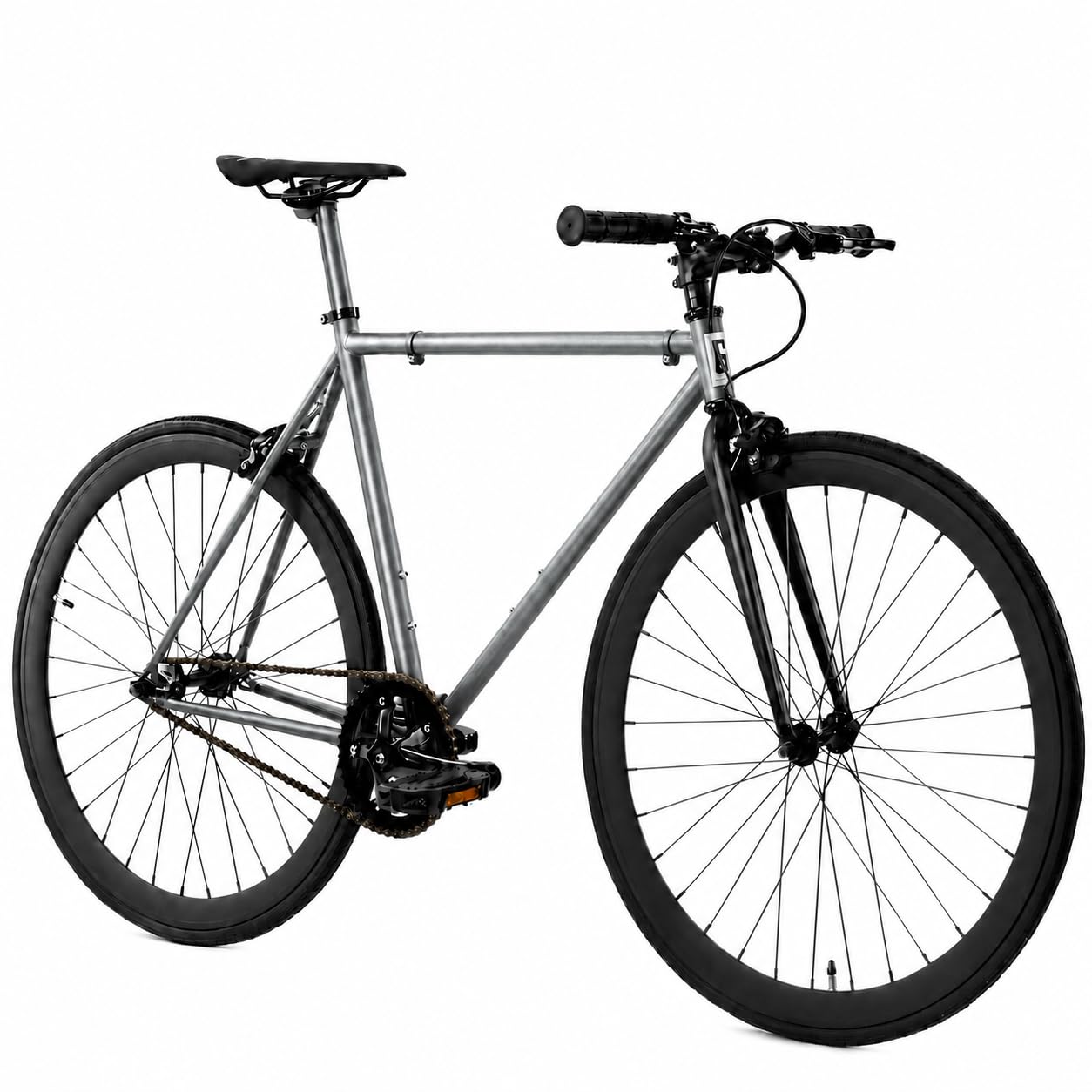
A flip-flop fixie in seven frame sizes from 41cm to 63cm, with front and rear brakes standard.
Golden Cycles covers almost every human height with its frame range, from 41cm up to 63cm. The standover heights climb from 27 inches to 34 inches in step, so you can match inseam before you buy rather than guessing. The flip-flop hub gives you fixed-gear and freewheel modes, and front and rear brakes come standard — a welcome extra on a fixed-gear bike where stopping control matters. The 700C wheels and alloy steel frame keep the ride stable through city traffic.
Performance is the headline here, with value-for-money a close second. One experienced commuter logged hundreds of miles on daily rides and still gave it five stars, noting sealed bearings that are uncommon at this tier. A 35-year cyclist bought it for a spouse who wanted a simple no-shift bike, assembled it in about 30 minutes, and reported a comfortable six-mile ride. Another owner described it as a genuine fit for a 6’3″ or 6’4″ rider in the 63cm frame.
The recurring gripe is manufacturing consistency. Some units arrive with the rear axle not fitting the dropout, or a crank that loosens during the first rides. Brake pads wear quickly, and the stock saddle is firm enough that many swap it. If you are handy with a wrench, these are solvable annoyances; if not, budget for a shop tune-up. The core design is sound — the finishing details are the variable.
What Commuters Praise
- Seven frame sizes from 41cm to 63cm cover nearly every rider height
- Front and rear brakes standard for reliable city stopping
- Flip-flop hub lets you switch between fixed and freewheel
- Sealed bearings and smooth ride at a budget-friendly tier
The Reality Check
- Some units need a crank or axle tweak right from the start
- Stock brake pads wear fast; the seat is firm
- Quality control varies enough that a shop check is wise
The match: value-focused commuters who want a flip-flop hub and real brakes without a premium price.
The mismatch: riders who want a bike to be perfect from the first pedal stroke without any setup time.
6. HILAND 700C Road Bike

A 14-speed aluminum road bike with internal cable routing and a 700C wheelset.
The HILAND’s aluminum alloy frame with internal cable routing is the lightest construction in this group, and the 700C wheelset holds momentum on open pavement with less effort than the steel-framed alternatives. The 14-speed shifter gives you enough range for hills and flat sprints alike. Three frame sizes — small at 49cm for 5’3″ to 5’6″, medium at 53cm for 5’6″ to 6’0″, and large at 57cm for 6’0″ to 6’4″ — mean most adults can find a correct fit. It ships 90% pre-assembled with tools and pedals included.
Buyers mention quality most often in reviews, with value for money close behind. One rider logged 70 to 90 miles in a week with zero issues. That rider also noted the brakes could stop the bike from about 13 mph within 10 feet — strong for a caliper setup (rim brakes that squeeze the wheel) at this tier. The shifters take a little learning but click cleanly afterward. Assembly is easy enough that a college student called the bike “just amazing” for campus riding.
The limitation is the saddle and the surface. The stock seat drew complaints from at least one rider’s husband, who replaced it. The drop-bar position and the caliper brakes are tuned for paved roads — gravel or rough trails will feel jarring. This is a pavement machine with a narrow comfort zone, and it is honest about that.
Where it shines: the aluminum frame drops weight noticeably compared with the VEVOR’s 31.5-pound carbon steel build, making acceleration feel snappier.
The comfort catch: the drop-bar stance is efficient but unforgiving — if your back prefers upright, this is not your bike.
The rider: pavement commuters and weekend sprinters who want light weight and real gear range.
Look elsewhere: if you need a cushioned saddle or plan to ride anything but smooth asphalt.
7. Superteam 88mm Carbon Clincher Fixed Gear Wheelset
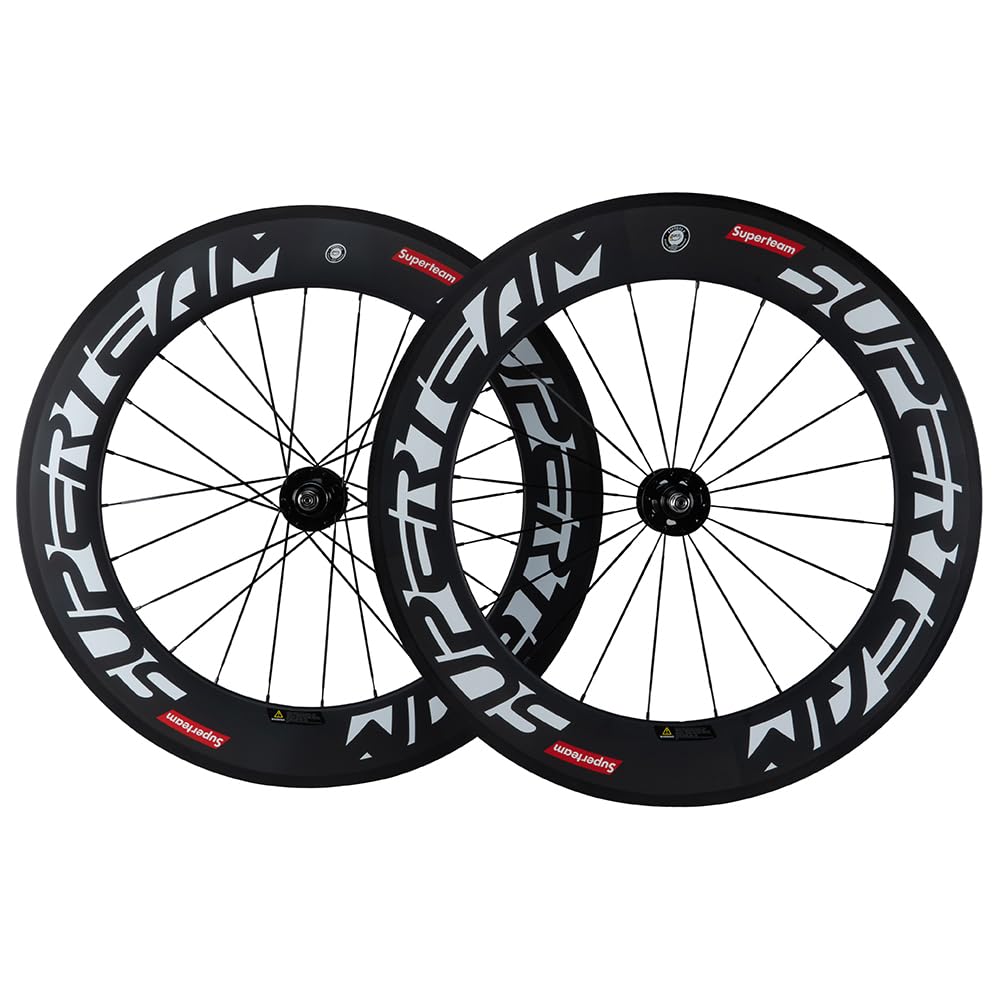
An 88mm deep-section T700 carbon wheelset for fixed-gear and track frames.
This is not a bike — it is the single biggest performance upgrade you can bolt onto a fixed-gear frame. The Superteam wheelset uses Toray T700 carbon fiber rims at an 88mm depth (deep-section aero rims that cut through wind and hold momentum), with 44 spokes per pair and a single-speed cassette body. The pair weighs 2170g ±50g, which is respectable for carbon at this depth, and the rim width sits at 23mm. The 2-year warranty under normal usage covers the kind of defect a short ride would expose.
Rim quality gets the most praise in reviews, with appearance close behind. One rider switched from 48-17 to 48-16 gearing (a slightly harder gear ratio) and reported lighter weight and better acceleration. Another rode thousands of miles and found the wheels still in perfect condition. That rider noted spoke tension maintenance is routine for any fixed-gear wheel. A Chicago rider took them downtown and said they “held up a lot of things aluminum 50mm rims wouldn’t.” Tighten the cog and lockring (the rear gear and its locking ring) from the start, and swap the factory valve extenders — a small upgrade most owners make.
The one recurring frustration is the rear axle length — it can run short, so you may need different nuts to catch enough threads. The wheels themselves are sturdy and smooth; the hardware around them is where corners get cut. If you ride a track bike and want a deep-section carbon set without a premium price, this is the upgrade that matters most.
What You Gain
- 88mm deep-section carbon rims hold speed and cut wind drag
- Toray T700 carbon fiber build with a 2-year warranty
- 44 spokes per pair add stability under load
- 2170g ±50g per pair — light for the rim depth
What To Prep For
- Rear axle can run short; may need different nuts
- Factory valve extenders are cheap — swap them
- Spoke tension needs regular checks on any fixed wheel
For the tinkerer: riders upgrading a track frame who want deep-section carbon aero without premium pricing.
Skip if: you want a wheelset that bolts on perfectly without hardware fiddling.
8. Queen Bike 50mm Carbon Fiber Track Wheelset

A 50mm carbon wheelset at 1880g per pair, with a 17-tooth cog included.
Where the Superteam goes deep at 88mm, the Queen Bike opts for a 50mm depth — a middle ground that keeps aero benefits without the twitchy feel deep rims can have in crosswinds. The carbon fiber build weighs 1880g per pair, lighter than the Superteam’s 2170g, and the 2:1 spoke weave (20 front, 24 rear) is calibrated to reduce yaw issues. A 17-tooth cog is included, along with brake pads, rim tape, spokes and nipples, and valve extenders. The basalt braking surface is paired with a classic 3K matte finish, and the hub accepts a 100mm front and 120mm rear spacing.
Quality and value-for-money are the two most-discussed strengths. One rider put 50 to 85 miles a day on a cheap single-speed commuter and came away satisfied. Another noted the hubs “spin buttery smooth” and the carbon rims arrived with no noticeable blemishes. The 120kg maximum weight recommendation covers most adult riders, and the UCI-approved, EN-standard construction under SGS testing adds a layer of confidence.
The honest caveat is truing. Several owners found the wheels not completely true from the start, requiring a shop visit before the first serious ride. The rear nuts and spacer combination also drew a note about limited bite. Budget carbon always asks for a tune-up — the question is whether the savings justify it, and here they usually do.
The weight advantage: at 1880g the Queen Bike pair undercuts the Superteam 88mm’s 2170g ±50g, making it the lighter of the two carbon options.
The depth trade-off: 50mm is more stable in crosswinds but gives up some of the aero benefit the 88mm Superteam delivers.
The target buyer: riders on a single-speed or fixed-gear frame who want carbon speed without deep-rim handling quirks.
The honest limit: plan for a truing session at your local shop before your first hard ride.
9. Schwinn Kedzie Single-Speed Fixie Road Bike

The familiar badge, the steel frame, the flip-flop hub.
The Kedzie runs a Schwinn steel racing frame and fork with a 46T by 18T single-speed drivetrain and a flip-flop hub — note that the fixed cog is sold separately. The 700C wheels use 32-hole alloy rims for strength on city commutes, and alloy front and rear caliper brakes handle stopping. It weighs 31 pounds and ships ready to assemble. A limited lifetime warranty backs the frame, which is a meaningful signal for a bike at this tier.
Quality and value-for-money are the dominant positives. One 6’1″ rider found it fits tall riders well and praised the smooth, fast ride. A rider who logged hundreds of miles reported it steady on pavement and gravel with good traction, though it struggles in mud. Speeds drop into the casual 12-13 mph range for 20-plus mile rides, and downhill runs can exceed 20 mph. Assembly takes minutes with the right tools.
The durability story is mixed, though, and you should hear it straight. Some reviewers point out the back wheel breaking or the tires failing early, and several found the brakes barely functional without adjustment. The handlebar can loosen when jarred, so carrying an Allen key is smart. The front brake often needs a basic tune right from the start. The steel frame is solid; the finishing parts are where you will spend your attention.
The Strong Side
- Schwinn steel racing frame and fork give a responsive ride
- Flip-flop hub with 46T x 18T drivetrain
- 700C wheels with 32-spoke alloy rims
- Limited lifetime warranty on the frame
The Soft Spots
- Rear wheel and tire durability complaints on some units
- Brakes often need adjustment right from the start
- Handlebar can loosen when jarred — carry a tool
- Fixed cog sold separately
Worth it for: riders who want a recognized brand frame and a lifetime warranty on the steel at a premium-tier price.
Pass if: you want brakes and wheels that are dialed from day one without a shop visit.
Know the Specs
Flip-Flop Hub
A rear hub threaded on both sides so you can run one side fixed and the other as a freewheel — that is the single feature that separates a true fixed-gear bike from a single-speed. In fixed mode the pedals turn with the wheel, so you brake by resisting the crank. In freewheel mode you coast. If the listing does not mention a flip-flop hub, you are locked into one ride style. Look for that phrase before you compare anything else.
Frame Size and Standover Height
Frame size (41cm to 63cm across these bikes) tells you the seat-tube length, but standover height (27 to 34 inches here) matters more on a fixie because you straddle the top tube at every stop. Match standover against your inseam, not just your overall height. The AVASTA fixie covers 5’1″ to 6’3″ across three sizes, while the Golden Cycles range spans seven frames — broad enough for almost any adult rider.
Brake Type
A coaster brake lives in the rear hub — pedal backward and you stop, with no cable to stretch. A caliper brake squeezes the rim from both sides and gives better stopping power on downhills, but needs pad upkeep. The Firmstrong uses a coaster, while the Golden Cycles and Schwinn use front and rear calipers. Urban flat routes favor the coaster’s simplicity; hilly routes favor the caliper’s control.
Frame Material
Carbon steel (the AVASTA fixie and Golden Cycles) absorbs road buzz and feels planted, but it carries more weight. Aluminum alloy (the AVASTA AV300 and HILAND) is lighter and snappier but transmits more road texture to your hands. Carbon fiber (the Superteam and Queen Bike wheelsets) is lighter still and tunable for stiffness, at a higher cost. None is best — the trade-off is weight versus cushioning versus price.
Common Questions
What does flip-flop hub mean on a fixed gear bike?
Can I coast on a fixed gear bike?
How do I know which frame size fixed gear bike fits me?
Are fixed gear bikes harder to ride than regular bikes?
How long does a fixed gear bike last?
Do I need brakes on a fixed gear bike?
What is the difference between a single-speed and a fixed gear bike?
Can I put carbon wheels on a fixed gear bike?
Are fixie bikes good for hills?
Do fixed gear bikes come assembled?
The Bottom Line
For most riders, the fixed gear bikes winner is the Firmstrong Urban Man because the coaster brake, oversized spring saddle, and nearly complete factory assembly mean you can ride it the same afternoon you unbox it. If you want a true flip-flop hub with size splits from 5’1″ to 6’3″, grab the AVASTA Single-Speed Fixie. And for the rider who wants lightweight pavement speed, the HILAND 700C is the one to reach for.
The single strongest nudge here is simple: the Firmstrong is the highest-rated pick in this group at 4.5+ stars across 500+ ratings, and it happens to be the easiest to own. That combination — top score and lowest maintenance — is why it stays in first place.
How we choose
We do not accept paid placement. Every pick is matched to a real buyer and a real use-case; we do not hands-on test units.
Sources
Specifications: manufacturer listings and product documentation. Review insights: verified customer reviews, as of October 2026. Pricing: not shown on this page (it changes often); check the current price via the retailer link.
As an Amazon Associate, Aappliancez earns from qualifying purchases. This does not affect which products we feature.