Disclosure: Some links in this post are affiliate links. As an Amazon Associate I earn from qualifying purchases, at no extra cost to you. Learn more
Specs are compiled from manufacturer listings and verified buyer reviews and can change over time — please confirm the key details on the product page before buying.
You want to leave the house with just a watch on your wrist and still get your run logged, your route mapped, and a call for help if something goes wrong. Two things make that possible: a built-in GPS chip (the satellite receiver that logs your route without a phone) and, on the models that truly cut the cord, a cellular connection (a built-in radio that makes calls and sends texts on its own). Everything else — the screen, the battery, the maps — depends on how far you plan to go untethered.
This guide is built by comparing the manufacturers’ published specifications and the patterns across verified customer reviews, so you get each pick’s real strengths and trade-offs instead of marketing spin.
The picks below range from a 42mm Garmin that fits smaller wrists to a rugged titanium watch rated to 100m. A phone-free watch only helps if the hardware matches how you train, so read on for the fitness tracker no phone needed that actually fits your wrist and your week.
Top Picks

How To Choose The Best Fitness Tracker No Phone Needed
The mistake most buyers make is assuming every smartwatch works on its own. It does not. Plenty of low-cost trackers are really just a sensor for your phone — walk too far from it and your route, your stats and your notifications all go dark. The watch you actually want has its own GPS chip and its own storage for routes and maps. Here is what to check, in plain terms.
Start with the GPS receiver, not the screen
A GPS receiver is the chip that talks to satellites to pin down where you are. A dual-band GPS is a more advanced version that listens on two frequencies at once, which helps it hold a signal between tall buildings or under heavy tree cover. If you run or hike beyond the city grid, spend your money here first. A watch with a bright display and a weak GPS receiver will drop your route under tree cover.
Decide if you need a cellular connection
Built-in GPS tells the watch where you are. A cellular connection lets it actually send and receive — calls, texts, a live location ping to someone at home. Models with LTE can make and take a call while your phone sits in a drawer. The trade-off is battery: a cellular radio is hungry, so expect to top up more often than a plain GPS watch needs.
Match the water rating to your sport
Water ratings are not all the same. A 5 ATM rating means the watch is fine for swimming and showers. A 10 ATM rating or a 100m rating is built for diving and high-speed water sports. If you swim laps, a 5 ATM rating covers you; divers need 10 ATM or a 100m rating. If you dive, you need the higher number.
Count your hours — both kinds
Every watch in this category quotes two battery figures. The first is smartwatch mode, where the watch acts like a watch. The second is GPS mode, where the satellite chip is running nonstop. A watch claiming many days of smartwatch life may drop to a single day once you start tracking long runs with full GPS. Compare the GPS-mode figure, not the smartwatch-mode figure, against your longest run.
Side-by-Side Comparison
| Model | Best For | Battery (Smartwatch) | GPS Battery | Water Rating | Amazon |
|---|---|---|---|---|---|
| Apple Watch Ultra 3★ Best Overall | Adventure and cellular freedom | Up to 42 hours | Up to 20 hours (Low Power Mode) | 100m | Amazon |
| Amazfit Active 2 PremiumBest Value | Everyday value with long life | Up to 10 days | — | 50m | Amazon |
| Apple Watch SE 3Best for Teens | Teens and first-time smartphone | 18 hours | — | Water resistant | Amazon |
| Amazfit Active Max | Big screen and big battery | Up to 25 days | — | — | Amazon |
| Samsung Galaxy Watch Ultra | Samsung phone users | 60 hours | — | Ocean swimming | Amazon |
| Amazfit T-Rex 3 Pro | Off-grid hiking and diving | Up to 17 days | — | 10 ATM, dives to 45m | Amazon |
| Garmin Forerunner 570 | Small-wrist runners | Up to 10 days | Up to 18 hours | — | Amazon |
| Garmin Forerunner 970 | Triathletes and serious racers | Up to 15 days | Up to 26 hours | — | Amazon |
| Garmin fēnix 8 | Divers and expedition athletes | Up to 16 days | Up to 47 hours | 40m dive rating | Amazon |
Detailed Reviews
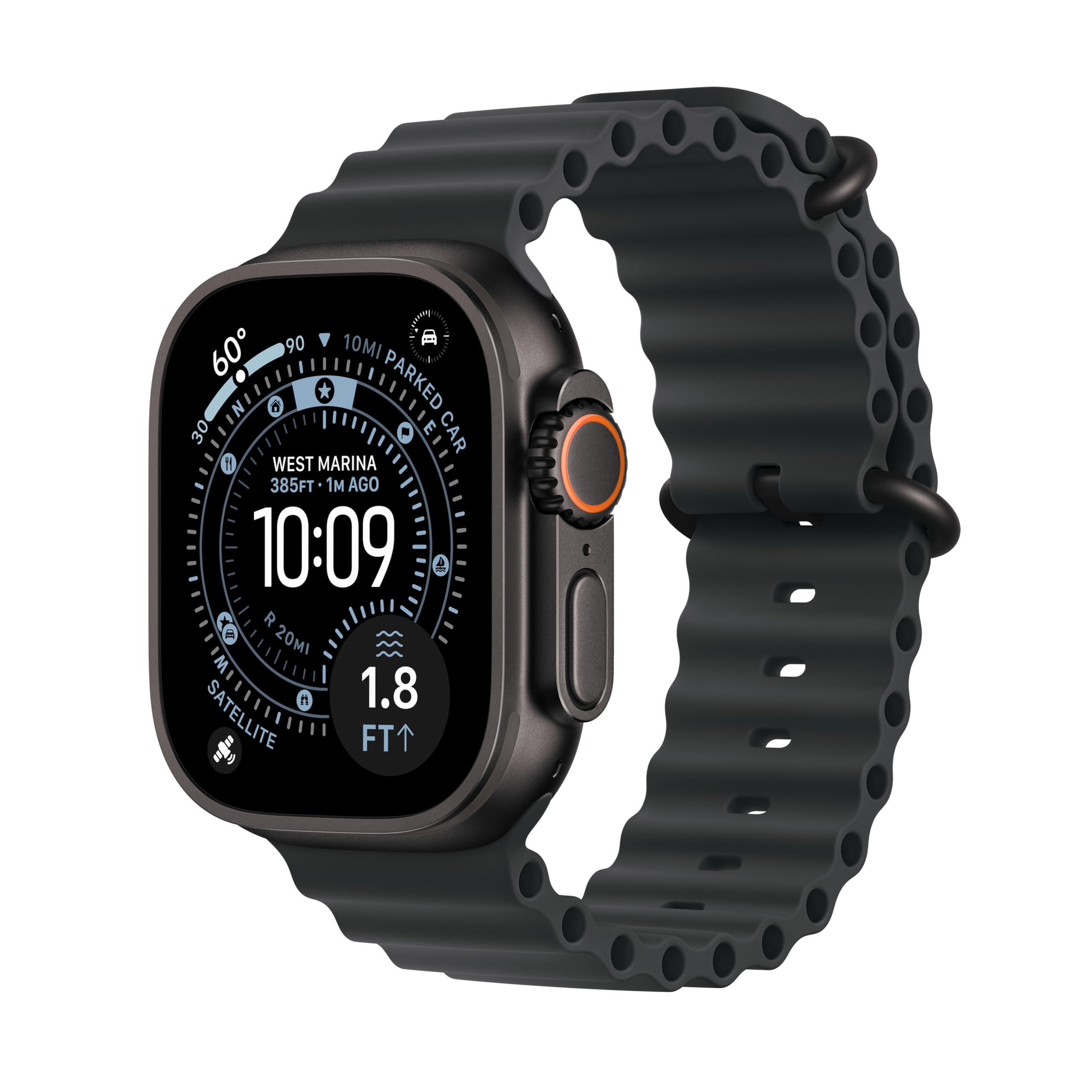
1. Apple Watch Ultra 3 [GPS + Cellular 49mm]
Our pick — 4.5+★ from 1,000+ verified ratings; the strongest balance of quality and price.
The titanium watch you can take into open water — and leave the phone at home for good.
The one number that decides this pick is 100m. That is the water-resistance rating on the rugged titanium case, and it is twice the 50m rating of the Amazfit Active 2 below. For you, that means the Ultra 3 goes swimming, diving and into high-speed water sports without a second thought. The sapphire crystal display over the top resists scratches from rock, sand and gym weights. At 2.24 ounces, it is a heavy watch on the wrist compared with a 0.96-ounce Apple Watch SE 3, but that weight buys real armor.
What makes it a true phone-free tracker is the cellular radio. You can take and make calls, stream music and podcasts, and listen through the built-in speaker or your AirPods — all without your iPhone nearby, on a fast 5G connection. Help is covered too: the watch can detect a hard fall or a severe car crash and reach emergency services on its own, and Check In pings a loved one when you arrive. For a solo trail runner, that is the safety net that turns a risky route into a reasonable one.
Battery is the real question at this level, and the answer here is up to 42 hours of normal use or up to 72 hours in Low Power Mode. Track a workout with full GPS and heart rate and you get up to 20 hours in Low Power Mode — enough for a long day out, not a multi-day expedition. Owners are candid about the size, as the review pages sum it up: some love the larger display, others find it too big. My read is that the 49mm case suits a wrist that already wears a big watch. If you have a slim wrist, the 40mm SE 3 fits better than the 49mm Ultra 3.
What earns the top spot
- 100m water resistance — twice the 50m rating on the Amazfit Active 2, so open-water swimming and diving are fair game.
- Cellular means calls, streaming music and emergency alerts with your iPhone left at home.
- Dual-frequency GPS for precise route tracking on trails and in city canyons.
- Rugged titanium case and sapphire crystal that hold up to hard knocks.
Where it asks more of you
- At 2.24 ounces it is a genuinely heavy watch, and the 49mm case reads big on smaller wrists.
- Up to 20 hours of full-GPS tracking in Low Power Mode means multi-day treks need a charger or a second watch.
Made for: swimmers, trail runners and divers who want a full phone replacement on the wrist and won’t flinch at a big case.
Think twice if: you have slim wrists or need a watch that runs for days of nonstop GPS — the 20-hour Low Power Mode figure will not cover a long expedition.
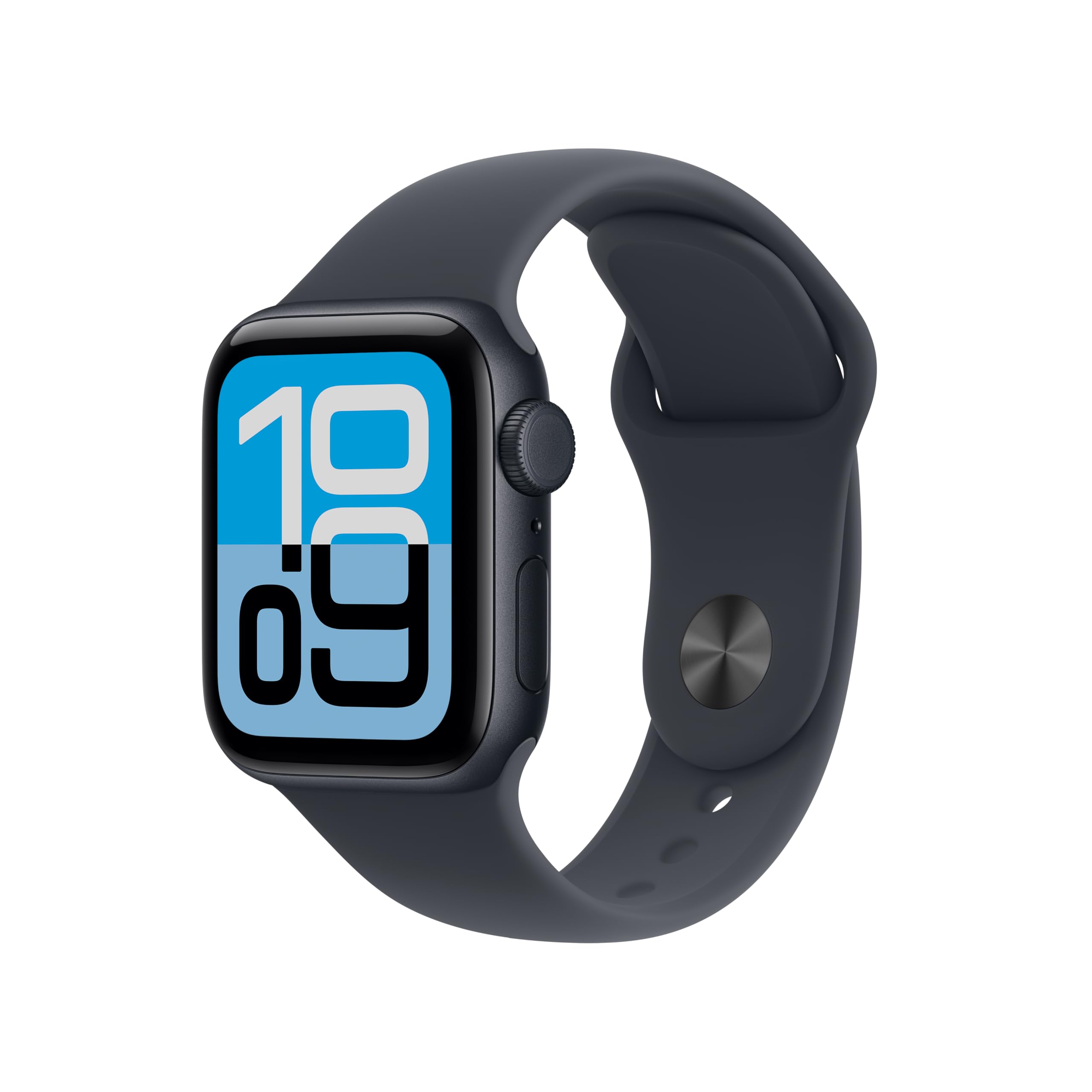
2. Amazfit Active 2 Premium Smart Watch
A stainless-steel dress watch that quietly logs your runs and skips the charger for over a week.
Here is the scenario this watch was made for: you want a classic-looking timepiece on your wrist at work and something that tracks a 5K after hours, without two devices or a nightly charging ritual. The stainless steel body and 1.32″ AMOLED display (a bright screen that stays readable in direct sunlight) deliver the first half. A 270 mAh battery delivering up to 10 days of typical use handles the second — you genuinely stop thinking about the charger.
The phone-free part is solid in the ways that matter. Five satellite positioning systems lock onto your route fast, so a run starts tracking quickly instead of waiting for a signal. Free downloadable maps give you turn-by-turn guidance on-screen or through Bluetooth headphones. With 160+ workout modes, 50m water resistance and a barometer (a sensor that reads air pressure for elevation), you can swim and ski with it on. The Zepp app carries no mandatory subscription fee, which is rare in this category.
Where it trails the pricier picks is the GPS battery drain under long efforts, and that is the honest trade-off for the multi-day life. There is also a compatibility catch worth knowing before you buy: on an iPhone, you cannot reply to iMessage from the watch, and with no Wi-Fi the Bluetooth sync is slow. Voice replies work with Android. Against the Apple Watch Ultra 3 above, this one holds a 50m water rating versus the Ultra’s 100m — fine for pools and showers, not for diving.
What wins people over: you get a sapphire-glass, stainless-steel watch with full GPS for the price of a budget fitness band, and that value is what buyers keep coming back to. The leather strap plus the included silicone sport band means it suits the office and the gym straight from the start.
The catch to plan around: the leather band is the dressy option, so budget for the silicone band on sweaty training days and treat the sapphire as scratch protection, not a license to abuse it.
Reach for this if: you want one watch for the desk and the trail, and charging it once a week sounds like plenty.
Look elsewhere if: you are an iPhone user who needs iMessage replies on the wrist, or you dive rather than swim.
3. Apple Watch SE 3 [GPS + Cellular 40mm]
The lightest wrist in this lineup, and the safest way to give a kid a phone number without a phone.
At 0.96 ounces, the SE 3 is the featherweight of the group — you barely feel it, which is exactly what you want on a wrist that wears it 24/7. The 40mm case is built for smaller arms. It carries cellular of its own, so a call, a text or an emergency connection works without an iPhone nearby. For a parent, that is the whole point: a way to reach a child on a bike ride or a walk home that is not a full smartphone.
The fitness side is honest about what it is. SE 3 tracks running, strength training and your daily step goal with real-time metrics, and the always-on display (the screen stays readable without a wrist raise) means a glance tells you your pace mid-run. Sleep score, overnight Vitals and irregular-heart-rhythm alerts round out the health picture. Battery is an all-day 18 hours, and a 15-minute top-up buys up to 8 hours — a fast-charge habit that offsets the shorter runtime compared with the multi-day Garmins here.
The known friction point is the family setup software, where approved contacts can fail to connect during Downtime and settings can revert over time. That is a software wrinkle, not a hardware fault — the watch itself holds up to drops and daily teen use. Against the Ultra 3, the SE 3 wins on weight (0.96 ounces versus 2.24) but gives up the 100m rating and the titanium case.
Best fit: a first watch for a teenager or a small-wrist adult who wants cellular safety and an always-on screen without a heavy case.
Not the pick if: you need multi-day battery for long GPS efforts or you want to dive with it — the 18-hour rating and lighter build suit everyday wear, not expeditions.
4. Amazfit Active Max Smart Watch
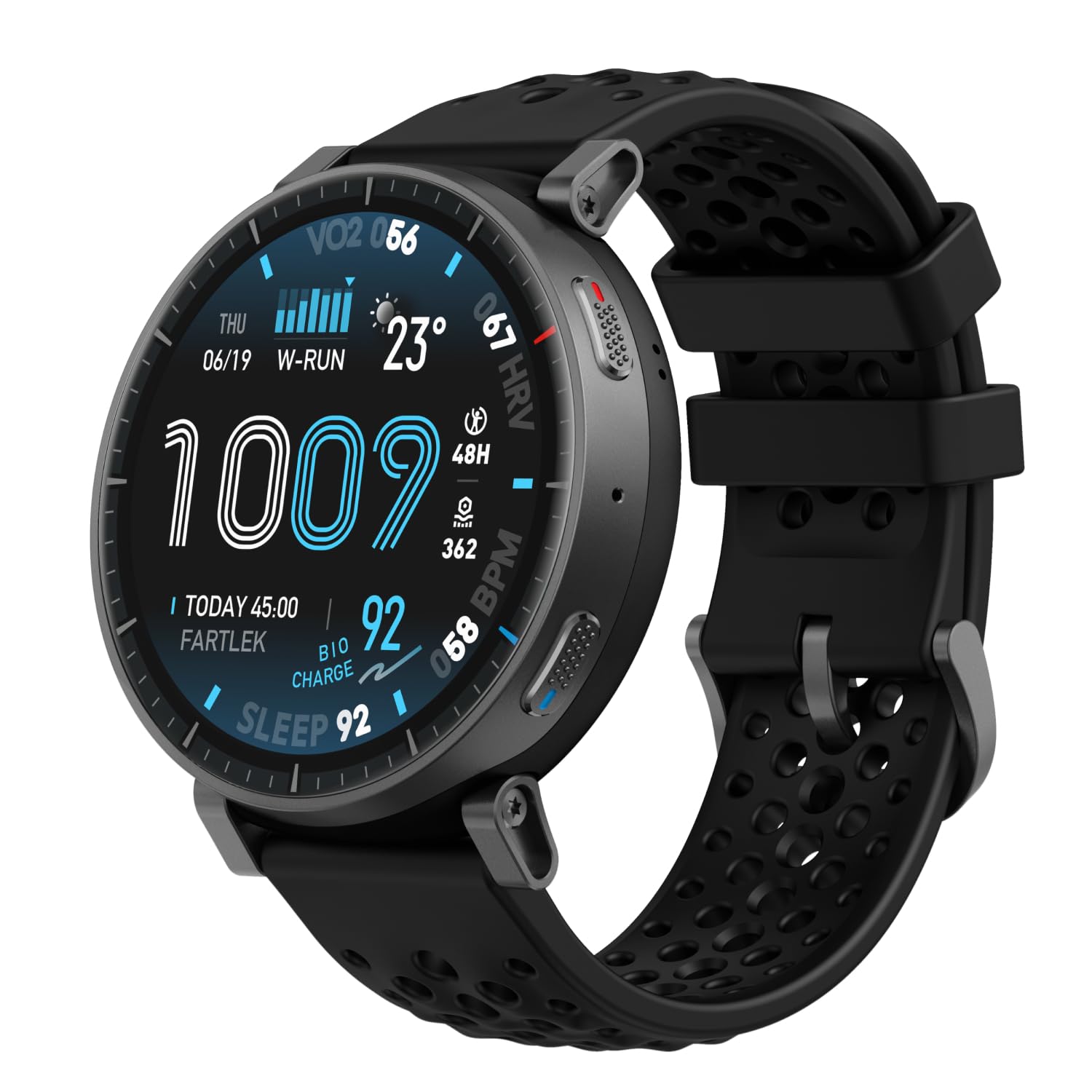
A 25-day battery and a 3,000-nit screen built for people who hate squinting.
If you have ever tried to read a watch face in full sun and given up, this one solves that specific annoyance. The 1.5″ AMOLED display pushes 3,000 nits of brightness — a nits rating is a measure of screen brightness, and 3,000 is bright enough to stay legible on a mountain at noon. The same screen is one of the largest in this lineup. On the endurance side, a rechargeable design rated for up to 25 days of battery means the charger becomes a monthly chore, not a nightly one.
The phone-free story is strong for a watch at this level. 4GB of onboard storage holds downloaded maps and music, so you can leave the phone home on a jog and play podcasts or MP3s through connected earbuds without a signal. Offline navigation works with five satellite systems for fast, accurate tracking. There are 170+ workout modes and Zepp Coach running plans, plus a BioCharge score that blends your workouts and stress into a read on when to push and when to rest.
The honest limits: the app ecosystem is leaner than Apple’s or Garmin’s, and some advanced health metrics drift during intense workouts. Buyers report the wrist strap as shipped feels uncomfortable, and a flexible aftermarket band is the easy fix. It also is not fully independent the way the cellular Apple picks are — the Zepp Flow voice assistant sends data to servers, so the deepest smarts still lean on a paired phone.
Why the big-screen crowd likes it
- Up to 25 days of battery — a month between charges is real for most users.
- 3,000-nit, 1.5″ AMOLED that stays readable in the harshest sunlight.
- 4GB of onboard storage for downloaded maps and music without a phone.
- Offline maps plus five-satellite positioning for trail runs.
The fine print
- Leaner app ecosystem than Apple or Garmin.
- The stock wristband has caused discomfort for some; a flexible band fixes it cheaply.
The win: the biggest, brightest screen here paired with month-long battery and offline maps — a superb match for hikers and gym-goers who want the data large and the charger rare.
The trade: deep integrations and a polished app store live in the Apple and Garmin ecosystems, not this one.
5. Samsung Galaxy Watch Ultra 47mm LTE
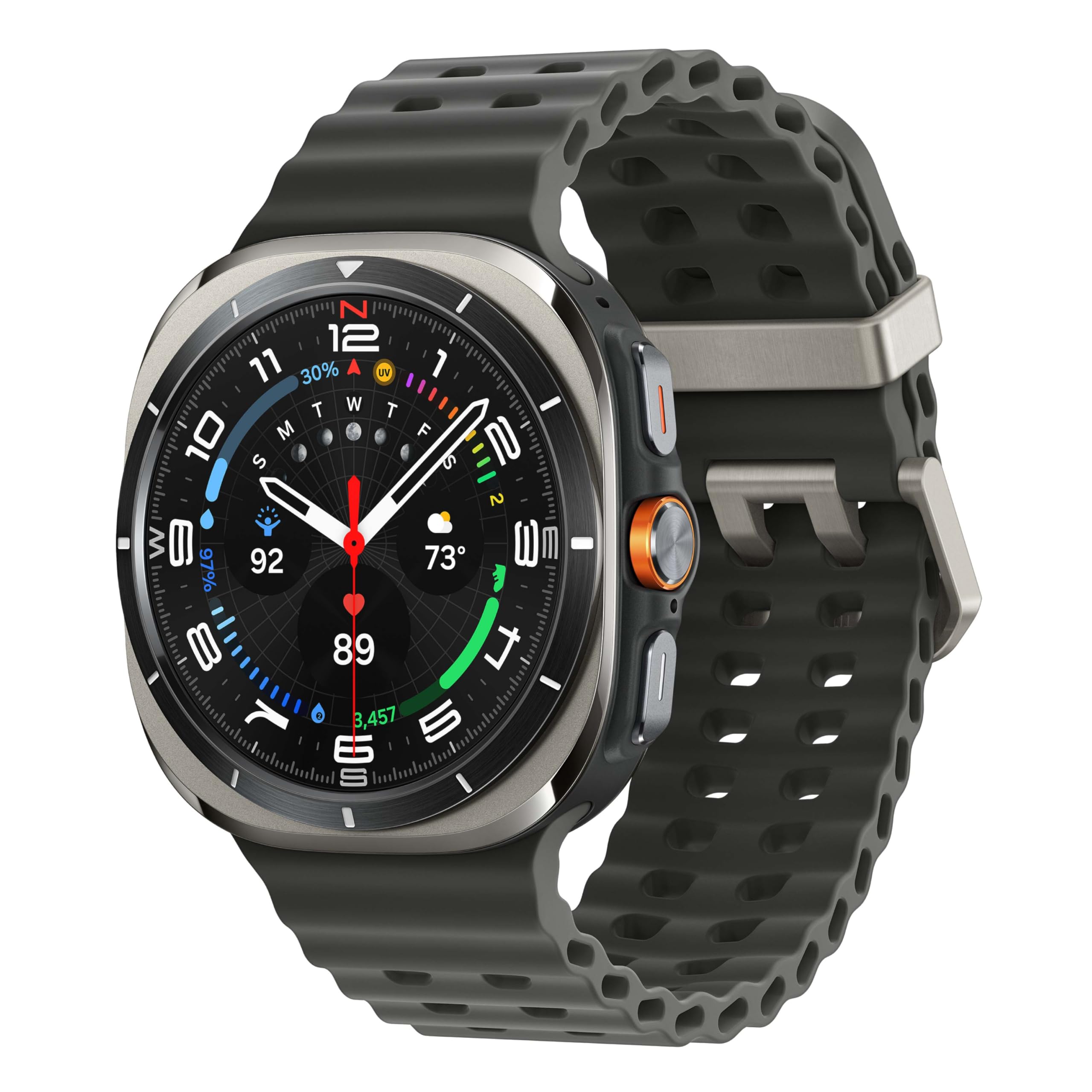
The smartwatch-first pick for Samsung owners who want LTE calls, AI insights and a titanium shell.
You get 60 hours of average use from a 590 mAh battery — the largest cell of any watch on this list — so you can head out for a weekend and skip the charger. Its fans praise the durable titanium case above almost everything else. LTE (the cellular radio that works without your phone) is built in, so calls, texts and emails work with your phone left behind. Add GPS, SOS, contactless payments, continuous heart rate, an ECG reading for heart rhythm, sleep and stress tracking, an Energy Score calculated from yesterday’s sleep, heart rate and steps, and a built-in flashlight, and you have a watch that replaces a surprising number of gadgets.
Samsung owners get the most from it: the AI features and Wellness Tips work best when the watch talks to a Galaxy phone. The performance tracking compares your current run or ride to your last one, and Heart Rate Tracking filters out body movement to keep readings cleaner during workouts. Charging runs about 2 hours.
Be clear-eyed about two things. First, the sharpest reviewers position this as a smartwatch that also tracks health, not a fitness-first tool — a dedicated Garmin beats it on pure training depth. Second, this is a bulky 47mm case, and the battery takes a hit under heavy use with everything switched on. It is also the pick that leans hardest into the phone-tethered AI features, so the phone-free purity sits a notch below the Apple cellular watches.
What it does best: the all-in-one act. LTE calls, a titanium body and a 60-hour battery mean it handles the office, the run and the weekend without a second device — the smartwatch you wear because it looks good, not just because it tracks.
One caution: the privacy-minded should read up on how Samsung handles the health data behind the AI features before leaning on them daily; this is a capable tool, not a sealed one.
Suits you if: you carry a Samsung phone, want LTE freedom and a titanium smartwatch that looks the part, and treat fitness tracking as one job among many.
Keep looking if: training depth is your priority — a Garmin will out-analyze it — or a 47mm case is more watch than your wrist wants.
6. Amazfit T-Rex 3 Pro Smart Watch
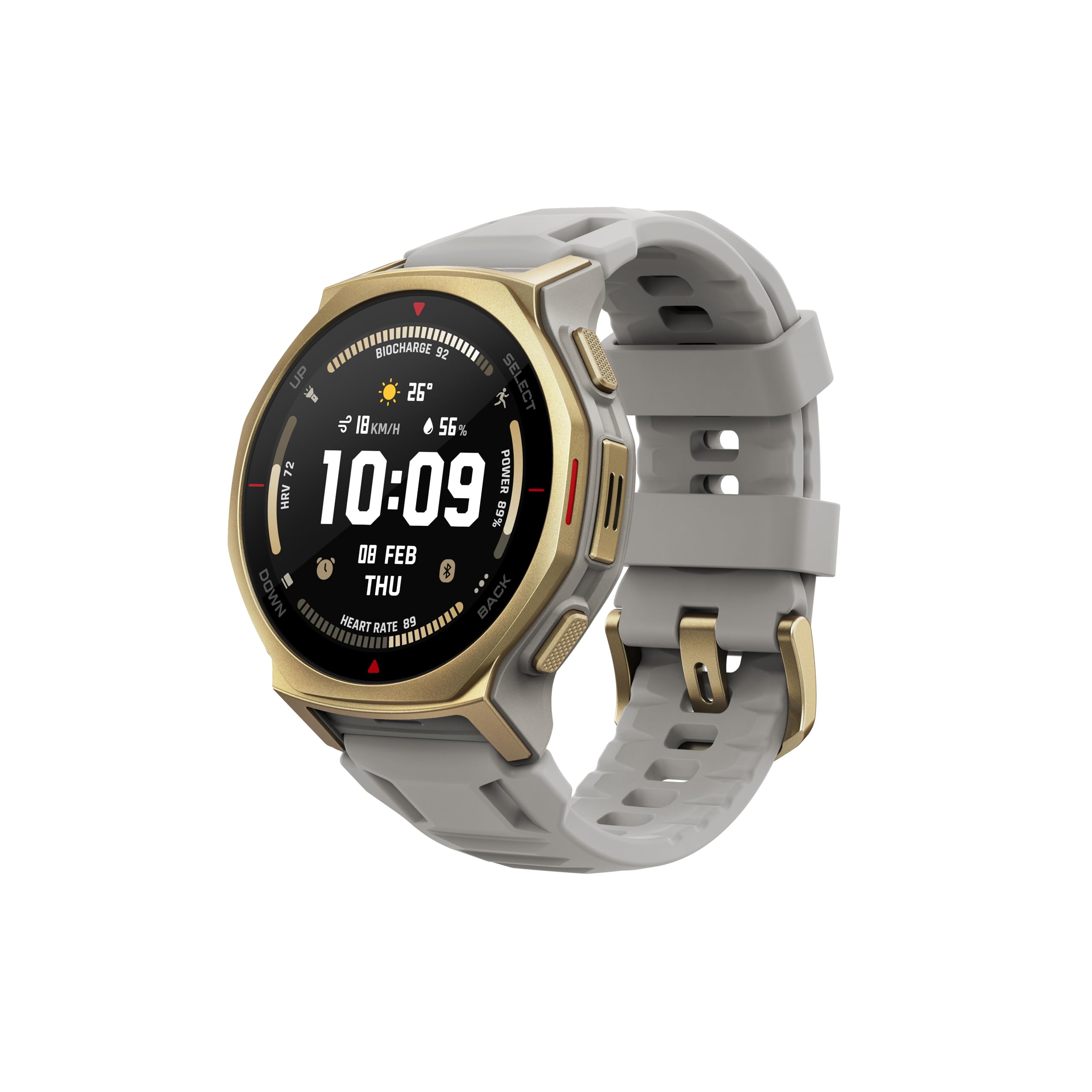
A titanium-bezel tank that maps the backcountry and dives to 45 meters.
Ten ATM and a 45m diving certification are the numbers that place this watch in a class of its own for water. That is twice the water rating tier of the 5 ATM Amazfit Active 2, and it covers everything from ocean swims to actual dives. The titanium alloy bezel, sapphire glass and 3,000-nit AMOLED screen make it feel built for abuse rather than looking delicate on the trail. A built-in two-color flashlight — with a Turbo Mode and an SOS signal — is the kind of detail that matters when the sun drops and the headlamp is still in the pack.
The phone-free hardware is serious. Dual-band GPS pulling from six satellite systems holds a signal under tall buildings and dense tree cover. Offline maps with point-of-interest search, auto rerouting and round-trip route creation let you navigate a full day out with zero signal — the watch plans the loop and gets you home without a phone. Up to 17 days of battery backs up all that independence. There are 180+ sport modes and HYROX training for structured work.
Where it asks patience is the music workflow: downloading tracks to the watch is fiddly, and unlike a Garmin there is no computer mass-storage shortcut, so you load a few songs and get on with it. Text replies also reportedly do not work with iOS. Treat music as a bonus and this becomes a very capable off-grid tool for the money.
For you if: you hike, scramble and dive in places where a phone is dead weight, and you want offline maps and a 17-day battery in one rugged package.
Pass if: you want to reload a big music library easily or reply to texts on an iPhone — the download workflow and iOS texting are the weak spots.
7. Garmin Forerunner 570, 42mm

The 42mm coach for smaller wrists — train smarter, charge on Sunday.
Most serious running watches come in a case built for a larger arm. This one fits smaller wrists with a 42mm aluminum bezel, and pairs it with Garmin’s brightest AMOLED touchscreen (a bright color display you can read in sunlight) and physical buttons you can press with cold or wet fingers. The battery runs up to 10 days in smartwatch mode and up to 18 hours in GPS mode — the second figure is the one that matters for a marathon, and it is comfortably clear of the Apple Watch SE 3’s all-day model by design.
The real draw for a phone-free runner is the coaching brain. Garmin Coach builds running and triathlon plans that adapt to your performance and recovery. A training readiness score weighs sleep quality, recovery, training load and HRV status (heart-rate variability, a read on how rested your body is) to tell you whether to go hard or back off. Personalized daily suggested workouts adjust to match. There are 30+ activity profiles, from track runs to open-water swimming and cycling. A built-in mic and speaker let you take calls from the wrist when paired to your phone, and safety features can send your live location to an emergency contact.
The friction is a learning curve — Garmin packs a lot of data behind menus that are not as intuitive as Apple’s, and the music apps are weak enough that most runners load their own tracks. It also wants a phone for setup and for the connected features; it is a superb solo trainer once configured, not a cellular phone replacement. Against the Forerunner 970 below, it gives up GPS hours (18 versus 26) and full-color maps, but it wins on price-of-wrist and a smaller case.
Why runners keep it on
- 42mm case genuinely fits smaller wrists without giving up the AMOLED screen.
- Up to 18 hours in GPS mode covers a marathon and then some.
- Garmin Coach plans adapt to your performance and recovery.
- Training readiness and daily suggested workouts take the guesswork out of pacing.
What to expect going in
- A real learning curve before the deeper metrics make sense.
- Music apps are limited; most people side-load their own tracks.
Made for you if: you race, you have a smaller wrist, and you want a coach on the wrist that tells the truth about recovery.
skip it if: you need a phone replacement on the wrist or multi-day GPS for ultras — you want the 970 instead.
8. Garmin Forerunner 970, 47mm
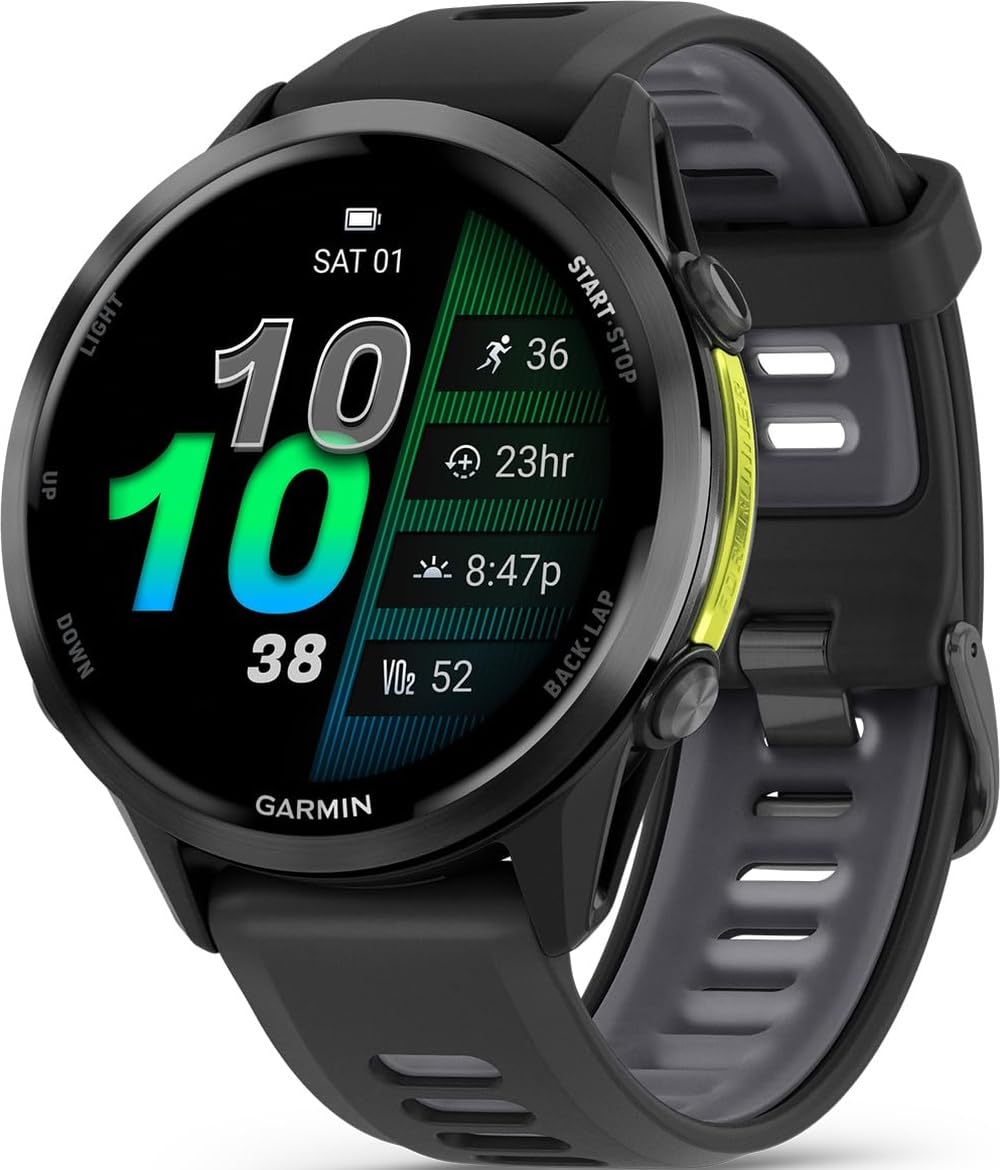
A triathlon weapon with full-color maps, a titanium bezel and 26 hours of GPS.
Start with endurance, because that is where this watch separates itself: up to 15 days in smartwatch mode and up to 26 hours in GPS mode. Compare that with the 18 hours of the Forerunner 570 above and the gap is plain — this is the watch for a full-distance triathlon or an all-day mountain effort without a charger. The lightweight titanium bezel and sapphire lens keep it scratch-resistant and comfortable for 24/7 wear, and a built-in LED flashlight adds visibility on early-morning or late-night runs.
For the phone-free athlete, the navigational package is the headline. Full-color built-in maps and multi-band GPS (a more accurate satellite read that uses multiple frequency bands) get you around any route. Dynamic round-trip routing builds a new path back to your start if you wander off course, preserving your mileage. Multisport auto-transition detects the switch between swim, bike and run for you, so triathlon splits record cleanly. Wrist-based running dynamics cover cadence, stride length and ground contact time, and wrist-based running power shows how hard you are actually pushing against the ground. There is even an ECG app to record your heart rhythm.
The trade-off is price and complexity. Some advanced running-economy metrics also require the HRM 600 monitor, sold separately — so read the feature list carefully if a specific number matters to your training. Garmin expects you to want the connected features on a paired phone for calls and texts.
Standout strength: 26 hours of GPS with full-color maps means you can finish a long effort without worrying the watch will die — triathletes who once carried a charger can leave it home.
Worth knowing: the gold bezel and titanium design earn the higher sticker, but not everyone will use the full training suite; the value depends on how deep you actually want to train.
For the committed: multisport athletes and serious runners who want maps, multi-band GPS and 26 GPS hours in one watch and will use the data.
Better left alone if: you mostly walk and want a simple tracker — you will pay for capability you rarely open.
9. Garmin fēnix 8, Sapphire, 47mm

The 47-hour GPS marathon of battery life, made for expeditions and actual dives.
The 1.4″ AMOLED display wears a scratch-resistant sapphire lens over a titanium bezel, and the whole watch tips the scale at 80g. That weight tells you it is built to be a tank. The battery is the star: up to 16 days in smartwatch mode and up to 47 hours in GPS mode, longer than any other pick here in both columns. If your idea of a run is a full day on the ridge with navigation always on, that is the number that buys your ticket.
This is a genuine off-grid tool. A 40m dive rating with leakproof metal buttons supports scuba and apnea diving, and an off-grid voice command feature lets you fire off select watch controls without a smartphone connection at all. Multi-band GPS with SatIQ technology pairs with a 3-axis compass, gyroscope and barometric altimeter for positioning in the backcountry. Dynamic round-trip routing sets your target distance and gives turn-by-turn directions that adjust to bring you home on schedule. Target strength training plans and real-time stamina tracking round out the training side, and a built-in speaker and mic handle calls when paired to a phone.
The honest caveats are the price — the highest in this bunch — and the sleep tracking, which is rigid about scheduling and struggles with split or daytime sleep. That makes Body Battery (a recovery score built from your sleep and stress) a weaker guide if your schedule is irregular. It is also heavy at 80g. If you sleep on a normal clock and want a dive-capable expedition watch, neither is a deal-stopper.
Choose this if: you dive, you trek, and you want the longest GPS runtime of any watch here plus an off-grid voice command that works without your phone.
Choose against it if: you work shifts or nap on an irregular schedule, or you want the lightest possible wrist weight.
Know the Specs
GPS Mode vs. Smartwatch Mode
Every watch here quotes two battery numbers. Smartwatch mode is the watch acting like a watch — time, notifications, the occasional glance. GPS mode is the satellite chip running continuously to log a route. That second number is almost always far shorter, because the satellite receiver is power-hungry. When you compare runtimes, always look at the GPS figure first. A watch that gives many days in smartwatch mode may drop to a single day in GPS mode; the Forerunner 970’s 26 hours and the fēnix 8’s 47 hours stand out because they hold up on the GPS side, which is the only side a long run cares about.
Water Resistance Ratings
Water ratings are tiered, not binary. A 5 ATM rating (used on the Amazfit Active 2) covers swimming and showers. A 10 ATM rating (the T-Rex 3 Pro) is built for diving and high-speed water sports. The Apple Watch Ultra 3 rates its case to 100m, and the fēnix 8 carries a 40m dive rating. Read the exact rating, because “water resistant” alone tells you little. If you swim laps, a 5 ATM watch is enough. If you dive, you need the higher tier — and you should check whether the buttons are rated for underwater use, as the fēnix 8’s leakproof buttons are.
What “No Phone Needed” Really Means
There are two levels of phone independence. The first is GPS autonomy — the watch has its own satellite chip and storage, so it logs a run and maps a route without a phone nearby. Watches like the T-Rex 3 Pro and Forerunner 970 deliver this fully, including offline maps. The second level is cellular autonomy — a built-in LTE radio that makes and takes calls and sends messages with your phone left at home. The Apple Watch Ultra 3 and Galaxy Watch Ultra sit here. Decide which level you need: a GPS-only watch frees you from the phone for tracking, while a cellular watch frees you from it for communication too.
Satellite Systems and Dual-Band Accuracy
The number of satellite systems a watch can listen to and whether it uses dual-band reception both affect how reliably it holds a lock. The Amazfit Active 2 uses five satellite systems. The T-Rex 3 Pro uses six with dual-band support. Dual-band means the watch listens on more than one frequency, which improves accuracy between tall buildings and under tree cover. For trail runners and city runners who lose signal in urban canyons, dual-band is worth the upgrade. For casual walkers, the basic multi-system GPS is plenty.
Common Questions
Can a fitness tracker track my run without my phone nearby?
Do I need a cellular watch to leave my phone at home?
What do the 5 ATM and 10 ATM water ratings on a watch mean?
Why is GPS battery life so much shorter than smartwatch battery life?
Can I load maps and music onto the watch and leave my phone behind?
Will an Amazfit or Garmin watch work with my iPhone?
Which battery figure matters for a triathlon — smartwatch or GPS mode?
Do I need multi-band GPS or is standard GPS enough?
What is the lightest phone-free watch here for all-day wear?
Can these watches help me reach emergency services without a phone?
The Bottom Line
For a fitness tracker that genuinely works without your phone, the strongest all-round pick is the Apple Watch Ultra 3. Its 100m water resistance (safe to swim with) and cellular radio let you swim, run and call for help with the phone left at home, and it backs that up with up to 42 hours of everyday battery. If long battery and a big screen matter more than calling, reach for the Amazfit Active Max with its 1.5″ 3,000-nit AMOLED display (bright enough to read in direct sun) and up to 25 days between charges. And for true off-grid adventure, the Garmin fēnix 8 pairs a 40m dive rating with up to 47 hours of GPS tracking, so it outlasts every other watch here once the charger stays home.
Decide your level of phone independence first: calls from the wrist, or route logging with no signal. If you want to make calls from the wrist, the two Apple cellular models and the Galaxy Watch Ultra are your shortlist. If you want to log routes and read maps with no signal, the Amazfit T-Rex 3 Pro and the Garmin Forerunner pair deliver that at a friendlier outlay. And if your wrist is small, the 42mm Forerunner 570 is the one that will actually fit without swimming around your arm.
One last nudge: the Apple Watch Ultra 3 holds 4.5+ stars from a large base of owners who prize its build and battery.
How we choose
We do not accept paid placement. Every pick is matched to a real buyer and a real use-case; we do not hands-on test units.
Sources
Specifications: manufacturer listings and product documentation. Review insights: verified customer reviews, as of October 2026. Pricing: not shown on this page (it changes often); check the current price via the retailer link.
As an Amazon Associate, Aappliancez earns from qualifying purchases. This does not affect which products we feature.