Disclosure: Some links in this post are affiliate links. As an Amazon Associate I earn from qualifying purchases, at no extra cost to you. Learn more
Specs are compiled from manufacturer listings and verified buyer reviews and can change over time — please confirm the key details on the product page before buying.
Your baby is pulling up on the sofa and taking those first wobbly steps, and now you need a shoe that helps rather than fights them. The short answer: a first-time walker shoe needs a wide toe box so toes can spread for balance, a sole that bends where the foot bends, and a strap that goes on and off without a wrestling match. Everything below is sorted by those three things, and every pick has real owners behind it.
This guide is built by comparing the manufacturers’ published specifications and the patterns across verified customer reviews, so you get each pick’s real strengths and trade-offs instead of marketing spin.
You will see which shoes survive daily wear, which run wide enough for chubby feet, and which soles stay flexible after months of use. Here is the honest breakdown of the best first time walker shoes for new walkers.
Top Picks
How To Choose The Best First Time Walker Shoes
A first shoe is not a small adult shoe. It is a balance tool. Your child is learning to control a body that just got taller, and the shoe either lets the foot feel the floor or it does not. Three features do most of that work, and you can check all three in under a minute.
The toe box has to be foot-shaped, not pointed
A wide toe box is the room up front where toes sit. When toes can spread, the foot makes a wider base and balance gets easier. Squeeze the front of the shoe between your fingers — it should feel roomy and round, not tapered to a point. A narrow toe box pushes toes together and makes a new walker grip with the toes instead of standing flat.
The sole must bend where the foot bends
Hold the shoe heel in one hand and toe in the other and fold it. A flexible sole creases near the ball of the foot without much resistance. A stiff sole makes the whole shoe act like a plank, so your child has to lift the leg higher and rock off the heel to step. Zero-drop construction means the heel and toe sit at the same height, which keeps the foot flat instead of tipped forward.
Strap, tongue, and opening decide whether mornings are calm
A hook-and-loop strap (the hook-and-loop fastener most people call Velcro) opens wide and closes fast. Look at how far the opening spreads — a shoe that gapes wide lets a chubby or high-arched foot slide in without a fight. The tongue is the flap under the laces or strap; if it bunches when you pull the shoe on, you will be straightening it every single time.
Side-by-Side Comparison
| Model | Best For | Closure | Toe Box | Sole Style | Amazon |
|---|---|---|---|---|---|
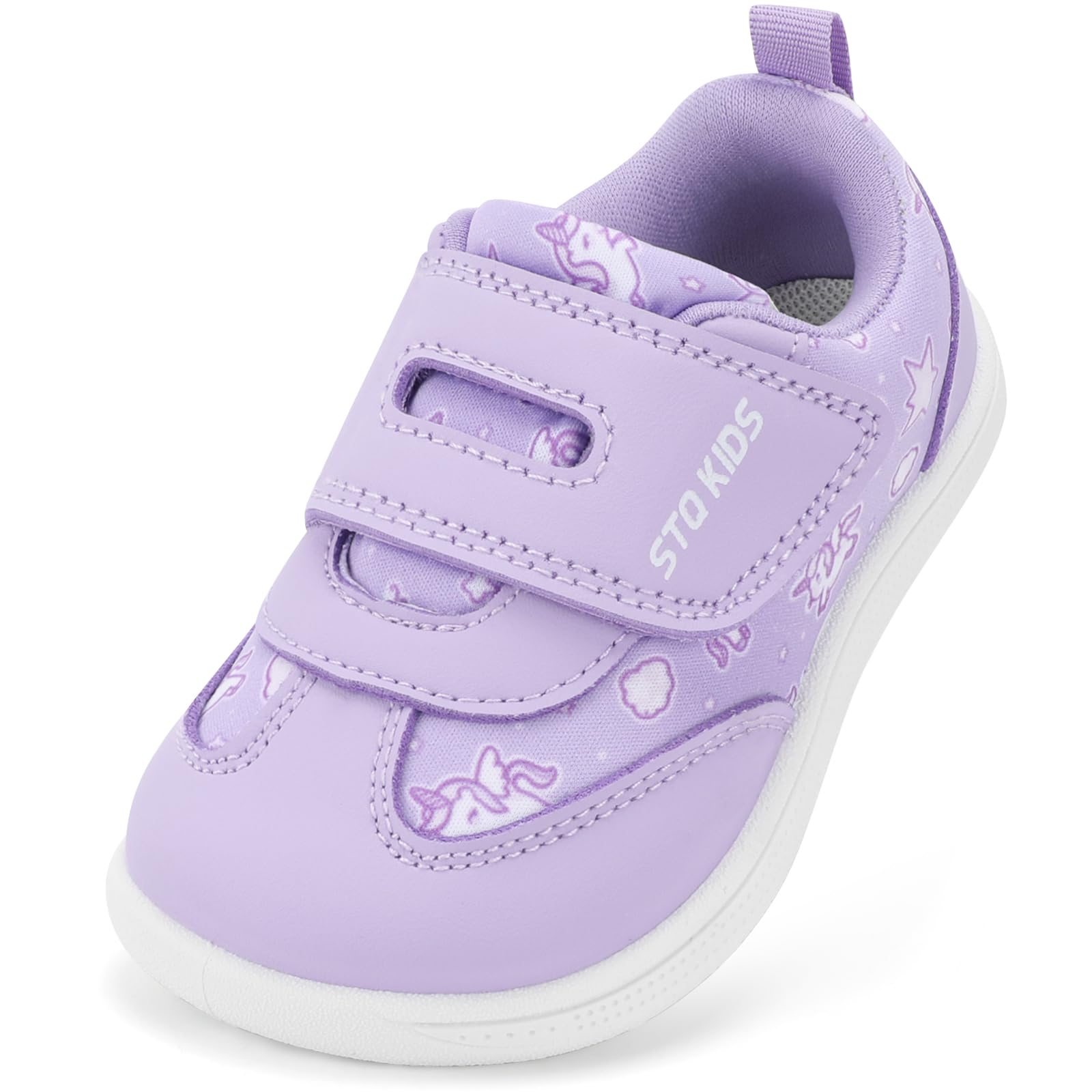
| STQ KIDS Toddler Wide Toe Box Shoes★ Best Overall | Overall pick for new walkers | Hook-and-loop strap | Wide | Flexible TPR outsole | Amazon |
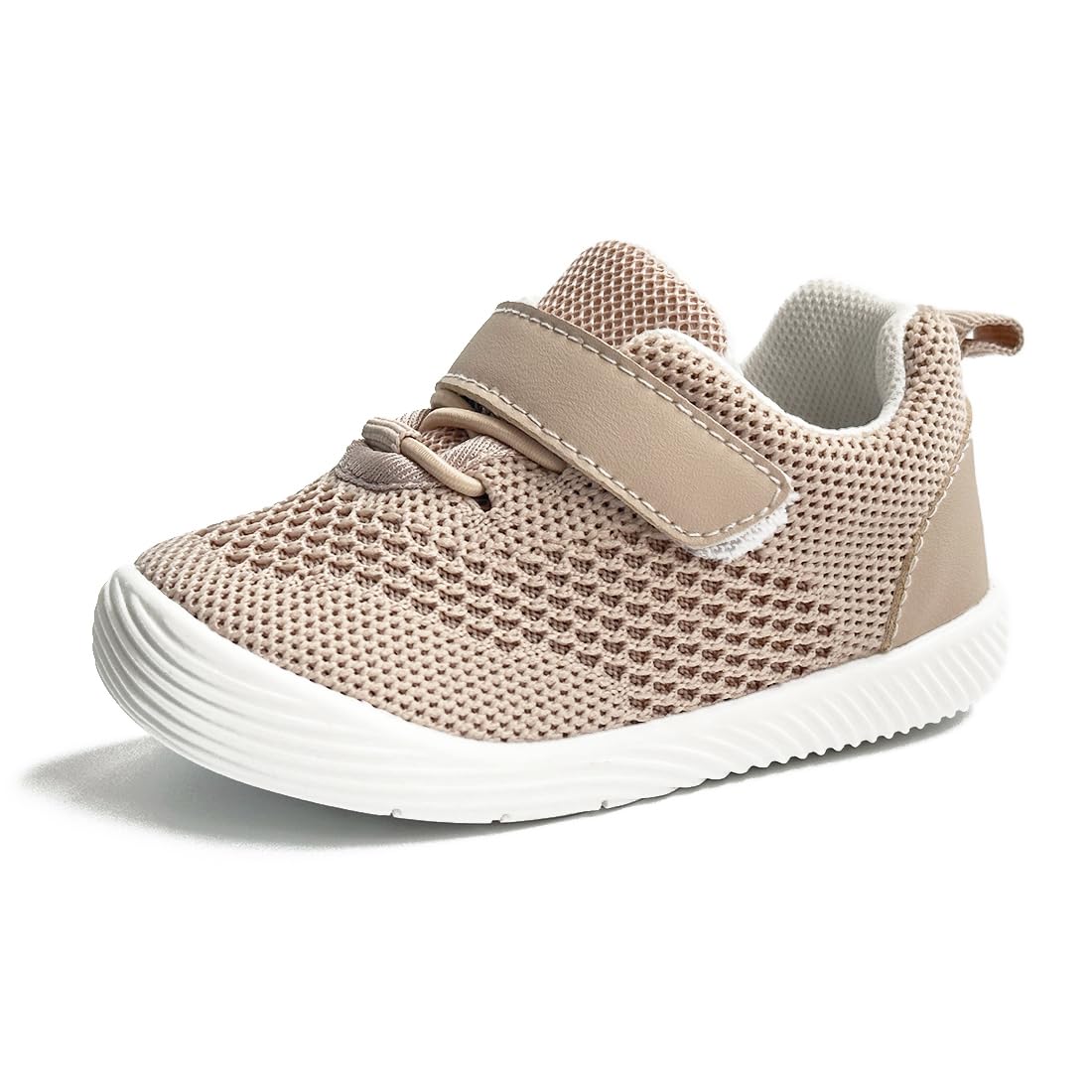
| Newsonet Baby Walking ShoesBest High-Top Look | High-top look with ankle support | Hook-and-loop strap | Wide | Soft rubber outsole | Amazon |
| Stride Rite Nick | Sturdy heel for balance | Hook-and-loop strap with laces | Wide | Flexible sole with sturdy heel | Amazon |
| BMCiTYBM Toddler Baby Canvas Shoes | Cute canvas high-tops | Hook-and-loop strap | Narrower | Canvas with ankle strap | Amazon |
| Little Sol Baby Boots | Leather ankle-support boots | Hook-and-loop strap | Wide | Non-slip leather sole | Amazon |
| Ten Little First Walker Baby Shoes | Barefoot-style with wide opening | Adjustable hook-and-loop strap | Wide | Zero-drop flexible sole | Amazon |
| See Kai Run Stevie Mini | Premium breathable textile pick | Hook-and-loop strap | Wide | Pliable flexible textile sole | Amazon |
Detailed Reviews
1. STQ KIDS Toddler Wide Toe Box Shoes
Our pick — 4.5+★ from 1,000+ verified ratings; the strongest balance of quality and price.
A wide, bendable barefoot sneaker that lets new toes spread out and grip the floor.
The crowd favorite here is the STQ, and the reason is easy to see: it does the three things a first-walker shoe has to do without charging premium money. First, the toe box is wide and round, so toes sit spread out instead of stacked. Second, the TPR outsole (a rubbery plastic compound that stays springy) bends with the foot rather than fighting it. Third, the hook-and-loop strap opens wide enough that a toddler can manage it alone. That is why getting the shoe on is the thing this pick does best — it is the single most-praised trait in the whole review pile, and the fit right behind it. It carries 4.5+ stars across 1,000+ ratings and is the strongest all-rounder on this list.
What buyers keep coming back to is how the shoe behaves on a real foot. One grandmother with a very wide-footed grandchild put it plainly: the shoes fit and were comfortable for him. A parent of a toddler working on balance watched her daughter steady up as the weeks went by. The washability matters more than you would expect, too — as one customer summed it up: “So far I’ve washed them twice (I got the white ones) and they look like new each time.” For a shoe that meets playground mud and a lunch spill in the same afternoon, that is a real advantage.
Here is the honest catch. The toe area does show stains and scuffs faster than the rest of the shoe, and durability feedback is genuinely split — some owners get a long run out of a pair, others find the front wears first. There is also a small strap piece on the tongue that has torn out of the fabric on at least one pair. None of that changes the recommendation for a shoe this age group grows out of quickly, but it does mean you should not expect it to look new forever. Sizing runs true, so measure the foot and buy the size you measure rather than sizing up out of habit.
What makes it the top pick
- Wide, foot-shaped toe box lets toes spread for a steadier base
- TPR outsole bends with the foot instead of resisting it
- Strap opens wide so toddlers can put them on and take them off alone
- Machine washable and comes back looking fresh
- True to size, so measuring the foot is enough
Where it gives ground
- Toe area stains and scuffs quicker than the rest of the shoe
- Durability feedback is split — some pairs wear at the front first
- The small strap piece on the tongue can tear loose from the fabric
Best for: the parent who wants one shoe that covers balance, easy mornings, and washing without paying premium money.
Think twice if: you need a pair that still looks crisp after months of scuffing — the toe front is where this one shows its age.
2. Newsonet Baby Walking Shoes
A high-top first walker that looks like a tiny sneaker and slips on like a slipper.
If you want the shoe that gets the most comments in the playground, this is the one. The Newsonet reads like a little canvas high-top, complete with laces, and people assume it is a grown-up brand shrunk down. Underneath that, the practical parts are all present: a soft rubber outsole for grip, a wide toe box for toes to spread, and a hook-and-loop strap that makes on-off quick. Quality is the trait owners bring up most, with ease of use right next to it. The build is what justifies the step up over a plain budget sneaker.
The ankle support is the detail that separates this from the slipper-style first shoes. One parent of a 16-month-old noted the traction, the wide toe box, and how easy the shoe was to walk in all in one breath. Another liked the extra ankle height because it gave a little more hold around the heel. Because it is not waterproof, wet grass is not its friend, but that is a fair trade for a shoe this breathable. Sizing runs slightly big on some feet, and the laces let you snug it down when it does.
Cleaning is straightforward — insoles come out, and the shoe goes in the washing machine on a cold cycle and air-dries, which owners specifically warn against skipping. The one real fit note: it runs wide, so a narrow-footed toddler will need the strap pulled snug. A pair of these in navy or white makes a very easy daily shoe for a child who is already walking confidently and just needs something between the foot and the pavement.
What seals it: a genuine high-top look with real ankle support, a wide toe box, and a strap that lets a toddler do it themselves. Plus it goes in the washer.
The trade-off to know: not waterproof, and the sizing runs big enough that narrow-footed kids need the laces and strap cinched down. Buy true to measured foot length and adjust from there.
Reach for this if: you want a first walker that already looks like a real sneaker and gives a little extra hold around the ankle.
Look elsewhere if: your toddler has very narrow feet and fights a loose shoe — the wide fit will need constant strap tightening.
3. Stride Rite Nick (Infant/Toddler)
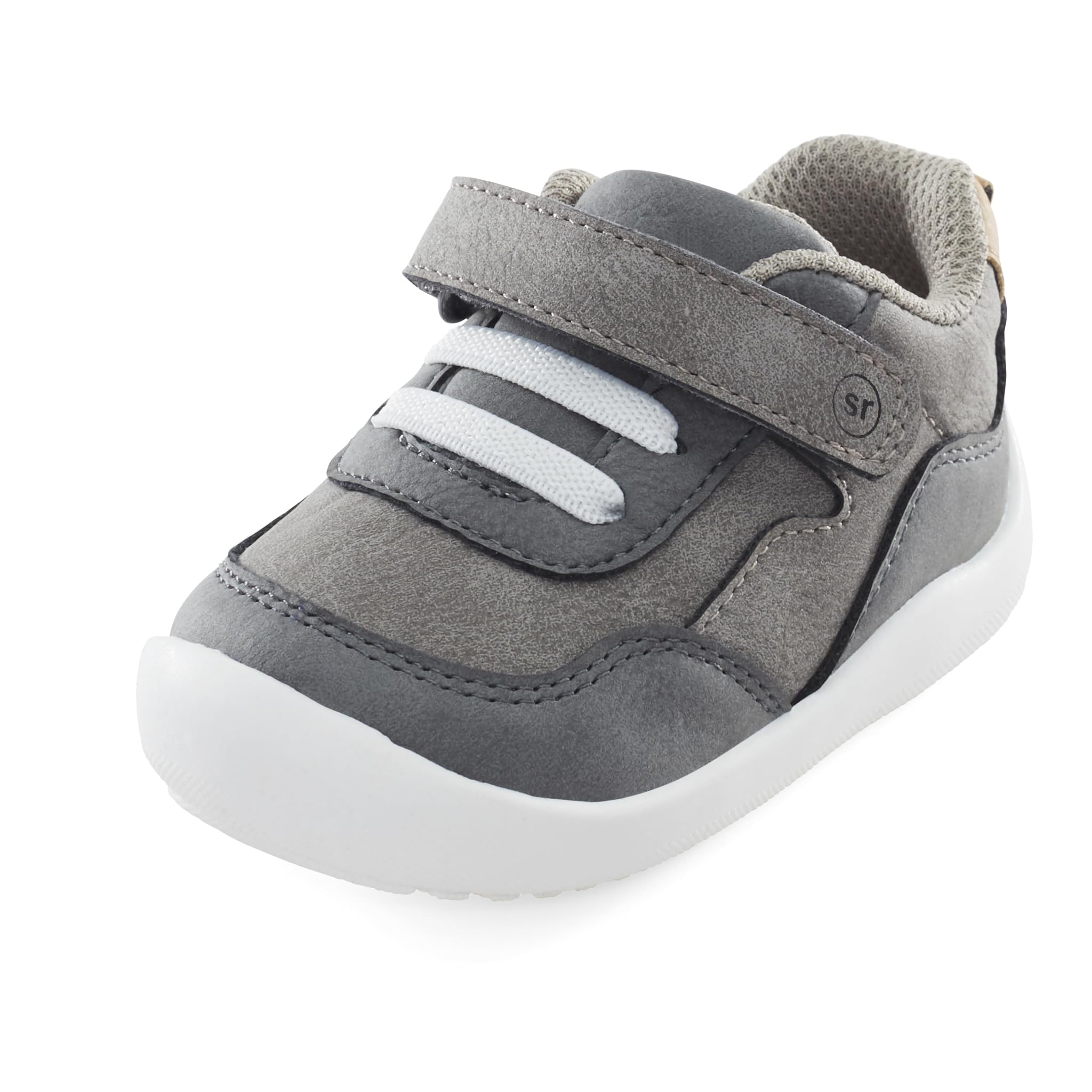
Flexible up front, firm at the heel — the balance-focused build for a wobbly new walker.
Most first shoes bend everywhere, and that is mostly good. The Stride Rite Nick does something slightly different: the sole is flexible, but the heel counter — the stiff cup at the back that holds the ankle — is sturdy. That firm-heel, flexible-front combination is why parents describe their toddlers tripping less and running more confidently in these. A firm heel counter keeps the ankle from rolling inward or outward, while a flexible forefoot lets the toes push off. If your child is unsteady or tends to fall sideways, this is the structural reason to pick this pair over a floppier one.
Perforated fabric keeps the upper breathable in warm weather, and the shoe is machine washable when it stops being breathable. The removable insole is the quiet hero here: pull it out, stand your child on it, and you can see exactly how much room is left at the toe without guessing. Buyers report about five months of wear with little visible damage — a realistic lifespan for feet that grow that fast. Stride Rite quality is the thing people name most, and the look earns plenty of notice too.
The friction point is value. Some owners feel the shoe earns its mid-range money, others do not — and that split is honest, because you are paying partly for the brand’s reputation. The other note: the largest sizes top out earlier than some parents would like, so if your child is already in a big toddler size, check the size run before you fall for the design.
The structural argument
- Sturdy heel counter steadies the ankle while the front stays flexible
- Removable insole lets you check toe room in seconds
- Perforated fabric breathes in hot weather
- Around five months of wear with little visible damage is realistic
- Machine washable
The honest reservations
- Value feedback is split — some owners feel the brand name carries the price
- Largest sizes run out sooner than some growing feet need
Pick this one for: an unsteady walker who needs a firm heel more than a floppy sole.
Skip the brand markup if: your child is already near the top of the size run, or you want the cheapest shoe that still works.
4. BMCiTYBM Toddler Baby Canvas Shoes
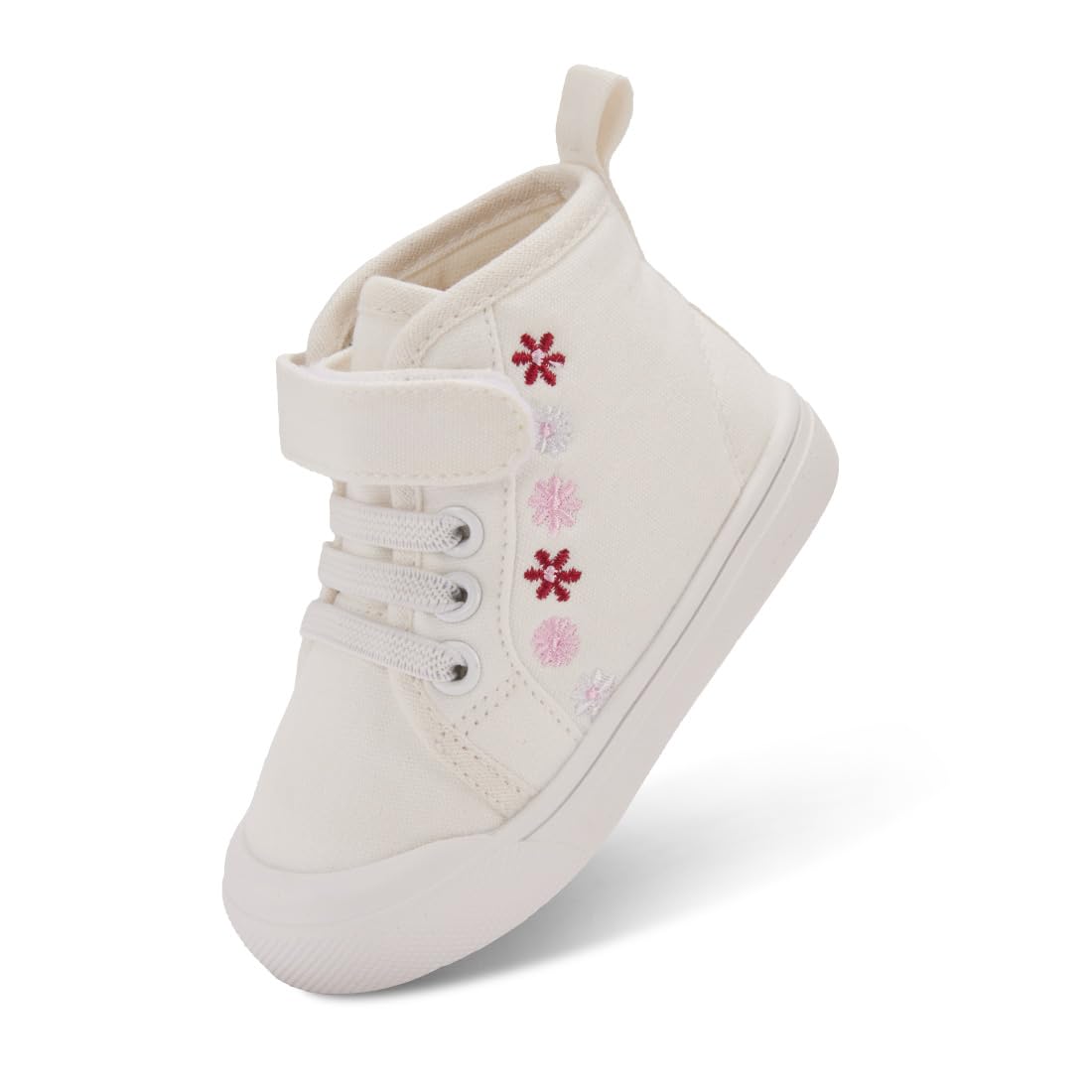
A canvas high-top that wins on looks first and does the walking job second.
The thing everyone raves about here is the appearance, and it is not hard to see why — the canvas high-top with a flower print or a neutral colorway photographs beautifully and matches most of a small wardrobe. What earns it a place on this list is the ankle strap, which can be snugged down over the instep, plus the high collar that some parents are specifically told to look for. One mother whose baby was in therapy for very flexible ankles was told to try high tops and called these perfect — not too narrow or stiff, and easy to get on and off. As one buyer put it: “This was the perfect shoe for my son to learn to walk in.”
That said, this is a narrower shoe. Owners with petite-footed children find it a lovely fit; parents of genuinely wide feet should look at the STQ or the Ten Little instead, because the canvas cut hugs closer. The fit feedback is the honest split on this product, and the size chart is the weak link — some parents find the shoe runs true, others find it sizes off by a full size. Measure the foot and check the chart every time rather than trusting the number on the toddler’s last pair.
One more caveat worth knowing: on at least one pair, the hook-and-loop strap on the right shoe loosened as soon as the child moved, while the left was fine. That is an occasional unit issue, not a pattern, but it is worth checking both straps when the box arrives. If the fit and the straps are good, this is a charming everyday shoe for a child between pulling-up and confident walking.
Why parents choose it: a genuine canvas high-top look with an ankle strap and enough structure to feel supportive, at a price that makes a second pair easy to justify.
What to watch: the fit runs narrow, and the size chart is the least reliable part of the listing. Measure the foot, then size from the measurement — and check both straps from the start.
Made for: petite-footed toddlers whose parents want the high-top look and a strap that tightens over the instep.
Not the one for: wide or chubby feet that need real room to spread.
5. Baby and Toddler Walking Shoes

A handcrafted leather boot that weighs 7.7 ounces and holds a new walker’s ankle steady.
Seven point seven ounces. That is the number that makes this pick work — light enough that a toddler does not feel like they are dragging a boot around, yet structured enough that there is real support in the ankle. The boot is handcrafted from strong leather in Central America by artisan families, and you feel the difference in the stiffness of the upper. Traction is a strong point: parents describe the non-slip sole handling hardwood and laminate floors without slips, and keeping grip on dirt and pavement outdoors too. Quality is the trait buyers praise most, with the appearance right behind it.
One parent said the boots steadied her toddler’s walk and held up through several months of daily wear. They run true to size, which is a relief after shopping brands that vary wildly. The white colorway does scuff outside with playground wear, though a polish brings it back — an easy fix for a leather boot, and one a fabric shoe cannot offer.
The genuine caveat: at first glance some parents find them a little heavier than a soft sneaker, and that weight is exactly what provides the stability. If your toddler is already running confidently, a lighter shoe will feel freer. If they are still finding their feet, the extra structure here is the point, and the leather will outlast the growth spurt.
The spec that matters: 7.7 ounces keeps the boot light while the leather and high collar add stability — the combination you want for a very new walker.
Worth it for: a nine- or ten-month-old who needs real ankle support and a non-slip sole on slick floors.
Consider a sneaker instead if: your toddler is already running and wants the lightest thing possible.
6. Ten Little First Walker Baby Shoes
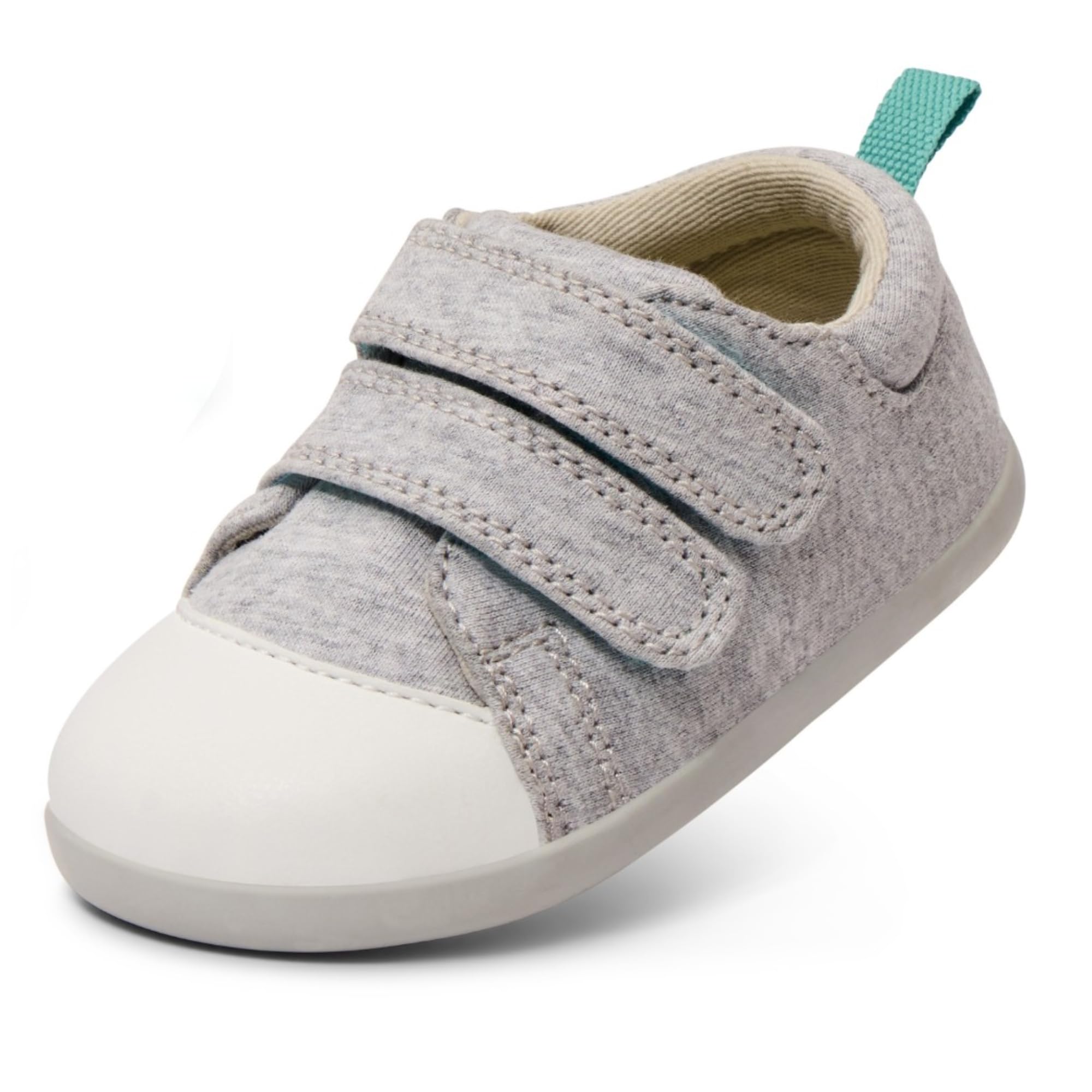
The design logic here is the most deliberate on the list. The sole is zero-drop — the heel and toe sit level, so the foot stays flat rather than tipped forward. The toe box is shaped like a foot rather than a shoe, with room to wiggle. And the opening is wide enough that you can slide a foot in without tugging. Add the removable insole with a printed sizing line, and you have a shoe that tells you when it is time to go up a size. Owners name quality first and fit second, and that is exactly the order you would expect from a shoe built this way.
The practical detail parents will love: the brands says to expect a size-up every two to three months at this stage, which is a realistic guide for parents wondering how long a pair will last. The velcro strap is adjustable and easy enough that a toddler can do it herself, and one parent described her daughter picking these out as her most comfortable shoe. The shoe is breathable cotton, machine washable in practice, and available in many colors — a small thing, but it matters when you are buying the same shoe repeatedly as feet grow.
The honest friction: the velcro fastening has come loose for some owners, and the durability feedback is genuinely mixed — some pairs wear better than others. Sizing also runs about half a size big on some feet, so check the size chart rather than assuming your usual toddler size. One pair arrived used and dirty on an order, which was returned and replaced — worth checking the box before the first wear.
Why it earns a spot
- Zero-drop sole keeps the foot flat and the step natural
- Foot-shaped wide toe box leaves room to wiggle
- Wide opening goes on without tugging
- Removable insole with a printed line shows when to size up
- Adjustable strap a toddler can work herself
What may put you off
- Velcro fastening has come loose for some owners
- Durability feedback is split between pairs
- Runs about half a size big on some feet — check the chart
Best match for: a parent who wants a true barefoot shape and a sizing line built into the insole.
Pass if: you want a fastening that never loosens — the velcro is the weak point here.
7. See Kai Run Stevie Mini (Infant/Toddler)
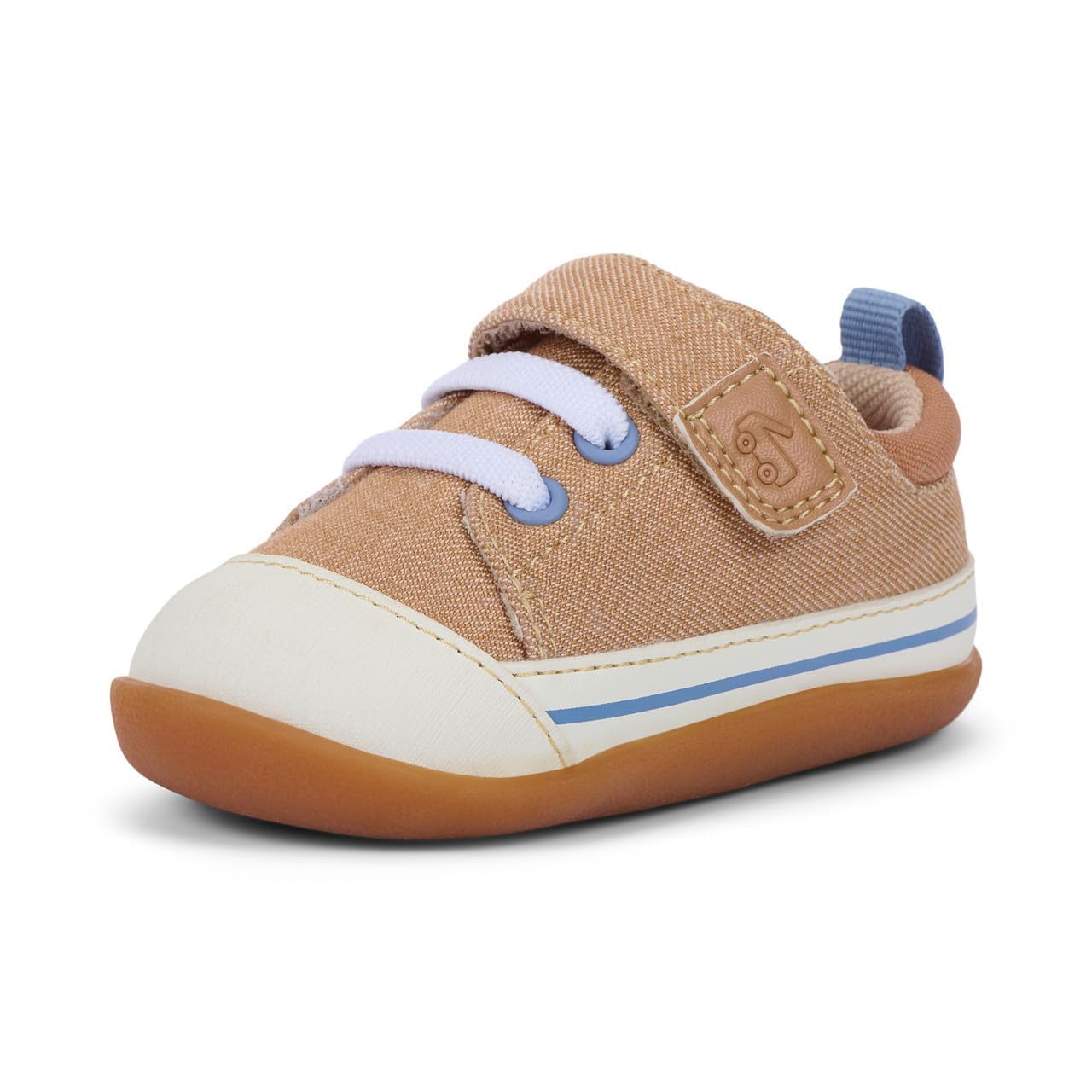
A pliable textile first walker that fits wide, chubby feet without pinching anywhere.
For the parent of a child with genuinely wide or chubby feet, this is the easy answer. The upper is pliable textile that gives where the foot pushes, and the toe box is wide enough that a wide foot slides in without a struggle — parents describe slipping these onto a moving toddler’s feet in seconds. Fit is the trait buyers praise most here, and once you have tried to wedge a chubby foot into a stiff shoe, you understand why. The shoe is lightweight, flexible, and breathable, and the textile wears well over time.
This is the priciest option on the list, and it earns that partly on build quality and partly on the fit for wide feet. One parent of a thirteen-month-old new walker said the shoes did not hinder walking or wobbling, and her child reached for them on her own. Another noted the toes do scuff, but not badly, and the fabric held up. Because the upper is breathable textile rather than leather, it stays cooler in warm weather — a real plus for a child who runs hot.
The catch is the price and one small annoyance: the tongue bunches up when the shoe goes on, and you will find yourself straightening it more often than you would like. It is a minor thing, but it repeats daily. If your toddler has a narrow foot and never fights a shoe, a cheaper pair will do the job just as well — this one earns its place on wide, hard-to-fit feet.
The standout trait: a pliable textile upper and wide toe box that make wide, chubby feet easy to fit and easy to slide in.
One daily irritation: the tongue bunches when you pull the shoe on, so expect to straighten it each time. Otherwise the fit and build justify the premium price.
Ideal for: wide, chubby, or high-instep feet that resist a stiff shoe.
Money better spent elsewhere if: your child has narrow feet that slide into anything.
Know the Specs
Wide Toe Box
This is the room at the front where toes sit. A foot-shaped box lets toes spread, which widens the base of support and makes balance easier for a new walker. A tapered or pointed box stacks toes together and forces the foot to grip the shoe instead of standing flat on the floor. When you squeeze the front of a shoe, it should give and feel round, not rigid and narrow.
Zero-Drop Sole
Zero-drop means the heel and the toe sit at the same height above the ground. It keeps the foot flat rather than tipped forward, which helps a beginner keep weight over the whole foot. Pair it with a flexible sole that creases near the ball of the foot, and the shoe moves with the foot instead of acting like a plank.
Hook-and-Loop Strap
The strap — often called Velcro — is the fastest closure for a toddler to work alone. Look at how wide the shoe opens when the strap is fully released. A wide gap lets a chubby or high-arched foot slide in without tugging. The tongue is the flap underneath; if it bunches when the shoe goes on, you will be straightening it every time.
Heel Counter and Ankle Support
The heel counter is the firm cup at the back of the shoe. A sturdy one keeps the ankle from rolling inward or outward while the front of the sole stays flexible. That combination suits an unsteady walker. A softer, floppier shoe gives more freedom once the child is already running confidently.
Common Questions
How do I know when my toddler has outgrown their first walker shoes?
Are barefoot-style shoes better than cushioned shoes for a new walker?
Should I size up to leave room for growth?
Can I machine wash my toddler’s first walker shoes?
Do wide toe box shoes work for narrow feet?
What is the difference between zero-drop and a regular sole?
Do first walker shoes need ankle support?
How long should a pair of first walker shoes last?
Are first walker shoes safe for a child who is only pulling up?
What should I check on the strap and tongue when the box arrives?
The Bottom Line
For most parents, the best first time walker shoes winner is the STQ KIDS Toddler Wide Toe Box Shoes because it nails the wide toe box, the bendable sole, and the easy strap all at once — and it washes clean after every playground mud incident. If you want a high-top look with a little extra ankle hold, the Newsonet is the one to reach for. And for wide, chubby feet that resist a stiff shoe, the See Kai Run Stevie Mini earns its premium price on fit alone. Whichever you pick, measure the foot first — a good first shoe is one your child forgets they are wearing.
How we choose
We do not accept paid placement. Every pick is matched to a real buyer and a real use-case; we do not hands-on test units.
Sources
Specifications: manufacturer listings and product documentation. Review insights: verified customer reviews, as of October 2026. Pricing: not shown on this page (it changes often); check the current price via the retailer link.
As an Amazon Associate, Aappliancez earns from qualifying purchases. This does not affect which products we feature.