Disclosure: Some links in this post are affiliate links. As an Amazon Associate I earn from qualifying purchases, at no extra cost to you. Learn more
Specs are compiled from manufacturer listings and verified buyer reviews and can change over time — please confirm the key details on the product page before buying.
Red oak is an open-pored, thirsty wood with a strong pink-to-amber undertone, and that single fact decides which finish you should buy. The wrong product sinks straight into those pores unevenly, or adds a yellow cast that fights the grain you paid for. A penetrating oil, aerosol lacquer, or gel stain each leaves the figure crisp and the surface protected. This guide lines up five finishes that suit red oak, from wipe-on oils to spray lacquer, and matches each to a specific piece.
This guide is built by comparing the manufacturers’ published specifications and the patterns across verified customer reviews, so you get each pick’s real strengths and trade-offs instead of marketing spin.
You will see how coverage area, cure time, and sheen separate these five options, so you can match one to your project instead of guessing. Read on for the breakdown of each finish for red oak.
Top Picks

How To Choose The Best Finish for Red Oak
Red oak has large open pores and a natural pinkish tone, so the finish you pick either fills and seals those pores or lets the wood drink. That gives you three broad families to weigh — penetrating oils, film-building polys, and gel stains — and each one behaves differently on this species. Here is what to check before you buy.
Match the finish family to the piece
Penetrating oils like Tried & True Danish Oil soak into the fibers and leave a soft sheen with no film, which keeps the grain texture intact and makes touch-ups easy. Film-builders like Varathane Triple Thick sit on top and seal the pores with a hard layer, which is tougher under foot traffic and spills but can look plasticky if you overbuild it. Gel stains sit in the middle — a gel like Old Masters is thick enough to sit on the surface, so it colors evenly without raising the grain the way a thin liquid stain can on red oak’s open pores.
Check coverage before you commit
Coverage is the spec that quietly decides your total spend. A pint of oil that covers roughly 125 square feet per pint will do far more area than a 12.25-ounce aerosol can rated at 12 sq ft. For a tabletop you may only need a small can; for a floor or a full set of doors you will burn through pints fast. Always read the coverage-per-unit number, not the container size.
Weigh food safety and cure time
If the piece touches food — butcher block, a charcuterie board, a countertop — you want an oil that cures to a safe surface rather than a film-builder that flakes into the food. Natural oils and food-safe formulations win here. Cure time matters too: an aerosol that dries in minutes lets you build multiple coats in a day, while a true oil may need eight hours between coats and days before it fully hardens.
Side-by-Side Comparison
| Model | Best For | Type | Coverage | Sheen | Amazon |
|---|---|---|---|---|---|
| Tried & True Danish Oil★ Best Overall | Food-contact pieces and grain pop | Oil-based | ≈125 sq ft per pint | Matte | Amazon |
| Deft Interior Clear Satin LacquerFastest Touch-Up | Fast touch-ups and small carved work | Aerosol lacquer | 12 sq ft / 12.25 oz | Satin | Amazon |
| Varathane Triple Thick Polyurethane | Furniture, doors and trim | Water-based poly | 50 square feet | Gloss | Amazon |
| Natura Onecoat Hardwax Wood Oil | Floors and all-in-one furniture coverage | Hardwax oil | 50-75 ft² | Matte | Amazon |
| Old Masters Gel Stain Red Mahogany | Coloring red oak and fiberglass doors | Gel stain | 100-150 square feet | Smooth, Flat | Amazon |
Detailed Reviews
1. Tried & True Danish Oil Pint
Our pick — 4.5+★ from 950+ verified ratings; the strongest balance of quality and price.
The food-safe oil that soaks into red oak and leaves the grain showing through.
The standout figure here is coverage: roughly 125 square feet per pint, which is generous for a penetrating oil. That number matters because red oak drinks finish, and a single pint goes a lot further than a small aerosol can. The base is polymerized linseed oil, an oil that has been partly thickened so it cures faster than raw linseed. It is rated food safe, which makes it the pick if your project touches food — butcher block, a countertop, a cutting board, a spoon.
Buyers praise how well it works first and the finish it leaves second. On cherry it pulls out a deep pattern, and on other species it leaves a soft matte sheen that buffs dry with no sticky residue. The cure window is set: let it sit 5 minutes, buff it dry, then wait a minimum of 8 hours before the next coat. Buyers report using it on spoons — “three coats with 8 hrs cure between coats and it’s working beautifully.” The odor is very low, which is why a lot of people finish pieces right at the kitchen table instead of the garage.
The catch is durability and defense. An oil soaks in rather than building a hard film, so for a high-traffic piece like red oak stairs or a heavily used table, a film-builder still has the edge. It also wants a separate top-coat if you need real moisture resistance on a food-contact item. Expect a little patience, too — the multi-coat, multi-day rhythm is slower than a spray. For a decorative piece, a board, or furniture you want to feel like wood rather than plastic, this is the one to reach for.
Where it earns its keep
- Food-safe base you can use on butcher block, boards and spoons
- Roughly 125 sq ft per pint — a little goes far
- Soft matte sheen that keeps red oak’s grain visible
- Very low odor, so you can work indoors
Where it asks more of you
- Penetrating oil, not a hard film, so high-traffic items want a top-coat
- Needs 8 hours minimum between coats and multiple coats
- An occasional can arrives with a loose lid and leaks in transit
Reach for this if: you are finishing a food-contact piece or want the grain to stay loud and natural.
Look elsewhere if: the piece takes heavy foot traffic and you need a hard film you can scrub.
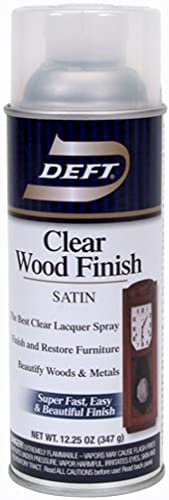
2. Deft Interior Clear Wood Finish Satin Lacquer
The spray can that lays a satin coat on red oak details in minutes, no brush marks.
If your red oak project has carved edges, turned legs or tight corners a brush cannot reach, an aerosol sidesteps the whole problem. This is a 100-percent nitrocellulose brushing lacquer in a 12.25-fluid-ounce can, and the maker claims it dries four times faster than conventional oil-based polyurethane. That speed is the whole point — you can lay several coats in one sitting, and the product is self-leveling, so it smooths itself out and needs no sanding between coats.
Two things stand out from how people actually use it. It does not change the color of raw wood and it resists yellowing over time, which is exactly what you want on red oak — a clear coat that lets the natural tone show instead of drifting amber. And it is built for small jobs done well: a spray gun for big surfaces, this can for the details. Owners mention laying “5-6 coats for thick, durable finish” when they want real protection on a small piece. It also resists alcohol, fruit juice and water spills and touches up easily.
The honest trade-off is cost per square foot. At 12 sq ft of coverage from a 12.25-ounce can, this is easily the least economical way to cover a large surface — a quart of liquid finish will bury far more area. There is also a recurring gripe that the spray tip can drip, so keep a rag handy and shake well. Think of this as a precision tool for detail work and repairs, not the main coat for a whole floor.
What it does best: lays an even satin coat on red oak carvings and repairs with no brush strokes and no sanding between passes.
The trade you make: you pay for convenience — a single can covers just 12 sq ft, so large surfaces run expensive fast.
Suits: furniture detail, carving, and quick touch-ups where control beats coverage.
Not for: whole-tabletop or floor jobs where the per-square-foot math turns against the can.
3. Varathane Triple Thick Polyurethane Gloss Wood Finish

The one-coat water-based poly that armors red oak furniture, doors and trim.
For red oak that has to survive daily life — a dining table, a door, a set of stairs — you want a film on top, and this is the film-builder of the group. It is a water-based polyurethane rated for one-coat coverage, and the maker lists a scratch- and stain-resistant formula. The gloss finish brings out the wood’s natural beauty, but on red oak it magnifies surface imperfections, so sanding prep matters more than with satin or matte.
The volume is where it separates from the oil: 32 fluid ounces versus the Deft can’s 12.25 fluid ounces, and the coverage is 50 square feet per container. Compare that to the Tried & True pint at roughly 125 square feet, and you can see the oil covers more area per ounce while the poly gives a harder surface. It dries to the touch in two hours, which keeps a big project moving. Buyers praise the quality first and the drying time second — it cures on schedule, and the self-leveling properties smooth it out as it flashes off.
The honest note is that value is a mixed bag. Some buyers consider it a fair deal for a one-coat product; others feel it does not stretch far enough for the money. That is a fair split — a single coat saves labor but the 50-square-foot coverage means a large project may need more than one container. This is the pick when the piece needs a hard, scrubbable finish and you would rather trade a little natural wood feel for real protection.
Why it holds up
- 32 fluid ounces covers 50 square feet in one coat
- Dries to the touch in 2 hours to keep a project moving
- Scratch- and stain-resistant, built for doors, trim and stairs
- Self-leveling and water-based for easier cleanup
What to weigh
- Gloss sheen shows surface flaws, so prep has to be thorough
- 50 sq ft of coverage means large projects may need a second can
- Some buyers find the value does not stretch as far as the oil
Best fit: red oak furniture, doors and trim where the surface takes daily wear and you want a hard, protected finish.
Skip if: you want a subtle satin look or the wood’s bare texture left untouched.
4. Wood Stain Oil 140 ml

A plant-based hardwax oil that bonds into red oak’s fibers instead of capping them.
This is a two-component hardwax oil made from linseed oil, other natural oils and waxes, and it works differently from a poly. Instead of building a film on the surface, it bonds with the upper fibers of the wood, so red oak keeps its natural texture and appearance while still getting protection against stains, water and heat. The maker says a single coat covers a range of 50-75 square feet, and 4.73 ounces can cover up to 75 square feet depending on the wood and sanding.
The practical hooks are speed and safety. The surface is touch-dry in one hour and fully cures within five days, and it carries a very low odor. It is also VOC-free — VOC stands for volatile organic compounds, the solvents that give many finishes their harsh smell — and it holds EN 71-3 certification, which relates to the safety of coatings on children’s furniture. That combination makes it a natural fit for a nursery piece, a kitchen table or a floor where you want plant-based materials and no VOCs in the room.
Buyers praise the finish first and the ease of application second. It brings out the beauty of a floor or a piece of furniture with a subtle, natural-feeling sheen. The one honest caveat is coverage — some customers note a little goes a long way, others find it disappointing, so measure your project honestly before ordering and expect to buy enough for the area. This is the pick when you want a low-VOC, plant-based finish that lets red oak feel like red oak.
The case for it: bonds into the wood’s fibers for a natural matte look, dries in an hour, and carries the lowest VOC story of the group.
Plan around this: coverage varies with wood type and sanding, and some buyers find 50-75 ft² optimistic for their surface.
Choose this if: you want a plant-based, low-VOC finish for furniture or floors and prefer a matte, textured look.
Choose differently if: you need the hard, scrubbable gloss of a polyurethane or the food-safe cure of a pure oil.
5. Old Masters 24994 Interior/Exterior Gel Stain Red Mahogany

A thick gel stain that colors red oak and sticks to fiberglass and metal alike.
This is the outlier of the five — a gel stain, not a clear top-coat, and that is exactly why it earns a spot. If your red oak piece needs color, a gel is far more forgiving on this species than a thin liquid stain: the thick consistency sits where you put it instead of racing into the open pores and leaving a blotchy finish. This one is a red mahogany, a deep reddish-brown shade, and it is rated for interior and exterior use.
The compatibility list is unusually broad — wood, fiberglass, primed metal and composition surfaces. That opens up jobs a wood-only finish cannot touch: fiberglass garage doors being the obvious one. It covers 100-150 square feet per 32-fluid-ounce container, and the maker lists it as manufactured in the United States. Buyers praise the coverage first and the color second — the shade can be layered darker or richer. Gel handling is different from a liquid, and the notes all point the same way: prep thoroughly, follow the maker’s instructions, and seal it with a water-based finish once it is dry.
Two things to plan for. The color lands darker than it looks going on — red mahogany can read almost black in the wrong light — so test on the underside of the piece first. And a gel sets quickly, so work in sections and avoid direct sun while it cures. If your project is about changing color rather than sealing bare wood, this is the one that does the job.
Where it wins: the thick gel handles red oak’s open pores evenly, and the 100-150 sq ft coverage keeps a whole door set or floor within one can.
Where it needs care: the red mahogany shade cures darker than it applies, and the gel sets fast, so working in sections and testing first is essential.
Right for you if: you are coloring red oak or coating a fiberglass door and need one product that handles both.
Wrong pick if: you wanted a clear protective top-coat that leaves the wood’s natural tone unchanged.
Know the Specs
Coverage Area and Volume
Coverage tells you how much surface a single unit will finish, and it is listed in square feet. A pint of oil at roughly 125 square feet per pint goes much further than a 12.25-ounce aerosol rated at 12 sq ft. Check the coverage number against your square footage before you buy — container size alone is misleading, since a quart and a pint of two different products can cover very different areas.
Cure Time vs Dry Time
These are two different things. Dry time is when the surface stops being tacky, often a couple of hours. Cure time is when the finish fully hardens and is ready for real use, which can take days. A product that dries to the touch in 2 hours may still need 5 days to fully cure. Plan your project around the cure time, not the dry time, before you put the piece back into service.
Common Questions
Can I use a water-based polyurethane over an oil finish on red oak?
Will a clear finish turn red oak yellow over time?
How do I stop a liquid stain from blotching on red oak’s open grain?
Is a penetrating oil or a film finish better for a red oak dining table?
How many coats of spray lacquer does a red oak piece need?
Can I use the same finish on red oak and on a fiberglass door?
Does a hardwax oil need a top-coat for moisture resistance on red oak?
Which finish is safe to use on a red oak butcher block or cutting board?
How long should I wait between coats of a red oak finish?
The Bottom Line
For most red oak projects, the clear winner is the Tried & True Danish Oil — it is the crowd favorite, food-safe, and covers roughly 125 square feet per pint, which is why so many owners keep it on the shelf. If you want a hard, scrubbable finish for furniture or stairs, grab the Varathane Triple Thick Polyurethane. If you are changing color or coating a fiberglass door, the Old Masters Gel Stain is the one to reach for.
Whatever you pick, match the finish to the piece: food-contact and natural grain call for the oil, hard wear calls for the poly, and a color change calls for the gel. Buy the coverage your project actually needs, and read the cure time before you plan your weekend around it.
How we choose
We do not accept paid placement. Every pick is matched to a real buyer and a real use-case; we do not hands-on test units.
Sources
Specifications: manufacturer listings and product documentation. Review insights: verified customer reviews, as of October 2026. Pricing: not shown on this page (it changes often); check the current price via the retailer link.
As an Amazon Associate, Aappliancez earns from qualifying purchases. This does not affect which products we feature.