Disclosure: Some links in this post are affiliate links. As an Amazon Associate I earn from qualifying purchases, at no extra cost to you. Learn more
Specs are compiled from manufacturer listings and verified buyer reviews and can change over time — please confirm the key details on the product page before buying.
Finches are picky about what they eat, and the wrong bag means seed kicked to the ground and feeders that sit full for weeks. The right bag flips that: you refill often because finches are eating the seed, not because you are sweeping husks off the patio. This guide covers the five blends worth hanging outside a window, sorted by what each one is genuinely best at.
This guide is built by comparing the manufacturers’ published specifications and the patterns across verified customer reviews, so you get each pick’s real strengths and trade-offs instead of marketing spin.
Shell-on sunflower, fine nyjer, and chopped hearts feed very different beaks, so the right pick depends on the feeder you already own. Here is the practical shortlist for best finch food.
Top Picks

How To Choose The Best Finch Food
Buying finch food is really two decisions: what your finches can physically eat, and what will not ruin your lawn. Get both right and a small-port finch feeder empties on schedule instead of clogging. Get either wrong and the seed either jams the ports uneaten or sprouts as weeds under the pole.
Seed size versus beak size
A finch beak is built for small seed. That means fine nyjer (thistle) and chopped sunflower hearts pass through easily, while big shell-on sunflower seeds are a fight for all but the larger finches. If your feeder has small feeding ports, fine seed falls out easily and shell-on seed jams the openings.
Shell on or shelled
Shell-on sunflower seeds give birds a lot of energy and keep them busy at the feeder for longer. The trade-off is husks on the ground and, when those husks get wet, sprouts. Shelled hearts and no-grow formulations skip most of that mess, which is why patio owners tend to prefer them.
What else is in the bag
Some blends are straight seed. Others add eggfood for protein, dried carrot and spinach for variety, or millet and canary grass to round out the mix. For cage finches, or birds you are moving off a plain seed diet, a blend with eggfood and dried vegetables earns its place. For an outdoor feeder, a straight nyjer or sunflower-heart seed is usually the simpler call.
Bag size versus how fast you use it
An 8 lb bag only pays off if you have a cool, dry, sealed container to store it in. Finch seed loses freshness when it sits warm, and a bag that hangs around all season is the most common reason feeders slow down. Match bag size to your refill rate: a 4 lb bag for one busy feeder, an 8 lb bag for several.
Side-by-Side Comparison
| Model | Best For | Bag Weight | Seed Type | Notable Extra | Amazon |
|---|---|---|---|---|---|
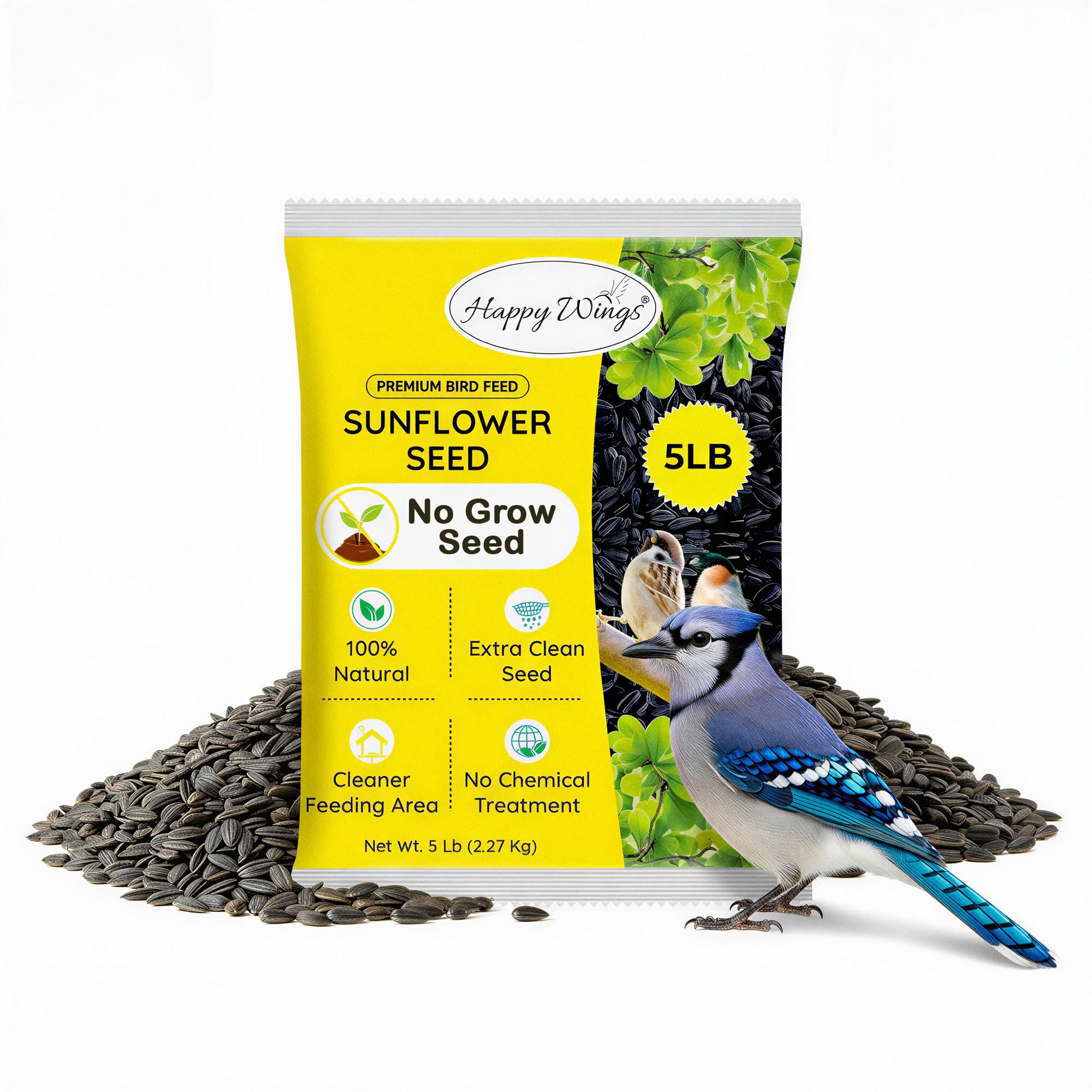
| Happy Wings Black Oil Sunflower Seeds★ Best Overall | Feeding a busy mixed yard | 2.27 kg | Black oil sunflower, shell on | No-grow formulation | Amazon |
| Better Bird Finch FoodPurest Blend | Pure finch blend, no filler grain | 16 ounces | Nyjer, sunflower kernels, millet, canary grass | Corn free and milo free | Amazon |
| Valley Farms Wild Finch Mix | Small-ported finch feeders | 4 pounds | Millet and chopped sunflower hearts | High fiber claim, made in USA | Amazon |
| Volkman Avian Science Finch Food | Variety and foraging enrichment | 8 pounds | Seed base with nyjer and oat chips | Eggfood plus dried carrot and spinach | Amazon |
| HARI Tropimix for Finches | Weaning birds onto a mixed diet | 8 pounds | Seeds with egg, fruits and vegetables | Pellet-like pieces budgies accept | Amazon |
Detailed Reviews
1. Happy Wings Black Oil Sunflower Seeds
Our pick — 4.5+★ from 1,000+ verified ratings; the strongest balance of quality and price.
One bag that keeps the feeder busy and the grass under it clear.
This is a 2.27 kg bag of black oil sunflower seed — the high-oil, thin-husked seed that songbirds burn through fastest for energy in cold weather. It works with chickens as well as wild birds, so a yard with a coop and a feeder can run off the same bag. Black oil sunflower is shell-on, which is the whole reason it draws birds: there is real food inside every husk, and finches, sparrows, chickadees and cardinals all work at it.
What wins people over is how hard the birds commit to it. The seed sits at the top of this list on attraction, and the pattern across the reviews is a feeder that empties on schedule instead of sulking full. The other half of the story is the no-grow formulation: this is the bag for anyone who has watched a store blend turn into little green sprouts across the lawn once the birds scatter the husks. If your lawn is manicured and your patio is swept, that part alone justifies the pick.
The honest catch is the seed size. It runs small, and that is what you are buying — smaller seeds fit more beaks and drop through standard feeder ports. Buyers report “I was using a store brand, and as the birds spread it around, I had sprouts in my lawn from them,” which is exactly the problem the no-grow claim is aimed at. Plan on husk clean-up under the feeder anyway, and store the bag somewhere dry so the seed stays fresh.
What earns it the top spot
- High-oil black oil sunflower pulls in finches, sparrows, chickadees and cardinals
- No-grow formulation aimed at stopping sprouts under the feeder
- Works for chickens and wild birds alike
- Processed in USDA- and BRC-GS-approved facilities
Where it asks a little patience
- Seeds run small, so expect a few to slip through wide feeder ports
- Shell-on seed still leaves husks on the ground to sweep
- Small-break seed needs a dry spot so it does not clump
Pick it for: anyone feeding a mixed yard who is tired of pulling seedlings out of the grass.
Think twice if: you only run a single small-ported finch feeder — a finer blend suits that set-up better.
2. Better Bird Finch Food, 4 Lb
No corn, no milo — nothing in the bag a finch will kick to the ground.
Most cheap wild bird blends pad the weight with corn and milo, two grains finches largely ignore. This bag removes both, which is the entire pitch: everything in it is seed a small beak will actually eat. The ingredient list runs nyjer, finely ground sunflower kernels, millet and canary grass seed — a fine-grained blend built for finch feeders with small ports.
It is aimed squarely at American Goldfinches, Purple Finches, House Finches and Buntings. Owners mention the blend “drew record-high Goldfinch counts immediately,” with whole, clean, tiny seeds and no dust or ground bits in the bag. Because nothing gets sorted out and flicked to the ground, you refill more often and sweep less — the trade most patio owners happily make.
Where it asks something of you is supply and bag size. It comes as a 16 oz bag, which is a small pour for a busy feeder, and stock runs thin enough that owners who find a blend they like grab it when they see it. The other thing to weigh honestly is cost per pound — this is a premium blend in a compact bag, so a large multi-feeder set-up goes through it quickly.
The case for the bag: a clean, filler-free finch blend with the hulled kernels finches can digest easily and the fine nyjer that fits small feeder ports.
The catch to plan around: 16 ounces empties fast, and availability can be spotty, so it rewards buying a couple of bags at a time.
Reach for this if: you run a dedicated finch feeder and want zero junk grain in it.
Look elsewhere if: you need one big bag to cover several feeders all season.
3. Valley Farms Wild Finch Mix

Chopped hearts and millet built for the narrow ports on a finch feeder.
The blend is millet plus chopped Valley Farms sunflower hearts, and the chopping is the point. Whole sunflower kernels are too chunky for a finch feeder’s small openings; chopped hearts pour through and land where a small beak can reach them. It is a 4 lb bag made in the USA by a family-owned operation, and it carries a high-fiber nutrient claim.
The intended visitors are American Goldfinches, Purple Finches and Redpolls. What people notice most is the quality of the mix itself, but the picture around attraction is genuinely mixed — some feeders fill up, others do not. Customers note “I used to use only nyjer seed but the finches stopped coming,” and that this was the seed that finally pulled finches and other little birds back. The same account is candid about the downside: “Big mess below but the doves love it.”
So the honest framing is this — buy it as a small-port feeder blend with real variety, not as a guaranteed finch magnet. Ground-feeding doves and towhees will clean up whatever drops, which softens the mess but also tells you the mix is reaching beyond the finches. If you want anny pure finch draw, a filler-free blend is the safer bet.
Best suited to: finch feeders with narrow openings where chunky seed jams.
Worth knowing first: attraction is hit-or-miss depending on what else is already visiting your yard, and dropped seed draws ground feeders.
4. Volkman Avian Science Finch Bird Food 8lbs

A seed bag that also sneaks in protein, vegetables, and something to peck at.
Most finch food is just seed. This 8 lb bag layers on vitamin-coated oat chips, Featherglow Eggfood for protein, and dried carrot and spinach flakes. The effect at the feeder is texture: fine nyjer, chunky oat chips and dried veg give a finch more to forage through than a flat scoop of thistle. If you keep finches indoors or want to broaden a plain seed diet, that variety is the reason to pick it.
In practice the birds take to the whole mix rather than cherry-picking one part — the pattern across reviews is finches clearing the bag and staying on it long-term. Freshness also holds up as a recurring praise, which matters with eggfood and dried vegetables in the bag, since those ingredients are the first to turn stale. The base is nyjer with the Avian Science formulation behind it, so you are not trading finch appeal for the extras.
The one thing worth flagging is that a mixed bag assumes your finches accept the extras. Finches that turn their beak up at vegetables or oat chips may sort and scatter part of it. Treat the first bag as a trial, and if the mix disappears cleanly, the bulk route is the cheaper way in.
Where it earns its keep
- Nyjer base with vitamin-coated oat chips for carbohydrate and fat
- Featherglow Eggfood adds protein and amino acids
- Dried carrot and spinach bring plant-based variety
- Natural foraging texture from fine seed to chunky chips
What to accept going in
- Finches that dislike the extras will sort part of the bag
- Mixed bag goes stale faster than straight seed once opened
- Bulk pricing only helps if you actually use the whole 8 lb bag
Worth it for: indoor finches or anyone who wants protein and forage variety, not just thistle.
Not the obvious pick if: your flock is a plain-seed crowd that ignores anything unfamiliar.
5. HARI Tropimix Bird Food

The mixed bag you reach for when moving a bird off a straight seed habit.
Tropimix pairs seed with egg, fruit and vegetable pieces, and some of the pieces are pellet-like rather than plain seed. That shape is the whole reason cage-bird owners pick it up: it bridges the gap between seed and a broader diet without a hard switch. It is an 8 lb bag aimed at finches, canaries and budgies, with a carrot-and-rice flavor line and plant-based diet type.
The draw here is less about wild finches and more about what happens at a cage. Budgies raised on seed often eat the seed and leave the pellets, and this mix is forgiving enough that they pick through the whole thing instead. Reviewers point out it is the only pellet-like food their budgies will eat, and the bag smells fresh and sweet on opening — a small thing, but a real signal that it has not sat on a shelf. The 8 lb size is a value buy per pound for anyone feeding several birds.
The catch is honest and specific: this is a general cage-bird mix, so wild finches at a feeder may not touch the fruit and vegetable pieces. Shoppers say their finches refusing parts of it, and for a yard feeder that wasted portion is worth weighing. Test a small bag against your birds before committing to 8 lb.
Where it shines: seed-and-pellet mix that eases a cage bird onto a broader diet, with egg, fruit and vegetables in the bag.
The honest limit: wild finches at a feeder often ignore the fruit and veg pieces, so some of the mix goes uneaten.
Go with this when: you keep budgies, canaries or finches in a cage and want to widen their diet without a standoff.
Hold off if: the bag is headed straight to an outdoor finch feeder where the extras will be ignored.
Know the Specs
Nyjer versus sunflower hearts
Nyjer (thistle) is the classic finch seed — tiny, fine, and easy for a small beak to crack. Sunflower hearts are hulled kernels, richer in oil and protein but chunkier, so they suit a feeder with wider ports. Many blends combine the two so finches get easy eating plus real energy in one feed.
Bag weight and freshness
Finch seed is at its best when fresh, and the longer an opened bag sits in warm air the less eager birds are to eat it. A 4 lb bag suits one busy feeder; an 8 lb bag suits several feeders or a cage full of birds. Storing the bag cool and dry keeps the seed crisp and loose.
What “corn free” and “milo free” mean
Corn and milo (sorghum) are cheap grains used to bulk up wild bird blends. Finches largely ignore them, so a bag packed with those grains looks big but feeds fewer birds. A corn-free, milo-free blend puts the same weight into seed your finches will actually eat.
Chopped versus whole seed
Chopped sunflower hearts pour through narrow finch feeder ports, where whole kernels jam. Whole seed lets birds work for their food for longer and holds up in a feeder for more visits. Which you want depends on the port size of the feeder you already own.
Common Questions
Will black oil sunflower seed fit a finch feeder with small ports?
Is nyjer or sunflower heart better for attracting finches?
Why is my finch seed growing in the grass?
How long does an open bag of finch food stay fresh?
Do finches eat millet and canary grass seed?
Is corn free finch food worth choosing?
Can I feed the same mix to budgies, canaries and wild finches?
How often should I refill a finch feeder?
Does a bigger bag of finch food save money?
What attracts Goldfinches and Purple Finches to a feeder?
The Bottom Line
For most yards, the finch food winner is the Happy Wings Black Oil Sunflower Seeds, because it feeds the widest range of birds and the no-grow formulation keeps the lawn under the feeder clean. If you run a dedicated finch feeder and want nothing but seed finches will eat, grab the Better Bird Finch Food. And for cage birds you are easing onto a wider diet, the HARI Tropimix is the one to reach for. Whichever you pick, start with a fresh bag and a scrubbed feeder — those two do more for finch visits than any blend on its own.
How we choose
We do not accept paid placement. Every pick is matched to a real buyer and a real use-case; we do not hands-on test units.
Sources
Specifications: manufacturer listings and product documentation. Review insights: verified customer reviews, as of October 2026. Pricing: not shown on this page (it changes often); check the current price via the retailer link.
As an Amazon Associate, Aappliancez earns from qualifying purchases. This does not affect which products we feature.