Disclosure: Some links in this post are affiliate links. As an Amazon Associate I earn from qualifying purchases, at no extra cost to you. Learn more
Specs are compiled from manufacturer listings and verified buyer reviews and can change over time — please confirm the key details on the product page before buying.
If a printed part keeps softening, drooping, or warping once it warms up, the filament — not your printer settings — is usually the culprit. Ordinary PLA starts going floppy in a hot car, while polycarbonate, ASA, nylon, and carbon-fiber blends keep their shape far longer. This guide breaks down eleven spools by real heat performance, print difficulty, and what owners actually experience, so you can match a filament to your printer and your project instead of guessing.
This guide is built by comparing the manufacturers’ published specifications and the patterns across verified customer reviews, so you get each pick’s real strengths and trade-offs instead of marketing spin.
Heat resistance is not one number — it is a balance of deflection temperature, enclosure needs, and how well a spool behaves on your machine. The picks below are sorted so the strongest all-rounder comes first and the niche specialists follow, giving you a clear path to the right filament for heat resistance for your workshop.
Top Picks

How To Choose The Best Filament for Heat Resistance
Heat resistance is not a single number you can compare like-for-like across every spool. Two filaments can both be sold as “high heat,” yet one sags at the temperature of a parked car while the other shrugs off an engine bay. Here is what to weigh before you buy.
Heat deflection temperature is the number that counts
Heat deflection temperature (HDT) is the point where a printed part starts to soften and bend under a load. The higher the HDT, the more heat a part tolerates before it deforms. Carbon-fiber nylon and PPS blends push this number well above the glass-transition range where everyday PLA and even basic ABS give up.
Your printer decides what you can actually run
A high-heat filament needs a hot nozzle, a warm bed, and usually an enclosure to trap heat and stop warping. If your printer tops out at a modest nozzle temperature and has no enclosure, a tough PC or nylon spool will fight you. Match the material to the machine you own, not the other way around.
Dry filament and a hardened nozzle are not optional
Nylon and carbon-fiber blends absorb moisture from the air, which causes steam bubbles, poor layer bonding, and rough surfaces. Drying before a print and storing spools sealed keeps results consistent. Carbon fiber is abrasive, so a hardened steel nozzle wears far slower than a standard brass one.
Side-by-Side Comparison
| Model | Best For | Material | Heat Resistance Spec | Nozzle Range | Amazon |
|---|---|---|---|---|---|
| Polymaker Polymax Tough PC★ Best Overall | All-round tough, heat-resistant parts | Polycarbonate | Higher temp resistance than standard PC | 260–290°C | Amazon |
| ELEGOO Rapid TPU 95ABest for Flex | Flexible, impact-absorbing parts | Thermoplastic Polyurethane | — | — | Amazon |
| TINMORRY PA6-CFCarbon-Fiber Pick | Stiff structural and load-bearing parts | PA6-CF (nylon + carbon fiber) | Deflection temp up to 141°C | 280–290°C | Amazon |
| ELEGOO PLA 4KG Bundle | Everyday, low-heat decorative prints | Polylactic Acid | — | — | Amazon |
| SUNLU ASA 8-Pack | Outdoor parts facing UV, rain, heat | ASA Filament | UV / Rain / Heat resistant | 230–260°C | Amazon |
| Creality ABS 4-Pack | Impact-resistant engineering parts | Acrylonitrile Butadiene Styrene | Heat and impact resistant | — | Amazon |
| Polymaker Fiberon PPS-CF10 | Extreme-heat industrial parts | PPS-Carbon Fiber | HDT 252.5°C at 0.45 MPa | 310–350°C | Amazon |
| Gryddle PETG 10-Color Set | Colorful functional and outdoor parts | Polyethylene Terephthalate Glycol | High toughness & heat resistance | 230–250°C | Amazon |
| Inslogic Pre-Dried ASA 4KG | Bulk outdoor and high-stress parts | Acrylonitrile Styrene Acrylate | UV, rain, and heat resistant | 250–280°C | Amazon |
| ANYCUBIC PLA Plus 10-Pack | High-volume, easy prints | Polylactic Acid | — | — | Amazon |
| SUNLU PA12-CF 4KG | Lightweight, wear-resistant moving parts | PA12-Carbon Fiber | Up to 175°C (347°F) | 260–280°C | Amazon |
Detailed Reviews
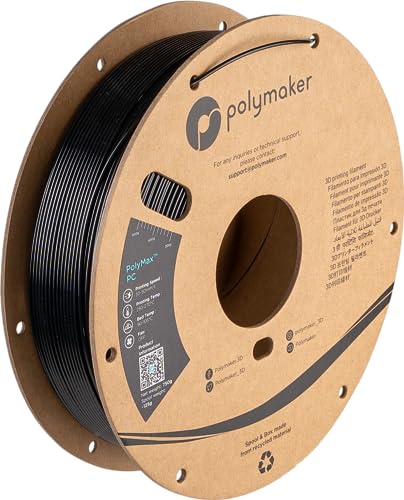
1. Polymaker Polymax Tough PC Filament 1.75mm 0.75kg Black
Our pick — 4.5+★ from 550+ verified ratings; the strongest balance of quality and price.
The do-it-all polycarbonate that keeps its shape where weaker plastics surrender
Polycarbonate is the strongest and most heat-resistant option Polymaker makes for consumer-grade printers, and PolyMax PC pushes that temperature resistance and toughness even further than standard PC. You get a part that holds up in extreme conditions — the maker even points to a black car baking in desert heat as the sort of scenario it handles. For anyone printing a bracket, a mount, or a tool that lives near a heat source, that ceiling is the whole point.
What wins people over is the print quality: the majority say it prints clean with a nice shiny finish, and owners running it at a 260–270°C nozzle and a 100°C bed describe tough, rubbery parts that do not shatter. Remember that polycarbonate will not cooperate on an open machine — warping forces an enclosure, and one buyer’s setup notes that a chamber reading above 80°C causes heat creep, so keeping it at 65–70°C is the safe lane. A second real-world detail: this is not an all-day-every-day bargain roll, at 0.75 kg versus 1 kg on the TINMORRY PA6-CF below, so you get noticeably less material on the spool.
Polycarbonate toughness
- Polycarbonate delivers the strongest, most heat-resistant result Polymaker rates for consumer printers
- Prints clean with a shiny finish at a 260–270°C nozzle and 100°C bed
- Tough and rubbery — does not shatter like brittle grades
- Minimal shrinkage and low odor while printing
High nozzle temp
- Needs a heated enclosure; above an 80°C chamber you risk heat creep
- Durability and adhesion draw mixed feedback — some parts arrive brittle, some beds grip poorly
- 0.75 kg spool holds 0.25 kg less than the 1 kg TINMORRY PA6-CF
Impact parts: the maker with an enclosed printer who wants one spool that handles heat, impact, and everyday functional parts.
Low-temp printers: your printer is open-frame — warping will force an enclosure first.
2. ELEGOO Rapid TPU 3D Printer Filament 1.75mm Red 1KG
The soft, springy one for parts that must bend without snapping
Not every heat project is a rigid bracket. When you want a phone case, a drone bumper, or a grip that absorbs a knock instead of cracking, this is a different job — and here the headline is a 95A TPU (a measure of hardness where a higher letter-number means firmer rubber) that ELEGOO says prints about three times faster than standard TPU. It bends without breaking and soaks up impact, which is exactly what shock-absorbing and wearable parts need.
The trade-off is consistency. While the spool is sold complete-dried and vacuum sealed, the real-world pattern is uneven: some rolls print flawlessly, one owner even skipped a dryer entirely and still got great results, and others hit clogs that escalate to repeated failures. ELEGOO does recommend drying the roll before you print, so treat the dryer as mandatory insurance rather than a maybe. Buy it for one-off flex parts, not for a batch of unattended prints.
Rapid TPU flow: softness plus toughness make it a natural fit for parts that need to give a little and stay intact.
Flexible prints: flex parts and impact protection, especially with a quick pre-print dry.
Rigid needs: you need clog-free reliability across a batch of prints every time.
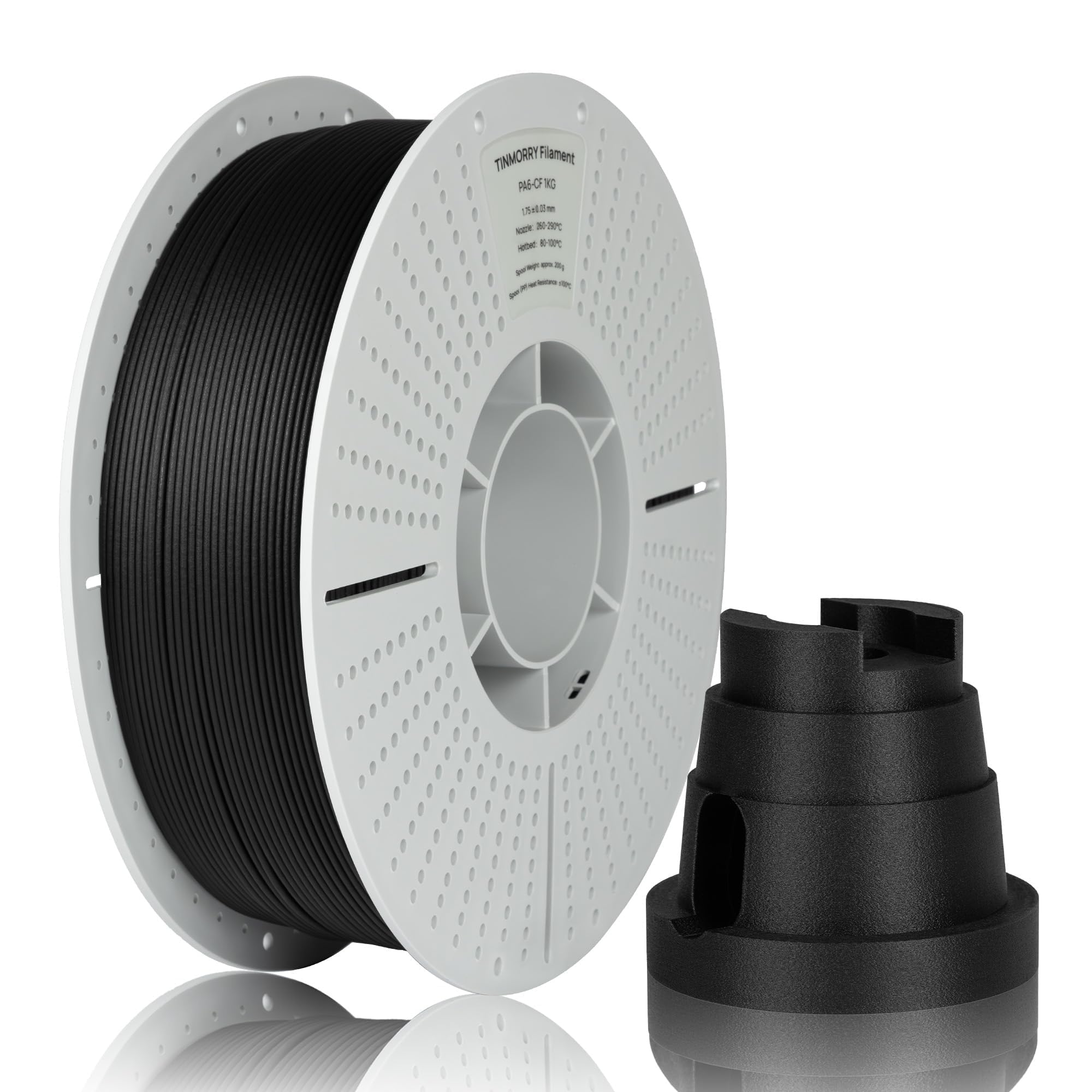
3. TINMORRY PA6-CF Nylon Filament 1.75mm 1 KG Black
Carbon-fiber nylon that holds its shape under load and heat
If your parts carry weight in a hot spot, this is the value play. TINMORRY’s PA6-CF is a nylon 6 blend reinforced with roughly 5% carbon fiber, and the manufacturer rates it with a thermal deformation temperature up to 141°C (the point a part starts to sag under heat). It is built for load-bearing brackets, spoiler mounts, and under-hood parts that see summer heat and mechanical stress. And on price per gram it beats the Polymaker Polymax PC up top — 1 kg against 0.75 kg, so you are getting more material in the bag along with a heat spec that is easier to plan around.
It asks more of your printer, though. TINMORRY’s own tips call for drying at 80°C for at least 8 hours, a 280–290°C nozzle, a 90–110°C bed, a hardened steel nozzle, and an enclosure. Layer adhesion is where results split: neatly wound rolls stuck to the plate and held detail, while a few runs came out with weak layer bonding, so drying and a stable chamber matter. Where it lands, buyers report parts print accurately with a clean matte finish and very little warping on plates like the Bambu engineering or Cryogrip Glacier.
Stiff parts: an enclosed printer running a hardened nozzle, for structural parts that see real heat.
Moisture issues: you cannot dry the spool thoroughly and keep the chamber stable — layer bonding will suffer.
4. ELEGOO PLA 3D Printer Filament 1.75mm 4KG
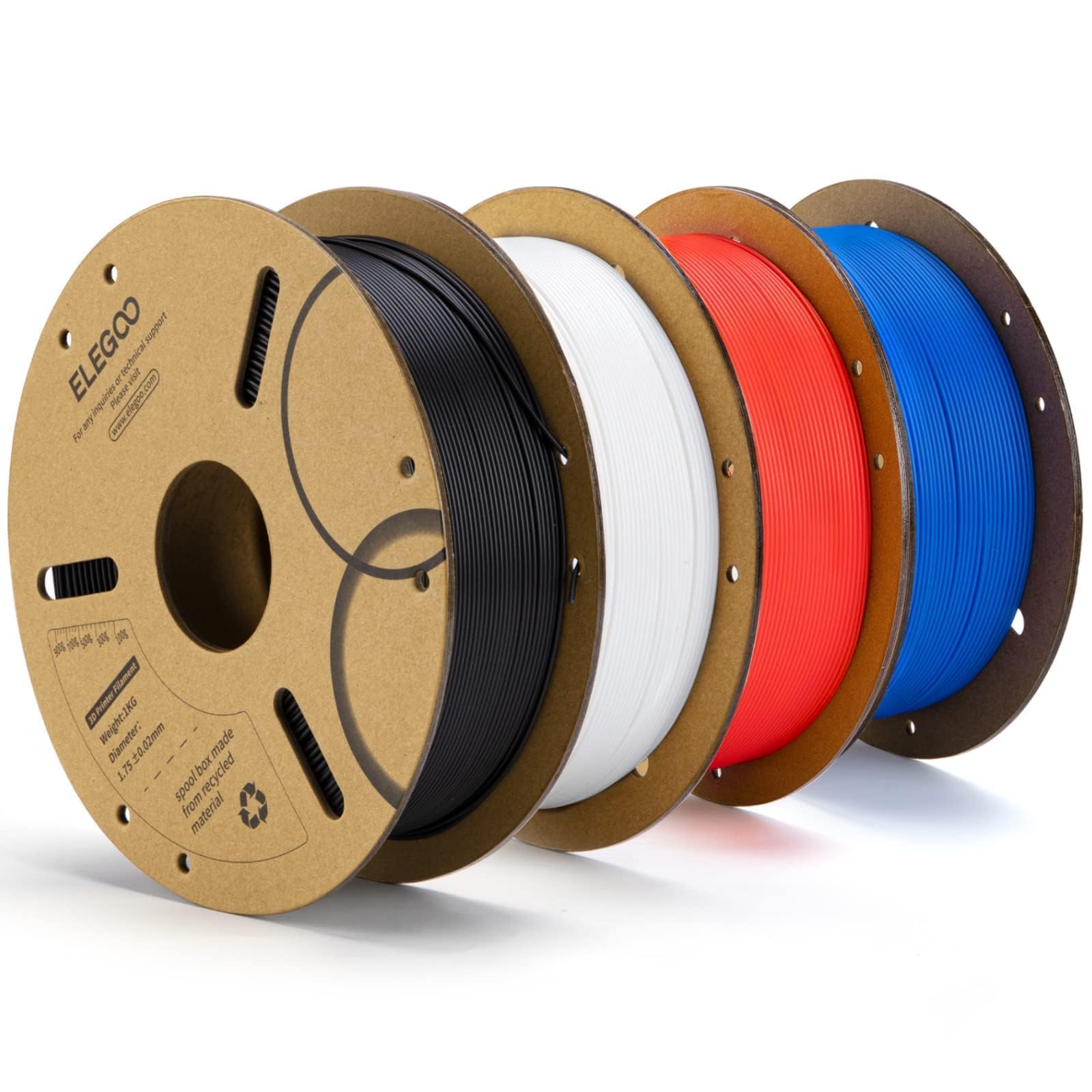
Four colors of dependable, easy PLA for everything that never sees real heat
Be honest about what PLA can do: it is the easiest filament to print and gives a glossy surface with almost no warping, but it is the wrong tool for a part that sits in a hot car. What makes this four-spool bundle worth owning is throughput and consistency. Each spool holds 1 kg, the diameter is held to a tight +/- 0.02 mm tolerance, and the roll is wound so it feeds without fighting you — that kind of repeatability is why it prints clean with a glossy finish right out of the bag.
Owners treat it as a workhorse, and the quality comes through as the standout trait. The gripes are real but narrow: a batch occasionally strings or snags, and one buyer had to lean on customer service before a replacement spool behaved, though the replacement sat well. Color is subjective too — the palette is fine for most jobs, but a few wanted richer shades. For prototypes, models, and decorative parts, it is an easy pick.
Four kilo value: four 1 kg rolls at a tight +/- 0.02 mm tolerance keep long print sessions moving with little babysitting.
Bulk printing: you print models, jigs, and decorative parts in volume and want colors on tap.
Specialty needs: the part will face sustained heat — this is exactly the material that softens there.
5. SUNLU ASA Filament 1.75mm 8 Packs 2kg
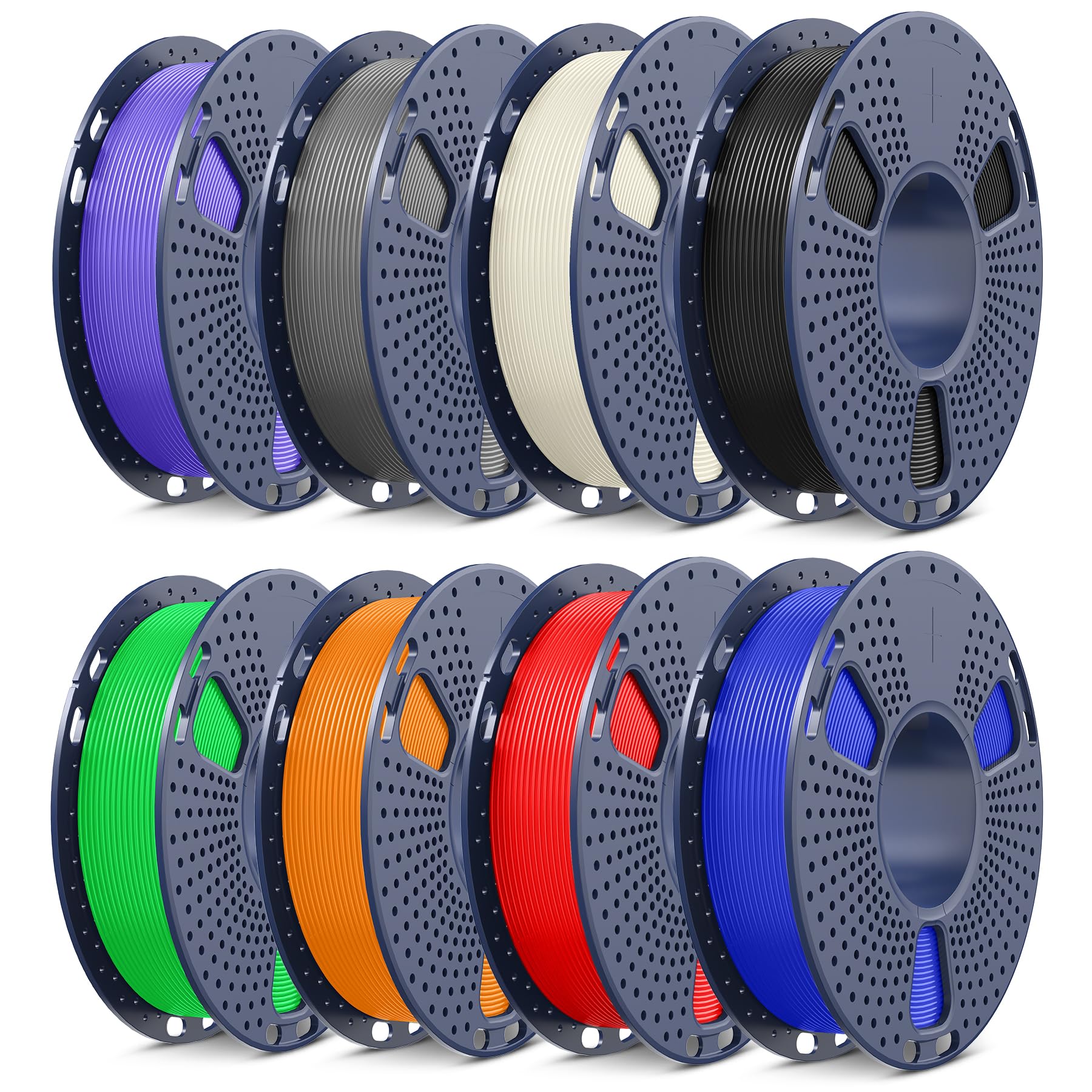
Eight handheld spools of UV-and-heat-ready ASA to sample before you commit
ASA (acrylonitrile styrene acrylate — a weather-tough cousin of ABS) is the material outdoor parts want, because it resists UV, rain, and heat together. SUNLU leans into that here, and the appeal of this set is the format: eight 0.25 kg spools, 2 kg total, split across black, natural, grey, klein blue, green, red, sunny orange, and lavender purple. The recommended window is a 230–260°C nozzle and an 80–120°C bed, with a tight +/- 0.02 mm diameter that fits most 1.75 mm printers.
Printability and material quality are the positives buyers lean on. The honest catch is brittleness — the spool can snap repeatedly once you are partway through a roll, which one owner hit after working through a few kilos. If you print small parts or want to test several colors before buying a full kilo, the multi-spool format helps; if you want one long trouble-free run on a single color, the frequent breakage is a reason to look at the bulk Inslogic set instead. It suits color sampling and small parts, not a single long ASA print.
Outdoor use: testing ASA across colors and printing small outdoor parts without committing to a kilo.
Small projects: you need one long uninterrupted print — brittleness can interrupt the run.
6. Creality ABS Filament 1.75mm 4-Pack 4 kg
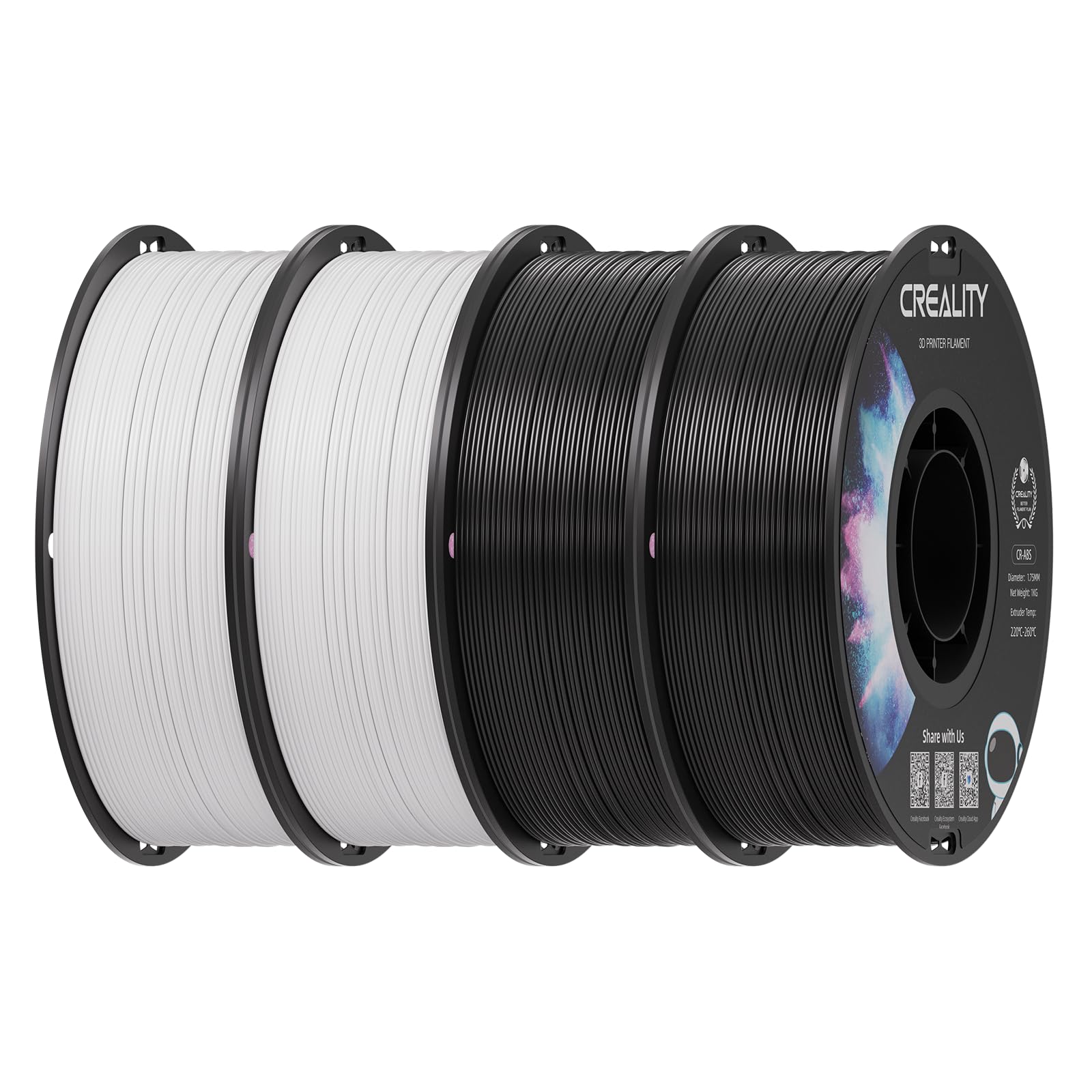
Reliable ABS in black and white for parts that need a bit more heat and toughness than PLA
If your shop prints a steady stream of brackets, jigs, and custom car parts, this four-kilo bundle of ABS (acrylonitrile butadiene styrene) earns its place. Creality rates it for both impact and heat resistance, and it goes out of its way to say the adhesion and printing problems that usually plague this material on large parts — layer separation, warping, splitting — are dialed down here. You get black and white on plastic spools, which feed cleanly in an AMS-style multi-color system. Creality rates it low-odor for ABS, though it still needs ventilation.
What stands out in the field is consistency. Owners have gone through a dozen rolls and still call it the best ABS for the money, with no tangles and clean prints at both 0.16 mm and 0.2 mm layer thicknesses. The only fair limits are the usual ones: it needs ventilation while printing, and ABS sits below the carbon-fiber nylon and polycarbonate picks above when you push the heat. In return you get a durable, wear-resistant, dimensionally stable workhorse. One clean detail worth repeating: the plastic spools feed without the drag that traps some cardboard rolls.
ABS strength: proven consistent roll after roll, with layer adhesion that holds through demanding prints.
Functional parts: the high-volume shop feeding black and white straight into an enclosed, well-ventilated printer.
Enclosed spaces: your parts will sit in genuinely high heat — that is a job for the carbon-fiber blends higher up.
7. Polymaker Fiberon PPS-CF10 Filament Black 1.75mm 0.5KG
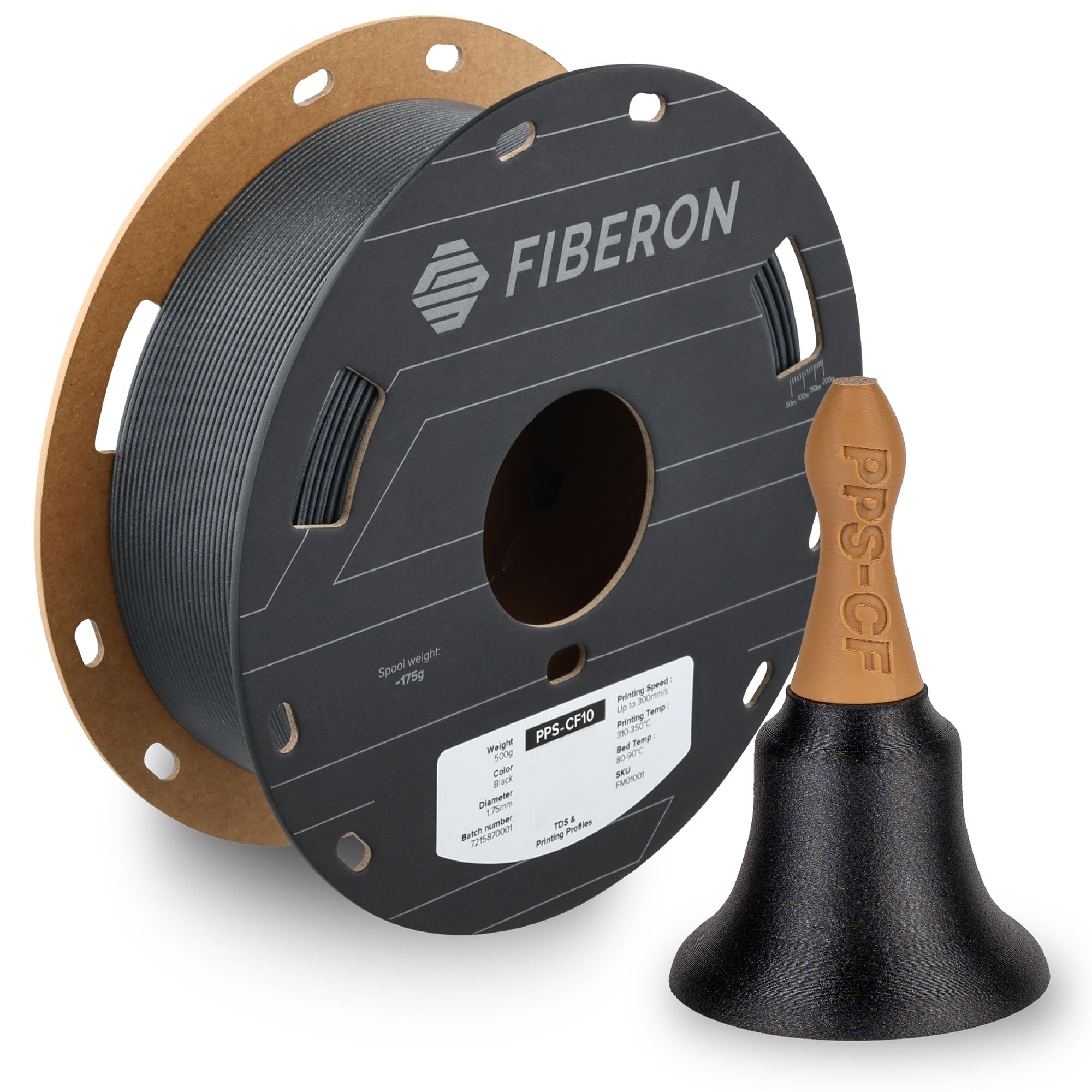
The industrial carbon-fiber PPS for parts that live where almost nothing else survives
When “hot” means genuinely hot, this is the ceiling. Fiberon PPS-CF10 is a carbon-fiber reinforced PPS (a high-performance polymer prized for heat and chemical resistance), and after a proper anneal — a controlled heating step that locks in its properties — it is rated with a heat deflection temperature of 252.5°C at 0.45 MPa, which sits far above the 141°C of the TINMORRY nylon and the everyday ABS and PLA above. It is aimed at high-temp prototypes, tooling, fixtures, and electronics components.
Run the numbers and the demands become clear: a 310–350°C nozzle, a hardened steel or ruby nozzle, an 80–90°C bed, and for the rated properties an anneal at 125°C for 16 hours. The filament path matters — it is stiff, so sharp bends in a PTFE tube or multiple feeder turns cause it to snap, and a smooth direct path from a dry box is the fix. Where a buyer takes the time to dial it in, the results are strong; the “ting” of a rigid part ringing on the bench is a real detail, and it prints with excellent layer adhesion and no warping on textured PEI.
PPS carbon fiber
- Rated heat deflection of 252.5°C at 0.45 MPa after a 125°C anneal
- Carbon-fiber PPS formula adds rigidity, chemical resistance, and dimensional stability
- Low moisture absorption (about 0.225% at 23°C, 70% RH) keeps extrusion consistent
- Excellent layer adhesion with a metal-like ring and no warping on textured PEI
Expensive
- Needs a 310–350°C all-metal hotend and a hardened or ruby nozzle
- Stiff filament snaps at sharp PTFE bends — a direct path is needed
- Only 0.5 kg on the spool, so long jobs may need a second roll on hand
High heat: engineers and serious makers with a high-temp printer who need a part to survive real industrial heat and chemical exposure.
Budget builds: your printer tops out below 310°C — it simply cannot run this material.
8. Gryddle PETG 3D Printer Filament 1.75mm 1KG
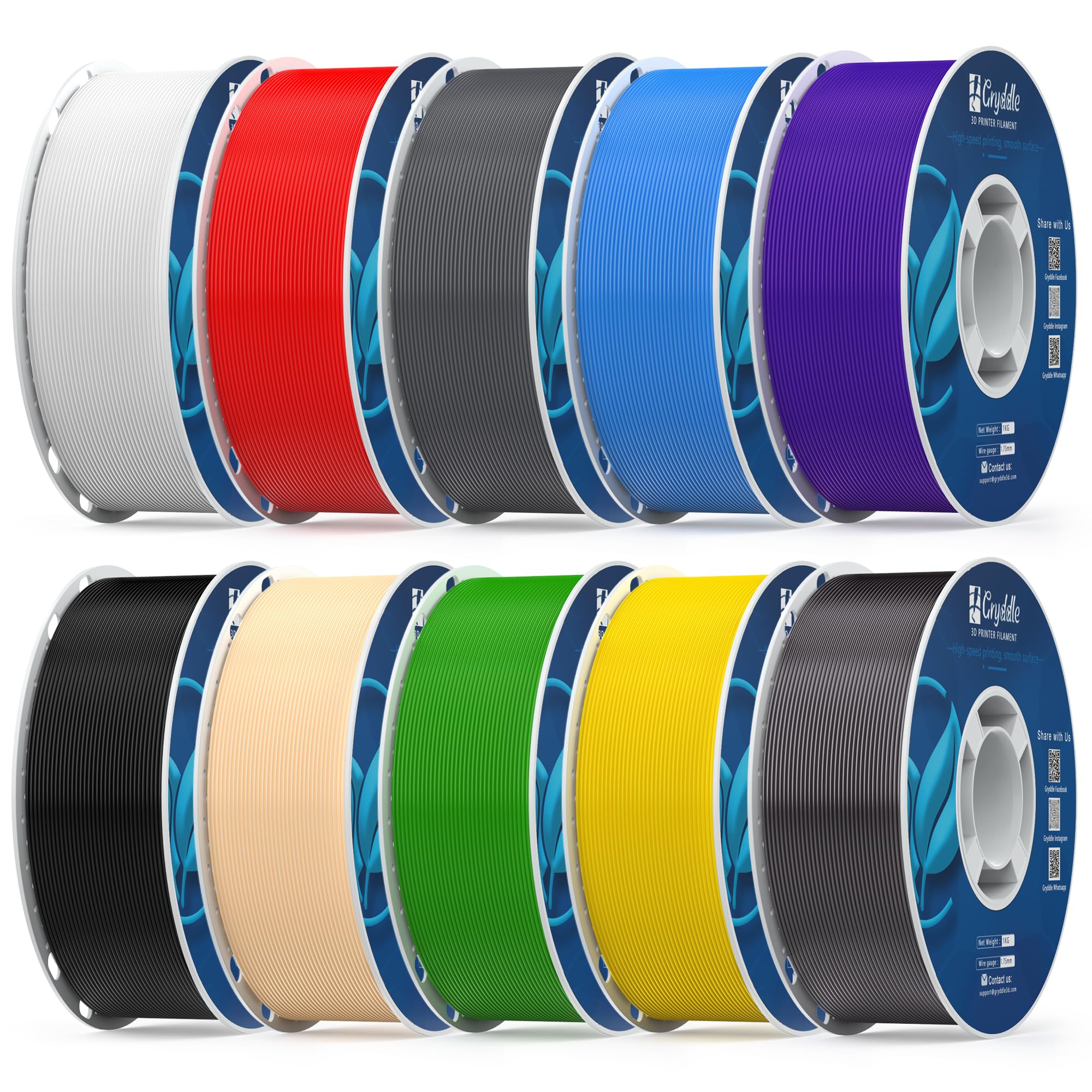
Ten PETG colors that blend PLA’s ease with more heat and impact resistance
PETG (polyethylene terephthalate glycol) is the sensible middle ground: Gryddle bills it as combining the easy printability of PLA with the strength of ABS, which means more heat and impact resistance than basic PLA without demanding the enclosure an ABS or nylon run needs. It is listed at a 230–250°C nozzle and a 70–85°C bed, and it is pitched at prototypes, functional parts, tools, and outdoor bits where toughness and weather resistance matter.
The headline for most buyers is the color range: the ten-color creative set includes shades like skin, silver, and yellow, so you can match a finish instead of settling for black. The honest caveat is consistency — bag seals leaked on at least one order, so drying every roll before you print is the safe move, and nozzle clogging is the recurring complaint. Dry every roll and it is a dependable PETG for everyday functional prints.
PETG toughness: ten colors in the set turn color-matching from a hunt into a choice.
Durable prints: functional and outdoor parts where you want more heat resistance than PLA and a specific color to match.
Fine details: dry every roll first and expect to tune against occasional clogs.
9. Inslogic ASA Filament 1.75mm 4KG
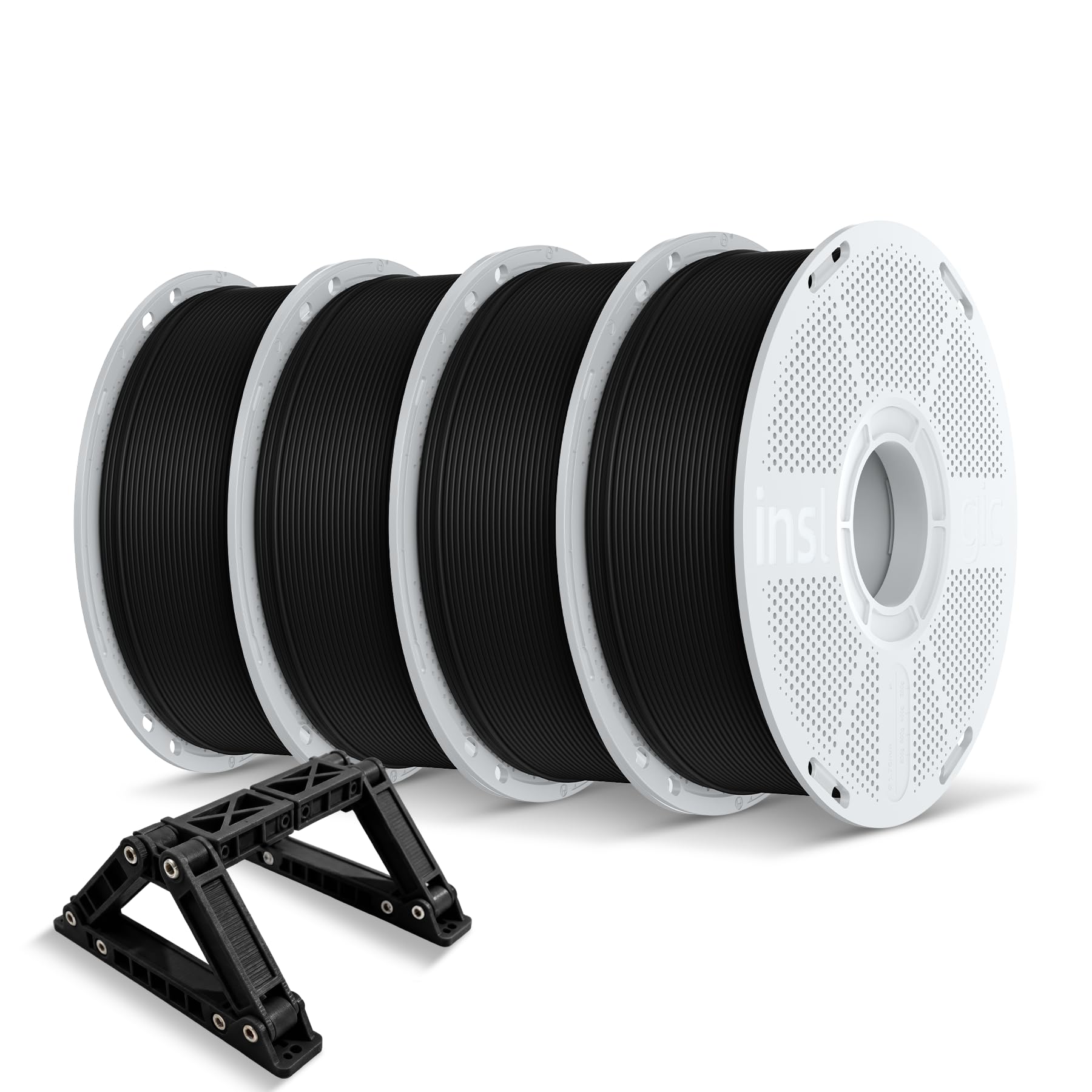
Four full kilos of outdoor-ready ASA that is dry and sealed the moment it arrives
This is the complement to the multi-spool starter above: instead of eight small sampler rolls, Inslogic gives you four full 1 kg spools of black ASA, 4 kg total, aimed squarely at UV, rain, and heat. The numbers back the intent — a tensile strength of 52.4 MPa and impact resistance of 18.33 KJ/m², with a broad 250–280°C print window and a tight +/- 0.02 mm diameter. It is pitched at prototyping, housings, and mechanical parts that face the weather.
The pre-dried, vacuum-sealed packaging is the quiet advantage here — spools arrive dry and stay that way in the bag, so you skip the guesswork that ruins a first ASA attempt. Where it prints, the winding is neat and the durability holds up: an SV08 cooling assembly printed from it lasted months without drooping. The honest fit note is odor — it throws more styrene smell than some ASA brands and wants ventilation — and there are outliers who got spools that simply would not cooperate. For bulk outdoor printing in one color, four sealed kilos is a fair bet.
Large prints: four sealed kilo spools when one ASA color will carry a season of outdoor parts.
Occasional use: it prints with more styrene odor than other ASA, so a ventilated space is a must.
10. ANYCUBIC PLA Plus 3D Printer Filament 1.75mm 10 Pack Black
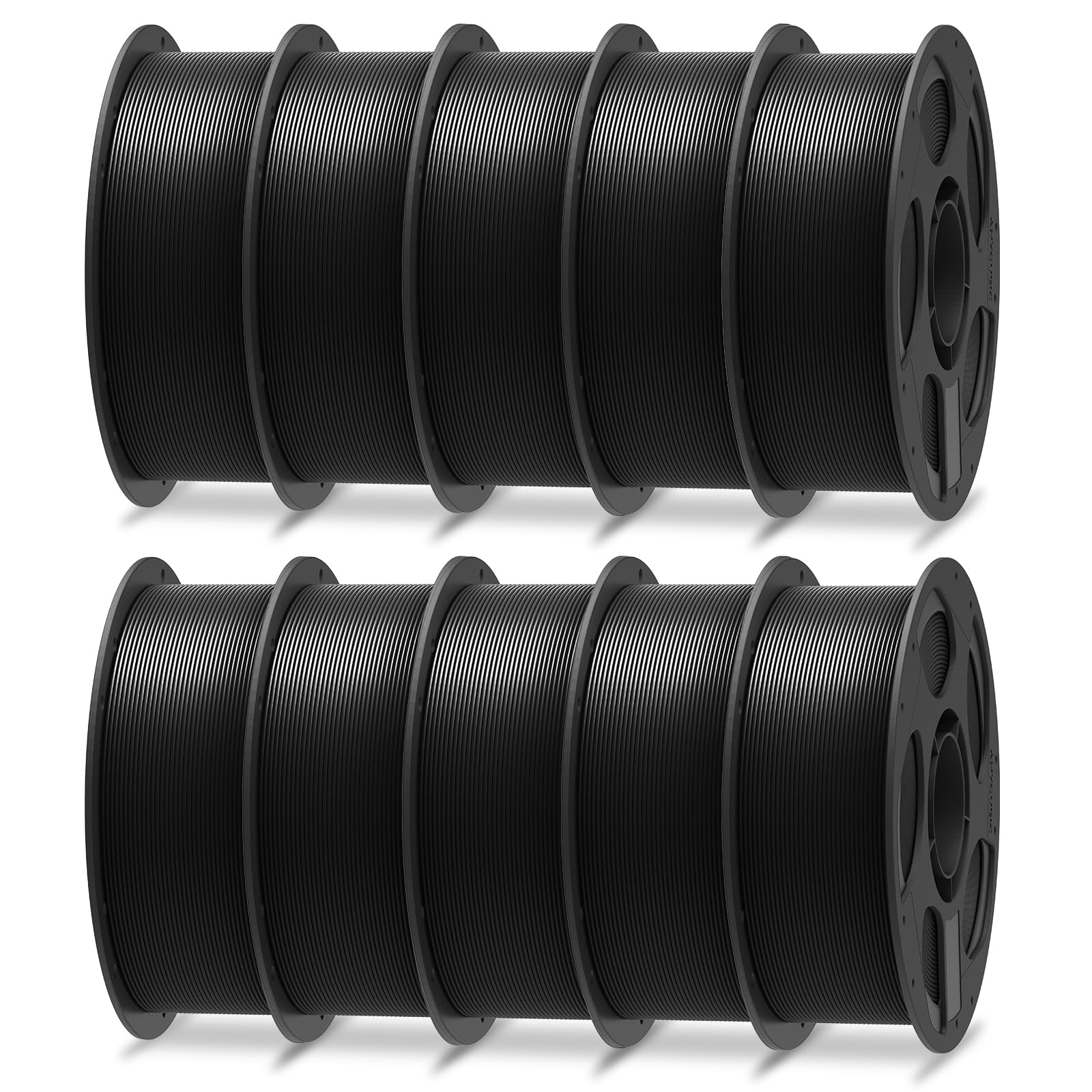
A ten-kilo pile of tough PLA+ for makers feeding prints around the clock
PLA+ is PLA blended for more toughness, and ANYCUBIC’s version leans on impact resistance — it resists breaking under force and prints smoothly for models, artworks, and engineering parts. The specs are what you would hope for in a bulk buy: a 1.75 mm diameter held to +/- 0.02 mm, tidy winding that frees the line without crossing turns, and vacuum packaging against moisture. Ten 1 kg rolls means one color to last a long stretch of production.
Be clear on the priority: this is a heat-resistance list, and PLA+ is not a hot-application material — it is here for volume and convenience. The feedback on these spools is mixed, from smooth, forgiving prints to repeated under-extrusion and end-of-roll tape that holds the filament instead of letting it break away, stopping the job. It prints well until you hit the seams, then clogs the head and ruins that print. For high-volume, low-heat work it pays off if you check each roll; for heat, stay with the nylon and PPS picks.
Ten spool pack: ten kilos of ±0.02 mm PLA+ rewards anyone printing nonstop and uninterested in heat applications.
High volume: the high-output printer who wants a big stock of tough PLA+ for models and jigs.
Heat exposure: durability and heat matter or you want a spool that never interrupts a job — the winding and end-of-roll tape are the weak spots.
11. SUNLU PA12-CF Nylon Filament 1.75mm 4 Packs Black
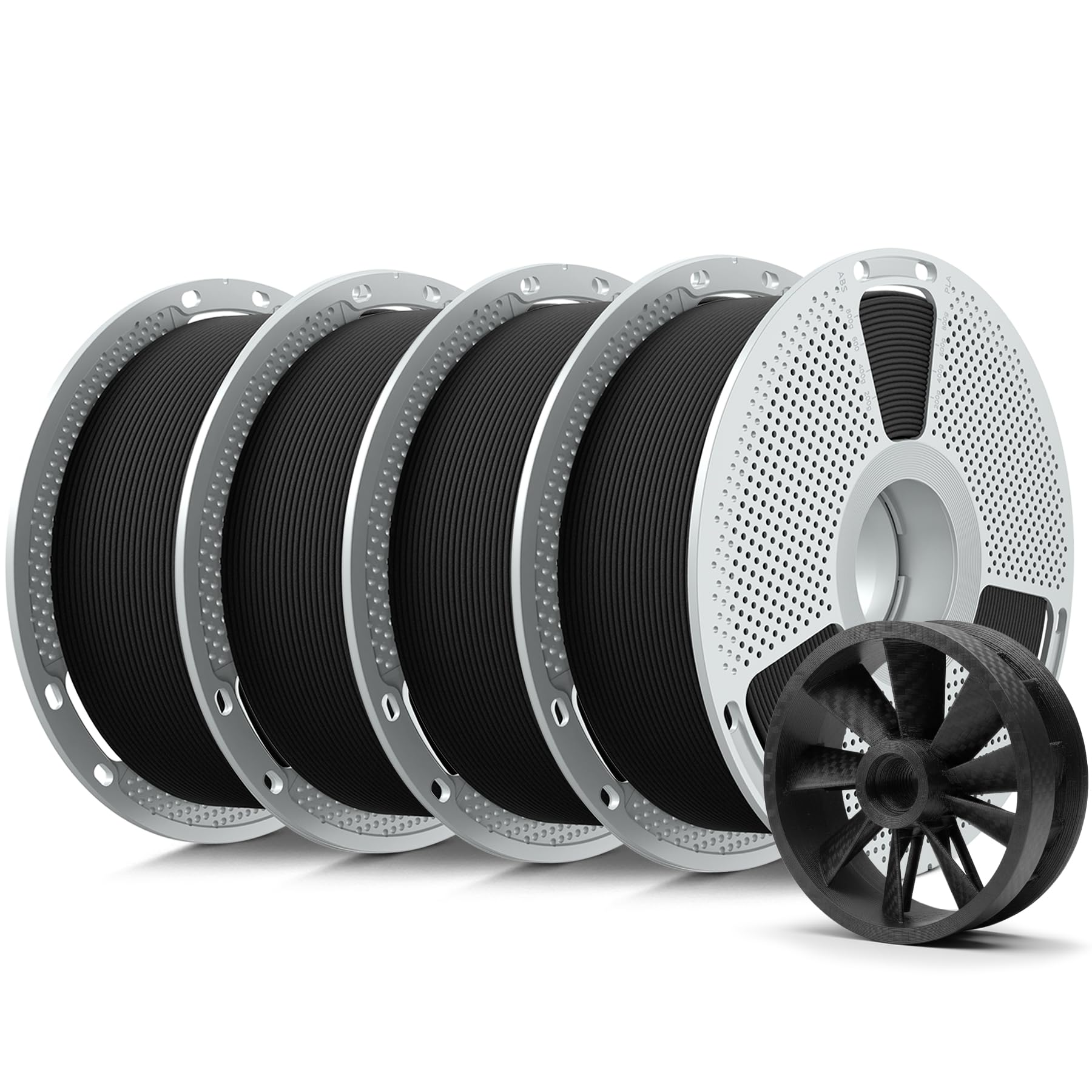
Lightweight carbon-fiber nylon built for moving parts and engine-bay heat
PA12-CF is a different animal from the PA6-CF above: SUNLU’s blend is 20% carbon fiber and 80% PA nylon, with a density of just 1.04 g/cm³, so it turns out strong but light parts — bike helmets, drone frames, car components. The headline is heat: it holds its shape up to 347°F (175°C), well above classic PLA and ABS, and importantly it resists grease, gasoline, and solvents, which suits fuel caps and workshop tools. Nylon 12 also takes on the least moisture of the nylons, so parts stay solid in rain or humidity.
For moving parts the wear resistance is the point — the carbon fiber creates a low-friction surface that suits gears, bearings, and sliding mechanisms. It runs at a 260–280°C nozzle and a 50–70°C bed, fed from a heat-resistant spool that can dry up to 110°C. The catch is delivery: it needs drying (80°C for 12 hours or 110°C for 4 hours) and a hardened nozzle, and it is not meant for AMS-style multi-color systems, since a few owners mention rough feeds and spools too wide to sit cleanly. Dialed in, it is a light, heat-ready nylon for gears and frames.
Engineering parts: wear-prone, load-bearing parts like gears and frames where low weight and high heat both matter.
Casual printing: you want to run it through an AMS or skip drying — the stiff, abrasive, moisture-hungry strand makes that a hard no.
Know the Specs
Heat Deflection Temperature (HDT)
This is the temperature at which a printed part starts to soften and give way under a load. A higher number means the part keeps its shape in hotter conditions — which is why carbon-fiber nylon rated to 141°C and PPS-CF10 rated to 252.5°C at 0.45 MPa suit hot applications that would warp a PLA or ABS part.
Nozzle Temperature Range
Every filament prints inside a specific nozzle-temperature window. PLA and PETG run comfortably on a stock printer, while polycarbonate and PA6-CF usually want a 280–290°C nozzle and PPS-CF10 needs 310–350°C. If your printer cannot reach a material’s range, that spool is not a realistic option for you.
Enclosure and Warping
High-heat plastics cool unevenly and pull away from the bed, so an enclosure traps warmth to keep the whole part at an even temperature. Polycarbonate, nylon, and PPS blends all typically require one, along with a heated bed, solid or liquid glue, and a stable chamber to hold layer adhesion together.
Nozzle Wear and Diameter Tolerance
Carbon fiber is abrasive, so it slowly grinds away a standard brass nozzle — a hardened steel or ruby nozzle holds its shape much longer. Diameter tolerance, stated like +/- 0.02 mm, describes how close each length of strand stays to 1.75 mm, which directly affects smooth, consistent feeding.
Common Questions
What is the most heat-resistant 3D printer filament on this list?
Can I print high-heat filament without an enclosure?
What nozzle do I need for carbon-fiber filament?
Do I need to dry carbon-fiber nylon before printing?
Is PETG better than PLA for heat resistance?
How do I stop high-heat filament from warping?
Can ASA filament be used outdoors in direct sun and rain?
What is the difference between PA6-CF and PA12-CF filament?
Does high-heat filament wear out a brass nozzle?
Will high-heat filament clog an AMS or multi-color system?
The Bottom Line
For most makers who want one spool that handles heat, impact, and everyday functional parts, the filament for heat resistance winner is the Polymaker Polymax Tough PC because polycarbonate gives the strongest, most heat-resistant result Polymaker rates for consumer-grade printers while still printing clean at a 260–270°C nozzle and 100°C bed. If you want the best heat ceiling and run a high-temp machine, grab the Polymaker Fiberon PPS-CF10, which is rated to a heat deflection temperature of 252.5°C at 0.45 MPa after annealing. And for structural parts that need stiffness and load-bearing strength without the industrial price, the TINMORRY PA6-CF is the one to reach for, with a thermal deformation temperature up to 141°C and a full 1 kg on the spool. Whichever you choose, dry it, enclose it, and fit a hardened nozzle — those three habits matter as much as the material itself.
How we choose
We do not accept paid placement. Every pick is matched to a real buyer and a real use-case; we do not hands-on test units.
Sources
Specifications: manufacturer listings and product documentation. Review insights: verified customer reviews, as of October 2026. Pricing: not shown on this page (it changes often); check the current price via the retailer link.
As an Amazon Associate, Aappliancez earns from qualifying purchases. This does not affect which products we feature.