Disclosure: Some links in this post are affiliate links. As an Amazon Associate I earn from qualifying purchases, at no extra cost to you. Learn more
Specs are compiled from manufacturer listings and verified buyer reviews and can change over time — please confirm the key details on the product page before buying.
Georgia is brutal on tall fescue. Your summers run long and humid, the clay holds water like a bathtub, and a bag of seed that thrives in Oregon can sulk and thin out by August. Below are the seven blends worth your time, sorted by how well they handle a Southern lawn.
This guide is built by comparing the manufacturers’ published specifications and the patterns across verified customer reviews, so you get each pick’s real strengths and trade-offs instead of marketing spin.
Start with how much ground you need to cover, then match the blend to your sun and shade. Everything below is ranked for real lawns, so you can pick the right bag of fescue seed for georgia without wasting a season on a blend that quits in the heat.
Top Picks

How To Choose The Best Fescue Seed for Georgia
Georgia sits in the transition zone, which is the awkward middle ground where cool-season grasses like tall fescue survive but do not relax. Your fescue has to push through humid summers, then recover from a short winter. The bag you pick needs heat durability and shade tolerance built in, not bolted on.
Match the blend to your actual sun and shade
A bag labeled “sun and shade” is telling you it can handle both extremes on one property. If your yard is mostly open afternoon sun, a turf-type tall fescue holds up better than a fine fescue mix. If your lawn backs up to pines or a fence line, a blend with creeping red fescue earns its keep in the shade. Read the label and be honest about how many hours of direct sun your worst patch gets.
Know your new-lawn versus overseeding numbers
The same bag always covers more ground when you are overseeding than when you are starting from bare dirt. That is because overseeding just thickens what is already there, while a new lawn needs a full seeding rate. A bag rated for 2,240 sq. ft. of overseeding might only do 745 sq. ft. as a new lawn. Buy for the job you are actually doing, or you will come up short halfway through.
Check the weed-seed percentage before anything else
On a seed tag, “0.00% other crop and weed seed” means the bag was cleaned to remove everything that is not the grass you paid for. A blend that leaves weed seed in the mix hands you a second problem the moment it sprouts. Your job is to get fescue up thick enough that weeds have nowhere to land, and pure seed starts you ahead.
Side-by-Side Comparison
| Model | Best For | Bag Weight | New Lawn Coverage | Overseeding Coverage | Amazon |
|---|---|---|---|---|---|
| Scotts Turf Builder Sun & Shade Mix★ Best Overall | Sun and shade lawns, fast fill-in | 5.6 lbs | 745 sq. ft. | 2,240 sq. ft. | Amazon |
| O.M. Scott & Sons Tall Fescue BlendBest for Weed Crowding | Weed crowding, homes with kids and pets | 8 lbs | 665 sq. ft. | 2,000 sq. ft. | Amazon |
| X-Seed Ultra Premium Quick and Thick | Bare spots and high-traffic patches | 3 lbs | 1,050 sq. ft. | 2,100 sq. ft. | Amazon |
| GreenView Turf Type Tall Fescue | Deep shade and heat-stressed yards | 7 lbs | 875 sq. ft. | 1,750 sq. ft. | Amazon |
| Outsidepride Legacy Fine Fescue Mix | Dense shade, pure raw seed | 5 lbs | — | — | Amazon |
| Pennington Signature Series Tall Fescue | Whole-lawn jobs, big coverage | 50 lbs | — | 10,000 sq. ft. | Amazon |
| SeedRanch Falcon IV Tall Fescue | Heat, disease resistance, shade | 50 lbs | — | — | Amazon |
Detailed Reviews
1. Scotts Turf Builder Grass Seed Sun & Shade Mix, 5.6 lbs.
Our pick — 4.0+★ from 34,500+ verified ratings; the strongest balance of quality and price.
The bag Georgia lawns reach for when sun and shade share the same yard.
What makes this one the pick for a Georgia yard is the pairing of coverage and durability. The 5.6 lb bag gives you 745 sq. ft. for a brand-new lawn or 2,240 sq. ft. when you are overseeding an existing one. That overseeding number is 12% more ground than the O.M. Scott & Sons bag covers, which matters when your fescue has thinned through a Southern summer and you want to thicken it without buying two bags.
The blend itself is designed for full sun and moderate shade, with medium drought resistance and medium to high durability. In plain terms, this is seed built to keep going when the rain stops for a week and your sprinkler can’t keep up. The Root-Building Nutrition is formulated to push roots deeper, which helps the grass hold through a Georgia summer instead of drying out shallow. Apply it in spring or fall when daily average soil temperatures sit consistently between 55°F and 70°F, or air temps between 60°F and 80°F — outside that window the seed sulks.
Where owners get emotional is appearance. The bright green color is the thing everyone raves about, and it fills dead spots in a way that reads fast. One five-bag veteran put it simply: “I bought a bag last year and it was great. I had grass starting to grow within a week.” That week-one sprout is what makes this bag a repeat buy for Southern overseeding.
The honest catch is germination, which is a mixed bag across the reviews. Some lawns come up thick and some come up patchy, and the gap usually traces back to prep and water discipline in the first week. The seed wants consistent moisture, and if you slack off for two days in July heat, you will see it. Prepare the soil, water twice a day until it’s established, and this bag earns its reputation.
What earns it first place
- 2,240 sq. ft. of overseeding coverage from a single 5.6 lb bag
- Medium to high durability holds up in sun and moderate shade
- Bright green appearance is the strongest, most consistent praise
- Root-Building Nutrition helps roots anchor deep
The honest trade-off
- Germination is the most-discussed mixed topic — prep and water decide the outcome
- Only 745 sq. ft. of new-lawn coverage, so bare-dirt jobs need two bags
- Needs twice-daily watering through the first week
Reach for this if: your yard takes sun part of the day and shade the rest, and you want to overseed a thinning lawn without a huge spend.
Look elsewhere if: you are seeding bare dirt from scratch and would rather stretch one bag across a bigger area.
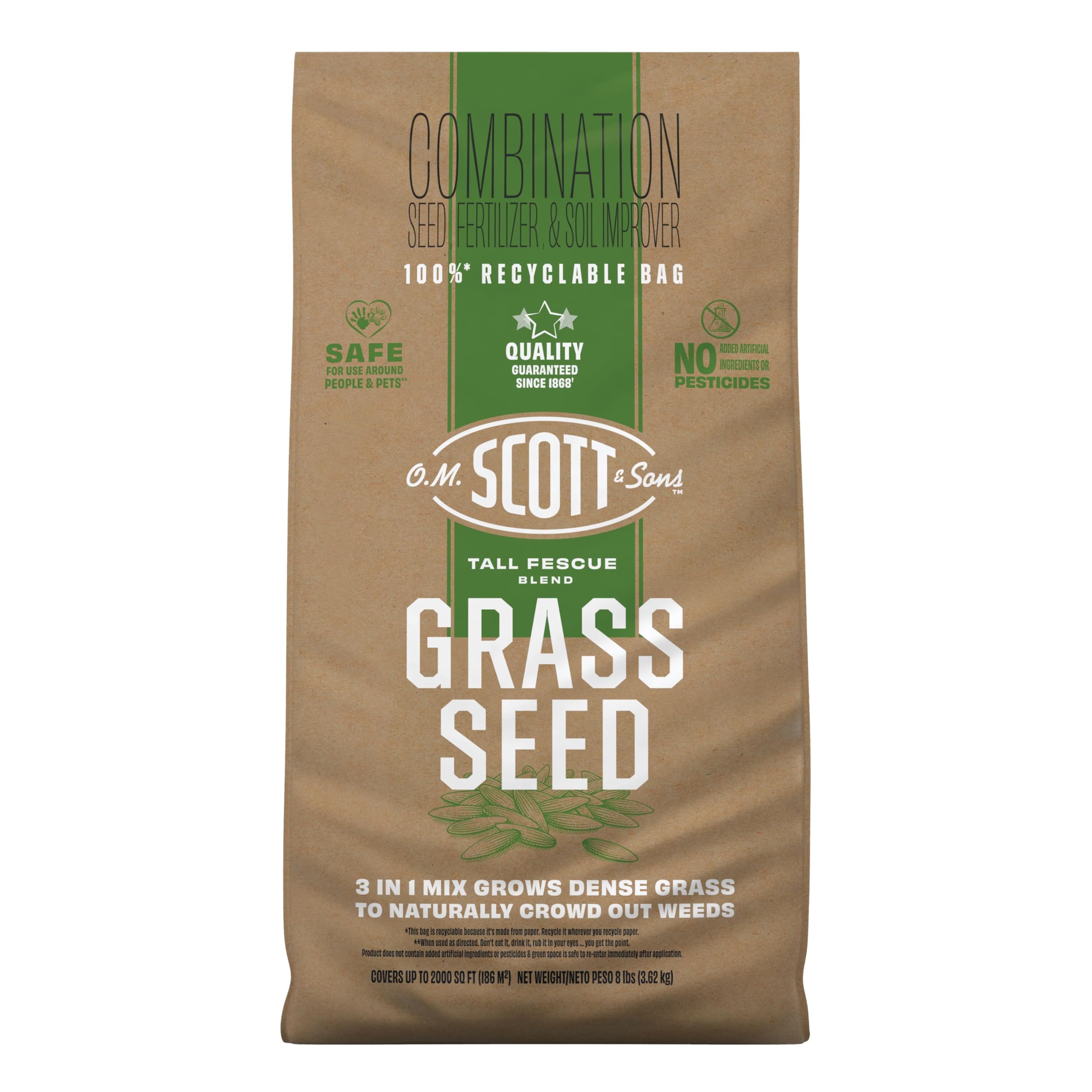
2. O.M. Scott & Sons Tall Fescue Blend Grass Seed, 8 lbs.
Three jobs in one bag: seed, natural grass food, and a soil-improving clay.
This is a tall fescue blend grown in Oregon and built for Northern and transition-region lawns, which is the group Georgia falls into. The 8 lb bag covers 2,000 sq. ft. when overseeding or 665 sq. ft. when you are starting fresh. Compare that to the Scotts Turf Builder above at 2,240 sq. ft. of overseeding and you can see this bag goes slightly less far, but it also weighs more — 8 pounds against 5.6.
The reason it sits high for Georgia is density. Dense tall fescue crowds weeds out on its own, so you are not spending your summer spraying. The 3-in-1 formula pairs seed with Natural Grass Food and a soil-improving clay that feeds the dirt while the seed works. And there are no added artificial ingredients or pesticides, which matters if your dog patrols the yard. The catch is patience: the bag tells you to keep the area watered daily for at least 3 weeks.
Owners praise the quality of the seed most, and the spreadability gets consistent mention — the seed pours without clumping. One buyer’s verdict landed well: “Took 2 weeks and i saw new grass growing in between my old grass,” adding that the square footage figure held up and the paper bag was still durable. That recyclable paper packaging is a nice small win for anyone trying to trim waste.
Germination is the one thing to go in eyes-open about. It’s the most-discussed topic by a wide margin and it swings both ways — some lawns fill in beautifully, others come up thin and patchy. The seed that does come up is a rich dark green. Plant in spring or fall when air temps sit consistently between 65°F and 85°F for two weeks, and keep the water steady, and you give it the best shot.
Buyer proof: the paper bag that survives shipping gets mentioned as often as the seed itself, and the even spread is what makes the 3-in-1 formula actually work.
Skip if: you want a lightning-fast fill-in from bare dirt and hate the idea of a three-week watering commitment.
Fair fit for: pet-owning families overseeding a thinning lawn who want one bag doing seed, feed, and soil work at once.
Think twice if: your bare-dirt patch needs speed and you’d rather not baby it with daily water for three weeks.
3. X-Seed Ultra Premium Quick and Thick Lawn Seed Mixture, 3 lb
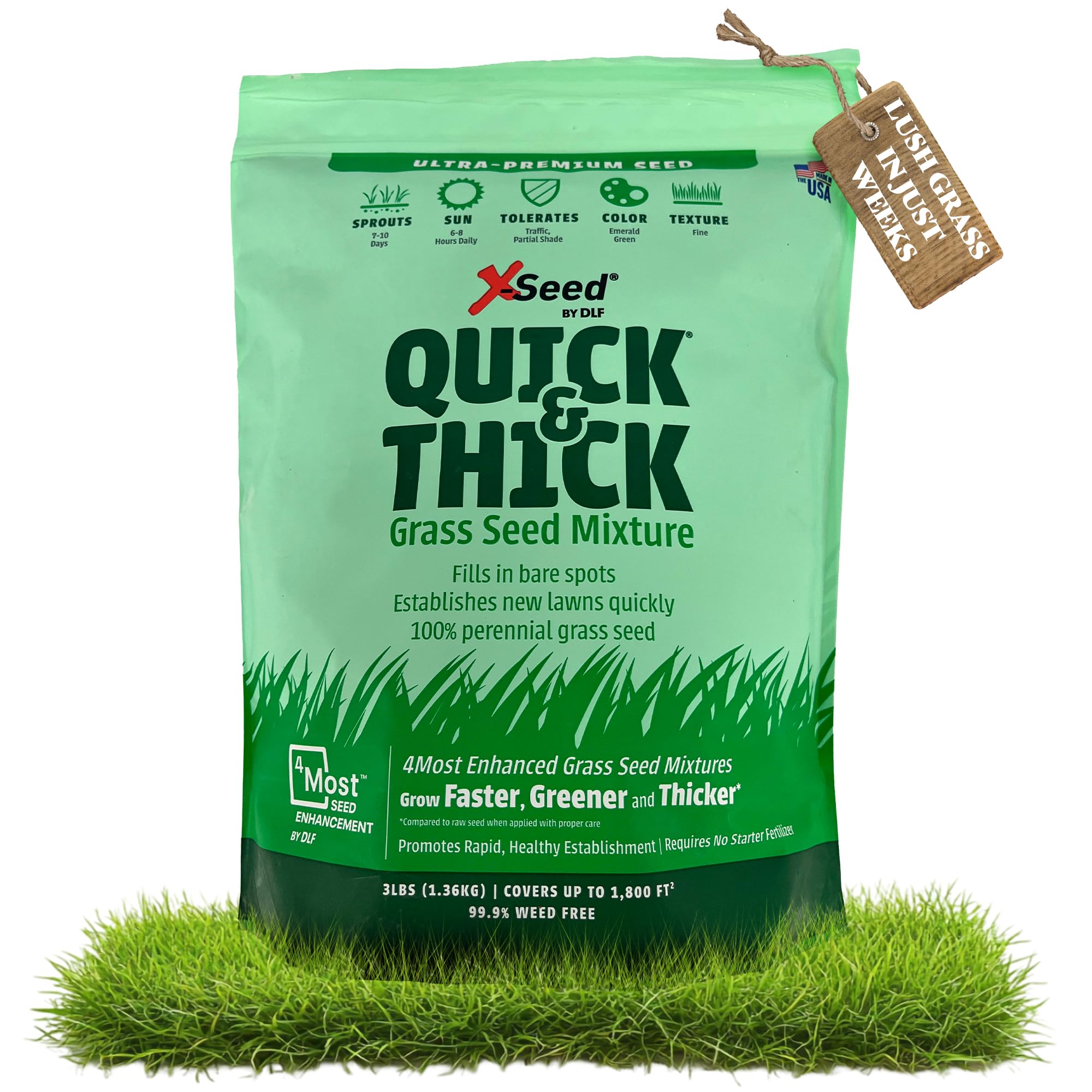
A 3 lb bag built to cover more ground than anything else on this list.
Here’s the number that jumps off the page: 1,050 sq. ft. of new-lawn coverage from a 3 lb bag. That is 58% more new-lawn ground than the O.M. Scott & Sons bag covers, and it does it at two-thirds the weight. For a Georgia lawn with bald patches after a hot summer, that coverage-per-pound is the whole argument.
The blend mixes perennial ryegrass, fine fescue, and Kentucky bluegrass — a combination that comes up fast and fills in dense. A Moisture Boost Plus coating is the reason it happens fast; the coating absorbs 50% more water than paper, which gives each seed a wetter start in July heat. Fine blades and a fast sprout mean you see green sooner, and it handles high-traffic areas, dogs, and hydroseeding jobs.
Owners are split on how long the come-up takes. The fast sprouters are certain — one put it bluntly: “I’ve never seen grass grow so quickly!” Another noted it “Takes too long to germinate” but still rated the bag highly because it filled the areas. That split is the honest story here. Count on anywhere from five days to a couple of weeks, depending on how warm the soil stays.
The one thing that costs this blend points is consistency. A handful of buyers report germination closer to half of what they sowed, with spotty coverage at the recommended rate and some washout in heavy rain. Spread it a bit heavier than the bag says on slopes, rake a thin layer of soil over the top, and you keep more of it where you put it.
The coverage argument: 1,050 sq. ft. of new lawn from 3 pounds is the best seed-to-ground ratio in this lineup — a bag that punches far above its weight class.
Be ready for uneven: thin, patchy come-up is the recurring gripe on tougher sites, so budget a second pass on the really bare sections.
Best for: patching bare spots and high-traffic patches where you want fast green without hauling a heavy bag around.
Probably not for: a full new lawn on uneven or sloped ground, where a thicker, slightly slower blend holds its place better.
4. GreenView Turf Type Tall Fescue 7 lb

The blend that grew where the sun never reached.
For a Georgia yard under pines or along a shaded fence line, shade tolerance is the whole ballgame. This 7 lb bag gives you 875 sq. ft. for a new lawn or 1,750 sq. ft. for overseeding, and the turf-type tall fescue holds up in both sunny and shady spots. A buyer with a genuinely sun-starved yard was flat surprised: “I was worried it wouldn’t really grow with no sun, and it did!!”
The label rates it for heat, drought, insect, and disease resistance plus brown-patch tolerance, which is the shortlist a Georgia July demands. In a Georgia July that list is your survival kit. It grows in all common soil types, which is good news for the red clay and sandy stretches that make up most Southern yards. Germination starts in 10 to 14 days, and the color comes in rich and dark green with a medium-to-coarse texture.
Seed count is tested to 99.9% weed-free, a spec that reads like marketing until you’ve fought oxalis for a season. Every cleaner bag means fewer surprises sprouting alongside your fescue. And the manufacturer backs it — if you’re not satisfied when used as directed, the warranty allows a refund with proof of purchase.
The place this bag fails for some is speed. Germination is the most-discussed and most-mixed topic in its reviews, and one experienced lawn owner reported only about 5% up at two weeks, though it climbed by week four. A 40-year veteran had the opposite experience, seeing thousands of half-inch sprouts in a week. The gap usually depends on moisture and seed-to-soil contact: water twice daily and rake the seed in lightly.
Where it shines: real shade tolerance that gets backed up by buyers — including one whose no-sun yard finally grew grass.
Slow-start warning: germination swings hard depending on conditions, so give it a few weeks before you write it off.
Suits: shaded Georgia lawns with heat-stressed turf that need a blend able to take both extremes.
Not for: anyone who needs green in under a week and won’t tend the seed daily.
5. Outsidepride Legacy Fine Fescue Grass Seed Mix, 5 lbs.
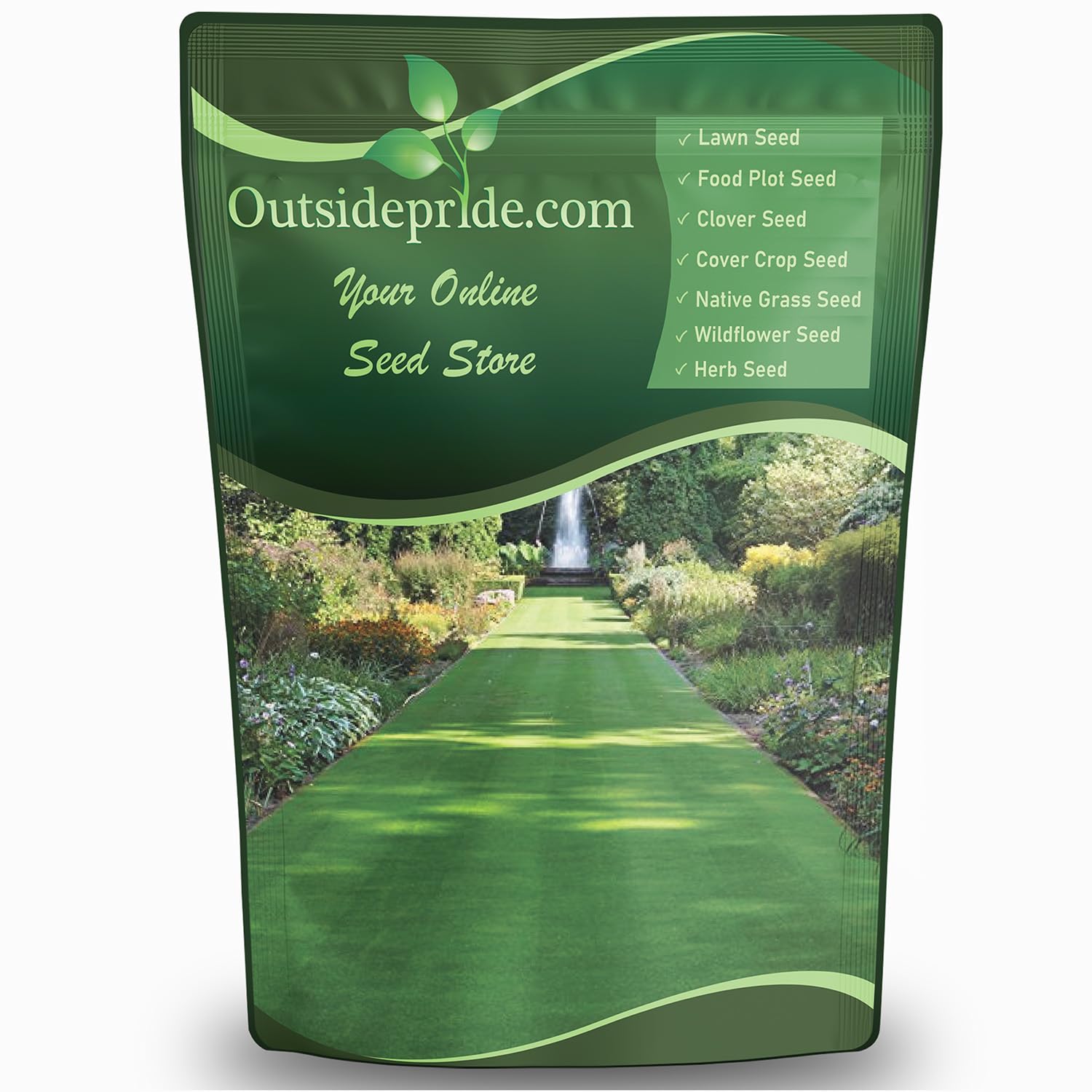
No fillers, no coatings, no other crop — just 5 pounds of cleaned fescue.
That 0.00% other crop and weed seed figure is the exact number serious turf hands look for first. This bag gets cleaned from farm field to plant so what you sow is what you get. The mix runs 20% Hard Fescue, 40% Chewings Fescue, and 40% Creeping Red Fescue — a fine-textured blend built for full sun to dense shade. The fine blades knit into a soft, low-maintenance mat that a formal turf-type can’t match in deep shade.
Where a tall fescue mix gives you coarse, durable blades, this one leans into the shade. Fine fescue is the grass that survives where the sun barely reaches, and it stays bright green. Owners who got it going describe uniform, soft turf and a color that reads emerald. It also tolerates drought once established and stands up to foot traffic, so it suits a family lawn rather than a showpiece.
What the label doesn’t tell you is the effort. Fine fescue is demanding in the establishment phase — constant moisture for germination, very slow growth, and soil with organic matter to build a dense mat. That’s why germination is the mixed story here: some lawns come up thick in days, and some owners mention a very small percentage of seed sprouting even after following instructions. The blend that grew is a beautiful, thin-bladed grass, but it asks you to provide the right conditions.
What you are really buying
- 0.00% other crop and weed seed — cleaned pure
- Fine-textured turf that shines in dense shade
- 20% Hard, 40% Chewings, 40% Creeping Red Fescue
- Low-maintenance once it establishes
What it asks in return
- Germination is the most-discussed and most-mixed topic
- Fine fescue grows slowly and wants high-organic soil
- Needs constant moisture early to build a dense mat
The fit: shaded yards where fine turf matters more than brute toughness, and you’re willing to prep the soil properly.
Best avoided if: you want a quick, forgiving fill on clay and can’t commit to keeping the seed wet.
6. Pennington Signature Series Tall Fescue 50 lb
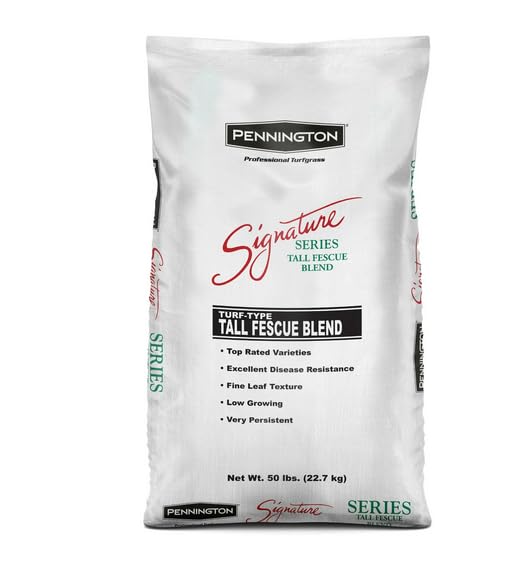
One 50-pound bag that tools a whole lawn or spot-seeds a hundred bare patches.
The number that makes this bag make sense is 10,000 sq. ft. of coverage. A whole residential yard fits in one bag, and there is enough left over to spot-seed through the season. That is the case for the 50 lb bag: one purchase covers the whole job instead of a mid-project run for a second bag.
The blend is a Blue Tag tall fescue for full sun to partial shade, and the varieties were selected over years before the bag came to market. Buyers in the Midwest report it held up in 90-degree stretches and took the cold swings that follow. Cut it high — one buyer keeps his at 4 inches — and it keeps its color through the summer rather than browning out.
What owners talk about first is seed quality, which is ranked the top positive. The germination is the mixed story: a lot of lawns sprout in roughly two weeks, but some report very small percentages coming up, often traced to heavy straw or hay blocking soil contact. Apply with a walk-behind spreader, keep the seed in contact with the dirt, and this bag delivers on the coverage promise.
The practical hurdle for a Georgia shopper is that 50 pounds is a lot of seed to store if your lawn is small. It also needs a spreader sized for the job. But if one bag genuinely covers your whole property, that is the straightest path to a full reseed.
Value read: 10,000 sq. ft. from a single bag is the largest total coverage on the list, full stop.
Watch the cover: too much straw or hay is the most common reason patches stay bare — let the seed touch soil.
For you if: you’re seeding a large lawn in one pass and want the value of a single big bag.
Overkill for: small yards and spot-patching work, where a smaller bag stores far easier.
7. SeedRanch Falcon IV Tall Fescue 50 lbs

Built for the heat and disease pressure that punishes Georgia fescue every summer.
Heat and disease resistance is the spec that matters most in a Southern lawn, and Falcon IV leads this lineup on both. It’s a turf-type tall fescue developed for superior turf quality, and the 50-pound bag is sized for large properties and serious reseeding jobs. If your fescue has ever thinned out and browned by mid-August, this variety was bred to fight exactly that.
Customers note speed that’s easy to see. Sprouting in roughly five to seven days is the standard the reviews describe, and one buyer at a shady property reported: “We have a very shady backyard… This seed sprouted in 7 days and is doing great in the shade!” Fast sprout plus shade tolerance is exactly the pairing a tree-covered Georgia yard needs.
Germination is the aspect owners praise most, and the quality is right behind it. A buyer on an acre lot described the seed germinating and growing strong within three weeks after core aerating and scratching the damaged areas. Repeat customers are a common thread here, which tells you the bag performs consistently enough to earn a return trip.
The trade-off is the upfront commitment. It’s a 50-pound bag, so it’s a full-property purchase rather than an impulse add-on, and the bag expects moderate watering to get going. Spread it evenly, keep it moist, and the promise of turf-quality fescue is within reach.
Editor’s take: heat and disease resistance plus a 5-to-7-day sprout makes this the pick for a lawn that has failed before.
One caution: the 50-pound format is a big commitment for a small yard.
The pick for: large or shade-heavy Georgia lawns where heat and disease have beaten other seed.
Hesitate if: you only have a patch or two to fix and want to store a smaller bag.
Know the Specs
New-lawn coverage vs. overseeding coverage
Every bag lists two coverage numbers, and they are not interchangeable. New-lawn coverage is the full seeding rate you need to start turf on bare dirt. Overseeding coverage is the lighter rate for thickening an existing lawn. A bag that covers 2,240 sq. ft. overseeding may cover only 745 sq. ft. as a new lawn. Buy for the job in front of you, not the bigger number on the bag.
Weed-seed percentage on the tag
0.00% other crop and weed seed means the bag was cleaned to remove non-grass material. It is a sign of effort at the plant, and it matters most on bare soil, where every weed seed you spread has the space to take hold. It does not replace good soil prep, but it stacks the odds in your favor.
Moisture coating and germination speed
A coating like Moisture Boost Plus is a water-absorbing layer around each seed. It holds moisture against the seed longer so it can take up water and sprout faster. In a Georgia summer, where a hot afternoon can dry a bare surface in hours, that extra moisture capacity is real leverage.
Soil temperature at application
Seed sprouting depends on soil warmth more than air warmth. The bags here set windows like 55°F to 70°F average soil temperature, or 65°F to 85°F air temperature for two weeks. Outside the window, seed sits or rots. In Georgia, that usually means spring and fall, not the middle of July.
Common Questions
Is tall fescue the right grass for a Georgia lawn?
When should I plant fescue seed in Georgia?
How much area does one bag actually cover?
Do I need to water fescue seed every day after spreading it?
What does the Blue Tag on the Pennington bag mean?
Can I overseed with fescue seed without killing my old lawn?
How do I keep my dog off freshly seeded fescue?
Why did my fescue seed come up patchy?
Is a pure raw seed better than a coated seed?
The Bottom Line
For most Georgia lawns, the Scotts Turf Builder Sun & Shade Mix is the one that balances sun, shade, and coverage best. It covers 2,240 sq. ft. on an overseed and handles moderate shade, which fits the typical Georgia yard that’s part sun, part trees. If weeds are the problem, the O.M. Scott & Sons Tall Fescue Blend crowds them out with dense growth. And for a shady lawn that just will not grow, the Pennington 50 lb bag covers a whole property in one go. Match the bag to your sun exposure and square footage, then keep the seed consistently wet through establishment.
How we choose
We do not accept paid placement. Every pick is matched to a real buyer and a real use-case; we do not hands-on test units.
Sources
Specifications: manufacturer listings and product documentation. Review insights: verified customer reviews, as of October 2026. Pricing: not shown on this page (it changes often); check the current price via the retailer link.
As an Amazon Associate, Aappliancez earns from qualifying purchases. This does not affect which products we feature.