Disclosure: Some links in this post are affiliate links. As an Amazon Associate I earn from qualifying purchases, at no extra cost to you. Learn more
Specs are compiled from manufacturer listings and verified buyer reviews and can change over time — please confirm the key details on the product page before buying.
If your squash vines are running wild but the blooms keep dropping, or your cucumbers taste bitter and arrive stubby, the plant is usually telling you something about food — not water and not sun. The fix is matching the fertilizer’s nutrient ratio to the growth stage, because a big nitrogen number feeds leaves while a lower one with more phosphorus and potassium feeds fruit. This guide covers five real fertilizers, what each one actually does in a squash or cucumber bed, and which one fits your setup.
This guide is built by comparing the manufacturers’ published specifications and the patterns across verified customer reviews, so you get each pick’s real strengths and trade-offs instead of marketing spin.
Here is how each option behaves in a real vegetable bed, so you can pick the one that suits your soil and your season with fertilizer for squash and cucumbers.
Top Picks

How To Choose Fertilizer for Squash and Cucumbers
Pick by growth stage first, form second, and coverage third. Squash and cucumbers spend their first weeks building vines and leaves, then switch to flowering and fruiting — and those two jobs want different nutrient mixes. Get that order right and the bag label stops being confusing.
Read the N-P-K ratio before anything else
Those three numbers are the percentage of nitrogen, phosphorus, and potassium in the bag. Nitrogen (the first number) drives leafy green growth. Phosphorus (the second) supports roots and flowering. Potassium (the third) helps fruit fill out and ripen. A high-first-number product like a 12-0-0 blood meal pushes foliage hard, which suits leafy greens more than fruiting vines. A balanced ratio like 3-4-4 or 6-4-5 feeds the whole plant through bloom and fruit set.
Granules or liquid: pick by how often you want to handle it
Granules get sprinkled on the soil and watered in, and a slow-release granule keeps feeding for a stretch of weeks. Liquid concentrate gets diluted into your watering can and goes to work fast, but you repeat it with each watering. If you want to fertilize once a month, choose granules. If you already water containers daily and want to dose as you go, liquid fits that routine better.
Match the bag to your bed size
Coverage numbers tell you how far one bag stretches. A 3 lb bag covering up to 104 sq. ft. suits a couple of raised beds, while a 2 lb bag built to feed two 4-by-4 ft raised beds for up to 3 months is sized for a small plot. Measure your beds before you buy so you are not short halfway through the season.
Side-by-Side Comparison
| Model | Best For | N-P-K Ratio | Form | Weight / Volume | Amazon |
|---|---|---|---|---|---|
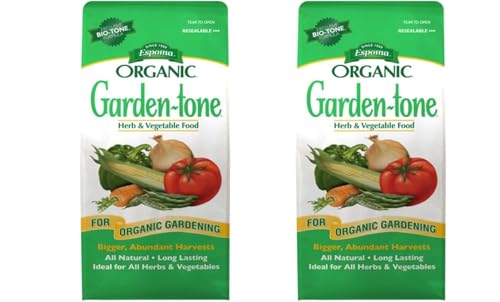
| Espoma Organic Garden-Tone★ Best Overall | All-season feeding for squash beds | 3-4-4 | Granules | 4 lb (pack of 2) | Amazon |
| Miracle-Gro Raised Bed Plant FoodBest for Raised Beds | One-and-done raised bed feeding | 5-1-7 | Granules | 2 lb | Amazon |
| True Organic Blood Meal | Pushing vine and leaf growth early | 12-0-0 | Granules | 3 lb | Amazon |
| FoxFarm Happy Frog All Purpose | Slow, steady feeding with soil microbes | 6-4-5 | Granules | 4 lb | Amazon |
| Growth Technology GT Vegetable Focus | Container and hydroponic dosing | Liquid concentrate | Liquid | 250 ml | Amazon |
Detailed Reviews
1. Espoma Organic Garden-Tone 3-4-4 Fertilizer 4 lb Pack of 2
Our pick — 4.5+★ from 900+ verified ratings; the strongest balance of quality and price.
The no-mixing, once-a-month granule that feeds squash and cucumbers from first vine to last fruit.
The 3-4-4 analysis is the reason this sits at the top for a squash bed. Those numbers are the percentage of nitrogen, phosphorus and potassium, and a low first number with nearly equal phosphorus and potassium feeds the plant without pushing all its energy into leaves. Espoma lists squash and melons by name on the label, alongside tomatoes and peppers. It also carries 5% calcium, a mineral that helps fruit set and skin quality on vines that produce continuously.
What wins people over is the quality of the blend itself, and the second most-praised thing is the plant growth it drives. You get 5% calcium in a mix the maker describes as free of sludges or fillers, and it is a registered Organic Input Material — meaning it meets the requirements for organic production. The 4 lb bag arrives as a pack of two, so you get 64 ounces total, twice the weight of the 2 lb Miracle-Gro bag below. This is also a heavier bag than that one, which matters little on a shelf but is worth knowing if you haul it to a community plot.
The catch is the smell. It is a natural-organic product, and a noticeable odor is the trade-off for that. The other catch is repetition — it is a monthly feed through the growing season, not a one-time dose, and you sprinkle it around the drip line of each plant and then water it in thoroughly. One zone 10b gardener reported annuals still blooming past late July into early September and vegetables that never stopped producing.
What earns the top spot
- 3-4-4 ratio with 5% calcium that suits fruiting vines rather than just leaves
- Ready to use straight from the bag — no measuring or mixing
- Registered Organic Input Material, so it fits an organic bed
- Pack of two 4 lb bags gives you 64 ounces of coverage
Trade-offs to know
- The organic blend has a strong smell you will notice while applying
- Monthly reapplications through the season, not a single dose
- Heavier than the 2 lb Miracle-Gro bag, which counts against portability
Grab this one if: you want a single balanced granule that covers squash, cucumbers, tomatoes and peppers all season without any measuring.
Think twice if: a strong organic odor in a small garden or patio is a problem for you.
2. Miracle-Gro Raised Bed Plant Food, 2 lbs.
One small bag, two raised beds, and up to three months of feeding you do not have to think about.
The 5-1-7 ratio is unusual, and it is the reason to look at this one for a squash and cucumber setup. Nitrogen at 5 is moderate, phosphorus at 1 is low, and potassium at 7 is the highest number on the bag — the opposite of the 12-0-0 blood meal below, which pours everything into leaves. For vines that need to fill out fruit, that potassium-forward profile is the useful half of the mix. The bag also carries added calcium and micronutrients, and one 2 lb bag is sized to feed two 4-by-4 ft raised beds for up to 3 months.
The growth it delivers is the thing that gets talked about, followed by plain effectiveness. For a raised-bed grower that means one sprinkle in spring and you are largely done until the season turns. The maker also notes it pairs with Miracle-Gro Raised Bed Soil for a bigger harvest than unfed plants. It is a granular product, so you broadcast it over the bed surface and water it through the soil.
What it does well: The longest single-dose window in this group at up to 3 months, which suits anyone who forgets to feed. Squash and peppers both showed results, and the label lists cucumbers, beans, flowers, fruits and herbs as crops it is built for.
Where it stumbles: It is a plant food built around raised-bed soil, and not everyone gets a clean result. The low phosphorus number means it is not the mix for pushing heavy flowering on its own, and it feeds a bed rather than a specific plant — so a single hillside squash patch on native soil is not really what this bag was designed for.
Ideal setup: a pair of 4-by-4 raised beds already filled with a soil mix, fed once at planting.
Better elsewhere: a container-only cucumber grower — the liquid concentrate below doses far more precisely.
3. True Organic Blood Meal 3 lb

A straight 12-0-0 nitrogen hit for the weeks when your vines need to build, not bloom.
Twelve percent nitrogen and nothing else — that 12-0-0 analysis is the whole story, and it is a 2.4x higher nitrogen figure than the 5-1-7 Miracle-Gro bag above. Nothing in the bag feeds phosphorus or potassium, so this is not a bloom-and-fruit product and should not be treated as one. It is a growth-stage tool: sprinkle it early when squash and cucumber plants are establishing vines, then step back to a balanced mix once flowers appear.
The maker names heavy feeders by example — corn, spinach, broccoli and leafy greens — and describes it as promoting vigorous vegetative growth. One 3 lb bag covers up to 104 sq. ft., which is generous for the price tier. Apply twice annually in spring and fall for in-ground and container plants. It is a single 1-count bag, so unlike the Espoma two-pack you are buying one 3 lb sack at a time.
Effectiveness is the trait that carries this product, with plant health close behind. Transplanting is where it shines most: buyers report using “a couple tablespoons each of blood meal and bone meal plus half a cup of worm castings worked into soil around each transplant with success every time.” Others scatter it around the garden to deter rabbits, squirrels and deer. The real catch is two-fold — the odor draws animals, so water it in well and blend it into the soil rather than leaving granules on the surface. The smell itself also splits opinion.
The honest read: This is the bag you reach for in the first four weeks of a squash planting and set aside once blooms open. The BB-sized granules disperse easily and dissolve quickly when blended in.
Two things to plan around: The 12-0-0 formula has no bloom support, so pair it with a balanced feed later in the season. And the scent attracts mammals — dig it in and water it down, or expect visitors.
Right for: the gardener staging two feeds per season and wanting a heavy nitrogen push at transplant time.
Wrong for: anyone who wants one bag to carry squash all the way through fruiting — this one stops short of that job.
4. FoxFarm Happy Frog All Purpose Fertilizer, 4 lb

The microbe-loaded granule that feeds soil life alongside the plant, in a 6-4-5 blend.
The 6-4-5 ratio is the middle path between the blood meal’s nitrogen spike and the potassium-heavy Miracle-Gro mix. All three numbers are reasonably matched, so it can carry a squash or cucumber bed from vine growth into bloom without a switch — a genuinely different approach from the stage-by-stage split the True Organic bag demands. It is also the only product here with an OMRI Listed label, and it is packed with beneficial soil microbes and mycorrhizal fungi, which the maker ties to possible improvements in nutrient uptake and water absorption.
The weight is a real number to plan around: at 4 pounds this bag is twice the weight of the 2 lb Miracle-Gro bag, so you get more material per bag even though it is a single 1-count sack. Plant health is what this product is known for. The maker describes it as a gentle feed that nurtures plants over time rather than a fast spike, so it suits a gardener who wants slow, steady nutrition across the whole season.
Value gets split down the middle — some gardeners consider it well worth it, others find it on the pricey side. The smell is noticeable in a bad way, and this one is a loose, easy-to-spread dry fertilizer rather than a compacted granule. One scheduling note owners work out for themselves: two weeks to a month between sprinklings depending on the season, and roughly half a bag covers a full year in a typical home garden.
Best quality: The living-soil angle. Mycorrhizal fungi and soil microbes are what separate this from a plain N-P-K granule, and the 6-4-5 numbers mean you are not chasing one nutrient at the expense of the others.
Real limit: Some dogs are drawn to the smell and knock plants over going for it. The odor plus a mixed reaction on value means it rewards gardeners who plan a longer feeding schedule rather than a one-off sprinkle.
Pick it when: you want one granule for the whole season and you like the idea of feeding the soil biology, not just the plant.
Look past it when: you need a fast-acting fix for a yellowing vine this week — the slow feed is the point.
5. Growth Technology GT Vegetable Focus Liquid Concentrate 250 mL
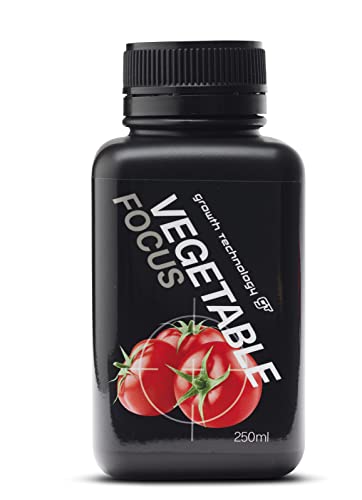
A liquid you dose into every watering can — and the only pick here built for hydroponic setups.
Unlike every granule in this article, this one arrives as a 250 mL liquid concentrate you dilute yourself. The mixing ranges are specific: 3-5 ml per litre for soil or potting mix, 5-7 ml per litre for hydroponics, and you increase dilution as plants mature. It names tomatoes, cucumbers, carrots, zucchini and green beans directly on the label, and it contains all 12 essential minerals including calcium for balanced feeding. The full 250 mL bottle is 8.45 fluid ounces of concentrate, so you are buying many doses rather than a sack of granules.
If your cucumbers are in containers on a patio or on a balcony, this fits that life better than a granular product, because you dose as you water rather than measuring spoonfuls into soil and hoping rain does not wash it away. It is formulated for both outdoor gardens and container plants and works in hydroponic systems too, which no other pick here does. The maker notes it is highly absorbable and mixes quickly.
Be honest with yourself about the track record: this is a new listing with only a handful of ratings. There is no deep review base to lean on, which is a real reason to treat it as an experiment rather than a safe bet if a whole vegetable garden is riding on it.
The argument for it: 12 essential minerals in one balanced liquid, precise per-litre dosing, and hydroponic use. For container cucumbers fed at every watering, that level of control is hard to match with granules.
The argument against: An extremely thin review base and a small bottle. Dedicated soil gardeners may find granules easier and cheaper per bed.
Your match if: you grow cucumbers in containers or a hydroponic setup and already mix feed into every watering.
Not your match if: you want a set-and-forget soil feed for a big in-ground squash patch.
Know the Specs
The N-P-K number
Those three digits are the percentage of nitrogen, phosphorus and potassium in the bag. Nitrogen drives leafy green growth, phosphorus supports roots and flowering, and potassium helps fruit fill and ripen. Squash and cucumbers need all three across a season, so a balanced ratio tends to serve a full crop better than a single-nutrient spike. A high-nitrogen product is a growth-stage tool, not a season-long feed.
Granule vs liquid form
Granules are ready to use — you scatter them on the soil and water them in. A slow-release granule keeps feeding over weeks, which suits a gardener who fertilizes monthly. Liquid concentrate gets diluted into water at a set rate and delivered with each watering, giving you fine control over dose, and it is the only form that works in hydroponics. Choose by how often you want to handle the product, not by which sounds stronger.
Common Questions
What N-P-K ratio is best for squash and cucumbers?
Should I use a high-nitrogen fertilizer on squash?
How often should I fertilize cucumbers in containers?
Can I use the same fertilizer for tomatoes and squash?
Does an organic fertilizer work as fast as a synthetic one?
How much ground does one bag of fertilizer cover?
Why does my organic fertilizer smell so bad?
Can I over-fertilize squash and cucumbers?
What does OMRI Listed mean on a fertilizer bag?
Do I need a fertilizer with calcium for cucumbers?
The Bottom Line
For most squash and cucumber beds, the fertilizer for squash and cucumbers that does the most work is the Espoma Organic Garden-Tone, because its 3-4-4 ratio with 5% calcium feeds fruit rather than just leaves and needs no mixing. If your plants sit in raised beds and you want one feed to last up to 3 months, the Miracle-Gro Raised Bed Plant Food handles that with almost no effort. And for containers or a hydroponic setup where you dose at every watering, the GT Vegetable Focus liquid gives you the finest control of the group. Whichever you choose, match the ratio to the growth stage first — that choice does more for your harvest than brand loyalty ever will.
How we choose
We do not accept paid placement. Every pick is matched to a real buyer and a real use-case; we do not hands-on test units.
Sources
Specifications: manufacturer listings and product documentation. Review insights: verified customer reviews, as of October 2026. Pricing: not shown on this page (it changes often); check the current price via the retailer link.
As an Amazon Associate, Aappliancez earns from qualifying purchases. This does not affect which products we feature.