Disclosure: Some links in this post are affiliate links. As an Amazon Associate I earn from qualifying purchases, at no extra cost to you. Learn more
Specs are compiled from manufacturer listings and verified buyer reviews and can change over time — please confirm the key details on the product page before buying.
Pole beans fail for one boring reason most gardeners never suspect: too much nitrogen. Feed them a hot synthetic blend and you get a wall of green leaves, gorgeous vines climbing eight feet, and almost no pods. The fix is a low-nitrogen, calcium-bearing organic feed applied monthly — and that is exactly what the picks below are built to do. Here is the short answer: buy a granular organic vegetable fertilizer with a modest first number and calcium in the mix, scratch it into the soil along the row, and water it in. Skip anything labeled as a general high-nitrogen lawn or foliage feed.
This guide is built by comparing the manufacturers’ published specifications and the patterns across verified customer reviews, so you get each pick’s real strengths and trade-offs instead of marketing spin.
Below you will find the granular and liquid feeds that actually suit climbing beans, sorted by what each one does best in a real garden row. Every pick here is an organic, bean-safe option you can apply without mixing a concentrate if you would rather not — and that alone narrows the field fast. fertilizer for pole beans should be low in nitrogen, steady in release, and simple enough to apply monthly without measuring drama.
Top Picks

How To Choose The Best Fertilizer for Pole Beans
Pole beans are legumes, which means they pull their own nitrogen out of the air with the help of soil bacteria. That single fact changes everything about how you feed them. You are not trying to push leafy growth — you are trying to support flowering, pod set, and steady pod fill over a long climbing season.
Keep the first number low
The first of the three NPK numbers is nitrogen — the leaf-and-stem nutrient. A bag marked 3-4-4 gives you a gentle nitrogen floor with more phosphorus and potassium behind it, which is the shape you want. A 5-7-3 leans harder into fruit and flower support, which suits a heavy pod crop. What you want to steer away from is a bag with a big first number, because that pushes vine and leaf at the expense of the pods you actually harvest.
Granules versus liquid
Granular fertilizer is a dry, pelleted or crumbly product you scratch into the top of the soil. It breaks down over weeks, so one application carries you a long stretch of the season. Liquid fish emulsion is a concentrate you dilute in a watering can and pour or spray — faster to reach the roots, but it needs repeating more often. For a climbing row you will be harvesting from for months, granules do less work for you.
Watch for calcium and organic registration
Calcium supports clean pod development, and both Espoma blends here list 5%. If you garden organically, look for an OMRI Listed or registered Organic Input Material label — both phrases mean the product meets a published standard for organic production rather than just using the word “natural” on the bag.
Side-by-Side Comparison
| Model | Best For | NPK Ratio | Form | Bag Size | Amazon |
|---|---|---|---|---|---|
| Espoma Organic Garden-Tone 3-4-4★ Best Overall | Best overall for a full bean row | 3-4-4 | Granules | 4 lb (pack of 2) | Amazon |
| FoxFarm Happy Frog Tomato & Vegetable 5-7-3Best Fruit Setter | Pod set and fruit support | 5-7-3 | Granules | 4 lb | Amazon |
| Espoma Organic Plant-Tone 5-3-3 | One bag for the whole plot | 5-3-3 | Granules | 4 lb (pack of 2) | Amazon |
| FoxFarm Happy Frog All Purpose 6-4-5 | New beds and mixed plantings | 6-4-5 | Granules | 4 lb | Amazon |
| The Grow Co Organic Fish Fertilizer 2-3-1 | Quick liquid boost mid-season | 2-3-1 | Liquid | 1 gallon | Amazon |
Detailed Reviews
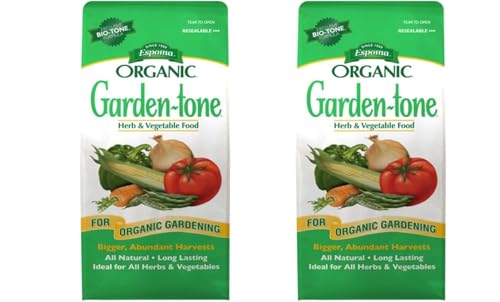
1. Espoma Organic Garden-Tone 4 lb Pack of 2
Our pick — 4.5+★ from 900+ verified ratings; the strongest balance of quality and price.
A bean-friendly 3-4-4 ratio that arrives ready to pour, in a two-bag pack that covers a long row.
The number to look at first is 3-4-4 — a gentle nitrogen floor with more phosphorus and potassium behind it, which is the shape climbing beans want. It also carries 5% calcium for pod development. You get two 4 lb bags in the order, which totals 64 ounces of granules, and at 3-4-4 that is more than twice the 64-ounce total of the single 4 lb FoxFarm Tomato & Vegetable bag in the same ratio family. That doubling matters when you are feeding a row every month from planting to first frost rather than a couple of patio pots.
Application is the part that wins people over. There is no concentrate to measure and no watering-can dilution — you scratch the granules into the soil along the drip line, water thoroughly, and repeat monthly through the growing season. The manufacturer lists it for leafy crops like lettuce, kale and cabbage as well as warm-season crops such as tomatoes, peppers, squash and melons, so a bean patch sharing space with peppers and squash runs on the same bag. It is also a registered Organic Input Material, which is the formal step above simply calling a product natural.
The honest catch is the smell. An awful odor is the recurring gripe in the review pages, and it is the price of a fish-and-manure-style organic blend — work it into the soil rather than leaving it on the surface near a patio, and the issue fades. Serious gardeners also report genuinely big results with it: tomatoes and carrots coming out of an urban plot in serious volume, and annuals that held on weeks past their usual collapse in a warm zone. For a climbing bean row, that combination of steady release, calcium and no-mix convenience is the whole package.
What makes it the front-runner
- 3-4-4 analysis with 5% calcium — low nitrogen, strong pod support
- Two 4 lb bags per order for 64 ounces total
- Ready to use straight from the bag, no mixing or dilution
- Registered Organic Input Material, so it fits an organic garden plan
The part to plan around
- The odor is strong — work granules into the soil and water them in
- Monthly reapplication through the season means you will go through the bags
Reach for this if: you want one granular feed that handles a mixed vegetable row and a bean trellis without any measuring.
Look elsewhere if: strong organic smell near a seating area is a problem for you — a liquid feed poured at the base is easier to control.
2. FoxFarm Happy Frog Tomato & Vegetable Fertilizer 4 lb
Built for heavy pod and fruit production, with the middle number cranked up to 7.
Where the Garden-Tone sits at 3-4-4, this FoxFarm blend pushes the phosphorus to 7 in a 5-7-3 split — a ratio aimed squarely at flowering and fruit rather than leaf. For pole beans that is the right instinct once the vines are running and the first flower trusses appear. It also brings calcium, which supports clean pod and fruit development rather than the blossom end rot that gardeners often blame on watering. Mycorrhizal fungi in the mix extend a plant’s root reach and may aid nutrient and water uptake.
Effectiveness is the thing that carries this bag. Gardeners report zucchini that was going nowhere throwing new blooms after a single application, and tomato harvests described as the best some growers have had. The calcium and the balanced spread across growth stages come up repeatedly as the reason it earns a spot in the shed. It is also OMRI Listed, which is a published organic standard rather than a marketing word.
The drawbacks are worth knowing before you commit. Some gardeners find it pricey for what is a single 4 lb bag, and opinions split on whether the bag size feels right for the money — the 5-7-3 three-part ratio also reads denser than the Garden-Tone’s 3-4-4, which is a formatting difference in how the blend is listed rather than a comment on strength. Keep it for the flowering push and pair it with a gentler granular early in the season.
Where it earns the shelf space: a 5-7-3 ratio with calcium and mycorrhizal fungi is a strong flowering-stage partner for a long-bearing bean row.
What to weigh: a single 4 lb bag goes fast if you are treating a long trellis every month, so budget for repeat bags.
The pick for pod set: use it from first flower onward when you want the plant putting energy into beans instead of more vine.
The trade-off to accept: one 4 lb bag is a modest amount for a full row, and the price per bag runs higher than the two-bag Espoma packs.
3. Espoma Organic Plant-Tone 4 lb Pack of 2

One bag that feeds the beans, the flowers beside them, and the shrubs at the fence line.
This is the widest-coverage option on the list, and the numbers say so plainly. It is a 5-3-3 analysis with 5% calcium, sold as a two-pack for 128 ounces total — exactly double the 64 ounces you get in the Garden-Tone two-pack. If your bean trellis sits in a mixed bed with roses, annuals and a couple of young shrubs, that volume is the practical reason to pick it. Its natural organics break down slowly, giving a long-lasting nutrient reservoir rather than a quick hit.
Use frequency splits by plant. For trees and shrubs the guidance is spring and fall; for roses, flowers and vegetables it is monthly through the growing season. On a bean row that monthly rhythm is what you want. Gardeners describe it rejuvenating tired begonias and stretching a garden’s productive season noticeably, and the ease of use comes up as a real advantage — granules straight from the bag beat mixing a concentrate with water any day you are already carrying a hose.
Now the honest part. The odor reads mixed in the review record — some gardeners barely notice it, others find it noticeable right after application. There is also a smarter-buying note buried in the feedback that is worth heeding: larger bag sizes work out better value per pound, so if you have the storage, size up rather than rebuying small packs. Buyers report the 8 lb bag being the better deal. If your garden is small, the two 4 lb bags here are the sensible middle ground.
Why it suits a mixed garden
- 5-3-3 with 5% calcium works across flowers, vegetables, trees and shrubs
- 128 ounces total — double the Garden-Tone two-pack volume
- Slow breakdown gives a long-lasting nutrient reservoir
- Granules only, no mixing step
Honest limitations
- Odor divides gardeners — noticeable right after you apply it
- Larger bag sizes carry better value, so small packs are less economical
Your move if: the bean row shares soil with ornamentals and shrubs and you would rather buy one bag for all of it.
Think twice if: you only grow a short trellis — the volume here may outlast what one season needs.
4. FoxFarm Happy Frog All Purpose Fertilizer 4 lb

A 6-4-5 all-purpose granule loaded with soil microbes for beds that are just getting started.
Compare the numbers and the difference is visible: this is a 6-4-5 blend, while the Espoma Plant-Tone runs 5-3-3, so every one of the three figures sits a step higher and the granular goods are more concentrated per scoop. That suits a new planting bed where the soil biology is thin and you want a broader nutrient spread rather than a fruit-specific push. The maker says its beneficial soil microbes may enhance nutrient and water uptake, which suits a bean row going into recently amended ground.
The feeding is designed to be gentle and to last. Granules go down, break down over time, and release nutrition as the season unfolds, with clear instructions covering several planting types. Gardeners across vegetables, flowers and fruit trees report the blend making plants grow vigorously and staying healthy through the season. The OMRI Listed status means it meets a published organic standard, which is the claim that actually holds weight on a bag.
One practical quirk deserves a mention before you scatter it: the dry powder is attractive to dogs, and a determined one can knock plants over while sniffing around the granules. It is not a flaw in the fertilizer so much as a note about a household with a curious pet. The value question also splits — some gardeners feel the cost is fully earned while others find it steep for 4 lb. Keep it for new beds and mixed ornamentals rather than as your bean-specific feed.
Its strongest selling point: a 6-4-5 granule carrying active soil microbes and an OMRI listing, built for establishing plants in fresh ground.
Where to use it instead: reach for the 5-7-3 when the vines are flowering; save this for the bed prep and the ornamentals.
Useful when: you are breaking ground on a first bean bed and want soil biology and nutrients in one granule application.
Less useful when: you already have an established, healthy bed and want a pod-focused ratio instead of a broad all-purpose feed.
5. The Grow Co Organic Fish Fertilizer, 2-3-1, 1 Gallon

A cold-pressed 2-3-1 liquid that reaches the roots fast when pods stall mid-season.
If you want the gentlest nitrogen of anything here, look at the 2-3-1 ratio — the lowest first number on the list, and the ratio the maker describes as perfect for light and frequent applications. It is a hydrolyzed fish emulsion, cold pressed and undiluted, and one gallon covers 160+ gallons of mixed feed. That coverage figure is the headline: a small pour in the watering can goes a long way down a row. Apply it as a soil drench at the base or as a foliar spray on the leaves, both of which the manufacturer lists.
It is a genuinely different tool from the granules. A liquid reaches roots within days rather than weeks, which makes it the right answer when a bean row looks stalled halfway through the season. As a soil drench it also feeds soil microorganisms and improves soil structure. Gardeners report improved vegetables and bright flower color after regular use, and the “little needed goes far” quality is a note that keeps coming up. The maker’s own line is blunt and fair: if it does not smell, it is not real fish.
That cutting, concentrated fishiness is the real-world cost. This is an outdoor-only feed — pouring it indoors or near a seating area is a mistake you will only make once. It is also a light, thin liquid rather than a thick emulsion, so heavy feeders will want it alongside another fertilizer rather than as the sole feed all season. Use it as the mid-season booster and let a granular do the slow, steady work.
Worth grabbing when: you want a fast liquid hit for a row that has stopped setting pods, applied as a drench or a foliar spray.
The real limitation: the fish odor is uncompromising, so plan to apply it outdoors on a day you can walk away from the patch afterward.
Know the Specs
What the three NPK numbers mean
NPK stands for nitrogen, phosphorus and potassium — the three big nutrients in any fertilizer, listed as three numbers in that order. On a pole bean feeding program the first number matters most: nitrogen pushes leafy growth, so a low first number keeps the plant focused on flowers and pods rather than a wall of green. A 3-4-4 favors modest nitrogen with pod support behind it; a 5-7-3 tilts harder into flowering; a 2-3-1 liquid is the lightest touch of all. Anything with a big first number is a leaf-pushing feed, not a bean feed.
Granules versus liquid, practically
Granular fertilizer is dry and breakable — you scratch it into the soil surface and it releases nutrition slowly over weeks, which is why one application carries a long stretch of the season. A liquid concentrate gets diluted in a watering can and poured at the base or sprayed on leaves, and it reaches roots within days. If you are planting a trellis in spring and want to walk away, granules suit better. If you are mid-season with pods that have gone quiet, a liquid drench is the quicker correction.
Common Questions
What NPK ratio should I use on pole beans?
Can I use a tomato fertilizer on pole beans?
How often should I feed a pole bean row?
Do pole beans need calcium in their fertilizer?
Is organic fertilizer better than synthetic for beans?
Does fish fertilizer really have to smell that bad?
How much area does a 4 lb bag of granular fertilizer cover?
Can I mix a granular fertilizer with a liquid feed?
What happens if I over-feed my pole beans?
Should I feed pole beans at planting or after they start flowering?
The Bottom Line
For most bean growers the winning pick is the Espoma Organic Garden-Tone 3-4-4 — a low-nitrogen granular blend with 5% calcium that goes down straight from the bag and repeats monthly without any measuring. It is the simplest thing you can do for a trellis, and the two-bag order keeps you fed until frost. If pod set is the problem rather than overall growth, step up to the FoxFarm Happy Frog Tomato & Vegetable 5-7-3 for its heavier phosphorus and flowering focus. And if the row stalls in August, a drench of the The Grow Co Organic Fish Fertilizer reaches the roots within days rather than weeks.
How we choose
We do not accept paid placement. Every pick is matched to a real buyer and a real use-case; we do not hands-on test units.
Sources
Specifications: manufacturer listings and product documentation. Review insights: verified customer reviews, as of October 2026. Pricing: not shown on this page (it changes often); check the current price via the retailer link.
As an Amazon Associate, Aappliancez earns from qualifying purchases. This does not affect which products we feature.