Disclosure: Some links in this post are affiliate links. As an Amazon Associate I earn from qualifying purchases, at no extra cost to you. Learn more
Specs are compiled from manufacturer listings and verified buyer reviews and can change over time — please confirm the key details on the product page before buying.
Mustard greens are a leafy crop, and leafy crops live or die on nitrogen. Pick the wrong fertilizer and you get small, tough, peppery leaves with yellow edges. Pick the right one and you get broad, tender leaves ready to cut in about three to four weeks. That is the whole decision: feed for leaves, not for fruit or turf.
This guide is built by comparing the manufacturers’ published specifications and the patterns across verified customer reviews, so you get each pick’s real strengths and trade-offs instead of marketing spin.
Below you get the five formulas that actually make sense for a mustard bed, each with the numbers you need to dose it correctly. The practical answer most gardeners miss is that you want a nitrogen-forward feed early and a potassium top-up later — and this roundup covers exactly what works as a fertilizer for mustard greens.
Top Picks

How To Choose The Best Fertilizer for Mustard Greens
Mustard greens are grown for the leaf, not the fruit or the root. That single fact reshapes everything about how you feed them. A plant putting its energy into leaves wants plenty of nitrogen, steady moisture, and enough potassium to keep cell walls strong so the leaves do not turn limp.
Read the N-P-K the leafy way
The three numbers on the bag are nitrogen, phosphorus, and potassium, always in that order. Nitrogen drives leaf and stem growth, so a high first number is what pushes mustard greens to size up fast. A fertilizer labelled 15.5-0-0 is pure nitrogen plus calcium and almost nothing else — that is a booster, not a complete meal. You dose it small and often, never as the only feed.
Phosphorus and potassium come into play later. Potassium supports strong cell structure and helps the plant handle heat stress, which matters once your mustard is standing through warm afternoons. A ratio like 0-0-60 is a targeted potassium supplement, and it does nothing for leaf bulk on its own.
Slow organic versus fast soluble
Worm castings and blended organic granules release their nutrients gradually as soil microbes break them down. That means less risk of burning tender seedlings, but also a lag of roughly a week before you see a response. Water-soluble granules and liquid concentrates feed almost immediately, so they suit a bed that needs a quick correction.
For a first-time mustard grower, the safest path is a gentle organic base at planting, then a soluble feed once the plants are established and actively pushing new leaves.
Get the dose and the timing right
Overfeeding is the more common mistake. Too much nitrogen pushes soft, sappy growth that pests love and that bolts early. Stick to the stated mixing ratio on the bag, water the bed before you feed so roots are not shocked, and always test your soil if you are guessing at a deficiency. If you are unsure whether your bed is short on a single nutrient, a soil test tells you far more than any label claim.
Side-by-Side Comparison
| Model | Best For | N-P-K | Form | Size | Amazon |
|---|---|---|---|---|---|
| Brut Organic Worm Castings★ Best Overall | Gentle all-round base feed | Not published | Granules | 5 pounds | Amazon |
| Muriate of Potash 0-0-60Potassium Top-Up | Potassium top-up | 0-0-60 | Granules | 5 pounds | Amazon |
| Gaia Green All Purpose | Organic top-dressing | Not published | Granules | 500 grams | Amazon |
| Calcium Nitrate 15.5-0-0 | Fast nitrogen push | 15.5-0-0 | Granules | 5 pounds | Amazon |
| Purived All-Purpose Liquid | Easy liquid feeding | Not published | Liquid | 16 fluid ounces | Amazon |
Detailed Reviews
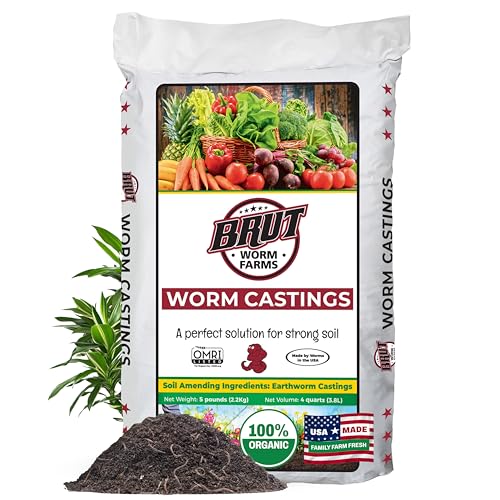
1. Brut Organic Worm Castings for Plants 5 LB
Our pick — 4.5+★ from 6,000+ verified ratings; the strongest balance of quality and price.
The gentle starter feed that will not scorch a young mustard seedling
Worm castings are the safest first fertilizer for anyone new to a mustard bed. They are made from worm manure, which is already broken down so it releases its nutrients slowly instead of hitting young roots all at once. The Brut bag is 5 pounds of that material in granule form, and the label lists it as OMRI and CDFA listed — meaning it is certified for organic production. For a leaf crop you plan to eat, that listing is worth something.
Dosing is forgiving, which is why it earns the top spot for a beginner. The listed mixing ratio is 1:5, so you blend roughly one part castings to five parts soil, and it works as a top dressing too — a light layer on the surface of the bed. As buyers report, about half a cup per plant is enough to last a good while, so a 5-pound bag stretches a lot further than the weight suggests.
Quality is the most-praised trait by a wide margin: buyers describe dark, fine, earthy castings that leave garden soil richer, with more earthworms turning up. It is also a family-run operation, which explains why repeat buyers keep coming back — the review pages are full of third and fourth purchases. The honest catch is that castings alone are a low-strength feed; for mustard greens bolting into fast growth you will still want to top-dress with something stronger. And because it is moist and alive, it can compact in the bed, so fork a little perlite or compost through if your soil is heavy.
What It Brings To A Mustard Bed
- OMRI and CDFA listed, so it suits an organic vegetable bed
- 1:5 ratio makes it hard to overdose a young seedling
- Slow release feeds steadily rather than all in one week
- 5-pound bag goes far at roughly half a cup per plant
Where It Falls Short
- Mild strength — it is a base, not a knock-out feed
- Can compact, so heavy soil needs perlite or compost mixed in
Reach for this if: you are planting mustard greens into a bed and want a safe organic base layer that will not burn delicate roots.
Pair it instead if: you need a fast mid-season push — castings alone will not drive a big flush of new leaf.
2. Muriate of Potash 0-0-60 Fertilizer
A pure potassium shot for the second half of the season
Read the ratio first: 0-0-60 means zero nitrogen, zero phosphorus, and the rest potassium. That is a single-nutrient booster, not a complete meal, so it belongs in your mustard program as a later-season supplement rather than the everyday feed. Potassium strengthens cell walls and helps a plant stand up to heat, which is exactly the job mustard greens need done once the summer afternoons turn brutal and the leaves start to droop.
Buyers single out granule quality most, then how effective it proves in the bed. The granules spread evenly and are water soluble, so you can scatter them or dissolve them into a watering can. It ships in a heavy-duty resealable 5-pound pouch, which keeps it dry between doses. In a bed where potassium was the missing piece, the turnaround shows up as firmer growth and better colour rather than a burst of new leaf.
Here is the catch, and it is a real one: this bag has no nitrogen or phosphorus, so leaning on it as your only fertilizer will leave mustard greens undersized. Overuse can also harm plants, and the manufacturers’ directions and a soil test are there for a reason — dose it correctly and on time or skip it. The mixed plant-damage feedback is born out of exactly that misuse, so treat this as a precision tool, not a blanket feed. Used at the right rate alongside a nitrogen source, it does its job quietly.
The right job for it: a potassium top-up mid-season, spread evenly and worked into moist soil, alongside a nitrogen feed for leaf bulk.
What to watch: no N and no P means it is incomplete on its own, and the label’s rate and timing exist to keep you out of overuse territory.
Best matched to: a gardener who has already fed nitrogen and wants to harden the plants up for the heat.
Wrong tool for: a one-bag solution — this cannot feed a mustard crop by itself.
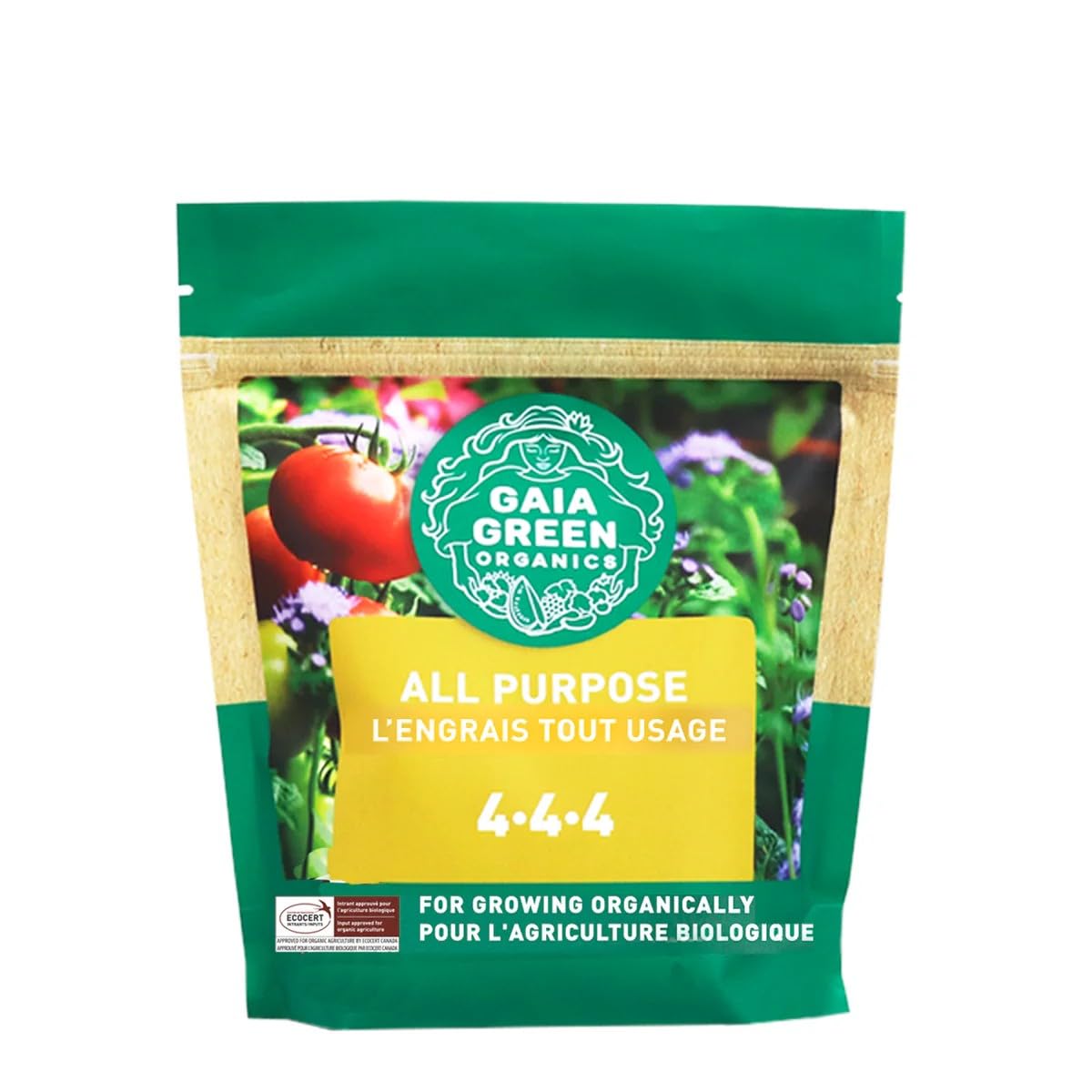
3. Gaia Green All Purpose Fertilizer, 500g
A balanced organic blend you sprinkle on top and let the soil wake up
This is the pick for the gardener who wants one organic jar that covers the whole bed. Gaia Green All Purpose is a granule blend of natural ingredients built to feed balanced nutrition and improve soil structure at the same time. It suits mustard greens because a leafy crop wants a steady organic supply rather than a sudden chemical spike — and the jar lists full coverage across all plants.
The dose is written on the label as a mixing ratio of 45 ml per 4 L for pre-mixing into soil and 15 ml per 4 L for top-dressing. That top-dressing rate is the one that matters once your mustard is up and running: scatter the smaller amount over the soil surface and water it in. Expect a delay. As owners mention, it takes about a week to kick in as a top dressing — but once it does, the response is real, with fuller, healthier plants following.
Two things to know before you buy. The granules are dusty when you pour them, so wear a mask while you dose. And it does not feed instantly — the soil microbes have to activate the nutrients first, so this is a plan-ahead product, not an emergency fix for a yellowing bed. The 500-gram jar is a modest size, so measure your scoops rather than tipping it out by eye.
Why it earns a spot: one organic jar, a clear 15 ml-per-4 L top-dress rate, and balanced nutrition that improves soil structure as it feeds.
The trade-off: a week-long lag before results and a dusty pour — plan ahead and mask up.
Suits you if: you want a single organic dry amendment to sprinkle on a mixed vegetable bed each few weeks.
Not for you if: your mustard is already pale and you need a feed that works today.
4. Calcium Nitrate 15.5-0-0 Fertilizer

The pure nitrogen-and-calcium push for fast, glossy leaf growth
For a leaf crop, this ratio is about as direct as it gets. Calcium Nitrate 15.5-0-0 delivers nitrogen plus calcium — the label states 19% calcium and 15.5% nitrogen — which together promote green leafy growth and hardy plants. Mustard greens fed this mid-season fill out broad, firm leaves rather than the thin, peppery ones you get from an underfed bed. It is greenhouse-grade and dissolves clean, leaving no oily skim in your watering can.
Speed is the whole point of keeping a bag around. As customers note, the granules dissolve fast, which means you can mix a batch in minutes and get it to the roots the same afternoon. It is designed for a 321 feeding schedule and works across hydroponics, drip irrigation, flood and drain, NFT, DWC, soil, coco and container systems — so if your mustard is in a raised bed or a tower garden, it fits. The 5-pound resealable pouch lasts a home garden a good while at the label’s rate.
What it cannot do is feed the whole season on its own. There is no phosphorus or potassium in the bag, so you still need a potassium source for the hardening phase — the Muriate of Potash above is the natural partner. And this is a fast-acting nitrogen feed, which means overdoing it is easy and undesirable; measure to the direction rather than eyeballing it. At the stated rate, reviewers point out strong stems and healthy green foliage, with the calcium and nitrogen visibly improving plant health.
Why It Earns A Bag In The Shed
- 15.5% nitrogen plus 19% calcium for strong, green leaf growth
- Dissolves fast and leaves no oily skim in equipment
- Fits soil, coco, drip, NFT, DWC and container systems
- Resealable 5-pound pouch stores easily between feeds
The Limits To Know
- No phosphorus or potassium, so it needs a partner feed
- Fast nitrogen rewards careful measuring, not guesswork
The right call for: a grower who wants a quick, clean nitrogen hit to size up mustard leaves in a hurry.
Keep shopping if: you want one bag that covers every nutrient — this is deliberately half of a program.
5. Purived 16oz All-Purpose Liquid Plant Fertilizer

One capful per gallon — a liquid feed you measure in seconds
If you grow mustard greens in pots on a patio or a kitchen windowsill, a liquid is the least fussy way to feed them. Purived comes as a 16-fluid-ounce concentrate with a listed 320:1 mixing ratio, and the practical instruction is one capful into a gallon of water. The label says one bottle makes 50 gallons, so a small bottle covers a full season of container greens. It is odorless, which matters if the pots are indoors.
Its most-praised trait is how reliably it pulls plants into vigorous growth. It also works across every feeding method the label names: soil drench, foliar feed, and full or semi hydroponics. That flexibility means the same bottle handles a raised bed, a pot, and a hydroponic tray without you buying anything else. The label also states a 2-year shelf life, so leftovers keep.
The honest caveat is that a liquid concentrate is a general-purpose feed, and mustard greens are a leaf crop that may want a nitrogen-forward push at the peak of growth. Some buyers also note leaves turning yellow, which usually points to dilution or frequency rather than the formula itself — measure the capful carefully and do not over-feed. Keep the bottle upright, too; laid on its side it can leak, though the inner seal holds most of it back.
The case for it: a 320:1 concentrate that makes 50 gallons, odorless, and works in soil, foliar, or hydroponic setups with a 2-year shelf life.
One caution: it is a general feed, so a heavy-cropping mustard bed may still want a targeted nitrogen top-up.
Go with this if: your mustard grows in containers and you want to feed it with one capful and a watering can.
Look past it if: you need precise N-P-K control for a large in-ground bed.
Know the Specs
The N-P-K Ratio
The three numbers on any fertilizer bag are nitrogen, phosphorus, and potassium, in that order. Nitrogen is the leaf-growth driver and the one a mustard bed cares about most. A ratio like 15.5-0-0 is pure nitrogen plus calcium, while 0-0-60 is pure potassium. Neither is a complete feed, and that is the whole reason you pair them. A balanced blend carries all three numbers, which suits a steady base feed.
Granule versus Liquid
Granules are dry and you scatter or blend them into soil, which suits a bed you are preparing or top-dressing every few weeks. Liquids are concentrates you dilute into a watering can, and they feed the moment you pour. For container mustard greens a liquid is quicker to dose; for an in-ground bed a granule works better over time. Either way, the mixing ratio on the label is the number to obey — it keeps you out of overfeeding.
Common Questions
What N-P-K should I use for mustard greens?
Can I use Calcium Nitrate 15.5-0-0 as my only fertilizer for mustard greens?
How much worm castings do I use per mustard plant?
Is 0-0-60 Muriate of Potash safe on mustard greens?
How long before an organic top dressing starts working?
Can I feed mustard greens with a houseplant liquid fertilizer?
Does mustard greens need potassium as well as nitrogen?
How do I avoid burning my mustard seedlings with fertilizer?
Why are my mustard leaves turning yellow after feeding?
Can I use these fertilizers in a hydroponic setup for mustard greens?
The Bottom Line
For most gardeners, the fertilizer for mustard greens to start with is the Brut Organic Worm Castings, because the 1:5 ratio and roughly half a cup per plant make it nearly impossible to overfeed a new seedling. If you want to push big leaves fast, grab the Calcium Nitrate 15.5-0-0 for its clean-dissolving nitrogen. And for the potassium the plants want once the heat sets in, the Muriate of Potash 0-0-60 is the one to reach for alongside it. Pair a nitrogen feed early with a potassium top-up later and the leaves do the rest.
How we choose
We do not accept paid placement. Every pick is matched to a real buyer and a real use-case; we do not hands-on test units.
Sources
Specifications: manufacturer listings and product documentation. Review insights: verified customer reviews, as of October 2026. Pricing: not shown on this page (it changes often); check the current price via the retailer link.
As an Amazon Associate, Aappliancez earns from qualifying purchases. This does not affect which products we feature.