Disclosure: Some links in this post are affiliate links. As an Amazon Associate I earn from qualifying purchases, at no extra cost to you. Learn more
Specs are compiled from manufacturer listings and verified buyer reviews and can change over time — please confirm the key details on the product page before buying.
If your jasmine has gone pale, leggy and stingy with flowers, the fix is usually the right food rather than more water. The pick that suits most gardens is the Nelson NutriStar 9-13-11 granular feed, because it feeds slowly through the soil and drops the pH that jasmine dislikes. Below you will find that pick plus four liquid concentrates, sorted by what each one actually does for a jasmine vine.
This guide is built by comparing the manufacturers’ published specifications and the patterns across verified customer reviews, so you get each pick’s real strengths and trade-offs instead of marketing spin.
Jasmine is fussy about two things: soil that leans acidic and steady feeding through the growing season. The right fertilizer for jasmine supplies both without burning the roots you are trying to encourage.
Top Picks

How To Choose The Best Fertilizer for Jasmine
Yellow leaves and slow growth on jasmine usually start below the soil line, and a fertilizer only helps if it matches what the vine is missing. Before you compare bottles, work out if you need a slow soil feed or a fast liquid top-up.
Read the NPK ratio first
The three numbers on any bag or bottle are nitrogen, phosphorus and potassium, written as the NPK ratio. Nitrogen pushes leafy green growth, phosphorus drives flowering, and potassium keeps the plant sturdy. A ratio with more phosphorus than nitrogen, such as 9-13-11, pushes flowering on a jasmine that already has healthy foliage.
Granular or liquid, and why it matters
Granules sit in the soil and release slowly, so you feed once and forget it for a stretch. Liquids mix into your watering can and reach the roots within days. A potted jasmine on a balcony is easier with a liquid; a garden bed is easier with a granular feed.
Acidity and iron for yellow leaves
Jasmine is an acid-loving plant, and when the soil drifts toward neutral it can stop taking up iron. That is what turns new leaves pale between green veins. A feed with acidifying ingredients and added iron, like the Nelson granules, corrects that iron lock-up instead of just adding more nitrogen.
Side-by-Side Comparison
| Model | Best For | Form | NPK Ratio | Size | Amazon |
|---|---|---|---|---|---|
| Nelson NutriStar 9-13-11★ Best Overall | Garden beds and high-pH soil | Granules | 9-13-11 | 32 Ounce | Amazon |
| Perfect Plants Liquid Jasmine FertilizerBest for Every Watering | Every watering feeding | Liquid | 9-3-6 | 8 fl oz | Amazon |
| Professional Jasmine Fertilizer 3-1-2 | Indoor pots and young plants | Liquid | 3-1-2 | 8 fl oz | Amazon |
| HiThrive Jasmine Fertilizer 16 oz | One vine, one season | Liquid | — | 16 fl oz | Amazon |
| HiThrive Jasmine Fertilizer 32 oz | Larger collections and repeat seasons | Liquid | — | 32 fl oz | Amazon |
Detailed Reviews
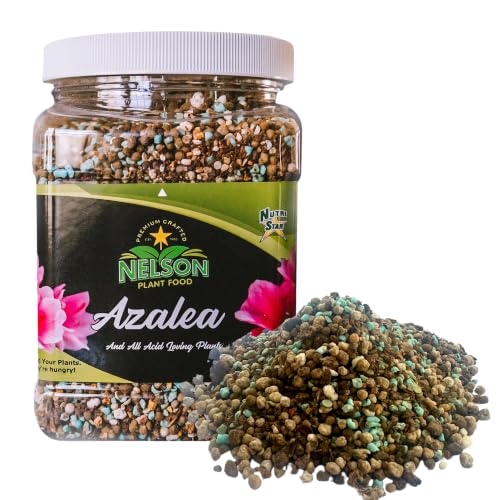
1. Nelson Acid Loving Plant Food NutriStar 9-13-11 (2 lb.)
Our pick — 4.5+★ from 450+ verified ratings; the strongest balance of quality and price.
The slow-release granule that fixes the soil, not just the leaf.
Most jasmine feeds only add nutrients. This one is built to change the ground your vine sits in. The 9-13-11 NPK ratio (nitrogen, phosphorus, potassium) leans on phosphorus for flowering while keeping enough nitrogen for steady green-up, and the four acidifying sources in the blend work to lower soil pH. That matters if your jasmine sits in soil that has drifted sweet, because a vine that cannot take up iron will keep throwing pale new leaves no matter how much food you pour on.
This 2-pound bag is a granular feed (dry granules you scatter on the soil), so the Cottonseed content releases slowly instead of dumping everything at once — you feed less often. Three sources of nitrogen green the plant up without scorching the roots, and three sources of Iron at 3.2% target exactly the yellowing that sends most people searching for a jasmine fertilizer in the first place. Compared with the Perfect Plants concentrate, this is the pick for a plant already in the ground rather than a pot on a windowsill.
What wins people over is that it actually does what the label promises on a struggling vine. Gardeners report a chlorosis-stricken (yellowing from lack of iron) young jasmine Grand Supreme turning deep green with significant new growth and an early blossom, and the review pages sum it up as plants looking healthier with darker leaves. As one buyer put it: “Amazing product… best I’ve ever used… plants are thriving!” The honest note is that it is a granular feed aimed at acid-lovers broadly, so a purely indoor potted jasmine is fiddlier to dose than a liquid you mix by the teaspoon.
What earns it top spot
- Four acidifying sources lower soil pH for a vine that needs it
- Iron at 3.2% from three sources targets yellow-leaf chlorosis
- Cottonseed at 20% releases slowly and consistently
- Works across jasmines, azaleas, gardenias and camellias
Where it asks more of you
- Granular dosing is less precise for a single indoor pot
- Slower to show up than a liquid mixed into the watering can
Made for: a jasmine in a garden bed or high-pH soil that keeps yellowing despite feeding.
Think twice if: you keep one jasmine in a small indoor pot and want teaspoon-level dosing.
2. Perfect Plants Liquid Jasmine Fertilizer, 8 oz
Turns plain watering into feeding, with one teaspoon per gallon.
Here is a feeding routine that takes no extra step. You mix one teaspoon into one gallon of water and use that in place of plain water, so your jasmine gets fed every time you water it. The 9-3-6 NPK ratio (nitrogen, phosphorus, potassium) leans on the nitrogen side for foliage and flowering, and the bottle adds calcium, sulfur, magnesium, copper, iron, zinc and manganese on top. That is a fuller nutrient set than most jasmine feeds carry, and the iron and magnesium are the two a yellowing vine usually lacks.
The 8 fl oz concentrate stretches to roughly 48 gallons at that one-teaspoon rate, and any leftover mix stores up to six months. For one or two plants that spread is genuinely long. The timing advice on the label is worth following — wait until the top 2 inches of soil are dry before feeding, because jasmine is drought tolerant and dislikes wet roots.
Growth is the thing owners talk about most, and it is not subtle. A stalled jasmine vine threw 6-inch-plus sprouts after three weekly applications, and a plant that had barely moved in two years in a raised planter pushed new leaves, buds and branches within days of its first feed. The catch is honest but narrow: a few buyers report they saw leafy growth without much flowering, which is more a sign of too much shade or rain than of a weak formula.
Why it earns its place: one bottle feeds a whole season at the teaspoon rate and covers the full nutrient set jasmine needs.
The trade-off to know: it leans toward leaf and vine growth, so a plant in heavy shade may still hold back its flowers.
Pick this if: you want feeding folded into your normal watering without a separate schedule.
Pass if: you already water heavily and need a dose that resists wet-root problems.
3. Jasmine Fertilizer Liquid 3-1-2 Concentrate, 8 oz

A light, fast liquid for a young jasmine and a new gardener.
The mildest mix in this lineup is the point. A 3-1-2 NPK ratio (nitrogen, phosphorus, potassium) is far lower strength than the Perfect Plants 9-3-6, which makes it a fitting first food for a young plant or a mature vine that has gone unfed for years. It is a liquid that mixes into water and heads straight for the roots, so you see a response within days rather than weeks. The easier-to-follow 1:4 dilution keeps a beginner from over-concentrating the mix.
Against the Nelson granules, this is the pick for a plant that needs a gentle start. The classic case is a neglected jasmine that has only been given water for about five years and shows visible greening and perks up within one week after a single application following the label directions. That slow, low-strength approach suits a plant whose roots are not used to feeding at all.
Be clear about what a low-ratio feed will and will not do. Owners are split on whether it delivers big flowering, and a few say the plant keeps growing but does not flower as heavily as the picture implies. Some also find the 8 fl oz bottle goes faster than expected because you use a fair amount per watering. Go in expecting steady, healthy growth rather than a bloom explosion, and a bottle that empties quicker than a concentrate.
The appeal: low-strength and fast-acting, so a fragile or long-neglected jasmine greens up without shock.
The honest limit: a 3-1-2 ratio is light on bloom power, and the small bottle runs out faster than you would like.
Best match: a beginner with one young or rescued jasmine that needs a gentle first feed.
Look elsewhere if: you want a heavy bloom push from a bottle that lasts all season.
4. HiThrive Jasmine Fertilizer 16 oz
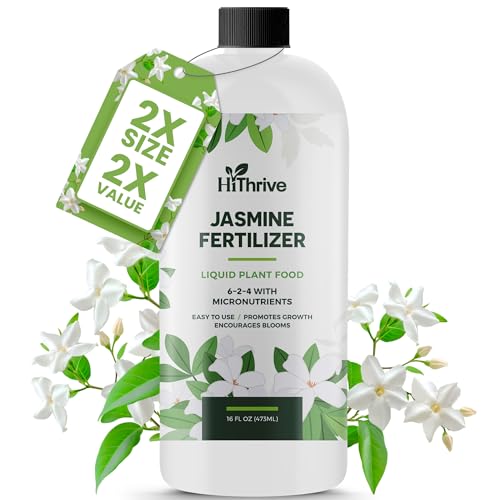
The bottle that quietly makes 96 gallons of jasmine food.
One 16 oz bottle keeps a single patio jasmine fed for a long time: at one teaspoon per gallon it yields 96 gallons of mixed feed. The formula is rich in nitrogen for new leaf growth, potassium for resilience, and phosphorus for fragrant blooms, and it carries iron, copper, manganese and zinc to reverse yellowing leaves and slow growth. The bottle also spells out two feed rates, which removes the guesswork: one teaspoon per gallon for standard feeding, two teaspoons when the plant is already deficient.
What you notice most is how often the flowers come. A potted jasmine fed only once a month blooms hard, throwing dozens of flowers a day for weeks before taking a short break and pushing another wave. The food also suits a mixed collection — with eight types of jasmine on the go, all of them improving daily. A vine that was dropping leaves and thinning out came back to a full bloom after one good feeding.
The trade-off is that this is a bloom booster, not an acidifier, so it will green up and flower a vine but will not single-handedly rescue soil that has drifted too sweet. If pH is your real problem, the Nelson granules above handle that job and this one handles the flowering.
Why it’s in the shortlist
- 16 oz bottle mixes up to 96 gallons
- Two clearly stated feed rates for normal and deficient plants
- Iron, copper, manganese and zinc reverse yellow leaves
- Suits Star, Downey, Dwarf, Forest and Primrose jasmine
What to keep in mind
- No acidifying ingredients, so it will not fix high-pH soil on its own
- Standard rate is only one teaspoon per gallon, so it needs measuring care
Go for it if: you want a long-lasting bloom booster for one or two flowering jasmines.
Keep shopping if: your soil is the problem and you need something that shifts pH.
5. HiThrive Jasmine Fertilizer 32 oz
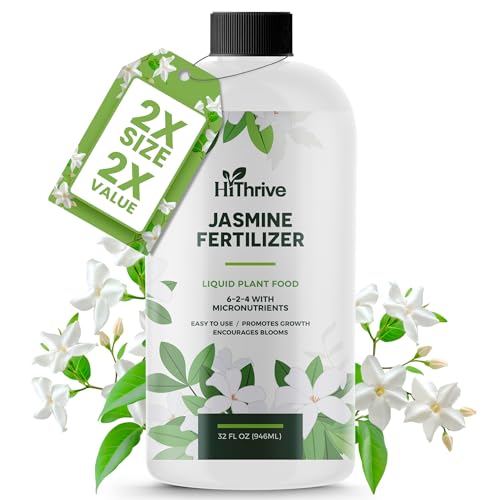
Same bloom formula as the 16 oz, doubled to 192 gallons.
This is the larger version of the HiThrive feed, and the jump is plain: the 32 oz bottle makes 192 gallons of mixed jasmine food at one teaspoon per gallon, where the 16 oz makes 96. The formula matches the 16 oz bottle: nitrogen for leaf growth, potassium for resilience, phosphorus for blooms, plus iron, copper, manganese and zinc. If you run several jasmines or expect to feed right through next season, the bigger bottle means fewer reorders.
Dosing stays simple: one teaspoon per gallon for a normal feed and two teaspoons when the plant is already deficient. Owners describe the same experience as the smaller bottle — a potted jasmine that blooms dozens of flowers daily when fed monthly, a plant throwing more flowers even out of season, and a struggling vine returning to full bloom after a single good feed. With eight types of jasmine under its care, everything improved daily.
The one thing to weigh is that doubling the concentrate only helps if you will actually use it. A single plant in a small pot will take a long time to work through 192 gallons, and if your real issue is soil pH or iron uptake, no amount of bloom booster volume solves it. It suits a collection, not one lonely vine.
Where it shines: a multi-plant jasmine collection or a repeat buyer gets the whole season from one 32 oz bottle.
What to weigh: 192 gallons is a lot for one small pot, so the extra volume is only value if you will use it.
Reach for this if: you keep several jasmines and want feeding handled for a full season.
skip it if: you have one small potted vine and soil pH is the real problem.
Know the Specs
The NPK ratio explained
The three numbers on any label are the NPK ratio — nitrogen, phosphorus and potassium. Nitrogen drives leafy green growth, phosphorus pushes flower and root development, and potassium keeps the plant sturdy and resilient. A 9-13-11 like the Nelson feed leans on phosphorus and potassium for flowering on a plant already in the ground, while a 3-1-2 like the Professional concentrate is a low, gentle balance for a young or neglected vine.
Granular versus liquid form
Granules are scattered into the soil and break down slowly, feeding a garden bed over a stretch of time. Liquids are mixed into water and reach the roots within days, which suits a pot you water by hand. Neither form wins outright: the granular Nelson feed suits a garden bed, while the liquid Perfect Plants concentrate suits a pot you water by hand.
Acidity and iron for acid-lovers
Jasmine is an acid-loving plant, and when soil drifts toward neutral it can stop taking up iron, which shows as pale new leaves between green veins. A feed with acidifying ingredients, like the four sources in the Nelson granules, lowers the pH. A feed with added iron, like the HiThrive blends, tops up the nutrient the vine cannot pull in.
Mixing ratio and coverage
The mixing ratio is how much concentrate goes into how much water, and it decides how long a bottle lasts. One teaspoon per gallon is the common rate; the Perfect Plants 8 oz makes up to 48 gallons at that rate, while the HiThrive 32 oz makes 192. Always follow the label rate — overfeeding can burn the roots you are trying to help.
Common Questions
What NPK ratio is best for a jasmine that will not flower?
Is a granular or a liquid fertilizer better for jasmine?
Why are my jasmine leaves turning yellow?
How often should I feed a potted jasmine?
Can I overfeed jasmine and burn the roots?
How long does an 8 oz bottle of jasmine fertilizer last?
Does the same fertilizer work for indoor and outdoor jasmine?
Will a bloom booster help jasmine flower more often?
Is jasmine drought tolerant, and does that affect feeding?
How do I store a mixed batch of liquid jasmine fertilizer?
The Bottom Line
For most gardens, the fertilizer for jasmine winner is the Nelson NutriStar 9-13-11, because it does two jobs at once — it feeds the vine and shifts the soil pH that acid-loving jasmine needs. If you would rather fold feeding into every watering, the Perfect Plants concentrate is the one to reach for. And for a larger collection of flowering jasmines, the HiThrive 32 oz turns one bottle into a full season. Whichever you pick, check the NPK ratio first: a phosphorus-led blend like 9-13-11 pushes blooms, while a nitrogen-heavy 9-3-6 pushes leaf and vine.
How we choose
We do not accept paid placement. Every pick is matched to a real buyer and a real use-case; we do not hands-on test units.
Sources
Specifications: manufacturer listings and product documentation. Review insights: verified customer reviews, as of October 2026. Pricing: not shown on this page (it changes often); check the current price via the retailer link.
As an Amazon Associate, Aappliancez earns from qualifying purchases. This does not affect which products we feature.