Disclosure: Some links in this post are affiliate links. As an Amazon Associate I earn from qualifying purchases, at no extra cost to you. Learn more
Specs are compiled from manufacturer listings and verified buyer reviews and can change over time — please confirm the key details on the product page before buying.
If your flowering plants are all green and no bloom, the fix is usually the wrong numbers, not more fertilizer. Flowering plants need a food weighted toward phosphorus and potassium, not the high-nitrogen lawn-style feed that pushes leaves at the expense of buds. This guide walks through ten real options, explains what each NPK ratio actually does for your flowers, and helps you match one to roses, bougainvillea, bulbs, or a whole bed of mixed bloomers.
This guide is built by comparing the manufacturers’ published specifications and the patterns across verified customer reviews, so you get each pick’s real strengths and trade-offs instead of marketing spin.
Ratio first, delivery form second, scent and mixing effort last — that is the order that saves you a wasted season. Every pick below is judged on what it does for buds and blooms, so you can choose the right fertilizer for flowering plants and see flowers instead of just foliage this season.
Top Picks

How To Choose The Best Fertilizer for Flowering Plants
Flowering plants are not lawn grass, and feeding them like grass is the fastest route to a leafy bush with no color. A bloom fertilizer leans on the middle and last numbers on the bag — phosphorus and potassium — to push bud formation, root strength, and flower density. Get that ratio right and the rest is just delivery: granular, powder, or liquid.
Read the NPK numbers before anything else
The three numbers on any bag or bottle are N-P-K: nitrogen for leafy growth, phosphorus for roots and buds, potassium for flower and fruit density. A bloom booster usually shows a high middle number (phosphorus) or a high last number (potassium), or both. Bone meal at 3-15-0 and Schultz Bloom Plus at 10-54-10 are textbook bloom feeds — heavy on the middle number. A 0-0-60 product is pure potassium, a targeted supplement rather than a complete food.
Match the form to how you garden
Granules get scratched into the soil around the drip line and break down slowly, which suits garden beds, roses, and shrubs. Water-soluble powders mix into a watering can or sprayer for a quick hit and can be applied to leaves as a foliar feed. Liquid organics pour straight from the bottle and work fastest, though they usually carry the strongest smell.
Know your flower type
Acid lovers like azaleas, hydrangeas, and rhododendrons want a dedicated acidic feed rather than a general bloom booster. Bougainvillea responds to high iron and dedicated blends. Roses are heavy feeders that want a monthly rhythm through the growing season. Bulbs and new plantings benefit from a high-phosphorus bone meal at planting time to build roots first.
Weigh scent, burn risk, and feeding rhythm
Organic blends built on fish, bone, and feather meals carry an earthy or fishy odor for a day or two after application. Concentrated synthetics feed fast but can burn delicate roots if you over-mix. Slow-release organics are gentler and forgiving on timing, which matters if you feed once a month rather than every watering.
Side-by-Side Comparison
| Model | Best For | NPK Ratio | Form | Weight / Size | Amazon |
|---|---|---|---|---|---|
| Down to Earth Organic Bone Meal★ Best Overall | Bulbs and new plantings | 3-15-0 | Granules | 5 lb | Amazon |
| Scotts Miracid Acid-Loving Plant FoodBest for Acid Lovers | Acid-loving bloomers | — | Water-soluble | 32 oz (2 pack) | Amazon |
| BGI Bougainvillea FertilizerBest for Bougainvillea | Bougainvillea | 1-0-0 | Granules | 10 lb | Amazon |
| Jack’s Classic Blossom Booster | Fast bloom boost | 10-30-20 | Powder | 8 oz | Amazon |
| Schultz Bloom Plus | Heavy bloom push | 10-54-10 | Powder | 16 oz | Amazon |
| True Organic Rose & Flower Food | Beds and containers | 4-5-3 | Granules | 4 lb | Amazon |
| Cz Garden Muriate of Potash | Targeted potassium | 0-0-60 | Granules | 80 oz | Amazon |
| Dr. Earth Flower Girl Bud & Bloom | Organic, pet-safe | 4-10-7 | Granules | 4 lb | Amazon |
| Espoma Organic Rose-Tone | Roses and climbers | 4-3-2 | Granules | 4 lb (2 pack) | Amazon |
| Neptune’s Harvest Rose & Flowering | Liquid fast feed | 2-6-4 | Liquid | 36 oz | Amazon |
Detailed Reviews
1. Down to Earth Organic Bone Meal 3-15-0, 5 lb
Our pick — 4.5+★ from 1,000+ verified ratings; the strongest balance of quality and price.
A box of slow-release phosphorus that builds roots first and blooms second.
If you plant bulbs, bare-root roses, or new perennials in spring, this is the first thing that should hit the hole. The 3-15-0 ratio runs high on phosphorus, the middle number on the bag, which is the nutrient that drives root development before it drives flowers. Down to Earth lists it with the Organic Materials Review Institute (OMRI) for organic production, so it fits a no-synthetics garden. It comes as granules, meaning you scratch it into the soil rather than mix it in a can.
One five-pound box covers a lot of ground — as owners put it: “THIS BOX CAN DO UPTO 70 TOMATOE PLANTS PER INSTRUCTIONS.” Phosphorus (the nutrient that drives root and bloom development) moves slowly through soil, so you see the gain build over the season, not overnight. Plant in spring and the payoff tends to show by midsummer. That slow release is also why it works as a one-and-done planting amendment rather than a weekly feed.
Where it falls short is speed and scent. This is a traditional organic bone meal, so it carries a strong earthy odor straight from the box, and the loose granule fill means you’ll want a sealed tub for storage. It also won’t rescue a plant that is already budding — reach for a water-soluble bloom booster when you need flowers in days, not weeks.
What earns it the top slot
- OMRI-listed organic phosphorus for root and bud building
- 3-15-0 ratio suits bulbs, bare-root roses, and new beds
- Slow release feeds steadily without burn risk
- One 5 lb box covers a lot of plantings
Where it gives you pause
- Earthy scent straight from the box
- No fast bloom hit — phosphorus works gradually
- Granule fill needs its own storage container
Reach for this if: you’re planting bulbs, roses, or new perennials and want roots to establish strong from day one.
Look elsewhere if: you need visible flowers this week — a water-soluble bloom booster works faster.
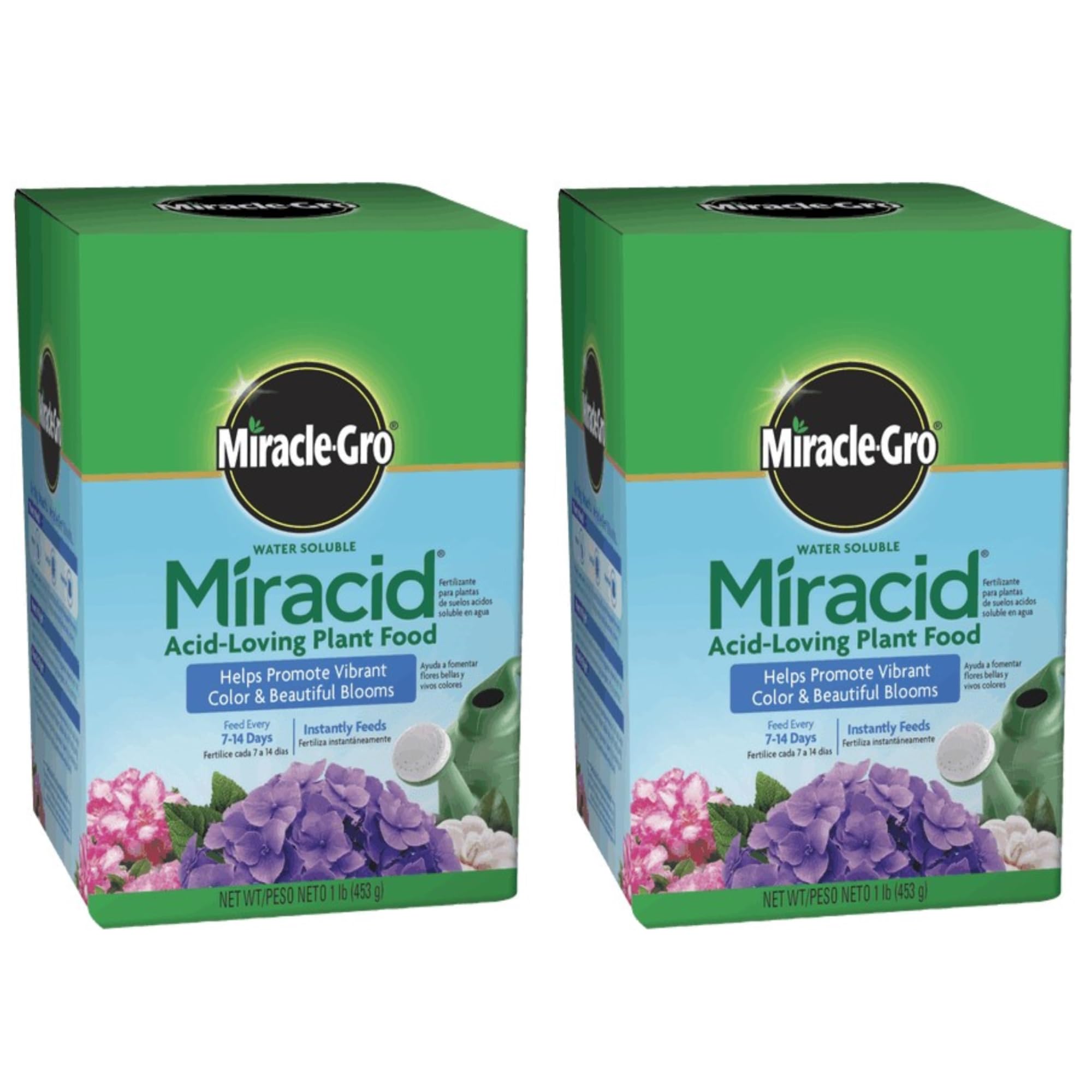
2. Scotts Miracid Acid-Loving Plant Food, 2-Pack
For the azaleas, hydrangeas, and rhododendrons that sulk in ordinary soil.
Some flowering plants don’t just want food — they want a lower soil pH, and Miracid is built for exactly that crowd. Azaleas, hydrangeas, and rhododendrons top the list. It’s a water-soluble powder that feeds through both the roots and the leaves, so you can pour it in or spray it on. Scotts says it starts working instantly, which matters when your hydrangeas are already in bud and you want color this month.
The two-pack gives you 32 ounces total, and the water-soluble powder means it goes into a watering can or a sprayer rather than being scratched into soil. That’s a real advantage if you grow acid lovers in containers on a deck — you feed on your normal watering routine, no digging. A dedicated acidic feed is not interchangeable with a high-phosphorus bloom booster, so don’t borrow one for the other.
What wins people over: it’s the reliability. Longtime Miracle-Gro users report bigger, more abundant blooms on azaleas and hydrangeas once Miracid joins their routine.
The honest caveat: it’s an acidic feed, so it’s not the right choice for every flowering plant in your yard — keep it to the acid lovers and use a dedicated bloom booster elsewhere.
Best for the acid-lovers corner of your garden: azaleas, hydrangeas, and rhododendrons that want both food and a lower pH.
Not the right pick if: you grow roses or mixed perennials — this formula is tuned to acid-loving plants.
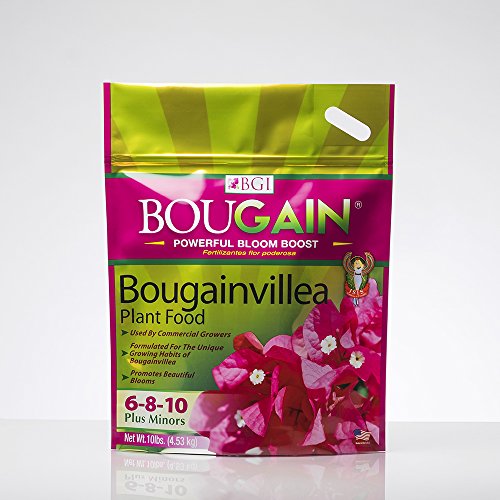
3. BGI Fertilizers Bougainvillea Fertilizer, 10 lb Bag
A ten-pound bag built for one stubborn vine that refuses to bloom.
Bougainvillea is notoriously fussy about color, and this is a blend made specifically for it. The defining number is 5% iron — iron is the micronutrient tied to deep color and healthy bougainvillea foliage. It’s granulated, so there’s no mixing: you scatter it once a month and water it in. The manufacturer, Bougainvillea Growers International, describes itself as a large bougainvillea nursery, so this is a grower’s formula rather than a general bloom booster.
It comes as a 10-pound bag, which is a serious quantity — that’s a lot of monthly feeds, and it is where the value question splits. The 1-0-0 ratio is worth understanding: it’s nitrogen-heavy with no phosphorus or potassium listed, so it’s designed to be the supplement in a bougainvillea’s schedule rather than a complete all-flower food. If your bougainvillea is in a pot, you’ll be feeding from this bag for many months.
The bloom response is what sells it. Bougainvillea owners who prune hard, then feed this 5%-iron granule every other month, report strong color from spring into late fall. The recurring gripe is the price — this is a premium-priced specialty bag, and the honest position is that you’re paying for a single-species formula that general fertilizers won’t match on bougainvillea.
Why bougainvillea owners keep buying it
- 5% iron supports the deep color bougainvillea is grown for
- Granular, once-a-month — no mixing or measuring
- 10 lb bag lasts through a full growing season
- Formulated by a bougainvillea nursery, not a generalist
The trade-off to weigh
- Priced as a specialty bag, and some find it expensive
- 1-0-0 means it’s a supplement, not a complete feed
- Specialty-only: little use outside bougainvillea
The clear choice if: you grow bougainvillea and want a formula built for that one plant’s color and bloom habit.
Think twice if: you want one bag to feed a mixed flower garden — this is a single-species product.
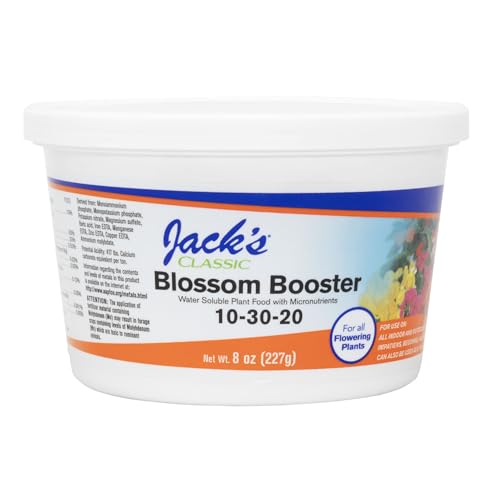
4. Jack’s Classic 10-30-20 Blossom Booster, 8 oz
The bloom booster that had a mandevilla covered in flowers inside ten days.
Want a fast, visible bloom push? Reach for a water-soluble powder with a high middle number (the middle number is phosphorus, the bloom nutrient). Jack’s Classic Blossom Booster runs a 10-30-20 analysis — heavy on phosphorus and generous on potassium — so it feeds blooms hard. Apply it as a foliar spray (a mix sprayed straight onto leaves) or as a root feed through a watering can. A measuring spoon comes in the box, so you don’t have to guess at your mix.
Powdered concentrates stretch further than liquids: you mix a measured scoop with water and get multiple gallons of liquid fertilizer from a small tub. It also carries added micronutrients, which the label says means no extra feeding is required. Buyers report a plumeria that hadn’t bloomed in five years finally flowering after a 10-30-20 feed.
Two things to know. First, the tub is small at 8 ounces, and the powder only fills it halfway — so it’s a starter size, not a season’s supply. Second, results aren’t always instant: some gardeners saw blooms only after one to two months. This is a booster for plants that are otherwise healthy and mature enough to flower, not a rescue tonic for struggling specimens.
Why it’s the fastest in the lineup: a 10-30-20 powder that mixes into gallons of feed and can be sprayed straight onto leaves, so the plant takes it up quickly.
One honest limit: 8 ounces doesn’t go far for a large garden, and some plants need weeks rather than days to respond.
Pick this when: your plants are mature and healthy but holding back on flowers, and you want a fast push.
skip it if: you want a big tub to feed a whole garden all season — the 8 oz size is a starter.
5. Schultz Bloom Plus 10-54-10 Water Soluble Plant Food, 1.5 lb

A 54 middle number — the most phosphorus-dense feed in this whole group.
Look at the ratio and the difference is stark: Schultz Bloom Plus runs 10-54-10, against Jack’s Classic at 10-30-20. If phosphorus is the bloom nutrient, this is the most concentrated powder here, and it’s built to push big, beautiful blooms along with a set of micronutrients. It’s water-soluble, so it dissolves evenly and goes in through the watering can. One 1.5-pound tub weighs 16 ounces, twice the powder of the Jack’s tub.
What owners describe matches the ratio. Rose bushes fed this 10-54-10 from planting get a strong head start and bloom heavily. Houseplants, including Christmas cactuses, grow well and bloom richly on it. Gardeners who’ve used it for years say their flowers look their best — and a few note it’s cheaper per feeding than the big-box equivalent, which matters if you feed weekly through the season.
The honest catch: the nutritional content draws a mixed reception. Some gardeners find the balance doesn’t suit every plant. And at 54 (the phosphorus number), it is potent enough that you should follow the mixing directions rather than eyeball it. This is a bloom booster for established plants, not a general all-purpose feed for young starts.
The heavy-weight for bloom volume: 10-54-10 with a full micronutrient package, best for roses and houseplants you’re ready to push into flowers.
Consider the alternative if: you want a gentler ratio you can use more freely — the high phosphorus here rewards careful measuring.
6. True Organic Rose & Flower Food, 4 lb Bag

A richer, furrier organic blend for the gardener who wants soil food, not just salts.
This is a different breed of flower food: seabird guano, shrimp and crab shell meal, fish bone meal, and soybean meal, all in granular form at a 4-5-3 ratio. Those ingredient names matter — they feed soil biology as well as the plant, and they break down over weeks rather than all at once. Apply it once a month during the growing season, scratch it in, and the 4-pound bag covers up to 70 square feet of bed or container.
For roses specifically, it holds its own. Rosarians report fast, healthy growth from this 4-5-3 granule in both in-ground beds and patio containers. The scent is mild — one grower noted the initial fishy smell disappears after application, even through heavy rain and heat.
The caveat is transparency: this one leans organic and rich, so it feeds soil slowly. If your goal is a hard bloom push on already-mature plants, an organic granular like this is a season-long commitment, not a quick fix. The honest user position is that it’s about soil health feeding blooms over time.
Where it shines: a nutrient-dense organic blend that builds soil while it feeds — 70 square feet of coverage from one 4 lb bag and a monthly rhythm that suits roses and mixed beds.
What’s fair to know: it needs the full season to do its work, and the results show up in soil quality as much as in immediate color.
A good fit for: gardeners who want an organic, soil-building feed for beds and containers and don’t mind feeding monthly.
Look past it if: you need a rapid bloom boost this week.
7. Cz Garden Muriate of Potash 0-0-60, 80 oz Pouch

Straight potassium for thick petals and heavy fruit — nothing else in the pouch.
Zero nitrogen, zero phosphorus, 60 potassium — that’s the whole formula, and that’s the point. High potassium supports carbohydrate metabolism and protein synthesis, the processes the label ties to thicker, heavier flowers and larger yields. It’s a targeted supplement, so it’s the tool you reach for when your plants are getting enough nitrogen and phosphorus elsewhere but still want flower density and stem strength.
The pouch is resealable and easy to pour from — useful, because 0-0-60 is potent and you’ll be measuring small amounts rather than dumping it on. Gardeners report flowers and fruit trees holding up better in heat after a 0-0-60 potassium top-up. It works on lawns, vegetables, fruit trees, and flowers alike, so it’s a versatile amendment even in a flower-focused garden.
The serious caution is that this is not a complete food. Applied carelessly or at too high a rate, it can harm plants, and a handful of reviewers reported damage from misuse. Read the rate, consider a soil test if your garden is large, and use it as a potassium supplement rather than a weekly feed. Handled with that discipline, it’s a precise, effective tool.
What makes it worth a spot
- Pure 0-0-60 potassium for flower density and stem strength
- Water-soluble granules spread evenly and absorb fast
- Resealable pouch makes small doses tidy
- Works on flowers, fruit, trees, vegetables, and lawns
Handle it with care
- No nitrogen or phosphorus — not a stand-alone plant food
- Over-use can harm plants; correct rate and timing matter
- Best used alongside a soil test or a balanced feed
Reach for this if: your flowers are fed elsewhere and you want to boost potassium for thicker petals and stronger stems.
Look elsewhere if: you want one bag that feeds a plant completely — this is a single-nutrient supplement.
8. Dr. Earth Flower Girl Bud & Bloom Booster 4-10-7, 4 lb

An organic bloom booster built for gardens where pets and kids run free.
Keep pets or kids in the garden and want zero worry about what’s in the bag? This one leads with safety: no GMOs, no chicken manure, no sewage sludge, and the bag carries a Certified Organic and Non-GMO Project Verified claim. The 4-10-7 ratio (nitrogen-phosphorus-potassium) puts it in bloom-booster territory, and it’s a hand-crafted granular blend at 4 pounds. It’s listed for vegetables, flowers, bedding plants, potted plants, trees, shrubs, annuals, and perennials, which makes it among the most versatile organic options here.
Pet owners consistently note the relief of using something they don’t have to fence off. The four-pound bag is resealable, so storage in a garage or shed is simple and the granules go down easy around the base of a plant. One grower who mixes it with a 4-4-4 veg feed at pot setup likes it for trace nutrients that other organic blends run thin on — a useful angle if you’re building soil for container roses.
The one caution is dosing: a grower noted that over-application can burn plants, and pH-balanced water helps. So measure, don’t heap. This isn’t the fastest-mixing product in the lineup — it’s a granular feed you scratch in — but for an organic garden with pets, it’s a thoughtful pick that concentrates on bloom formula and safety claims over speed.
Why it earns its place: a 4-10-7 organic bloom booster with Certified Organic and Non-GMO claims, plus versatility across vegetables, flowers, and containers.
Use it deliberately: over-applying can burn plants, so follow the rate — organic doesn’t mean guesswork.
Get this if: you keep pets and kids in the garden and want a certified-organic bloom booster you can spread without worry.
Pass if: you want the fastest, cheapest bloom push and aren’t fussed about organic certification.
9. Espoma Organic Rose-Tone 4-3-2, 4 lb (2-Pack)

A monthly rose ritual in a bag — no mixing, no measuring cup required.
Espoma Rose-Tone is a 4-3-2 analysis with 5% calcium and an added Bio-tone blend, and it’s ready to use straight from the bag — you sprinkle it around the plant’s drip line and water it in. That no-mixing convenience is the everyday appeal: no bucket, no measuring, no granules dissolving on the counter. It’s approved for organic gardening and listed as a registered Organic Input Material. It also works on viburnum, bougainvillea, and clematis, not just roses.
The feeding rhythm is monthly through the growing season, generally May through September. That cadence is what owners credit for the results: roses turn noticeably greener and push more buds with each month of feeding, and drift roses that started out spindly fill in and bloom heavily. Climbers and knockouts take to it the same way.
Two honest realities. First, the organic odor is strong at application and fades within a day or two, especially after rain. Second, this two-pack of 4-pound bags is a lot of product, so it suits a committed rose grower rather than a single potted plant.
The easy rose routine: a 4-3-2 organic granule with Bio-tone, applied monthly around the drip line with no mixing at all.
One thing to expect: a strong organic smell on application day that fades within a day or two.
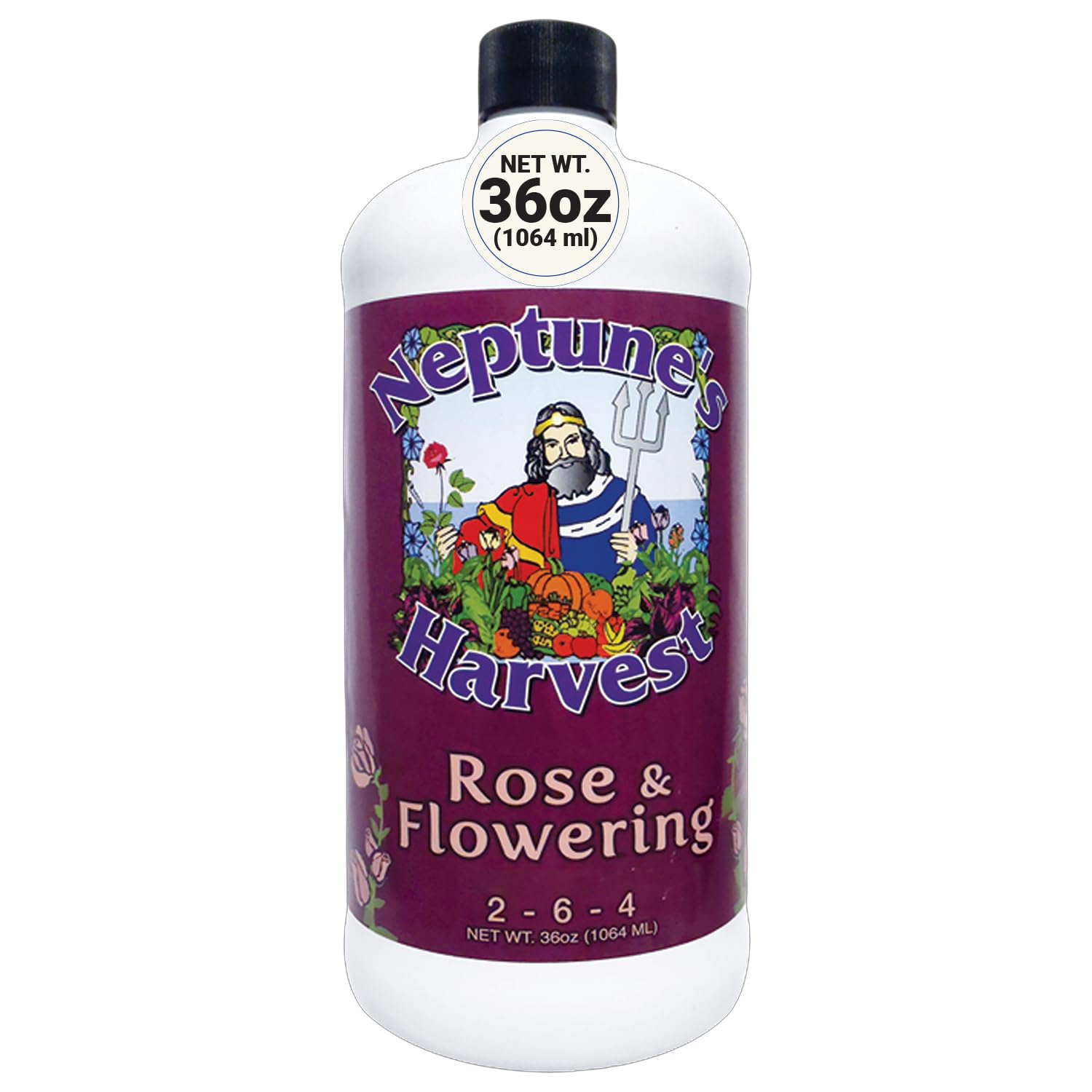
10. Neptune’s Harvest Rose & Flowering Fertilizer 2-6-4, 36 oz
Fish, seaweed, and molasses in a bottle — the liquid that gets roses going fast.
This is the organic liquid option, and its 2-6-4 ratio leans on phosphorus and potassium for bud density and flower volume. The ingredient list is the story: fish, seaweed, molasses, humic acids, yucca extract, and liquid calcium. Those feed soil microbes as well as the plant, and the liquid form means it’s available to roots quickly. Mixing is simple — 1/8 cup per gallon of water for outdoor plants, or 1 tablespoon per gallon for houseplants. You can apply it to soil or spray it on leaves.
Owners mention stunted tomatoes and cucumbers perking up overnight and roses pushing strong new growth within days of a 2-6-4 feed. The 36-ounce bottle goes far at those dilution rates.
The trade-off is the smell. It’s a fish-based liquid and it does carry an ocean scent while you’re mixing it — most describe it as mild and fading once dry, but if you’re feeding indoors, expect a moment. It’s also a fast-acting feed rather than a slow-release one, so you’ll be mixing it into your watering routine rather than scratching it in once a month.
what separates it: it feeds fast. This 2-6-4 organic liquid (nitrogen-phosphorus-potassium) is made from fish and seaweed and reaches roots quickly — mix 1/8 cup per gallon for outdoor plants and water it in, or spray the leaves.
Worth knowing: the fishy smell is real during mixing, and it’s a routine feed rather than a set-and-forget granule.
The one for feed-along gardeners: if you water regularly and want an organic liquid that gets roses and flowering plants moving fast, this is it.
Maybe not if: you feed once a month and want zero mixing — a granular product suits that habit better.
Know the Specs
NPK Ratio
The three numbers on a fertilizer bag are N-P-K, and each drives something different. Nitrogen pushes leafy green growth, phosphorus (the middle number) drives root development and bud formation, and potassium (the last number) supports flower and fruit density, stem strength, and stress tolerance. A bloom-focused feed runs high in the middle or last number — Jack’s Classic at 10-30-20 or Schultz Bloom Plus at 10-54-10 for a strong phosphorus push, or a 0-0-60 potassium product as a targeted supplement. A high first number means a leafy feed, which is the wrong tool if you want flowers.
Granular vs Powder vs Liquid
The form decides how fast the plant gets fed and how often you work. Granules (bone meal, Rose-Tone, Dr. Earth Flower Girl) are scratched into the soil and release slowly, which suits monthly feeding and garden beds. Water-soluble powders (Jack’s Classic, Schultz Bloom Plus) mix into a can or sprayer for a quick hit and can be applied to leaves. Liquids (Neptune’s Harvest) go in fast and work immediately, but need mixing at every watering. Slow-release organics are forgiving on timing; concentrated powders and liquids demand careful measuring.
Organic vs Synthetic
Organic blends (bone meal, fish and seaweed, guano, and shell meals) feed soil microbes first and the plant second. That builds long-term soil health and lowers the risk of burning roots. Products with an OMRI listing (Organic Materials Review Institute approval) or Certified Organic status fit a no-synthetics garden. Synthetic fertilizers feed the plant directly and work faster, but over-mixing can burn roots. Neither is “better” — it depends on if you want speed or a slow-building soil.
Coverage and Application Rate
Coverage tells you how far one bag goes: True Organic’s 4-pound bag covers up to 70 square feet, and Neptune’s Harvest mixes at 1/8 cup per gallon for outdoor plants or 1 tablespoon per gallon for houseplants. Match the rate to your garden size and feeding rhythm. Smaller gardens and containers do well with a water-soluble or liquid product on a weekly or biweekly schedule, while large beds favor a granular feed scratched in monthly.
Common Questions
What NPK ratio is best for flowering plants that won’t bloom?
Is bone meal the same as a bloom booster?
Can I use a 0-0-60 potassium fertilizer on its own?
Will Miracid work on roses?
How often should I feed roses with a granular organic fertilizer?
Why does my organic fertilizer smell so strong?
Can I mix bone meal and a bloom booster together?
Is a pet-safe fertilizer really safe for my dog or cat?
Will a bloom booster fix a plant that’s already dying?
Can I apply a liquid fertilizer to the leaves directly?
The Bottom Line
For most flowering-plant gardeners, the best fertilizer for flowering plants is the Down to Earth Organic Bone Meal. Its 3-15-0 ratio loads phosphorus exactly where bulbs, roses, and new perennials need it at planting time. Want a fast bloom push on established plants instead? Grab Jack’s Classic Blossom Booster — the 10-30-20 powder mixes into gallons and can be sprayed straight onto leaves. For roses on a no-mixing monthly routine, Espoma Organic Rose-Tone is the one to reach for. And if you keep pets in the garden, Dr. Earth Flower Girl brings certified-organic safety along with its 4-10-7 bloom formula. Its 4.5+ star average across a large base of ratings suggests the slow-release phosphorus holds up season after season. If your flowerbeds are due for a spring planting feed, that is the bag to start with.
How we choose
We do not accept paid placement. Every pick is matched to a real buyer and a real use-case; we do not hands-on test units.
Sources
Specifications: manufacturer listings and product documentation. Review insights: verified customer reviews, as of October 2026. Pricing: not shown on this page (it changes often); check the current price via the retailer link.
As an Amazon Associate, Aappliancez earns from qualifying purchases. This does not affect which products we feature.