Disclosure: Some links in this post are affiliate links. As an Amazon Associate I earn from qualifying purchases, at no extra cost to you. Learn more
Specs are compiled from manufacturer listings and verified buyer reviews and can change over time — please confirm the key details on the product page before buying.
Calibrachoa — those cascading million-bell baskets — will give you a hundred flowers or a hundred leaves, and the difference is almost always the food. The plant is a heavy feeder that wants steady phosphorus for buds and a little acidity for leaf color, so a general all-purpose garden feed often pushes soft green growth instead of flowers. Below are the five fertilizers that actually match that job, from a bloom-heavy powder you mix in a watering can to a granular organic feed you scratch into the soil.
This guide is built by comparing the manufacturers’ published specifications and the patterns across verified customer reviews, so you get each pick’s real strengths and trade-offs instead of marketing spin.
The biggest fork in the road is liquid versus granular: powders mix fast and hit leaves and roots at once, while granules release slowly and forgive a missed week. This breakdown of the fertilizer for calibrachoa covers both, plus the N-P-K math that decides whether your baskets fill out or just sprawl.
Top Picks

How To Choose The Best Fertilizer for Calibrachoa
Calibrachoa blooms on new growth, and new growth costs the plant food. Too much nitrogen gives long, floppy stems with a few tired bells at the tips. Steady phosphorus turns the same basket into a solid curtain of color until frost. The choices below come down to four things: the N-P-K ratio, whether it is a powder or a granule, how strong you mix it, and whether the feed leans acidic.
Read the N-P-K ratio before anything else
The three numbers on the label are nitrogen, phosphorus, and potassium, always in that order. Nitrogen pushes leafy green growth. Phosphorus drives root and bud development, which is what you want more of once a basket is established. Potassium supports the overall strength of the plant. A bloom-leaning feed flips the usual balance — the middle number climbs above the first, which is exactly what the 9-58-8 and 12-36-14 blends on this list do. A gentle all-round organic feed such as a 3-4-5 keeps the numbers closer together and feeds the soil at the same time.
Powder or granule: match it to your watering habit
A water-soluble powder goes into the watering can and reaches the plant the moment you pour. That makes it the tool for weekly basket feeding, and it lets you spray leaves directly for a faster top-up. Granules are scratched into the soil surface and break down over time, which suits anyone who cannot water on a strict schedule. Powder suits weekly basket watering; granules suit a busy week.
Mixing ratio tells you how far the bag goes
A quarter teaspoon per gallon and a full tablespoon per gallon are wildly different doses. The lighter mix is designed for continuous feeding, so a small bag stretches across many watering cans. The heavier mix is a stronger hit per application. Check the ratio before you assume a bigger bag is the better buy — with a light-dose powder, a modest bag can carry a whole season of baskets.
Acidity matters more than most labels admit
Calibrachoa sits happily in slightly acidic soil, and an acidic feed can help hold leaf color through the season. A feed built for acid-loving plants delivers that nudge as a side effect of its formulation. A neutral bloom booster does not, and that is fine — it simply means you are feeding for flowers rather than adjusting soil chemistry.
Side-by-Side Comparison
| Model | Best For | N-P-K Ratio | Form | Mixing Ratio | Amazon |
|---|---|---|---|---|---|
| Scotts Miracle-Gro Miracid Acid-Loving Plant Food (2-Pack)★ Best Overall | Acid-loving baskets and bedded color | Acid-loving formula | Water-soluble powder | — | Amazon |
| Jack’s Classic 12-36-14 African VioletMost Precise Dose | Precise, measured weekly feeding | 12-36-14 | Water-soluble powder | 1/4 teaspoon per gallon | Amazon |
| Carl Pool BR-61 Plant Food | Heavy bloom push on big baskets | 9-58-8 | Water-soluble powder | 1 tablespoon per gallon | Amazon |
| FoxFarm Happy Frog Japanese Maple | Low-pH feeders in pots and ground | 4-3-4 | Powder | 2 tablespoons per gallon | Amazon |
| Espoma Organic Flower-Tone (2-Pack) | Organic, no-mix monthly feeding | 3-4-5 | Granules | 3:4:5 | Amazon |
Detailed Reviews
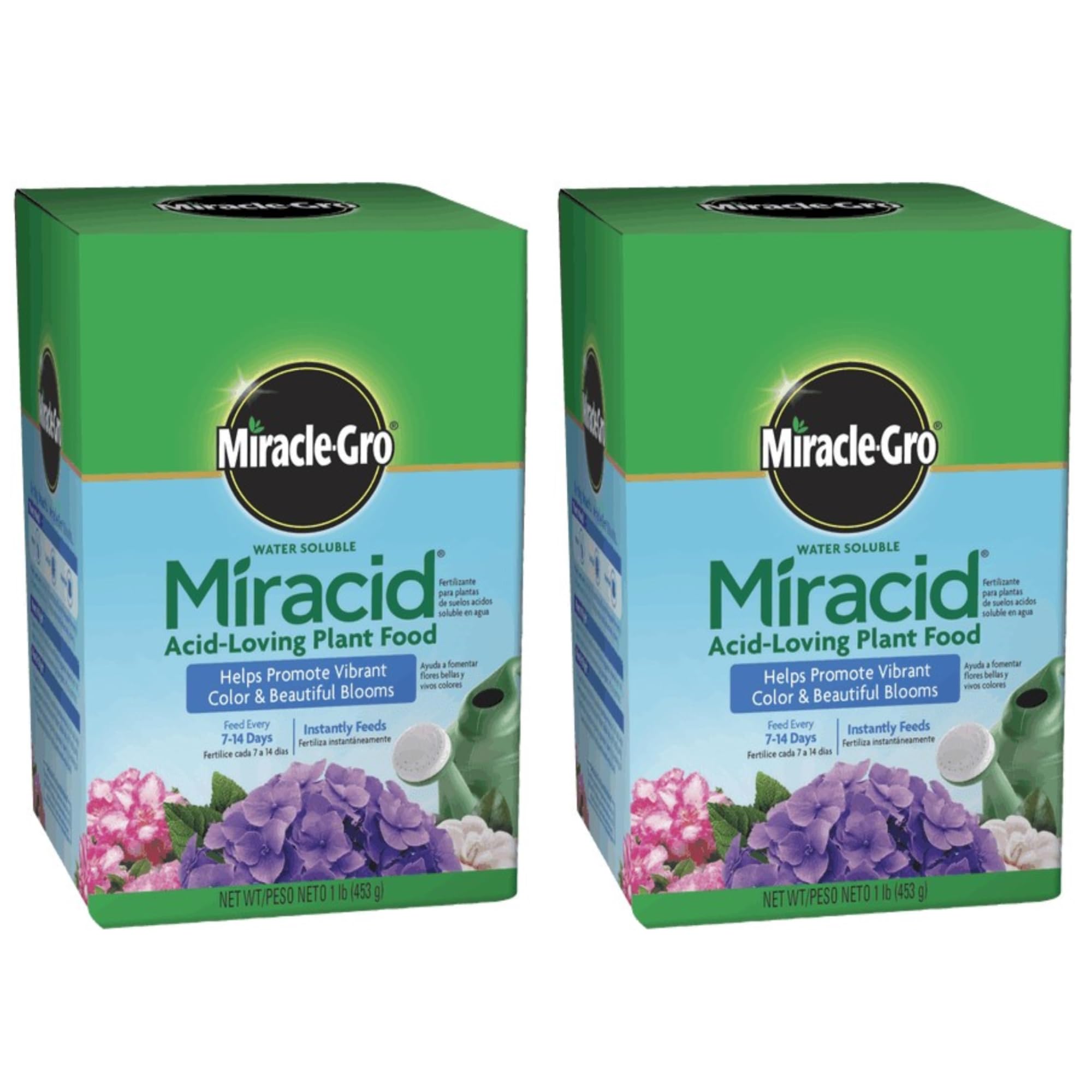
1. Scotts Miracid Acid-Loving Plant Food 1-Pound
Our pick — 4.5+★ from 1,000+ verified ratings; the strongest balance of quality and price.
Two tubs of acid-leaning feed that reach the roots and the leaves in the same watering.
Calibrachoa baskets sit in the same slightly acidic range as azaleas, hydrangeas, and rhododendrons — the exact plants this powder is built for. It feeds two ways at once, through the roots when you water the soil and through the leaves when the spray settles on them. That double action is why a tired basket can look different within a week of the first mix rather than waiting on a slow soil feed.
What wins people over here is straightforward quality and reliability: the blend dissolves predictably and the results repeat season after season. It carries 32 ounces across the pair, against 32 ounces in the single-tub Scotts listing — so you are getting a spare container to keep under the potting bench. For a plant that wants feeding every week through summer, that spare earns its shelf space.
The catch is that this is a general acid-lover feed, not a bloom-forcing formula — the label markets it around azaleas and rhododendrons, so treat it as your maintenance feed rather than the big flowering push. Pair it with a high-phosphorus booster mid-season if your baskets start throwing leaves instead of buds.
Where it earns its place
- Feeds through roots and leaves at the same time, so one watering does two jobs
- Two tubs in the pack give you 32 ounces total with a spare to store
- Built for the acid-loving range that calibrachoa shares with azaleas and hydrangeas
- Dissolves cleanly and mixes fast in a watering can
The honest limits
- Not a dedicated bloom booster, so heavy flowering may need a phosphorus top-up
- Powder feed means you have to keep up a watering routine to see results
Reach for this if: you want one dependable acid-leaning feed for baskets, beds, and hydrangeas, and you like keeping a spare tub on hand.
Think twice if: your whole goal is maximum bud count and you would rather buy a single high-phosphorus product to do that job.
2. Jack’s Classic African Violet Fertilizer 8oz
A quarter teaspoon per gallon turns one small tub into gallons of bloom-leaning feed.
The middle number does the work for a flowering basket. At 12-36-14, this powder leans hard on phosphorus for bud and root development, with potassium behind it for strong stems. It also carries added micronutrients, and the maker states that no additional feeding is required beyond it — which is useful when you are already juggling weekly basket watering.
Here is the number that surprises people: 0.24 liters of liquid volume against 3 liters in the Carl Pool tub. That looks like a mismatch until you read the mixing ratio — a quarter teaspoon per gallon. That light dose is why such a small tub keeps going, and why the concentrated powder outlasts liquid bottles of the same size.
You can apply it two ways, sprayed onto leaves or poured into the soil, so it works whether you are feeding a hanging basket at eye level or a pot on the ground. It also turns the water blue, which makes it easy to see how far you have filled the can. Buyers report the fizz of a first bloom within weeks: as the review pages put it, “Started using Jack’s AF in Jan and got my first bloom by Feb 1!”
Why the ratio wins: the included measuring spoon removes the guesswork, and a light continuous dose suits calibrachoa better than a heavy occasional hit — steady feeding keeps new buds coming without pushing soft leaf growth.
The trade-off: you are buying a powder that must be measured and mixed each time, so it is not the feed for someone who wants to scatter and walk away.
The fit: growers who water on a schedule and want a bloom-leaning feed they can measure spoon by spoon.
Not the fit: anyone who would rather not mix powder into a can every week.
3. Carl Pool BR-61 Plant Food 9-58-8 3 Lbs
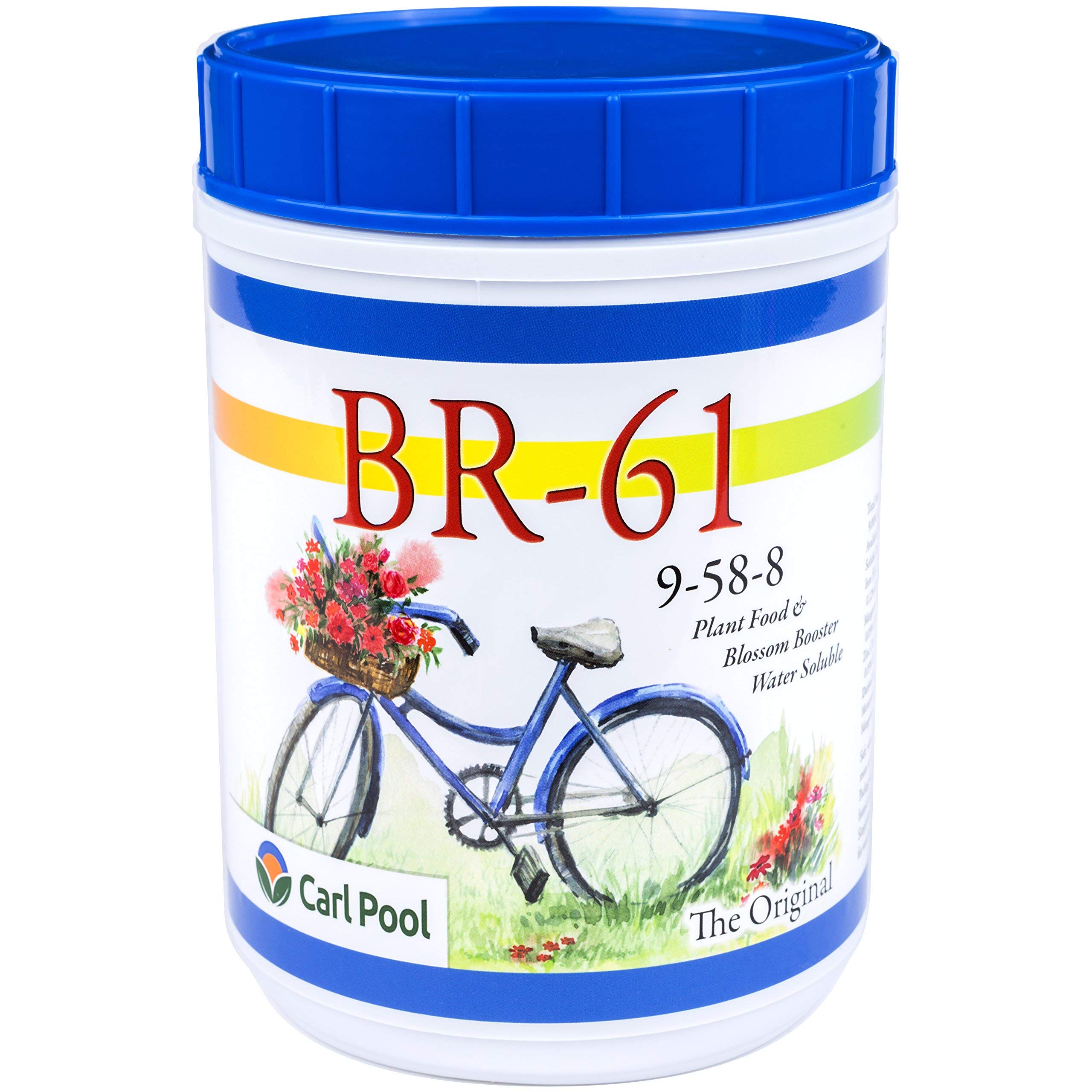
A phosphorus number so high it is sold as a bloom booster first and a plant food second.
Fifty-eight is the figure to fix on. That phosphorus level is what makes this blend a bloom booster and a plant starter at once — it pushes flower production on established plants and gets new ones rooting. Carl Pool markets it for all flowering plants, and a calibrachoa basket mid-summer is squarely in that group.
Then there is the volume. This tub carries 3 liters of liquid volume and 48 ounces of product, against 0.24 liters in the Jack’s Classic tub — a much bigger container for a stronger per-gallon mix of one tablespoon per gallon of water. Buyers keep coming back to how far it stretches and how strong the flowering gets. Plumeria growers report real turnarounds: as one put it, “For 4 years my plumeria didn’t grow at all but after using this plant food it helped grow so much and it’s very easy to use!”
The honest caveat is that a ratio this hot is not a feed-every-week default. Push it on a basket every watering and you risk overdoing the phosphorus, so the sensible routine is to alternate it with a gentler feed. Loaded baskets and heavy bloomers get the most out of it; a light feeder might not need this much muscle.
What the numbers buy you: a 9-58-8 ratio plus a 48-ounce tub means a bloom push strong enough for peak-season baskets, mixed at a tablespoon per gallon and stretched over many waterings.
The fair warning: this is a booster to rotate, not a sole weekly feed — keep a milder product alongside it.
Pick it when: your baskets are established, flowering is the whole point, and you want the strongest phosphorus hit on this list.
Hold off when: you want a single feed to use every single week without thinking about rotation.
4. FoxFarm Happy Frog Japanese Maple Fertilizer 4 lb

A low-pH feeder’s feed with living soil microbes built into the blend.
This one is formulated for plants that struggle with standard fertilizers — Japanese maples, hydrangeas, and other low-pH feeders. Calibrachoa is not the headline crop on the bag, but it shares that acidic preference, so the blend suits a bed where baskets and acid-lovers grow side by side. The 4-3-4 analysis is gentle and balanced, with phosphorus and potassium there to support strong branch and stem development rather than force a bloom spike.
The part most bags skip is the biology. This one includes beneficial microorganisms and mycorrhizal fungi, which the maker says help increase root efficiency and may improve nutrient and water uptake. In a container that dries out fast, better root function is the difference between a plant that wilts by afternoon and one that holds its flowers.
On the scale: 4 pounds here against 3 pounds in the Carl Pool tub. The application is a powder you mix into soil or top-dress and water in thoroughly, at 2 tablespoons per gallon, on a monthly schedule through the growing period. Note the texture — it is powdery rather than pelleted, so apply it close to the soil or a breeze will carry it off.
Good reasons to choose it
- Made for low-pH feeders, matching the acidic lean calibrachoa prefers
- Contains mycorrhizal fungi and soil microbes to support root efficiency
- Monthly feeding schedule is far less demanding than weekly mixing
- Works for new container plants, in-ground plantings, and established trees
What to keep in mind
- Powdery texture blows away if you do not work it into the soil surface
- Not a bloom booster — the mild 4-3-4 will not force heavy flowering on its own
Best matched to: a mixed bed or patio where baskets share soil with hydrangeas and other acid-lovers, fed once a month.
Less useful for: a single hanging basket you want to push into maximum bloom — the mild ratio will not do that alone.
5. Espoma Flower-Tone Plant Food 4 lb 2 Pack

No measuring, no mixing — just sprinkle the drip line and water it in.
Flower-Tone is a granular feed you scatter on the soil around the drip line of the plant, then water thoroughly. There is no mixing, no measuring spoon, and no watering can of blue liquid to prepare. For calibrachoa in a hanging basket, that makes it the least fussy option on this list — tip a small scoop into the soil, water, done. The 3-4-5 analysis with 5% calcium is a low-nitrogen, gently balanced blend designed to promote abundant blooms without driving soft leafy sprawl.
It is approved for organic gardening and registered as an Organic Input Material, which matters if you are feeding a bed you also cut flowers from. The blend carries Espoma’s Bio-tone formula and contains no sludges or fillers. Two bags in the pack give 128 ounces total, so you are set for a full season of monthly feeding across several baskets.
One thing to know up front: this fertilizer has a strong odor, and it is the most common gripe. Open the bag outdoors and apply on a calm day. Owners mention that the smell fades over time and that the flowering is worth it — as the review pages frame it, flowers come in “big and bright every summer.”
The fuss-free angle: ready-to-use granules eliminate mixing entirely, so a missed week means a quick sprinkle rather than a production — and the organic registration gives it a place in a cut-flower bed.
The one downside: the smell is real and noticeable at application; plan to apply it outdoors and let it settle.
Choose this if: you want organic, no-mix feeding for baskets and beds on a monthly rhythm.
Look elsewhere if: a strong manure-like odor at application would put you off using it at all.
Know the Specs
N-P-K Ratio (Nitrogen-Phosphorus-Potassium)
These three numbers tell you what the feed pushes. Nitrogen drives leafy growth, phosphorus drives roots and buds, and potassium supports overall plant strength. A bloom-leaning fertilizer for calibrachoa flips the middle number above the first — the 9-58-8 and 12-36-14 blends here do exactly that. Higher phosphorus relative to nitrogen favors flowers over foliage, which is the balance a flowering basket wants once it is established. A gentler ratio like 3-4-5 or 4-3-4 feeds more evenly and suits a soil-building, season-long approach.
Mixing Ratio (Teaspoons or Tablespoons per Gallon)
The mixing ratio decides how strong each watering is and how far a bag stretches. A quarter teaspoon per gallon is a light continuous dose meant for regular feeding, so a small tub lasts a long time. A tablespoon per gallon is a stronger hit per application. Two tablespoons per gallon sits in between. Match the dose to your routine — light and frequent for weekly basket feeding, heavier for occasional booster applications. Always measure rather than eyeball, because doubling the powder doubles the strength the plant receives.
Form: Powder, Granule, or Liquid
Water-soluble powders dissolve in the can and reach the plant immediately, and some can also be sprayed onto leaves for a faster top-up. Granules are scratched into the soil surface and break down over time, feeding slowly and forgiving a missed week. Powders reward a routine; granules suit a busy schedule. Choose powder for weekly basket watering, granules for a looser schedule.
Acidity and Low-pH Formulation
Calibrachoa grows best in slightly acidic soil, and some fertilizers are formulated specifically for acid-loving plants. Those blends can help hold leaf color and support plants that struggle in alkaline conditions. A dedicated bloom booster is usually neutral and does not adjust soil chemistry — that is fine if your soil is already in range. Choose an acid-leaning feed if your water or soil runs alkaline, or if you are feeding a bed of acid-lovers alongside your baskets.
Common Questions
Which N-P-K ratio is best for feeding calibrachoa baskets?
Can I use an African violet fertilizer on calibrachoa?
How often should I fertilize a calibrachoa hanging basket?
Is a high-phosphorus bloom booster safe to use every week?
Will an acid-loving plant food help my calibrachoa?
Powder or granular fertilizer — which is easier for hanging baskets?
How long does a small tub of water-soluble fertilizer last?
Can I mix a bloom booster with an organic granular feed?
Does the powdery texture of FoxFarm fertilizer blow away?
Is the strong smell of Espoma Flower-Tone a problem for container plants?
The Bottom Line
For most calibrachoa growers, the Scotts Miracle-Gro Miracid Acid-Loving Plant Food is the safest first buy — it matches the acidic lean the plant wants, feeds through roots and leaves, and the two-tub pack keeps a spare on the shelf. If you want a measured, bloom-leaning feed to use spoon by spoon every week, the Jack’s Classic 12-36-14 is the precise choice. And for the strongest phosphorus push once your baskets are filling out, reach for the Carl Pool BR-61 and rotate it with a gentler feed. Pick the one that fits your watering habit — a powder if you water baskets weekly, granules if you miss a week.
How we choose
We do not accept paid placement. Every pick is matched to a real buyer and a real use-case; we do not hands-on test units.
Sources
Specifications: manufacturer listings and product documentation. Review insights: verified customer reviews, as of October 2026. Pricing: not shown on this page (it changes often); check the current price via the retailer link.
As an Amazon Associate, Aappliancez earns from qualifying purchases. This does not affect which products we feature.