Disclosure: Some links in this post are affiliate links. As an Amazon Associate I earn from qualifying purchases, at no extra cost to you. Learn more
Specs are compiled from manufacturer listings and verified buyer reviews and can change over time — please confirm the key details on the product page before buying.
You want the weeds gone for good, not for a season — and that means buying fabric that blocks sunlight, drains water, and survives a shovel. The reality of this shelf is that most rolls look identical in a photo and behave nothing alike in the ground, so the differences that matter are weight, width, and how the edges handle a cut.
This guide is built by comparing the manufacturers’ published specifications and the patterns across verified customer reviews, so you get each pick’s real strengths and trade-offs instead of marketing spin.
Below you will find seven rolls matched to real jobs, from a narrow flower-bed run to a driveway underlayment, along with the one spec that separates a fabric that lasts from one that shreds.
Top Picks
How To Choose The Best Fabric Weed Barrier
Your buying decision depends on three numbers and one question about your ground. The numbers are weight, width, and length; the question is whether anything heavier than a wheelbarrow will ever roll over the fabric.
Start with weight, not length
Weight is measured in ounces per square yard, and it is the clearest signal of how a roll holds up. A 5 oz fabric is a heavier cloth than a 3.2 oz one, so it resists tearing and stays flat under gravel. Lighter rolls are easier to carry and cut, and they suit beds where nothing walks on them.
The trade-off is honest: thicker fabric costs more and weighs more on the roll, which matters if you are hauling it to a back garden alone.
Match width to the shape of your bed
A 2.6 ft roll threads between rows and around established plants without endless trimming. A 4 ft roll covers a path or a raised bed in one pass, which saves both time and overlap seams. Wide rolls reduce the number of joins, and joins are where weeds usually find their opening.
Check that water can still get through
Permeability is how easily water and air move through the cloth into the soil. A woven polypropylene fabric lets rain reach roots while still blocking the light that weed seeds need to sprout. Fabric that puddles on top is a sign water is not draining, and that is the failure you want to avoid.
Side-by-Side Comparison
| Model | Best For | Size | Weight | Material | Amazon |
|---|---|---|---|---|---|
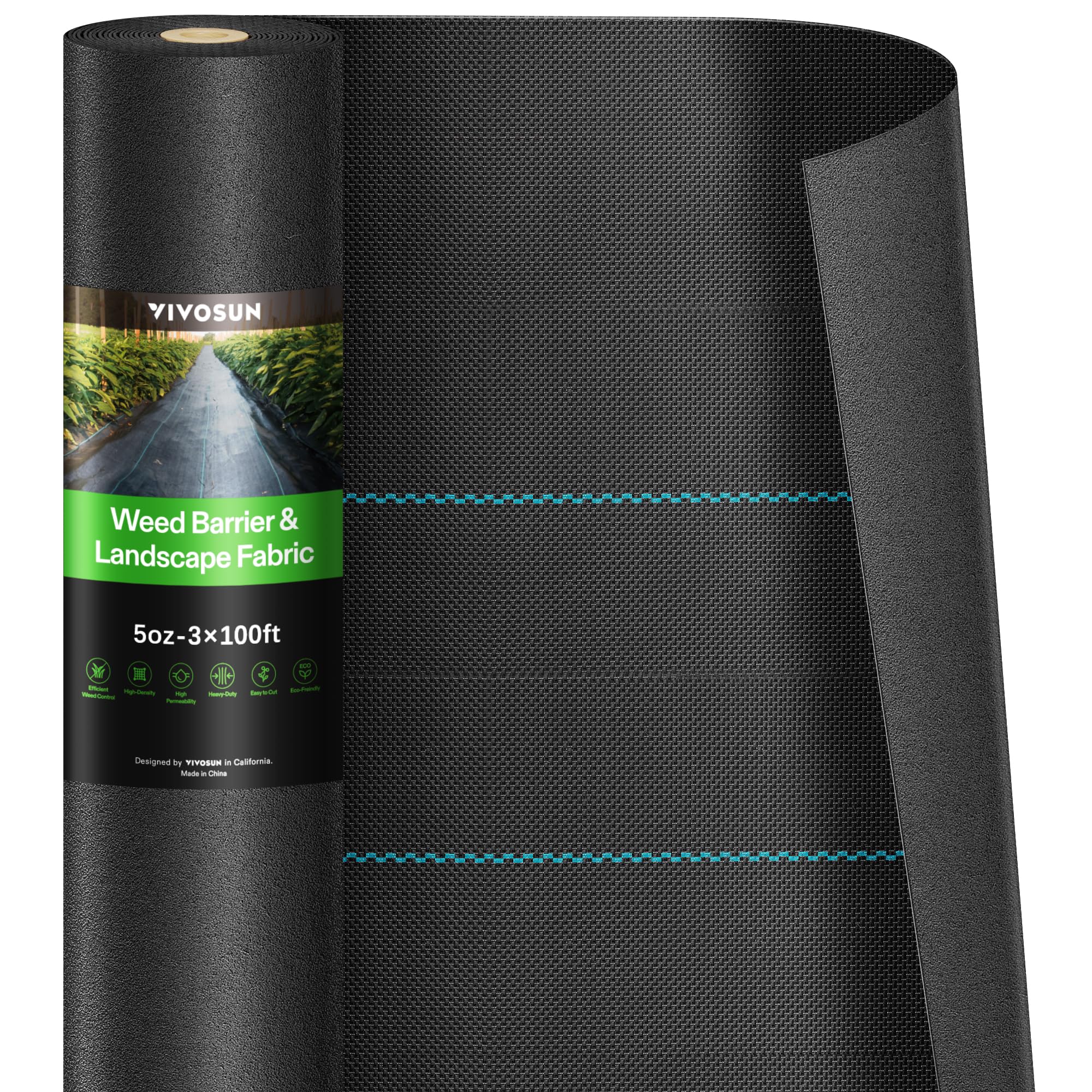
| VIVOSUN Premium Weed Barrier 3ft x 100ft★ Best Overall | All-round garden beds | 3 ft x 100 ft | 5 oz | Woven + non-woven polypropylene | Amazon |
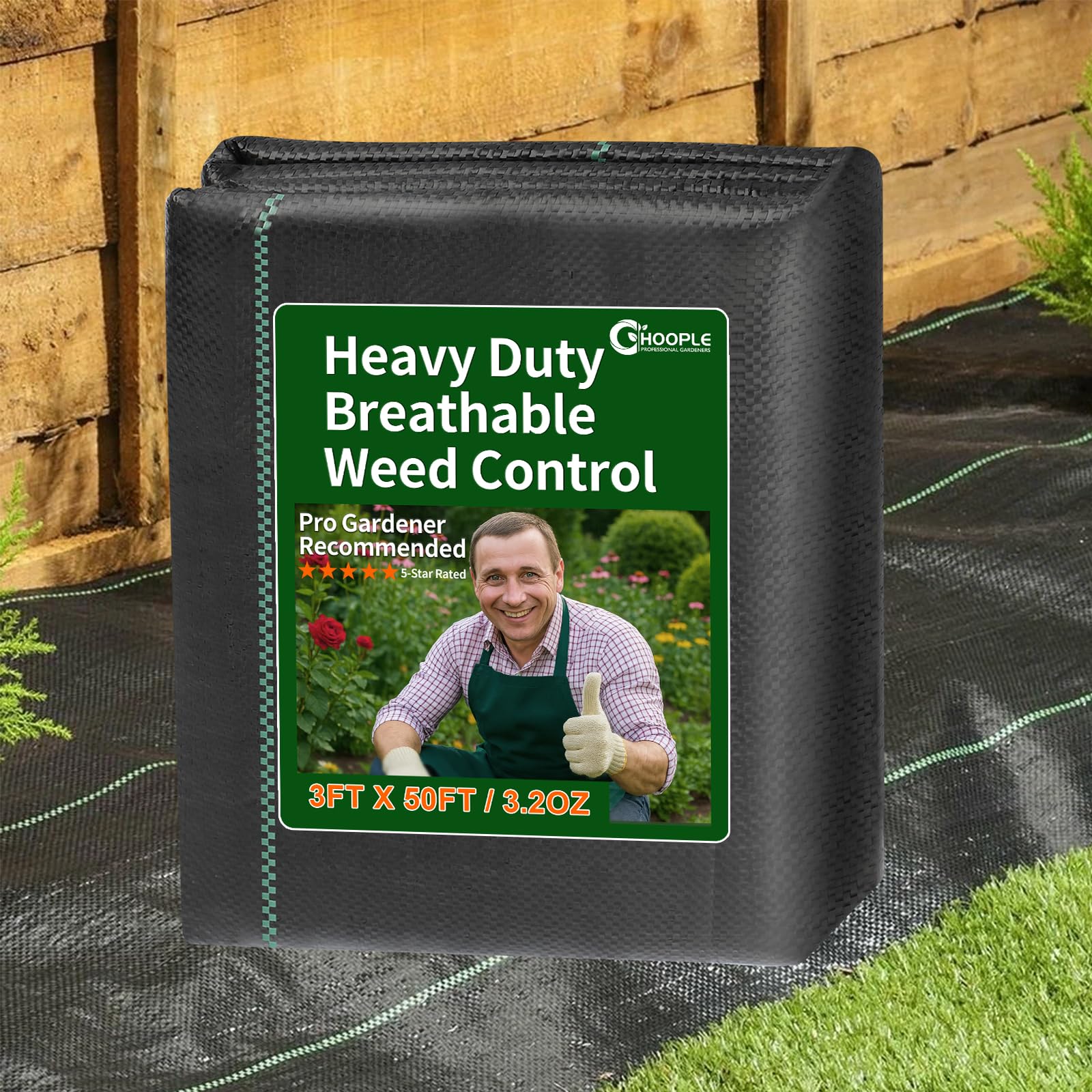
| HOOPLE 3FT x 50FT Heavy-DutyBest for Driveways | Driveways and paths | 3 ft x 50 ft | — | PP woven polypropylene | Amazon |
| Winisok 4FT x 100FT 3.2oz | Wide beds and French drains | 4 ft x 100 ft | 3.2 oz | Woven polypropylene | Amazon |
| Kijamilee 2.6FT x 100FT Thicken | Narrow beds and planter boxes | 2.6 ft x 100 ft | — | Polypropylene, dual layer | Amazon |
| SNAIL 3ft x 100ft Premium 5oz | Commercial-grade ground cover | 3 ft x 100 ft | 5 oz | Woven polypropylene | Amazon |
| Land Guard 6ft x 300ft | Large lawn and outdoor projects | 6 ft x 300 ft | — | Woven landscape fabric | Amazon |
| Vanver 3ft x 300ft | Farm and driveway stabilising | 3 ft x 300 ft | 3.2 oz | Polypropylene | Amazon |
Detailed Reviews
1. VIVOSUN Weed Barrier 3ftx100ft
Our pick — 4.5+★ from 950+ verified ratings; the strongest balance of quality and price.
The roll that treats water drainage as seriously as it treats weeds.
Water drains through instead of pooling on top, thanks to two layers in one sheet. VIVOSUN builds this 3 ft by 100 ft roll from a woven layer paired with non-woven fibres, needle-punched together (punched with needles to lock the fibres), so the mesh has small holes that pull water down into the soil. VIVOSUN rates its permeability at 6 times that of traditional woven ground covers. In plain terms, a heavy rain soaks through rather than sheeting off into your flower bed.
Weight is where this one separates from lighter rolls on the list. At 5 oz per square yard it is a 56% heavier cloth than the 3.2 oz Winisok below, and that extra density is what keeps it flat under gravel and mulch. Green line guides run down the roll every foot, which turns planting alignment into a straight-line job instead of a guessing game with a tape measure.
Cloth quality is what wins people over — it is the single most-praised trait of this roll and by a wide margin. Owners describe it as a high quality barrier they expect to last for years, in contrast to cheaper cloth that gives up after a season. One greenhouse grower’s verdict: “Installed in a 12×18′ greenhouse for a few months; works well, edges hold together, no rips or tears so far.” The honest counterpoint is durability: some buyers report it rips easily if you yank rather than cut, so score and slice cleanly at the edges. The other quirk is texture — it traps loose dirt, which makes sweeping a finished path a little harder than on a smoother mat.
What earns it the top spot
- Dual-layer 5 oz build: woven plus non-woven fibre for strength and drainage together
- 3 ft x 100 ft covers a long bed run with fewer seams
- Green guides every foot take the guesswork out of plant spacing
- Cut edges fray less than plain woven cloth, so trimmed rolls stay tidy
Where it asks more of you
- Durability feedback is split — cut cleanly, don’t pull
- Surface holds loose soil, so paths need a sweep
- Heavier roll is more to carry to a back garden
Best match: a vegetable patch, greenhouse, or flower bed where you want the fabric to outlast a couple of seasons and still drain.
Think twice: a very long single run — at 3 ft wide, a wide bed means laying two strips and overlapping the seam.
2. HOOPLE 3FT x 50FT Heavy-Duty Weed Barrier Fabric
Built for the job where most fabric fails — weight rolling over it.
This is a 3 ft by 50 ft roll of woven polypropylene, and it is the shortest run on the list. Picture a gravel driveway, a stone path, or the strip under a parked trailer: the maker rates the cloth for vehicle pressure and heavy foot traffic, and that is the pitch that matters. The wheels of a car will kill a thin mat over a summer. This one is built for it.
Half the length of the VIVOSUN’s 100 ft roll means you buy it for a contained job, not a whole yard perimeter. That makes the maths simple: if your driveway is roughly a car-length wide, one roll goes down and you are done. The polypropylene weave also lets water, air, and nutrients through, so gravel does not turn into a puddle trap after rain.
Quality is the trait that carries this roll in owner feedback, and the practical side of it — actually doing the job — runs a close second. The friction point is material feel: some buyers describe it as closer to plastic sheeting than a soft garden fabric, and a few find the cut ends shred rather than stay woven. That does not stop it holding under gravel; it just means you fold or tuck the trimmed edge rather than leave it exposed. For driveways and paths, the trade-off is worth taking.
Where it fits: under gravel, stone, or a vehicle track where a thin roll would rip in a month.
The honest catch: a plastic-leaning hand and a 50 ft length — great for one path, short for a large perimeter job.
Reach for this if: your project involves anything heavier than a garden cart rolling over the cloth.
Look elsewhere if: you need to cover a long boundary in one roll.
3. Winisok 4FT x 100FT Weed Barrier Landscape Fabric 3.2oz

Four feet wide means one pass covers a raised bed, seam-free.
Width is the headline: at 4 ft this roll is 54% wider than the 2.6 ft Kijamilee below, which is the difference between one strip and two on a standard raised bed. You get 100 ft of woven polypropylene in two 4 ft by 50 ft packs, so you can work one section while the second stays rolled in the shed. Green stripes run the length for planting alignment, and trimming to shape takes scissors, not power tools.
The maker makes two claims worth noting. The first is tear resistance from the tight polypropylene weave; the second is a claimed 5-plus years of weed control. Treat the second as the maker’s estimate rather than a promise — no fabric beats a bad installation. What does hold up is breathability: water and air pass through, so a raised bed does not turn into a bog.
Installation is where this one gets its goodwill — it is quick to lay and quick to cut, which matters when you are covering a long bed. The recurring gripe is the opposite of thick: the cloth is thin, and the trimmed edges fray, so a few weeds have found their way through. Fold your cut ends under the soil line and the fraying mostly stops. For a wide, low-traffic bed, the width advantage outweighs the light cloth.
Suits: raised beds, French drains, and underlayment jobs where a 4 ft width removes the seam entirely.
Skip the fraying: if you plan to leave cut edges exposed above soil — tuck them instead.
4. Kijamilee Weed Barrier 2.6FT x 100FT

The narrow roll that slips between rows without burying your plants.
At 2.6 ft wide, this is the roll you want between vegetable rows and along a planter box edge. It runs 100 ft long, so one purchase handles a long kitchen garden. Kijamilee describes a high-density woven, needle-punched dual layer rated 99.8% opaque, so almost no sunlight reaches the soil beneath. Blocking that light is what stops weed seeds germinating.
Owner experience centres on how easily this stuff rolls out and how well it does the basic job — functionality is the trait owners mention most often, with weed resistance close behind. That checks out with the design: 100 ft of narrow cloth that cuts with scissors and lies flat under gravel. What owners also flag is the limit: weeds have pushed through on some installations after a few weeks, even under rock cover. Weeds that do appear pull more easily than they would from bare soil, but this is not a permanent no-touch barrier.
There is one more wrinkle worth knowing. The material is thin compared with heavier rolls, so it wants a good layer of mulch or gravel on top for the weed control to hold. Spread it thin and it struggles. Where this roll shines is cost-to-coverage for a narrow bed — it is the most economical way to line a row of planter boxes, and the green alignment makes a neat finish easy.
Tidiness at the narrow width: the 2.6 ft cut keeps soil covered without smothering young plants.
The size to watch: it earns a tidy, organised bed, but a thin cloth needs the mulch on top to keep working.
Ideal for: planter boxes, vegetable rows, and rock garden edges where a wider roll would waste cloth.
Not your roll: for a driveway or anything under heavy load — the narrow, thin cloth is not built for traffic.
5. SNAIL 3ft x 100ft Premium 5oz Pro Heavy Duty Ground Cover

A commercial-grade mat with a weight that tells you it means business.
The spec to remember is 5 oz per square yard (142 gsm) — the same heavy grade as the VIVOSUN, and a full step above the 3.2 oz rolls on this list. That cloth is woven polypropylene, UV stabilized to survive sun exposure, and dense enough to hold up under a layer of crusher dust. At 10.28 lb the roll has real substance, which is the point: weight is what stops a mat from wrinkling and moving under stone.
Durability is the other half of the story here, and the two combine into the reason owners rate this one so highly. It holds up under real material, not just a light mulch dusting, and that durability is exactly what you want under gravel, an artificial grass underlayer, or a stone walkway. Cutting takes scissors and laying is straightforward; the maker suggests pinning it down with staples to stop the wind lifting it before you cover it.
SNAIL backs the roll with a limited one-year warranty and free replacement for rolls that arrive damaged. On value, opinions split — some owners call it the best value on the shelf while others feel the cost is steep for the length. That is a fit question, not a defect: a heavy cloth does more work per roll, so the question is whether your job needs the heavy grade or a lighter mat would do.
Why the weight pays off
- 5 oz woven polypropylene resists wrinkling under crusher dust and gravel
- UV stabilized, so long sun exposure does not break the weave down
- Green stripes for plant alignment and easy scissor cuts
- Limited one year warranty with free replacement for damaged rolls
What to weigh up first
- Value feedback is split — the heavy grade costs more per roll
- 10.28 lb on the roll is a proper lift to the back garden
- Needs stapling down before covering in windy conditions
Built for: a driveway underlayment or gravel path where a lighter mat would ripple and tear.
Consider the lighter rolls: for a light flower bed where the heavy cloth’s strength simply goes unused.
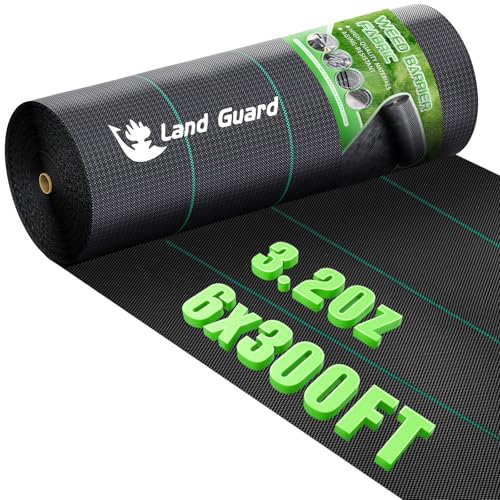
6. Land Guard 6ft x 300ft Weed Barrier Fabric Heavy Dusty
A lawn-scale roll for anyone covering ground, not just a bed.
This is the coverage monster of the group. At 6 ft by 300 ft, the roll covers 1800 square feet — enough for a lawn area or a large outdoor project without a single join. If you have ever wrestled two narrower strips into alignment across a slope, you know why that width matters. The 6 ft width is the widest on this list.
The design is a woven landscape fabric that lets air and water through, so the soil under a large covered area keeps breathing. Green stripes run the length for planting alignment and trimming, and the maker lists it for landscaping, retaining walls, French drains, underlayment, erosion control, and pond underlayment. Laying is straightforward — unroll, cut with scissors, cover with mulch or stone.
The catch is working with a roll this size. It arrives heavy — 15.97 kg on the specification — so plan for two people to move it, and lay it in sections rather than trying to drag the whole roll. Material feel is a matter of taste: some owners find it dense and sturdy, others find it less fabric-like than expected. For a big garden or outdoor build, neither point gets in the way of the job.
Great for: a whole lawn, a large outdoor project, or any run long enough that joining strips would be a nuisance.
Plan around: the weight of the roll — bring a second pair of hands for the first lay-out.
7. Vanver Weed Barrier 3ft x 300ft
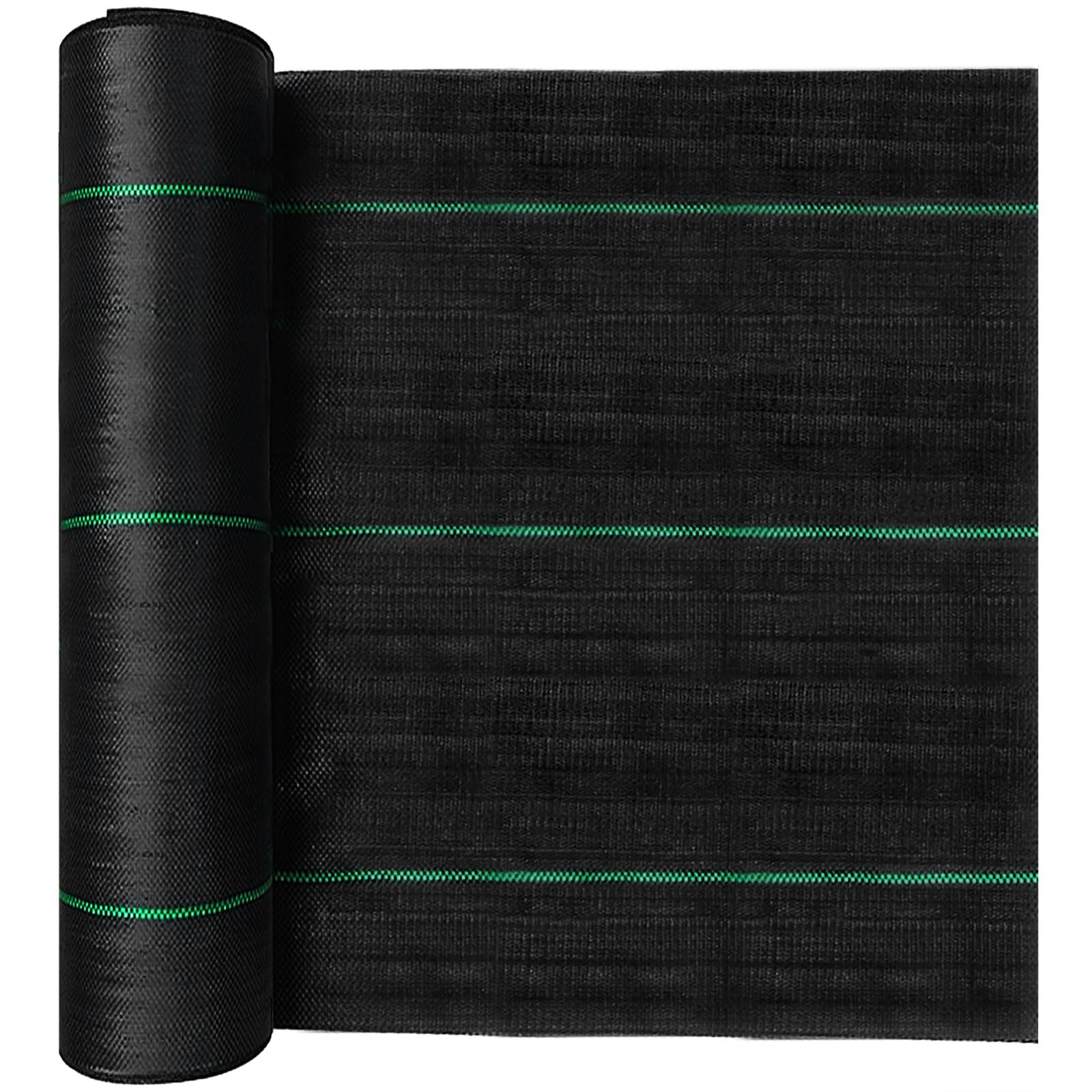
Three hundred feet of 3.2 oz cloth for the buyer covering a farm or a long driveway.
Length is this roll’s whole argument. At 3 ft by 300 ft of 3.2 oz polypropylene (a tough plastic fabric), you get the longest narrow run on the list — the kind of length that suits a farm boundary, a long driveway, or a series of beds in one purchase. Vanver rates the cloth for foot and vehicle traffic and lists it for driveway stabilising and erosion control.
The cloth is designed to block weeds while letting water and nutrients reach the soil, which keeps a long covered run from turning into a dead zone. Cutting to size is easy, and the finish is simply laying it over soil and covering with mulch. At 18.76 lb the roll is manageable for one person to shift between sections.
Quality is the trait this roll is known for, and the rest of the picture is more mixed. Some buyers find the cloth durable; others see it fray at cut edges. The bigger variable is weed control: some report grass and weeds pushing through, which is the honest limit of a 3.2 oz fabric where the top cover is thin. Give it a proper mulch or gravel layer and it does the job it was bought for.
Length wins: 300 ft in one roll removes the join problem across a long farm boundary or driveway.
Where it needs help: a lighter 3.2 oz cloth relies on the mulch layer above it to stop weeds breaking through.
Pick this for: farm edges, long driveways, and larger garden projects where maximum length beats maximum weight.
Not ideal for: bare, uncovered installs — a heavier cloth holds up better left exposed.
Know the Specs
Fabric weight in ounces per square yard
This is the clearest measure of how tough a roll is. A 5 oz cloth is heavier than a 3.2 oz cloth, which makes it more resistant to tearing and less likely to ripple under gravel. Heavier fabric costs more and weighs more on the roll, so save it for jobs where something will roll over it.
Permeability
Permeability is how freely water and air pass through the cloth into the soil. A woven polypropylene fabric blocks light to stop weeds while still letting rain reach roots. Fabric that puddles on top is not draining, and that puddle is where root problems start.
Width and length
A narrow 2.6 ft roll suits between-row planting and planter boxes; a 4 ft or 6 ft roll covers wide beds and paths in one pass. Wider and longer rolls mean fewer joins, and joins are where weeds usually find their way through.
UV stabilization
UV stabilization means the cloth is treated to resist sun damage over time. It matters most on installs where the fabric sits uncovered or under light stone, since direct sun is what breaks down an untreated weave. Most woven rolls on this list are UV stabilized.
Common Questions
What weight of fabric weed barrier should I buy for a driveway?
Will weeds grow through landscape fabric if I cover it with gravel?
Does landscape fabric let water reach plant roots?
How do I stop the cut edges of weed barrier fabric from fraying?
Can I use weed barrier fabric under artificial grass or crusher dust?
What is the difference between 3.2 oz and 5 oz landscape fabric?
Do I need to pin down landscape fabric before covering it?
How wide should a weed barrier be for a raised garden bed?
Can landscape fabric be used on a slope or for erosion control?
How long does weed barrier fabric last?
The Bottom Line
The fabric weed barrier that suits most gardens is the VIVOSUN 3ft x 100ft, because its 5 oz dual-layer build drains water while staying flat under mulch, and the green line guides make planting straight simple. If your job involves a driveway or a vehicle track, the HOOPLE 3FT x 50FT is the one rated for that traffic, though its 50 ft length suits a single contained run rather than a long boundary. For a wide raised bed, the Winisok 4FT x 100FT covers it in one seam-free pass. Whichever you pick, check the weight and width against your ground before you order, because those two numbers decide whether the roll does the job for one season or many.
How we choose
We do not accept paid placement. Every pick is matched to a real buyer and a real use-case; we do not hands-on test units.
Sources
Specifications: manufacturer listings and product documentation. Review insights: verified customer reviews, as of October 2026. Pricing: not shown on this page (it changes often); check the current price via the retailer link.
As an Amazon Associate, Aappliancez earns from qualifying purchases. This does not affect which products we feature.