Disclosure: Some links in this post are affiliate links. As an Amazon Associate I earn from qualifying purchases, at no extra cost to you. Learn more
Specs are compiled from manufacturer listings and verified buyer reviews and can change over time — please confirm the key details on the product page before buying.
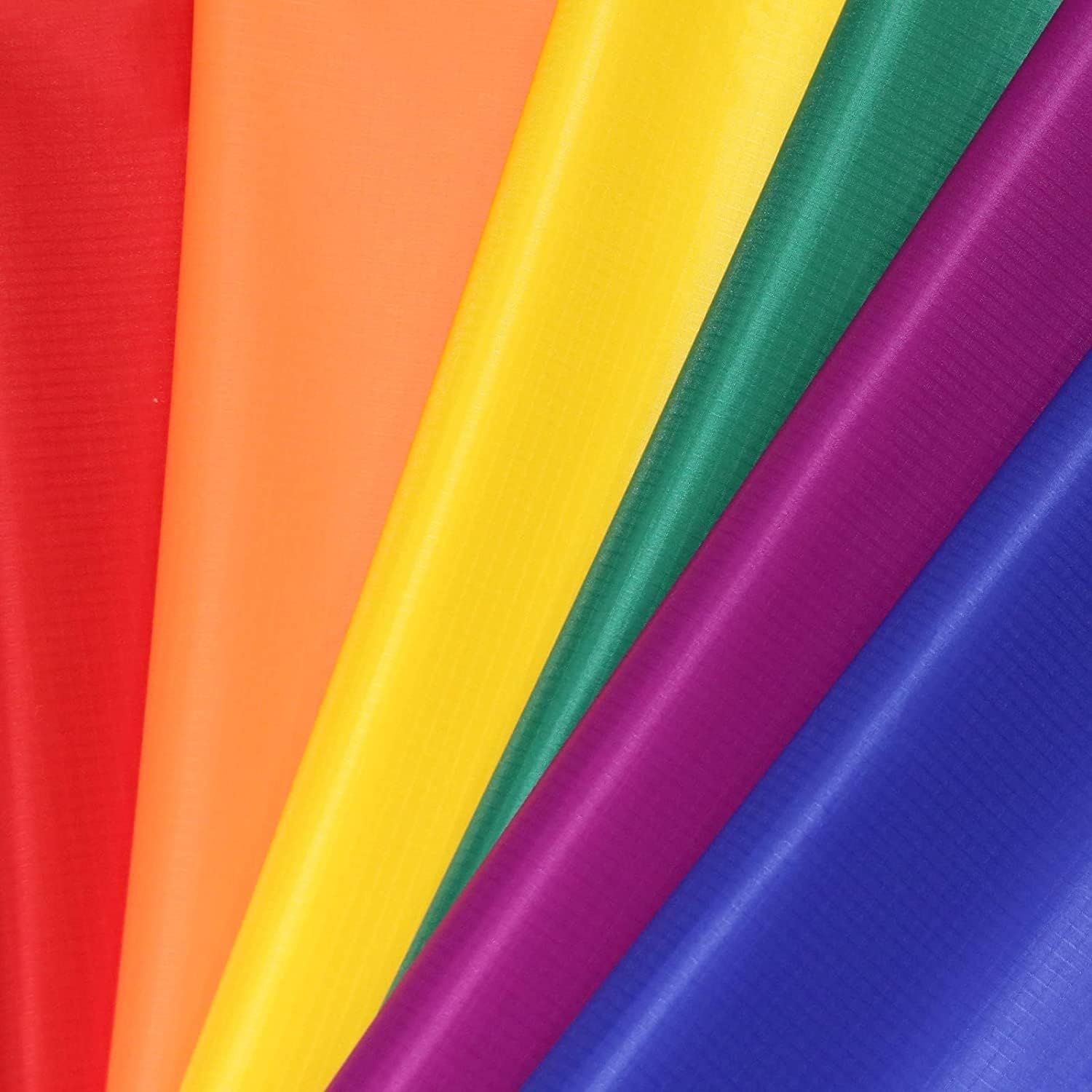
If you want fabric that actually keeps the sun off you, the pick that does it best here is the 9KM DWLIFE Nylon Ripstop six-color set — it blocks rain with a 1000mm waterproof coating and resists tearing thanks to woven reinforcement yarns. The honest truth about this whole category is simple: thin single-layer cloth barely slows sunlight down, so what you are really shopping for is weave density, a coating on the back, and a UV-resistant finish. Get those three right and a cheap-looking yard of cloth will out-shade a pretty one that lets the glare straight through.
This guide is built by comparing the manufacturers’ published specifications and the patterns across verified customer reviews, so you get each pick’s real strengths and trade-offs instead of marketing spin.
Some fabrics cut glare for a boat awning while others are built to line a curtain and kill every photon. Below you will find five yardage options that hold up outdoors, so think of this as your shortlist of the fabric for sun protection.
Top Picks

How To Choose The Best Fabric for Sun Protection
Sun protection from cloth is not one thing — it is three separate jobs done at once. The weave stops direct light, the coating or backing bounces the rest away, and a UV-resistant finish keeps the color from bleaching out after a few months on a porch. You can buy a fabric that does one of those well and two of them badly, which is why a yard of bargain cloth can fade in a season while a heavier coated canvas holds its color much longer.
Start with what you are shading, not the fabric
A windshield shade, a boat curtain, a kite, and a pair of yoga pants all want completely different material. If your cloth will live outside in rain, you need a waterproof backing and a weave that resists tearing. If it goes on your body, breathability matters more than any coating. If it lines a curtain or blocks a projector beam, you need opacity above everything else — the fabric just has to be dark and thin enough to hang without adding weight.
Denier, GSM, and shade factor in plain words
Denier is the thickness of the individual thread — a 600D canvas uses noticeably chunkier yarn than a 40D nylon, so it feels sturdier and resists scrapes better. GSM means grams per square meter, which is simply how heavy the cloth is per area; a heavier GSM fabric hangs with more body and generally lasts longer outside. Shade factor is the percentage of sunlight the fabric keeps off you, so a 90% to 95% shade fabric lets a small amount of light through and a 100% blackout fabric lets essentially none. None of these numbers alone tells you a fabric is good — you need to read them together with the coating and the intended use.
What to skip
Skip any listing that promises sun protection but never names the material, the weave, or a shade factor. Skip cosmetic-only coatings that wash off in the first rain. And skip buying the thinnest, cheapest yard of anything if the cloth is going to sit in full sun all season — thin fabric is fine for linings and photography backdrops, but it will not survive years of direct exposure.
Side-by-Side Comparison
| Model | Best For | Material | Fabric Weight | Waterproofing | Amazon |
|---|---|---|---|---|---|
| 9KM DWLIFE Nylon Ripstop 6 Color Set★ Best Overall | Kites, tents, and DIY outdoor covers | Nylon (40D ripstop) | 48 g/m² | 1000mm PU coating | Amazon |
| Ice Fabrics Nylon Spandex by The YardBest for Wearables | Swimwear, activewear, and stretch props | 82% nylon / 18% spandex | 210 GSM tricot | Listed waterproof | Amazon |
| Blackout Drapery Shade Fabric Black & Silver | Curtain linings and photo light control | 100% polyester | 0.27 lb per yard | Water repellent | Amazon |
| GoldWheel 600D Marine Canvas (Grey) | Boat covers, awnings, and cushions | 600D polyester canvas | 600 x 600 denier | PVC backing | Amazon |
| GoldWheel 600D Marine Cordura Canvas (Blue) | RV and car sun shades, tough covers | 600D polyester canvas | 600 x 600 denier | PVC backing | Amazon |
Detailed Reviews
1. 9KM DWLIFE Nylon Ripstop Fabric 6 Color Set
Our pick — over 4.5★ from 250+ verified ratings; the strongest balance of quality and price.
Six pre-cut color panels of reinforced ripstop nylon that shrugs off branches and rain alike.
This is the set for anyone who owns a sewing machine and a backyard full of things that need covering. You get six pieces of 40D ripstop nylon — “40D” simply means the individual threads are fine and light, around 48 g/m² of fabric — in a 60×39 inch cut. The ripstop part is the important one: the cloth is woven with thicker reinforcement yarns running in a crosshatch pattern, so a nick from a sharp rock or a branch stops at the grid instead of running into a full tear. For kite makers and tent builders, that is the difference between a repair and a replacement.
Rain is handled by a PU coating on the back that the maker rates at 1000mm, which is a measure of how much water pressure the coating holds before it soaks through — enough for steady moderate rain, not a monsoon. A UV-resistant treatment keeps the six colors from washing out over roughly three months of continuous outdoor use. Owners rave about the crosshatch weave and slick finish, and kite builders report cutting three kites from one panel with leftovers. A family project and a salon cosmetic-patch experiment both came down to the same thing: the hand-feel of the cloth.
Size up honestly before you cut. The panels are listed at 60×39 inches, but the cloth arrives as precut sheets rather than squared-off yardage, and buyers report that “each side 36″ but only ~30″ usable fabric per color” once the crooked edges are trimmed and the pieces are cut off-grain. So plan your layout around about 30 inches of usable width per color rather than a full 36. On a per-color basis you still get a strong amount of cloth for the money, and the six-color spread is exactly what you want for a kite, a banner, or a project that needs matching panels.
Why sewers keep coming back to it
- 40D ripstop weave resists tearing even on sharp rocks and branches.
- 1000mm PU coating handles moderate rain on tents and covers.
- UV-resistant finish keeps the six colors vibrant for about three months of sun.
- At 48 g/m², it is easy to pack and light enough for backpacking gear.
- Sews with a #80 needle and polyester thread, and can be ironed under 120°C.
Where it gets fiddly
- Panels arrive precut rather than squared, so plan for roughly 30 inches usable per color.
- Not designed for heavy, sustained rain — it is built for moderate exposure.
- Thinner than a 600D canvas, so it is not a substitute for a marine-grade cover.
Buy it if: you sew your own outdoor gear and want light, tough material in six usable color panels.
Measure twice: the cloth is precut, not squared, so trim before you start cutting your pattern.
2. Ice Fabrics Nylon Spandex Fabric by The Yard
A stretch fabric that moves with your body instead of fighting it — built for swim and sport, not awnings.
Four-way stretch is the headline, and it means exactly what it says: the cloth stretches horizontally and vertically, so it bends and recovers whichever direction you pull. That comes from the makeup — 82% nylon for strength, 18% spandex for elasticity — knitted into a 210 GSM tricot, which is simply a medium-weight knit that drapes smoothly without feeling flimsy. For swimwear, dancewear, and yoga pants, this is the material class you want; it lets air circulate so you are not cooking in your own sweat, and the maker says it will not fade, pill, or stretch out of its shape.
What owners keep coming back to is exactly that fabric quality, followed by how much it stretches. The phrase on the review pages is that it “is exactly as pictured with good solid color and four way stretch. it is lightweight and very easy to work with.” A dance company ordered it for photoshoot outfits, and the kids found it comfortable to wear. A church group molded it over chicken wire for a Jonah-and-the-whale prop. When something works for a bodysuit and a boat-prop whale, you know the stretch and hand-feel are doing their job.
Two honest notes. First, this is not the fabric you buy to block sun — it is a wearable fabric, not a shade cloth, and its waterproof claim comes from the coated nylon blend rather than a heavy rubberized backing. Second, owners mention it is shinier than expected. That shine is a feature for costumes and swimwear, but a problem if you wanted a matte finish. Also worth knowing: care is hand wash only and line dry out of direct sunlight, so toss this one in the washer at your own risk. At 60 inches wide and 36 inches per yard, you are getting a generous cut for a garment project.
Where it earns its keep: 4-way stretch, breathable tricot knit, and a hand that sews easily make this the go-to for swimwear, leggings, and costumes — plus a range of colors and yard sizes up to five continuous yards on one bolt.
Where it will not help: it is not a sun-shade fabric, it runs shinier than some buyers expect, and it needs hand washing and line drying to hold its shape.
Reach for this if: you are cutting swimwear, activewear, or a costume that needs real four-way stretch and breathability.
skip it if: your job is blocking sunlight off a window or awning — that is a different fabric class entirely.
3. Blackout Drapery Shade Fabric 3 Yards

A two-sided polyester sheet that kills light completely and weighs almost nothing on the rod.
When the goal is darkness rather than shade, this is what to reach for. One side is black, the other is silver, and the material is 100% polyester with a water-repellent and UV-protect treatment — meaning it shrugs off spills and resists sun damage without a heavy coating. At 0.27 lb per yard and 4.32 ounces for the 3-yard cut, it will not sag a curtain rod or stress a roller blind. The 57-inch width fits a standard window; multiply by the 3-yard length and one order lines a decent-sized window or two smaller ones.
The application that made this fabric famous in the reviews is studio photography. Painters and product photographers use it to cover windows and darken a room for consistent lighting, because it flattens glare completely. The line on the review pages that sums up the whole product: “Even though it is very thin, it completely blocks the light and will make a really good lining.” One reviewer noted it to the backside of wicker blinds and reported the room went dark without changing how the blinds looked or how they operated.
The trade-off is the hand-feel. It is stiff and tent-like, not soft — it will not drape or fold gently like a cotton curtain, so it is a lining, not a face fabric. Customers note the black coating can come off if you stick it with spray adhesive, so use mechanical fasteners or sew it rather than gluing it down. And yes, the black side is easy to mar, so keep chemical adhesives away. Treated as a lining and photographed as a blackout screen, it delivers exactly what the listing promises.
The verdict in one line: a lightweight, machine-washable 100% polyester blackout layer that blocks light completely and costs very little for three yards — perfect as a lining, a photo studio screen, or a car window cover.
The caveat to plan around: it is stiff, not soft, and the black coating dislikes chemical adhesives — sew or clip it rather than glue it.
Best matched to: photographers, curtain makers, and anyone who needs a window to go truly dark without adding weight to the hardware.
Not the fabric for: a soft drape, a fitted garment, or an outdoor cover that needs to flex and fold.
4. GoldWheel Marine Waterproof Canvas Fabric Grey
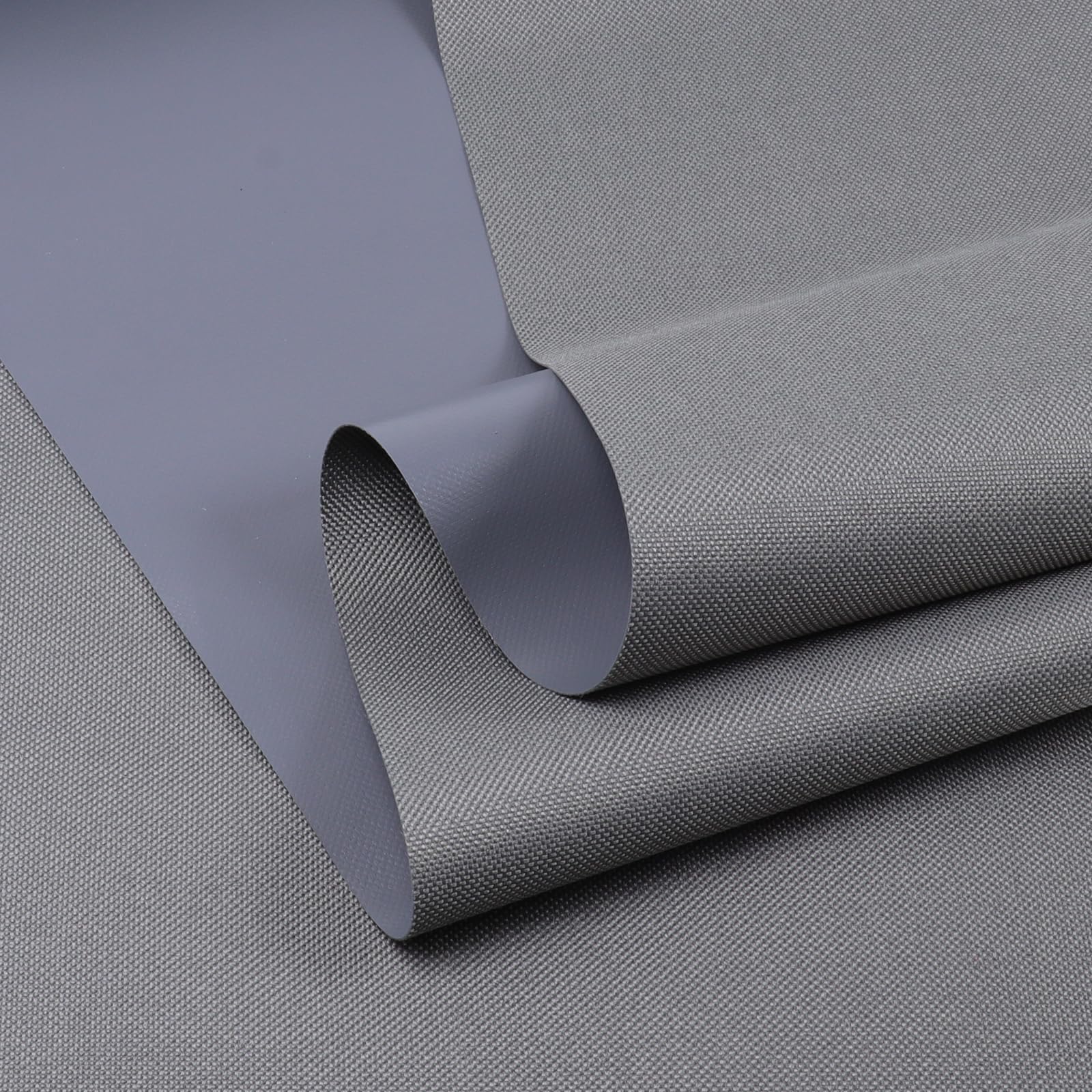
Heavy blanket-weight canvas with a rubbery PVC back — the one you buy for awnings, boat seats, and rough ground.
Denier is the number to read here. This cloth is woven at 600 x 600 denier, meaning both the warp and weft threads are chunky — roughly 15 times the thread thickness of a 40D fabric like the ripstop above — which is why it feels like a genuine marine canvas rather than a dress lining. A PVC waterproof coating on the back handles rain and wind, and the maker lists a UV-resistant finish that blocks heat and reduces glare. Fade-resistant, stain-resistant, and stretch-resistant cover most of what an awning or boat cover needs to survive a season outside.
Where it stumbles is what it does after the first summer. GoldWheel’s 70% shade factor is honest but moderate, and the listing says the tighter-weave version hits 90% to 95% while blocking 86% of solar radiation without obstructing your view — so if you need real shade for a windshield or a canopy, read the spec carefully and buy the tighter grade. Long-term durability is the other thing to watch: most reviewers point out the canvas holding up well through storms, but a handful say the surface starts cracking or the color fades within a season or two in direct sun. That is a real risk and worth weighing against how much direct exposure your project gets.
What wins people over is the material itself, then the water resistance. Shoppers say bench cushions look brand new after 8+ months outdoors, brush-clean easily, and hold their color. One buyer patched a leaking truck roof AC unit with the remainder; another added porch privacy at night. The fabric ships folded, so expect some creases — lay it flat on a ventilated spot for a while and they relax. A 60-inch-by-36-inch cut is a generous single-yard piece, sized for a chair cushion set or an awning patch rather than a full boat cover.
What the heavy weave delivers
- 600 x 600 denier polyester, comparable thread chunkiness to serious marine canvas.
- PVC backing gives it excellent waterproof and windproof properties.
- UV-resistant and stain-resistant so it stays usable outdoors.
- Machine washable for easy cleanup.
- 100% polyester construction resists rot and mildew better than cotton canvas.
What to plan around
- 70% shade factor base version is only moderate — the 90% to 95% tighter weave is the better sun block.
- Some buyers report the surface cracking or color fading after a season in direct sun.
- Ships folded, so creases need a day to relax after opening.
Reach for it when: you need a substantial canvas with a PVC backing for awning patches, boat cushions, or a replacement cover that has to survive weather.
Pick a different grade of it when: your project demands shade factor rather than thick weather protection — the tighter 90% to 95% version is the right pick.
5. GoldWheel Waterproof Canvas Fabric Blue
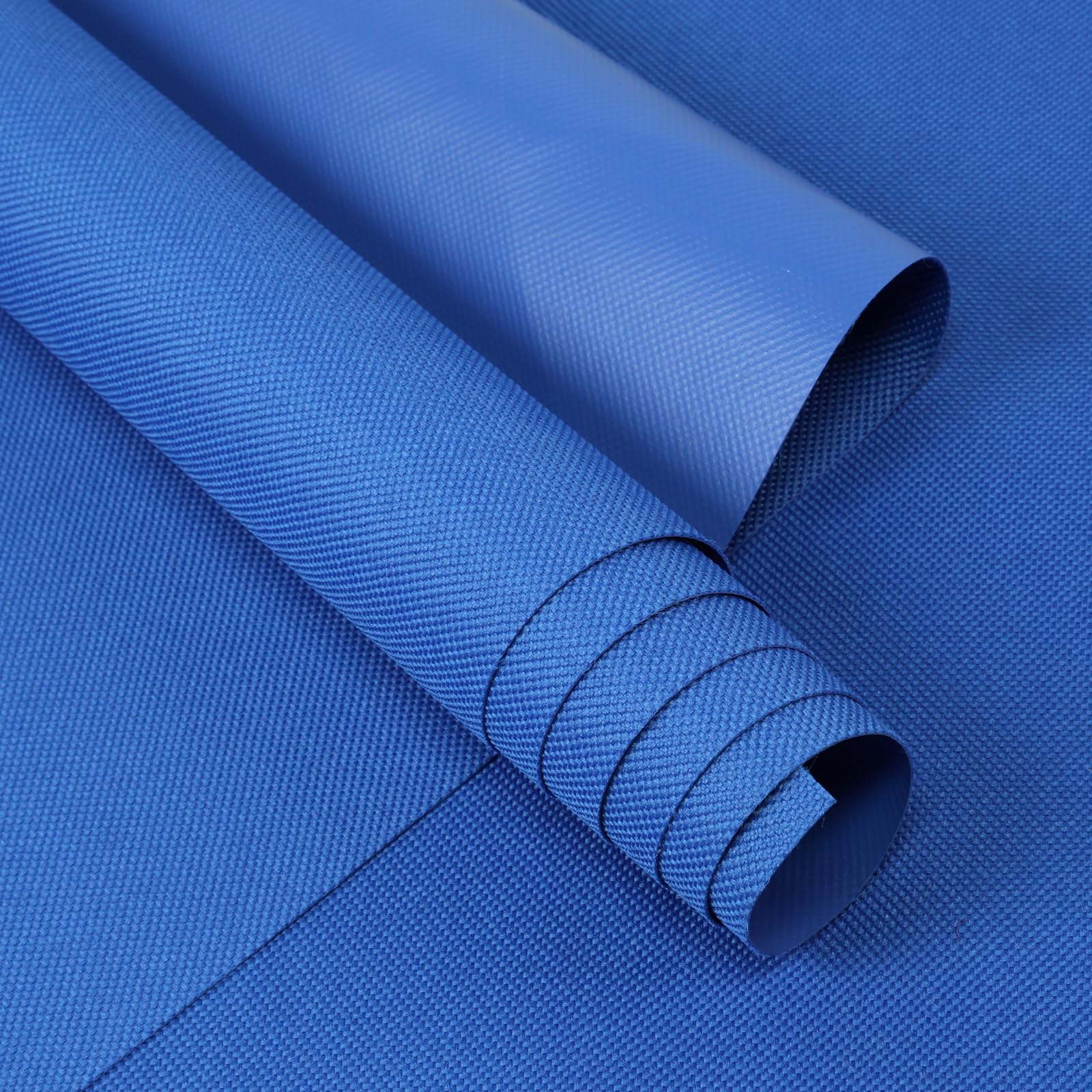
The blue twin of the grey marine canvas — pitched at RV windshields, stock trailers, and ATV seats.
This is the same 600 x 600 denier weave and PVC waterproof backing as the grey canvas above, but in a blue colorway and pitched as Cordura marine canvas. The pitch on the listing is all about RV and car sun protection — a windshield shade, a trailer cover, a boat curtain — and the spec line says it blocks 86% of solar radiation and offers a 70% shade factor at base, with the tighter version going up to 90% to 95%. If you are building something that goes on a vehicle, that shade factor is the number to trust over the description.
Owners mention the quality is good and the fabric is easy to handle — easy to sew, easy to fold, and tough enough for a battery compartment curtain in a boat. One owner made magnet-backed stock trailer curtains for sleeping inside at rodeos, reporting it held in the heat and blocked 100% of the light. Another made an ATV seat cover and wished the canvas were slightly heavier, though it still beat the original. So it handles the tough-cover job, sews neatly, and holds snaps without pulling out.
There is one sharp warning in the review record worth repeating: the fabric will fade noticeably in direct sunlight, with at least one owner reporting fading inside a month of full exposure. That is the honest trade-off for a PVC-backed canvas that costs far less than branded marine fabric. Use it for a shade, a curtain, a cover that lives in partial sun, or a trailer — and accept that putting it in full blaze all day erodes its color faster than a top-tier coated fabric would.
What works in its favor
- 600 denier twill weave takes a snap and holds a fold without pulling out.
- PVC backing gives it genuine waterproof properties for rain-exposed covers.
- Shade capability hits 86% solar radiation blocked at base, up to 90% to 95% on the tighter weave.
- Easy to sew and machine washable for cleanup between seasons.
- Blue colorway is nice for boat interiors and RV curtains.
What to know going in
- Fades in sustained direct sunlight, and one owner reported fading within a month.
- Slightly lighter canvas feel than some buyers expected for the denier count.
- Shipped folded, so press or hang it flat to reduce creases before sewing.
The right pick for: anyone covering an RV windshield, a stock trailer window, a boat compartment, or an ATV seat who wants marine-style canvas without the branded price.
Think twice if: your cover lives in blazing sun all day — a fade-resistant premium fabric will hold color longer.
Know the Specs
Denier And Weave Tightness
Denier measures how thick each thread is, so a 600D canvas carries far chunkier yarns than a 40D nylon — which is why one feels like a heavy blanket and the other feels like a thin kite skin. Thicker thread generally means better abrasion resistance and more material between you and the sun, but it also hangs heavier and takes more space. When the weave is tight enough that you cannot see through it against a bright window, you have most of the light-blocking power already.
Shade Factor And UV Resistance
Shade factor is the share of sunlight the fabric keeps off you — a 70% shade fabric lets meaningfully more light through than a 90% to 95% shade fabric, which is why the tighter weave is worth asking for when the project is a windshield or a canopy. UV resistance is separate: it is a finish that keeps the color from fading and the fibers from breaking down. A fabric can block a lot of light and still bleach quickly if the UV treatment is weak, so check both before you buy.
Waterproof Coatings And Backings
A “1000mm PU coating” is simply how much water pressure the coating resists before it leaks — around enough for moderate rain on a tent or cover, not a storm. PVC backings on canvas are heavier and more rubbery, so they handle sustained weather better but add weight and stiffness. Neither one is better in the abstract; you pick the one that matches how exposed your project will be.
Weight, Hand-Feel, and Drape
Listings use grams per square meter or ounces per yard to describe weight, and that number tells you how the fabric will behave in use. A light 48 g/m² nylon packs small and stretches easily; a 210 GSM tricot drapes smoothly over a body; a stiff 0.27 lb-per-yard blackout polyester lines a curtain with almost no weight added. If a fabric feels stiff and tent-like, that is a signal it will not fold gently — plan accordingly.
Common Questions
What is the best fabric for sun protection between ripstop nylon, spandex, and coated canvas?
Will a 70% shade factor fabric block enough sun for a car windshield?
How do I clean a PVC-backed waterproof canvas fabric?
Does the blackout drapery fabric work as a sunshade for a car window?
Can I sew a 600 denier canvas with a home sewing machine?
How much do these sun-protection fabrics shrink and fade outdoors?
How much fabric do I need to cover a standard window or a boat windshield?
Will 40D ripstop nylon hold up on a tent that stays outside all season?
What needle and thread should I use for ripstop nylon fabric?
How do I get the creases out of canvas fabric that shipped folded?
The Bottom Line
The winner on this shortlist is the 9KM DWLIFE Nylon Ripstop 6 Color Set, because it does the most jobs well at once — 40D ripstop that resists tearing, a 1000mm PU waterproof coating for rain, and a UV-resistant finish that keeps the six colors strong for three months outdoors. It is also the easiest pick to work with for anyone sewing a kite, a tent, or a tarp. If your project is a boat windshield or a trailer cover, the Blue GoldWheel 600D Canvas is the one that stands up to weather and holds a snap. And if all you need is darkness, the Blackout Drapery Shade Fabric blocks light completely and stays light in the hand. Whichever you choose, order based on the actual sunlight your fabric will face, not the color on the listing photo — a thicker weave almost always outperforms a prettier one.
How we choose
We do not accept paid placement. Every pick is matched to a real buyer and a real use-case; we do not hands-on test units.
Sources
Specifications: manufacturer listings and product documentation. Review insights: verified customer reviews, as of October 2026. Pricing: not shown on this page (it changes often); check the current price via the retailer link.
As an Amazon Associate, Aappliancez earns from qualifying purchases. This does not affect which products we feature.