Disclosure: Some links in this post are affiliate links. As an Amazon Associate I earn from qualifying purchases, at no extra cost to you. Learn more
Specs are compiled from manufacturer listings and verified buyer reviews and can change over time — please confirm the key details on the product page before buying.
Here is the short answer: the fabric matters as much as the vinyl, and cotton or a cotton-rich blend is where press-on designs hold best. Put a stretchy athletic jersey together with a standard cotton vinyl and the design will start to lift around the edges after a few washes. Match the material to the garment and most of your peeling problems disappear before you even heat the press.
This guide is built by comparing the manufacturers’ published specifications and the patterns across verified customer reviews, so you get each pick’s real strengths and trade-offs instead of marketing spin.
Heat-transfer work lives or dies on the match between the vinyl and the weave, so the picks below are grouped by which fabric each one genuinely suits, from everyday cotton tees to stretchy sportswear. This breakdown covers the best fabric for heat transfer vinyl and the exact materials each roll and sheet is built to grip.
Top Picks

How To Choose The Best Fabric for Heat Transfer Vinyl
The garment decides more than the roll does. A plain cotton tee gives a heat-transfer design a stable, matte surface to bond to. Stretchy activewear pulls and relaxes with every movement, so the vinyl has to flex alongside it or the bond shears off at the edges.
Match the vinyl to the weave, not the other way around
Standard heat transfer vinyl (HTV — a sheet of colored plastic film you cut, weed, and press onto fabric) is built for cotton and cotton blends. It grips a stable weave and stays put. Press the same roll onto lycra or spandex without any stretch ability and you are asking the design to handle movement it was never cut for.
Sportswear and nylon need a stretch formulation. Cricut SportFlex in this list is the clearest example — it is specifically made for polyester and nylon activewear and is designed to move with the body. If your project is jerseys, yoga pants, or swimwear, that is the type of vinyl to reach for.
Check the wash survivability before you buy
A design that peels after a handful of laundry cycles is a waste of a good shirt. Look at the manufacturer’s stated wash life. Cricut Value Iron-On claims it outlasts 25 washes, SportFlex claims 30, and the HTVRONT printable paper for dark shirts also states up to 30 washings. Those figures are the maker’s stated durability, not a guarantee — but they tell you which product is engineered for repeat laundry.
Weeding difficulty decides how much you enjoy the hobby
Weeding means picking out the tiny bits of vinyl you do not want before pressing. A stiff, sticky backer fights you on intricate lettering; a clean-release backer lets the negative space pull away in one piece. This matters most when you are cutting names, small logos, or fine script.
Side-by-Side Comparison
| Model | Best For | Roll / Sheet Size | Stated Wash Life | Fabric Suited To | Amazon |
|---|---|---|---|---|---|
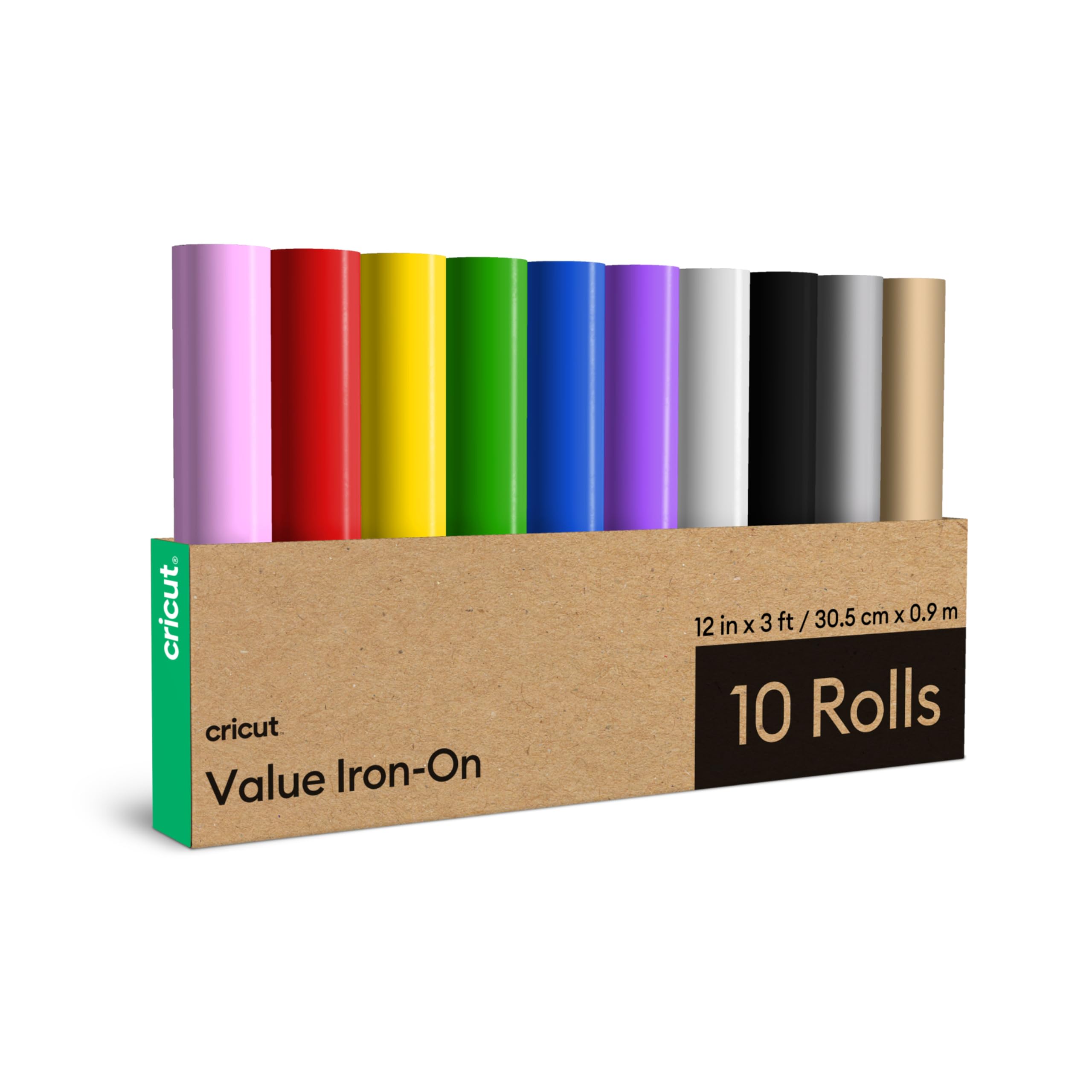
| Cricut Value Iron-On, Rainbow Sampler★ Best Overall | Color variety on cotton tees | 12 in x 3 ft (10 ct) | Outlasts 25 washes | Cotton & blends | Amazon |
| Cricut SportFlex Iron-On, WhiteStretch Specialist | Stretchy sportswear | 5 ft roll (1 ct) | Outlasts 30 washes | Polyester & nylon activewear | Amazon |
| HTVRONT White HTV Roll | High-volume single-color runs | 12 in x 20 ft | Tested 50+ wash cycles (maker) | Cotton, polyester, blends, lycra/spandex, athletic mesh | Amazon |
| TECKWRAP Printable Heat Transfer Paper | Photo prints on light & dark fabric | 15 sheets, 8.3 x 11.7 in | States repeated washes without cracking | Light & dark fabrics | Amazon |
| HTVRONT Heat Transfer Paper for Dark Shirts | Laser-printer dark shirt work | 25 sheets, 8.5 x 11 in | Up to 30 washings | Dark cotton & nylon | Amazon |
Detailed Reviews
1. Cricut Value Iron-On Rainbow Sampler
Our pick — 4.5+★ from 600+ verified ratings; the strongest balance of quality and price.
Ten rainbow colors in one pack, built for the cotton tee you already own.
This is the pack that gets a beginner’s cotton tee projects finished without buying ten separate rolls. You get 10 pieces at 12 in x 3 ft each, and Cricut states each one outlasts 25 washes. For plain cotton and cotton blends — the fabrics where standard HTV bonds most predictably — that is a sensible place to start. It sits at 4.5+ stars across 600+ ratings, and its value angle is why it takes the top spot.
What wins people over is the color range and the weeding. The heat-resistant clear backer (the stiff film the vinyl sits on before pressing) releases cleanly, so intricate lettering pulls away in one piece rather than shredding. Buyers report vivid, saturated colors that stay bright after repeat laundry, and one project note describes cutting intricate designs cleanly and pressing them without peeling through more than 25 washes. If you are decorating shirts for a family or a class, this is the sampler that covers the palette.
Here is the catch worth knowing before you buy. The listing photos show individual rolls, but the colors arrive on a single combined roll — measure your mat space and expect to cut your own strips rather than unrolling a neat spool per color. Adhesion also draws mixed reports: some projects grab on the first press, others need extra dwell time and pressure to lock in. Set your press a touch hotter and hold it longer than the quick-start card suggests, and the bond behaves.
What earns its keep
- Ten colors at 12 in x 3 ft each covers a full family crafting session
- Clear heat-resistant backer makes weeding intricate cuts noticeably easier
- Stated to outlast 25 washes on cotton and blends
- Cutting-machine tune, so Cricut users skip the guesswork
Where it asks patience
- Colors ship on one combined roll, not separate spools as pictured
- Adhesion is inconsistent project to project without a longer, hotter press
- Sampler format means you cannot restock a single favorite color easily
Reach for this if: you want a full rainbow of cotton-ready vinyl in one buy and you are comfortable dialing in your own press time.
Look elsewhere if: your project is stretchy activewear — this formulation is built for stable cotton weaves, not nylon jerseys.
2. Cricut® SportFlex Iron-On, White (5 ft)
The vinyl that bends with a jersey instead of cracking at the seam.
SportFlex is the answer to the question the rainbow sampler cannot solve: what do you press onto polyester and nylon activewear? Cricut made this specifically to stretch and flex on yoga pants, jerseys, and swimwear, and states it outlasts 30 washes.
Functionality is the thing that comes up again and again in the feedback, and it is easy to see why. The low-temperature application (it presses cool enough not to melt heat-sensitive synthetics) is what lets you decorate nylon without scorching it. Owners mention it adhering on the first try to aprons and swimwear alike. A baseball-team parent reports the vinyl went from weeding to pressing without trouble and was “still holding up seasons later” on a son’s uniforms.
The trade-off is scope. This is a 5 ft roll in a single color — 1 ct — so it is a focused purchase, not a sampler. Buy it when you have a stack of team jerseys to finish and you know you want white. If you need a spread of colors for cotton tees, the rainbow sampler above covers that job better and gives you far more pieces to work with.
The team-kit workhorse: a low-temp press that protects nylon, a stretch build that moves with spandex, and a stated 30-wash life — all aimed at sportswear the standard rolls cannot handle.
Know before you commit: single color, single roll. Confirm your batch of jerseys is the white you want before ordering, because this format is not built for mixing.
The sportswear verdict: if your project is jerseys, swimwear, or anything that has to flex, this is the correct formulation and worth the specialization.
Skip the stretch premium if: every shirt in your pile is plain cotton — standard vinyl handles that at a lower cost per project.
3. HTVRONT Heat Transfer Vinyl White HTV Rolls, 12″ x 20ft

One long white roll for the crafter who goes through white faster than anything else.
This is the biggest continuous run of vinyl in the group by a wide margin — 20 ft against the rainbow sampler’s 3 ft. If you cut endless white names and logos, one long roll beats restocking samplers. The maker also states it works out to about 52% less per foot than a 5 ft roll. It is the largest single color run here, and it is why it outranks the smaller rolls for repeat projects.
HTVRONT states the fabric range broadly: cotton, polyester, cotton blends, lycra/spandex, athletic mesh, and general textiles. That flexibility is a real draw if your projects vary — one roll that can do a cotton apron today and a blend tote tomorrow. One buyer’s home wash test reports the design coming through “40 degrees, more than 50 times” of washing without color loss or peeling. The maker also notes detailed instructions are included, which shortens the learning curve for a first-time user.
The honest friction here is the backer. It is very sticky, which holds your cut pieces in place but makes the transfer paper fight you when you try to remove it — the same stickiness that helps one project bogs down another. The marketing also describes the cut-and-weed step as easy, while the deeper feedback is mixed: some intricate designs peel away easily, and some large cuts tear into little pieces if you rush the weeding. Press it in stages and slow down, and the roll delivers the most yardage for the money.
The yardage winner: 20 ft of continuous white, a stated per-foot savings over 5 ft rolls, and a fabric range that stretches from cotton to spandex and athletic mesh.
The stickiness caveat: the backer holds tight, so plan extra time to release intricate pieces — and expect to press in stages for full adhesion.
Go big if: white is your primary color and you want one supply that covers cotton, blends, and stretch fabrics without ordering more every few weeks.
Not your roll if: you need a spread of colors — staying in one shade here is a deliberate single-purpose buy.
4. TECKWRAP Printable Heat Transfer Paper 15 Sheets
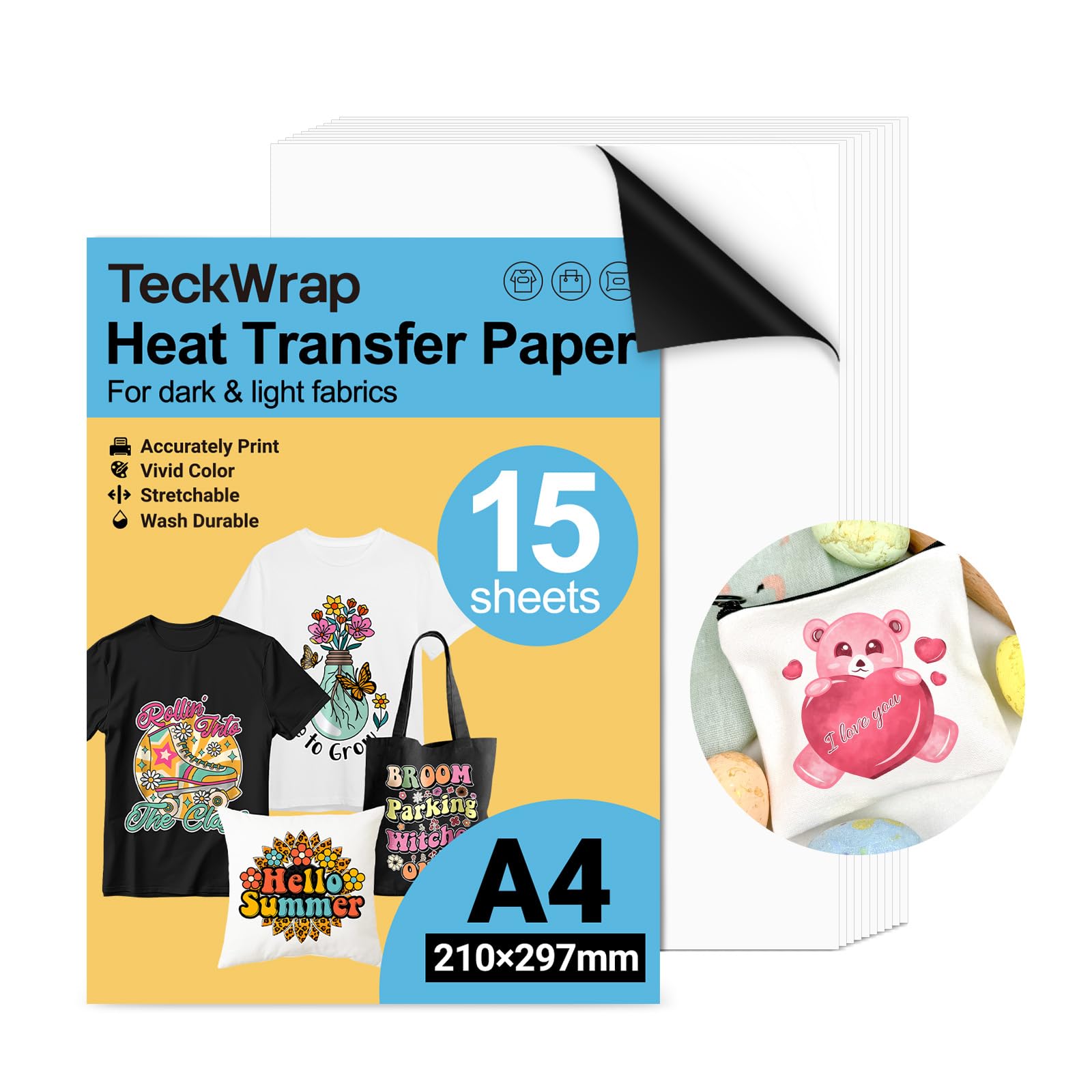
Photo prints on demand — the pick for full-color images rather than solid cut vinyl.
Cut vinyl gives you flat colors; this gives you a photograph. TECKWRAP’s 15-sheet pack is printable transfer paper for inkjet printers, and it handles both light and dark fabric. The 8.3 x 11.7 in sheets hold a full letter-size image, and the kit includes a reusable parchment sheet plus two transfer masks to help you line the design up. If your project is a photo, a detailed illustration, or anything with gradients, that is the capability this roll answers.
The press settings are forgiving — 310-330°F for 15-20 seconds — so a home iron can work without a full press setup. The print quality is what earns the trust here: sharp, vibrant prints with a clean matte white finish that reads professional, and the sheet feeds an inkjet without jamming or making a mess. The maker rates the coating at 7.0 for stretch and softness, so the finished print feels thinner than the plastic-like transfer paper many people start with.
What is genuinely mixed is how the print holds up over time. Some projects survive repeat washes without fading or cracking; others show ink bleed unless the shirt gets washed inside out on low heat. And the backing and color both draw a split verdict in the long-run feedback — great on some fabrics, less predictable on others. Use an inside-out wash and follow the parchment-and-press routine exactly, and the results hold far better.
The full-color route: inkjet printable, works on light and dark fabric, and presses at 310-330°F for 15-20 seconds — a photo tee without a screen-printing shop.
Laundry discipline matters: wash inside out on low heat to keep ink from bleeding, and do not expect every fabric to hold color equally.
Choose it if: your designs are photos or detailed artwork and you have an inkjet printer ready to feed letter-size sheets.
Pass it by if: you only cut solid-color logos — plain colored vinyl is simpler and skips the printer altogether.
5. HTVRONT Heat Transfer Paper 25 Sheets

Built for the black tee problem — 25 sheets aimed squarely at dark cotton and nylon.
Dark fabric is the case where printable paper earns its place, and this pack is set up for it. You get 25 sheets at 8.5 x 11 in plus 5 sheets of parchment paper, and HTVRONT states the formulation performs best on fabric that is more than 60% cotton. Nylon is also in the supported range, which widens it beyond plain tees. The no-mirror coating is the practical detail — you print the image right side up and skip the flip step that trips up first-timers.
Printer flexibility is unusually broad here. The paper works with laser printers (HP, OKI, and Brother are named) for higher printing speed, and it works with all inkjet printers for higher quality prints. The maker recommends pigment ink for inkjet use and states plainly that sublimation ink will not work. That makes it a match for a print shop juggling machines, and one print-shop owner reports it outperforming other well-known transfer brands on dark-color work.
The honest note is the quality split. Some users find it excellent and some find it poor, and the feedback is genuinely divided rather than unanimous praise. The parchment sheets are included because dark transfer paper needs that cover layer during pressing, so use them. Press on a dark-colored cotton or nylon surface, follow the directions carefully, and the result is soft and stretchable — the durable hand-feel the maker describes after up to 30 washings.
The dark-fabric specialist: 25 letter-size sheets, laser and inkjet support, a no-mirror coating, and an included parchment stack for press work on black and navy shirts.
Set expectations on consistency: the quality reads as split in owner feedback, so a careful press and the correct cotton-heavy fabric matter more here than on lighter projects.
The right tool for: dark-colored cotton and nylon shirts, especially if you print from a laser machine and want the no-mirror shortcut.
Wrong tool if: your designs go on light fabric or you rely on sublimation ink — this paper is formulated for opaque color on dark cloth.
Know the Specs
Wash Life (the number that decides durability)
The wash-life figure is the manufacturer’s stated count of laundry cycles the design should survive before it starts to fade, crack, or peel. It is the best single indicator of how well the vinyl bonds to a given fabric — a design that holds through many washes is a sign the vinyl and the weave are well matched. Cricut states 25 washes for its Value line and 30 for SportFlex, while HTVRONT states up to 30 for its dark-shirt transfer paper. Treat those as the maker’s rating, not a promise, and always follow the press and launder directions for the real performance.
Stretch Formulation (why activewear needs its own vinyl)
A stretch formulation is a vinyl engineered to flex and bend rather than stay rigid on the fabric. Standard vinyl bonds well to a stable cotton weave but can crack under the constant pull of activewear. SportFlex is made for polyester and nylon and is designed to move with the body — the reason it makes sense for jerseys, yoga pants, and swimwear. If a garment stretches every time it is worn, the vinyl has to flex with it or the edges lift first.
Backer and Weed-ability
The backer is the carrier film the vinyl sits on before you press it. A clear, heat-resistant backer that releases cleanly makes weeding — pulling away the unwanted negative space — far easier, which matters most on fine lettering and small logos. The TECKWRAP printable sheets add transfer masks to help align the design, while the HTVRONT dark-shift paper includes parchment for the press step. Fighting a sticky backer slows down every project, so this detail is worth checking.
Printable Transfer Paper and Ink Compatibility
Printable transfer paper lets you print a full-color image on an inkjet or laser printer, then press it onto fabric — no cutting machine needed. The TECKWRAP sheets call for an inkjet using pigment or dye ink, not sublimation ink, and press at 310-330°F for 15-20 seconds. The HTVRONT dark-shirt paper works with laser and inkjet printers but also rules out sublimation ink. If you rely on sublimation, choose a paper made for it or the print will not transfer correctly.
Common Questions
What fabric works best for heat transfer vinyl?
Can I put heat transfer vinyl on polyester?
How many washes should a heat transfer design survive?
Will heat transfer vinyl work on 100% cotton?
What is the difference between vinyl and printable transfer paper?
Can I use a home iron instead of a heat press?
Does printable transfer paper work in a laser printer?
Why does my heat transfer vinyl peel after washing?
How do I weed a design cleanly?
Can I layer heat transfer vinyl colors?
The Bottom Line
For most people, the strongest pick for fabric for heat transfer vinyl is the Cricut Value Iron-On Rainbow Sampler, because 10 colors at 12 in x 3 ft covers cotton and cotton-blend projects without buying ten separate rolls. If your garments stretch — jerseys, yoga pants, swimwear — the Cricut SportFlex Iron-On is the formulation built for that movement, rated to outlast 30 washes. And when your designs are photos or full-color artwork rather than solid logos, the TECKWRAP Printable Heat Transfer Paper handles light and dark fabric in one 15-sheet pack. The honest buying nudge: match the vinyl to the weave, press a touch hotter than a quick first attempt, and any of these five will hold far longer than a mismatched combination ever would.
How we choose
We do not accept paid placement. Every pick is matched to a real buyer and a real use-case; we do not hands-on test units.
Sources
Specifications: manufacturer listings and product documentation. Review insights: verified customer reviews, as of October 2026. Pricing: not shown on this page (it changes often); check the current price via the retailer link.
As an Amazon Associate, Aappliancez earns from qualifying purchases. This does not affect which products we feature.