Disclosure: Some links in this post are affiliate links. As an Amazon Associate I earn from qualifying purchases, at no extra cost to you. Learn more
Specs are compiled from manufacturer listings and verified buyer reviews and can change over time — please confirm the key details on the product page before buying.
If your eyes burn, scratch, or glue themselves shut by morning, the fix is usually not more daytime drops — it is the right product applied right before sleep. That is the whole job of night eye care: something that keeps the surface of your eye wet for hours while you are not blinking, not something that clears redness for a photo. Below are five products that actually do that work, split between single-use tears, a redness reliever for irritated mornings, a multidose lubricant, and two ointments built to sit on the eye overnight. Two of them are ointments, and if you wake up with dry, gritty eyes, that is where most people should start.
This guide is built by comparing the manufacturers’ published specifications and the patterns across verified customer reviews, so you get each pick’s real strengths and trade-offs instead of marketing spin.
You will see which formula suits sensitive eyes, which one blurs your vision on purpose, and which bottle is a fight to squeeze. Here is the breakdown of the eye drops for night that are worth keeping on the bedside table.
Top Picks


How To Choose The Best Eye Drops for Night
Night use changes the rules. During the day you blink roughly every few seconds, which spreads a drop across your eye and clears it fast. Overnight your eyelids stay shut for hours, so whatever you put in has to keep the surface wet without any help from you. That single fact separates a good daytime drop from a good nighttime one, and it splits the products here into drops and ointments.
Drops for the last blink, ointment for the whole night
A lubricating drop is thin and watery. You put it in, it coats the eye, and it feels normal within a minute or two. That makes it the right pick if your dryness is mild, if you read in bed, or if you cannot tolerate a greasy film. An ointment is thick and petroleum-based, and its whole purpose is to sit on the eye like a seal while you sleep. It will blur your vision, so you apply it and go straight to sleep. If you wake up with eyes that feel like sandpaper, the ointment family is generally the more direct answer.
Preservative-free is not a marketing word
Preservatives keep a bottle from growing bacteria, but they can also sting on contact, especially if you use drops many times a day. At night that sting is more noticeable because you are tired and your eyes are already irritated. A preservative-free formula removes that variable, and single-use vials remove it completely because each container is opened once and thrown away. The trade-off is packaging: vials are fiddly for anyone with arthritis or shaky hands.
Match the bottle to how you actually use it
A 30-vial box suits someone who needs a drop once or twice a day and wants zero contamination worry. A multidose bottle suits someone on a twice-daily routine who wants less waste, but it only stays clean for a stated window — check that window before you commit. And an ointment in a tube suits the person who has accepted that the last thing they do before sleeping is put something in their eye.
Side-by-Side Comparison
| Model | Best For | Format | Preservative-Free | Key Spec | Amazon |
|---|---|---|---|---|---|
| REFRESH CLASSIC Lubricant Eye Drops★ Best Overall | Zero-contamination nightly use | Single-use vials | Yes | 30 single-use containers | Amazon |
| Bausch & Lomb Advanced Eye Relief MaximumMorning Redness Fix | Red, irritated eyes in the morning | Bottle | — | 0.5 Ounce | Amazon |
| Optase Allegro Lubricant Eye Drops | Twice-daily routine, contact lens wearers | Multidose bottle | Yes | 0.33 fl oz | Amazon |
| Systane Nighttime Eye Ointment (2 Pack) | Waking with dry, gritty eyes | Ointment tube | — | 2 Pack | Amazon |
| Refresh P.M Lubricant Eye Ointment (2 Pack) | Overnight seal for severe dryness | Ointment tube | — | 0.12 Ounce, Pack of 2 | Amazon |
Detailed Reviews
1. Refresh Classic Lubricant Eye Drops
Our pick — 4.5+★ from 1,000+ verified ratings; the strongest balance of quality and price.
Thirty fresh vials, zero preservatives, and nothing to contaminate between uses.
If you want one box that handles your bedside routine without any hygiene questions, this is it. Each of the 30 containers holds one dose, so you twist it open, drop it in, and the rest goes in the bin. There is no bottle sitting open on your nightstand collecting whatever drifts past it. The formula is designed to act like your own natural tears, which is why it feels thin and unremarkable going in — that is the point.
The sizes tell you what kind of product this is. The box measures 6 x 4 x 4 inches and the whole thing weighs 0.3 ounces. Compare that to the Bausch & Lomb bottle in this list at 1.06 x 1.63 x 3.38 inches, and the Refresh takes up dramatically more shelf room for the same job. If nightstand space is tight, know that you are trading footprint for convenience.
Buyers praise its plain effectiveness and how gently it settles an irritated eye. Dry-eye sufferers reach for it between prescription drops and report it actually works. One thing worth hearing verbatim from the review pages, given how many buyers came to this after eye surgery: “I have ordered several boxes of these refresh tears at this point after my Lasik surgery and they helped my eyes so much!” The recurring gripe is not the liquid but the vial — they are small, and anyone with arthritis or a weak grip will find them genuinely awkward to open.
What earns these a permanent spot
- Preservative-free in every single vial, so nothing stings on a tired eye
- One dose per container means no contamination worry at any point
- Works fast on the mild dryness that builds through a screen-heavy day
- Accepted as an FSA and HSA eligible expense, depending on your plan
Where the box fights back
- The vials are small and stiff — hard to open with arthritic hands
- Single-use means ongoing packaging waste and repeat buying
- Thin consistency, so it will not hold a severe case all night
Reach for this if: you want a clean, preservative-free drop you can use as often as needed, including the last one before lights out.
Look elsewhere if: your eyes are bone-dry by morning or your hands struggle with small twist-off containers — an ointment tube is kinder on both counts.
2. Bausch & Lomb Advanced Eye Relief
The bottle you grab when last night’s dryness left your eyes looking bloodshot.
This is a different tool from the rest of the list, and it is worth being blunt about that. The active ingredient is a maximum-strength redness reliever — it constricts the vessels that make your eyes look red, and it adds moisture while it does. That makes it a morning product for irritated eyes after wind, sun, or a dry night. It is not the thing that keeps your eye wet for eight hours. The bottle is also the most compact object here by a wide margin: 1.06 x 1.63 x 3.38 inches, against the Refresh box at 6 x 4 x 4 inches. It disappears into a pocket or a desk drawer.
The relief it is actually known for is redness, and that is what buyers describe most. It clears the red without leaving that filmy layer some drops do, and it is comfortable going in. One buyer’s routine sums up how the bottle gets used: “I use every morning and sometimes throughout the day. My eyes get red easily. They are comfortable when applied and do take the red out.”
The honest catch is the sting. Feedback splits sharply here — some find it gentler than other redness drops, and some find it burns. There is also a real distinction between relieving redness and lubricating an eye, and this leans hard toward the former. Treat it as your morning cosmetic-and-comfort fix, not your overnight moisture plan.
The redness job: it does the one thing it is designed for — clears visible bloodshot eyes and soothes minor irritation from wind, sun, or a dry night — and it does it out of a bottle small enough to keep anywhere.
Where it ends: maximum-strength redness relief is not overnight lubrication. If your goal is waking without grit, this bottle will not carry you through the dark hours.
Worth keeping: a compact morning bottle for anyone whose eyes go red easily and who wants to look alert rather than irritated.
Not your night product: if the problem is dryness that builds while you sleep, this handles the look of it, not the cause.
3. Optase Allegro Lubricant Eye Drops, 0.33 fl oz
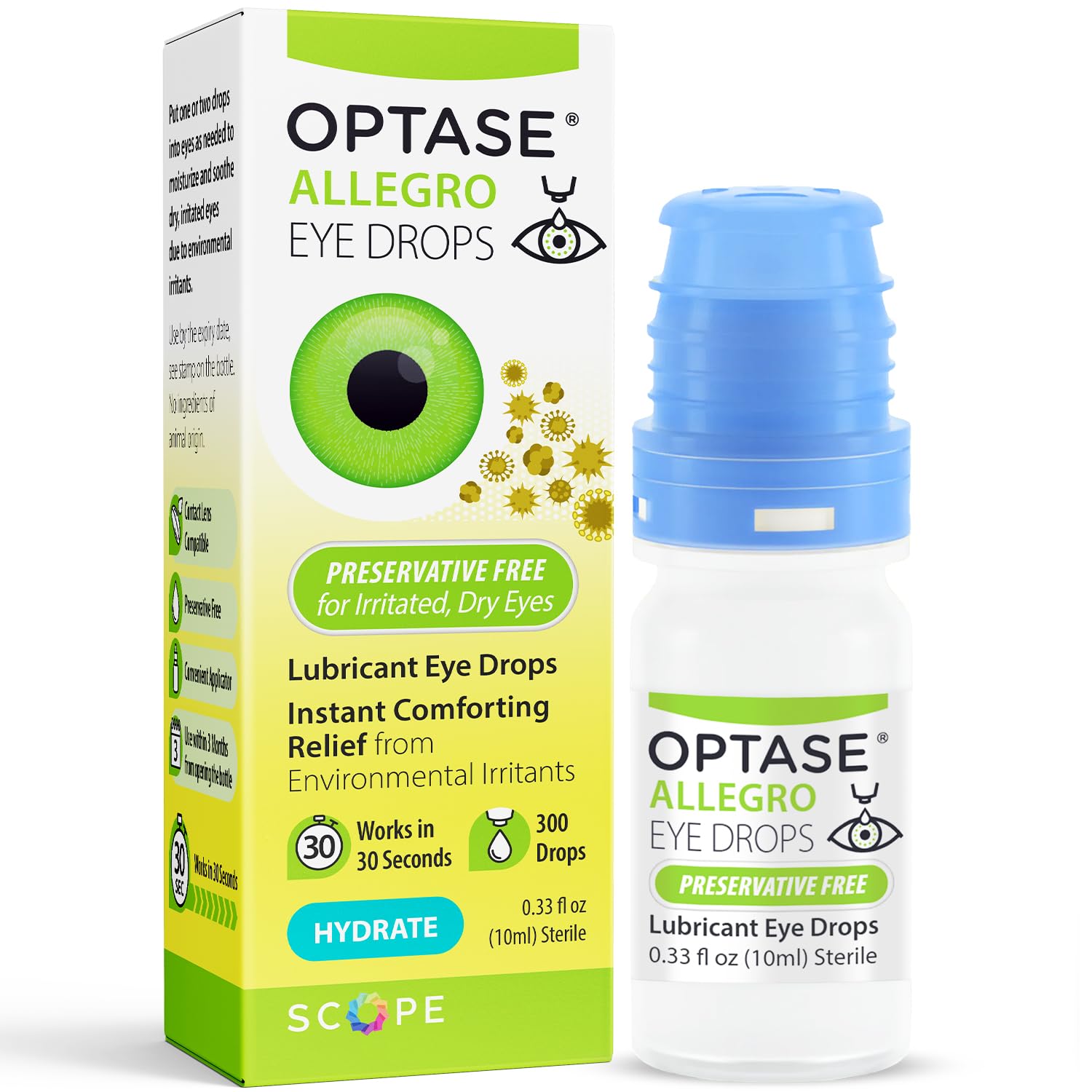
A preservative-free lubricant built for people who use drops twice a day, every day.
Here is a bottle that delivers up to 300 precise drops and is designed to stay sterile for up to 3 months after opening. That combination is what makes it a routine product rather than an emergency one. The HEC formula — a lubricating agent that works with your natural tears — forms a light protective barrier against environmental irritants. It is also formulated to be compatible with most contact lens types, with no residue or clouding reported in the maker’s description. If you wear lenses and still need moisture, that matters.
Buyers praise how soothing it feels, then how well it works on burning, itchy eyes. The results can take a few days rather than a few minutes — that is the pattern across feedback, and it is worth setting your expectations accordingly. One buyer’s experience, quoted directly: “Big eye relief after a couple of days using the product.” Steady twice-daily use is the routine this bottle was designed around, and the math backs it up: a single bottle covers roughly 8 weeks at that pace.
Now the caveat, and it is a real one. The bottle is the most-discussed frustration: it can need firm, prolonged squeezing, and the drops can land beside the eye instead of in it, which wastes product. Anyone with arthritis will find it harder still. This is a case of an excellent formula trapped in a stubborn container — the liquid itself draws warm, consistent praise for extreme dryness with no irritation.
Formula verdict: preservative-free, contact-lens compatible, and built for twice-daily use over months rather than a single bad night — the 3-month sterility window and up-to-300-drop count make it a genuine routine purchase.
The squeeze problem: budget for the bottle being annoying. Aim carefully, expect a learning curve, and know that a hard squeeze is normal rather than a fault.
Best fit: the twice-a-day drop user, contact lens wearer included, who wants one bottle on the shelf instead of a drawer of vials.
Think twice if: your hands are weak or arthritic, or if you need a drop that goes in cleanly on the first try in the dark.
4. Systane Nighttime Eye Ointment for Dry Eyes (2 Pack)

Thick, greasy, and blurry — and that is exactly why it holds all night.
If you have been treating overnight dryness with drops, this is the upgrade that changes the morning. It is a petroleum-based ointment that forms a moisture-sealing barrier over the eye, so hydration stays put for the hours you are not blinking. You apply it into the lower lid, close your eyes, and go to sleep. This is the defining difference from every drop on this list: drops coat and fade, ointment sits and stays.
It protects against the long stretch of sleep, and that barrier is what buyers praise most after the morning result. The effectiveness shows up as mornings without the usual blur and grit. As owners put it, the change is in the waking hours rather than immediately at application. The two-pack layout also means one tube can live by the bed and one in a travel bag without a repurchase in between.
Yes, it is greasy. Expect a film, expect your vision to soften the moment it goes in, and expect to be unable to read after applying. That is not a defect — it is how the barrier works. An occasional tube proves stubborn to open, so keep that in mind if your grip is weak. Used as the last step of the night rather than mid-evening, the greasiness stops being a problem at all.
Why it holds until morning
- Forms a physical moisture barrier that lasts through the night
- Petroleum-based and described as gentle enough for sensitive eyes
- Two tubes per pack for bedroom and travel
- Absorbs into the lower lid routine in seconds
Accept before you buy
- Blurs vision completely — apply it lying down, not standing
- Leaves a greasy film you will notice until you fall asleep
- Tube caps can resist opening on some units
The one to take: anyone whose dry eye is worst in the morning and who has already accepted that blurry-for-ten-minutes is a fair trade for clear eyes at 7 a.m.
The swap to make: if you need to read or use a screen after applying, use a lubricating drop and save this for lights-out.
5. Refresh P.M Lubricant Eye Ointment
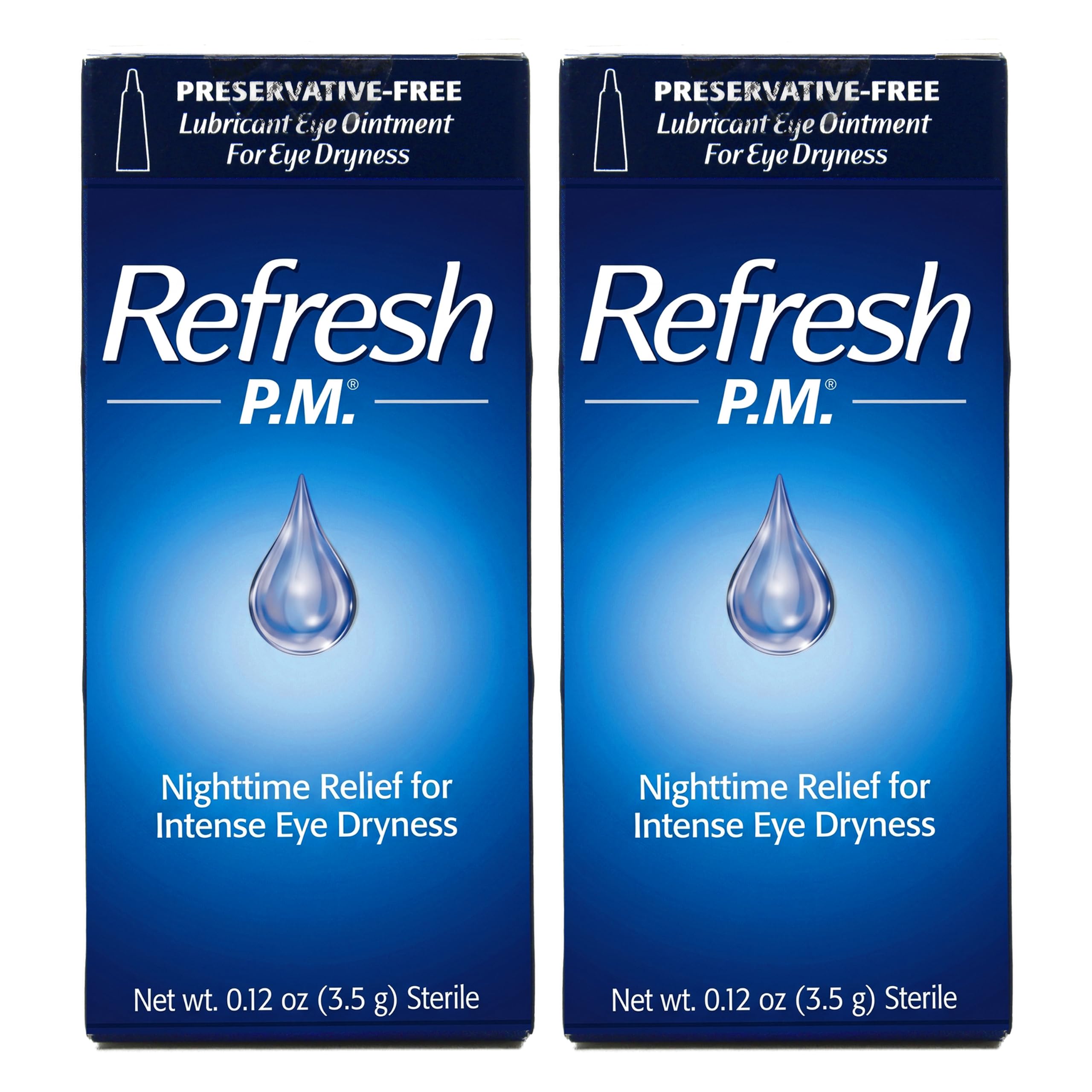
The bedside tube people keep re-buying because the difference next morning is obvious.
Two tubes of 0.12 Ounce each, and a simple promise: your eyes do not dry out while you sleep. That is the whole brief, and it is the one that matters most for anyone with genuine dry eye disease rather than occasional end-of-day tiredness. You put it in last thing, close your eyes, and the ointment holds the surface through the night.
The tube is easy to absorb into a routine. It pairs naturally with a warm eye mask before bed, and the morning result is eyes that blink clear for reading rather than eyes that need ten minutes of drops to open. Buyers keep coming back for its effectiveness, the quality that comes up over and over ahead of everything else. If you skip a night, the next day tells you.
The friction points sit in two places. It is messy, so a little goes a long way and a tissue nearby helps. And the cost is the most-debated topic in the feedback, with some finding it reasonable and others feeling it is steep for the volume you get. Blurred vision right after application is expected, same as any ointment. Neither point undermines the core job — this is a product people describe as the best they have tried for the condition, not a compromise.
Where it shines: an overnight seal for serious dryness, with the kind of effectiveness that makes the morning difference unmistakable and the tube feel like a fixed part of the bedtime routine.
What to expect: it is messy and it costs what it costs. Use a light touch, keep a tissue close, and judge it on the morning rather than the moment of application.
Choose it when: your dry eye is a diagnosed condition or a nightly certainty, and you want the tube that has earned repeat purchases by making mornings easier.
Hold off when: you want a drop that leaves your vision completely untouched — this one asks for the blur.
Know the Specs
Preservative-Free vs. Preserved
Preservatives stop bacteria growing in a bottle that gets opened again and again. The cost is sting, which you notice most when your eyes are already irritated at the end of the day. A preservative-free formula removes that sting entirely. Single-use vials go a step further, because each container is opened once and discarded, so there is no window in which anything can grow. A multidose preservative-free bottle like the Optase Allegro splits the difference — it stays usable for a stated sterility window, which that bottle lists as up to 3 months.
Single-Use Vials vs. Multidose Bottles
Vials suit occasional or on-the-go use and remove all contamination doubt. The trade-offs are cost per use, packaging waste, and small caps that are hard on arthritic hands. A multidose bottle suits a fixed twice-daily routine and produces less waste, but it asks you to track when it was opened and to throw it away at the end of the sterility window. Neither format is better in the abstract: choose vials for absolute cleanliness, a multidose bottle for a routine you can keep without thinking.
Drops vs. Ointment at Night
A drop is thin, comfortable, and clears your vision quickly, which makes it fine for the last minutes before sleep if your dryness is mild. An ointment is thick and petroleum-based, and its job is to sit on the eye as a sealing layer for hours. That is why ointment blurs vision and drops do not. If your problem is the waking-up-with-grit kind of dryness, the ointment family is aimed directly at it. If your problem is daytime discomfort between prescription drops, a lubricating drop is the better fit.
Redness Relief Is Not Lubrication
A redness reliever constricts the vessels that make the white of your eye look pink. That changes appearance and can soothe minor irritation from wind or sun. It does not keep your eye wet for the night. Reading a label that says both “redness reliever” and “lubricant” and assuming it does both jobs well overnight is the most common wrong assumption in this category. Decide which job you need first, then pick the product that matches.
Common Questions
Can I use an eye ointment instead of my regular drops at night?
Why is my vision blurry after applying a nighttime eye ointment?
How long can I keep a multidose preservative-free bottle once it is opened?
Are single-use vials better than a bottle for overnight use?
Can I use these eye drops while wearing contact lenses?
Do preservative-free eye drops really sting less?
Is a redness reliever the same as a dry eye drop?
How much ointment should I put in my eye at night?
Why does my dry eye feel worse in the morning than during the day?
Can I use an eye mask with a nighttime ointment?
The Bottom Line
For most people dealing with dry, irritated eyes at night, the strongest pick on this list is the REFRESH CLASSIC preservative-free vials, because 30 sealed single doses remove every contamination question and the formula works on the mild dryness that builds through a screen-heavy day. If your real problem is the gritty, glued-shut feeling at 6 a.m., the Refresh P.M ointment is the one built for that exact stretch of hours. Want a single bottle you use twice a day with up to 300 drops and a 3-month sterility window? The Optase Allegro covers that routine. And to have a compact bottle on hand for red, irritated mornings, the Bausch & Lomb redness reliever sits in that lane. Pick by which symptom hurts most — dryness or redness — and the choice makes itself.
How we choose
We do not accept paid placement. Every pick is matched to a real buyer and a real use-case; we do not hands-on test units.
Sources
Specifications: manufacturer listings and product documentation. Review insights: verified customer reviews, as of October 2026. Pricing: not shown on this page (it changes often); check the current price via the retailer link.
As an Amazon Associate, Aappliancez earns from qualifying purchases. This does not affect which products we feature.