Disclosure: Some links in this post are affiliate links. As an Amazon Associate I earn from qualifying purchases, at no extra cost to you. Learn more
Specs are compiled from manufacturer listings and verified buyer reviews and can change over time — please confirm the key details on the product page before buying.
Opening your eyes in the morning can hurt when map dot fingerprint dystrophy has left your cornea rough and uneven. Blinking can feel like sandpaper. The fix most eye doctors reach for first is simple: thick, preservative-free lubrication used often, before the surface dries out and sticks. This guide narrows the field to the lubricants that hold up for that job. It keeps each pick’s honest catch in plain view. That includes one product here that is a skin cream, not a drop, and should never go into your eye.
This guide is built by comparing the manufacturers’ published specifications and the patterns across verified customer reviews, so you get each pick’s real strengths and trade-offs instead of marketing spin.
You will see which formulas are preservative-free and which come in single-use vials (small one-dose containers you throw away after use) versus a squeeze bottle. You will also see how each one behaves in real daily use. That helps you match the bottle to your routine and pick the eye drops for map dot fingerprint dystrophy you will actually reach for every few hours.
Top Picks


How To Choose The Best Eye Drops for Map Dot Fingerprint Dystrophy
With map dot fingerprint dystrophy, the surface layer of your cornea (the clear front window of the eye) doesn’t hold together smoothly. The spots that break down are exactly where a lid can catch and tear. The most useful thing a drop can do is keep that surface wet and slippery, so the lid glides instead of gripping. That makes three things worth checking before anything else: thickness, preservative status, and how often you can safely reapply.
Preservative-free is the starting line, not a bonus
Preservatives are ingredients that stop a bottle from growing bacteria over weeks of use. When you lubricate a lot — which is exactly what this condition asks of you — those same preservatives can irritate an already fragile surface. A preservative-free formula is made to be used as often as you need. That is why nearly every pick below is preservative-free by design.
Thickness: a drop versus a gel-like shield
A watery drop spreads fast and feels clean, but it can drain away quickly. A thicker formula coats the eye and hangs on longer. That is what you want for overnight protection, or for the moments your surface feels roughest. The trade-off is a slightly blurrier, heavier feel for a short while after you put it in. Many people keep a thicker product for bedtime and a lighter one for daytime top-ups.
Vials versus a bottle: hygiene against convenience
A single-use vial is opened fresh, used, and thrown away. Nothing sits around collecting germs, which helps when you are applying many times a day. A multidose bottle is more portable and less wasteful. But it depends on the dispenser keeping the tip clean and the drops sterile. Think honestly about your day: if you top up at a desk or in a car, a bottle wins on convenience; if hygiene worries you most, vials win.
How to apply when your surface is uneven
Pull the lower lid down to make a small pocket, look up, and let a single drop fall in. Don’t aim straight at the center of your eye. Blink gently a couple of times, then keep your eyes closed for a moment so the drop spreads instead of draining. If a bottle is hard to squeeze, that effort matters. A drop that lands off-target is a drop wasted, so pick a dispenser your hands can actually manage.
Side-by-Side Comparison
| Model | Best For | Preservative-Free | Format | Available Size | Amazon |
|---|---|---|---|---|---|
| REFRESH PLUS Lubricant Eye Drops★ Best Overall | All-day top-ups | Yes | 70 single-use vials | 0.4 mL per vial | Amazon |
| Systane Ultra Lubricant Eye DropsTop Performer | Thicker protective shield | — | Multidose bottle | 10 mL | Amazon |
| Optixcare Eye Lube + Hyaluron | Pets with dry eyes | — | 20 g tube | 20 g | Amazon |
| Refresh OPTIVE MEGA-3 PF | Long-lasting single drop | Yes | Soft-squeeze multidose bottle | 10 mL | Amazon |
| Optase LIFE Sensitive Eye Cream | Skin around the eyes | Yes | Eye cream tube | 15 ML | Amazon |
Detailed Reviews
1. REFRESH PLUS Lubricant Eye Drops
Our pick — 4.5+★ from 4,500+ verified ratings; the strongest balance of quality and price.
Seventy fresh vials and zero preservatives — the simplest way to lubricate all day without thinking about germs.
This pick earns its spot because you can top up every few hours without ever worrying about germs in a bottle. You get 70 single-use containers, each holding 0.4 mL — enough for one session, then it goes in the bin. Nothing sits in a bottle growing bacteria between uses. That is the whole point of a preservative-free vial. It is the crowd favorite here by a wide margin, sitting at 4.5+ stars across thousands of owners.
What wins people over is how quiet it feels going in. Buyers report “no burning, instant relief lasting at least a couple hours.” The same calm experience shows up again and again with dry, sensitive eyes. It is also the format people actually carry. One vial covers both eyes, fits a purse or a desk drawer, and travels without a leak risk. If you have ever had a bottle tip over in a bag, you know why that matters.
The honest catch is the vial itself. The top snaps off, and a few owners find the flow a little slow right after you open it. There can be a beat between squeezing and the drop landing. You stop noticing after the first few, but it’s worth knowing if your hands aren’t steady. For map dot specifically, the bigger win is flexibility. Because there are no preservatives, you can use a fresh vial as often as your surface needs it, and keep one everywhere you sit.
Where this one shines
- 70 single-use vials at 0.4 mL each — a fresh, sterile dose every time you top up
- Preservative-free, so frequent daily use doesn’t add irritation to an already fragile surface
- One vial is enough for both eyes and slips into a pocket, purse, or travel bag
What to keep in mind
- Snap-off top can feel slow to release the drop on the first squeeze
- Single-use plastic adds up if you are using several vials a day
Reach for this if: you lubricate often and want a guaranteed-clean dose every single time, with no bottle to keep tidy.
Look elsewhere if: you would rather carry one compact bottle than a handful of vials through the day.
2. Systane Ultra Lubricant Eye Drops
A drop that acts a little like a gel, laying a protective sheet over a roughened surface.
Systane Ultra is built thicker than a plain watery tear, and that extra body is why it’s here. The maker claims it creates a protective shield over the eye — the feel of a drop with the staying power of a gel. For a surface that keeps breaking down and catching on the lid, that layer is exactly what you want between blinks.
Effectiveness is what carries this one, and the long-time loyalty says something. As one owner put it, “I have used this product for 45 years.” It is also stated as safe to use before and after contact lens wear, so you don’t have to choose between your lenses and lubrication. The 10 mL bottle (about two teaspoons) is compact enough for a bedside table or a work bag. The formula is aimed at extended protection rather than a quick splash that fades.
What you should weigh is consistency of value. A portion of buyers find it priced on the high side compared with a basic artificial tear. If you go through a bottle every couple of weeks, that adds up. It also isn’t the pick if you specifically need a guaranteed preservative-free formula for very frequent use — this one is a multidose bottle, not a single-use vial.
Why it earns its spot: a thicker formulation designed to shield the eye and hold its lubricating feel, in a 10 mL bottle that is easy to keep close by.
The honest trade: it is a multidose bottle at a premium-leaning value, so heavy daily users may prefer vials for hygiene and cost control.
Best suited to: anyone who wants a heavier, longer-hanging drop and doesn’t mind a bottle over vials.
Think twice if: you need a preservative-free dose every few hours — this format doesn’t offer that.
3. Optixcare Eye Lube + Hyaluron (20 g)
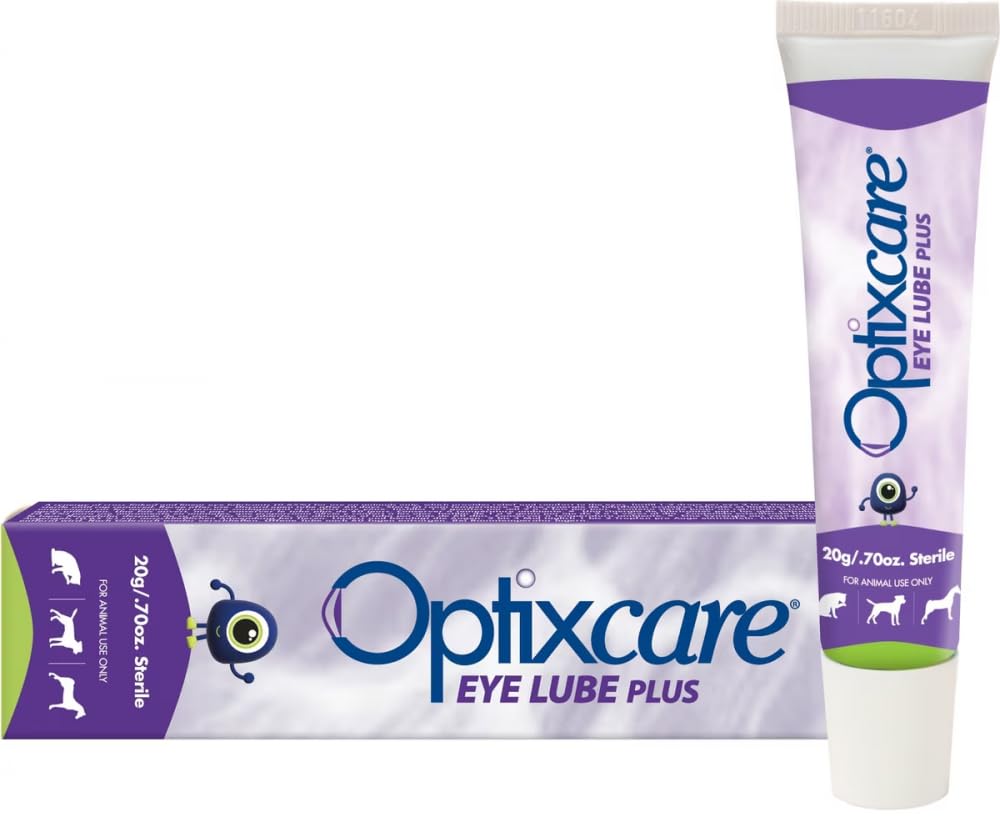
Not for your eyes — this one is built for the dog or cat whose eyes have gone dry.
Owners keep reaching for this tube for pets with dry, runny, or crusty eyes, and that’s the job it does. Here is the important clarity: Optixcare Eye Lube + Hyaluron is a veterinary product, and its listing is tagged for dogs. If you are shopping for your own map dot fingerprint dystrophy, stay with a human drop above.
For the pet side, effectiveness is what carries it. Owners describe it clearing up redness and tearing. One put it bluntly: “The prescription meds are approx and they don’t work! This works wonders!!!” The consistency is on the runnier side — a number of buyers describe it as watery — so a gentle hand helps when you are applying it to a wriggling animal. It comes as a 20 g tube, and the 5.24-inch length makes it easy to hold steady while you steady the pet with your other hand.
Compared with the human picks in this guide, it is far more compact. The REFRESH PLUS packaging runs 7 inches wide and 4 ounces, while this tube sits at 0.704 ounces. That is a pocket-sized tube, easy to keep in a grooming kit or a travel bag. Groomers use it to soften the crust that dries at the inner corner of a dog’s eye before wiping gently with a warm cloth.
The real-world read: a small 20 g tube owners reach for on dogs and cats with dry or runny eyes, praised most for actually working.
Where it stumbles: the consistency is watery rather than a thick gel, so a little care is needed to get it where it belongs.
Pick this for: a pet with dry or irritated eyes that needs a practical daily lubricant from a tube.
Do not pick this for: your own eyes — it is a veterinary product, and your map dot care calls for a human drop.
4. Refresh OPTIVE MEGA-3 PF Lubricant Eye Drops

One drop for a long stretch of relief — if your hands can work the bottle.
The label claims one drop provides 10+ hours of dry eye relief, though results may vary. That is the reason to consider it over a lighter tear. For map dot, fewer applications means fewer chances for the lid to drag on a dry surface, so a drop that hangs around earns its place. The formula also includes plant-based flaxseed oil, which contains omega-3s (a type of fatty acid), plus antioxidants. It contains no preservatives.
It is a genuinely soothing drop. Buyers describe immediate moisture without stickiness and comfort that lasts rather than a quick wet-then-dry. You notice it in the evening, when the day’s blinking has left your eyes feeling scraped. The soft-squeeze bottle uses a double lockout system intended to keep the drops sterile. The 10 mL size (about two teaspoons) is small enough to sit on a nightstand.
Now the part you have to plan around: the bottle is hard to squeeze. That is the recurring complaint, and it hits people with arthritis or a weaker grip hardest. You have to squeeze hard and long before a drop comes out, and the drop can shoot off-target. Compared with the REFRESH PLUS vials at the top of this list, the hygiene is handled by the dispenser rather than by single-use freshness, so you are trusting the bottle design. If your hands are strong and you want the longest gap between applications, this is a fair trade; if they are not, take the vials.
What makes it worth a look
- One drop is claimed to give 10+ hours of relief, so you apply less often
- Preservative-free formula with plant-based flaxseed oil containing omega-3s, plus antioxidants
- Soothes quickly and doesn’t leave a sticky or filmy feel
The parts to plan around
- The soft-squeeze bottle takes real pressure — tough on hands with arthritis
- Drops can dispense off-target when the squeeze finally releases
Go with this when: long-lasting relief matters most and your grip can handle a firm squeeze.
Steer away when: squeezing a stiff bottle is a struggle — the single-use vials are the kinder option.
5. Optase LIFE Sensitive Eye Daily Renewal Cream
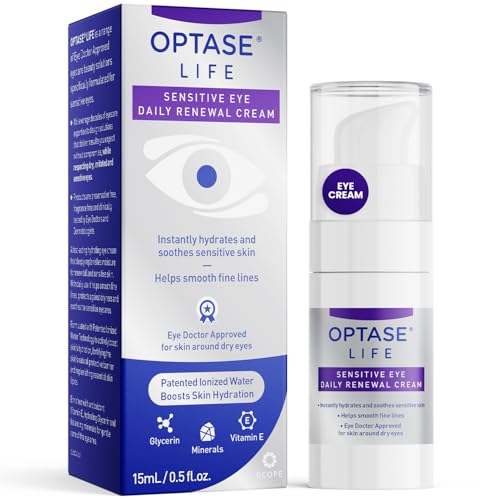
For the skin around your eyes, not the eye itself — read the label before you open it.
With only 13 ingredients, this cream is built to calm eyelids and skin that have turned flaky and irritated alongside a rough corneal surface. It is preservative-free, fragrance-free, hypoallergenic (made to be less likely to trigger allergies), and dermatologist tested, with Vitamin E, glycerin, and balancing minerals. It is not a drop. The label says external use only, and it must never go into your eye.
For the delicate skin around your eyes, it does its job well. Moisturizing is what people praise most, and it earns that reputation for sensitive lids that react to everything else. One buyer with very reactive skin described using it “with ZERO reaction,” applying just a dot smaller than a pea to the upper and lower lid. It also absorbs quickly and layers under makeup, so it can sit in a morning routine without a greasy shine.
The critical caution is the label. At least one buyer mistook it for an eye drop and ended up in pain — the packaging shows an eye image, so the mistake is easy to make. Keep it on the skin only, well outside the lash line, and never as a substitute for lubrication inside the eye. The 15 ML tube (about half a fluid ounce) is small but goes a long way: a tiny amount per application covers both lids.
The right job for it: soothing and moisturizing dry, flaky, or sensitive skin around the eyes with a short, gentle ingredient list.
The rule that matters: it is a cream, not a drop — external use only, and it does not replace eye lubrication.
This is your pick if: the skin around your eyes is the part that’s dry and irritated, not just the surface of the eye.
Keep looking if: you need lubrication inside the eye — that’s a drop’s job, and this cream stays on the outside.
Know the Specs
Preservative-free
Preservatives keep a bottle from spoiling, but they can irritate an already sensitive surface when you lubricate many times a day. A preservative-free formula is made to be used as often as you need. That is why the top picks here are labeled preservative-free, and why single-use vials fit this condition so well. Each dose is fresh, with nothing sitting around to spoil.
Single-use vial versus multidose bottle
A single-use vial holds one dose, then gets thrown away, so hygiene is guaranteed every time. A multidose bottle depends on its dispenser to keep the tip clean and the drops sterile. That is why features like a double lockout system (a design meant to keep the drops sterile) exist. Vials suit frequent top-ups and travel. Bottles suit people who want one compact container and don’t mind a firmer squeeze.
Thickness and staying power
A thicker, gel-like drop coats the eye and holds longer, creating a protective layer between your lid and the surface. A watery drop spreads fast and feels weightless but can drain away sooner. For an uneven corneal surface, longer coverage often means fewer applications and less friction through the day. The cost is a slightly heavier feel right after you apply.
Reading the label before applying
Artificial tears are made for use in the eye; a skin cream is not, even when the packaging shows an eye image. Check that the product says it is for the eye. Look for the words “external use only” or “do not apply into the eye” — those mark a product meant for the skin around the eyes. Mixing up the two is an easy, painful mistake.
Common Questions
Are preservative-free drops better for map dot fingerprint dystrophy than a regular bottle?
Should I use a thicker gel-like drop or a watery one?
How often can I put in preservative-free drops in a day?
Is a single-use vial more hygienic than a squeeze bottle?
Can I put the Optase LIFE cream into my eye?
Why is the Refresh OPTIVE MEGA-3 PF bottle so hard to squeeze?
How long does a 10 mL bottle or 15 ML tube last?
Can I use these drops if I wear contact lenses?
I have a pet with dry eyes — can I use the Optixcare tube on myself?
Do eye drop products qualify for FSA or HSA?
The Bottom Line
For most people managing a rough corneal surface with frequent lubrication, the eye drops for map dot fingerprint dystrophy winner is the REFRESH PLUS Lubricant Eye Drops. It pairs a preservative-free formula with 70 single-use vials that guarantee a clean dose every time. If you want a thicker drop that hangs on longer, reach for the Systane Ultra. And if your hands can manage a firmer squeeze and you want the longest gap between applications, the Refresh OPTIVE MEGA-3 PF is worth the effort. Just keep the Optase LIFE cream on the skin around your eyes, never inside, and leave the Optixcare tube to the pets.
How we choose
We do not accept paid placement. Every pick is matched to a real buyer and a real use-case; we do not hands-on test units.
Sources
Specifications: manufacturer listings and product documentation. Review insights: verified customer reviews, as of October 2026. Pricing: not shown on this page (it changes often); check the current price via the retailer link.
As an Amazon Associate, Aappliancez earns from qualifying purchases. This does not affect which products we feature.