Disclosure: Some links in this post are affiliate links. As an Amazon Associate I earn from qualifying purchases, at no extra cost to you. Learn more
Specs are compiled from manufacturer listings and verified buyer reviews and can change over time — please confirm the key details on the product page before buying.
Most exterior wood fails for one boring reason: the coating quit before the weather did. If you want a finish that shrugs off rain, sun and winter swings on decks, fences, railings and outdoor furniture, the picks below are the ones worth your weekend. The short answer: a fast-drying one-coat gloss for furniture and trim, an oil-based spar urethane that expands and contracts with the seasons for railings and fences, and marine-grade options for anything that gets brutal sun.
This guide is built by comparing the manufacturers’ published specifications and the patterns across verified customer reviews, so you get each pick’s real strengths and trade-offs instead of marketing spin.
You will learn which finish holds color, which one turns amber over time, and which one needs a fresh coat every single year. By the end you can pick the right exterior wood varnish for your project.
Top Picks


How To Choose The Best Exterior Wood Varnish
Exterior wood varnish is not one product with one job. It is a family of coatings that fall into two camps: film-forming varnish that builds a hard shell on top of the wood, and penetrating stain-sealer that soaks in and leaves the grain open. Knowing which camp you need solves most of the buying decision before you read a single label.
Oil-based spar urethane vs water-based polyurethane
Spar urethane is oil-based and formulated for outside. It stays slightly flexible after curing, so it moves as wood swells in humid months and shrinks in cold ones — that give is what stops a finish from splitting apart at the seams. Water-based polyurethane like the Varathane Triple Thick cures harder and drier, and it cleans up faster. For exterior work in full weather, oil-based wins on flex; for furniture, trim and teak tables that sit under a covered porch, water-based gives you the same shine with a quicker turnaround.
Match coverage to your square footage
Coverage is the number people get wrong. A quart and a gallon sound similar on a shelf but can differ by hundreds of square feet once spread. Measure your deck, fence or railings before you buy, then compare the stated coverage figure on the can to that total. Buy a can that only just covers your area and you will run short on the second coat, which is the coat that actually does the protecting.
Semi-transparent color and how it ages
Semi-transparent stain tints the wood while letting the texture show through. The catch is that the color you see in the can is not always the color you get, and the shade can drift warmer or darker once it cures on your particular timber. Treated pine, cedar, ipe and mahogany all pull a tint differently. Test on an offcut or a hidden corner board before committing a whole deck.
Side-by-Side Comparison
| Model | Best For | Base / Finish | Coverage | Recoat Time | Amazon |
|---|---|---|---|---|---|
| Varathane Triple Thick Polyurethane Gloss★ Best Overall | Furniture, doors and trim in one coat | Water-based / Gloss | 50 sq ft | 2 hours | Amazon |
| Varathane Outdoor Spar Satin UrethaneBest for Weather Swing | Railings, fences and full-sun decks | Oil-based / Satin | 190 sq ft | 8 hours | Amazon |
| Thompson’s WaterSeal Semi-Transparent Stain & Sealer | Big surface jobs on a budget | Waterproofing stain / Semi-Transparent | 150–400 sq ft/gal | — | Amazon |
| TotalBoat Lust Marine Spar Varnish | Boats, brightwork and heritage wood | Oil-based polyurethane / High-Gloss | 360–400 sq ft/gal | — | Amazon |
| KILZ Waterproofing Semi Transparent Wood Stain | Decks, siding and fences you want to clean easily | Acrylic / Satin | 250–500 sq ft | 1–2 hours | Amazon |
| Ready Seal Stain & Sealer for Wood | One-coat touch-ups and no-back-brush speed | Oil-based / Oil | 125–150 sq ft | — | Amazon |
| TWP 1501 Cedartone Low VOC Wood Preservation Stain | Log homes and long-term preservation | Low VOC / Matte or Textured | 350 sq ft | — | Amazon |
Detailed Reviews
1. Varathane Triple Thick Polyurethane Gloss Wood Finish
Our pick — 4.5+★ from 1,000+ verified ratings; the strongest balance of quality and price.
One self-leveling gloss coat turns a bare teak table into a wet-look showpiece in an afternoon.
Start with the number that decides your weekend: 32 fluid ounces covering up to 50 square feet. That is a furniture-scale can, not a fence-scale can. A teak table, a few door slabs, a run of interior trim — this quart handles those jobs with material left over. A full deck it will not do.
The real draw is the formula itself. It goes on as a thick, self-leveling coat that flattens out its own brush marks, and it dries to the touch in 2 hours. One buyer worked through four layers in a single day and had a cured, protected surface before dinner. Fireplace mantels, coffee tables, bar tops and paint-pouring projects all fit squarely in its lane, and the gloss keeps the finish clear rather than yellowing the grain underneath.
The catch is scope, not quality. This is a water-based polyurethane built around interior wood — furniture, doors, trim — and the 50-square-foot coverage keeps it there. If you are coating a full exterior deck that takes direct rain, step down the list to an oil-based spar urethane. For everything that lives indoors or under cover, this is the fastest low-effort win here.
The glossy case for it
- Dries to the touch in 2 hours — four coats in one day is realistic
- Self-leveling thick formula flattens brush marks on its own
- One coat protects, so a 32 fluid ounce quart stretches far on furniture
- Gloss finish reads clear and rich on teak, oak and walnut
Where it stops short
- 50 square feet of coverage means it is a quart for furniture, not a gallon for decks
- Acrylic paint-pour users report the odor needs real ventilation
Reach for this if: your project is interior furniture, doors or trim and you want a cured finish today rather than tomorrow.
Look elsewhere if: you need to cover a full exterior deck — the 50 square foot rating will leave you short.
2. Varathane Outdoor Spar Satin Urethane
This oil-based spar flexes with a pine door through three years of heat and humidity swings without cracking.
If your wood lives outside and gets rained on, this is the pick built for that life. It is an oil-based spar urethane, which is a varnish designed to flex with the wood as it expands and contracts through the seasons. That movement is what makes film finishes fail on exterior wood, and flex is exactly what stops it.
Coverage here is the standout: up to 190 square feet from one quart — nearly four times the reach of the Triple Thick quart above, on a similar shelf placement. Recoat after 8 hours, so a two-coat day is realistic. The satin finish keeps a natural cedar or white-wood look without a mirror glare. Owners who used it on a porch swing and on a handrail report the wood protected rather than glassy, which is the right outcome for a railing you grab with bare hands.
The trade-off worth naming is drying temperature. Oil-based urethanes cure slowly, and cooler or damp weather pushes the recoat window beyond the label’s 8 hours. Plan it for a warm, dry stretch. And like any spar varnish, it will amber slightly over raw pale woods — noticeable on untreated maple, invisible on cedar and pine.
The real strength: an oil-based formula that spreads up to 190 square feet and holds its color under UV, which is why the finish is the aspect owners leave the most good words about.
Plan around this: oil varnish wants warm, dry air to cure — a cold snap mid-project will slow every recoat.
Best for: exterior railings, fences, outdoor furniture and any wood exposed to real weather cycles.
Skip if: you need a quick indoor turn on furniture — this is oil-based and built for the outdoors.
3. Thompson’s WaterSeal Semi-Transparent Waterproofing Wood Stain and Sealer, Natural Cedar, 1 Gallon
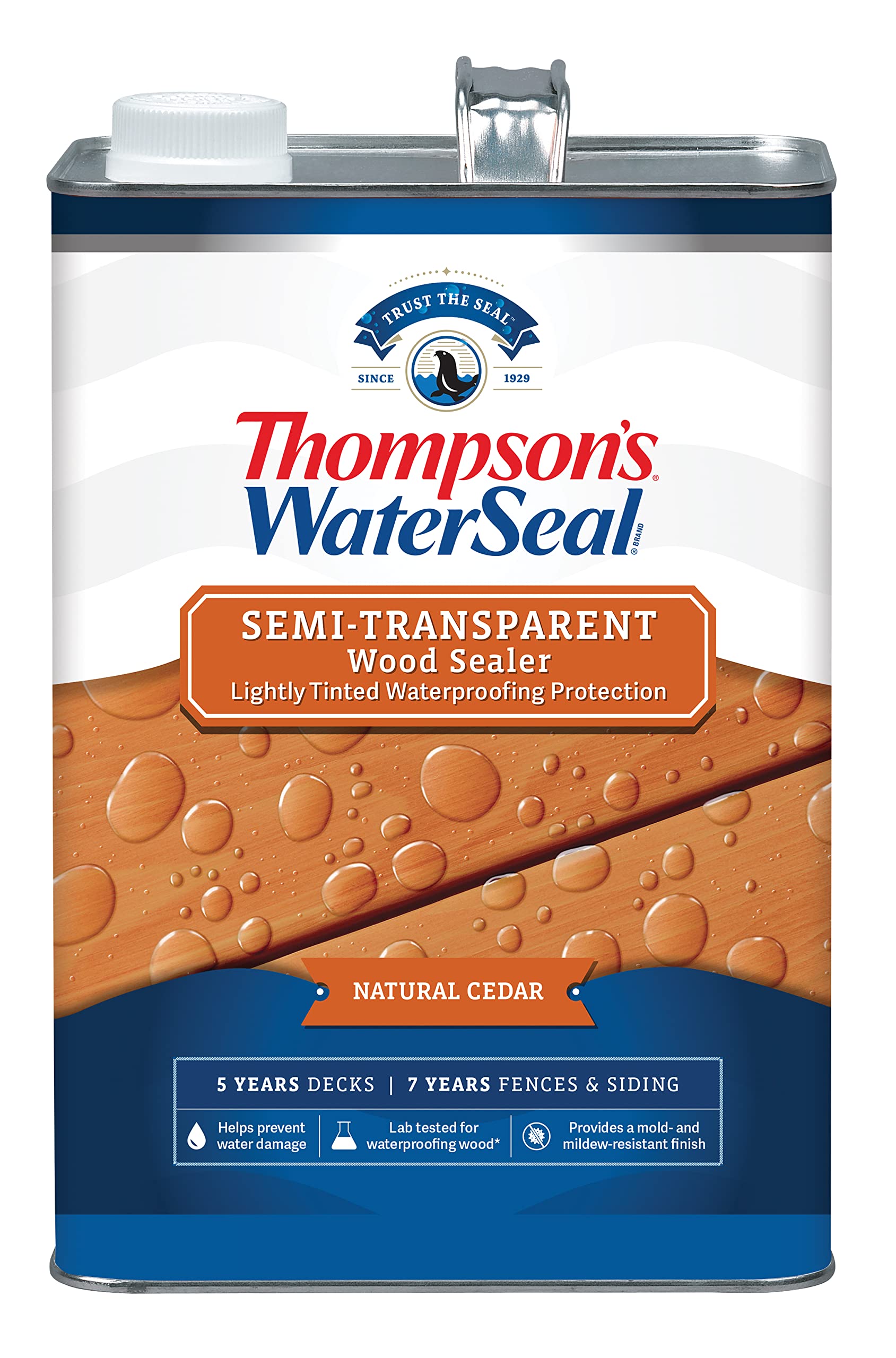
One gallon, 128 fluid ounces, and enough spread to finish a whole fence run without running back to the store.
Here is the comparison that matters: 128 fluid ounces against the 32 fluid ounces in the Varathane Triple Thick quart — a 4.0x difference in liquid volume. That is the whole pitch. When your project is a long fence, a porch railing system or a garage’s worth of shelving, buying by the gallon beats buying by the quart every time.
You get color and protection in one step, because this formula works as both a waterproofing stain and a sealer. It goes on damp or dry wood, so you can start right away instead of waiting a full sunny day for the timber to dry. It also has UV and fade-resistance chemistry (additives that block sunlight from breaking down the color), so the color holds season after season. You can apply it with a brush, a roller, or a sprayer.
The honest caveat is color drift and lifespan. Natural Cedar lands warmer and more orange than a swatch suggests on some decking, so test on a scrap board first. And the waterproofing film is a surface coating, not a penetrating sealer, so plan on refreshing the sun-exposed face every couple of years rather than treating it as a decade-long finish.
What it does well
- One gallon covers a large surface — 150 to 400 square feet depending on wood porosity
- Applies to damp or dry wood, so weather is less of a blocker
- UV and fade-resistance built into the color coat
- Meets ASTM D-4446 waterproofing standard
Know before you pour
- Natural Cedar reads more orange on some wood than the can suggests
- It is a surface film, so sun-facing planks want a refresh every couple of years
Buy this one when: you are covering a large exterior surface and want one gallon to stretch across it.
Think twice if: you need the exact shade on the can — semi-transparent cedar tints warmer in person.
4. TotalBoat Lust Marine Spar Varnish High Gloss Pint
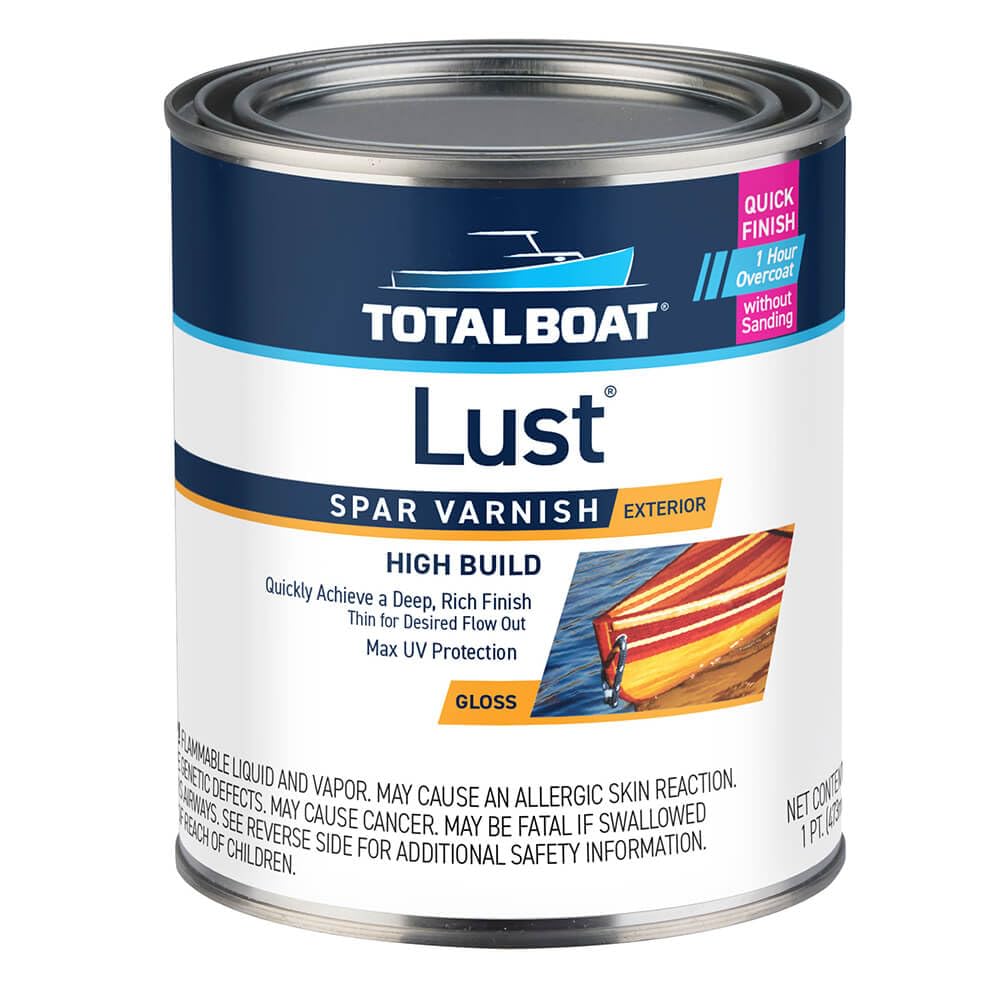
Built for a boat’s brightwork, but equally at home on a cedar bar top you want deep and glassy.
The headline spec is coverage: 360 to 400 square feet per gallon, and even this pint lays down a lot of finish for its size. It is an oil-based marine polyurethane varnish, which is the coating used on wooden boats because it holds up to salt air, spray and sun. That same chemistry is why it works on a front door or outdoor furniture that takes real weather.
This one beats the spar urethane above on build speed. It is a high-build, fast-drying formula (high-build means each coat lays down a thick layer) made for rapid recoating — you can apply multiple coats in a day with no sanding between coats, so bare wood becomes a deep gloss in about a day and a half. It contains UV inhibitors (additives that block sunlight damage) and stays flexible, so it does not crack as the wood moves. On a cedar table, buyers report it self-levels smooth and leaves a rich amber tone that enhances the grain rather than hiding it.
The trade-offs are real and worth knowing up front. This is a high-gloss film finish that behaves like glass — a floor coated with it becomes slick, and it demands respect. High-UV locations test its limits; a pulpit exposed to full sun can show failure over a season even after many coats, while shaded rails stay intact. And once a can is opened, it can skin over or dry out within months. Plan thin coats of about 10% thinner at the start, and expect to learn the technique on the first panel.
Why it earns its place: coverage of 360 to 400 square feet per gallon and a self-leveling high build that lets you take a bare cedar surface to a glass-like finish in roughly a day and a half.
The honest limit: it is a high-gloss film varnish — slick when cured and best left off walking surfaces.
Pick this for: boats, exterior brightwork, garden furniture and coastal wood that gets UV and spray.
Skip if: your project is a floor or anything with foot traffic — the gloss surface gets dangerously slick.
5. KILZ Waterproofing Semi Transparent Wood Stain, Cedar Naturaltone, 1-Gallon

The acrylic stain that lets you wash your brushes in the sink instead of hunting for mineral spirits.
If you have ever finished a project with a stiff, ruined brush and a headache from solvent fumes, this is the one that solves that. It is a 100% acrylic waterproofing stain, which means it cleans up with soap and water. No thinners, no solvents, no ventilation anxiety in a closed garage.
Coverage is generous — 250 to 300 square feet on the first coat and 500 to 600 square feet on the second. Recoat after just 1 to 2 hours, and the fully cured coating can be washed after 72 hours.
KILZ warrants the finish for years on decks and longer on fences and siding, and owners mention the color holding with rain still beading off. The one issue worth flagging is coverage variability — some wood surfaces drink more product than the can suggests, so buy a little extra for absorbent or weathered timber.
Where it wins
- 100% acrylic formula cleans up with soap and water
- Recoat after 1 to 2 hours, and wash the cured surface after 72 hours
- 250 to 300 square feet on the first coat, up to 600 on the second
- UV, fade and mildew resistant for exposed decks and siding
Honest notes
- Absorbent or weathered wood drinks more product than the can estimate
- This is a satin semi-transparent stain, not a high-gloss film varnish
The right call for: deck and fence owners who value quick recoat times and a cleanup that does not need solvent.
Not the one for: anyone wanting a deep, glassy high-gloss — the finish here is satin.
6. Ready Seal Stain & Sealer Dark Walnut 1 Gallon

A stain so forgiving you can coat a staircase for the first time and have it looking professional in about an hour and a half.
The defining feature here is the self-blending formula. It means no lap marks and no back-brushing — you apply it and walk away, without worrying about the wet edge or streaks. That matters most on big flat surfaces like decks and porches, where poor technique shows up as a patchwork of overlap lines. Here, brush or roller over and it levels itself.
It is an oil-based stain-and-sealer in one, so there is no separate priming or thinning step. It goes on clean, dries to a natural finish, and enhances the wood’s own grain instead of hiding it. On mahogany and cedar, customers note the color blending beautifully, with the grain still readable underneath. Coverage is 125 to 150 square feet — smaller than the gallon options above, so measure your deck before you buy.
The trade-offs to keep in mind: coverage per gallon is tighter, so a big deck needs more than one can. And on sun-blasted locations, the color can fade faster than you might like — owners in harsh-climate parts of the country report that the finish wants a touch-up more often than the label implies. In milder climates it holds up well for several seasons.
The thing everyone raves about: coverage and evenness — owners repeatedly note it goes a long way and that the self-leveling formula creates no overlap or stripes, even on first-timer jobs.
In hot-sun climates: expect to refresh the finish every year or two rather than counting on a multi-year run.
Go for this if: you are coating a deck or fence for the first time and want streak-free application without back-brushing.
Look past it if: you have a very large deck and want one gallon to do the whole job.
7. TWP 1501 Cedartone Wood Preservation Stain 1 Gallon

A penetrating preservative one owner returned to after thirty-two years, because the first coat on his cypress beams was still working.
This is a penetrating stain, not a film. It sinks into the wood rather than sitting on top of it, which means it cannot peel away the way a surface coating can. The finish here is matte or textured, and the formula is low VOC — the choice for staged projects in states with tighter solvent rules, or for anyone finishing indoors with the windows closed.
Coverage runs 350 square feet from the gallon. The color is cedartone, a warmer and slightly darker shade than many natural cedar products, so it reads as a richer tone on pale timbers and deeper on aged ones. Its EPA-registered preservative fights rot and structural decay, not just UV and water like a straight waterproofing stain.
What makes this stick around is the track record. Log-home reviewers point out it soaking deep into cypress beams and still beading rain months after application. Method matters: the wet-on-wet technique is recommended, so plan 2 to 3 coats while the surface is still damp. It goes on thin and handles large areas with a sprayer and pad, so a whole deck can move quickly. The strong odor is the trade — ventilate well, and expect it to linger for several days.
Why it earns its place: a 350 square foot gallon, EPA-registered preservative protection against rot and structural damage, and a low-VOC build — the most preservation-focused pick here.
The catch: the odor is strong and lingers for days, so this is a job for well-ventilated weather and a day or two of patience.
Reach for this if: you want a penetrating wood preservative for a log home, fence or deck and prefer a low-VOC formula.
skip it if: you need fast results in a tight week — the strong odor and long cure window want a slower schedule.
Know the Specs
Oil-Based vs Water-Based Varnish
Oil-based varnish cures with a flexible film that moves with the wood as it expands in humid weather and contracts in cold. That give is why spar urethane holds up outside on decks and railings. Water-based polyurethane cures harder and faster — often touch-dry in a couple of hours — and cleans up with soap and water, but the film is less forgiving of thermal movement. Use water-based for interior furniture, trim and anything under cover; use oil-based for full-weather exposure.
Coverage, Finish and Recoat Time
Coverage in square feet per can is the number that decides how much varnish you actually need. Denser timber, weathered boards and rough-sawn surfaces all drink more product, so stay on the higher end of the can’s range if your wood is old or porous. Finish type matters too: high-gloss builds the deepest shine but shows scratches and gets slippery; satin and semi-transparent finishes are more forgiving on outdoor surfaces. Recoat time tells you how the project fits your week — a 2-hour window lets you do multiple coats in one day, while an 8-hour oil-based window stretches over two days.
Common Questions
Can exterior wood varnish be applied over an existing stain?
How long does exterior wood varnish last on a deck?
What is the difference between spar urethane and marine varnish?
Do I need to prime exterior wood before varnishing?
How soon can I apply a second coat of exterior varnish?
Which exterior wood varnish is best for direct sun exposure?
Can I use exterior wood varnish on pressure-treated wood?
How do I stop exterior varnish from turning orange or amber?
Is low VOC exterior wood varnish as protective as a standard formula?
Do I need to sand between coats of exterior varnish?
The Bottom Line
For most projects indoors and under cover, the exterior wood varnish winner is the Varathane Triple Thick Polyurethane Gloss — one thick, self-leveling coat that dries to the touch in 2 hours, so you can protect furniture and trim the same afternoon. If your wood sits in full weather and has to flex through the seasons, grab the Varathane Outdoor Spar Satin Urethane with its 190 square foot reach and 8-hour recoat. And for log homes or any wood you want to preserve for the long haul, the TWP 1501 Cedartone with its EPA-registered, low-VOC preservative formula is the one to reach for. If you want a finish that forgives a first-timer’s brush technique, the Ready Seal is worth adding to the cart today.
How we choose
We do not accept paid placement. Every pick is matched to a real buyer and a real use-case; we do not hands-on test units.
Sources
Specifications: manufacturer listings and product documentation. Review insights: verified customer reviews, as of October 2026. Pricing: not shown on this page (it changes often); check the current price via the retailer link.
As an Amazon Associate, Aappliancez earns from qualifying purchases. This does not affect which products we feature.