Disclosure: Some links in this post are affiliate links. As an Amazon Associate I earn from qualifying purchases, at no extra cost to you. Learn more
Specs are compiled from manufacturer listings and verified buyer reviews and can change over time — please confirm the key details on the product page before buying.
An EVP recorder is a digital voice recorder you use to capture voices, room ambience, and stray sounds you might otherwise miss — and the model you pick changes everything about what you actually hear back. If you want the safest all-round buy, the Sony ICD-UX570 bundle is the one to start with: it holds 4.5+ stars and is the pick most people end up keeping. The rest of this list splits by job, from a 128GB magnetic unit that mounts on steel to a wearable AI pin that transcribes as it records.
This guide is built by comparing the manufacturers’ published specifications and the patterns across verified customer reviews, so you get each pick’s real strengths and trade-offs instead of marketing spin.
Some recorders store months of audio, others clean up background hiss, and a few run for days on one charge — knowing which of those matters for your sessions is half the decision. Here is what separates the strongest options in this evp recorder rundown.
Top Picks
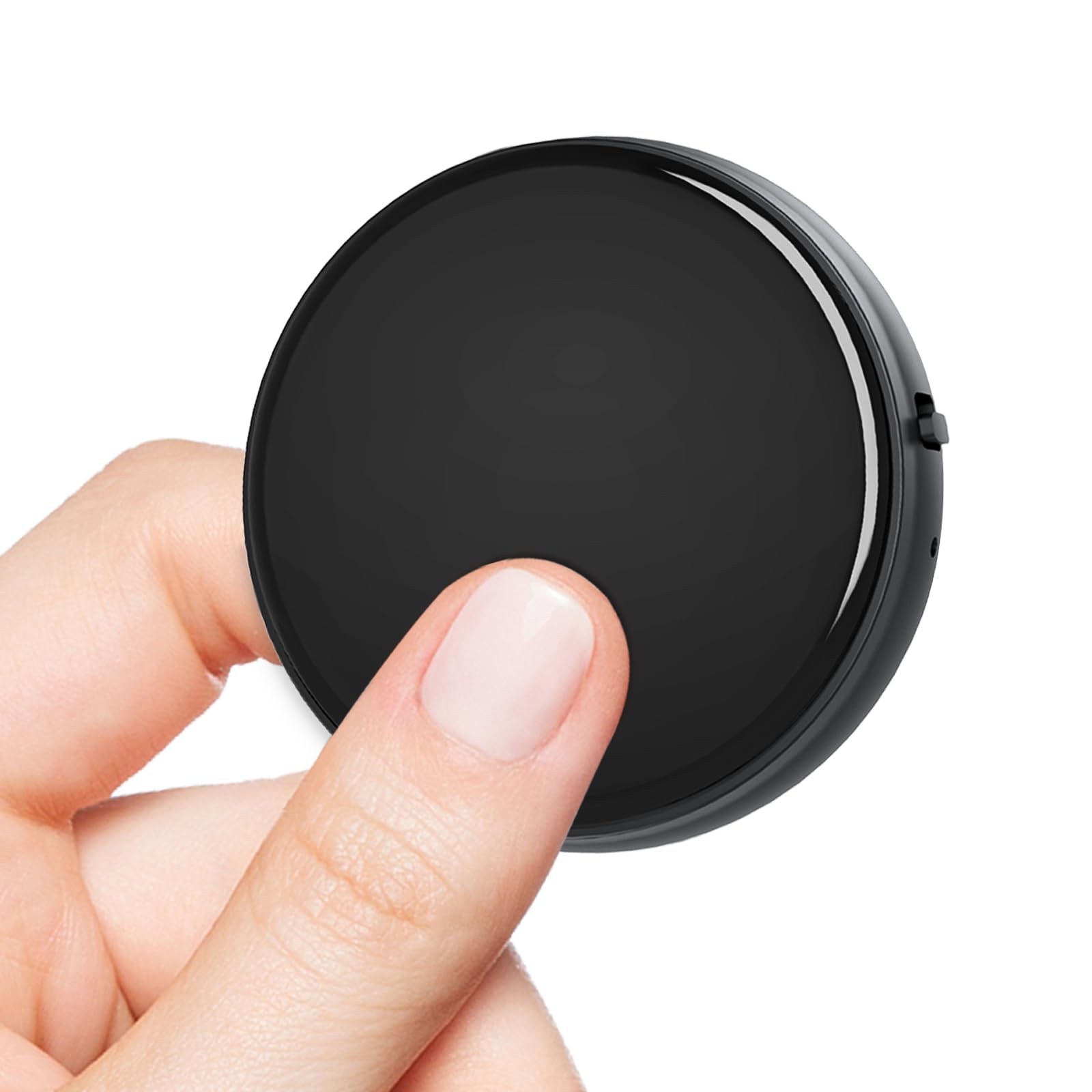
How To Choose The Best EVP Recorder
EVP work is about catching quiet, unscripted sound — a faint voice, a whisper across a room, a hum you only notice on playback. The wrong recorder gives you hours of hiss and a drained battery at the worst moment. The right one records for hours, holds plenty of files, and cuts room hiss without smearing the voices you’re trying to catch.
Recording time and storage come first
A session can run for hours, and you don’t want to stop mid-sitting to clear space. Digital recording time (how much audio the unit can hold in total) and memory capacity (the raw storage in gigabytes) are the two numbers that set your ceiling. For context, the magnetic COHANA unit lists 9500 hours of digital recording time against 159 hours for the Sony, and 128 GB of storage against the Sony bundle’s 32 GB. Those are very different working limits.
Noise reduction versus raw honesty
A noise-reduction layer (a filter that strips background sound) makes a busy room sound cleaner. The trade-off is that aggressive filtering can round off the very soft sounds EVP work is chasing. Several units here let you adjust the level, so you can record wide-open when you want everything and tighten it later.
Voice activation and battery
Voice-activated recording (auto start when sound passes a set level, auto pause when the room goes quiet) protects both your storage and your battery during long silent stretches. On a recorder you carry daily, battery life matters more than screen quality — check the continuous-recording figure and how it recharges, since built-in USB means one less cable to lose.
Side-by-Side Comparison
| Model | Best For | Recording Time | Storage | Battery / Power | Amazon |
|---|---|---|---|---|---|
| Sony ICD-UX570 Bundle★ Best Overall | All-round meetings and lectures | 159 hours | 32 GB | Built-in USB charge | Amazon |
| COHANA 3072Kbps MagneticHuge Storage | Massive storage, hands-free mounting | 9500 hours | 128 GB | USB-C, magnetic | Amazon |
| Olympus WS-883 | Journalists and field reporters | 2080 hours | 8 GB | USB-A charging (2-AAA) | Amazon |
| Tonfarb 64GB | Budget daily carry | 48 hours | 64 GB | 600mAh battery | Amazon |
| AFFETUNI 128G Magnetic | Long unattended sessions | 600 hours | 128 GB | 35 days rated | Amazon |
| Plaud NotePin S | AI transcription and summarising | 1200 minutes | 64 GB | 20 hours recording | Amazon |
| Olympus VN-8100PC | Simple everyday dictation | 843 hours | 2 GB | 2.4 oz, one AAA | Amazon |
Detailed Reviews
1. Sony ICD-UX570 Series Digital Voice Recorder Bundle
Our pick — 4.5+★ from 500+ verified ratings; the strongest balance of quality and price.
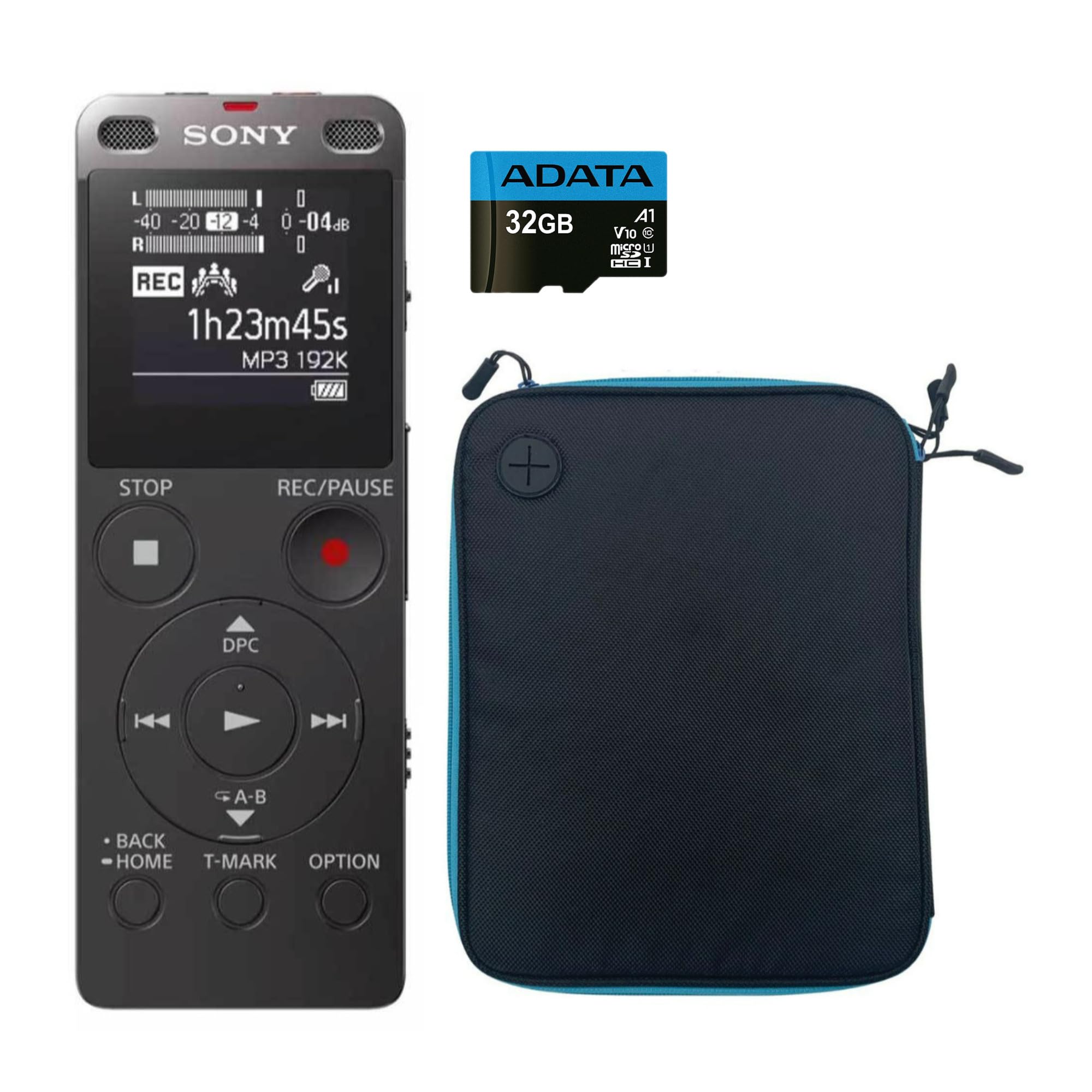
A stereo meeting recorder with 159 hours of MP3 storage, built-in USB, and a 32GB card in the box.
Start with portability and quiet clarity. The ICD-UX570 is a handheld stereo recorder (a built-in two-sided microphone that captures a room rather than one voice) with 4 GB of built-in memory. That gives you up to 159 hours of MP3 recording, or 5 hours and 20 minutes at the highest-quality Linear PCM setting (an uncompressed format that captures more detail). The bundle adds a 32GB MicroSD card and a zipper hard case, so you carry spare storage and protection from day one.
What wins people over is the build quality and the ease of use — the recorder earns more praise for its solid feel than any other single thing. The review pages sum it up: “This small recorder replaced a Sony recorder we used for over 13 years. 1/4 the size, mo batteries to change, excellent sound recordings. Very easy to use.” Plug the built-in USB straight into a laptop and files transfer like a thumb drive. A backlit display keeps the menus readable in a dim room, and the mic input lets you add an external microphone when you want one.
The recurring gripe is the slide-out USB port — it doubles as the only stand for the unit, so charging on a laptop puts bending stress on that tab. A short USB extension cord takes the strain off. One bundle note worth knowing: the included case ships large and soft on some orders rather than the small hard case pictured. Neither flaw touches the recordings themselves, which is why this stays at the top.
Where it earns its keep
- 159 hours of MP3 recording plus a 32GB card and hard case in the box
- Built-in USB means no separate cable to forget
- Stereo microphone with an external mic input for flexibility
- Backlit display and a menu you can learn in minutes
Small things to plan around
- Slide-out USB port does double duty as the stand — add a short extension cord
- Case size in the bundle can vary from the listing photos
Reach for this one: if you record lectures, meetings, or acoustic sessions and want one unit that just works.
Think twice: if you need many hundreds of hours of unattended storage without touching a card.
2. COHANA 3072Kbps Magnetic Voice Recorder
Four magnets hold it anywhere, and 128GB holds an enormous amount of audio.
If you leave a recorder sitting for a full session and never want to think about space, this is the pick. It carries 128 GB of storage and rates 9500 hours of digital recording time — compare that to the Sony above at 159 hours and 32 GB, and the gap in working ceiling is vast. Four powerful magnets let you stick it to any steel surface, so it holds itself in place instead of balancing on a shelf.
The mic runs a stereo, noise-cancelling setup and lets you dial the bitrate (the data rate per second of audio) from 32 to 3072Kbps. Higher bitrate means more detail and bigger files; lower means you stretch storage and still get clear speech. Voice activation kicks in when sound passes 45dB (decibels — a rough measure of loudness, roughly where a quiet conversation sits) and pauses when the room falls silent. A hybrid port takes a 3.5mm headphone jack and USB-C charging, so playback and powering up happen without a computer.
The honest catch is consistency. Most owners get working units that record clear audio and mount easily, but this model has a mixed record — some units never power on, and some run out of charge quickly. Treat it as a unit to test the day it arrives, and it rewards the effort with more storage than anything in this list.
Capacity winner: 9500 hours and 128 GB mean far fewer offloads than the Sony, and the magnets make placement genuinely hands-free.
The trade-off: batch consistency is the weak point — verify yours powers on and holds charge during the return window.
Best for: anyone who needs weeks of audio without touching a card.
Look elsewhere: if you want the safety of a long, steady track record.
3. Olympus WS-883 Digital Voice Recorder

A 77 g field recorder with stereo mics, a low-cut filter, and USB-A charging from any laptop.
For a working reporter, the numbers that matter are how long it runs and how little it weighs. The WS-883 weighs 77 g and carries 8 GB of internal memory for 2080 hours of maximum recording. Two real stereo microphones capture left and right separately, and a low-cut filter trims low-frequency rumble (deep hum and handling noise) so voices sit clearer. It records in Linear PCM or MP3, and a USB-A connector tucks straight into a laptop for charging. Press-and-go simplicity makes it easy to hand to someone else, which is why it works for a 96-year-old user as happily as a journalist.
The 128GB COHANA stores sixteen times the capacity, but the WS-883 trades that for a calm, known quantity with build quality at the front of owner praise — more than any other aspect. A retractable USB slider recharges it off a laptop, and a room-recording preset lets you start in a setting that suits a conference without fishing through menus.
The genuine snag is the menu language: several units ship with a Japanese interface, and the menu is the one area where feedback splits. If you buy, set the language first thing. The low-cut filter and stereo mics keep this a real field tool, not a toy — it just needs that one setup step.
Built for the field: 77 g, 8 GB, true stereo mics and a low-cut filter — a compact rig that recharges over USB-A wherever there’s a laptop.
Set it up first: the menu can arrive in Japanese, so flip the language before your first session.
Pick this if: you record interviews on the move and want something light enough to forget.
Skip if: the idea of navigating a foreign-language menu on day one puts you off.
4. Tonfarb 64GB Digital Voice Recorder
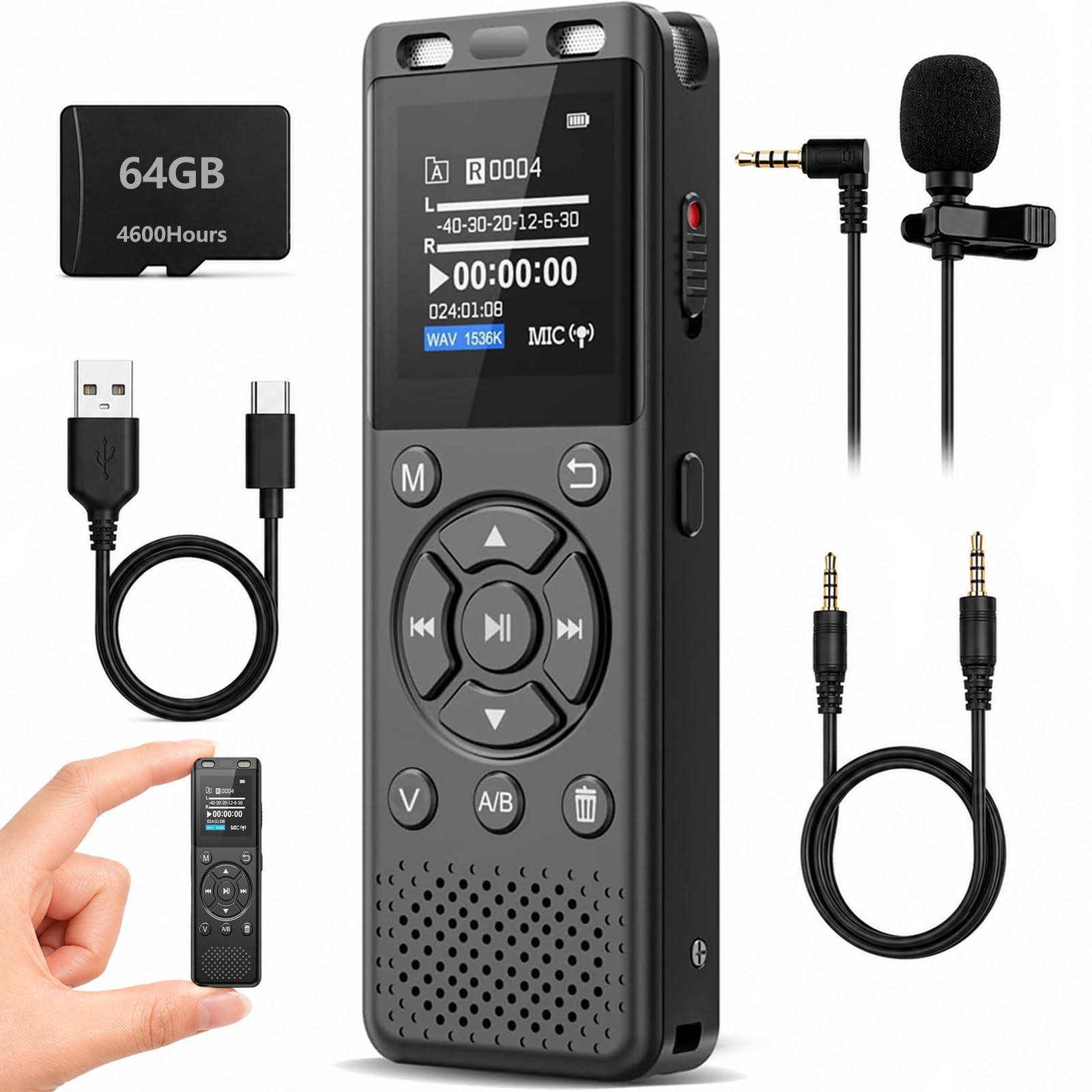
One push records, one push saves — no menu dive before the moment passes.
The Tonfarb wins on pure simplicity of storage: 64 GB built in through a TF card (a small memory card, pre-installed), enough for up to 4,600 hours of recordings. A 600mAh battery (milliamp-hours — a measure of charge) supports up to 48 hours of continuous MP3 recording at 32kbps. The controls are the real star — push the side button up to record even from off, push down to save. Press play and it just plays.
Storage aside, ease of use is what buyers praise most, with compact size close behind — it fits a bag or a pocket without bulk. A 1.44-inch screen keeps navigation visible, and password protection locks your files away from idle eyes. It records WAV up to 1536kbps PCM (uncompressed, detail-first audio) with automatic noise reduction, and handles voice activation, scheduled recording, A-B loop playback, and file segmentation. A USB connection turns it into a plain storage drive when you’re offloading.
The catch is consistency in sound. Some owners find audio choppy or noisy in certain rooms, and a smaller group hits reliability snags. The build is solid and the buttons firm and responsive, but expect it to do its best work in a reasonably quiet setting. A small step down in fidelity from the pricier picks, at a lower entry point.
Simple and capable: one-click recording, 64 GB of built-in storage, a 1.44-inch screen, and extras like A-B loop and password protection.
Room-dependent: sound quality splits between owners, so quieter spaces suit it best.
Bang-for-buck pick: for students and note-takers who want storage and simplicity without overspending.
Move up the list: if pristine audio in a crowded room is non-negotiable.
5. AFFETUNI 128G Magnetic Voice Recorder
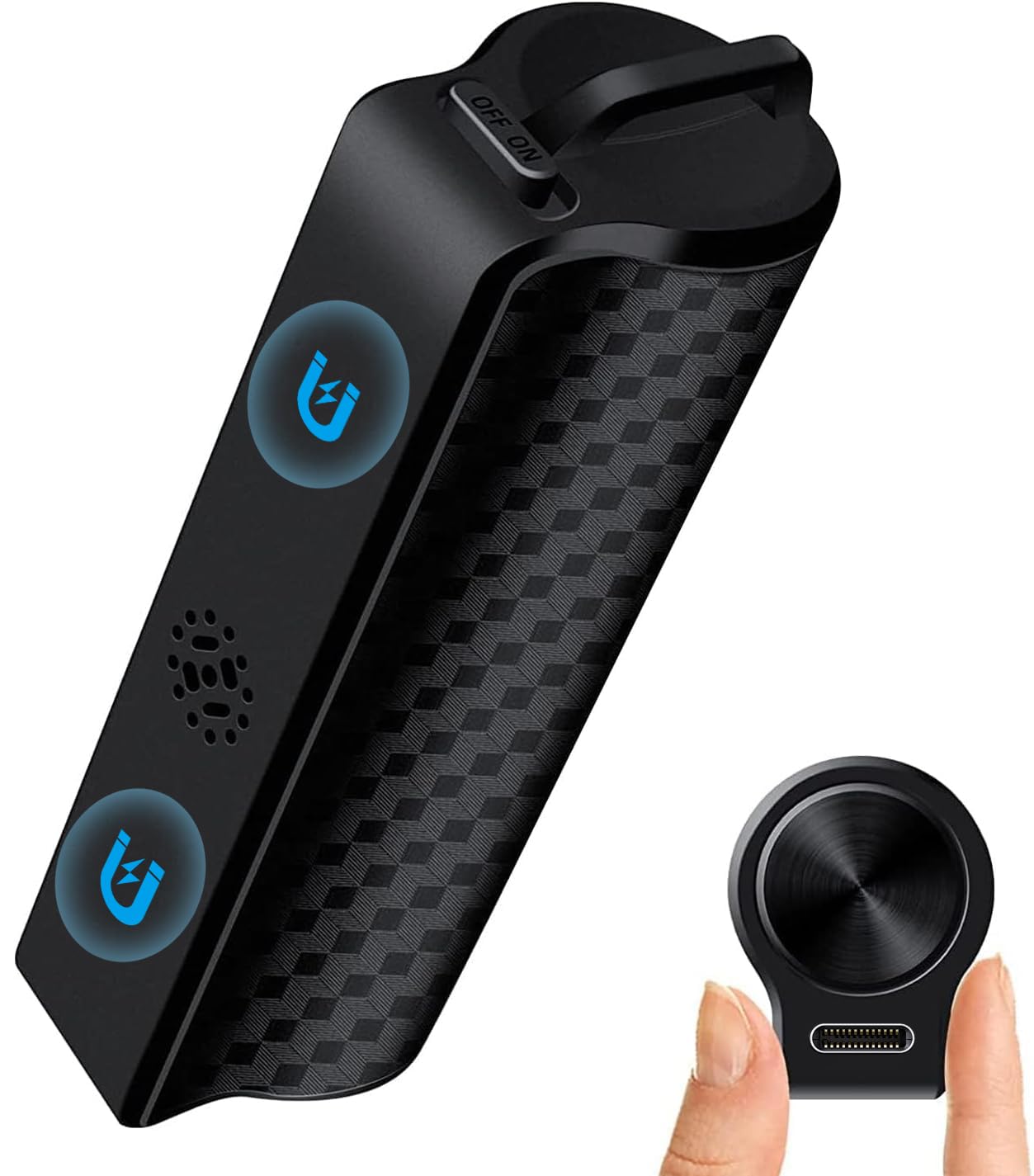
A tiny magnet that keeps listening for weeks without a charge.
The headline here is endurance. This magnetic recorder is rated for up to 35 days of continuous recording on a single charge, with 128 GB of storage holding 600 hours of WAV audio. It weighs 65 g and measures roughly the size of a thumb, so it disappears onto a metal surface and stays put. Triple-layer AI noise reduction (a filter stack that suppresses background sound) works to keep nearby voices forward even in a noisy room.
What wins people over is reliability of placement — the strong magnet grips and holds without slipping, and the review pages agree the audio stays clear and picks up sound at a distance. Voice activation records when sound arrives and rests when it doesn’t, stretching that already lengthy charge. USB-C charging and a 3.5mm headphone jack round out everyday use.
The honest trade-off is documentation. The printed directions arrive tiny and a side button is easy to miss, so plan on a few minutes of trial and error to learn the controls. A small number of units have also fallen short over long stretches. Treat it as a patient install rather than a plug-and-go gadget, and the storage and stamina carry the day.
Why it stands out
- 35 days of rated continuous recording on one charge
- 128 GB for 600 hours of WAV audio
- Strong magnet for secure, hands-free placement
- AI triple noise reduction and voice activation
Know before you buy
- Printed directions are hard to read — rely on the screen and testing
- A side control button is easy to miss at first
Choose it for: long, unattended sessions where mounting and stamina matter most.
Not the one: if you want a recorder you can operate blind on the first try.
6. Plaud NotePin S Wearable AI Voice Recorder
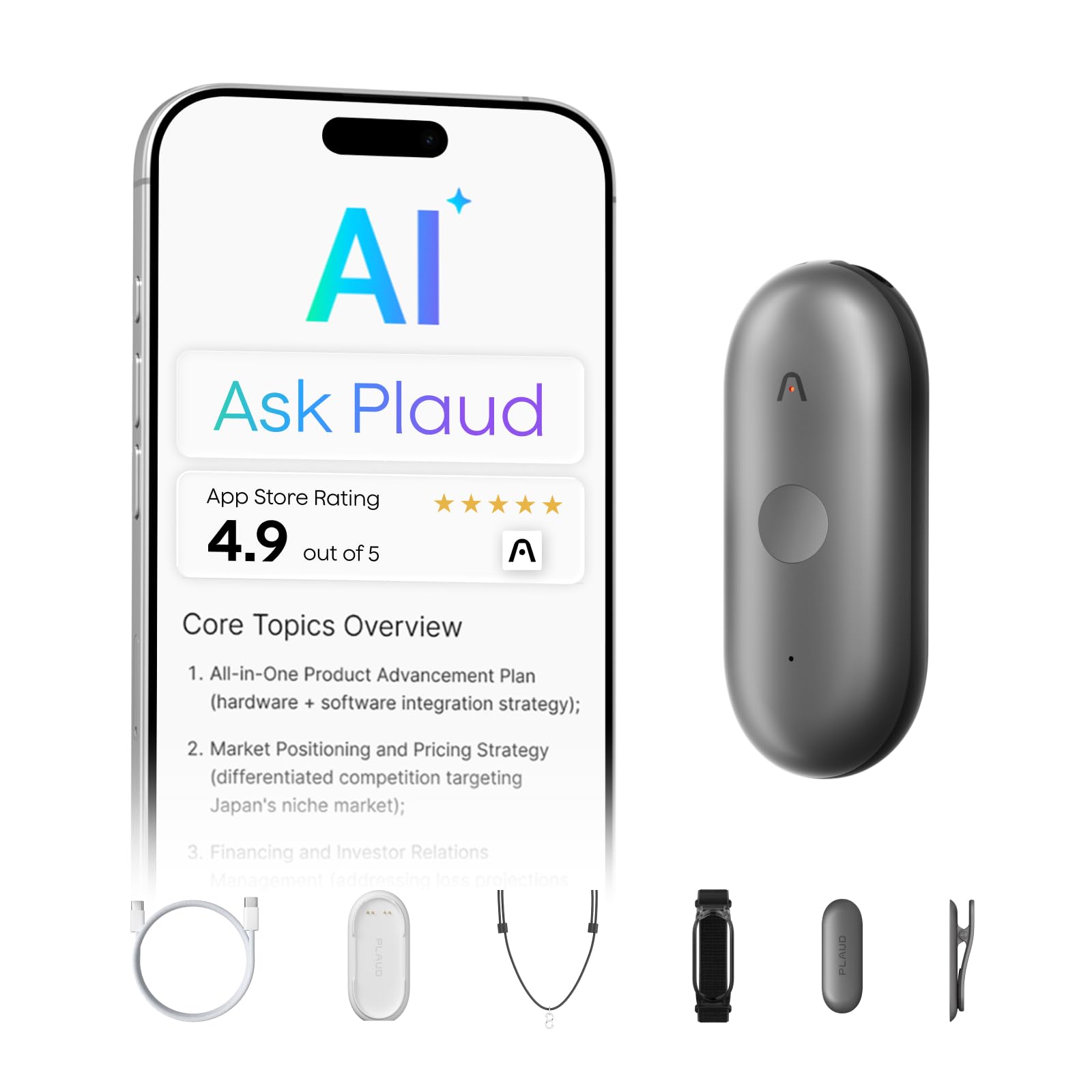
A 0.61 oz pin that records, transcribes, and hands you the summary.
The NotePin S is a different kind of tool — a wearable recorder that does more than store audio. It captures conversations in 112 languages, then uses models like GPT-5.5, Claude Sonnet 4.6, and Gemini 3.1 Pro through the Plaud app to turn raw audio into transcripts, mind maps, and to-do lists. Over 10,000 professional templates help organise the output. Four included accessories — necklace, wristband, clip, and pin — let you wear it in the way that fits your day, and a dedicated physical record button gives you tactile control.
Functionality is what wins people over, with recording quality right behind — owners lean on it for meetings and appointments and prize the accurate transcription. It weighs 0.61 oz, records for 20 hours continuously, and holds 64 GB of audio locally, so it keeps working even offline. Enterprise-grade privacy certifications (ISO 27001/27701, SOC 2, HIPAA, GDPR, and EN18031) cover the data handling. A free Starter Plan includes 300 transcription minutes per month.
The obvious question is cost, and the answer is that a real subscription sits behind the full experience — the recording is free, but heavy transcription pushes you toward a paid tier. Battery life is generous but split in owner feedback between long standby and shorter active use. It also adds bulk when clipped to a phone. For anyone who wants audio turned into usable notes with no dictation typing, the trade is worth it.
The productivity angle: 112-language transcription with app summaries, plus a 0.61 oz body, 20 hours of recording, and 64 GB of local storage.
Mind the subscription: the free Starter Plan includes 300 minutes a month — push past that and the paid tiers start.
For the busy professional: anyone who needs transcripts and summaries, not just raw audio files.
Keep it simple: if you only want to press record and save, a plain recorder serves you better.
7. Olympus VN-8100PC Digital Voice Recorder

A slim, light recorder built for clear daily note-taking at a steady price.
Here’s a recorder that keeps things basic and reliable. It holds 2 GB of internal memory for 843 hours of recording, weighs just 2.4 ounces, and runs a single mono microphone (one pickup rather than a stereo pair). It records in MP3 and WMA, and connects over USB so you can email, edit, or archive your files like a thumb drive. A large LCD with an adjustable font size setting makes the display easy to read.
What wins people over is the build and the sound — quality and functionality lead the praise — and the recorder picks up voices and speeches from across a room. The thin, light body slips into a pocket, though it needs a pen holder to stand upright on a desk. A backlit display and an amber record light keep status visible at a glance, and the speaker plays back loud enough to check a file without headphones.
The trade-off is that this is a mono, bare-bones setup with low playback volume on some units, and it’s built for daily dictation rather than high-detail archival. The 2 GB storage is modest next to the 128 GB magnetic picks, so offloads come sooner. For straightforward, dependable voice capture with an easy screen, it does exactly what it sets out to do.
Simple and dependable: 843 hours of recording, 2.4 oz body, plug-and-play USB, and an adjustable-font LCD.
Modest by design: mono mic and 2 GB of storage mean offloading sooner — fine for daily notes, less so for long archives.
Straightforward choice: for students and note-takers who want a clear, light recorder and easy file transfer.
Want more headroom: if you need stereo capture and larger storage, look to the magnetic picks above.
Know the Specs
Recording time and storage
Digital recording time is how much audio a unit can hold in total, usually quoted in hours. Storage (in gigabytes) sets the raw ceiling, and a card slot lets you expand it. A higher capacity means longer sessions before you offload, which matters when a sitting runs for hours. The Sony bundle’s 159 hours and the COHANA’s 9500 hours sit at opposite ends of that ladder, and the 2 GB on the Olympus VN-8100PC fills up fastest for heavy archives.
Noise reduction and voice activation
Noise reduction is a filter that strips background hiss so voices sit forward — helpful in a busy room, though aggressive filtering can soften very soft sounds. Voice activation records only when sound passes a set level and pauses during silence, saving both storage and battery. On the COHANA, the trigger sits at 45dB, roughly where a quiet conversation sits, and the AFFETUNI uses triple-layer suppression to keep nearby voices clear.
Common Questions
How long can an EVP recorder actually run before I need to charge it?
Will a magnetic recorder stick to a metal shelf and stay put?
Does voice activation miss quiet voices?
What is the difference between the COHANA and the Sony ICD-UX570 for storage?
Can I connect an external microphone to these recorders?
Do these recorders work with a Mac or Windows computer?
What does bitrate mean on a voice recorder?
Is the Plaud NotePin S a recorder or a transcription device?
How do the Olympus WS-883 and VN-8100PC compare for field reporting?
Can I password-protect recordings on these devices?
The Bottom Line
For most people chasing a reliable evp recorder, the Sony ICD-UX570 bundle is the steady choice — proven ease of use, a 32GB card and hard case included, and clear results in the room. If long unattended sessions are your goal, grab the AFFETUNI 128G Magnetic for its 35-day rated runtime, or the COHANA if sheer storage is what you need. And for turning conversations into written notes, the Plaud NotePin S is built to do exactly that. Consider the 4.5+ star Sony first — it’s the pick most likely to simply work.
How we choose
We do not accept paid placement. Every pick is matched to a real buyer and a real use-case; we do not hands-on test units.
Sources
Specifications: manufacturer listings and product documentation. Review insights: verified customer reviews, as of October 2026. Pricing: not shown on this page (it changes often); check the current price via the retailer link.
As an Amazon Associate, Aappliancez earns from qualifying purchases. This does not affect which products we feature.