Disclosure: Some links in this post are affiliate links. As an Amazon Associate I earn from qualifying purchases, at no extra cost to you. Learn more
Specs are compiled from manufacturer listings and verified buyer reviews and can change over time — please confirm the key details on the product page before buying.
If you want real Cuban coffee at home, the answer is simpler than the espresso-machine aisle makes it look. The rich, syrupy cafecito that Cubans drink twice a day does not come from a pump-driven machine at all. It comes from a moka pot — a stovetop brewer that pushes hot water up through ground coffee at low pressure — and then from whipping the first few dark drops with sugar until they turn into a pale, thick paste called espuma. That little jar of foam is what makes a cafecito taste like a cafecito, and it is why the picks below are built around the ritual rather than around wattage.
This guide is built by comparing the manufacturers’ published specifications and the patterns across verified customer reviews, so you get each pick’s real strengths and trade-offs instead of marketing spin.
Most machines sold as espresso makers will never produce a real cafecito, because Cuban coffee needs a concentrated moka-style base you can whip with sugar, not a thin pressurized shot. The shortlist below covers the seven brewers that do it properly. The fastest way to pick yours is to decide if you want flame or a plug, then choose the capacity that matches how many demitasse cups you pour in a day, which is the whole point of a good espresso machine for cuban coffee.
Top Picks

How To Choose The Best Espresso Machine for Cuban Coffee
Start with the drink you actually make. A cafecito is a small, strong coffee cut with sugar foam, poured into a demitasse cup — the tiny handle-less cup that holds about two or three sips. A colada is the same brew served in one bigger cup with smaller cups around it for sharing. A cortadito is that strong coffee topped with a splash of steamed or frothed milk. Every pick below can handle all three, but the size you choose changes how comfortably you can pour for one person or for a table.
Moka pot or electric brewer?
A stovetop moka pot heats over gas or electric burners, costs less, needs no counter outlet, and gives you the slow, low-pressure extraction that Cuban coffee depends on. An electric moka pot plugs in, runs one button, and keeps the base cool while it works — handy in an office or a hotel room where you have no open flame. If you have a working stove and a minute to watch the pot, the stovetop route is the classic one. If your kitchen is small, or you brew away from home, the electric route is the one you will actually use every morning.
How much coffee do you pour?
Moka pot sizes count demitasse cups, not mugs. A 3-cup pot fills about 150 ml total, which is roughly two small cups or one large mug. A 6-cup pot yields around 9 ounces of finished coffee, enough for two or three people or one person with a serious habit. That sizing matters more than brand in this category, because a pot that pours too much leaves you either over-caffeinated or pouring good coffee down the sink.
What you need for the espuma
The espuma step is where most beginners stumble. You pour the very first dark, thick drops of the brew into a cup that already holds sugar, then whisk hard until it turns into a glossy tan cream, and finally stir that back into the rest of the coffee. A small whisk, a spoon, or a purpose-built pitcher all work — what matters is that you have a vessel small enough that a few tablespoons of coffee and sugar actually whip instead of just sloshing around.
Side-by-Side Comparison
| Model | Best For | Brew Style | Capacity | Material | Amazon |
|---|---|---|---|---|---|
| Bialetti Moka Express (6 Cups)★ Best Overall | Everyday cafecito, one to two people | Stovetop moka pot | 270 ml | Aluminum | Amazon |
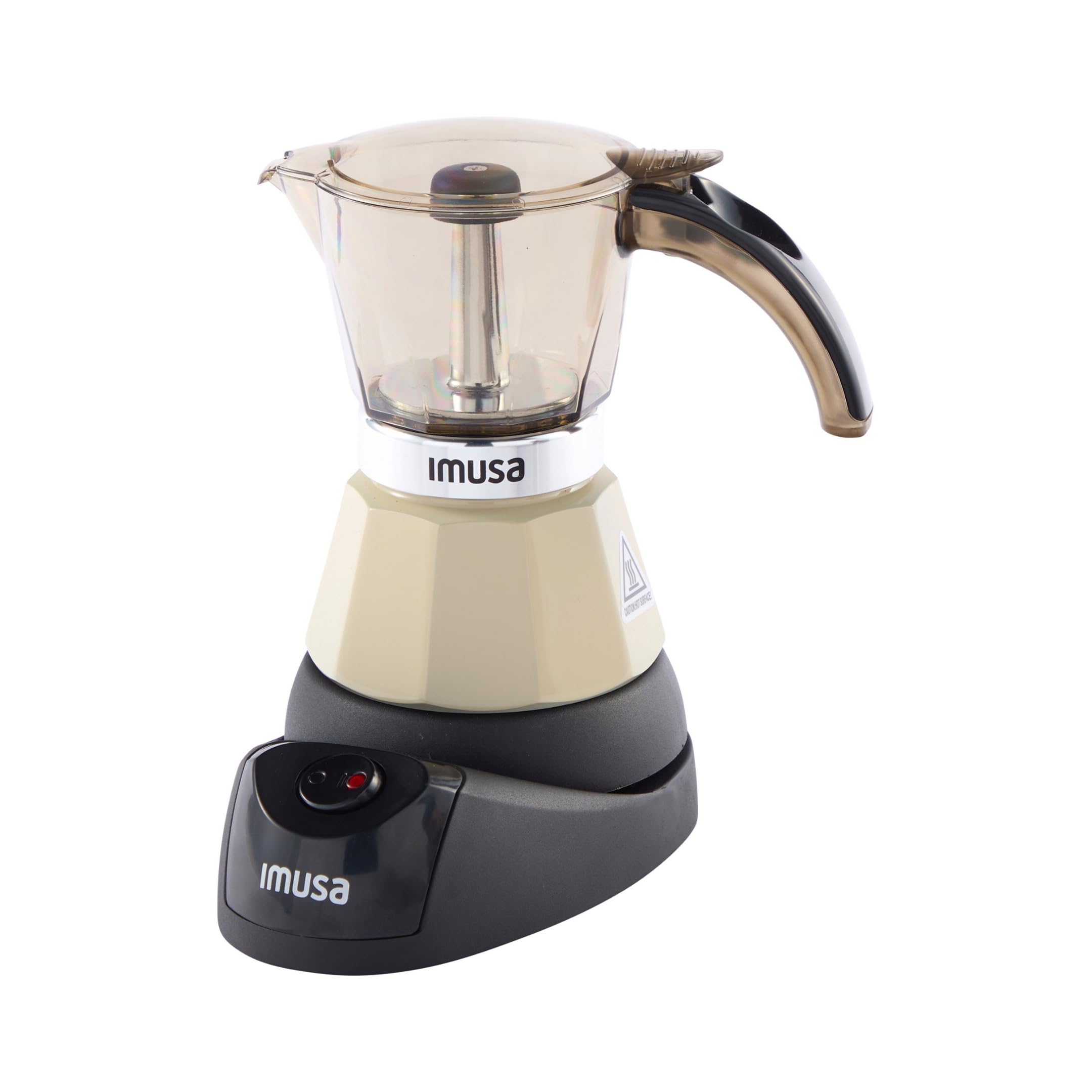
| IMUSA Electric Espresso Maker (3 or 2 Cup)Best for Travel | Office, travel, and no-flame kitchens | Electric moka-style | 3 cups (1.5 oz each) | Cast aluminum and Tritan | Amazon |
| LAOION Stovetop Espresso Maker | Induction stoves and bigger pours | Stovetop moka pot | 10 oz | Stainless steel | Amazon |
| GROSCHE Milano Stovetop Espresso Maker | Cuban-style brewing with a burn-guard handle | Stovetop moka pot | 9.3 fl oz | Anodized aluminum | Amazon |
| Bialetti Moka Express (6 Shots) | Anyone who wants the original shape in a 9 oz size | Stovetop moka pot | 12 oz | Polished aluminum | Amazon |
| FUOCCI Electric Moka Pot with Milk Frother | Cortaditos and lattes without a stove | Electric moka pot plus frother | 150 ml | Aluminum | Amazon |
| Cuban Coffee Starter Kit (Cafecito Ritual System) | First-timers who want the full ritual in one box | Stovetop moka pot plus tools | 6 cups (about 9.1 oz) | Aluminum and stainless steel | Amazon |
Detailed Reviews
1. Bialetti Moka Express 6 Cups
Our pick — 4.5+★ from 120,000+ verified ratings; the strongest balance of quality and price.
The 1933 original — the faceted aluminum shape every Cuban kitchen recognizes.
Here is the defining number: 270 ml of capacity, which pours enough concentrated coffee to fill a colada cup or to serve two people with a splash of milk. The body is aluminum, the filter is a reusable screen, and there is nothing to plug in — you fill the boiler to the patented safety valve, spoon in ground coffee without pressing it down, screw the two halves together and set it on the flame. When it starts to gurgle, you kill the heat and the coffee is done. Buyers report the whole cycle takes about ten minutes, fast enough for a weekday morning.
What wins people over is the taste. The brew is strong without the biting bitterness you get from a badly pulled pressure shot, which is exactly the profile that makes espuma whip up properly when you beat it with sugar. It also comes apart into three pieces for a rinse under the tap — no detergent, no dishwasher, just water. Compared with the stainless LAOION below, this one is lighter on its feet at 1 kg and is made in Italy, the same country where Alfonso Bialetti patented the design back in 1933. That lineage is practical: replacement gaskets and filters are easy to find anywhere.
The catch is sizing, and it is worth naming plainly. The 6-cup measurement counts demitasse cups — those little two-sip cups — not mug-sized servings, so if you are pouring cortaditos for four people you will want a second round or a bigger pot. One more thing to know: the handle is designed for lifting the pot off the burner, but the metal body gets very hot during brewing, so keep a cloth nearby. As owners put it, the recurring gripe is simply that it runs small for a coffee-loving household.
What earned it the top spot
- A 270 ml boiler that pours a full colada or two cafecitos from one cycle
- Quick brew time of about 10 minutes from cold water to finished coffee
- Three-piece aluminum body rinses clean under plain water — no detergent needed
- Patented safety valve lets you fill the boiler confidently every time
Where it asks something of you
- The 6-cup size is demitasse cups, so it serves one or two people comfortably, not four
- The pot itself gets very hot, so handle it with a cloth off the flame
- Never dishwasher it — the finish and the coffee flavor both suffer
Go this way: you want the classic cafetera that pours a true cafecito base and you have a working gas or electric burner.
Look at the bigger model: you regularly brew for three or more people and want one pour to cover the table.
2. IMUSA Electric Espresso Maker Almond
A café cubano machine that runs off a wall outlet, not a flame.
No stove, no open flame, no waiting for a burner to heat — you fill it, flick the integrated on/off switch, and the detachable base does the work. Each cup holds 1.5 oz, and the pot is designed to brew three of them or two if you like your shots a little longer. The base heats water and pushes it up through the grounds the same low-pressure way a stovetop moka pot does, but the base itself stays cool because it only passes electricity, which is the part people appreciate most when they are standing over it half awake.
The build throws in a few things the stovetop pots cannot: a keep-warm function so your second cup is not cold, boil dry protection that shuts the element down before it scorches, and a translucent carafe with a brown tint so you can watch the coffee rise. Cast aluminum base, Tritan top, mint-condition matte finish. It travels well enough that owners have taken it to hotel rooms and vacation kitchens to make their own café con leche instead of hunting for a café — and one buyer who runs a medical office reports up to 18 pours a day without a single failure.
Compare it to the Bialetti above and you see the trade clearly: this one trades the aluminum heirloom feel for convenience and a cord, and it runs noticeably smaller per brew — a fraction of the 270 ml the Bialetti boiler holds. Dimensionality is a fair gripe too; it measures 5.61 inches deep by 8.07 wide by 9.65 tall, so it eats a slice of countertop in a small kitchen. At the same time, that footprint is smaller than what a full pump espresso machine demands, and you can unplug it and stash it in a cabinet. The one thing to watch is grounds: this pot uses ground coffee, not pods, so you still have to fill and empty the basket each time.
Where it shines: brewing for one person, morning after morning, without the fuss of a stovetop.
The honest trade: less coffee per cycle than any of the stovetop pots here, so a crowd needs two rounds.
Reach for this if: your kitchen has no gas burner, or you want to keep cafecito in a hotel room or office.
Think twice if: you routinely pour for four or five people — a 6-cup stovetop pot will serve you better.
3. LAOION Stovetop Espresso Maker 6 Cup
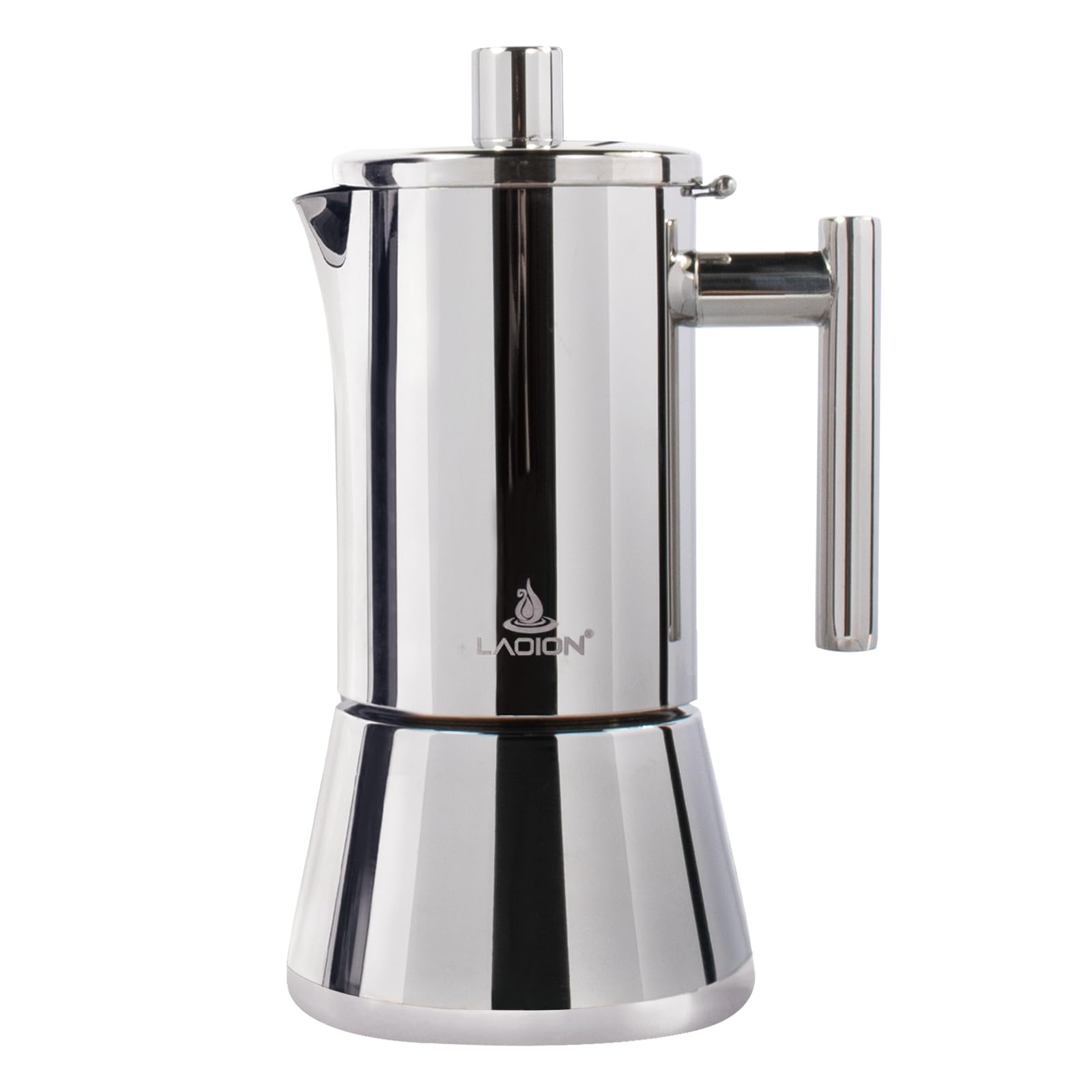
Stainless steel with a 300 ml boiler that works on an induction hob.
If your stove is induction, this is one of the few picks here that will accept the heat — the maker says it is compatible with gas, electric and induction burners. The body is stainless steel, the filter is reusable, and the boiler holds 300 ml, which is the largest capacity in this group. In cup terms, LAOION calls that 6 espresso cups, and each of those is a small demitasse measure rather than a full mug, so expect a little over 10 ounces of finished coffee per brew. That is enough for a colada and a couple of extra cafecitos beside it.
The stainless construction is the selling point for anyone who dislikes the seasoning ritual that bare aluminum pots need. It ships with an anti-leak threading setup that owners say holds without drips if you twist the top and bottom just finger-tight. LAOION also puts a few tips right in the listing that are worth repeating because they solve the number one beginner problem: never fill water past the safety valve, spread the grounds level instead of packing them, and snug the two halves before you set it down. Follow those three and the pot stays dry on the outside.
Pair it against the Bialetti above and the sizes argue for themselves: 300 ml against 270 ml, and 10 oz against 6, depending on which capacity number you read. The trade-off here is durability, and it shows up in the maker’s own material note — reviews mention that the metal can corrode over time, and the body is described as a stainless and aluminum alloy rather than pure stainless steel. The listing also leans on its shape: it stands 9.3 inches tall, so it needs a clear spot on the stove, and the stainless surface looks handsome enough that owners keep it out rather than tucking it away.
Why induction owners shortlist it
- The largest boiler here at 300 ml, so one brew fills a colada
- Stainless steel body that does not need the seasoning routine aluminum pots do
- Works on gas, electric and induction burners without an adapter plate
What to keep in mind
- Not pure stainless steel — the maker describes the body as a stainless and aluminum alloy
- Durability is a genuine concern in the reviews, with corrosion showing up over time
- The 6-cup label counts demitasse shots, not mugs, which trips up plenty of buyers
Pick this one: you cook on induction, or you want the biggest single-brew yield in this list.
Look elsewhere: you want the aluminum heirloom you can hand down, or you care most about long-term finish.
4. GROSCHE Milano Stovetop Espresso Maker 6 espresso Cup

The cafetera that fixes the burnt-finger problem other moka pots ignore.
GROSCHE took one look at the complaints about hot handles on other stovetop pots and did something about it: this moka pot carries a soft-touch handle with a burn guard that shields your fingers. The body is black anodized aluminum with a silicone gasket, holds 9.3 fluid ounces, and uses the standard 6-cup moka gasket size, so replacements are simple to find. The maker also names it directly for Cuban coffee — it is sold as a cafetera cubana, and it brews that concentrated, syrup-strong base that espuma needs.
A note on stovetop compatibility worth reading closely. GROSCHE says the Milano will sit on gas, electric and even propane camping stoves, and it will work on a glass-top induction cooker — but it will heat very slowly there because aluminum is not magnetic. So if you own an induction range, this is a convenience pick, not a fast one. On gas, where it belongs, it works like any good moka pot: low heat, slow extraction, pull it off when it starts to sputter. Owners describe the brew as strong and rich rather than bitter, though a few needed a couple of batches to dial in the heat.
Where this one separates from the Bialetti is in the accessories and the finish. It is a touch heavier built at 9.28 ounces, the handle is sturdier for hands that find the classic pot narrow, and it comes in a range of colors so you are not locked into silver. Durability is the softer spot — some owners mention the aluminum developing a mottled spot as it ages, which is cosmetic but noticeable on a shiny new pot. Cleanup is straightforward, and the silicone gasket is the part that will eventually wear and need replacing, same as any moka pot.
What it sells on: a burn guard that makes the handle pleasant to grab off a live burner, plus color options the classic pots do not offer.
The fine print: the aluminum finish will spot and dull over time, and it is not a fast pot on a glass induction top because the metal is not magnetic.
Best for: anyone who has already burned their fingers on a bare-metal moka handle and wants that fixed.
Skip if: you need speed on an induction hob — an induction-compatible stainless pot will heat faster.
5. Bialetti Moka Express 6 Espresso Shots

Same legendary shape, six espresso shots, and a polished aluminum finish.
This is the second Bialetti in the list, and it is worth understanding why both earn a slot. This version is sized at 9 ounces, or 270 ml, which the maker frames as six espresso shots, and it arrives in polished aluminum with a silicone gasket already fitted. If the earlier Bialetti is the everyday pot, this one reads more like the display piece — the polished finish and silhouette that date back to 1933 give a kitchen counter a bit of theatre, and the 6-shot capacity matches what most households actually pour in a morning.
Brewing is the same low-pressure story: fill the boiler to the safety valve, level the grounds, close it up, and pull it off the heat at the first gurgle. The result is the strong, non-bitter base that whips into espuma, and it is the same base that makes cortaditos and coladas taste right. Owners note the cycle runs around ten minutes and the pot comes apart for a quick water rinse — no scrubbing, no detergent, no dishwasher. Match it to the stovetop you have, because it sits happily on gas or electric, and it will also work on induction with the brand’s adapter plate.
Where this one differs from the top pick is the finish and the maintenance that comes with it. Polished aluminum shows water spots and fingerprint smudges faster than a matte or anodized body, so it asks for a bit more care to keep looking new. It is also lighter at 1.5 pounds, which some owners like for handling and others read as less substantial on the counter. The one thing that raises eyebrows is the plastic handle — it stays cool while brewing but a few owners have found it gets uncomfortably hot right off the burner, so a potholder is not a bad habit to build.
Why it holds a top slot
- Six espresso shots, or 270 ml, in a single brew — enough for a colada and then some
- Classic Italian silhouette with polished aluminum and a silicone gasket fitted as standard
- Comes apart into three pieces for a quick water rinse
What to expect
- Polished aluminum shows spots and smudges quickly, so it needs a little more polish to stay sharp
- The plastic handle gets hot off the burner — use a cloth when moving it
- Dishwasher use will damage the finish and change the taste, so hand-rinse only
The one to grab: you want the polished original look, six shots per brew, and a pot you would happily leave on the stove.
Look at the anodized picks instead: you would rather not fuss with smudge-prone polished metal.
6. FUOCCI Electric Moka Pot 3-Cup White

Two machines in one body — moka pot on one side, milk frother on the other.
If your drink of choice is a cortadito or a café con leche, this saves you buying a second appliance. The moka side brews 150 ml total, about two small cups or one oversized mug, and the frother half warms up to 200 ml of milk and foams roughly 100 ml of it into the creamy topping that makes a cortadito a cortadito. Both live in one compact white body with a detachable cordless base and a single-button interface, so the whole operation is one press and a short wait rather than a stovetop watch.
The frother is what most reviewers zero in on, and it is worth a real talk about milk chemistry. Regular cold milk will spin and warm without building much foam, but evaporated milk whips into what the maker calls silky foam and what a few owners describe as rich and creamy, thick enough to sit on top of a cafecito without sinking. That detail matters for Cuban coffee specifically: the traditional café con leche often uses evaporated or scalded milk, so the frother behaves best with exactly the milk you probably already have in the pantry. It also does double duty as a standalone frother for cappuccino, latte and mocha.
The trade-offs are worth spacing out. First, the pot is small — 150 ml against the 300 ml the LAOION above holds — so it is a personal brew, not a party brew. Second, heat output on the milk side draws mixed feedback; a few owners find it warms rather than truly steams, which is fine for foam but not for a scorching-hot latte. And third, durability is the soft spot here, with the most common concern being the black coating on the milk container peeling over time. Treat that inner surface gently with a soft sponge and skip abrasive cleaners, and it will hold up better.
The reason to buy: a moka pot and frother in a single plug-in unit, which is the easiest route to cortadito at home.
The trade to accept: a small 150 ml brew and a milk container whose black coating needs careful handling to stay intact.
Best for: cortadito and latte drinkers who want one countertop appliance and no stove involved.
Not for you if: you want to brew for a table of people, or you prefer the feel of a stovetop moka pot.
7. Cuban Coffee Starter Kit 6-Cup Moka Pot

Everything for the cafecito ritual arrives in one gift-wrapped box.
This is the only pick here that treats the whole ritual as the product. Inside the box you get a 6-cup cafetera cubana with a wood-style handle and a solid 400 g build, a stainless steel anti-splash valve that sits on top of the pot during brewing to cut down on mess, two 304 stainless steel whisking spoons in matte black and white, a 6 oz bell-shaped creamer pitcher sized for whipping sugar and espresso into foam, and a 10 oz brick of dark roast espresso coffee to start you off. The kit is designed in the United States, assembled in Miami, and rooted in the cafecito tradition.
The espuma tooling is the detail that separates it from a bare moka pot. Whip the first dark drops from the brew with a spoon of sugar in that 6 oz bell pitcher and you get the thick, glossy foam that turns a shot of coffee into a real cafecito. The pot brews up to 6 demitasse servings, about 9.1 oz total, which is the balance for a household of two or a host pouring a couple of rounds. The handle is what owners notice first, though — the solid 400 g weight makes it feel stable on the burner, and the removable anti-splash valve keeps the burner deck cleaner than a bare pot.
There is one rule to obey without fail: never put the moka pot in the dishwasher. Customers note corrosion after a single dishwasher cycle, and the maker’s care instructions agree — rinse with water only, no detergent, dry before reassembling. The good news is that the spoons and pitcher can be cleaned separately with normal methods, so only the pot needs the kid-glove treatment. On the stove, the pot works with gas and electric burners, and it is the pick most likely to get someone started on the ritual without hunting down individual tools.
What makes it a true starter kit
- A 6-cup cafetera, two whisking spoons, a 6 oz creamer pitcher, an anti-splash valve and a 10 oz coffee brick all in one box
- Solid 400 g build with a natural wood-style handle for stable handling on the burner
- Assembled in Miami around the traditional cafecito method
What to watch
- Dishwasher use will damage the pot — one owner reports corrosion after a single cycle
- Brews about 9.1 oz total, so it suits one or two people rather than a crowd
- The kit costs more than buying a bare pot, because you are paying for the tools and the coffee
Ideal for: someone new to cafecito who wants the pot, the tools and the coffee in one tidy box.
Already have a moka pot: buy the tools separately instead of the full kit.
Know the Specs
Why moka pot coffee beats pressure espresso for Cuban coffee
A moka pot — the faceted stovetop brewer with a boiler at the bottom and a filter basket in the middle — pushes hot water up through ground coffee at low pressure, producing a strong, syrupy concentrate. A pump espresso machine forces water through at much higher pressure and yields a thinner shot. Cuban coffee depends on that concentrated, almost molasses-strong base, because it is the base you whip with sugar to build espuma, and a thin pressure shot whips into a weak foam. If you want a real cafecito, start with the moka base, not the espresso machine.
Boiler capacity and what “6 cups” really means
Moka pot capacity is measured in demitasse cups — the small two-sip cups used for cafecito — not standard mugs. A pot labeled 6 cups holds roughly 270 ml or 9 to 10 ounces of finished coffee, which fills about two mugs or serves four demitasse cups. A 3-cup pot holds about 150 ml. This is why a “6-cup” pot pours less than you might expect from the label. Match the size to your household: a single cafecito drinker is happy with 3 cups, while a family that pours coladas wants 6 or more.
Common Questions
Can I make real Cuban coffee with a moka pot instead of an espresso machine?
How many cups does a 6-cup moka pot actually make?
What is espuma and how is it made?
What grind size works best in a moka pot?
Should I use the anti-splash valve in a moka pot?
Can I make café con leche with an electric moka pot?
How do I stop my moka pot from leaking or sputtering?
How do I clean a moka pot without damaging it?
Can I use a moka pot on an induction cooktop?
Does the size of the pot change the flavor of the coffee?
The Bottom Line
For most households, the espresso machine for cuban coffee winner is the Bialetti Moka Express because it nails the low-pressure base that espuma needs, brews in about ten minutes, and gives you 270 ml to pour a colada or two cafecitos from one cycle — a design that has anchored Cuban kitchens since 1933. If you want to skip the stovetop entirely, the IMUSA Electric Espresso Maker brings the same moka style to an outlet, with a keep-warm function and boil dry protection that make it a comfortable everyday option. And if you are just starting out and want the whole ritual together, the Cuban Coffee Starter Kit hands you the pot, the espuma tools and the coffee in one box. Whichever you choose, the trick is the same: pull the brew off the heat the moment it starts to gurgle, whip the first drops with sugar, and pour slowly.
How we choose
We do not accept paid placement. Every pick is matched to a real buyer and a real use-case; we do not hands-on test units.
Sources
Specifications: manufacturer listings and product documentation. Review insights: verified customer reviews, as of October 2026. Pricing: not shown on this page (it changes often); check the current price via the retailer link.
As an Amazon Associate, Aappliancez earns from qualifying purchases. This does not affect which products we feature.