Disclosure: Some links in this post are affiliate links. As an Amazon Associate I earn from qualifying purchases, at no extra cost to you. Learn more
Specs are compiled from manufacturer listings and verified buyer reviews and can change over time — please confirm the key details on the product page before buying.
If your Android phone has no eSIM setting anywhere in its menus, you do not have to buy a new handset to get on a travel data plan. What you need is a small adapter card that slips into your existing SIM tray and tricks the phone into reading a downloaded profile. The picks below split into two very different jobs: hardware cards that hold downloaded eSIM profiles, and ready-made prepaid cards that simply drop into your tray and work on landing. Decide between a reusable hardware adapter and a ready-made prepaid card before comparing anything else.
This guide is built by comparing the manufacturers’ published specifications and the patterns across verified customer reviews, so you get each pick’s real strengths and trade-offs instead of marketing spin.
Before you buy, work out whether your phone reads a physical card at all, because that single check decides everything. The right esim adapter for android slots into the SIM tray of an older open up handset and holds a downloaded travel plan without a carrier store visit.
Top Picks
How To Choose The Best eSIM Adapter for Android
The first thing to settle is which of the two product types you actually need, because they solve the same problem from opposite directions. A hardware adapter holds profiles you download yourself and can be reused on trip after trip. A prepaid card arrives with a plan already loaded and a phone number attached, then expires when the days run out.
Storage capacity decides how many plans you can carry
An adapter card stores downloaded profiles in onboard memory, measured in megabytes. More room means more plans banked at once, so you can keep a US profile, a European one and an Asian one loaded together. A card with 1.5MB of storage holds up to 50 profiles, which is far more than a single trip ever needs.
Check your phone is open up before anything else
A carrier-locked handset will refuse a card from another network no matter how good the adapter is. Look for the open up status in your settings, since most modern open up Android devices work directly with these cards. Older or locked devices may need a separate card reader instead of the phone slot.
Match the network band to where you are going
A card is only useful if your phone can pick up the local signal. Some plans specify exact bands, such as 5G band 78 or 4G band 3, and you can check those against your handset on a spec database before ordering. If your phone lacks the band, the card will sit there with no bars.
Side-by-Side Comparison
| Model | Best For | Card Type | Plan Duration | Network | Amazon |
|---|---|---|---|---|---|
| 9esim V3 Flagship eSIM Card★ Best Overall | Banking multiple travel plans on one card | Hardware adapter | Reusable | Global profiles | Amazon |
| travSIM USA eSIM 14 DaysBest for Long Stays | A two-week US trip with hotspot needs | Prepaid eSIM | 14 days | T-Mobile | Amazon |
| China Unicom 5G 20GB SIM | An extended stay in mainland China | Physical SIM | 30 days | China Unicom 5G | Amazon |
| travSIM USA eSIM 21 Day | Three weeks in the States on one plan | Prepaid eSIM | 21 days | T-Mobile | Amazon |
| travSIM Prepaid SIM USA 10 Days | Short US breaks and quick stopovers | Physical SIM | 10 days | T-Mobile | Amazon |
Detailed Reviews
1. 9esim V3 Flagship eSIM Card for open up Android
Our pick — 4.0+★ from 250+ verified ratings; the strongest balance of quality and price.
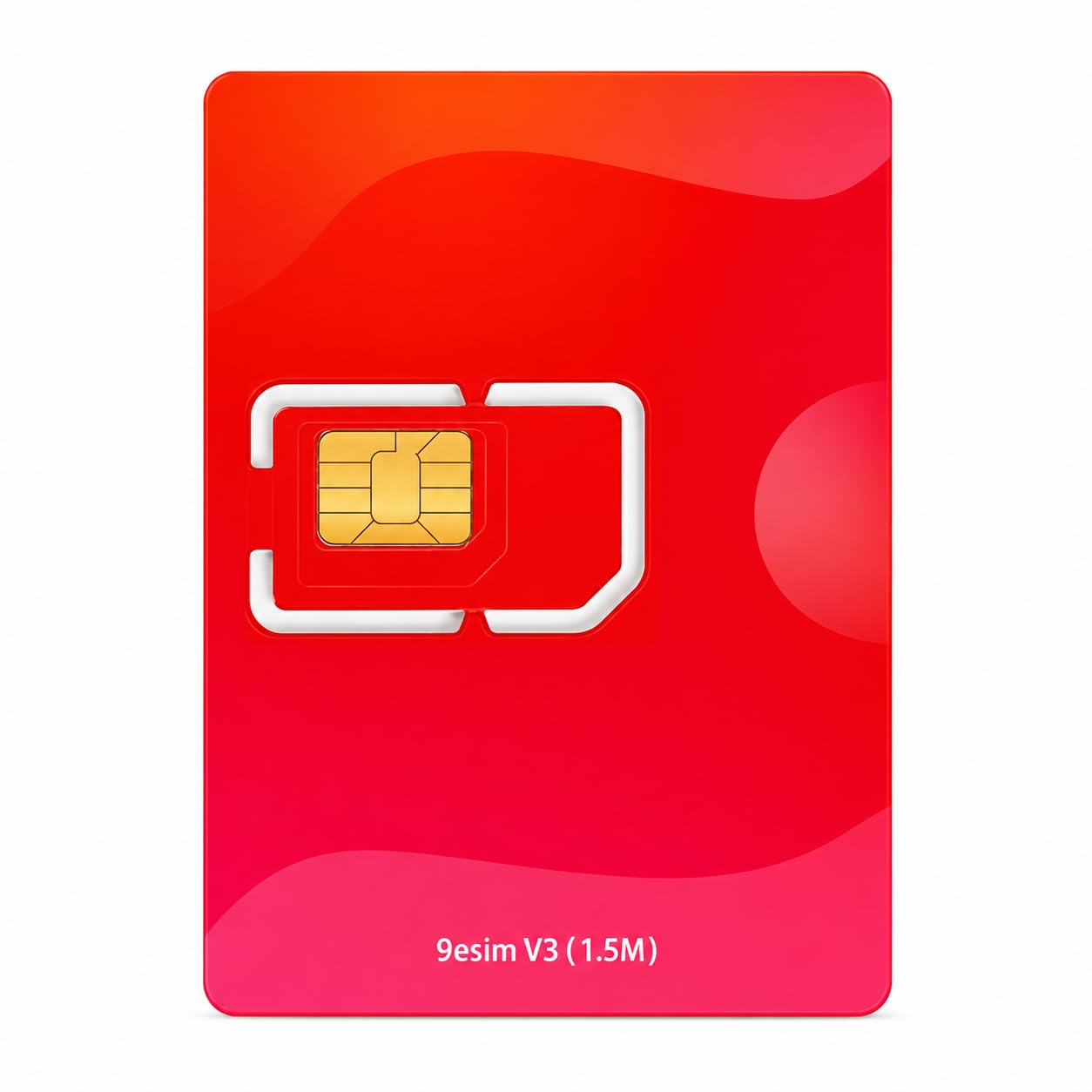
The little red card that lets a SIM-tray phone carry fifty downloaded travel plans.
If your Android handset predates eSIM support entirely, this is the piece of hardware that changes that. It is a physical card that sits in your tray and behaves like a built-in eSIM once you push a profile onto it — and it does the job without a separate USB adapter, which is what makes it the pick for most people here.
The number that decides it is 1.5MB of onboard storage, which is enough room for up to 50 eSIM profiles at once. That is what lets you bank a US plan, a European plan and an Asian plan side by side instead of swapping files in and out. Switching between them runs through a built-in STK menu (a simple text menu your phone shows for card-based tools), so you can jump profiles with one tap even with no internet.
The upgraded chip is the other reason it holds this spot. The maker claims a big reduction in dropouts compared with standard adapters, and the reviews back the direction of that — what wins people over is reliability, and it shows in exactly the places it should, like downloading a large AT&T profile cleanly and working first try on an open up Samsung Galaxy A14 5G. It ships pre-cut into Nano, Micro and Standard sizes, so it fits whichever tray your phone uses.
Where it earns the top spot
- 1.5MB of storage holds up to 50 eSIM profiles — more plans than any single trip needs
- Built-in STK menu switches profiles offline, with no scanning and no data connection
- Pre-cut to Nano, Micro and Standard, so it drops into most trays without trimming
- Works on older handsets that have no eSIM settings at all, and it is reusable across trips
The parts worth knowing first
- Setup is easy but not intuitive — you must install the 9esim app before adding a profile
- Some US carrier plans resist it; one trial with two different Android phones ended with no network connection
- Locked or non-mainstream devices need a separate card reader rather than the phone slot
The one to buy: pick this if you want a reusable card that carries multiple travel plans on an older open up Android phone.
Look elsewhere if: your main need is a US carrier number on a mainstream plan, since that is exactly where a few setups have stalled.
2. travSIM USA eSIM – 14 Days Unlimited Data, Calls & Texts
Unlimited US data, calls and texts for a fortnight, hotspot allowance included.
Two weeks in the States usually means two things: you want navigation and messaging to just work, and you want an American number so locals can call you back. This card handles both — the plan carries unlimited data, an American phone number, unlimited calls and texts to US numbers, and it runs on the T-Mobile network across all 50 states except Alaska.
The detail that separates it from the ten-day option further down is hotspot use. You can push up to 7GB of this plan to other devices at 3G speeds, which is enough to tether a laptop for email or keep a second phone online. The travSIM Prepaid SIM USA 10 Days carries the same network and unlimited data, but the extra four days here suit a full fortnight rather than a short break.
Coverage is the standout: the data holds up well beyond the cities and into genuinely remote ground, the kind of range that has left owners comparing it favorably against the major carriers they normally use. QR setup gets you running without a physical SIM to swap. Be ready one thing, though — sending an activation request the day before you want service live, and an American number means you may land on call lists, with one traveler counting 42 spam calls across a two-week stay.
The range case: unlimited data on T-Mobile that holds up well outside the cities, backed by an American number for incoming calls at no cost.
Plan around the start: activation is requested a day ahead and reflects in Pacific Standard Time, and the paper instructions are thin — expect to lean on the QR code rather than the leaflet.
Reach for this if: you are on a two-week US trip and want unlimited data plus a hotspot allowance on one plan.
Think twice if: you need coverage in Alaska, which the plan does not include, or you want crisp printed setup screenshots in the box.
3. China Unicom Sim Card 5G

A real Chinese number, thirty days of 5G, and data that stretches across a whole trip.
This is the card to look at if China is the destination, and the reason is simple: it comes with a Chinese phone number.
The plan runs 30 days on the China Unicom 5G network with 20GB of data, 300 minutes of domestic talk and 300 domestic texts, and incoming calls and texts are free. At 1.97 inches by 1.18 inches it is a far smaller piece of plastic than the bulkier US prepaid card, and that 30-day window is the longest here — three times the ten-day plan lower down the list. Owners stretch it further than you might expect; 20GB has been reported to last three to four weeks when you hotspot and use GPS regularly.
What owners keep coming back to is how it behaves on arrival — put it in as you land and it just connects, with reliable 5G signal and setup that follows the instructions without fuss. The thing to know before ordering is the software side. Google Pixel phones have a known compatibility issue where calls may not connect in either direction, and the card needs a passport copy submitted by email for activation under Chinese regulation, which is deleted once the card is live.
Why it travels well: a genuine Chinese number, 20GB of 5G data over 30 days, and free incoming calls and texts for the whole stay.
The Pixel warning: Google Pixel handsets may be unable to make or receive calls on this card, and China-only use means it is no help once you cross the border.
Pick this one when: mainland China is your only stop and you want a local number for apps and train bookings for a month.
Not the right fit if: you carry a Google Pixel, or you need a plan that also works outside China.
4. eSIM USA Unlimited Data 21 Day Prepaid Internet Access

Three full weeks of unlimited US data with an American number attached.
For a longer American trip, the duration is the whole story: 21 days of unlimited data on the T-Mobile network, valid in all 50 states except Alaska, with an American phone number for unlimited calls and texts to US numbers and free incoming calls. It weighs just 10.2 grams, so it adds nothing you will notice to a travel bag.
Against the 14-day travSIM card in this list, this one buys you an extra week of runway on the same network — the choice between them is simply how long you are staying, not which one performs better. The eSIM can be installed while you are still abroad and finished at the US airport, then it comes alive on landing, which has owners using it for navigation straight out of arrivals.
The recurring gripe is coverage gaps rather than setup trouble. A few owners note occasional dead spots, and national parks like the Grand Canyon are an area limitation of the region rather than the card itself. Activation also runs on business hours in the Pacific time zone, so if you are requesting service outside those windows you may wait — plan the request a day ahead and it is a non-issue.
The long-trip math: 21 days of unlimited data with calls and texts included, on the same T-Mobile network as the shorter cards here — it simply gives you seven more days to use it.
Where it stumbles: signal can drop out in places, and activation only processes during Pacific-time office hours, so a late request pushes your start date.
Go with this if: your US stay runs to three weeks and you want one plan to cover the whole stretch.
Skip the upgrade if: a fortnight covers your trip — the 14-day card delivers the same network for less commitment.
5. Prepaid SIM Card USA 10 Days
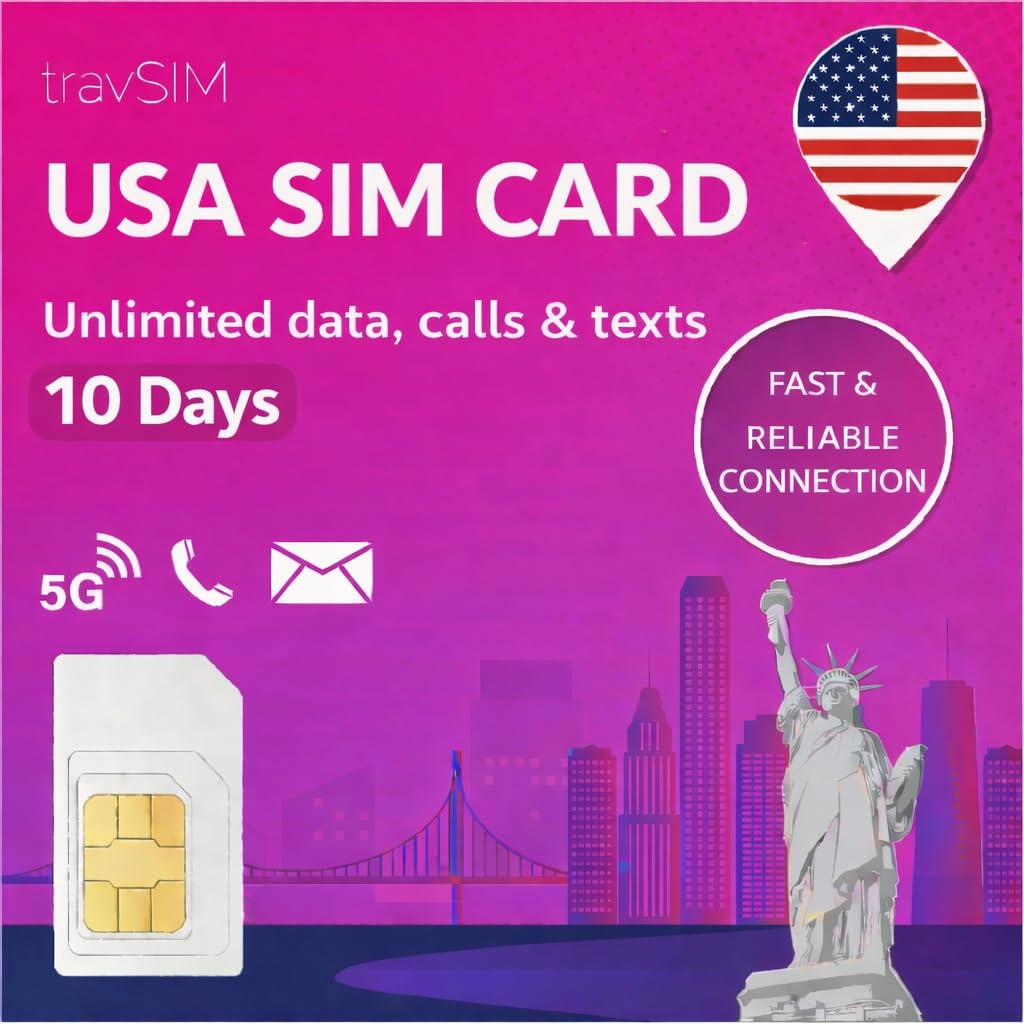
Ten days of unlimited 4G and 5G on T-Mobile, dropped straight into your tray.
Short breaks and layovers are where this card makes sense. Ten days of unlimited mobile data at 4G and 5G speeds, unlimited calls and texts to US numbers, and an American phone number with free incoming calls — all on the T-Mobile network across 50 states excluding Alaska. Nothing to download and no app to learn; it is a physical card that goes in your tray.
The trade-off against the longer options here is exactly what you would guess. It runs half the days of the 21-day eSIM and a third of the 30-day China card, so it is the one to grab when your trip is genuinely short rather than something to stretch. Owners set it up online before flying and activate it for the dates they need, which is worth doing since activation reflects on Pacific time.
Once live, it ran without a hitch for a full eight days in the States, including New York and Washington for one traveler who set it up ahead of time. The setup step is the honest caveat: plan the activation request a day before you fly, not on the plane.
The short-trip play: unlimited 4G/5G data on T-Mobile for ten days, with calls and texts to US numbers and no activation app to install.
Set it up early: activation mirrors Pacific Standard Time and needs a request a day ahead, so a last-minute start will eat into your first day.
Best match: a short US visit or stopover where a physical card and a ten-day window cover everything you need.
Consider the longer card instead if: your trip stretches past ten days and you would rather not top up mid-visit.
Know the Specs
Profile storage on an adapter card
On a hardware adapter, storage is measured in megabytes and it sets a hard ceiling on how many downloaded plans you can keep at once. A card with 1.5MB holds up to 50 profiles, so you can bank several country plans together instead of loading one at a time. If you only ever travel to one place, a small amount of storage is plenty; if you hop between regions, more room saves you re-downloading.
Plan validity and activation timing
Prepaid cards here run on a fixed clock measured in days, from the 10-day and 14-day US cards up to 21 days and 30 days. Most need an activation request sent a day before your chosen start date, and the countdown is set to Pacific Standard Time. Miss that window and you lose the first day of service, so send the request before you pack.
Hotspot allowance
Unlimited data on the phone screen does not always mean unlimited tethering. One plan here lets you push up to 7GB to other devices at 3G speeds, which covers email and messages on a laptop but not heavy streaming. Check the hotspot figure before you plan to work from a laptop on the road.
Network bands and phone compatibility
A card that uses 5G band 78 and 4G band 3 will only connect if your handset supports those bands, so look them up for your model before ordering. Separately, an adapter card needs an open up device and, on some older phones, a separate card reader rather than the built-in tray. Pixel owners also face a known calling issue on the China plan.
Common Questions
Will an eSIM adapter work in my locked Android phone?
How many eSIM profiles can I store on one adapter card?
Do these plans need activation before I travel?
Is a hardware eSIM adapter better than a prepaid travel card?
Can I use my phone as a hotspot on these plans?
Why does my adapter card not connect to my carrier network?
Does the China Unicom SIM work on Google Pixel phones?
What do I need to submit to activate the China Unicom card?
Will these cards work in Alaska or national parks?
Can I top up a plan once it expires or runs out of data?
The Bottom Line
For most people buying an esim adapter for android, the winner is the 9esim V3 Flagship eSIM Card because 1.5MB of storage holds up to 50 profiles, it switches them offline through the built-in menu, and it turns a phone with no eSIM settings into one that carries many travel plans. If your trip is a fortnight in the States, grab the travSIM USA eSIM 14 Days for unlimited data and a 7GB hotspot allowance. And for a month in mainland China, the China Unicom 5G card is the one to reach for, since it is the only pick here that hands you a real Chinese phone number. The 9esim V3 holds 4.0+ stars across 200+ owners, the highest rating in this group.
How we choose
We do not accept paid placement. Every pick is matched to a real buyer and a real use-case; we do not hands-on test units.
Sources
Specifications: manufacturer listings and product documentation. Review insights: verified customer reviews, as of October 2026. Pricing: not shown on this page (it changes often); check the current price via the retailer link.
As an Amazon Associate, Aappliancez earns from qualifying purchases. This does not affect which products we feature.