Disclosure: Some links in this post are affiliate links. As an Amazon Associate I earn from qualifying purchases, at no extra cost to you. Learn more
Specs are compiled from manufacturer listings and verified buyer reviews and can change over time — please confirm the key details on the product page before buying.
Clearing brush is really a question of pulling power versus cutting power, and the right answer depends on what is actually growing on your land. If you are fighting buckthorn, bamboo, or saplings that keep coming back from the roots, a puller that yanks the whole plant out saves you a repeat job next season. If you are staring at waist-high weeds and fence lines, a gas cutter with a metal blade gets the job done faster. This guide sorts through both kinds of tools so you can pick the one that matches your ground, not the one with the loudest label.
This guide is built by comparing the manufacturers’ published specifications and the patterns across verified customer reviews, so you get each pick’s real strengths and trade-offs instead of marketing spin.
Every tool here has been matched to the job it actually does best, from hand-pulled roots to skid-steer attachments. Below you will find the honest breakdown of the best equipment to clear brush.
Top Picks

How To Choose The Best Equipment to Clear Brush
Brush clearing tools split into two families, and picking the wrong family wastes your weekend. Pulling tools grab the plant at the base and drag it out roots and all, which stops regrowth. Cutting tools slice through stems and grass, which is faster on soft growth but leaves the root system alive to sprout again. Decide which problem you actually have before you spend a dollar.
Match the tool to the thickness of what you are cutting
Thin stalks and weeds under about an inch fall to a string trimmer head or a sharp blade. Anything between one and three inches of diameter needs real engine displacement — the 27cc and larger gas engines on this list are built for that middle ground. Once you are past a few inches, cutting becomes slow and dangerous, and a puller attached to a vehicle does the work with far less effort. A puller that handles up to 6 inches of diameter covers most residential land, while a skid-steer attachment reaches trees in the 12-inch class.
Decide whether you will pull by hand or by machine
Hand pullers are ideal for fence lines, garden beds, and anywhere a vehicle cannot fit. The trade-off is physical effort — every shrub has to be set into the jaws and levered by hand. Machine-assisted pullers hook to a lawn tractor, ATV, or UTV and let the vehicle do the straining. If you own an ATV or a tractor already, a hook-up puller turns an afternoon of digging into about an hour of pulling. If you do not, a hand tool plus a good pair of gloves is the practical route.
Fuel system care matters as much as engine size
Gas tools on this list run on regular fuel, and the single easiest way to shorten their life is leaving untreated ethanol gas sitting in the tank. Owners consistently report that fresh, non-ethanol gas and a yearly oil change keep these gas tools running season after season. A folding handle and compact storage also help, because a tool that stores easily is a tool you actually take out again next spring.
Side-by-Side Comparison
| Model | Best For | Power Source | Cutting Width | Weight | Amazon |
|---|---|---|---|---|---|
| Brush Grubber Original Root and Weed Puller★ Best Overall | Pulling saplings and invasive brush whole | Manual / tow strap | Up to 3″ diameter | — | Amazon |
| PowerSmart EasyGlide 21-Inch Push Gas Lawn MowerBest Value | Cutting long grass and overgrown lawns | 144cc 4-stroke gas | 21 inches | 61.6 pounds | Amazon |
| DEWALT Brush Cutter Gas Powered 27ccBest Bladed Trimmer | Trimming shrubbery with a metal blade | 27cc gas | 17 inches | — | Amazon |
| Husqvarna 122RJ Multi-Purpose Gas Brush Cutter | Mixed grass and light brush on uneven ground | Gas powered | 17 inches | 12.6 pounds | Amazon |
| Brush Grubber Xtreme Plus Steel Root Puller | Heavy stump and small tree extraction | Manual / vehicle tow | Up to 6″ diameter | 36.2 pounds | Amazon |
| PowerSmart 21-Inch 170cc Self Propelled Gas Lawn Mower | Mowing slopes on larger properties | 170cc 4-stroke gas | 21 inches | 59 pounds | Amazon |
| SENIX 22” Self Propelled Gas Lawn Mower | Fast coverage of small to medium yards | 170cc 4-cycle gas | 22 inches | 72.8 pounds | Amazon |
| BILT HARD Walk Behind String Trimmer | Tall weeds and fence line clearing | 170cc 4-cycle gas | 22 inches | 54.1 pounds | Amazon |
| Titan Attachments Post and Tree Puller | Large-scale tree and post removal | Skid steer hydraulics | Up to 12″ trees | 308 pounds | Amazon |
Detailed Reviews
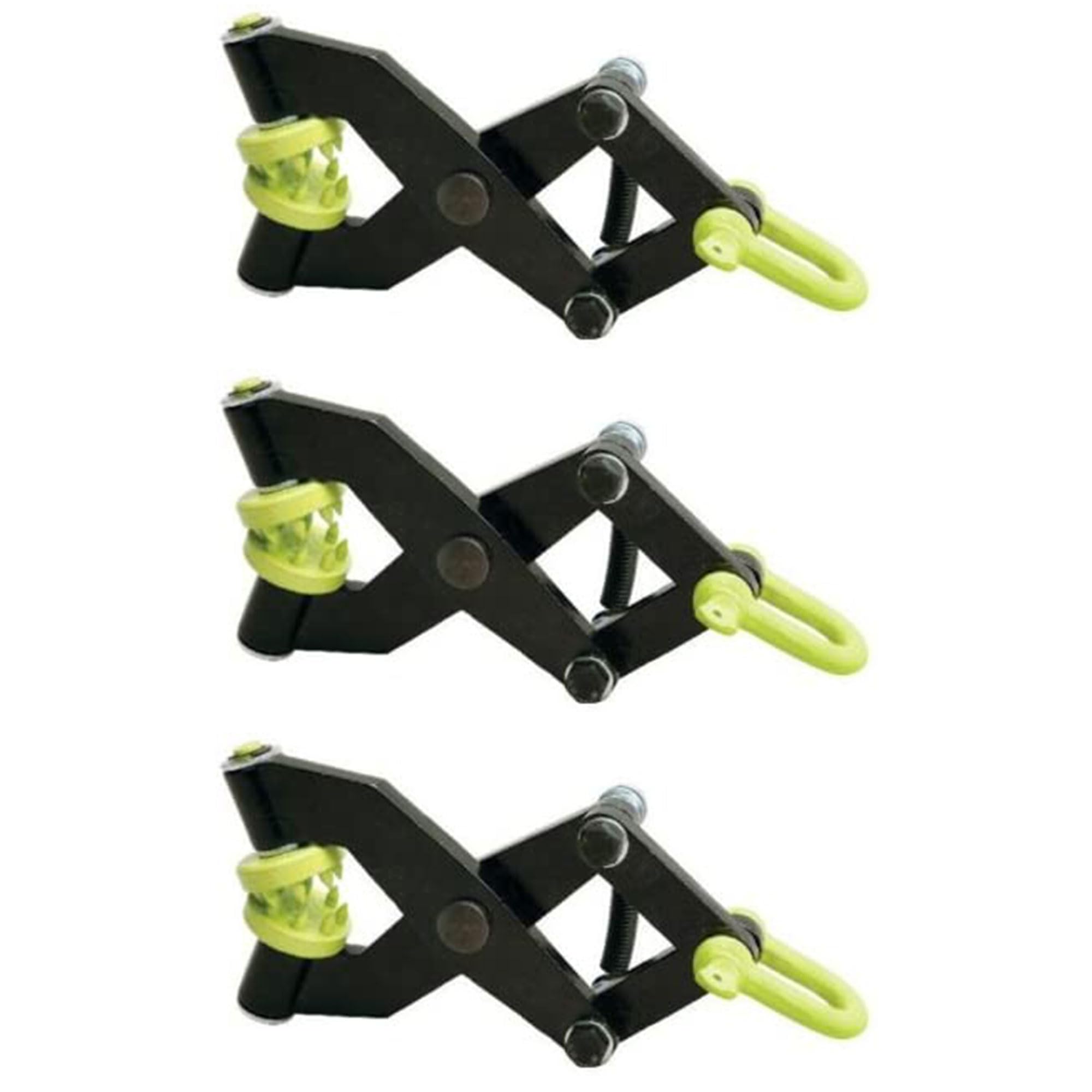
1. Brush Grubber Original Root and Weed Puller 3-Pack
Our pick — 4.0+★ from 950+ verified ratings; the strongest balance of quality and price.
The grab-and-yank tool that turns a truck strap into a brush-clearing machine
This is the one to reach for if your problem is regrowth. Each of the three pullers in this pack grips a shrub with 16 teeth, and you attach it to a lawn tractor, ATV, UTV, or light utility tractor so the vehicle does the yanking instead of your back. That design targets small trees and fence-line brush directly, dragging the plant out by the roots so it does not sprout again next spring. The set suits anyone clearing invasive species like buckthorn and bamboo, where cutting just makes the thicket denser.
The strong jaws open wide enough to handle bigger brush up to about 3 inches of diameter, and the grip pads rotate 360 degrees to help avoid stripping bark off the trunks you want to keep. Heavy-duty build quality is the recurring theme in owner feedback, with the design holding up under repeated tension without the jaws slipping once the teeth are firmly set.
The honest catch is the setup per shrub. The jaws need to be firmly seated before you pull, which means kneeling and a fair bit of hand strength to open the grippers, and the sharp teeth will bite through thin gloves. One quirk owners keep running into is the grip pulling bark instead of locking on when the jaws are not set deeply enough, which is exactly why seating the teeth properly is worth the extra seconds. The three-tool pack also lets you leave one rigged to a lawn tractor and keep another in the truck, so you are not swapping hardware every time you move between the front field and the back fence line.
What earns the top spot
- 16 gripping teeth hold small trees and saplings up to roughly 3 inches in diameter so they come out roots-first
- Grip pads rotate a full 360 degrees, which protects the bark on trees you want to keep standing
- Buyers report clearing a dozen saplings in about 45 minutes of pulling
- Three pullers in the pack means you can rig one to the tractor, one to the truck, and keep a spare
Where it asks more of you
- Every shrub needs the jaws set by hand, so it is labor-intensive on dense thickets
- The pointed teeth require gloves and some kneeling to position correctly
- Jaws can peel bark instead of gripping if the teeth are not seated firmly
Made for: Landowners with overgrown fence lines and invasive brush who already own a tractor, ATV, or UTV and want the regrowth to stop for good.
Think twice if: You are clearing solid stands of tall grass or weeds — a powered cutter covers that job far faster.
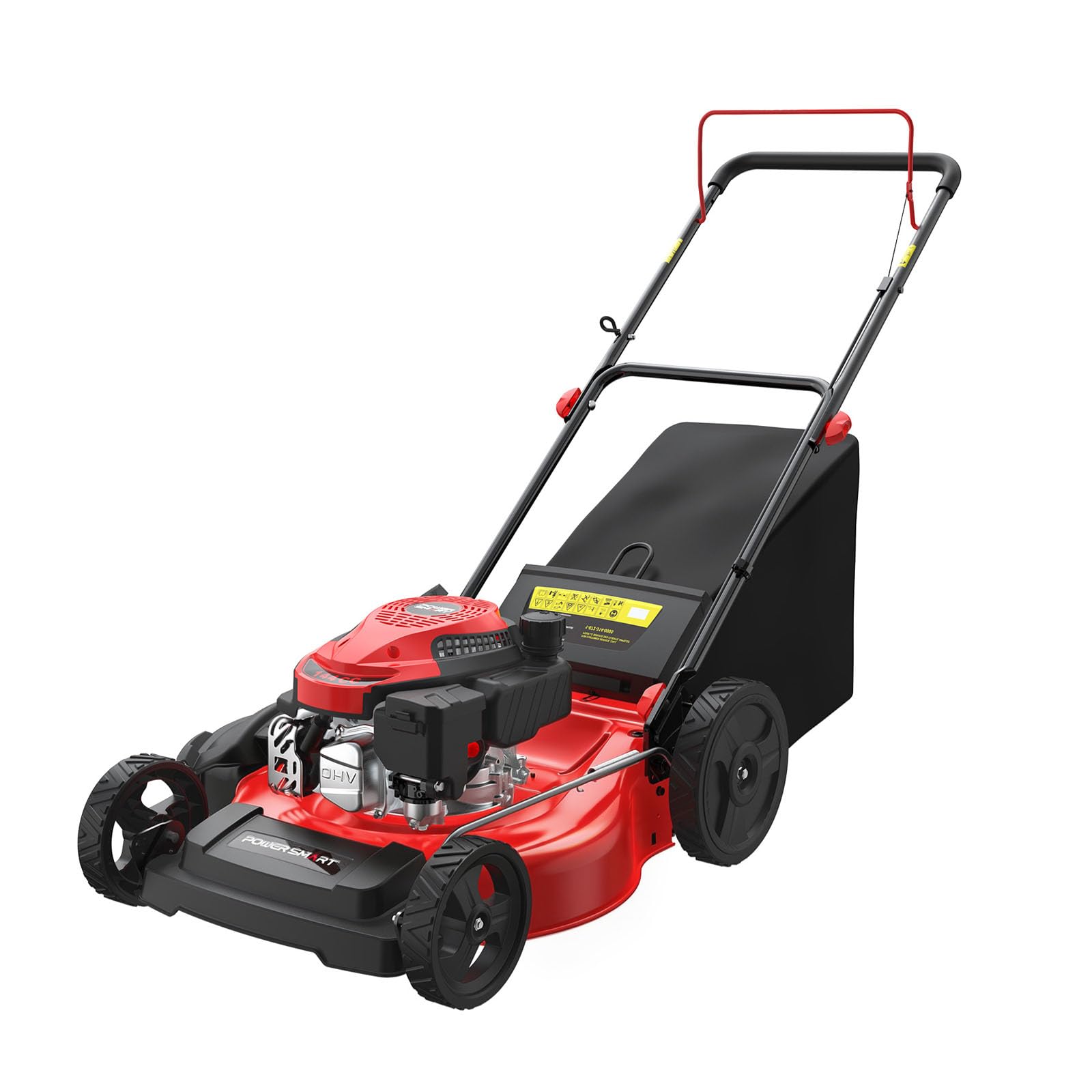
2. PowerSmart EasyGlide 21-Inch 3-in-1 Push Gas Lawn Mower
When the brush has already been knocked down, this is the machine that finishes the yard
The job this mower handles is the ground left behind — lawn that has gone weeks without attention and grass that has shot up past the point where a battery unit gives up. A 144cc 4-stroke OHV engine drives a 21-inch steel deck, and the auto-choke starting system with a primer means you are not fighting the cord every time. Owners mention it cutting thick, high grass without bogging down, including grass as tall as 9 inches. Push it, and the 10-inch rear and 7-inch front wheels roll it along on ball bearings so the effort stays low even loaded with clippings.
Its versatility is the real selling point for a mixed yard. The 3-in-1 system switches between mulching, bagging, and side discharge, and a single lever moves the cutting height through 6 positions from 1.5 inches up to 3.9 inches. On wet or overgrown patches, side discharge lets the clippings fly out the side so the deck does not clog, while mulching quietly returns the nutrients to the soil on a normal cut. That flexibility is why it beats the Dewalt cutter further down this list for anything the size of an actual lawn — the cutter is a trimmer, while this handles acres of grass in sweeps.
Durability is the honest weak spot. Most customers note the mower running strong season after season with only an oil change and fresh gas, but a handful of units give up early — one account describes a pull-cord failure and warranty headaches within the first season. Those cases sit at the edge of a large, mostly happy crowd rather than describing the norm. Also note on the practical side: the fuel tank is small enough that large properties will need a refill mid-job, and 61.6 pounds is heavy for a push unit, which is a lot of heft to move across a steep slope by muscle alone.
Where it shines: A 21-inch steel deck with a 144cc engine pairs cleanly with six height settings from 1.5″ to 3.9″, giving you a mower that works as a mulcher, bagger, or side-discharger depending on the day.
Pick this for: Standard home lawns with thick or neglected grass where the price-to-capability ratio matters most.
Look elsewhere if: You have slopes steep enough to want the self-propelled drive models below.
3. DEWALT DXGST227BC Brush Cutter
A handheld blade for the shrubbery a mower cannot touch, and one attachment system you can grow with
This is the tool to grab when brush is growing where no mower can roll — between fence posts, along a foundation, in beds too tight for a deck. A 27cc full-crank engine drives a heavy-duty metal brush blade across a 17-inch cut, and the overmold handles reduce the hand strain that comes with gripping a gas trimmer for an hour straight. Because it is TrimmerPlus compatible, the power head converts into other lawn tools as you buy attachments, so the investment grows with your property. For fall cleanup of ornamental grasses and dead perennial stalks, owners describe it clearing everything they threw at it and cutting hours off the work of doing the same job with pruners.
For comparison’s sake, this is a strapping handheld, and it is a very different creature from the walk-behind mowers here. Its 17-inch cutting width lines up exactly with the Husqvarna 122RJ’s 17 inches, so neither one beats the other on swath. The Dewalt’s edge is the metal blade and the attachment system — you can bolt on other tools down the road, which the Husqvarna does not offer in the same way. The Husqvarna, meanwhile, brings a longer reach and a lower weight, and it is the lighter of the two by a wide margin for the amount of brush it can take down.
The drawbacks are real and worth knowing before you buy. Left-handed users have flagged that the muffler shield sits where your arm goes, which gets uncomfortably hot, and a few units have arrived with a dull blade that struggles with thicker stock. One tool in the batch also showed up with a loose screw and a shoulder strap that pops off on its own. Those are build-consistency gripes rather than a systemic failure, and the tool still does the cutting the design promises — but budget a few minutes for setup and a quick once-over of the fasteners before first use.
Reasons it earns its spot
- 27cc commercial-grade engine with a 17-inch cut handles thick shrubbery the mower leaves behind
- Overmold handles cut hand fatigue over long sessions
- TrimmerPlus compatibility lets the head drive other attachments over time
- Owners saved hours versus pruning the same plants by hand
Things to know first
- Left-handed operators report the hot muffler shield sits against the arm
- Blades have arrived dull on some units, limiting what they take down from the start
- Some assemblies ship with loose fasteners and a strap that unhooks
Worth buying if: You want a blade-equipped handheld that takes on woody stems and can grow into a full attachment platform.
Consider the alternative if: You are left-handed, or you want a tool that arrives ready to cut without a blade touch-up.
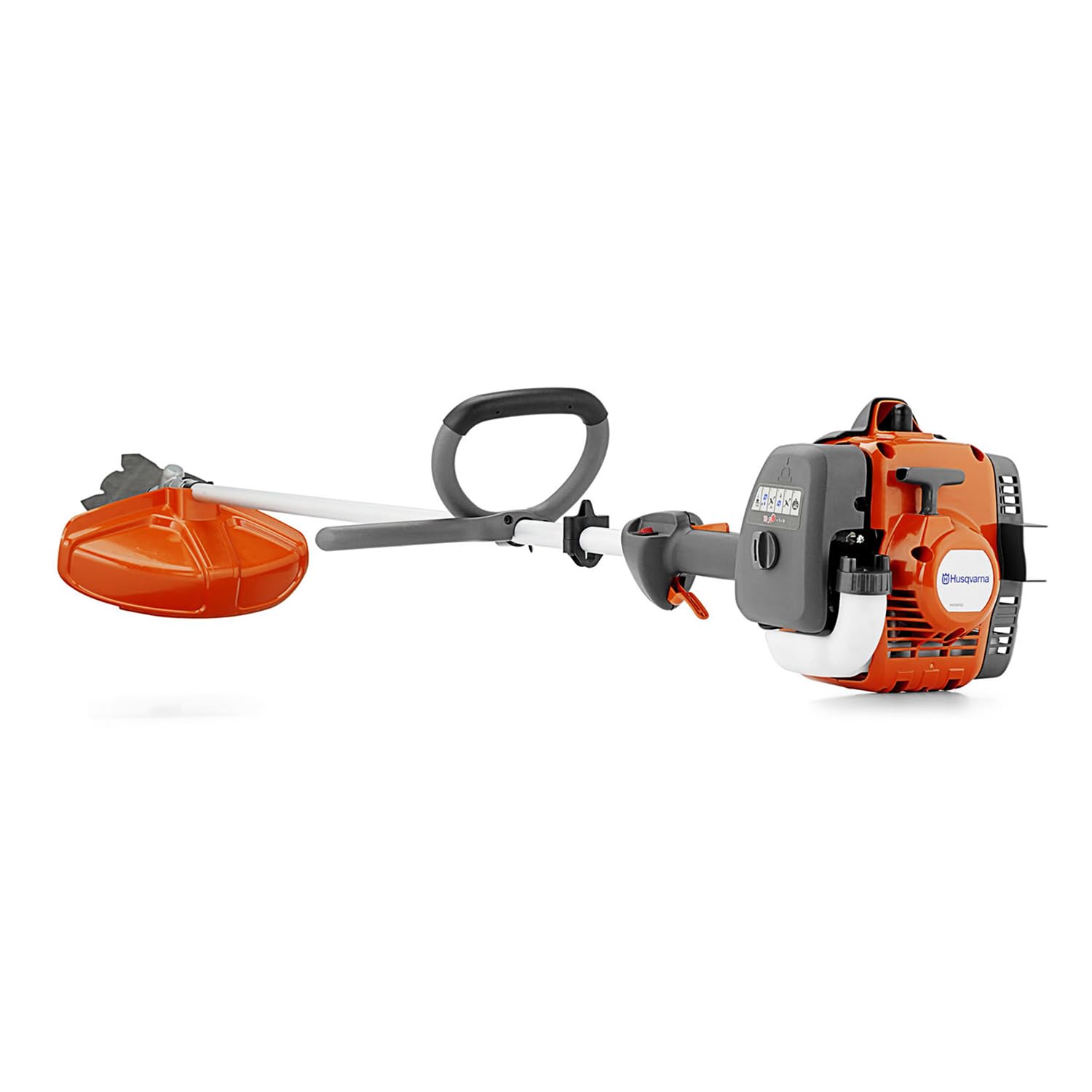
4. Husqvarna 122RJ Brush Cutter
Two cutting heads on one shaft, built for grass one day and woody stalks the next
Anyone whose brush problem changes with the season gets the most out of this tool. It ships with both a string trimmer head and a grass blade, so you can switch from fine trimming along a walkway to chopping back thicker stalks without buying a second machine. That two-in-one setup applies a dedicated engine and starter designed to fire up with minimum effort, helped along by an air purge that clears air from the carburetor and fuel system before you pull. A barrier bar with a J-handle encourages a safer stance, and the harness adds support during long sessions on uneven ground.
On the numbers, this is the heavier-duty answer to the Dewalt blade cutter above, and the comparison is close on paper — both cut a 17-inch swath. What separates them is weight and reach. At 12.6 pounds this is dramatically lighter to carry than the 61.6-pound push mower in this guide, which is why it is the one you grab for the parts of a property a wheeled machine cannot enter. Its 70-inch length also reaches into spots a mower’s deck can never touch, and reviewers point out it slicing through brush they expected to need a saw for.
There is a learning curve baked into gas ownership here. The tool runs beautifully once it is going — owners describe easy starting, a stable idle that does not rev on its own, and enough muscle to take down 1-inch branches in a couple of passes. The flip side is the occasional unit that fires up, runs briefly, and then demands carburetor adjustment with a special wrench and some small-engine expertise to get right again. A few have also arrived with a guard that came loose early or a damaged label plate. Set the carburetor, keep the fuel fresh, and this becomes a long-serving tool rather than a frustrating one.
One tool, two jobs: The included string head and grass blade let you swap cutting style to match the growth, and the air purge system takes the guesswork out of cold starts.
Best for: Yards where you are trimming fine grass in one pass and hacking woody brush in the next, especially on slopes and awkward ground.
Not for you if: You would rather not deal with occasional carburetor tuning and want a pure push-button experience.
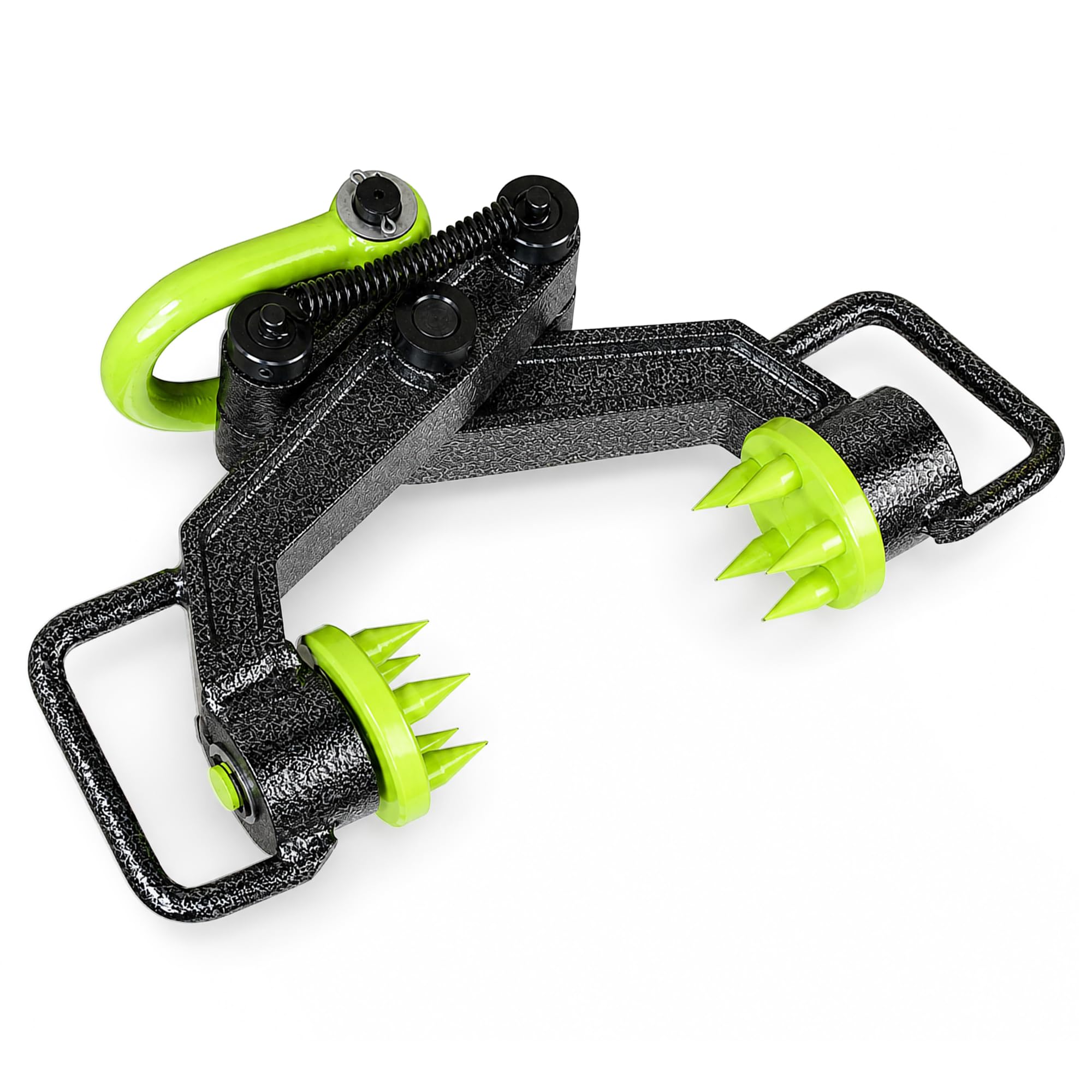
5. Brush Grubber Xtreme Plus Steel Root Puller
The big-jawed puller for stumps the smaller grubber cannot wrap its teeth around
When a tool needs to remove brush and small trees up to 6 inches in diameter by the roots, the jaw size is what matters, and this unit delivers it. Each stump remover features 5 large gripping teeth per pad, and the pads rotate a full 360 degrees to keep a tight, secure hold without stripping bark off trees you intend to keep. It is built from heavy-duty 1.5-inch steel with rugged handles sized for a single operator to open and close by hand. Hook it to any ATV, pickup truck, or lawn tractor, and the vehicle supplies the pulling power for landscaping, farming, or general property upkeep.
This is the natural step up from the Original Brush Grubber above for two reasons: it takes on larger-diameter wood, and it works through bigger stumps. Where the smaller puller tops out around 3 inches, this one opens wide enough for 6-inch work, which is the difference between clearing saplings and clearing young trees. Shoppers say pulling roughly 25 Texas mountain cedar stumps behind a heavy pickup, and one yanked a pear tree out with a 4WD vehicle and a log chain. Whether you are clearing juniper, cedar, privet, or sweetgum, the 36.2 pounds of steel here outclasses the lighter hand pullers on stubborn material.
Fair warning: that 36.2 pounds is heavy to maneuver through tight brush, and owners have pointed out that positioning it in thick stands is genuinely a two-person job — a teenager strained to move it alone. The other quirk worth factoring in is the spring, which can pop off in use; several owners simply secure it with zip ties or run the tool without it, which some find easier. There is also a finesse point on strong pulls, where the force applied at the teeth can weaken a tree above the root and snap it before it comes out clean. On brand-new or badly packed units, check the box on arrival — one arrived with the spring missing and the teeth bent from loose warehouse repacking. Pin down the spring, bring a helper, and this is a workhorse that owners keep for years.
The case for the big jaws
- Handles trees and brush up to 6 inches in diameter, double the reach of the smaller grubber
- 5 large teeth per pad bite in securely, with 360-degree rotating pads that avoid debarking
- Built from heavy-duty 1.5-inch steel that has held up through years of seasonal use
- Hooks to any ATV, pickup, or lawn tractor so the vehicle does the pulling
The catches to plan around
- At 36.2 pounds it is hard to position in dense brush without a second pair of hands
- The spring can pop off in use and is often replaced with zip ties
- Strong pulls can snap a tree above the root before it extracts cleanly
Choose this when: You are clearing stumps and small trees in the 2-to-6-inch range and have a vehicle ready to pull them free.
Downgrade to the Original if: Your brush is mostly fist-thick saplings, where this weight is more trouble than it is worth.
6. PowerSmart 21-Inch 170cc Self Propelled Gas Lawn Mower
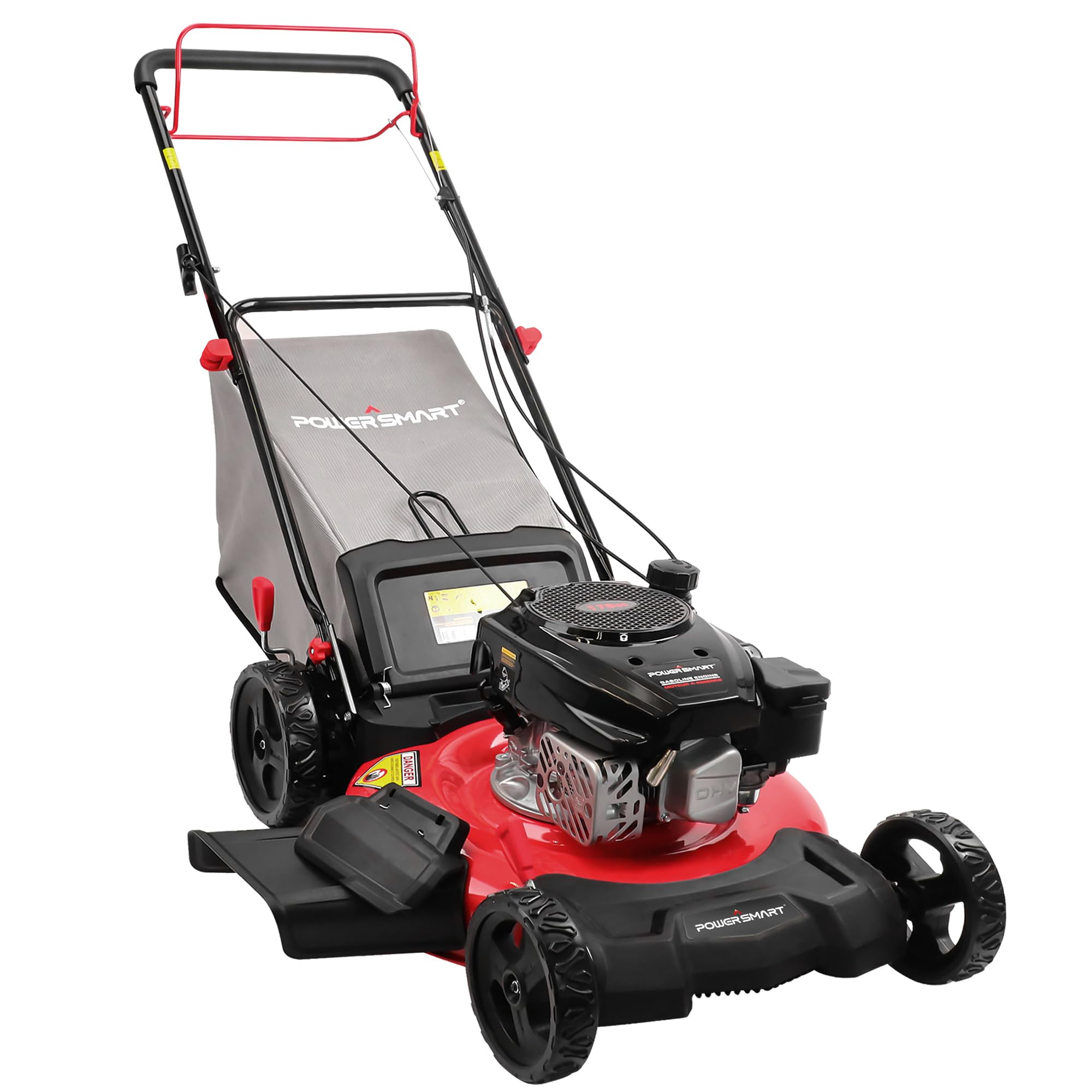
A 170cc self-propelled mower that hits its stride on sloping, overgrown ground
If your yard has any grade to it, the rear-wheel drive system is what you are paying for here. It provides strong traction on slopes and uneven terrain with noticeably less pushing than a basic walk-behind, and it steps up from the EasyGlide above by adding a bigger 170cc OHV 4-stroke engine with auto choke and recoil start. That larger engine cuts through thick or wet grass efficiently, and the 3-in-1 system still gives you mulching, side discharge, or rear bagging to match the season. Six height positions from 1.5 to 3.9 inches are controlled by a dual lever, and the deck is steel for the long haul.
At 59 pounds it is a touch lighter than the 61.6-pound push model and 13.8 pounds lighter than the 72.8-pound SENIX below, which is welcome when you are steering it around trees. Owners praise the traction on slopes, with several noting it starts on the first pull and switches easily between bagging and mulching. That easy-start reputation is a big part of why this lands higher than a specification sheet might suggest — the machine does not fight you first thing in the morning.
The trade-offs are honest and specific. Starting time is the most common divider in owner feedback: plenty of units fire on the first pull, while some take more work to wake up. A minority report rougher experiences — blue smoke from day one, rubber grips that crack, and plastic screw holes that strip out, which is worth knowing if you are hard on your equipment. Owners also advise using non-ethanol gas and staying on top of maintenance, since neglected fuel is what shortens the life of most gas mowers. Fold the handle down for storage, keep it fueled clean, and this stays a reliable partner season after season.
Why slopes matter here: Rear-wheel drive delivers traction where a push mower can slip, and the 170cc engine means the machine powers itself up the hill rather than you dragging it.
The right mower for: Yards with hills, dips, and uneven grass where self-propulsion turns a chore into a walk.
Skip if: Your lawn is pancake-flat, in which case the less expensive push model above is all you need.
7. SENIX 22” Self Propelled Gas Lawn Mower
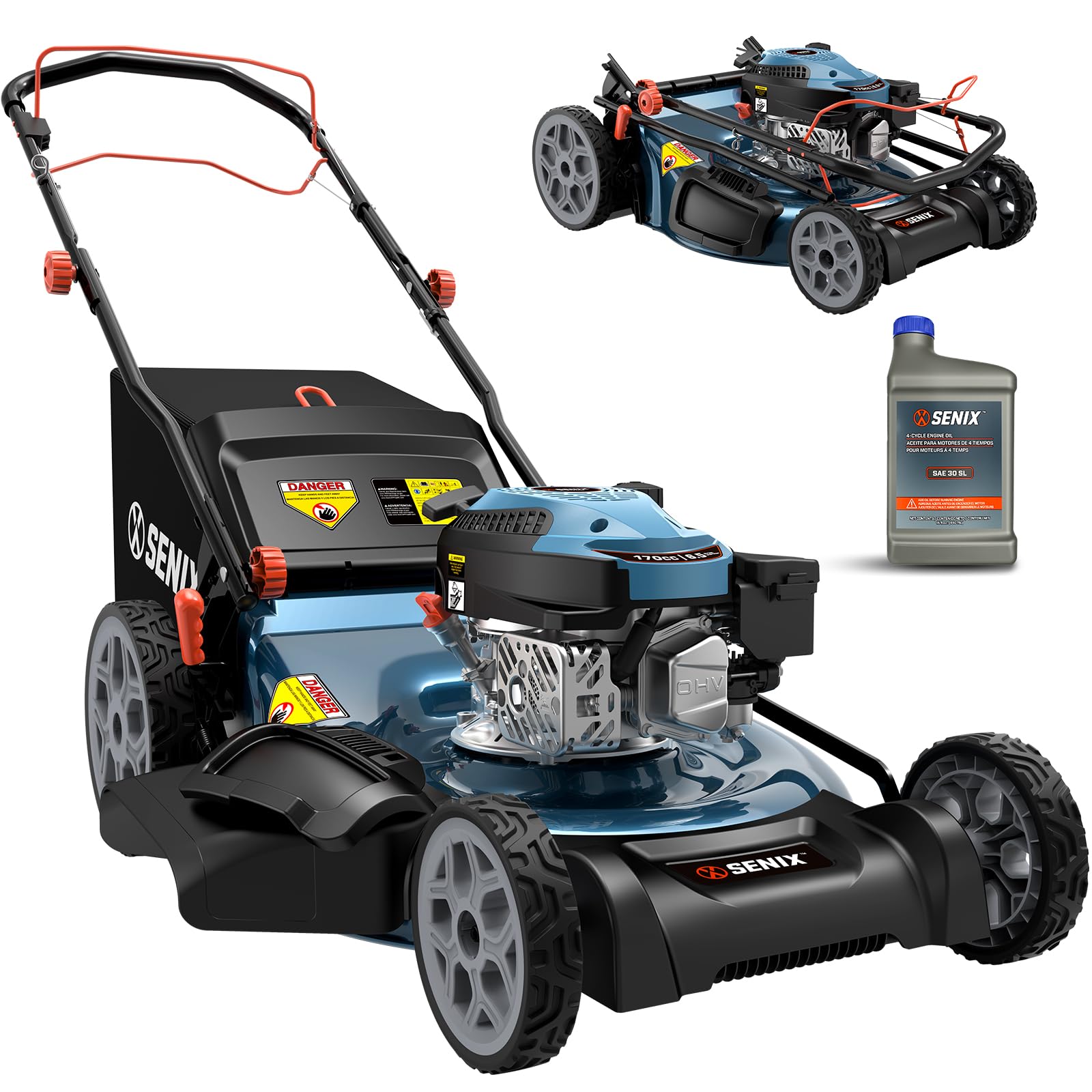
The widest deck here, built to shrink a big yard down to fewer passes
A 22-inch cutting deck is the reason to start your search here if you want to be done faster. This mower’s wider cut means fewer laps around a small-to-medium yard than a 21-inch machine needs — the exact 1-inch edge over the two PowerSmart mowers above adds up over an acre. A 170cc 4-cycle OHV engine drives a rear-wheel-drive, single-speed transmission, so you walk at a steady pace and let the mower pull. It is a proper 3-in-1 system too, with mulching, side discharge, and rear bagging, and a 19-gallon bagger that comes in the box rather than as an add-on.
The details are genuinely well thought out. Six height positions adjusted by a single lever run from 1.25 inches up to 4 inches, giving a clean cut if you want closely cropped turf or a longer finish. Rugged 8-inch front and 11-inch rear wheels roll smoothly over uneven ground, and an integrated washout port lets you flush the underside of the deck without tipping the mower. The handle folds for vertical storage, and the package includes engine oil, a mulch plug, a discharge chute, and the 19-gallon bagger, so nothing extra is needed on day one. Buyers report it cutting grass 8 to 10 inches tall without bogging down.
Two things temper the enthusiasm. First, assembly: the mower ships mostly unassembled, and the manual leaves a lot to be desired, so budget real time with a socket set — one owner took two hours plus a tool run to get going. Second, at 72.8 pounds it is the heaviest mower in this guide, which is a lot of machine to steer around tight landscaping, though the self-propelled drive offsets much of that on open ground.
What the money buys
- 22-inch deck covers more ground per pass than any other mower on this list
- 170cc engine with self-propelled rear-wheel drive handles tall and wet grass
- 19-gallon bagger, mulch plug, and discharge chute all included
- Rugged 8-inch front and 11-inch rear wheels roll over uneven ground
The trade-offs
- Heavy at 72.8 pounds and harder to steer around tight landscaping
- Setup is time-consuming, and the included manual is thin on detail
- Height adjustment is a single lever, which some prefer over dual-lever fine-tuning
Ideal for: Homeowners with larger or fast-growing yards who want the widest possible cut and a complete bagging setup from the start.
Reconsider if: You have tight, obstacle-heavy landscaping where a lighter and more nimble mower will save you frustration.
8. BILT HARD Walk Behind String Trimmer
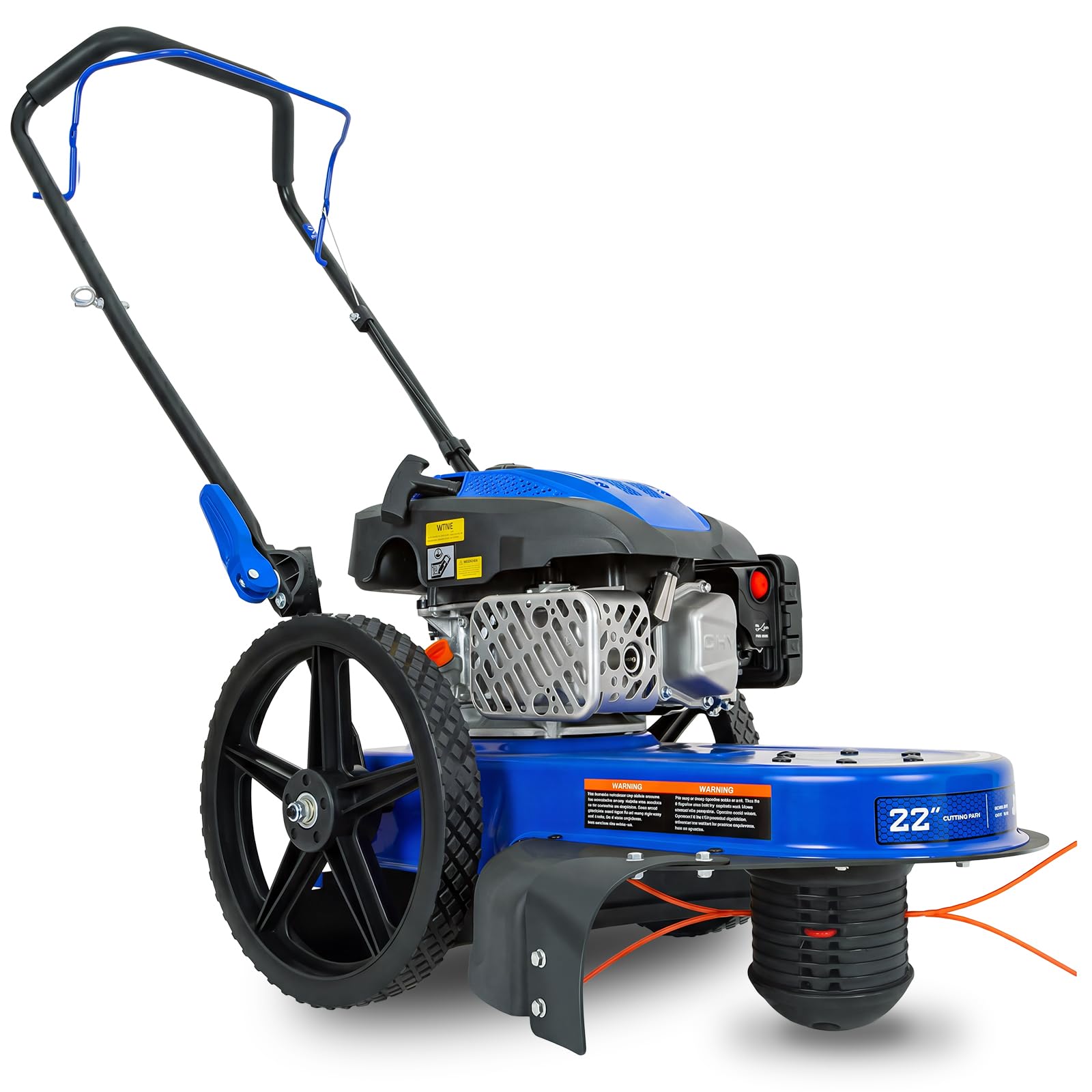
The push-behind string cutter that eats weeds a mower deck would choke on
Here is the tool for tall, unforgiving growth rather than lawn. A sturdy 170cc 4-cycle OHV engine drives heavy-duty nylon line that clears a 22-inch-wide path through the thickest grass and weeds, and a one-piece steel deck adds strength while reducing vibration. Because it cuts with line rather than a blade, it can push right through overgrown tall grass, saplings, and light brush that would stall a conventional deck. The 14-inch never-flat wheels take whatever terrain you point it at, and the foldable ergonomic handle eases storage when the season ends.
Reach is its quiet advantage. Because there is no deck to ride over the ground, it can get into tight spots along fence lines, around obstacles, and in the awkward corners a standard mower cannot enter, which is exactly what makes it useful on brush rather than just grass. Owners mention it chopping through 5-foot-tall weeds, and one saved money by clearing a commercial lot instead of hiring it out. On fuel it is undemanding, running on regular gas.
The belt and the starting game are the two things to keep in mind. Most units hold up to hard use, but a minority report the belt breaking after just 15 minutes of cutting, which is best treated as a quality-check task rather than an inherent flaw. Cold starts also take patience: some owners find the engine needs several pulls when cold and starts with one pull once warm, and a few have had the air filter work loose in shipping. Inspect that filter before the first start, keep the line fresh, and this walk-behind earns its keep on tough ground.
The walk-behind advantage: A 22-inch cutting path on a string trimmer means you get mower-like coverage with the reach and clearance to clear brush a deck cannot touch, all on regular gas.
Buy it for: Overgrown acreage and fence lines full of tall weeds and light brush where a standard mower simply cannot go.
Not the one for: A manicured lawn — this is a brush-clearing tool first and a grass cutter second.
9. Titan Attachments Post and Tree Puller Attachment

For serious land clearing, the skid-steer attachment that pulls trees and posts out whole
This is the tool for the job the hand pullers cannot finish. A hydraulic system with a 2-inch bore and 10-inch stroke delivers 3,000 PSI of clamping force to grip roots, stumps, and fence posts and pull them straight from the ground. The jaw is reinforced with a single hinge pin and 1-inch thick teeth, and it removes tough roots, wood fence posts, and trees up to 12 inches wide. It mounts to any skid steer, loader, or tractor with a Universal Skid Steer Style mounting system, including New Holland, John Deere, Bobcat, and Kubota equipment, and it comes with hoses and flat-faced couplers for consistent pressure during the pull.
Owners who run one describe remarkable throughput. One owner pulled over 200 trees measuring a half-inch to 4 inches in diameter in about 10 hours of skid-steer work. The open-plate design keeps operator visibility clear, and the jaws handle honeysuckle bush after bush without damaging the trees standing next to it. Built from powder-coated steel with rust resistance, the attachment is rated to hold up in the field, and at 308 pounds it is built for a machine, not a person.
The one number to read honestly is the size ceiling. The 12-inch tree rating is optimistic in the real world — a heavy dozer will struggle with wood that thick, so treat 6 inches as a comfortable working range for a smaller machine and less for anything compact. There are also small installation details: the mounting pins can need driving in through thick paint, and the flat-faced hydraulic coupler may need to be ordered separately if your tractor uses a different style. Weld quality has drawn a few grumbles on some units, though no breaks were reported by owners using it on a non-commercial scale.
Why it earns its keep commercially
- 3,000 PSI clamping force with a 2-inch bore and 10-inch stroke pulls posts and roots cleanly
- 1-inch thick teeth and a single hinge pin rip through trees up to 12 inches wide
- Universal SSQA mounting fits New Holland, John Deere, Bobcat, and Kubota machines
- Owners cleared enormous volume quickly, some hoisting 200+ trees in a single day’s work
What to plan for
- The 12-inch tree rating is generous — a typical machine cannot pull wood that thick
- Mounting pins can need driving in through thick paint during setup
- Some customers note weld quality that is not up to commercial standards
Built for the job: Property managers and serious landowners who already own a skid steer or tractor and want brush and post removal done at scale.
Not the one for: Anyone without a machine to mount it to — this attachment does nothing by itself.
Know the Specs
Engine displacement (cc)
Displacement, measured in cc (cubic centimeters), tells you how much fuel-and-air mixture the engine can burn per revolution — put plainly, bigger engines hold their speed against tougher growth. A 144cc engine like the EasyGlide mower is suited to thick, lengthy grass, while the 170cc engines on the self-propelled mowers and the BILT HARD walk-behind bring more reserve for overgrown ground. The 27cc engine on the DEWALT cutter is a different class entirely, because it drives a lightweight handheld blade through woody stems rather than spinning a mower deck through acres of lawn.
Cutting width and cutting diameter
Cutting width is the path your tool clears in a single pass, and it decides how many trips you make. A 21-inch mower deck covers slightly less ground per lap than a 22-inch deck, and a 17-inch trimmer cut is enough for edges and beds but not for mowing a yard. On pullers, the number to watch is diameter — the Original Brush Grubber handles roughly 3 inches and the Xtreme Plus reaches 6 inches, so match the jaw to the thickest wood on your property before you buy.
Weight and maneuverability
The weight figure decides whether you can realistically use a tool on a slope or in tight brush. A 12.6-pound trimmer is simple to carry around obstacles all afternoon, while a 61.6-pound push mower and a 72.8-pound self-propelled unit roll well on open ground but feel heavy on turns. When a tool is heavy enough to need two people, as the 36.2-pound Xtreme Plus puller does in dense brush, that changes who on your property can use it alone.
Power source and what it fixes
Gas engines give you the sustained torque to chew through wet, tall, thick growth that drains a battery, but gas tools need clean, fresh fuel and regular oil changes to stay reliable. Manual pullers and tow-strap tools need no fuel at all and work anywhere a vehicle or a person can reach, though they ask for muscle instead. Skid-steer attachments like the Titan puller use stored hydraulic pressure from the host machine, which is why they deliver 3,000 PSI of gripping force no hand tool can match.
Common Questions
Will a brush puller work if I do not own an ATV or tractor?
Can I cut brush with a regular mower instead of buying new equipment?
What diameter of tree can each puller actually remove?
Do I need a metal blade or a string head forclearing brush?
How long will a gas brush clearing tool last if I maintain it?
Is a walk-behind string trimmer better than a standard lawn mower for brush?
Can the string trimmer or cutter cut wet grass without clogging?
What size property does a self-propelled mower make sense on?
Will a skid-steer tree puller fit my tractor?
Should I choose a manual puller or a gas cutter for fence line clearing?
How do I stop the cutting blade from dulling on a gas brush cutter?
Is a heavier puller always more effective at removing stumps?
The Bottom Line
Choosing the equipment to clear brush really depends on what is growing and if you want it gone for good or gone for now. The Brush Grubber Original Root and Weed Puller takes the top spot because it pulls small trees and invasive brush out by the roots so you are not fighting the same growth next season, and it works with whatever vehicle you already own. If you need to carry a tool into tight spots and want both a string head and a blade, the Husqvarna 122RJ gives you that two-in-one versatility on a 17-inch cut. And if you are clearing overgrown acreage with tall weeds and light brush, reach for the BILT HARD walk-behind string trimmer, whose 22-inch path goes places a mower deck cannot. Match the tool to your ground, keep the fuel fresh, and the regrowth stops being a yearly project.
How we choose
We do not accept paid placement. Every pick is matched to a real buyer and a real use-case; we do not hands-on test units.
Sources
Specifications: manufacturer listings and product documentation. Review insights: verified customer reviews, as of October 2026. Pricing: not shown on this page (it changes often); check the current price via the retailer link.
As an Amazon Associate, Aappliancez earns from qualifying purchases. This does not affect which products we feature.