Disclosure: Some links in this post are affiliate links. As an Amazon Associate I earn from qualifying purchases, at no extra cost to you. Learn more
Specs are compiled from manufacturer listings and verified buyer reviews and can change over time — please confirm the key details on the product page before buying.
If your vinaigrette separates on the plate or your lotion splits in the jar, you do not need a new recipe — you need the right emulsifier. An emulsifier is the ingredient that forces oil and water to stay mixed instead of pulling apart. The short answer: pick by what you are making. For a bottle that handles food, cosmetics, and home projects in one go, the SimpleNature Propylene Glycol is the most flexible all-rounder on this list, while soy lecithin suits cooking and baking, polysorbate 20 suits drinks and sprays, emulsifying wax suits creams and lotions, and bakery emulsion suits flavor.
This guide is built by comparing the manufacturers’ published specifications and the patterns across verified customer reviews, so you get each pick’s real strengths and trade-offs instead of marketing spin.
Each pick below is food-grade or cosmetic-grade where it matters, and every one names the exact form it comes in — liquid, powder, pastille, or gel — because that is what decides how it behaves in your kitchen. The right emulsifiers for food keep a sauce glossy, a butter creamy, and a flavor locked in from the first stir to the last bite.
Top Picks
How To Choose The Best Emulsifiers for Food
An emulsifier does one job: it grabs the oil side of a mixture with one hand and the water side with the other, so the two stop fighting and stay blended. The trick is matching the emulsifier to what you are actually making, because a liquid built for cosmetics and a pastille built for lotion behave nothing alike in a pan of sauce.
Match the form to what you are making
A liquid emulsifier pours and measures by the spoon, so it drops straight into a dressing, a drink, or a spray. A powder dissolves or hydrates into batters and doughs with a stir. A pastille — a small solid bead of wax — has to be melted into the oil phase of a cream or lotion before it can do anything. A pastille will not dissolve in a cold dressing, and a liquid will not set a cream.
Check the grade before it touches food
Food grade means the maker states the product is intended for edible use. Cosmetic grade means it is made for skin and hair products. USP grade points to a purity standard. A bottle can carry more than one label, and the label is the only thing that tells you whether it belongs in a sauce or only in a lotion. Read it rather than assume it.
Understand concentration so you do not over-pour
A concentrated emulsifier or flavor goes further than its liquid cousin, which is why a gel bakery emulsion often needs less than the extract it replaces in an unbaked frosting. Start small, stir fully, and let the mixture rest before adding more — you can always add, but you cannot take it back out.
Side-by-Side Comparison
| Model | Best For | Form | Grade | Size | Amazon |
|---|---|---|---|---|---|
| SimpleNature Propylene Glycol★ Best Overall | All-round food and DIY use | Liquid | Food grade, 99.9% purity | 16 fl oz | Amazon |
| XPRS Nutra Soy Lecithin PowderBest for Baking | Cooking and baking | Powder | Food grade, vegan friendly | 4 Ounce | Amazon |
| velona Polysorbate 20 | Drinks, sprays, bath formulas | Liquid | Food & Cosmetic Grade, USP Grade | 16 fl oz | Amazon |
| 33rd Parallel Emulsifying Wax NF Pastilles | Creams, lotions, body butter | Pastilles | Cosmetic grade, non-GMO | 8 oz | Amazon |
| LorAnn Bakery Emulsion 3 Pack | Flavor in baked goods | Gel emulsion | Bakery emulsion | 3 x 4 ounce | Amazon |
Detailed Reviews
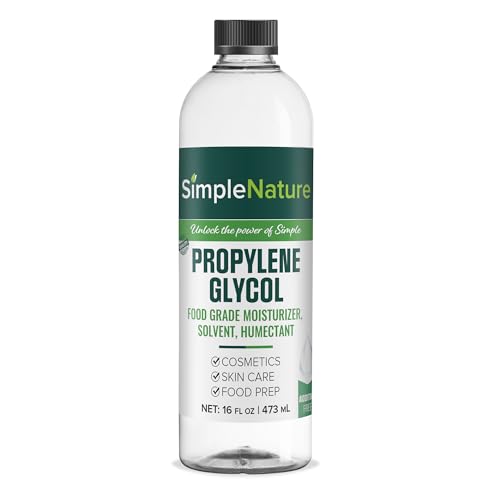
1. SimpleNature Food Grade Propylene Glycol
Our pick — 4.5+★ from 800+ verified ratings; the strongest balance of quality and price.
A 99.9% food-grade liquid that works in cooking, skincare, and DIY fog fluid.
If you want a single bottle that earns its shelf space across the whole house, this is the one. The 99.9% assay (the measured purity of the chemical inside) is the headline number — it means what you pour is almost entirely propylene glycol, with no filler or contaminant diluting the job. It is a liquid, so it measures by the spoon and disappears into a mixture with a stir. Food grade status is stated on the label, which is what makes it the safe reach for edible work.
The jobs it handles are unusually wide for one ingredient. It thins and carries flavor in food, acts as a humectant (a moisture-holding agent) that keeps a mix from drying out, and lowers the freezing point of water as a de-icer. Home fog machines run on a DIY 5-to-1 water-to-PG mix, and you adjust that ratio to dial the fog density. Wooden cutting boards get oiled with it to protect the surface before first use. Painters stretch acrylic drying time with a small splash. The crowd favorite read on this bottle is quality, and it shows in how clean and odorless the liquid arrives.
A couple of practical notes before you commit. The liquid is best kept cool and out of sunlight to hold its condition over time, so a cupboard beats a sunny windowsill. The taste of this ingredient draws split opinions — some find it neutral, others notice an off note — so in delicate food work, test in small batches first. And there is a seal-arrival lottery: an occasional bottle turns up with a loose cap and a little leakage in the box, which is a shipping hiccup rather than a product flaw.
What earns it the top spot
- 99.9% purity keeps the liquid clean, clear, and odorless so it fades into whatever you mix it with
- Food grade status opens it to edible use, not just cosmetics
- 16 fl oz goes a long way when a little covers wood, paint, fog fluid, or a recipe
- A single 16 fl oz bottle covers cooking, moisturizers, fog fluid, and wood care
Where it asks for care
- The flavor note divides opinion, so taste-test small food batches before scaling up
- Store it cool and out of sun to keep it in condition
- Caps occasionally arrive loose with minor leakage in transit
Reach for this if: you want one food-grade liquid that covers cooking, moisturizers, fog machines, and wood care — the most versatile bottle here.
Honest caveat: if your whole goal is flavor in baked goods, a dedicated bakery emulsion will taste cleaner than a general-purpose liquid like this.
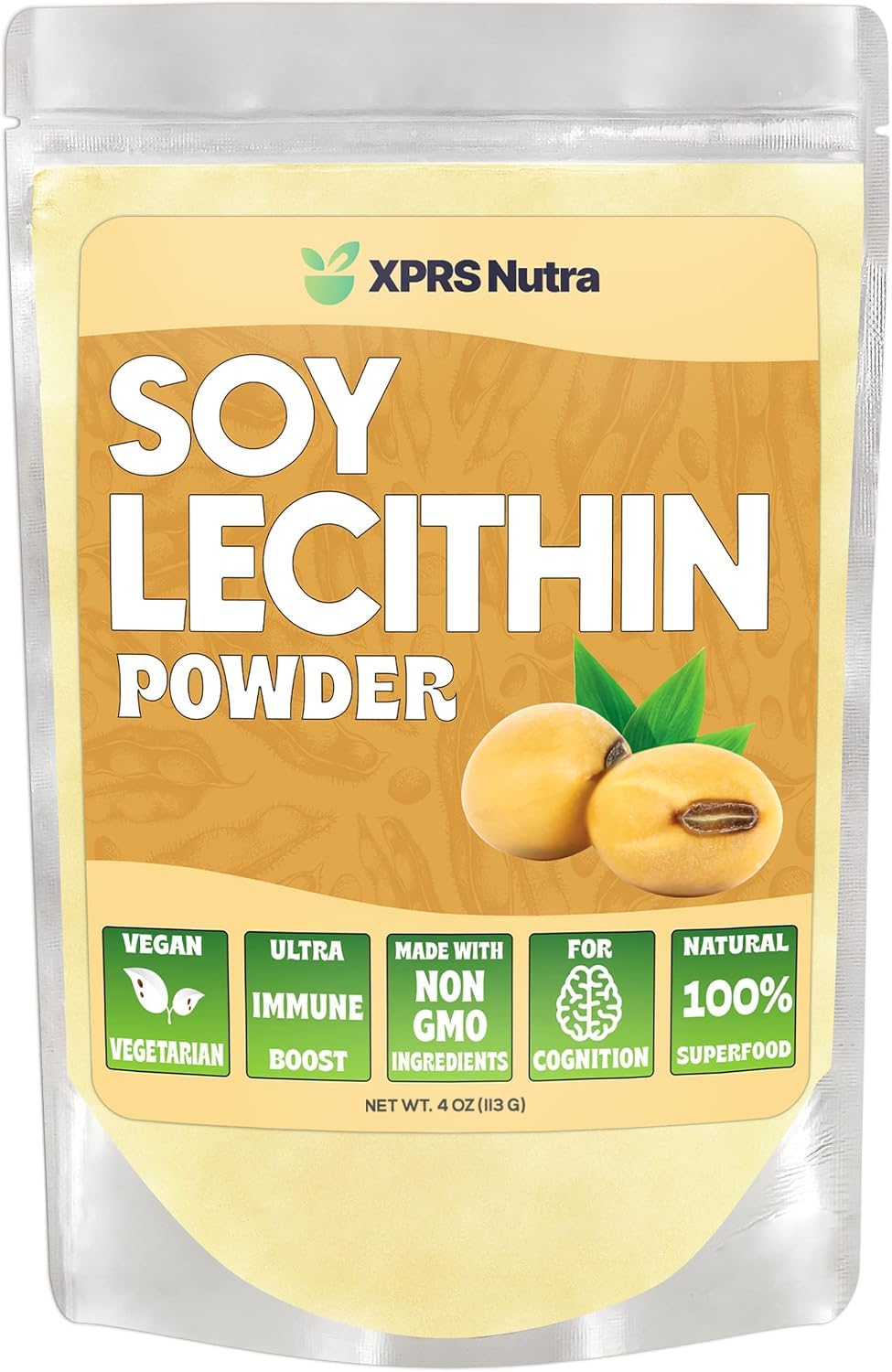
2. XPRS Nutra Soy Lecithin Powder
A soy lecithin powder that holds oil and water together in batters, doughs, and creams.
This is the emulsifier to reach for when the recipe lives in the oven. Lecithin is a fat found naturally in cells, and this version is drawn from soy beans, so it drops into doughs and batters as a fine powder that hydrates with a stir. The job is simple: keep the oil and water in a mix from separating so a bake comes out even instead of greasy at one edge. It is food grade and vegan friendly, and it comes in 4 Ounce, 8 Ounce, and 16 Ounce bag sizes so you can match the bag to how fast you bake.
Weight matters if you are comparing bottles. This bag runs 3.99 ounces, against the 15.84 ounces of the velona Polysorbate 20 bottle above — a real difference when you are deciding which one to keep on the counter. Buyers who work in small-batch creams get on with it too. As buyers report: “Used 3% in face cream with xanthan gum, mixed via high-speed shear frother; emulsion held strong.” That same reasoning is why cookies, cakes, and cinnamon rolls are the everyday win here.
The catch is texture out of the bag. The powder can arrive compacted and hard, which makes the little scoop that ships with it close to useless — you will want your own dry spoon and a quick break-up of any clumps before measuring. It also hydrates best when you whisk or shear it rather than stir it lazily. If you are making a cream without any water in it, a liquid lecithin does that job better than this powder.
Best value in the powder aisle: a food-grade, vegan-friendly lecithin that works in baking and in small-batch emulsifying, with three bag sizes to choose from.
The trade-off to know: expect some compacting, plan on your own spoon, and whisk it in properly rather than stirring half-heartedly.
Pick this when: your emulsifying happens in the kitchen — batters, doughs, and homemade creams where a powder stirs straight in.
Look elsewhere if: you need a no-water product or a liquid you can pour by the drop without clumping.
3. velona Polysorbate 20

A liquid solubilizer that disperses oil into water for sprays, drinks, and bath formulas.
Polysorbate 20 is an emulsifier and solubilizer (a helper that dissolves an oil-based ingredient into a water-based one) made from ethylene oxide, sorbitol, and lauric acid. It is a nonionic ingredient, which is a jargon way of saying it does not carry an electrical charge and plays nicely with most other ingredients. It arrives as a liquid in a flip-top bottle, so it goes into a formulation by the drop or the spoon. Food and cosmetic grade together, which is why it works in flavor sprays as readily as in skincare.
What wins people over is effectiveness — the thing holds oil and water together in real formulas, not just on paper. Use it to disperse flavors and colors evenly in baked goods and prepared foods, or to smooth lotions, sprays, shampoos, and fragrance blends. Air freshener, bath bombs, and reed diffusers all rely on it for the same reason. A buyer who mixed a reed diffuser with a one-to-one ratio of oil, polysorbate, and water got a milky liquid that cleared to a transparent one after a spoon of vodka and a few hours of resting. It also adds no scent, so it will not fight whatever fragrance you are working with.
The practical snag is the lid. The flip top can seep when you pour, so the solid cap that ships alongside it is worth keeping and swapping back on for storage. Value draws split views — some buyers find it an economical buy, others feel they overspent — so size your bottle to how often you mix. A 16 fl oz bottle weighs 15.84 ounces, so it is a real bottle with some heft on the shelf, not a flimsy sample.
Where it shines: liquid formulas where oil needs to vanish into water — sprays, drinks, bath fizz, and fragrance blends — with a nonionic profile that cooperates with most recipes.
Keep in mind: pour with the flip top and water seams, or switch to the solid cap for storage.
It suits you if: you mix sprays, drinks, or bath formulas and want a liquid that blends oil into water cleanly.
Wrong tool if: you are building a thick cream or lotion that needs a wax to set it.
4. 33rd Parallel Emulsifying Wax NF Pastilles
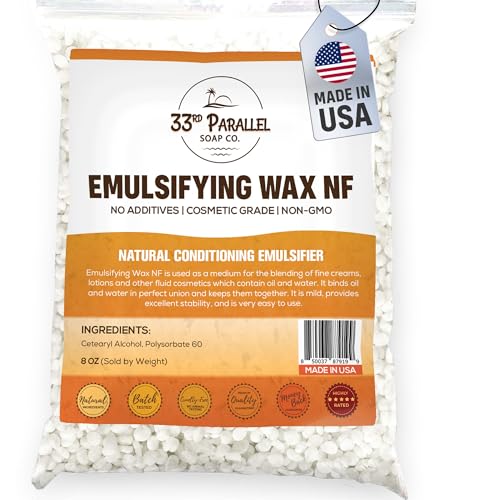
Wax pastilles you melt into the oil phase so a lotion sets creamy instead of splitting.
If your goal is a cream that stays creamy, this is the ingredient that does the structural work. Emulsifying Wax NF comes as pastilles — small solid beads of wax — that you melt into the oil phase of a recipe, then blend with water so the two set together instead of splitting. It is non-GMO and 100% plant derived, cosmetic grade, and sold in an 8 oz resealable bag. Because it is a wax rather than a pour-in liquid, it belongs in lotions, body butters, and hair products, not in a salad dressing.
What wins people over here is effectiveness: the pastilles melt smoothly and the resulting lotion does not break after weeks in a jar. The beads arrive loose and ready to use rather than fused into a block, and they add no competing scent to a formula. One telling comparison sits above: the velona Polysorbate 20 is a liquid built to make oil dissolve into water, while this is a waxy solid built to give a cream its body — same broad job, opposite physics. Hair care gets real benefit too, since the wax conditions while it emulsifies, which is why it shows up in shampoos, conditioners, and detangling sprays.
One honest point from the mixing bench: it is marketed as non-GMO and plant derived, but a careful buyer flagged that it still contains chemicals that some people prefer to avoid, and chose lecithin plus a natural wax instead. That is a personal-values call, not a performance flaw. The bigger thing to know is that this wax needs heat to work — if you are not prepared to melt the beads, it will not do anything for you.
What it delivers: stable, creamy emulsification for lotions and body butter, with pastilles that melt evenly and a resealable bag that keeps moisture out between batches.
Who should think twice: anyone who wants a purely natural label, or who is not set up to melt a wax before mixing.
Choose it for: homemade lotions, creams, and whipped body butter where you want a soft, creamy set that holds.
Not your match if: the recipe is edible, or you want an ingredient that pours straight in with no melting step.
5. LorAnn Bakery Emulsion 3 Pack
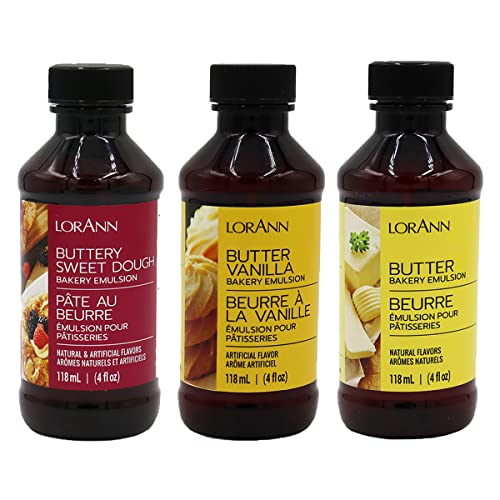
Three 4-ounce gel emulsions that hold butter flavor through the oven’s heat.
This pack is where emulsifying meets flavor, and it changes how a baked good tastes. The three bottles — Buttery Sweet Dough, Butter Vanilla, and Butter — are gel emulsions that hold their flavor through heat, an advantage over extracts that fade in the oven. You measure them like an extract in a baking recipe, but a little less is needed when the item is not baked, such as a frosting. Each bottle is 4 ounces, so three of them together give you 12 Fluid Ounces of flavor to work through.
What earns the praise here is concentration — a small pour carries a long, rich flavor, so the bottles last. The 3-pack also does the job of three singles, which makes it a practical stock for anyone who bakes often. Cakes, pound cakes, breads, rolls, icing, shortbread, and even sauces all pick up the buttery note. A home baker’s lesson carried into this pick: add butter flavoring to any baked item you would serve butter on, and this pack handles that without reaching for the real thing.
The one split is the smell. Some love the strong butter aroma and the flavor it delivers; others find the scent off-putting straight from the bottle. It reads far better baked into a cake than sniffed cold, so do not judge it by the cap. And because it is concentrated, over-pouring is the real risk — start with less than you would of an extract and build up.
The flavor edge: a concentrated gel that holds through the heat of baking, in three buttery flavors that cover cakes, breads, and frostings.
Go easy: the aroma polarizes, and the concentration means a heavy hand overwhelms a recipe.
Worth grabbing if: you bake often and want buttery flavor that survives the oven in one three-bottle pack.
skip it if: you need an actual oil-and-water binder — this flavors a recipe, it does not stabilize a mixture.
Know the Specs
Food Grade vs Cosmetic Grade
Food grade means the maker labels the product for edible use. Cosmetic grade means it is intended for skin and hair products. A bottle can carry both, like the velona polysorbate 20, which is labeled Food & Cosmetic Grade. The grade tells you where the product belongs — a cosmetic-only wax or lecithin should stay out of your dinner.
Purity and Assay Percentage
An assay percentage, such as the 99.9% on the SimpleNature propylene glycol, is the measured concentration of the active chemical. A high figure means fewer fillers and contaminants diluting the job. It is the number to check when you want the ingredient to behave consistently batch after batch.
Liquid vs Powder vs Pastille
The form decides how you use it. Liquids pour and measure by the spoon and drop into dressings, sprays, and drinks. Powders hydrate into batters and doughs. Pastilles are solid wax beads you melt into a cream or lotion. Match the form to the recipe and the emulsifier does its job without a workaround.
Concentration in Flavor Emulsions
A concentrated bakery emulsion carries more flavor per spoon than a standard extract, so the same measure can overpower a recipe. Measure less than you would of an extract in an unbaked item such as frosting, and let the flavor settle before adding more.
Common Questions
What is the difference between an emulsifier and a thickener?
Can propylene glycol be used as a food emulsifier?
Is soy lecithin powder better than liquid lecithin for cooking?
How do I stop my lotion from separating after I make it?
Does polysorbate 20 work in drinks and sprays?
Why does my bakery emulsion smell stronger than an extract?
How much emulsifying wax should I use in a body butter?
Can I use cosmetic grade emulsifiers in food?
How should I store liquid emulsifiers so they last?
Will an emulsifier change the taste of my food?
The Bottom Line
For the widest spread of jobs from one bottle, the emulsifiers for food winner is the SimpleNature Propylene Glycol because it carries a 99.9% purity food-grade liquid that works in cooking, personal care, fog machines, and wood care alike. If baking and batters are your focus, grab the XPRS Nutra Soy Lecithin Powder. And for homemade creams and lotions, the 33rd Parallel Emulsifying Wax Pastilles is the one to melt into the mix. One nudge: keep the solid cap on your polysorbate bottle for storage, because a sealed bottle keeps the liquid in condition far longer than a loose flip top.
How we choose
We do not accept paid placement. Every pick is matched to a real buyer and a real use-case; we do not hands-on test units.
Sources
Specifications: manufacturer listings and product documentation. Review insights: verified customer reviews, as of October 2026. Pricing: not shown on this page (it changes often); check the current price via the retailer link.
As an Amazon Associate, Aappliancez earns from qualifying purchases. This does not affect which products we feature.