Disclosure: Some links in this post are affiliate links. As an Amazon Associate I earn from qualifying purchases, at no extra cost to you. Learn more
Specs are compiled from manufacturer listings and verified buyer reviews and can change over time — please confirm the key details on the product page before buying.
Here is the short answer: the boot you want has a safety toe that will not pinch your toes, a sole that grips a wet concrete floor, and a weight you can stand in for a ten-hour shift. Everything else is marketing. The catch with electrician boots is that a worthless pair and a great pair often look identical on a shelf, so the difference only shows up at hour nine of a shift.
This guide is built by comparing the manufacturers’ published specifications and the patterns across verified customer reviews, so you get each pick’s real strengths and trade-offs instead of marketing spin.
What follows is how toe construction, sole grip, and electrical-hazard claims actually play out on a jobsite, so you can pick a pair that survives the crawlspace as well as the panel swap. The picks below are the ones that hold up best in real working conditions.
Top Picks


How To Choose The Best Electrician Boots
Electrical work is a lot of kneeling, crawling, ladder work, and standing in mud at a service panel that nobody has touched since the last install. So an electrician’s boot has to do three jobs at once: protect your toes, keep water out, and grip a floor that is slick with rain or grease. A boot that looks tough on a shelf can still fail at any one of those.
Toe protection: steel versus composite
Both steel and composite toe caps do the same basic job — they stop a falling panel or a dropped tool from crushing your toes. The official rating is often printed on the boot: ASTM F2412-24 is an established standard that tests toe impact and compression resistance. Steel tends to feel colder and set off metal detectors; composite shaves weight off the front of the boot. Neither material is automatically safer on a live circuit, so do not assume a toe cap protects you from current.
Electrical hazard protection (the “EH” rating)
An electrical hazard rating means the boot is built with a barrier underfoot intended to reduce the flow of current through the sole, and it is not the same thing as “anti-static” or “conductive”. EH protection is tied to the sole, so it degrades as the sole wears. Replace the boots once the tread thins visibly — a worn EH sole is a false sense of security.
Waterproofing and breathability
Waterproofing is not a useful luxury for an electrician; it is a real safety feature, because wet feet on a cold site are a distraction you cannot afford. Waterproof leather typically needs periodic treatment to keep it that way, and the boot can feel hotter on a summer day. Breathable textiles or vented linings trade some water protection for cooler feet.
Slip resistance on real floors
Concrete dust, rain-slicked slabs, and oily garage floors are the most common slip surfaces at a job site. A boot with aggressive lug geometry and a soft rubber compound grips best on these. A smooth sole pattern slides, and that is where electricians take the most ankle injuries. Check the boot’s description for slip resistance, and remember that an oily floor and a wet floor need different grip characteristics.
Weight and break-in time
Heavy leather boots, especially 6-inch and 8-inch styles, take a few days of wear to mold to your foot. A composite toe usually offsets some of that weight, but heavy-duty leather is still heavier than a synthetic boot. Choose a boot light enough to kneel and crawl in, but not so light that it lacks structure.
Side-by-Side Comparison
| Model | Best For | Toe Type | Weight | Waterproof / Water Resistance | Amazon |
|---|---|---|---|---|---|
| Timberland PRO Boondock 6″★ Best Overall | All-round pro pick for long field days | Composite safety toe | 4.5 lbs | Waterproof leather | Amazon |
| Ablanczoom Work BootsBest Value | Budget-friendly starter pair | Steel toe | 3.22 lbs | Water reported to hold up | Amazon |
| Lugz Monterey Steel ToeBest for Style | Light-duty and casual wear | Steel toe | — | Not waterproof, per owner feedback | Amazon |
| NORTIV 8 Waterproof Steel Toe | Long wet-shift work | Steel toe | 3.7 lbs | Waterproof protection | Amazon |
| Steel Toe Moc Toe Safety Boots | Versatile work and casual wear | Steel toe | — | Waterproof and heat-resistant, per listing | Amazon |
| KELODON 6″ Steel Toe Boots | Style-conscious jobsite boot | Steel toe | — | Waterproof leather | Amazon |
| NORTIV 8 Composite Toe | Lightweight all-day support | Composite toe | — | Water resistance noted by owners | Amazon |
| NINGO Steel Toe Work Boots | Everyday industrial wear | Steel toe | — | — | Amazon |
| DahWe Steel Toe 8″ Side Zip | Easy on/off with side zipper | Steel toe | — | Water resistance noted, some report wet feet | Amazon |
| SUREWAY Slip-On Fire & Safety Boots | Station and slip-on convenience | Composite or soft toe | — | — | Amazon |
| Timberland PRO Pit Boss 6″ | Premium long-haul build | Steel safety toe | 1.83 lbs | Not waterproof from the start, per owner feedback | Amazon |
Detailed Reviews
1. Timberland PRO Boondock 6 Inch Composite Safety Toe Work Boot
Our pick — 4.5+★ from 7,000+ verified ratings; the strongest balance of quality and price.
A heavy waterproof workhorse that trades grams for confidence on a wet site.
This is the boot for the electrician who spends more time in wet trenches and on muddy service slabs than in a shop. The composite safety toe gives you a non-metallic cap, so it will not set off a metal detector at a secure job site. The leather is waterproof by construction, which means rainwater runs off rather than wicking through a seam.
It is a 4.5-pound boot — heavier than the Ablanczoom pair, which comes in at 3.22 pounds. That extra weight is the price of a thicker protection layer underfoot and a stiffer upper that shrugs off scuffs. Owners describe it as a boot that feels stiff from the start and then breaks in over a week or two, after which it holds its shape. The fit is the most praised thing about it, with people consistently saying it runs true to size and that the toe box leaves room for thicker work socks. Warmth in cold weather is another highlight, with cold-weather work being a repeated theme.
The catch: the cushioning underfoot compresses over time. Owners who spend their day on concrete often swap in a thicker aftermarket insole, and the stock liner can feel flat after months of use. The boot also has a high, padded ankle collar that some wearers find rubs the Achilles while breaking in. That is a break-in issue, not a build failure, but it is real. The orange accents are also brighter than the product photos suggest, so expect them to be visible.
Why it takes the top slot
- Composite toe will not trip a metal detector, useful on secure sites.
- Waterproof leather construction, not just a spray-on coating.
- Fit is the strongest point, with consistent true-to-size reports.
- Cold-weather warmth that owners mention repeatedly.
Where it asks for patience
- At 4.5 pounds it is the heaviest of the boots worth considering, which tells by hour eight.
- Stock insoles compress; budget for a thicker replacement liner.
- Stiff break-in period compared with a lighter synthetic boot.
Reach for it if: you want one boot to cover wet slabs, cold mornings, and long field days without thinking twice.
Think twice if: you need a boot light enough to sprint up a ladder all day — the Ablanczoom is over a pound lighter.
2. Ablanczoom Work Boots for Men Steel Toe
An entry-level steel toe that gets the safety basics right without wrecking your budget.
If you are arming a new apprentice or want a second pair for the truck, this is the sensible pick. The steel toe is rated to the ASTM F2412-24 standard, so you get verified impact protection rather than a vague claim. The sole pattern has a good lug depth and grips grass, rock, and oily shop floors well.
Buyers often say this boot performs like a more expensive one. Build quality and comfort come up most in reviews — it feels like a pricier boot from day one, and one buyer whose husband is on his second pair calls it the most comfortable boot he has owned. The lacing is quick, and the leather looks like real leather rather than a plastic shell.
Two things to plan around. The first is the insole: it is thin, and owners with sensitive feet or long walking routines often add a cushioning insert to soften it. The second is long-term wear. Multiple owners question how long the boot lasts, with one report of laces unraveling within 2-3 weeks of a shift-heavy wearing pattern; replacing the laces with a sturdier pair fixes that quickly. If you wear a wide fit, the lacing will not pull tight enough for a locked-in heel without some adjustment.
Budget math that works: an ASTM F2412-24 toe cap and a genuinely grippy sole at the entry-level price tier is a fair trade — you accept thinner cushioning and a shorter service life in exchange.
Fit is not universal: owners with wide feet report the laces stretch rather than tighten the heel, so narrow or average widths get the best result.
Good fit for: the new hire, the weekend DIYer, or anyone who wants a safety-rated boot they can replace without regret.
Not the one for: heavy-shift electricians who need a boot to survive a full service year without a liner upgrade.
3. Lugz Men’s Monterey Steel Toe
A clean-looking steel toe that dresses up a work outfit without trying too hard.
The Monterey is the boot to pick when you need a safety toe for light jobsite duty but want something that looks put together at a site meeting. The styling borrows from a classic painters boot, with a rounded toe and a clean upper. Comfort is the standout: owners consistently say this boot feels comfortable from the first wear, does not produce blisters, and fits well without feeling narrow.
On the construction side it is a genuine steel toe, but the boot is built for lighter work. Owners describe it as best suited to light-duty jobs, with outdoor wear and light workshop use where it is comfortable all day. One buyer with a half-size-up fit says it feels like a top-quality boot from the first wear and loves the walnut colour.
Here is the honest limit. Long-term durability is the split point in the reviews — a few buyers report the boot breaking down under daily heavy wear in under two months, while others get months of everyday use out of it. It is also not a waterproof boot, and one owner reports wet feet after wearing it in rain. If your work involves standing water, mud, or a lot of kneeling, this is the wrong tool. For a light-duty boot that looks sharp and feels comfortable on an average day, it works.
What wins people over: the comfort and the clean silhouette — this is the boot you can wear to a client walkthrough and then out to dinner without changing.
The honest limit: a light-duty construction, so treat it as a dry-day boot and keep a waterproof pair for weather.
Pick it for: light-duty and indoor jobs where the boot has to look presentable and feel comfortable for the whole day.
Leave it for: anyone whose day includes standing water, deep mud, or constant kneeling under load.
4. NORTIV 8 Men’s Waterproof Steel Toe Work Boots
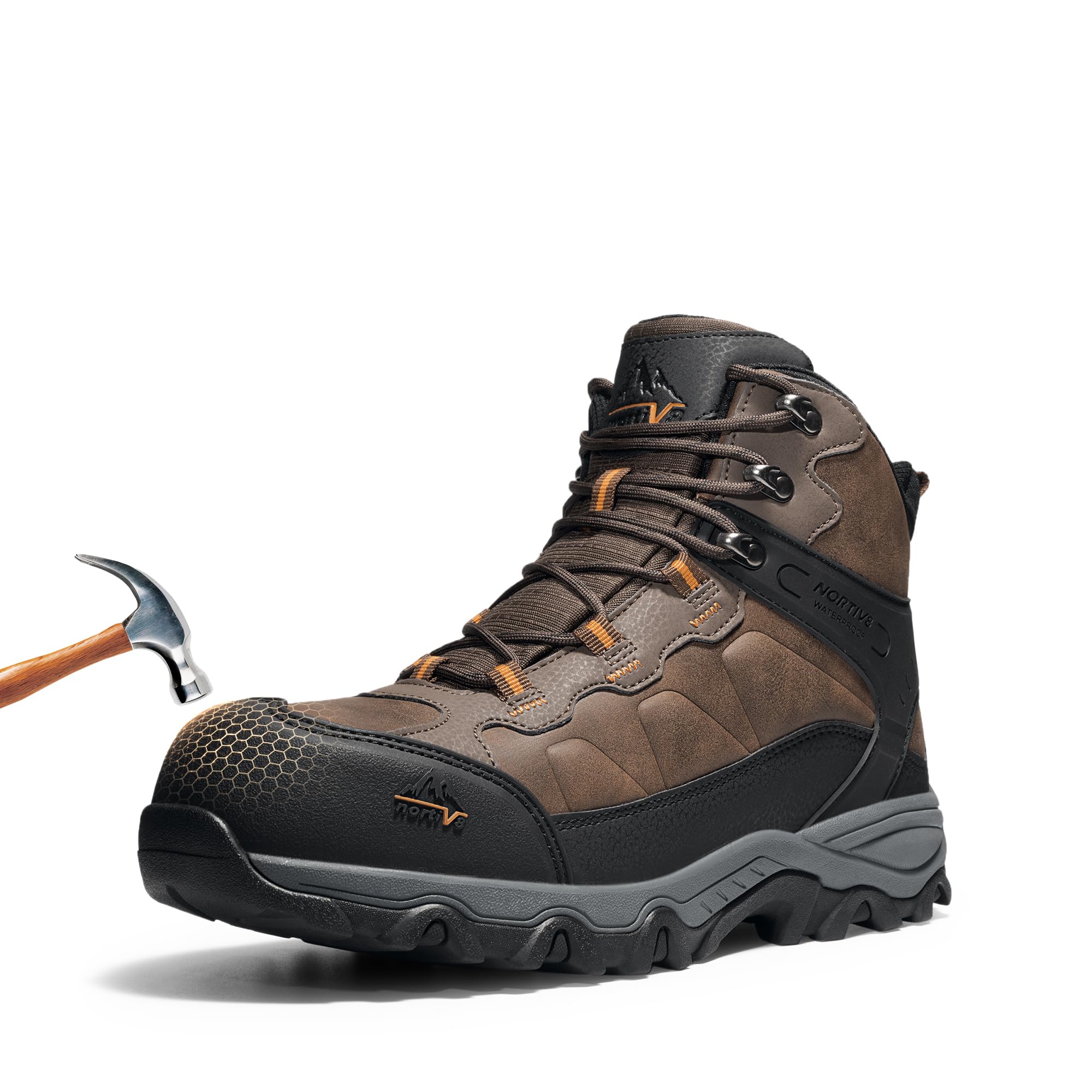
The most consistent wet-weather performer in the group, with a steel toe and a 3.7-pound build.
Pick this boot if your day regularly involves oil field, truck yard, or outdoor pipe work. The waterproof construction gets the most praise — owners describe water and oil rolling off the boot, feet staying completely dry, and the sole staying intact after weeks of exposure to industrial cleaners and caustic powders. One owner who switched from a pricier brand after a price hike on their old boot reports being shocked at how comfortable these were for warehouse work.
The steel toe is the safety backbone. Owners say it feels secure without being overly heavy for the protection it offers, and one owner uses it for cutting work around tall grass, with the reinforced toe providing real confidence. The boot sizes accurately, and it handles a wide fit at 11W without seam splitting. Build quality is what owners mention most — no stitching failures, soles that stay attached, and tread that still looks new after five weeks.
The trade-off is lifespan. Owners who work every day put the usable life at one to two years, after which the boot material can crack and the waterproofing goes. One owner describes them as cheap enough to buy two or three for the price of one premium boot, which is the honest way to think about them. They are also not the lightest option around, though light enough to kneel and crawl in without complaint.
The wet-shift case
- Waterproof build that stays dry through oil, water, and industrial cleaners.
- Steel toe rated for genuine impact confidence.
- Sizing that holds true, including wide fits.
- Consistent build quality — no seam failures reported.
What you give up
- Owners frame the useful life at one to two years, with material cracking after that.
- Still a steel-toe boot at 3.7 pounds, so it is not the lightest option.
Best for: electricians who work outdoors or on wet, oily slabs daily and need a boot that stays dry through the shift.
Pair with: a plan to replace every couple of years rather than expecting a decade of service.
5. Steel Toe Boots for Men 6 Inch Moc Toe Safety Work Boots
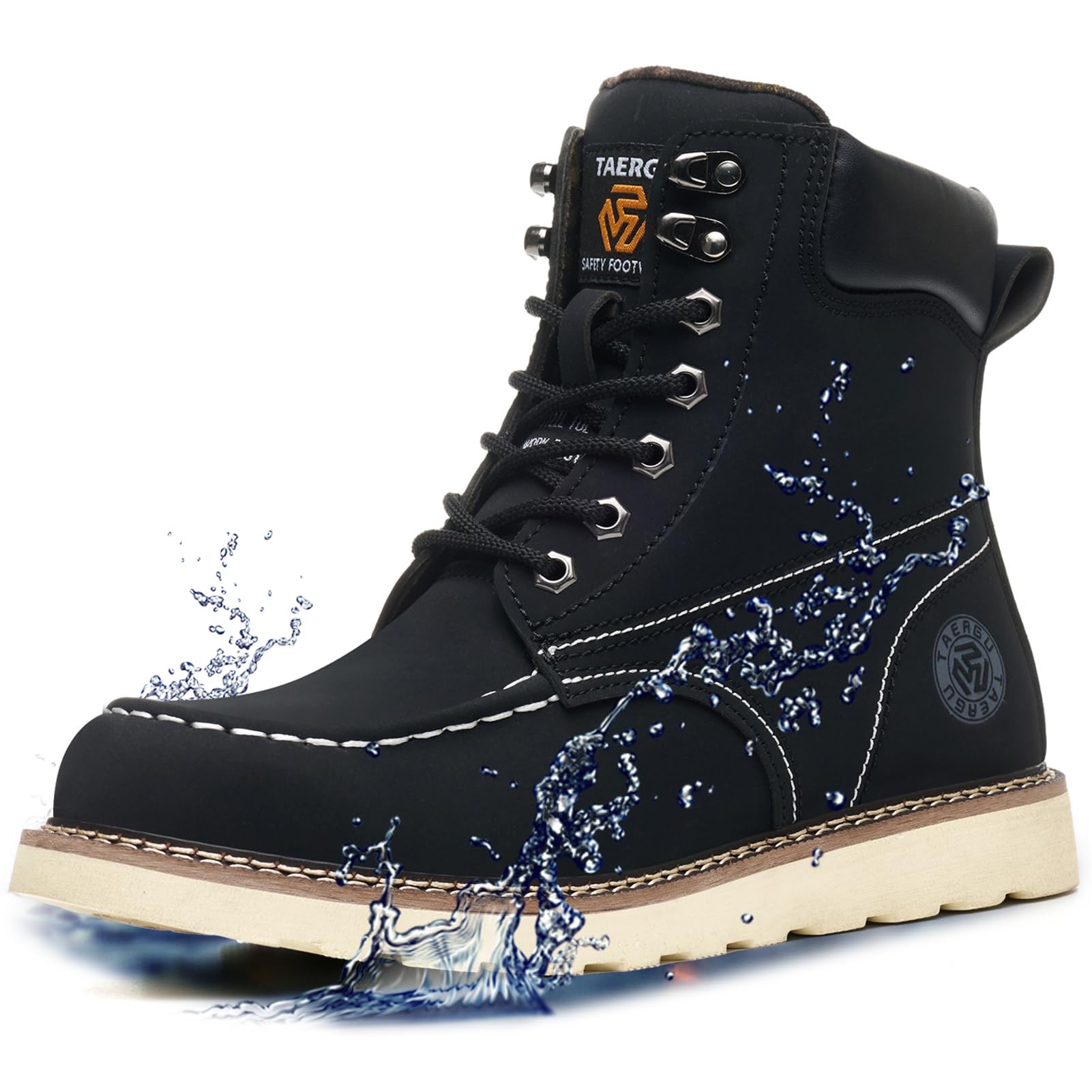
A moc-toe steel boot that reads casual but promises puncture resistance underfoot.
This boot stands out for one spec no other boot here claims outright: puncture resistance, tied to the ASTM 2413-2024 rating. On a jobsite with exposed nails, wire ends, and debris, that is a real layer you want between your sole and the ground. The listing also claims waterproofing, non-slip traction, and heat resistance.
Comfort is where it clicks with buyers. The memory foam insoles make a long standing shift tolerable, and owners describe wearing them all day without discomfort. One buyer got them for a son who spends long hours standing, and reports the steel toe and slip-resistant sole hold up as a plus. Another notes the boot is not bulky or heavy and feels durable enough to last a long stretch, which is the highest compliment for a steel boot at the entry level.
There is a wide spread of experience here, and that matters. A few owners mention the boot coming apart quickly — a sole detaching within weeks, a lace holder ripping, an eyelet pulling loose, and water leaking through the stitching above the sole. The material can also be a cheaper synthetic that scratches or peels. This is a boot that suits light-to-medium duty and DIY use well; if your work is constant kneeling in water and rough-grade roughhousing, put your money elsewhere.
Standout spec: puncture resistance rated to ASTM 2413-2024, which is the kind of protection that matters on a debris-strewn crawl.
Honest read: construction quality is inconsistent, so this is the boot for moderate wear, not the boot for permanent rough duty.
Right call for: work that mixes light construction, yard work, and everyday wear where puncture protection is the priority.
Wrong call for: heavy daily site work where the boot takes nonstop kneeling and water exposure.
6. KELODON Waterproof Steel Toe Boots For Men 6 Inch Leather

A leather steel-toe boot that hides its safety hardware inside a clean silhouette.
What sells this boot is the way it looks. Style is the second most mentioned strength, with owners calling the tan colour nice and the boot good-looking enough to pass for a regular leather boot. The steel toe is discreet enough that one buyer’s boyfriend did not realize it was a safety boot at all — that is the compliment a steel-toe boot wants.
The build quality is the part owners mention most, with repeated praise for solid construction and a soft lining. Waterproofing that holds up is another point in its favour — one buyer describes it as legitimately waterproof and a steal at the price, while another appreciates the comfort and heel cushion for long warehouse shifts. It is also fairly light, which helps when you are on your feet all day.
Now the fit, and this is important. Multiple customers note it runs large and ask for a full size down, so follow that advice. The slip resistance is the other weak point, with owners saying the sole does not grip smooth concrete well and one describing it as not slip-resistant at all on a polished floor. If your work involves walking on wet polished concrete or steel plate, this is not the boot for that surface. It is also reported to run warm, and one owner found the toe wearing through internally after a month of hard use.
What buyers notice first
- Style that reads like a standard leather boot, not a heavy site boot.
- Waterproof leather that reviewers point out holding up to real wet conditions.
- Soft lining and good heel cushion for long standing shifts.
- Lightweight enough to kneel and move in all day.
Where it trips up
- Sizing runs large — order a full size down, per owner feedback.
- Slip resistance is weak on smooth concrete.
- Runs warm in hot weather.
Made for: electricians who want a waterproof leather boot that looks sharp and does not shout “safety gear”.
Not for: polished-concrete or steel-plate work where slip resistance is the deciding factor.
7. NORTIV 8 Men’s Composite Toe Work Boots Lightweight
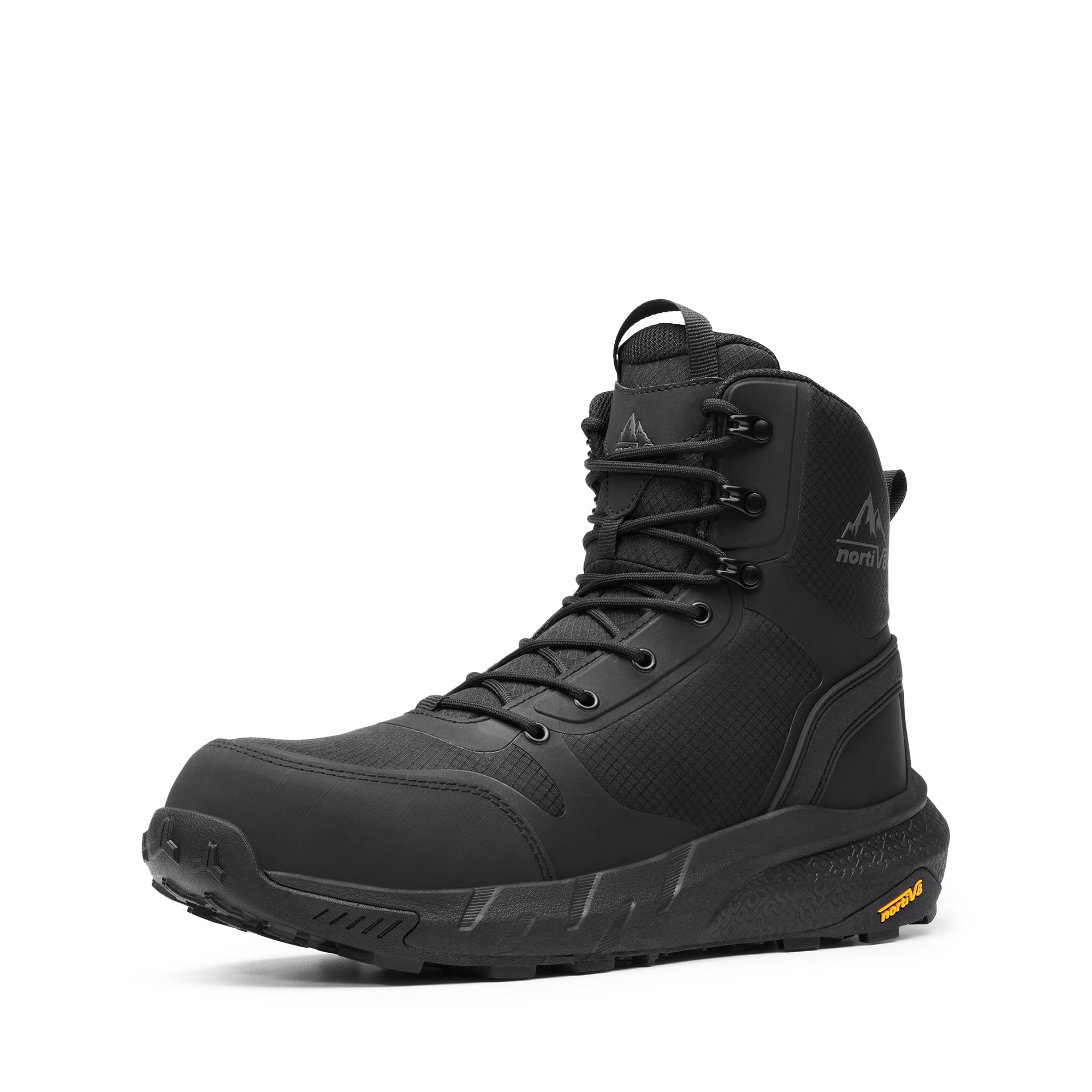
A composite-toe boot built to be pulled on in a hurry and worn for twelve hours.
The build quality is what owners bring up most, with a consistent theme of well-made construction and stitching that does not fail. The composite toe is the other big draw — it keeps the front of the boot lighter than a steel cap and avoids the metal detector issue on a secure site. Owners describe a snug ankle with no heel lift and a roomy toe box, which is exactly the fit an electrician wants when you mix standing and kneeling.
The side zipper is what owners mention most often after the build quality. It lets you get the boot on without unlacing, which is a small thing until you are doing it four times a day on a site. Arch support also gets positive notes, with one diesel mechanic reporting no need for custom insoles after nearly a year of five-day, twelve-hour weeks. A mechanic’s son wears the same boot without complaint, and the sole takes concrete with barely any visible wear after months.
Two honest notes. The sizing skews large — shoppers say going up half a size that came out snug, and a few find the fit confusing, so treat it as run-large and consider sizing down. Water resistance is also mixed: buyers report staying dry and warm in wool socks, but one notes moisture creeping in near the toe cap and lace loops in snow. This is not a wading boot.
The spec that earns its place: a composite toe that keeps the front of the boot light, paired with a side zipper that makes on/off a non-event.
What to watch: sizing and snow — this boot runs large and can let in moisture in deep slush.
The one to grab if: you want a lightweight composite-toe boot that goes on fast and holds up through long shifts.
Size down if: you are between sizes, or you plan to wear it in deep snow rather than rain.
8. NINGO Steel Toe Work Boots for Men
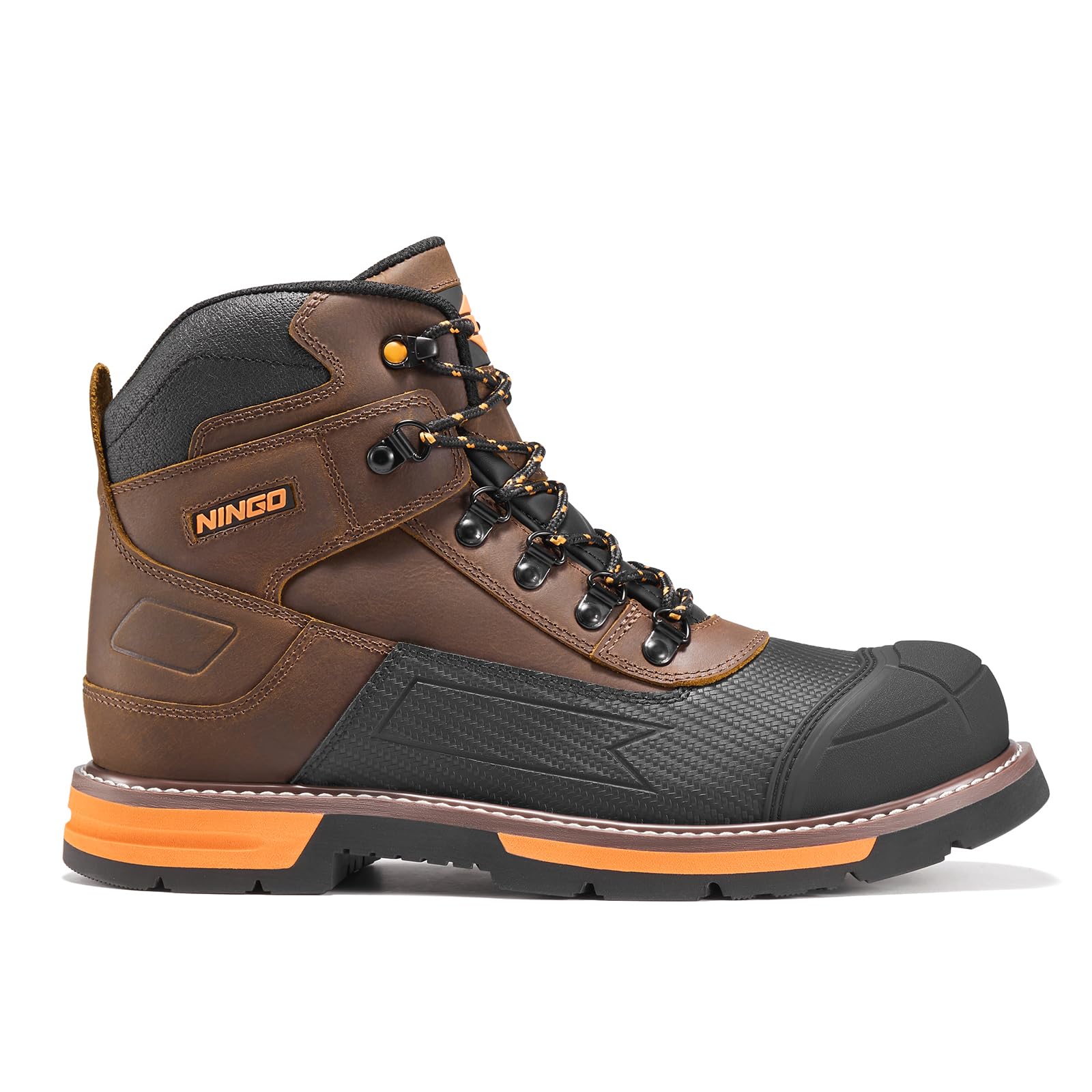
A no-frills steel toe that earns its keep in a workshop or a light industrial setting.
The NINGO is a solid, honest steel-toe boot for indoor industrial work where the floor is dry and the wear is steady. It is comfortable enough to wear for a full shift and true to size, which is fewer than you might think in this price tier. The stock insoles offer more padding than expected, and they are easy enough to swap for orthotics without shifting around inside the boot.
Owners put the break-in at roughly one to two weeks, after which the boot is comfortable enough to recommend for ten-hour days. It is lighter than many steel-toe boots, which helps when you are walking a shop floor or a warehouse aisle all day. Value is the other consistent theme — one buyer reports getting two pairs for what most brands charge for one.
The honest read is that this is a boot for dry, light-duty work, and it is not built for the worst the jobsite throws at it. One owner reports the boot breaking down after six weeks of minimal wear, and the listing does not claim waterproofing. There is also a recurring sizing confusion in the feedback, with some owners finding the fit hard to pin down. If your work is muddy, oily, or heavy construction, look at the Waterproof Steel Toe NORTIV 8 instead.
Value read: a true-to-size steel toe that is light and comfortable from the start, with the two-for-one economics working in your favour.
The limit: dry indoor duty only — it is not waterproof and will not survive heavy field abuse.
Pick it for: dry, light-duty indoor or warehouse work and a budget that covers a backup pair.
Look elsewhere if: your day is outdoor, muddy, or wet, where a waterproof boot is essential.
9. DahWe Men’s Steel Toe Work Boots with Side Zipper 8 inches
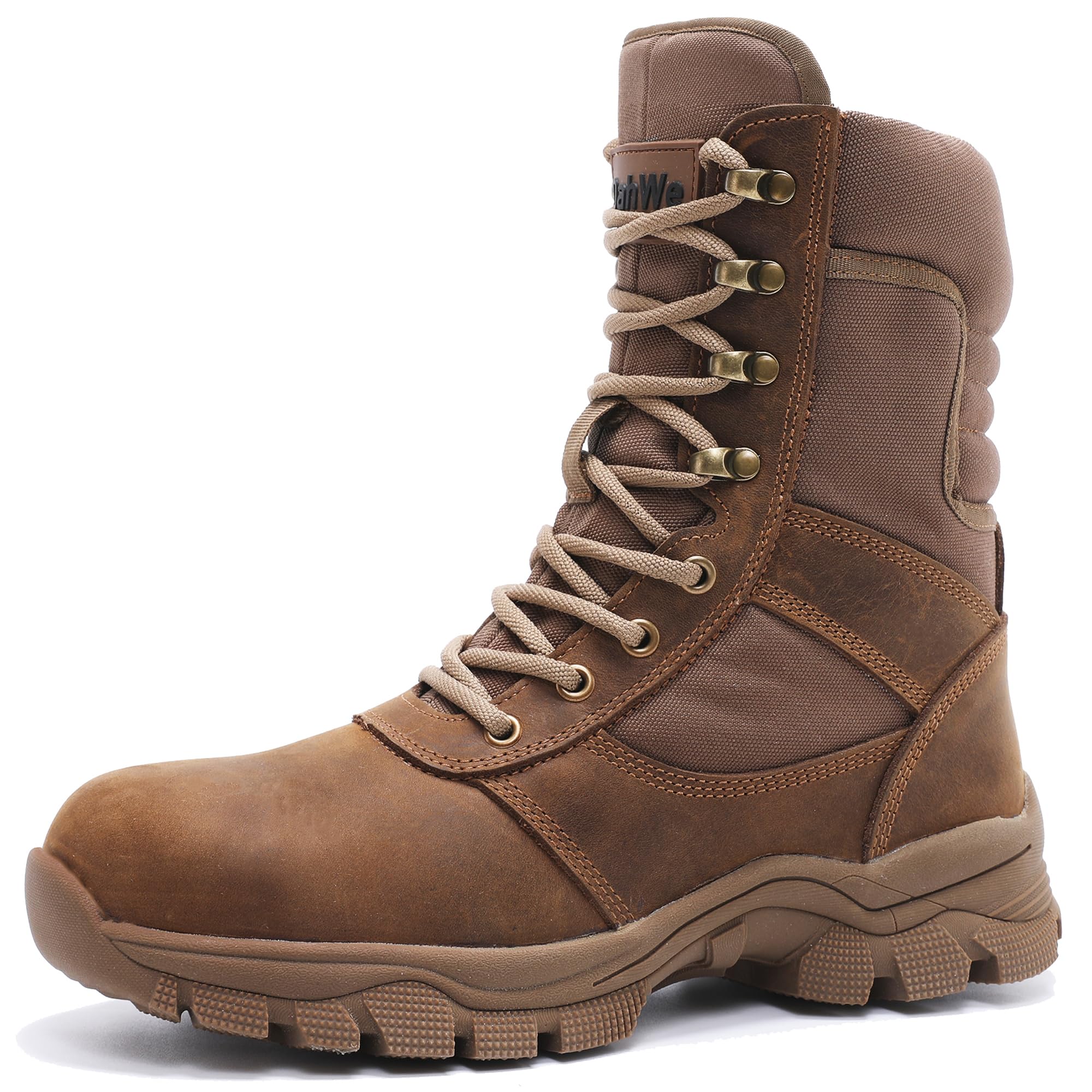
An 8-inch steel-toe zip boot for the worker who wants full ankle coverage without the lacing routine.
If you need a taller boot for ankle support and you want to get it on and off quickly, the DahWe side-zip design is the one to look at. The 8-inch cut covers more of your ankle than a 6-inch boot, which some electricians prefer for ladder and crawlspace work. The comfort is the headline here — owners describe it as comfortable over weeks of wear, with good support and a soft sole flexible enough to power-walk in.
Owners also like the build. The leather is smooth rather than suede, the construction feels solid, and the tall ankle makes it useful for emergency-response work where a boot has to be on fast. One buyer who put it against much pricier boots says the comfort level was every bit as good, and another describes it as their best work boot purchase.
The caution is the zipper and the sole. The zipper is a convenience feature, and the feedback on it is mixed — some owners find the teeth fine and hard to get started, and one says the zipper has a short working life under heavy use. The sole loses traction sooner than the boot itself, and it is not a waterproof boot. If your only goal is fast on/off for light-duty use, this is a good fit. If you kneel or crawl all day, the zipper is a weak point.
Comfort and coverage
- 8-inch height gives taller ankle support than most boots here.
- Side zipper makes on/off quick without unlacing.
- Comfortable over weeks of wear, with support that holds.
The zip-boot trade-off
- Zipper is a weak point — fine teeth and a shorter working life under hard use.
- Not waterproof; owners mention wet feet in rain.
- Sole loses grip before the rest of the boot wears out.
Made for: workers who need taller ankle coverage and want the fastest on/off routine of any boot on this list.
Think twice if: you are kneeling or crawling in heavy debris — the side zip is the first thing to wear out.
10. SUREWAY Men’s Slip On Fire & Safety Work Boots

The pull-it-on-and-go boot for station work where lacing is not part of the routine.
Slip-on boots are a different animal, and this one has a clear audience: vehicle crews, station duty, and anyone who spends as much time getting in and out of a truck as standing in one spot. The composite or soft toe choices give you a lighter build, and the slip-on design saves you the lacing routine at the start and end of every shift.
Quality and comfort are neck and neck in the owner feedback. Owners describe the leather as low-maintenance and the boot as easy to slip on, with a replaceable insole and a spacer that lets you tune the fit. One owner who was considering a well-known Australian brand calls these perfect for EMS work, with quality on point. Another owner is on a third pair, worn through landscaping work at roughly fifteen miles of walking a day across six months of fifteen-hour shifts.
The honest caveats are real. The “Fire and Safety” name does not make it heat-proof — one owner notes the sole melts on hot asphalt just like similar boots do, and that is a feature of the sole compound, not a defect. The toe box is composite and not rated as a metal safety toe in every listing, so check the exact toe option you select. And a few customers note a bulky fit, recommending a half size down for a tighter hold.
Where it shines: easy on/off leather with a replaceable insole and a fit that owners can tune to their foot.
Set expectations: “Fire and Safety” is a name, not a heat-proof rating — treat the sole as a normal rubber sole and step carefully on hot surfaces.
The one for: crew and station workers who want a quick-on leather boot and do not need a lacing system.
Check before buying: which toe option you select, and consider a half size down if you want a snug hold.
11. Timberland PRO Pit Boss 6 Inch Steel Safety Toe Work Boot

A long-haul performer that electricians buy again and again — this is the third pair for more than one owner.
The Pit Boss is the classic steel-toe work boot, and what keeps it in electricians’ hands is durability. Reviewers point out the leather surviving years of site abuse, the soles gripping wet and oily surfaces, and roughly five years of daily use per pair. One electrician who does electrical work specifically describes it as flexible enough for kneeling and crawling, durable, non-slip, true to size, and comfortable. That combination — stiff leather that flexes where it needs to — is the reason it stays on job sites.
Build quality is the recurring theme. Shoppers say solid stitching, no sole separation, and treads that barely show wear after thousands of steps a day in a machine shop. The steel toe and the nylon shock-diffusion plate give you impact protection and torsional rigidity, which are the two things you want when you are standing on a ladder rung all afternoon. Ankle lacing is tight and supportive, and the boot takes a short break-in relative to its stiffness.
It is not a waterproof boot from the start, and several owners treat the leather before the first wear to make it water-resistant. The break-in is stiff for the first few days and the boot is bulky. Laces are another recurring complaint — they wear out and need replacing. Given how long the rest of the boot lasts, that is a minor ongoing cost rather than a flaw.
The long-haul case
- Owner-reported service life of roughly five years per pair with daily site use.
- Nylon shock-diffusion plates add torsional rigidity and support.
- Gripping soles that handle wet and oily surfaces well.
- Ankle lacing that gives tight, supportive hold.
What to plan for
- Not waterproof from the start — treat the leather yourself if wet work is routine.
- Stiff break-in period and a bulky profile.
- Laces wear quickly and need replacing.
Buy once, wear for years: the pick for the electrician who has burned through cheap boots and wants one pair to outlast the last three.
Only if: you are willing to treat the leather for water and live with a few days of stiff break-in.
Know the Specs
Toe Protection: Steel vs Composite
Steel caps are the traditional choice: they are dense, tough, and reliable under impact. They also feel cooler on a winter morning and can be flagged at a secure site with a metal detector. Composite caps use a non-metallic material that shaves some weight and passes through detectors without a beep. Both protect your toes during a falling load; neither protects you from electrical current. The ASTM F2412-24 standard, printed on the Ablanczoom listing, is a recognised toe-impact rating you can trust.
Waterproofing and Water Resistance
These are not the same claim. Waterproof leather is constructed to keep water out through the upper, and it usually needs a periodic treatment to stay that way. Water-resistant boots shed a light spray but soak through in standing water. On the list here, the Timberland Boondockis built with waterproof leather, the NORTIV 8 Waterproof Steel Toe lists waterproof protection, and the KELODON is described by owners as legitimately waterproof. The Timberland Pit Boss is not waterproof from the start, and owners treat the leather to add resistance.
Slip Resistance on Concrete
A slip-resistant sole is tested to grip a wet or oily surface, which is the most common fall hazard in a service panel room, a garage, or a loading dock. Look for a deep lug pattern and a soft rubber compound. The KELODON’s slip resistance is the weak point owners flag, and the DahWe sole loses traction before the upper wears out. The NORTIV 8 Waterproof Steel Toe is the strongest report here for grip on oily and wet surfaces.
Electrical Hazard Rating
An EH-rated boot is built with a barrier intended to reduce current flow through the sole. It is not the same as anti-static or conductive footwear, and it is not a substitute for insulated gloves or proper lockout practice. EH protection lives in the sole, so it fades as the tread wears thin. If your work regularly puts you near live circuits, replace the boot once the sole is visibly worn rather than waiting for a hole.
Break-In and Weight
Heavy leather boots like the Timberland Pit Boss and Boondock take a few days to soften, then mold to your foot and hold their shape. Composite-toe and lighter synthetic boots, like the NORTIV 8 Composite Toe, are comfortable from the start with little break-in. The trade-off is that heavy leather usually lasts longer, while lighter builds are easier to wear through a long shift. Match the weight to your day: kneeling and crawling favours lighter, standing and ladder work favours structure.
Fit and Sizing
Sizing is the most common source of returns on a work boot. Narrow and average widths fit true to size in most of the boots here, while wide feet need more care. The KELODON runs large and asks for a full size down; the NORTIV 8 Composite Toe also skews large; and the SUREWAY can feel bulky, so a half size down tightens the hold. If you wear a wide fit, order true to your measured width and be ready to swap the insole rather than the boot.
Common Questions
Are steel toe boots safer than composite toe boots for electrical work?
Will a steel toe boot set off a metal detector at a secure site?
How long does a pair of electrician boots last?
Do I need a waterproof boot for indoor electrical work?
What does the ASTM F2412-24 rating on a work boot mean?
Can I wear steel toe boots while kneeling or crawling in a crawlspace?
How do I keep a waterproof leather boot waterproof?
Which boot is best for a wide foot?
Is a heavier boot better for standing on a ladder all day?
How tight should electrician boots fit?
The Bottom Line
For most electricians, the winner is the Timberland PRO Boondock 6 Inch because it pairs a non-metallic composite toe with a waterproof leather build and the most consistent true-to-size fit in the group. If wet slabs and oily floors are your daily reality, the NORTIV 8 Waterproof Steel Toe is the more dedicated wet-weather boot, and its 3.7-pound build is lighter than the Boondock’s 4.5 pounds. And if you want one pair to outlast the last three, the Timberland PRO Pit Boss is the long-haul buy, with owners reporting roughly five years of service per pair.
One caveat: the Pit Boss has the deepest owner track record of any boot on this list, and a boot that lasts roughly five years per pair pays for itself even at the premium tier. Match the boot to your day — dry and indoor, wet and outdoors, or standing and kneeling — and the choice becomes simple.
How we choose
We do not accept paid placement. Every pick is matched to a real buyer and a real use-case; we do not hands-on test units.
Sources
Specifications: manufacturer listings and product documentation. Review insights: verified customer reviews, as of October 2026. Pricing: not shown on this page (it changes often); check the current price via the retailer link.
As an Amazon Associate, Aappliancez earns from qualifying purchases. This does not affect which products we feature.