Disclosure: Some links in this post are affiliate links. As an Amazon Associate I earn from qualifying purchases, at no extra cost to you. Learn more
Specs are compiled from manufacturer listings and verified buyer reviews and can change over time — please confirm the key details on the product page before buying.
Buying an electrical panel is really a decision about how much room you want for later. A panel is the metal box that holds your circuit breakers (the switches that trip when a wire overloads), and it is the one part of your electrical system you almost never want to replace twice. Get the space, the amp rating, and the indoor or outdoor enclosure right, and every future project — a hot tub, a garage subpanel, an EV outlet — becomes a simple afternoon job instead of a wall-opening one.
This guide is built by comparing the manufacturers’ published specifications and the patterns across verified customer reviews, so you get each pick’s real strengths and trade-offs instead of marketing spin.
Below you’ll find panels sorted by what they actually solve: indoor versus outdoor boxes, main-breaker versus main-lug, and the outlet-style units made for RVs and campers. Every pick lists its real space count, amp rating, and enclosure type so you can match one to your job — which is exactly what separates a good electrical panels shortlist from a shelf of lookalike metal boxes.
Top Picks


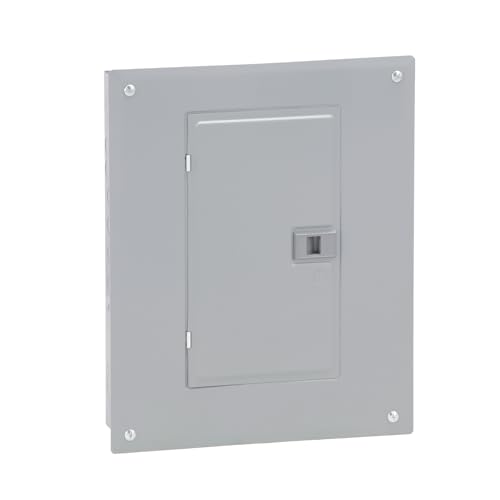
How To Choose The Best Electrical Panels
Start with the job, not the box. The panel you need for a detached garage subpanel is a completely different animal from the one feeding a whole house or powering a camper in the driveway. Answer three questions and most of this list narrows itself: how many amps does the feed carry, does the box live indoors or outside, and does it need its own main shutoff breaker or just lugs?
Amps first, spaces second
Amperage is the total current the panel is built to carry — 100 A, 125 A, or 200 A. A 125 A panel runs a subpanel or a workshop comfortably. A 200 A panel is the whole-house number. Pick the amp rating to match the breaker feeding it, because the panel cannot be upgraded later without a full swap. Then look at spaces: a “space” is one slot for a single breaker, and a circuit count tells you how many circuits you get when tandem breakers (two switches in one slot) fill the panel out.
Main breaker or main lug
A main breaker panel has its own large shutoff switch built in, so you can kill power at the box. A main lug panel has no big switch — it relies on the breaker upstream in your service panel to cut power. Main lug is the normal choice for a subpanel fed from the house, while a main breaker panel suits a service entrance or a building where you want one obvious shutoff handle.
Indoor versus outdoor enclosure
The enclosure rating tells you where the box can live. NEMA 1 is an indoor rating — it keeps fingers and dust out, but not rain. NEMA 3R is a rainproof outdoor rating with a gasketed, latchable door. Putting an indoor box on an exterior wall is a code problem, so match the rating to the wall before anything else.
Breaker brand compatibility
Every panel only accepts its own family of breakers. Siemens panels take Siemens breakers, Square D Homeline panels take Homeline breakers, and Leviton panels take Leviton breakers, including the smart versions. Check breaker availability and price before you commit to a brand, because a cheap panel with expensive or hard-to-find breakers is a false economy.
Side-by-Side Comparison
| Model | Best For | Max Current | Circuits | Enclosure | Amazon |
|---|---|---|---|---|---|
| Siemens W0816ML1125CU★ Best Overall | Outdoor subpanel feeds | 125 A | 16 | Outdoor (NEMA 3R-style) | Amazon |
| Siemens PN3048L1125CMost Breaker Room | Big indoor subpanel | 125 A | 48 | Indoor (NEMA 1) | Amazon |
| Square D HOM1224M100PCBest for Garage Builds | Garage and shop subpanels | 100 A | 24 | Indoor (NEMA 1) | Amazon |
| Connecticut Electric CESMPSC55GRHR | RV and camper hookups | 60 A | 2 | Outdoor (NEMA 3R) | Amazon |
| Leviton LP320-BPD | Modern smart-breaker homes | 200 A | 30 | Indoor | Amazon |
| Siemens SN2040B1100 | Main-breaker indoor subpanel | 100 A | 40 | Indoor (NEMA 1) | Amazon |
| Leviton LP420-BPD | Large new-build panels | 200 A | 42 | Indoor | Amazon |
| Square D HOM2040M200PCVP | Whole-house 200 A service | 200 A | 40 | Indoor (NEMA 1) | Amazon |
| Siemens MC2040B1200S | Outdoor service entrance | 200 A | 40 | Outdoor (NEMA 3R) | Amazon |
Detailed Reviews
1. Siemens W0816ML1125CU Load Center
Our pick — 4.5+★ from 500+ verified ratings; the strongest balance of quality and price.
The outdoor box that takes a 125 A feed and keeps every breaker bone dry.
If the panel is going on an outside wall, this is where the search usually ends. It carries a 125 A maximum current rating across 8 spaces and 16 circuits, which is enough for a detached garage, a workshop, or a hot tub feed without leaving you stranded mid-project. The enclosure is built for weather, and owners keep coming back to the same point: you open the door, the breakers are dry, the job goes in, done.
Reviewers praise its plain functionality and value above all. The knockouts deserve a mention too, because buyers describe them as heavy tack welds sitting in concentric rings sized for different conduit, so you can open exactly the hole you need on the top, bottom, or sides. Just go slow with the hammer; those rings open easily and a careless swing widens the hole past the fitting.
The catch is the missing ground bar. It does not ship with a grounding bar, so a GFCI breaker setup or a proper subpanel ground means buying the bar separately and drilling or using the pre-drilled bonding holes. One buyer solved it by running the neutral bar as ground with a grounding rod and bonding strap. Budget for that extra part and the install is straightforward; skip it and you will be making a second trip. The other real gripe is the face plate, which does not always seat cleanly on these load centers.
Where this box earns its keep
- 125 A rating over 8 spaces and 16 circuits handles a workshop or subpanel feed
- Outdoor-rated enclosure keeps breakers dry through rain
- Many concentric knockouts on top, bottom, and sides fit a range of conduit sizes
- Accepts easy-install Siemens breakers, so wiring stays simple
What to plan around
- No grounding bar in the box — a separate bar kit is needed for GFCI or subpanel grounding
- Face plate fit is inconsistent on some units
- Instructions reference a pre-drilled bonding hole that isn’t always there
Reach for this if: your panel lives outdoors and you want a 125 A feed with room for 16 circuits.
Add to the cart: a grounding bar kit, because it does not come in the box.
2. Siemens PN Series Load Center
Forty-eight circuits in a box you will never outgrow.
Here is the number that reframes the whole shortlist: this panel holds 48 circuits against the 2 circuits of the Connecticut Electric RV box — a 24x gap in capacity. That is the difference between a box that runs a camper outlet and a box that feeds an entire building’s worth of circuits with room in reserve. The 125 A maximum current is the same as the Siemens outdoor unit above, but the space story is on another level entirely.
The design is built for the person standing there with a screwdriver. Plug-on neutral means the neutral wire lands right on the breaker instead of a separate bar, which speeds up the install on arc-fault and GFCI breakers. There is a generous run of wire-bending room, and two factory-installed ground bars come already in the box. Even the cover is thoughtful — it hooks in place without screws, so it hangs there waiting while you gather hardware instead of sliding off the panel.
The trade-off is straightforward: this is a main lug panel, so there is no big shutoff handle of its own. It expects a breaker upstream, which makes it the right call for a subpanel and the wrong call if you wanted a service entrance. It is also an indoor NEMA 1 box, so it belongs inside a wall, not on an exterior one.
Built for the long haul: With 48 circuits and 125 A of capacity, this covers a full subpanel today and leaves slots free for the next project.
Subpanel-first design: Main lug, indoor only, plug-on neutral — pick it when it feeds from a breaker upstream and lives indoors.
The pick that wins on capacity: a 48-circuit indoor subpanel with 125 A behind it.
Look elsewhere if: you need the panel itself to have a main shutoff breaker.
3. Square D Homeline Load Center
The garage subpanel that electricians reach for without thinking twice.
A 100 A panel with 12 spaces and 24 circuits is the classic garage or workshop answer, and this Homeline box nails that brief. The bus bar is tin-plated aluminum, the enclosure is welded sheet steel with a baked enamel gray finish, and it is designed for indoor use only. The whole unit weighs 18.3 pounds — noticeably heftier than the 10.8-pound Connecticut Electric RV box, which tells you where the steel went.
This pick earns its spot on build quality, and the install details back that up. A combination cover works for either flush or surface mounting, so you are not locked into one wall type. Plug-on neutral (the neutral wire lands right on the breaker instead of a separate bar) speeds up arc-fault breaker wiring. The box lugs accept 6 AWG to 2/0 AWG copper or aluminum wire — that wide a range means you can often bring in the feeder you already have. The neutral bar runs the full length of the panel, so wiring stays tidy instead of turning into a bird’s nest.
One quirk worth knowing before you install: the door on some units does not latch from the start. The fix is a few minutes of filing and reshaping the latch, and then it works properly. It is a minor annoyance rather than a design flaw, but if a perfectly aligned door matters to you, inspect it on arrival.
What buyers keep coming back to: Buyers praise the welded steel enclosure, tin-plated bus bar, and lugs that take 6 AWG to 2/0 AWG copper or aluminum.
Good fit for: a garage or shop subpanel on a 100 A feed with room for tandem breakers.
One thing to check: test the door latch the day it arrives.
4. Connecticut Electric CESMPSC55GRHR RV Panel

A camper hookup box that fits the plug you already own.
Do not judge this one like a house panel, because it is not one. It is a 50 A RV outlet with a 20 A GFCI receptacle (a shock-protection outlet) built in, in a 2-circuit unit that measures 5 inches long by 7.5 inches wide by 13.25 inches high. The NEMA 3R rainproof enclosure (rated to shed rain and weather) has a lockable latch. The door lets the cord stay connected with the door closed — exactly what you want when the camper sits in the driveway through a rainy week.
The 14-50R receptacle is a 4-wire 50 A 125/250 V outlet, and the 5-20R is a 3-wire GFCI-protected 120 V receptacle, so you can run the camper and charge a phone or tool at the same time. The lugs take aluminum or copper wire, meaning you can reuse the feeder already in the ground. That reuse point matters — the whole appeal of this box is that it bolts over the old outlet, uses the existing conduit, and adds a GFCI where there wasn’t one.
Two caveats are worth knowing. The door latch is solid but the opening does not accommodate oversized plugs or a Tesla Gen 1 NEMA 14-50 adapter. The knockouts are also tough — one buyer ended up cutting a stubborn 3/4 inch knockout with a hacksaw after a screwdriver, hammer, and pliers all failed. And to wire from the bottom, you have to pull the receptacles and two mounting supports first.
Why camper owners pick it
- 50 A 14-50R receptacle plus a 20 A GFCI 120 V outlet in one enclosure
- NEMA 3R rainproof housing with a lockable latch and door-closed cord use
- Lugs accept copper or aluminum, so existing feeder wire can be reused
- Replaces an outdoor NEMA 14-50 without an adapter
Where it fights back
- The door opening will not clear oversized plugs or the Tesla Gen 1 14-50 adapter
- Knockouts can be stubborn and may need cutting out
- Bottom wiring requires removing the receptacles and two mounting supports
Made for: hooking a camper, travel trailer, or RV to the house on a 50 A outlet.
Think twice if: you plan to charge an EV through an oversized adapter plug.
5. Leviton LP320-BPD Load Center
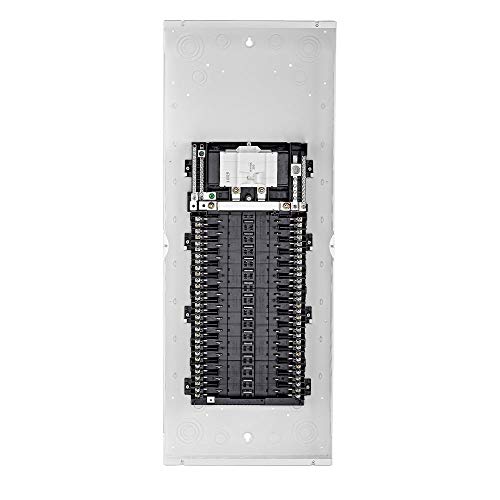
The panel that lets you wire the whole box with no breakers in it.
Leviton’s core idea here is a genuine wiring change: the entire load center gets wired at rough-in with zero breakers installed, then the breakers snap in afterward. On a 200 A main breaker panel with 30 spaces and 30 circuits, that means one electrician can land the circuits clean instead of fighting breakers the whole way. A failed breaker pops out and back in with no tools and without disturbing the wires around it.
The finish is a white powder coat rather than the usual gray, and it changes the look of an electrical panel in a way owners actually notice. Tin-plated copper bussing comes standard, notches stamped into the enclosure hold cable ties, and the box includes a master shutoff that satisfies code. There is also room to add a whole-house surge protector, and the smart breakers themselves let you track power use and size battery backup before you buy it.
Two things to price before you commit. The door is sold separately — the enclosure and interior are what you get — so the cover is an added line item the listing does state. And Leviton breakers, including the smart ones, cost more and are stocked in fewer places than the common Homeline or Siemens breakers. The panel itself carries a 10-year limited warranty; just know the Leviton breakers cost more than Homeline or Siemens.
The design payoff: Wiring without breakers present is the detail that makes this panel faster on a real job, and the snap-in breaker swap makes future service work tool-free.
The budget reality: A separately sold door plus premium-priced breakers means the true cost is higher than the panel alone.
Built for: a new build or a full panel replacement where smart breakers and a clean white finish matter.
Cost check first: add the door and a set of Leviton breakers before you compare it to other brands.
6. Siemens SN Series Load Center

Forty circuits and its own shutoff handle, in one indoor box.
This panel answers the question the main lug Siemens pick above leaves open: what if you want the breaker included? It is a 100 A panel with 20 spaces and 40 circuits and a main breaker built right in, so the box has its own big shutoff instead of relying on the panel upstream. For a shop or a garage where you want to kill power at the box, that handle changes how you use the space.
Plug-on neutral keeps the breaker wiring quick, one factory ground bar comes installed, and there is over 4 inches of wire-bending room to work in. The interrupt rating is 22,000 AIC, which is the fault-current figure the panel is tested to clear safely. It is a NEMA Type 1 indoor enclosure for a 1-phase, 3-wire, 120/240 V system. Buyers describe it as a solid fit against an existing Siemens fuse box, with the components matching the rest of the setup.
Install it as a subpanel and you will need a second bus bar for separate grounding to meet NEC code — the panel does not come with that separation built for subpanel use. Layout is flush-mount indoor, so a surface-mounted exterior job is out. For the money and the circuit count, it is one of the more practical indoor main-breaker boxes on this list.
Pick this one if: you want a main shutoff breaker inside a 40-circuit indoor panel on a 100 A feed.
Plan around: an added ground bus bar when it serves as a subpanel.
7. Leviton LP420-BPD Load Center

A 42-space whole-house panel that looks nothing like the gray box in your basement.
If you are building new and want every circuit to have its own slot with no tandem tricks, 42 spaces at 200 A is the number that gets you there. The same Leviton architecture applies: wire the load center at rough-in without any breakers, then snap them in. Circuits land on the panel rather than the breaker, so a failed breaker comes out and the replacement goes in without tools and without touching anything else. The white powder-coated finish is the detail that gets noticed first.
Tin-plated copper bussing and the stamped cable-tie notches carry over from the smaller Leviton pick above, and a master shutoff that meets code is included. The same watch-outs apply: the door is sold separately, so the enclosure and interior are the box, and the breakers carry a premium over commodity brands. On a project already running Leviton hardware, that is a fair trade — on a tight budget, price the breaker set before you decide. The panel itself carries a 10-year limited warranty.
Best for: new construction or a full service upgrade where 42 dedicated spaces at 200 A make sense.
Budget note: the door and a full breaker set are separate costs on top of the panel.
8. Square D HOM2040M200PCVP Value Pack

A 200 A box that shows up with breakers, so you can start wiring the same day.
You get breakers in the box with this package version of the Homeline panel: a 200 A main breaker load center with 20 spaces and 40 circuits, plus 3 HOM120 single-pole breakers, 2 HOM230 double-pole breakers, and a combination flush or surface cover. For a tiny house, a shop build, or a service where you want a couple of circuits live immediately, those included breakers are the point. The fully distributed neutral bar accepts Homeline plug-on neutral arc-fault breakers in any space, and each pole takes a full-size, tandem, or quad breaker.
Customers find the install the thing to talk about, and the box lives up to the ease. The ground and neutral bars accept up to three #10-14 equipment grounds each, which is more capacity than most small jobs use. It fits an existing opening comfortably — one builder describes the panel dropping into place with no modification to the box. The plug-on neutral design mostly matters for arc-fault breaker wiring, which is exactly where the time savings show up.
The missing piece is the grounding bar. This value pack does not clearly note that you need the PK9-27GTA or PK18GTA kit, so the box can arrive ready to mount but not ready to complete without a second order. Get the ground kit in the same cart and there is no delay.
Why contractors stock it
- 200 A service with 20 spaces and 40 circuits
- 3 HOM120 and 2 HOM230 breakers included, so power goes live fast
- Distribution neutral bar takes plug-on neutral arc-fault breakers on any space
- Each slot accepts full-size, tandem, or quad breakers
Order with it
- Grounding bar not included or clearly flagged; PK9-27GTA or PK18GTA needed
- Occasional unit arrives with a bent front cover
Buy it for: a 200 A whole-house or shop service where included breakers save a trip to the supply house.
Don’t forget: the ground bar kit, since it isn’t in the pack.
9. Siemens MC2040B1200S Meter Load Center

Meter socket and breaker panel in one outdoor box, for a service entrance.
This unit combines the meter socket and the load center in a single 200 A box, 20 spaces and 40 circuits, built to serve as service entrance equipment with an overhead feed. The enclosure is NEMA 3R outdoor rated, it takes RX type hubs for the overhead mast, and it carries pad-locking provisions on the door. At 33.8 pounds it is the heavyweight of this list, which is what a combined meter-and-panel assembly should feel like. The interrupt rating is 22,000 AIC, and the cover is a ring type.
Call your utility before you buy this one, because it is service entrance equipment only (the main panel where power enters the building). Meter socket approval is a local decision, and no amount of reviews changes that. Buyers consistently praise the build quality — the box goes in where it is supposed to, and the 40 circuits leave real room for future additions. That is why it tends to get picked for a service upgrade rather than a small job. One small gripe: buyers wish for a larger knockout (the punch-out hole for conduit) on the bottom, so plan your feed route with that in mind.
The utility-first rule: Ring-type cover, overhead RX hubs, pad-lockable door, and 200 A of capacity in one weatherproof assembly — but confirm the meter socket with your utility before ordering.
The right call for: a full outdoor service entrance where you want the meter and panel in one assembly.
Call first: your local utility, to confirm the meter socket is approved.
Know the Specs
Spaces versus circuits
A space is one physical slot in the panel for a breaker; a circuit is one path to an outlet or appliance. The circuit number is always higher than the space number because tandem breakers put two switches in one slot — a 20-space panel rated for 40 circuits gets there by using tandems. If you want every circuit to have its own slot with no tandems, buy the panel where spaces and circuits are equal, like the 42-space, 42-circuit Leviton.
Amperage and service size
The maximum current rating is the total load the panel is built to carry — 100 A, 125 A, or 200 A. Match it to the breaker or meter feeding it, because the panel cannot be uprated later without replacement. A 200 A panel is a whole-house service; a 100 A or 125 A box is typically a subpanel, a garage, or a dedicated outdoor feed.
Interrupt rating (AIC)
The AIC number is the fault current, in amps, the panel is tested to safely clear in a short circuit. It is a safety rating, not a capacity rating — a panel rated 22,000 AIC handles a 22,000-amp fault without failing in a dangerous way. Higher AIC ratings suit service entrances and larger commercial feeds where fault current is higher.
Main breaker versus main lug
A main breaker panel has its own large shutoff switch, so the box can kill power by itself. A main lug panel has no big switch and relies on the breaker upstream. Choose main breaker for a service entrance or a building where you want an obvious handle; choose main lug for a subpanel fed from an existing panel.
NEMA enclosure ratings
NEMA 1 is an indoor rating that keeps out dust and contact but is not rainproof. NEMA 3R is a rainproof outdoor rating with a gasketed, latchable door. Installing an indoor box on an exterior wall is a code problem — match the rating to the wall before considering brand or circuit count.
Plug-on neutral
Plug-on neutral lets the neutral wire land directly on the breaker instead of a separate neutral bar, which speeds up install on arc-fault and GFCI breakers. That is the wiring detail that saves labor on modern panels, and it comes standard on the Siemens and Square D picks in this guide.
Common Questions
How many circuits do I actually need in a garage subpanel?
What is the difference between a main breaker and a main lug panel?
Can I put an indoor load center outside?
Do I need to buy a grounding bar separately?
Will Leviton breakers fit in a Siemens or Square D panel?
Is an indoor load center compatible with a meter socket combo?
What does 22,000 AIC mean on a panel?
Can I use a main lug panel as a service entrance?
Do I need a permit or an electrician before I install a new panel?
Can I wire the panel before the breakers arrive?
The Bottom Line
For most homes in this guide, buy the Siemens W0816ML1125CU. It handles a 125 A outdoor feed across 16 circuits, so you avoid a second trip to the supply house beyond a ground bar. Want more room than you will ever fill? The Siemens PN Series gives you 48 circuits at 125 A in an indoor box. For a whole-house service with breakers already in the box, the Square D Homeline value pack is the practical answer. My one push: order one size bigger on circuit count than today’s job needs, because that is the cheapest upgrade you will ever make.
How we choose
We do not accept paid placement. Every pick is matched to a real buyer and a real use-case; we do not hands-on test units.
Sources
Specifications: manufacturer listings and product documentation. Review insights: verified customer reviews, as of October 2026. Pricing: not shown on this page (it changes often); check the current price via the retailer link.
As an Amazon Associate, Aappliancez earns from qualifying purchases. This does not affect which products we feature.