Disclosure: Some links in this post are affiliate links. As an Amazon Associate I earn from qualifying purchases, at no extra cost to you. Learn more
Specs are compiled from manufacturer listings and verified buyer reviews and can change over time — please confirm the key details on the product page before buying.
Most headphones calling themselves eco-friendly are just a bamboo logo glued onto the same plastic shell. The picks below are different in ways you can check in the spec sheet — recycled silicone, FSC certified wood, recyclable aluminum, or packaging that ships with no plastic at all — while still delivering the noise cancelling and battery life you actually came for.
This guide is built by comparing the manufacturers’ published specifications and the patterns across verified customer reviews, so you get each pick’s real strengths and trade-offs instead of marketing spin.
Below you’ll find how to read an eco claim, which materials actually matter, and what each pair does in daily use. The short answer: a greener build doesn’t cost you sound — my full breakdown of the eco-friendly headphones worth your money shows exactly where the real trade-offs sit.
Top Picks
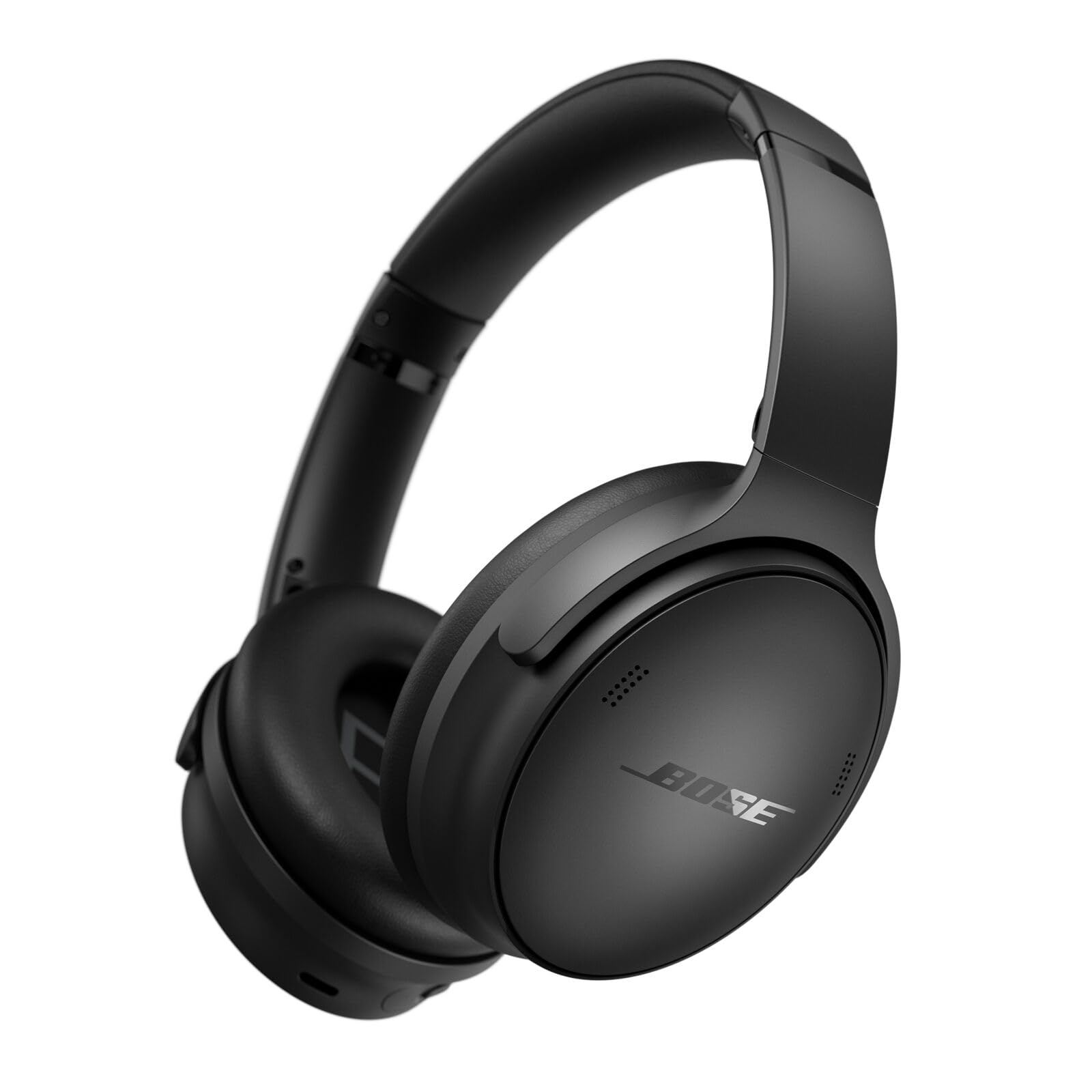

The material story is real: The Rebel’s frame is built from Regrind silicone rubber (recycled silicone waste ground down and re-formed) with a…Check price on Amazon
How To Choose The Best Eco-Friendly Headphones
Green marketing is easy to print on a box. Actual green build is easy to verify in the spec sheet, and that’s where you should put your attention. A pair earns a place here only when it names the material, the certification, or the packaging standard rather than hinting at it.
Follow the named material, not the colour green
The words that matter are specific: regrind silicone rubber, FSC certified wood, recyclable aluminum, plastic-free packaging. Those are claims a manufacturer can be held to. A vague line about “earth-friendly design” tells you nothing about what’s in the ear cup or what happens to it in five years. Look for the exact material on the listing before you believe the badge.
Packaging counts more than most buyers expect
A pair shipped in 100% plastic-free recyclable packaging avoids the foam tray, the plastic window, and the little baggie around the cable. That’s usually the single largest environmental choice in the entire purchase, and it costs you nothing in performance. It’s also the easiest claim to verify.
Battery hours are a durability question in disguise
Longer playtime means fewer charge cycles per year, which usually means a longer service life before the cell fades. A pair rated at 34 hours and one rated at 80 hours both work the same on day one. Two years in, the 80-hour model is plugged in far less often, which is easier on the battery.
Check the codec and Bluetooth version together
Bluetooth 5.3 with LDAC support (a higher-quality wireless codec) gives you more headroom than an older 4.0 radio when streaming from a modern phone. That gap matters for sound clarity, and it also matters for connection stability as devices pile up in your home. You don’t need the newest number, but you do want to know which one you’re getting.
Side-by-Side Comparison
| Model | Best For | Battery Life | Bluetooth | Eco Material | Amazon |
|---|---|---|---|---|---|
| Bose QuietComfort★ Best Overall | Comfort over long hours | 24 hours | 5 | — | Amazon |
| House of Marley RebelBest Value | Budget on-ear pickup | 10 hours | 4 | Regrind silicone rubber | Amazon |
| Positive Vibration Frequency | Wood-accent comfort | 34 hours | 5.2 | FSC certified wood, recyclable aluminum | Amazon |
| Raycon Fitness | Gym and sweaty sessions | 45 hours | 5 | — | Amazon |
| Marshall Monitor III A.N.C. | Long-haul listening | 100 hours | 5.3 | — | Amazon |
| Nothing Headphone (1) | Physical controls and EQ | 80 hours | 5 | — | Amazon |
Detailed Reviews
1. Bose QuietComfort Wireless Bluetooth Headphones
Our pick — 4.5+★ from 22,000+ verified ratings; the strongest balance of quality and price.
The pair you forget you’re wearing — even when you lie down on the sofa.
Comfort is the whole pitch here. Plush over-ear cushions with a padded band stay gentle through long sessions, and buyers who normally feel ear pressure report none at all. One sensory-sensitive owner says the padding is soft enough to sleep in.
Noise cancelling runs in two modes — Quiet for full blocking and Aware for hearing the room — and the Aware mode is smoother and more natural than the phone-style transparency in rival earbuds and cans. Bass is deep from the start but heavy, which the Bose app’s adjustable EQ evens out with a few taps on bass, mid-range and treble. Battery is rated at 24 hours, and a 15-minute USB-C charge adds up to 2.5 hours, so a rushed departure is survivable.
Two things to know. There is no true “ANC off” position, only Quiet or Aware, and some wearers feel a bit of pressure or dizziness in the first sessions. The pivoting joints that make them so comfortable also make them floppy for heavy workouts. And if you listen wired through the 3.5mm cable, ANC and EQ are disabled.
The comfort case: Cushions this soft plus a 24-hour battery make them a genuine all-day, lie-on-the-couch pair. Multipoint switching between a phone and a computer is fast and reliable.
The catch: Bass runs heavy before you open the EQ, and the joints are too loose for a serious gym session.
Best matched to: Long workdays, flights, and anyone with sensitive ears who needs relief from squeeze.
Not the one for: Heavy workouts or anyone who wants a fully off ANC switch.
2. Sony WH-1000XM4 Headphones

The quiet one that turns a screaming commute into a private listening room.
If your daily goal is to make the outside world disappear, this pair delivers the most convincing version of that. The active noise cancelling (mics that listen to the room and play an opposite sound to cancel it) uses Sony’s Dual Noise Sensor technology, and it earns its reputation on planes, trains and open-plan offices. That quiet is the reason this takes the top slot: the noise cancelling is the second most-praised thing about these headphones, right behind the sound itself.
Battery is rated at up to 30 hours, and a 10-minute charge gives you 5 hours of playback over USB-C. Translation: a forgotten cable the night before a flight is not a disaster — ten minutes at the airport gate buys you the whole trip. The touch panel on the right cup handles volume, track skips and calls, and Speak-to-Chat drops the volume automatically the moment you start talking, so you can order a coffee without pulling them off.
Where it stumbles is the smart stuff. The auto-pause sensor (a little light sensor that stops playback when you lift the cups off your ears) fires on shadows too, so a dim room can pause your podcast at random. Multipoint pairing handles two devices, and the five built-in mics keep calls clear, but Bluetooth pairing has been known to drop and need reconnecting. Midnight Blue reads almost black in person, which is either subtle or a disappointment depending on what you expected.
What wins people over
- Noise cancelling that genuinely silences a commute, matching or beating rivals that cost more
- 30-hour battery plus a 10-minute charge for 5 hours — the airport save
- Speak-to-Chat and wearing detection mean you rarely touch a control
- Five-mic call quality keeps you audible on the other end
Where it asks for patience
- The auto-pause sensor misreads shadows and pauses at random in dim rooms
- The flat tuning suits detail-lovers but not people chasing heavy bass
- After around 10 hours the headband starts pressing, so all-day wear has a limit
Go for it: You commute, fly, or focus in a noisy house and want the quietest listening for the money.
Think twice: You want a bass-forward sound from the start or a wireless connection that never hiccups.
3. House of Marley EM-JH101-BK Headphones
Real recycled material in the frame, at a price that barely dents a week’s coffee budget.
The material story is real: The Rebel’s frame is built from Regrind silicone rubber (recycled silicone waste ground down and re-formed) with a durable polymer headband. That is a named, checkable material rather than a green badge, and it’s the reason this pair sits on a list of eco picks at all. The 40mm dynamic drivers push strong bass, and the removable cable carries a one-button mic for calls.
Where it lands short: Battery is rated at 10 continuous Bluetooth hours, well under the 30-hour Sony and the 34-hour Positive Vibration. Bluetooth 4.0 is also the oldest radio here — workable with a phone, but you won’t get the newer codec headroom. The clamp is snug, which keeps them planted during a jog but gets constricting on larger heads past a few hours.
Pick these when: You want an honest recycled-material build for a starter or backup pair.
Step up instead if: You need all-day battery or a fit that opens up for bigger head sizes.
4. House of Marley Positive Vibration Frequency Headphones

FSC certified wood and recyclable aluminum, with a plastic-free box to match.
The build here is the most literal answer to the eco question on this list. The ear cups are set in FSC certified wood (timber from forests managed to a recognised sustainability standard), the frame uses recyclable aluminum, and the whole thing ships in 100% plastic-free recyclable packaging. Nothing else here names its timber source and its box standard in the same breath.
Battery is 34 hours with quick-charge giving up to 4 hours after just 15 minutes plugged in, and Bluetooth 5.2 is newer than both the Sony and the Rebel. The 40mm hi-definition drivers are tuned with warm bass, and the memory foam cushions plus padded headband are the reason comfort keeps coming up as the standout. Owners with glasses say the pressure stays easy on the temples — a rare thing in over-ears.
The catch is build toughness. Wood and aluminum look great and feel premium, but this pair does not shrug off a drop; one hard knock and the buttons can pop loose. Bluetooth pairing has also been reported to fail after several months on some units. Treat them like a nice watch rather than a gym bag item and they’ll serve you well.
The right fit: You want visible, verifiable eco materials and warm, comfortable listening at a desk or on a sofa.
Look elsewhere if: You need something that survives drops, or you’re already worried about long-term connectivity.
5. Raycon Fitness Bluetooth Over-Ear Headphones

Washable ear pads and an IPX4 shell built for the sweaty end of your week.
The standout detail is the removable ear cups. Raycon includes three sets of breathable pads, and you can pull them off and wash them after a heavy session — something none of the other picks here offer. The whole frame is rated IPX4 (splash and sweat resistant, not submersible), folds up, and the rotating cups keep the clamp tight enough that they don’t wobble mid-set. Battery runs up to 45 hours on a charge.
Active noise cancelling handles gym noise, and there’s an Awareness mode for when you need to hear a training partner or a crossing signal. Sound runs on premium dynamic drivers with strong bass and clean highs, and passive isolation from the over-ear seal is serious before the ANC even kicks in. Multipoint pairing lets a phone and a tablet sit connected at once.
The honest friction is durability and charging. The plastic build has drawn more complaints than anything else in its reviews, and a couple of buyers report the battery falling well short of the headline number during video playback. You also cannot charge and listen at the same time, so a low battery ends the session. There’s no travel case in the box either.
The gym-first design pays off
- Three washable ear pad sets keep the sweat and smell manageable
- IPX4 rating handles splashes and heavy training sweat
- 45-hour battery covers a week of daily sessions with fast charging
- Active noise cancelling plus an ambient mode for the gym floor
What you’re signing up for
- The build has more durability complaints than the rest of this list
- No simultaneous charging and listening, so a flat battery pauses the workout
- No travel case included, so pack it carefully in a gym bag
Built for: Regular gym-goers and runners who sweat hard and want pads they can actually wash.
Not for: Buyers who want a rugged shell and a carry case for daily commuting.
6. Marshall Monitor III ANC Wireless Over-Ear Headphones, Cream
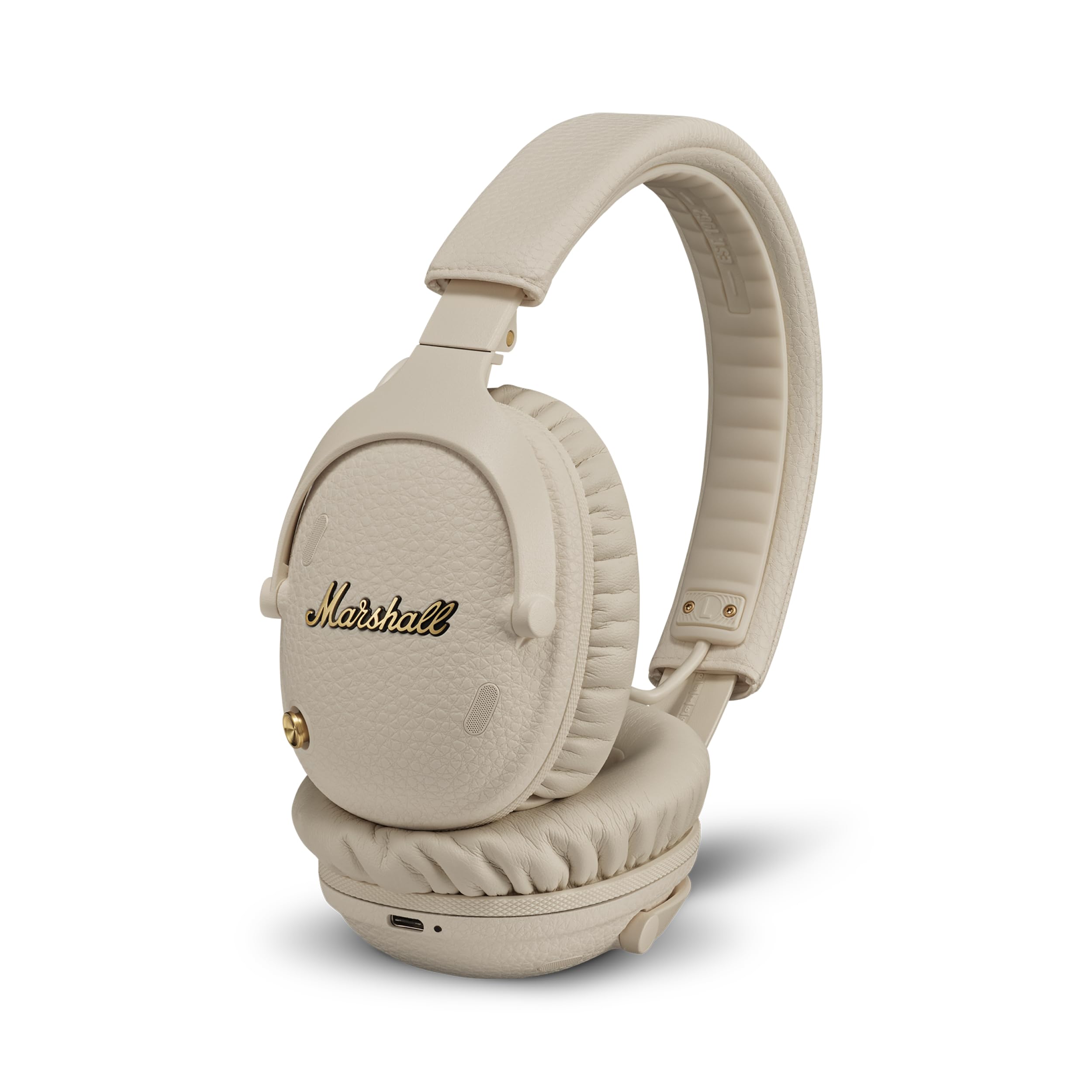
One hundred hours between charges — you will forget where the cable went.
Marshall quotes 70 hours of wireless playtime with active noise cancelling running, and 100 hours without. That is the longest figure on this page by a wide margin, and it changes how you live with the headphones: charging becomes a monthly chore instead of a nightly one. Bluetooth 5.3 is the newest radio here, and the included USB-C to 3.5mm detachable cable lets you plug into a console or an older device with no battery cost.
Sound is the thing buyers talk about most, with the tuning described as bright and clear with moderate bass — the Dynamic Loudness feature rebalances treble, mids and bass at every volume so the mix doesn’t fall apart when you turn it down. There are three noise cancelling levels plus a Transparency mode, and a Soundstage spatial audio feature widens the image past your head. Physical buttons and a joystick sit on the ear cup instead of a touch panel, which people either love or find fiddly.
The trade-off is ANC strength and price. This is a decent canceller, but it sits a rung below the Bose and does not fully erase a barking dog or a loud cafe. The 32mm drivers are also smaller than the 40mm units on the Sony and the Positive Vibration. It’s the least green pick on the list in material terms — no recycled frame or plastic-free packaging is claimed here.
The number that matters: 100 hours without ANC and 70 with it is genuinely rare, and the hard case plus foldable design makes it a travel companion.
What you give up: Cancelling that lets some world in, and a build with no eco-material claim at all.
Choose this if: You travel often and hate charging, or you love a bright, clear tuning over skull-rattling bass.
Skip the upgrade if: You want the deepest possible silence for a flight.
7. Nothing Headphone (1) Headphones
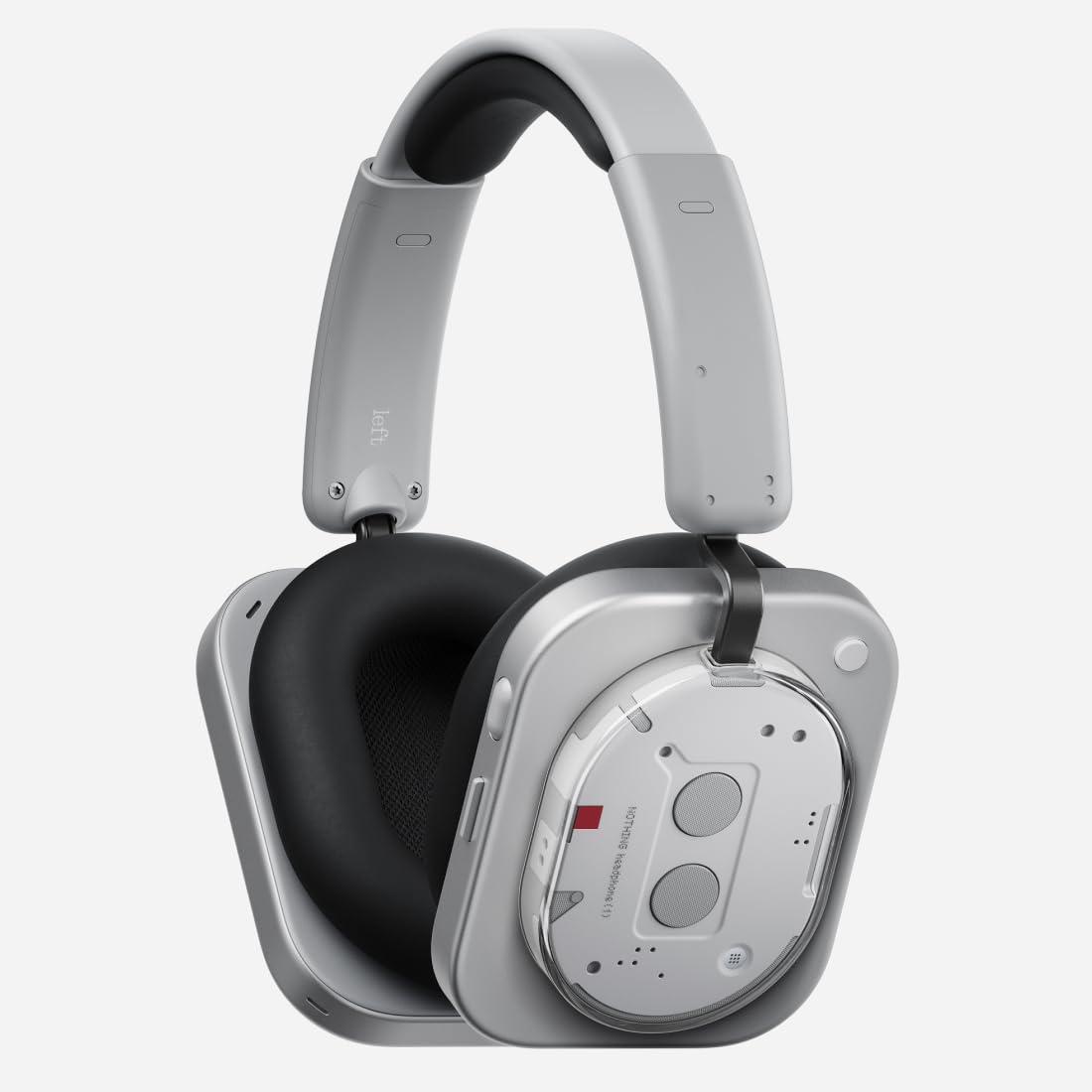
A roller wheel, a paddle, and an 8-band EQ — this pair hands you the controls.
Nothing built this with British audio house KEF, and the tuning shows in the balance rather than the boom. The real differentiator is control: a volume roller and a paddle sit on the cup, and the Nothing X app gives you an 8-band equalizer (eight adjustable frequency ranges versus the five-band setups most rivals offer). That extra range is what turns a warm out-of-box sound into something you actually want to listen to. Hybrid active noise cancelling (mics inside and outside the cup working together) has four settings — High, Mid, Low and Adaptive.
Battery is up to 80 hours with ANC off and 35 with it running, and a 5-minute charge buys 5 hours — the fastest top-up here. LDAC support streams higher-quality audio from a compatible Android phone, USB-C and a 3.5mm jack cover wired listening, and spatial audio with head tracking widens the stage. Dual connection keeps two devices live at once.
The honest caveats are weight and the headband. It runs slightly heavy, and the headband has no detents — the sliding adjustment has no click-stops, so it slowly slips down while you wear it. The industrial design is also love-it-or-hate-it. There is no recycled-material or plastic-free packaging claim anywhere in this listing, so if sustainability is your first filter, this is a performance pick rather than a green one.
Why tinkerers love it
- An 8-band EQ gives more control than the five-band norm, and it’s fully parametric
- Physical roller and paddle beat touch panels for gloved or hurried hands
- Up to 80 hours with ANC off, plus 5 hours from a 5-minute top-up
- LDAC, USB-C and 3.5mm cover every source you own
Worth knowing before you buy
- The headband has no click-stops and slowly slides down while worn
- Slightly heavy, and the styling splits opinions
- No named eco material or plastic-free packaging claim
The buyer who’ll love it: You treat EQ like a hobby and want physical controls plus long playtime.
The buyer who won’t: You prioritize recycled materials or a headband that holds its setting without fuss.
Know the Specs
Active Noise Cancelling vs Passive Isolation
Active noise cancelling uses microphones to sample the surrounding noise and plays an equal-and-opposite sound wave to cancel it. Passive isolation is simply the seal of the ear cushion blocking sound physically. Most over-ear pairs do both, and the combination is why the Sony and the Bose handle a plane cabin so well. A pair with strong passive seal but weak ANC will still cut some noise with the electronics off — the Raycon’s over-ear seal is a good example.
Battery Hours and Charge Speed
Playtime is quoted with or without ANC running, and the gap is large: the Nothing claims 80 hours without it and 35 with it. Always check which figure a listing uses. Quick-charge rates matter just as much on the road — the Sony’s 10-minute charge buys 5 hours, while the Marshall’s 100-hour tank rarely needs a top-up at all. A bigger battery means fewer charge cycles per year, which extends cell life.
Bluetooth Version and Codecs
The Bluetooth number (4.0, 5, 5.2, 5.3) describes the wireless radio generation. Newer versions generally hold a steadier connection and handle multiple devices better. Codecs are how audio is compressed over that radio — LDAC on the Nothing is a higher-bitrate option than the basic SBC standard. If your phone is older or an iPhone, you’ll fall back to a standard codec regardless of what the headphones support.
Eco Claims You Can Actually Verify
Regrind silicone rubber, FSC certified wood, recyclable aluminum, 100% plastic-free packaging — these are named claims a manufacturer can be held to. Vague phrases like “sustainable design” or “earth-friendly materials” tell you nothing about what’s inside the ear cup. The Positive Vibration Frequency and the Rebel both name their materials in the listing, which is the standard to hold every other pair to.
Common Questions
What actually makes a pair of headphones eco-friendly?
Does an eco-friendly build mean worse sound quality?
How long should the battery last on over-ear headphones?
Will these headphones pair with both my phone and my laptop at once?
Can I wash the ear pads on over-ear headphones?
What does IPX4 mean on fitness headphones?
Is Bluetooth 5.3 noticeably better than Bluetooth 4.0?
Do these headphones work with a cable if the battery dies?
Can I fix or replace the battery on these headphones?
Which pair is best for air travel?
The Bottom Line
For most people, the eco-friendly headphones pick that balances quiet, battery and sound is the Sony WH-1000XM4, because its Dual Noise Sensor cancelling and 30-hour battery handle the daily commute without drama. If the material itself is the reason you’re shopping, the Positive Vibration Frequency names its FSC certified wood, recyclable aluminum and plastic-free packaging in a way almost nothing else here does. And for long-haul travel where charging is a nuisance, the Marshall Monitor III A.N.C. runs up to 100 hours and folds into its case.
One last nudge: if you want the least to think about after buying, the Bose QuietComfort earns its loyal following — a 4.5+ star rating across 22,000+ reviews — on comfort alone, which is the spec you feel every single day.
How we choose
We do not accept paid placement. Every pick is matched to a real buyer and a real use-case; we do not hands-on test units.
Sources
Specifications: manufacturer listings and product documentation. Review insights: verified customer reviews, as of October 2026. Pricing: not shown on this page (it changes often); check the current price via the retailer link.
As an Amazon Associate, Aappliancez earns from qualifying purchases. This does not affect which products we feature.