Disclosure: Some links in this post are affiliate links. As an Amazon Associate I earn from qualifying purchases, at no extra cost to you. Learn more
Specs are compiled from manufacturer listings and verified buyer reviews and can change over time — please confirm the key details on the product page before buying.
A standard bicycle helmet is tested only for pedal-bike speeds, so it leaves less margin for the higher speeds and harder impacts of an e-bike. The pick that fits most everyday riders is the Thousand Heritage 2.0 — it comes safety-certified for bicycles and skates, uses a dial at the back to fine-tune tightness, and adds a hidden channel so you can thread a U-lock straight through the shell. But if you ride a Class 3 e-bike, a dedicated e-bike helmet with a higher certification and integrated lighting is the smarter call, which is why the XNITO and Lumos entries here deserve a serious look before you click buy.
This guide is built by comparing the manufacturers’ published specifications and the patterns across verified customer reviews, so you get each pick’s real strengths and trade-offs instead of marketing spin.
On an e-bike you cover ground faster than your reaction time is used to, and that is exactly when the right shell, the right certification, and the right lights start to matter. This guide compares certification, weight, fit systems and lighting across seven helmets so you can match one to your commute.
Top Picks


How To Choose The Best Ebike Helmet
The single most important question is not style or color — it is what the helmet is certified to survive. A standard bicycle helmet is tested for the speeds of pedal cycling. An e-bike can carry you well past that, which is why a class of helmets exists specifically for it. If you ride a Class 3 e-bike, scooter, or Onewheel, you want a shell rated for that reality, and you want the liner technology that manages a fall at speed.
Certification Beats Everything Else
Look at the fine print and find the standard the helmet actually met. CPSC is the U.S. baseline for bicycle helmets. NTA-8776 is a stricter Dutch standard written specifically for speed pedelecs — e-bikes that assist up to higher speeds. A dual-certified helmet has passed both, which is the clearest signal that a manufacturer was thinking about e-bike riders rather than repackaging a bike lid. Note that a helmet rated to 28mph is stating the upper bound of the protection it was designed around, so if your bike tops out below that, the helmet has margin; if it tops out above, you have exceeded the design intent.
MIPS And Koroyd Explained
MIPS stands for Multi-Directional Impact Protection System. Picture a thin slip layer inside the helmet that lets the shell rotate slightly on impact, which is designed to reduce the rotational forces that reach your brain during an angled fall. It is not a rare luxury anymore — several of the picks here include it. Koroyd is a different approach: a matrix of fused tubes built into parts of the shell that is designed to crush and absorb energy on impact while still letting air move through. Neither replaces a good fit, but both add a layer of protection a plain foam shell does not offer.
Why Fit Determines Real Safety
A perfectly certified helmet that slides around on your head protects you less than a simpler helmet that sits snug and level. That is why every serious commuter helmet here uses either a dial or a ratchet fit system at the back to tighten the shell to your head circumference. A magnetic buckle also earns its keep on an e-bike: it clicks shut with one hand at a stoplight and releases with a squeeze, which is far easier than fumbling with a traditional two-tab buckle while wearing gloves. Measure your head with a soft tape before you order, since every size range here is expressed in centimeters and inches and a helmet one size too big will rock on rough pavement.
Side-by-Side Comparison
| Model | Best For | Safety Standard | Weight | Fit System | Amazon |
|---|---|---|---|---|---|
| Thousand Heritage 2.0★ Best Overall | Daily commuters and skaters | Bicycle and skate certified | 0.5 kg | Dial Fit System | Amazon |
| BATFOX LA303 Mountain Bike HelmetBest Value | Trail and all-round riding | CPSC, ASTM F1447, E.U. CE | 13.76 ounces | Adjustable dial | Amazon |
| Auboa AU-T801 Full Face | E-bike and motorbike riders wanting full coverage | FMVSS-218 and DOT | 1.92 kg | Snug fixed fit | Amazon |
| Bell Sixer MIPS | Riders prioritising rotational impact protection | MIPS and in-mold construction | 16 ounces | Float Fit Race, three-way | Amazon |
| Smith Persist MIPS | Road riders who wear glasses | CPSC, CE EN 1078, AS/NZS 2063 | 310 g | Rear dial | Amazon |
| XNITO LED Urban Helmet | Night commuters on Class 3 e-bikes | CPSC and NTA-8776 dual certified | 13.28 ounces | Dial-fit wheel | Amazon |
| Lumos Ultra E-Bike Smart Helmet | Tech-forward e-bike riders wanting turn signals | NTA 8776 and MIPS | 0.89 kg | Adjustable fit | Amazon |
Detailed Reviews
1. Thousand Heritage 2.0 Adult Bike Helmet
Our pick — 4.5+★ from 900+ verified ratings; the strongest balance of quality and price.
The retro lid you leave on the lock instead of carrying into the office.
At 0.5 kg, the Heritage is the lightest helmet in this lineup, so it will not fatigue your neck on a long commute. It is built for a person who commutes in normal clothes, not race kit: a polycarbonate shell, a leather-wrapped inner, and a look that reads more 1970s café racer than cycling gear. A dial at the back lets you tighten or loosen the shell while wearing it, and the shell is certified for bicycle, skateboard and roller skate use, so the same lid covers a skate session and a bike commute.
What wins people over is the attention to finish — the leather detailing, the rear reflector mount, and the PopLock channel hidden behind the logo mark that lets you thread a U-lock or chain straight through and leave the helmet with the bike. Buyers report it plainly: the Heritage is easy to adjust, the magnet buckle is a pleasure, and one owner with a genuinely small head found it fit perfectly. The magnetic clasp does take a few tries to get used to, as a couple of riders note, and the ventilation is tuned for commuting rather than racing, but even riders in Florida heat and 90°F conditions found it breathable enough for real summer miles.
Two guarantees sit on top of all that, and they are unusual in this category: an Anti-Theft Guarantee that replaces the helmet if it is stolen while locked up, and an Accident Replacement Guarantee that replaces it free if you crash and damage the shell. Solid, well-finished protection you can genuinely lock to the frame is rare at any tier. The main caveat is a familiar one — retro styling is not for everyone, and if you want MIPS or e-bike-specific certification you will need to look further down this list.
The case for it
- Lightest helmet here at 0.5 kg, so it does not fatigue your neck on a long commute
- Dial Fit System tightens the shell to your head without tools
- PopLock channel lets you lock the helmet to your bike with the same U-lock
- Magnetic buckle clicks shut one-handed
- Anti-Theft and Accident Replacement Guarantees both included
The catch
- Bicycle and skate certification only — not the NTA-8776 standard for high-speed e-bikes
- No MIPS slip layer inside the shell
- Magnetic buckle needs a little practice before it becomes second nature
Built for: commuters and skaters who want a helmet good-looking enough to wear on and off the bike, with the lock-ability and light weight to match.
Think twice if: you ride a Class 3 e-bike at speed and want the stricter e-bike certification, in which case the XNITO or Lumos below is the smarter match.
2. BATFOX LA303 Mountain Bike Helmet
Eighteen vents, three shell sizes, and a shell that survived real trail punishment.
Riders with wider skulls who are tired of helmets that stop before they reach the width of the ears should start here — the BATFOX is the widest-fit entry in this group. It is fully certified for the U.S., European and ASTM bicycle standards, which is a firmer footing than many budget shells offer. A polycarbonate outer shell is fused to an impact-absorbing EPS foam liner so the two act as one piece on impact, and 18 wind-tunnel vents with internal channeling keep air moving across your scalp on a long summer ride. The fit is handled by a rear dial and an adjustable strap, and the sizes run M for 54-58cm, L for 58-61cm and XL for 61-63cm.
Where it earns its place in an e-bike helmet roundup is the fit and the protection-to-cost ratio. Owners consistently describe the shape as wider, letting it clear the side of the head properly — that mattered enough that one rider called it out directly, and the same rider praised the colors and the included visor. Ventilation is a real strength here, not a spec-sheet claim: riders note it breathes well and cuts down sweat on sustained climbs, and the two-screw visor attachment was singled out as sturdy rather than flimsy.
What you should know before buying: the shell scuffs easily under trail abuse, and the size chart sits on the snug side, so it pays to double-check your measurement. It also stops at bicycle-standard certification, which means it is not the helmet XNITO or Lumos would recommend for a 28mph e-bike. Treat it as the best all-rounder for mixed riding and you will be well served.
Protection per dollar: for riders who want real ventilation and a wider fit without stepping up to a premium shell, this is the value play.
Reality check: the shell scuffs easily and the fit runs snug — measure your head first.
Pick it if: you want a wide-fitting, heavily vented trail lid that handles sun and sweat without complaint.
Move along if: you need the higher-speed certification that a Class 3 e-bike rider should be wearing.
3. Auboa AU-T801 Full Face Motorcycle Helmet

Full-face coverage for the rider who wants their chin and jaw protected too.
Nobody in this lineup covers more of your head than this one, and that is the whole point — it wraps your skull, face and chin inside a single hard shell. It meets or exceeds the FMVSS-218 and DOT safety standards for motorcycles, using an ABS outer shell fused to a stable EPS foam liner designed for strong impact resistance. The aerodynamic fin-and-shell shape and the snug fit keep it steady at speed, and the multi-function nature means it suits e-bikes, street bikes, scooters and ATVs alike — a true e-bike helmet with a full-face build for anyone who wants more coverage than an open lid.
The two-visor system is where this earns its keep. You get a tinted outer visor for bright days plus a clear replacement visor for night riding, and the visor lock reduces wind noise while keeping the shield secure. Padding inside the liner is removable and washable, and the vent layout pushes air through the shell in warm weather. Owners repeatedly describe it as comfortable with a fit that draws compliments and a tinted visor that makes bright conditions easy to handle. In one case a rider walked away from a serious crash with only a scratch on the shell — that is the honest, verified experience of one owner, not a tested guarantee, but it is worth knowing.
Two things to plan around: the sizing runs tight compared to the chart, so size up if you are between sizes, and the vents that keep your head cool also produce noticeable wind noise without a comm system. Owners mention it as a solid starter and everyday lid for riders who want maximum coverage at a modest price.
Coverage first: the FMVSS-218 and DOT rating plus the two visors make this the pick for riders who want a proper full-face shell over an open-style lid.
Fit warning: buyers routinely size up, so confirm your measurement before you commit to a size.
Suited to: e-bike, scooter and motorbike riders who want chin-to-crown protection and both a tinted and a clear visor in the box.
Also worth noting: the shell is built for protection over silence — a comm system or earplugs will make highway-speed rides much calmer.
4. Bell Sixer MIPS Bike Helmet
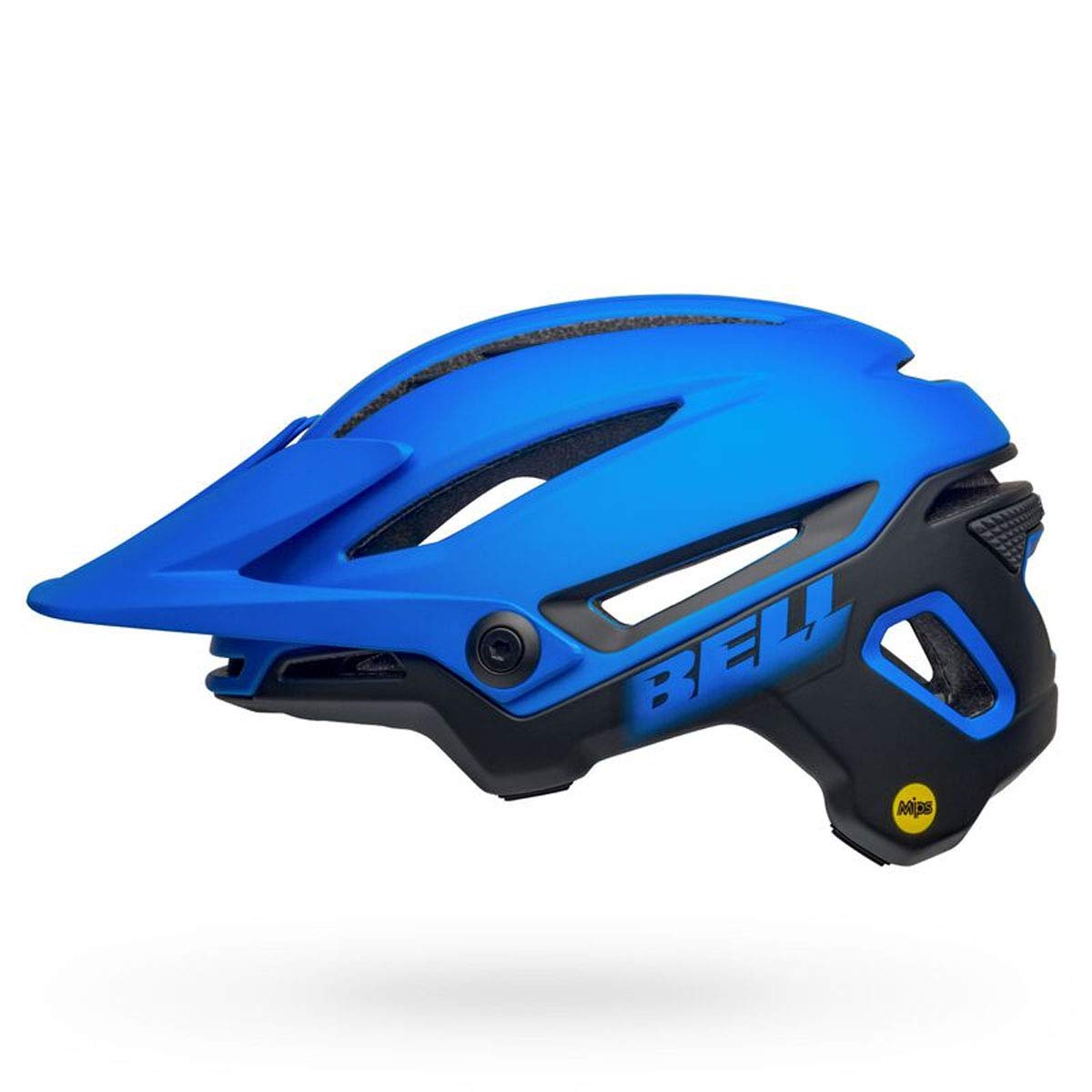
The trail lid with a slip layer designed to reduce rotational forces on impact.
If your priority is impact technology rather than styling, this is the helmet to beat. It pairs a Fusion in-molding process — Bell’s method of bonding the polycarbonate shell directly to the EPS foam liner with variable foam densities so the liner can spread energy more evenly on impact — with MIPS, the Multi-Directional Impact Protection System that slides a thin plane inside the shell to reduce the rotational forces reaching your brain on an angled hit. Float Fit Race integrates with the MIPS layer and offers three-way adjustability: height, pad width and tension. Add X-STATIC and XT2 padding woven with real silver fibers, 26 vents and 4 brow ports, and you have a shell built for real trail time.
Ventilation and coverage are both above average for the price band, and the numbers back the riding feel. A large-headed rider describes the fit as excellent, with a quality click dial that draws the webbing around the head and locks the helmet in place. Others praise the stability on rough terrain and the clean matte finish. The 4-position adjustable visor lets you set the angle to block sun or drop it for the descent, and it adjusts without tools.
Two honest points. The camera mount is designed to break away on impact for safety, but some riders find it pops off easily during normal handling. And the plastic visor bolts can work loose over time — the practical fix is a dab of thread locker or a swap to metal bolts. Neither changes the protection story, but they are worth knowing before you buy.
What riders like
- MIPS slip layer plus variable-density EPS foam for impact management
- Float Fit Race gives three-way adjustment: height, pad width and tension
- 26 vents and 4 brow ports for strong airflow
- Silver-fiber X-STATIC and XT2 padding resists odour
- Integrated breakaway camera mount needs no zip ties or tape
Where it falls short
- The breakaway camera mount can pop off during everyday handling
- Plastic visor bolts may loosen over time and are worth securing
- Some colours cut the size range so X-Large is not always available
Choose it if: you want serious impact technology and full adjustability without paying premium-tier money.
One thing to accept: a couple of small hardware details — the camera mount and visor bolts — will need a light touch and an occasional check.
5. Smith Persist MIPS Cycling Helmet

The road hat that keeps your glasses clear instead of fogging them up.
Glasses wearers know the pain: a helmet that sits too low on the brow pushes your frames into your forehead and fogs your lenses the moment you stop. This Smith is designed around solving exactly that. It uses MIPS for rotational impact protection plus Zonal Koroyd coverage — a matrix of fused tubes built into parts of the shell that is designed to crush and absorb energy while letting air pass — in a 310 g shell. The AirEvac system works with Smith eyewear specifically to pull warm air away from your lenses. With 21 fixed vents and an adjustable rear dial, it punches well above its weight for road riders.
At 310 g it is the lightest entry in this lineup, and you can feel the difference over a long ride. Riders describe it as so light and comfortable they forget it is on, with no neck strain over the course of a ride, and the ventilation holds up even on climbs. The rear dial makes fine-tuning easy without removing the helmet, and the build quality reports are consistently strong across the board.
Two details to know. The straps can produce a small amount of mushroom effect if you cinch too tightly on a smaller head, and the shell does not include holes for sliding sunglasses arms through — if you ride with glasses over the straps rather than under, that matters. Otherwise, for the road rider who cares about eyewear compatibility and weight, this is a strong pick.
Lightest of the bunch: 310 g with 21 vents and MIPS plus Zonal Koroyd — a genuine road-riding build.
Worth double-checking: no dedicated sunglass arm channels, and the mushroom effect appears if you cinch too tightly on a smaller head.
This is for you if: you wear prescription glasses or sunglasses on the bike and want a light, well-vented road helmet that keeps your lenses clear.
Worth a rethink if: you want dedicated sunglasses arm holes in the shell rather than routing the arms under the straps.
6. XNITO Bike Helmet with LED Lights

Certified for 28mph e-bikes and lit from front to back after dark.
This is the helmet built specifically for the speed an e-bike rider actually travels. It is dual-certified to CPSC and NTA-8776 — the Dutch standard written for high-speed e-bikes — and designed for protection up to 28mph. A thicker layer of EPS foam sits inside for extra impact absorption, and the coverage extends around the temples and the rear of the head, exactly where a fall at speed tends to land. At 13.28 ounces it is one of the lightest entries here even with the lights inside. It’s safe for Class 3 e-bikes, e-scooters, e-skateboards, Onewheels and ordinary bicycles, so if you split your time between an e-bike and a pedal bike, one helmet covers both.
The lights are the headline, and they are genuinely integrated rather than clipped on as an afterthought. Custom LED units at the front and rear improve visibility in the dark and in foggy conditions, run up to 10 hours on a charge, and recharge over USB. Three modes — flash, static and wavy — are switched with a button you can reach while wearing the helmet. Riders describe the front light as bright and the rear red light as visible even from a distance, and the magnetic buckle is quick to click. The dial-fit wheel keeps the shell snug, and the sizes span 21.2 to 25in across small, medium and large.
The trade-off is straightforward: this is a commuter helmet first, not a lightweight race shell, and the fit runs snug so measure your head before ordering. Durability is described as mixed by some buyers, and a few have noted the shape works best on average head sizes. But with the NTA-8776 certification and the lights, this is the strongest all-round value for night e-bike commuters.
Night commuter’s pick: dual CPSC and NTA-8776 certification, up to 28mph of design protection, and integrated front and rear lights running up to 10 hours on USB charge — this is the helmet built for e-bike riding after dark.
Honest limit: durability is described as mixed by some buyers, and the fit runs snug, so measure before you order.
Made for: the rider who commutes on a Class 3 e-bike at night and wants protection and visibility wrapped into one shell.
Look elsewhere if: you want a bare-bones, best-hardware-only build and do not care about integrated lighting.
7. Lumos Ultra E-Bike Smart Helmet

Turn signals, brake lights and app control in one e-bike-specific shell.
The one feature nobody else in this roundup offers is built-in turn signals operated by a wireless remote you mount on the handlebar, so the rider behind you knows where you are going before you lean. That is on top of the safety you would expect at this tier: NTA 8776 certification for higher-speed e-bike use, MIPS inside the shell to help manage rotational impact force, and a retractable face shield for wind, rain and bugs. It weighs 0.89 kg — heavier than the XNITO above, and that extra mass is the cost of the electronics and the higher crash rating. The shell fits head sizes from 21-1/4in to 24in (54cm to 61cm). Custom brightness and LED patterns, plus ride tracking, are handled through the Lumos app.
What owners notice first is the reaction they get on the road. Riders describe the shell as feeling high-tech and genuinely safer, with lights bright enough to be spotted by other vehicles at night, an audible on-alert sound, and a rear light that flashes like a car’s brake lights when a speed sensor detects you slowing. A rider who fell on pavement and hit a tree came away grateful they were wearing it. The magnetic chin strap is easy to fasten, and the fit earns consistent praise, though average head sizes do better reaching for a medium. It has also been worn for road biking as well as e-bikes.
The trade is clear. You are paying for the electronics, the turn signals and the app, and that makes it the priciest shell here. A couple of riders wish the helmet left more room around the arms of prescription glasses, and battery life is one figure you will have to judge for yourself in real use. If those are not dealbreakers, it is the most feature-dense choice on the list.
Features you will actually use
- NTA 8776 certification for e-bike riding speeds, with MIPS inside the shell
- Wireless handlebar remote controls integrated turn signals
- Retractable face shield for wind, rain and bugs
- Lumos app customises LED patterns, brightness and ride tracking
- Rear light flashes on braking via a built-in speed sensor
Costs of ownership
- Heavier than the XNITO at 0.89 kg because of the electronics and crash rating
- Premium-tier pricing for the smart feature set
- Some riders with prescription glasses wish there was more temple room
The one to grab if: you want a genuinely smart e-bike helmet with turn signals, MIPS and app control in one package.
The honest trade: you are paying a premium for electronics, so if signals and app features do not appeal, a simpler certified shell will serve you just as well for less.
Know the Specs
Certification — CPSC, NTA-8776 and DOT
Certification tells you what speed and impact conditions the helmet was tested to survive. CPSC is the U.S. baseline for bicycle helmets. NTA-8776 is the Dutch standard written for speed pedelecs — e-bikes assisted to higher speeds — and a helmet carrying it has been tested to a firmer brief. DOT and FMVSS-218 apply to motorcycle helmets and cover the shell-plus-chin protection a full-face design provides. Match the helmet to your bike: a purely bicycle-certified shell is fine for relaxed rides but leaves less margin if you are on a fast e-bike.
MIPS, Koroyd and What They Actually Do
MIPS is a thin slip plane built inside the helmet. On an angled impact it lets the shell rotate slightly, which is designed to reduce the rotational forces that reach your head. Koroyd is different: a matrix of fused tubes set into parts of the shell that is designed to absorb energy by crushing, while still letting air pass through. A helmet can carry one or both. Neither makes a loose helmet safe — a dial or ratchet fit system that holds the shell level and snug on your head matters just as much.
Weight and Ventilation
Weight directly affects how tired your neck gets over a long ride. The entries here range from a 310 g road helmet to a 1.92 kg full-face shell — a huge difference in how it feels after an hour at the bars. More vents means more airflow and less sweat buildup on a hot commute, which is why vent counts matter on summer rides. Light commuters usually want a lighter shell with more vents; riders prioritising coverage accept the trade.
Integrated Lighting and Visibility
Lights built into the shell improve how visible you are to drivers, especially after dark and in fog. Manufacturers here describe LEDs designed to improve visibility, with runtime measured in hours and recharge over USB. Look for front and rear coverage, several flash modes, and a magnetic buckle so you can still fasten the helmet one-handed while wearing gloves. If you commute at night, this feature is not decorative — it is the difference between being seen and being missed.
Common Questions
Do I need a specific helmet for an e-bike rather than a regular bicycle helmet?
What is the difference between CPSC, NTA-8776 and DOT certification?
How do I measure my head to pick the right size?
Is MIPS worth paying extra for on an e-bike helmet?
How long do the LED lights last on a helmet like the XNITO?
Can I lock my helmet to my bike instead of carrying it around?
Do full-face helmets protect more than open-face e-bike helmets?
Are magnetic buckles as secure as traditional chin strap buckles?
How many vents does an e-bike helmet need for summer riding?
What is the heaviest helmet in this roundup and does weight matter?
Can I use one helmet for both my e-bike and a regular bicycle?
The Bottom Line
The best overall pick here is the Thousand Heritage 2.0 — it is the lightest shell at 0.5 kg, it has the dial fit and the magnetic buckle that make daily use easy, and the PopLock channel lets you lock it to the bike and walk away. It is the helmet most commuters and skaters will be happiest reaching for every single day. If you ride a fast e-bike at night, grab the XNITO with its NTA-8776 dual certification and integrated LED lights, and if you want turn signals and app control in the shell, the Lumos Ultra E-Bike Smart Helmet is the one to reach for. Take the tape measure out before you order on any of these — a snug fit is what turns a good shell into real protection.
How we choose
We do not accept paid placement. Every pick is matched to a real buyer and a real use-case; we do not hands-on test units.
Sources
Specifications: manufacturer listings and product documentation. Review insights: verified customer reviews, as of October 2026. Pricing: not shown on this page (it changes often); check the current price via the retailer link.
As an Amazon Associate, Aappliancez earns from qualifying purchases. This does not affect which products we feature.