Disclosure: Some links in this post are affiliate links. As an Amazon Associate I earn from qualifying purchases, at no extra cost to you. Learn more
Specs are compiled from manufacturer listings and verified buyer reviews and can change over time — please confirm the key details on the product page before buying.
If your ears ring after a loud day, the fix is not total silence — it is turning the volume down without turning the music to mush. A good pair of earplugs for tinnitus drops the harmful decibels while keeping voices, instruments, and announcements clear enough to follow. Below are five reusable pairs that do exactly that, each matched to a different kind of noisy life.
This guide is built by comparing the manufacturers’ published specifications and the patterns across verified customer reviews, so you get each pick’s real strengths and trade-offs instead of marketing spin.
You will see which pair lives on a keychain, which one survives a three-hour set in front of the speakers, and which one suits small ear canals. Every pick here is measured on the same three things: how much noise it cuts, how it fits, and how clear the sound stays. That is the real test behind the earplugs for tinnitus.
Top Picks


How To Choose The Best Earplugs for Tinnitus
Ringing in the ears is your warning light. Once it is on, the smart move is to keep loud places from pushing your ears any harder. The right pair filters the damaging level of sound while keeping enough detail that you still enjoy the show, the flight, or the ride.
Read the decibel number the right way
Noise reduction is measured in decibels, usually written as dB — a unit for how loud a sound is. A plug rated at 25 dB takes the edge off engine roar and crowd noise without turning everything into a muffled blur. A lower rating such as 12 dB keeps the sound closer to natural and is better for music you want to hear clearly. Pick the rating to match the room, not the biggest number on the box.
Even reduction beats raw blocking power
Some plugs quiet the high notes far more than the low ones. That leaves you with thumping bass and dead cymbals, which ruins a concert. Look for wording like “flat attenuation” or “equal sound reduction across the range of hearing” — that is the sign a plug turns the whole mix down evenly instead of picking on some frequencies.
Fit decides whether you are actually protected
A plug that sits loose leaks sound and protects nothing. Soft flanges — the small ridges you push into your ear canal — create the seal, and the size has to suit your ear. Several picks below ship with more than one tip size or are built slightly smaller for petite ear canals. If a plug feels loose or keeps slipping out, that is a fit problem, not a reason to give up on the pair.
Side-by-Side Comparison
| Model | Best For | Noise Reduction | Tip Options | Weight | Amazon |
|---|---|---|---|---|---|
| Airplane Ear Plugs Pressure Relief★ Best Overall | Flights and pressure pain | 25 dB | Dual flange, one pair plus spare | 1.13 oz | Amazon |
| Etymotic ER20 ETYMusician’s Choice | Musicians and even, natural sound | Up to 20 dB | Standard size, longer stem | 0.96 oz | Amazon |
| Mack’s High Fidelity | Concerts and motorcycles | NRR 12 dB | 2 tip sizes included | 0.32 oz | Amazon |
| Concert Ear Plugs by QuietZone | Long loud events on a budget | SNR 30 dB | 6 tips, S/M/L double flange | 0.63 oz | Amazon |
| HEAROS High Fidelity | Small ear canals | NRR 12 dB | Three flanges, small sizing | 0.32 oz | Amazon |
Detailed Reviews
1. Airplane Ear Plugs 2 Pairs
Our pick — 4.5+★ from 1,000+ verified ratings; the strongest balance of quality and price.
The pair that eases the pressure pain of landing while still cutting cabin drone by 25 dB.
Most earplugs only block sound. These carry a small filter that regulates the pressure change as a plane climbs and descends, so descent pain does not build the way it normally does. That pressure relief is why they top this list for anyone whose ears ring or ache after flying.
The sound side is just as solid. They are rated at 25 dB of noise reduction — enough to take the edge off engine drone and crying babies while you can still hear gate announcements and the flight attendant. You also get a waterproof aluminum case with a carabiner, so the pair clips to your bag and never goes missing in a seat pocket.
On weight, they are the heaviest pair here at 1.13 ounces, against 0.32 ounces for Mack’s — a gap you notice only in the hand, not in the ear. They are also the highest-reduction option on this list, and the comparison against the Etymotic ER20 makes that plain: 25 dB here versus 20 dB there. For a flight or a motorcycle ride, that extra shelf of quiet is real.
Comfort is what owners praise most, thanks to a snug double-flange seal that does not press hard on the ear. The disagreement sits in fit and removal: a few find them loose, and pulling them out varies from easy to stubborn. Neither is a defect; it is the nature of a soft seal that has to suit your own ear canal.
Where it pulls ahead
- Pressure-regulating filter aimed at landing and takeoff ear pain
- 25 dB of noise reduction, the most on this list
- Waterproof aluminum case with a carabiner for bag or keys
- Two pairs included, so there is a spare
What to weigh first
- At 1.13 ounces it is the heaviest pair reviewed here
- Fit and removal draw mixed feedback — sizing decides the seal
Reach for these if: your ears ring or ache after flying, or you want the deepest quiet on this list for riding or naps.
Worth knowing: the seal is soft, so people with wider canals may want to seat them a little deeper to lock out cabin noise.
2. Etymotic ER20 ETY Earplugs
The even-handed filter that lets a working musician hear every note at up to 20 dB less.
These are the plugs you see on stage because they cut almost equally across the whole range of hearing. A tuned resonator and acoustic resistor inside each plug mimic how your ear canal naturally responds, so the mix stays intact instead of collapsing into bass thump and dead cymbals. The rated reduction is up to 20 dB.
They come with a neck cord and a carrying case. The longer stem design also gives your fingers something to grip when you seat them.
Buyers report these “work very well and simple to slide in and out of your ear canal.” A working musician on the review pages uses nothing else at rehearsals, shows, and concerts, and says the music stays clear and natural next to muffled foam. One reviewer with small ears found the standard size fit well and noticed no ringing after a K-pop show, with all frequencies trimmed evenly rather than just the highs.
Here is the honest catch. There is a split among long-time wearers: one owner who used the same model for two decades says the newer version does not seal as easily and needs pushing uncomfortably deep. Most people never hit that, but if you have owned this pair before and loved the old fit, it is worth checking that the current one seats the same way for you.
The fidelity argument: for a bassist, a DJ, or anyone mixing sound, keeping the tone natural matters as much as the protection — and the even attenuation here is the reason it earns a spot.
Pick these if: you play, mix, or sit near the monitors and want the music intact rather than flattened.
Think twice if: you need maximum blocking — the QuietZone pair is rated for more reduction and will give you a quieter night.
3. Mack’s High Fidelity Ear Plugs

Featherweight plugs at 0.32 ounces that tame a loud room without stealing the tone.
An open-air membrane filter sits inside each plug, and that is what keeps the full spectrum of sound intact instead of the muffling you get from a lump of foam. Makers rate it at an NRR of 12 decibels — a gentler cut that suits a concert or a motorcycle ride where you still want detail.
You barely feel these in your ears at 0.32 ounces, the lightest pair in this guide. The Airplane Ear Plugs weigh 1.13 ounces, so the gap is clear: 1.13 ounces there versus 0.32 ounces here. Two comfort tip sizes come in the box, so you can match small or large ear canals, and an aluminum travel case clips to a keychain or belt loop.
What buyers praise most is the sound reduction itself, and the reviews paint it clearly. One owner sat in front of the speakers at a Tedeschi Trucks show and found the night more enjoyable than without them, enjoying the music rather than enduring it. Another takes them to two concerts and says the volume drops without turning to mush — you can still hold a conversation between songs. A parent bought them for a daughter practicing the piccolo and found the pitch and tone stayed true while the pressure dropped.
The recurring gripe is fit. The flanges are soft, and some ears find them hard to seat comfortably compared with a foam plug. Owners mention “easy to insert/remove, comfortable for 2 hours, nice carry case,” which is good news for a show but a limit for a long-haul flight. Keep the filters safe when you wash the plugs too — the small parts inside the case can get stuck if you push them in too far.
Best at a gig: the balance of a light touch on volume and a clear, natural mix makes this the pick for a night out where the music is the point.
Reach for these if: you want a featherweight pair that clips to your keys and keeps a concert sounding like a concert.
Look elsewhere if: you need heavy blocking for a flight or construction noise — a higher-rated pair like the Airplane Ear Plugs does that better.
4. Concert Ear Plugs 30dB
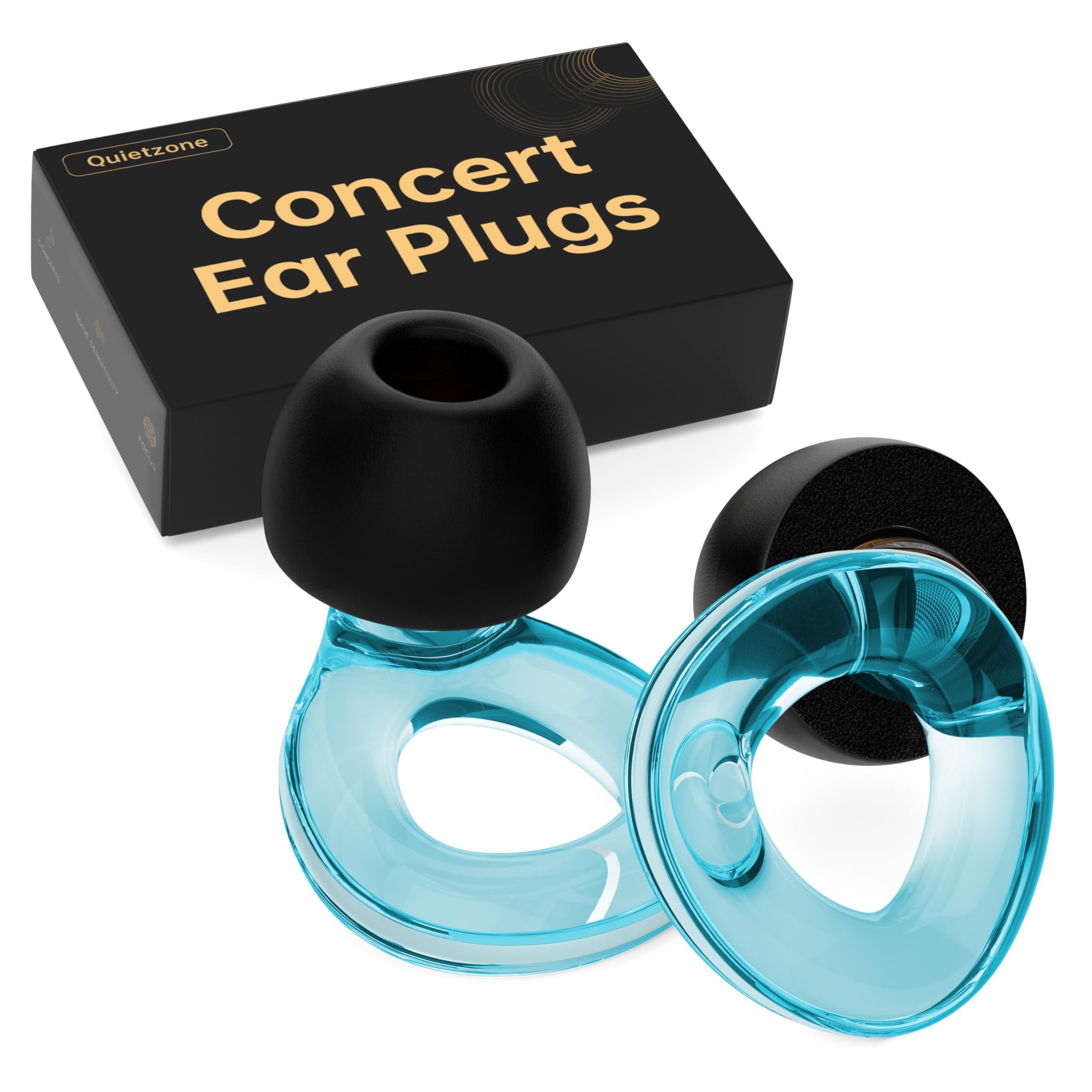
This pair blocks the most sound in this guide at an SNR of 30 dB, and it gives you six tip sizes to find your seal.
A rated SNR of 30 decibels is the highest reduction on this list, and that is the reason it takes the top tier. SNR here means the single-number rating for how much sound the plug removes. In a stadium or a metal show, that extra shelf of quiet is the difference between a sore night and a ringing one.
Fit is the other half of the story. The box holds six interchangeable tips plus double-flange tips in small, medium, and large, all in soft reusable silicone. That spread means most ear shapes can find a snug seal, and the plug is designed to sit flush without sticking out. A carrying case keeps the set together.
Reviews back up the long-event use. One owner wore them through three-plus hours of dancing and screaming at a BTS show and came away with clear vocals, no ringing, and the plugs still in place. Another uses the small tips to block loud car noise and the high pitches of a TV or game, describing a comfortable, secure seat that still lets nearby talk through when it is quiet. A wearer who took them to a Zumba class found they blocked the painful volume while keeping the music and the instructor audible.
The honest trade-off is that the highest number does not mean total silence. Customers note that the sound is “somewhat muffled” compared with pricier musician plugs, and that the first fit takes some fiddling — a small tip for a narrow canal, a larger one if the plug slides. That is the price of a deep cut: more reduction, slightly less pristine tone than the Etymotic pair.
Tone versus depth: if you want the purest sound, the Etymotic ER20 leads. If you want the quietest night and the most sizing options, this is the one.
Choose these if: you stand through long, loud events and want the most reduction plus a tip size that will actually seal your ear.
Skip if: you insist on uncolored, natural sound at a lower cut — the higher reduction here comes with a little muffling.
5. HEAROS High Fidelity Series Ear Plugs
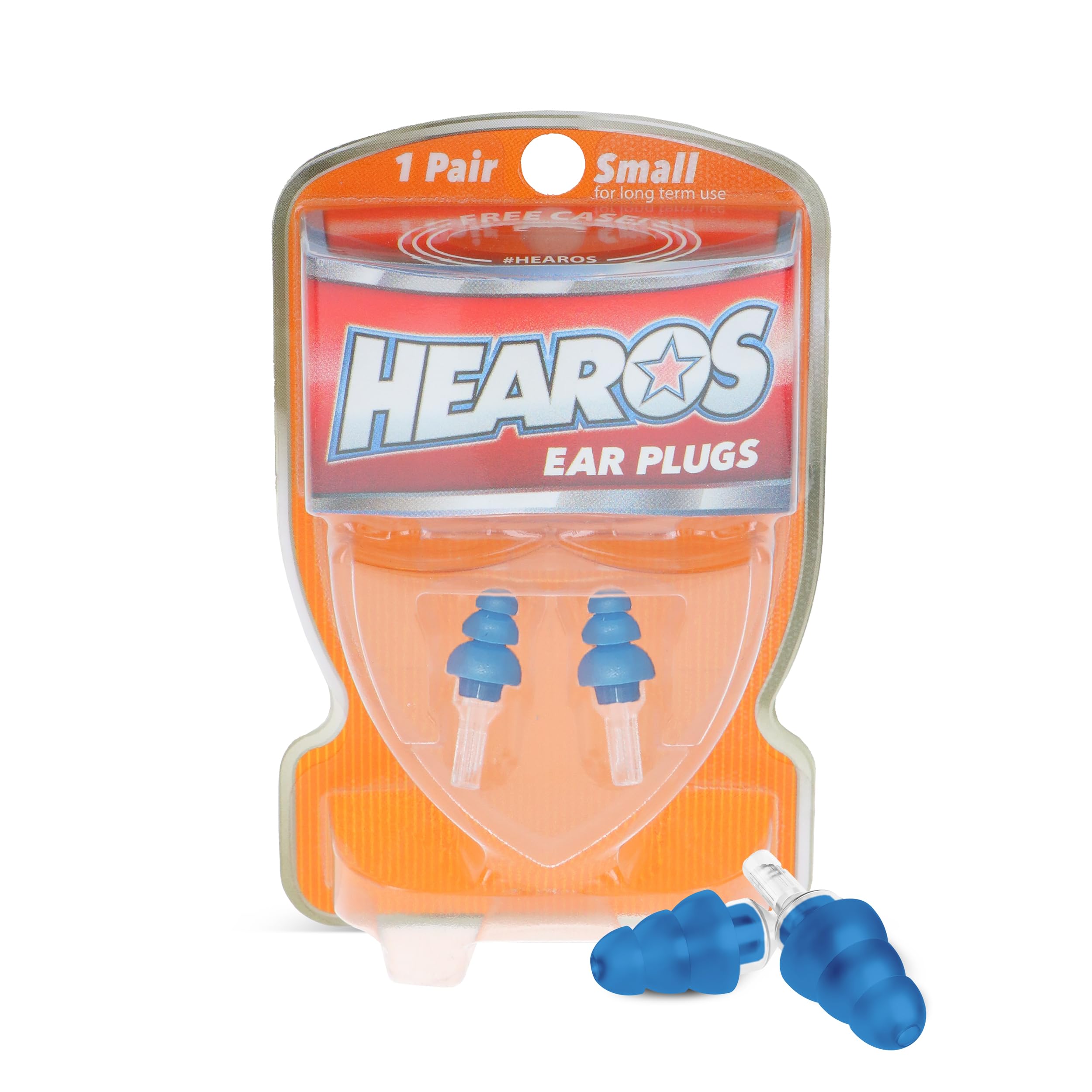
Built a touch smaller for petite canals, with a flat cut that keeps the tone.
This pair is made slightly smaller for people with petite ear canals, and that single decision is why it earns a place here. A plug that seals small ears properly protects them far better than a full-size pair that sits loose. The three form-fitting flanges do the sealing, and the transparent stems blend into your skin tone so they stay inconspicuous.
Reduction sits at an NRR of 12 decibels, and the makers describe it as flat attenuation — an even trim across the spectrum rather than a muffled blur. Soft medical-grade silicone keeps them comfortable, and they are also listed as hypoallergenic. A free case comes in the box.
Sound quality is what this pair gets praised for most, and the owner voices carry it. A concertgoer who once used Loops says these fit small ears much better, worn to every show with no ear fatigue and great sound. A musician dealing with hearing loss and tinnitus notes the attenuation stays even across the spectrum without muddying the mix, and works well through band practice. A bassist in a rock band still hears himself and the band clearly, with no ringing after rehearsal.
A few realities to plan for. Some ears find these too small and get no seal at all, so if your canals run wide, a larger-tip pair like the QuietZone set is the safer fit. Owners also mention that the tiny size makes them easy to lose even in the case, and that the silicone can itch after a while if you leave them in for sleeping. Both are the cost of a small, discreet plug — not reasons to rule it out.
The small-ear edge: if standard plugs always feel loose or press painfully, the smaller sizing here is the detail that will actually change your experience.
Best for you if: your ear canals are narrow and full-size plugs never quite seal.
The caveat: the loose-larger-ear stories are real — check the fit before committing if your canals run wide.
Know the Specs
Noise reduction rating in decibels
This is the headline number — how much loudness the plug removes, measured in decibels (dB), the unit for sound level. A higher figure blocks more noise; a lower one keeps the sound closer to natural. Match it to the room: a concert benefits from a moderate cut, while a flight or construction noise takes a deeper one. The rating tells you the size of the cut, not whether it stays clear.
Flat attenuation versus muffling
Flat attenuation means the plug lowers all frequencies by a similar amount, so the bass and the cymbals come down together and the mix stays intact. A plug that muffles picks on the highs and leaves you with thump. If clear sound matters — for a musician or a music lover — look for wording about preserving clarity or reducing across the range of hearing.
Flange seal and tip sizes
A flange is the soft ridge that sits in your ear canal and creates the seal. The size and number of flanges decide whether the plug blocks sound or leaks it. Several picks here ship with more than one tip size or are made smaller for petite canals, so the fit can follow your ear rather than the other way around.
Reusable silicone and hygiene
Every pair here is washable and reusable, which is a small but real advantage over disposables. Clean them with soap and water, dry them fully, and store them in the included case so the filters stay clear. Keeping a spare set, as the two-pair Airplane option does, lets you clean one while wearing the other.
Common Questions
Will earplugs stop tinnitus from ringing?
Which pair is best for the loudest concerts?
Can I still hear the music and talk to people with them in?
What does NRR or SNR actually mean on the box?
My ears are small. Which pair should I choose?
Are these earplugs reusable or disposable?
Do airplane earplugs work for a concert or motorcycle ride too?
How do I clean the small filter inside the plug?
Is a lower decibel rating better for ringing ears?
Will these fit under a helmet or in one ear only if needed?
The Bottom Line
If your ears ring after noisy days, the earplugs for tinnitus winner for most people is the Airplane Ear Plugs Pressure Relief. It gives the deepest cut on this list at 25 dB, and its filter is built to ease pressure on a descent, so it suits flights and loud rides alike. Want the clearest, most natural tone for music? Grab the Etymotic ER20. And if your ear canals are petite and never quite seal, reach for the HEAROS High Fidelity.
Whichever you choose, the goal is the same: keep the volume down before your ears pay the price. Start with the pair that matches your noisiest day, wear them consistently, and your ringing ears will thank you for the break.
How we choose
We do not accept paid placement. Every pick is matched to a real buyer and a real use-case; we do not hands-on test units.
Sources
Specifications: manufacturer listings and product documentation. Review insights: verified customer reviews, as of October 2026. Pricing: not shown on this page (it changes often); check the current price via the retailer link.
As an Amazon Associate, Aappliancez earns from qualifying purchases. This does not affect which products we feature.