Disclosure: Some links in this post are affiliate links. As an Amazon Associate I earn from qualifying purchases, at no extra cost to you. Learn more
Specs are compiled from manufacturer listings and verified buyer reviews and can change over time — please confirm the key details on the product page before buying.
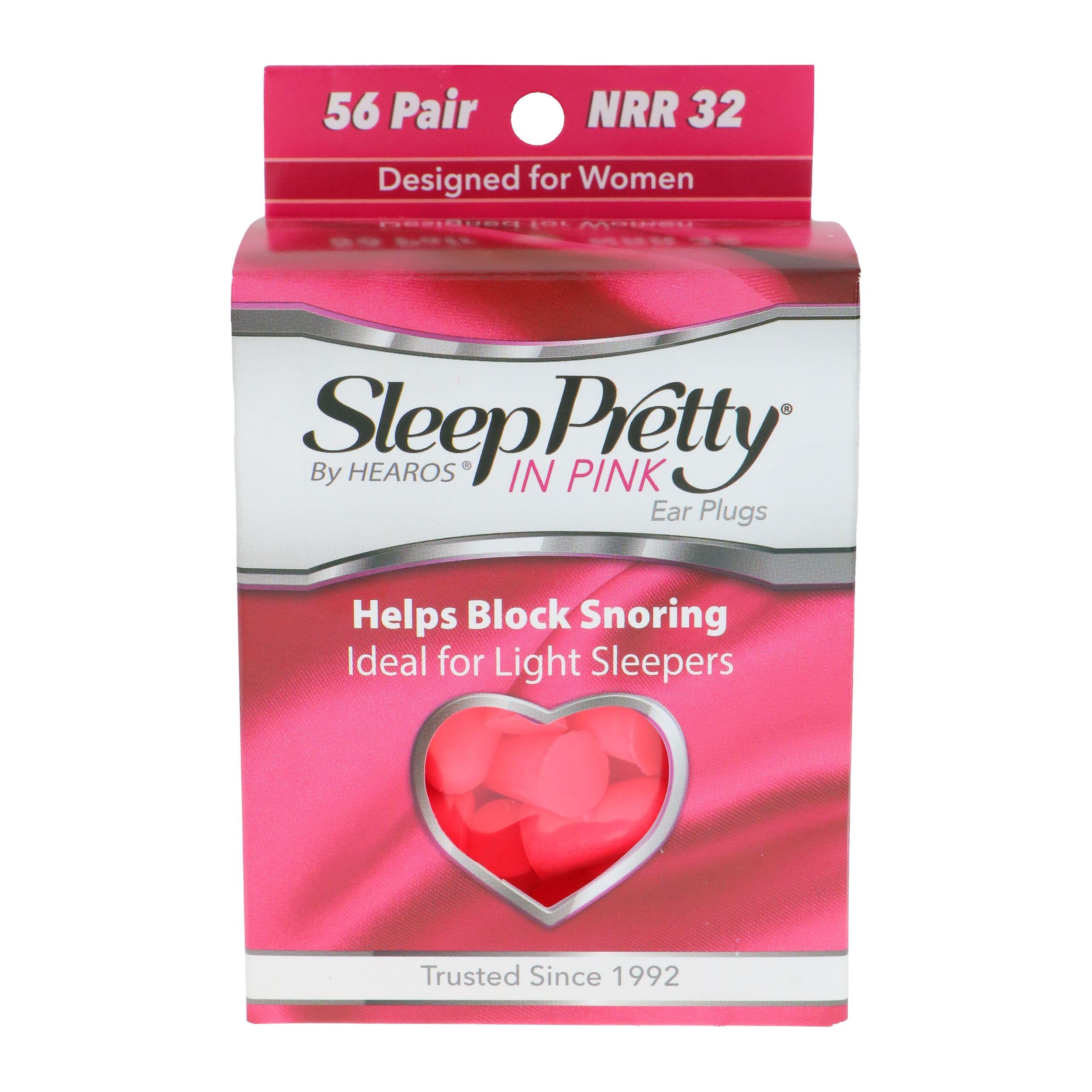
If standard foam plugs leave your ears aching by 3 a.m. or slide out before you drift off, the problem is usually size, not the plug itself. The picks below are built around narrower ear canals, so you get a seal that holds without forcing something oversized into your head. Start with the HEAROS Sleep Pretty in Pink if you want the safest all-round choice — a 4.5+ star favorite with a Noise Reduction Rating of 32 and 56 pairs in the box.
This guide is built by comparing the manufacturers’ published specifications and the patterns across verified customer reviews, so you get each pick’s real strengths and trade-offs instead of marketing spin.
A plug only works if it stays seated, so fit beats every other number on the label. Below you’ll find five honest options, from soft foam to reusable silicone, each matched to a different kind of narrow ear canal. These are the earplugs for small ears worth your attention if you want quiet nights without sore canals.
Top Picks
How To Choose The Best Earplugs for Small Ears
Most people buy plugs by noise rating and never check the diameter. That’s the wrong order. If the plug is wider than your canal, it sits at the entrance, leaks sound around the edge, and presses on the wall of your ear until it aches. Get the size right first, then look at the decibel rating.
Start with the shape of your own canal
A foam plug that you roll thin and let expand inside the canal can mould itself to a narrow passage. A moulded silicone plug relies on its own fixed shape, so it either seals or it doesn’t. If you have tried foam and found it painful, silicone with an extra-small tip is the usual next step. If silicone keeps slipping, foam that expands slowly tends to stay put.
Read the NRR for what it is
The Noise Reduction Rating (NRR) is a lab figure for how many decibels a plug can reduce when it is seated properly. A higher number is not automatically better for sleep. Plugs rated around 30dB to 33dB suit snoring and traffic, while a lower-rated plug lets more of the room through so you still notice an alarm or a child calling out.
Decide between disposable and reusable
Foam plugs are cheap per pair and you throw them away when they stop springing back. Silicone plugs are washable under mild soap and warm water, so one set can last months. If you travel or lose plugs often, a reusable set with a little case removes the daily hunt for a fresh pair.
Plan for the position you sleep in
Side sleepers press the plug into the pillow all night. A low-profile or one-piece design spreads that pressure instead of driving a hard tip into the canal wall. If you wake with sore ears, the depth and shape of the plug matter as much as its width.
Side-by-Side Comparison
| Model | Best For | Noise Rating | Material | Supply | Amazon |
|---|---|---|---|---|---|
| HEAROS Sleep Pretty in Pink★ Best Overall | All-round sleep and snoring | NRR 32 | Polyurethane foam | 56 pairs | Amazon |
| Softvox Kids & Small Canal PlugsBest for Families | Children and shared family use | 26dB | Soft silicone | 4 tip sizes | Amazon |
| HeyFir Noise Cancelling Sleep Plugs | Side sleeping on a tight budget | 33dB NRR | Latex-free silicone | 4 pairs | Amazon |
| EarPeace Sleep Earplugs (Small) | Every-night use with cleaning | up to 30dB | Soft silicone | 6 plugs | Amazon |
| Peace&Quiet PQ Small Ear Plugs | Bulk supply for tiny canals | — | Foam | 100 plugs | Amazon |
Detailed Reviews
1. HEAROS Sleep Pretty in Pink 56 Pair
Our pick — 4.5+★ from 650+ verified ratings; the strongest balance of quality and price.
The soft, slow-expanding foam plug that narrow canals actually forgive.
What earns this box the top spot is the combination of a real 32-decibel Noise Reduction Rating (the lab measure of how much sound the plug can cut) with a petite cut of polyurethane foam. You roll it thin, slide it in, and the foam swells to fill your own canal shape rather than forcing a fixed mould against it. For a snoring partner or traffic noise at the window, that seal is what does the work.
The comfort story is why people keep buying the 56-pair pack: the foam is described by the maker as silky smooth, and it compresses smaller than a standard plug before it expands. Owners most often praise how quickly they drift off and stay asleep with these in. One caution worth knowing up front: the fit is not identical for every wearer, and a few people with very wide canals find them looser than expected. If you have spent years fighting sore ears from full-size plugs, this is the pick most likely to end that.
Compared with the Peace&Quiet set at the bottom of this list, you are trading bulk quantity for a slightly firmer, more structured foam. The two boxes measure very differently as packaged units — 5.25 inches by 3.38 inches by 2 inches and 2.5 ounces here — but inside the ear what matters is the petite diameter and the 32 rating. For most small-eared sleepers, that is the sensible default.
What carries this pick
- NRR 32 gives you serious sound blocking for snoring, traffic and shared rooms.
- Petite foam size is built for narrower canals instead of trimmed down from a full-size plug.
- 56 pairs in one box means you never run out mid-week.
- Slow-expanding foam settles without the sharp pressure a rigid plug puts on the canal wall.
Where it will not suit you
- Very wide ear canals can find these loose; a few buyers report reinserting more than once.
- Foam is disposable — expect to replace pairs as wax and handling degrade the spring-back.
Reach for this if: you want dependable snoring relief, a narrow-canal foam plug and a big supply in one go.
Think twice if: your canals run wide — you will likely want a larger diameter than this petite cut.
2. Softvox Ear Plugs for Kids
One little kit that lets four different ear sizes find their own fit.
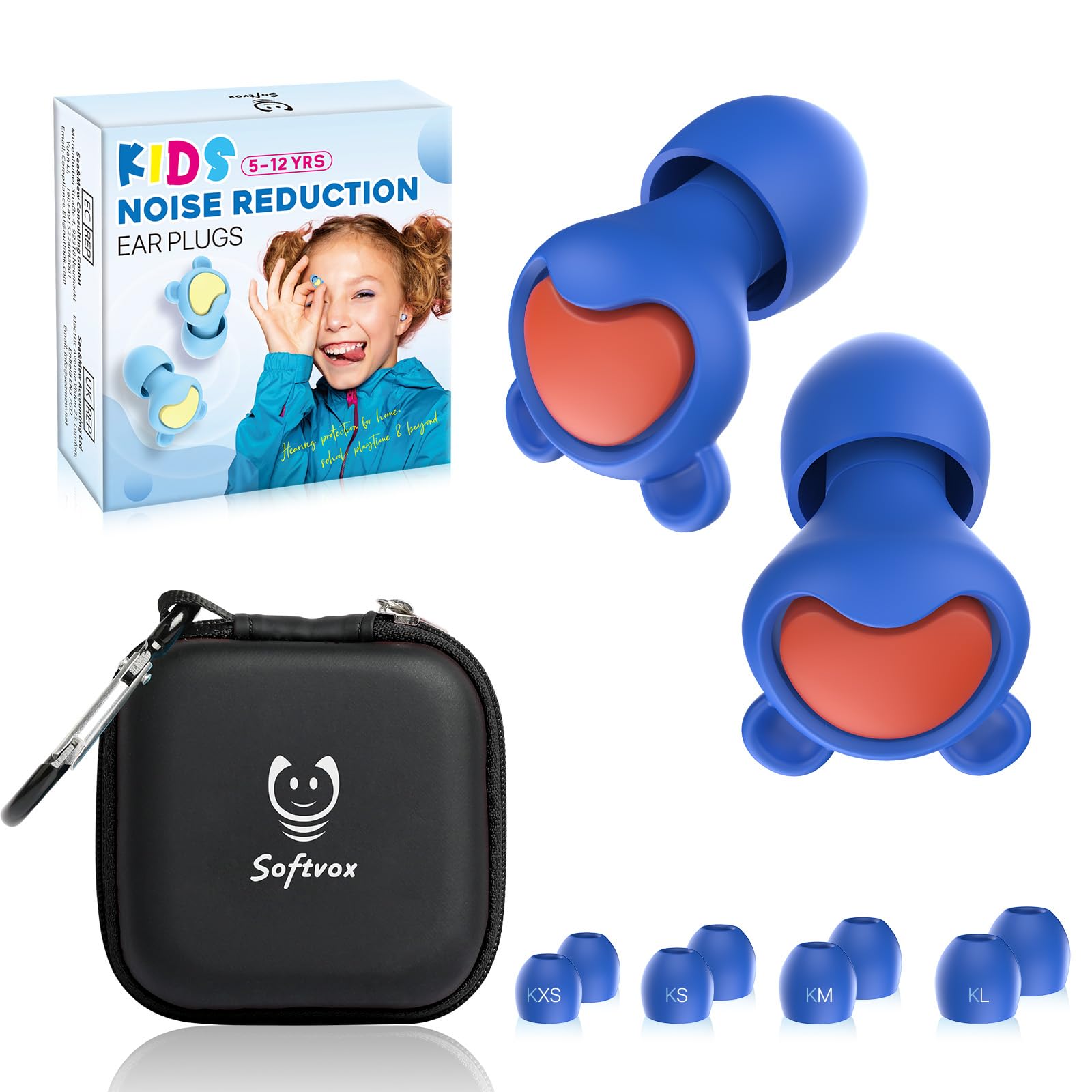
This is the pick for a household where more than one pair of small ears needs covering. The set ships with four silicone tip sizes — KXS, KS, KM and KL, running extra small up to large — so a six-year-old and a narrow-canal adult can each end up with the tip that actually seals. The protection level is 26dB, a step gentler than the 33dB HeyFir plugs on this list, which suits loud school buses and birthday parties more than deep snoring.
Parents report that sound-sensitive kids tolerate these without pulling them out. Parents describe kids who reject other earbuds wearing these on the bus or at loud events, with a carry case and clip included. The silicone body is what makes that possible — it is soft enough to sit without the ear-touch protest that harder tips trigger.
The honest catch is a small one but worth naming: the kit is advertised with a lanyard, and some sets have arrived without it in the box. The plugs themselves still work; it is a packaging gap, not a fit problem. If you specifically need the lanyard to keep a child’s pair on a backpack, check the contents on arrival.
Fit flexibility first: four tip sizes in one kit is the whole reason to buy here. It lets you size up or down without buying a second product.
The trade-off: a 26dB rating is deliberately lighter than the 33dB offered by the HeyFir set — that is a plus for a child who needs to still hear instructions, and a minus if your goal is total snoring blackout.
Go with this: for kids aged six to twelve, or an adult with a genuinely small canal who wants to try several tip sizes before committing.
Pass on it: if your only job is silencing a loud sleeper — the lower rating leaves more sound in.
3. HeyFir Noise Cancelling Ear Plugs Sleep

An extra-small silicone tip that stays put even when you roll onto your side.
Start with the number: 33dB is the highest Noise Reduction Rating in this group, and it comes from a one-piece silicone body rather than foam. That one-piece build is the real point for side sleepers — there are no separate tips to detach and leave behind in your canal, and the flexible shape presses into the pillow instead of digging in. The set arrives with four pairs covering XS, S, M and L, so an extra-small canal gets its own dedicated tip.
You also get a compact case that fits a pocket or a carry-on, and the silicone is latex-free and washable with mild soap and warm water. That makes it a reusable alternative to throwing away foam every few nights. For a tight budget and a genuine small canal, the XS pair is the entry point.
The catch sits with noise blocking, and it is worth being straight about it. The advertised rating is 33dB, but real-world results are mixed — some sleepers find the small tips fantastic, others find the seal leaks and sound gets through. Reviewers with very small canals praise the XS tip for finally fitting without falling out. If your canal is average rather than truly small, the XS tip may not seal and you will notice the difference.
Why side sleepers like it: the flexible one-piece silicone bends with your ear against the pillow, and the included XS tip targets exactly the small-canal buyer this list is about.
What to expect honestly: the 33dB is the top rating here, but the seal quality depends heavily on tip size — the wrong tip size will not deliver it.
One more thing: the plugs are water-resistant but not meant for swimming or showering, so keep them dry.
Best matched to: a genuine XS canal, a side-sleeping habit and a lean budget all in one buyer.
Look elsewhere if: your canal is closer to average and you need the seal to hold without fiddling.
4. EarPeace Sleep Earplugs Small Size
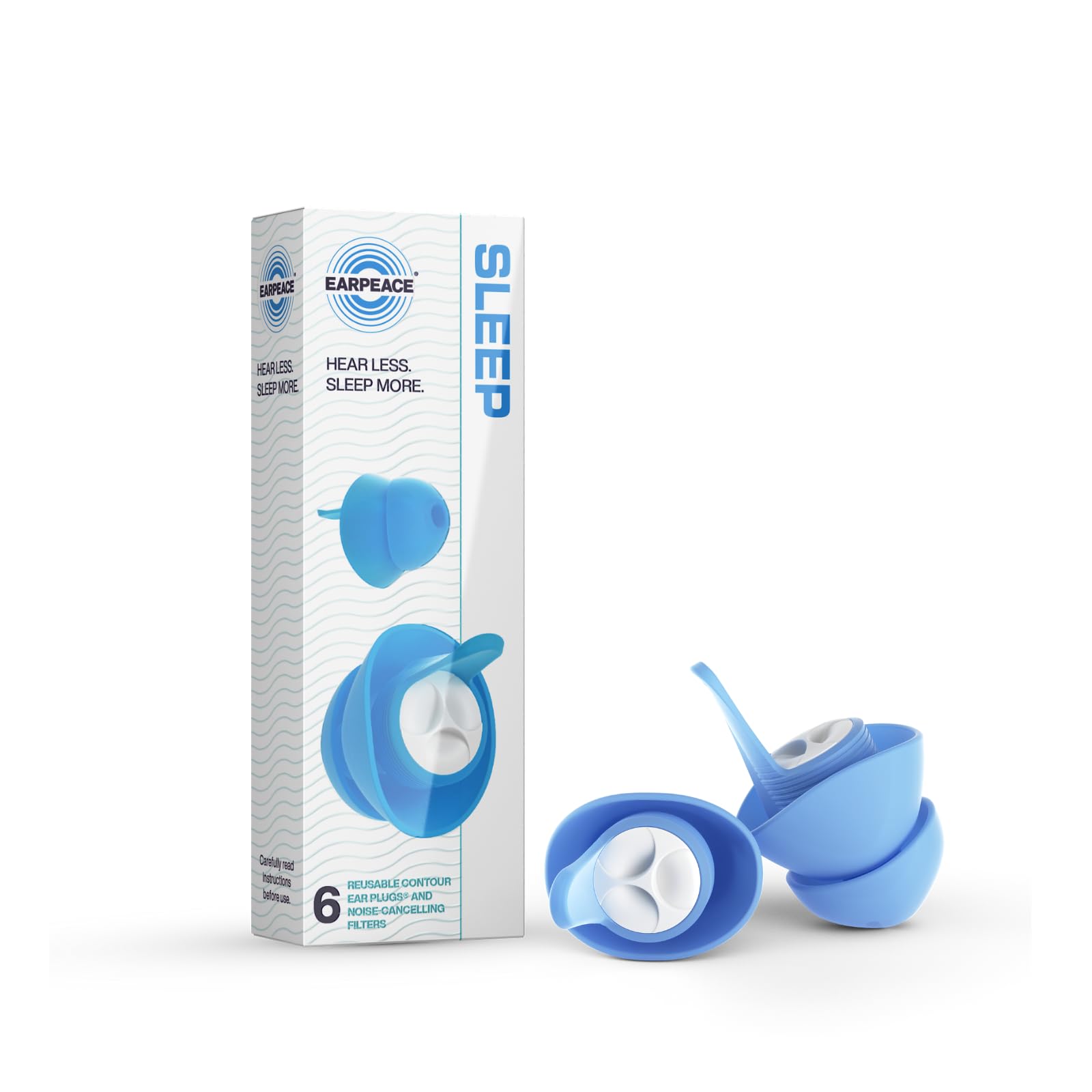
A low-profile silicone plug for people who want to hear an alarm, not silence.
The distinguishing spec here is the “up to 30dB” wording, and it is honest: these are noise-reduction plugs, not a mute button. You still hear the room, just at a lower volume — which is exactly what you want if you need to catch an alarm or a child in the night. The Small size option is the reason it belongs here, and the pack carries three sets, six plugs in total, so you have a spare pair while one is drying.
Buyers praise these most for cutting a partner’s snoring without the sealed-off vacuum feeling. The plugs draw the most praise for how well they cut a partner’s snoring without the full earplug vacuum feeling. They are also washable and reusable, which suits anyone who wants one pair they keep rather than a disposable routine.
Comfort is where results split. Some sleepers wear them for hours with no slippage; others find the seal traps moisture or the fit wrong for their canal. A small number notice their own breathing and heartbeat louder, which is normal for any plug that seals well. The small size helps, but canal shape still varies — worth knowing before you commit to a whole pack.
Leading strength: a low-profile silicone shape that keeps an alarm audible while cutting snoring, in a genuinely Small size.
The honest limit: the 30dB figure is a maximum, and the actual reduction depends on how well the small tip seals your particular canal.
The one to choose: if you want washable plugs, an audible alarm, and a low-profile fit that does not press hard when you lie on your side.
Skip the small here: if you need deep snoring blackout — the lighter rating lets more sound through than foam at NRR 32.
5. Peace&Quiet PQ Small Ear Plugs 100 Count
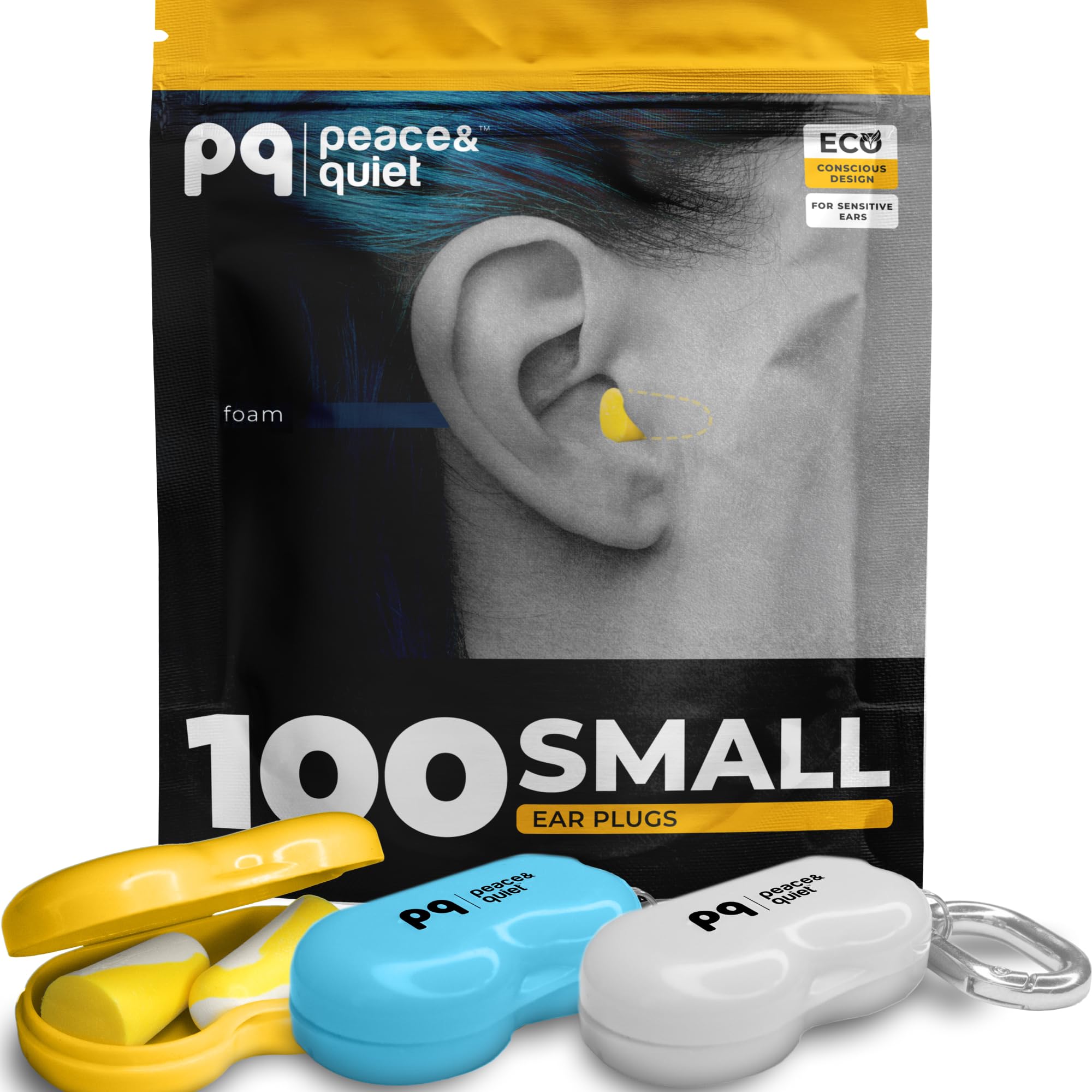
The bulk box built for tiny canals that chew through foam plugs.
The clearest advantage here is the fit, and the math is on your side: 100 compact foam plugs in one box, with a small case thrown in to keep a working pair clean. The foam is described as ultra-soft and high-density, and the stated aim is a snug fit for small canals that does not hurt during long wear. If you have tried standard foam and found it too firm to insert, this petite cut is the alternative.
What fits best about these is the size — the whole design brief is a smaller foam plug for narrower passages. Reviewers most often note that they sit comfortably without the canal-wall pressure of a full-size plug. Insertion technique matters though: roll the plug, pull the top of your ear up and out, then press and let it expand. Owners who do this get a better seal than those who just push them in.
Set expectations on noise reduction: the box does not advertise a decibel rating, and the feedback reflects that. It cuts household noise well enough for studying and sleep, but it will not vanish a stubborn snorer the way an NRR 32 plug might. A few users report them working loose overnight. For sheer quantity and a soft small-canal feel, this is the tidy budget box.
Where it wins: 100 small foam plugs plus a carry case is the most economical way to keep a fresh pair on hand.
The trade-off: no stated decibel rating, so it is for everyday distraction more than deep snoring relief.
Worth it for: a light sleeper with genuinely tiny canals who wants a big, soft, budget-friendly supply.
Not your pick if: you need a rated, hard-hitting block against loud snoring or machinery.
Know the Specs
Noise Reduction Rating (NRR)
The NRR is a number that estimates how many decibels a plug can reduce when it is inserted correctly — think of it as the plug’s sound-blocking ceiling. A higher figure like 32 or 33 suits snoring and traffic, while a lower figure like 26 suits a child who needs to still hear instructions. The number assumes a proper seal, so a higher-rated plug that leaks can perform worse than a lower-rated one that fits.
Tip Size and Canal Fit
A plug only blocks sound once it seals your canal, which is why small-canal buyers should chase the smallest diameter first and the decibel rating second. Foam plugs expand to fill your own shape, while silicone plugs rely on a fixed moulded tip. If your canal is narrow, an extra-small silicone tip or a petite foam roll is the reliable route to a seal.
Foam vs Silicone
Foam is disposable, soft and moulds to your ear, but it degrades with wax and handling. Silicone is washable under mild soap and warm water, so it lasts far longer, and it is often shaped for side sleepers who press their ear into the pillow. Neither material makes a plug “waterproof” for swimming — most sleep plugs are for dry wear only.
Side-Sleeper Shape
When you lie on your side, a stiff or deep plug drives into the canal wall. Low-profile and one-piece silicone designs spread that pressure instead of concentrating it, which is the main reason side sleepers get sore ears with standard foam but not with these shapes. A shape that sits flush to the ear also tends to fall out less overnight.
Common Questions
How do I know if I actually have small ear canals?
Can kids use adult small earplugs?
Will a higher NRR plug always block more snoring?
How often should I replace foam earplugs?
Are reusable silicone earplugs better than foam for small ears?
Can I sleep with earplugs in and still hear my alarm?
Why do earplugs fall out of small ears overnight?
Is it safe to wear earplugs every night?
What is the difference between an NRR rating and a dB rating on the box?
Do small earplugs work for side sleepers with narrow canals?
The Bottom Line
The safest buy for most small-eared sleepers is the HEAROS Sleep Pretty in Pink, because it pairs a genuine NRR 32 with petite foam and 56 pairs in one box. If you need plugs that last and still let an alarm through, the EarPeace Sleep Earplugs in Small size give you a washable, low-profile option. And if the priority is sheer quantity for genuinely tiny canals, the Peace&Quiet PQ Small Ear Plugs deliver 100 soft plugs in one go. Whichever you choose, remember that fit decides everything — a plug that seals your canal beats a higher rating that leaks.
How we choose
We do not accept paid placement. Every pick is matched to a real buyer and a real use-case; we do not hands-on test units.
Sources
Specifications: manufacturer listings and product documentation. Review insights: verified customer reviews, as of October 2026. Pricing: not shown on this page (it changes often); check the current price via the retailer link.
As an Amazon Associate, Aappliancez earns from qualifying purchases. This does not affect which products we feature.