Disclosure: Some links in this post are affiliate links. As an Amazon Associate I earn from qualifying purchases, at no extra cost to you. Learn more
Specs are compiled from manufacturer listings and verified buyer reviews and can change over time — please confirm the key details on the product page before buying.
Sensory overload hits in the supermarket aisle, on the bus, at a family dinner — not at a convenient moment. The right earplugs for autistic adults lower the volume without sealing you into silence, so you can stay in the room. The honest answer up front: for most people the Dison 200Pairs Foam Ear Plugs are the safest, cheapest way to test what your ears tolerate, while the Loop Quiet 2 is the pick if you want one reusable pair with four ear tip sizes to dial in fit.
This guide is built by comparing the manufacturers’ published specifications and the patterns across verified customer reviews, so you get each pick’s real strengths and trade-offs instead of marketing spin.
Below you will find the practical differences between foam, moldable silicone, and adjustable reusable plugs, plus which ones actually stay put overnight. This breakdown of the earplugs for autistic adults covers fit, seal, and comfort so you can pick with confidence.
Top Picks

How To Choose The Best Earplugs for Autistic Adults
The mistake most first-time buyers make is chasing the biggest reduction number on the box. For sensory sensitivity, a plug that cuts too much can feel disorienting — you lose the warning sounds you rely on and the seal starts to feel like pressure. What you actually want is control: enough muffling to take the edge off, in a shape your ear will tolerate for hours.
Start with the material, not the decibels
Foam expands inside the canal, which gives a strong seal but can feel tight after an hour. Moldable silicone sits at the ear opening and molds to your shape — softer, but it leaves residue and picks up lint. Reusable silicone with interchangeable tips is the middle path: you swap tips until the seal feels right rather than forcing one size.
Check the reduction rating and what it is measured against
SNR (Single Number Rating) and NRR (Noise Reduction Rating) both describe how much sound the plug removes, but they are different scales, so do not compare a 35 dB SNR directly against a 22 dB NRR. Higher numbers mean more blocking, not more comfort. A 14–35 dB range on an adjustable plug lets you choose the lighter setting on a bad day.
Think about when you will wear them
Sleep is the hardest test: side-sleepers need a plug that does not press into the pillow or slide out overnight. For daytime focus, a plug that still lets speech through is often more useful than total silence, because you can hear someone ask a question without pulling them out.
Side-by-Side Comparison
| Model | Best For | Reduction Rating | Pairs Included | Reusable | Amazon |
|---|---|---|---|---|---|
| Dison 200Pairs Foam Ear Plugs★ Best Overall | Testing what your ears tolerate | SNR 35 dB | 200 pairs | No — disposable | Amazon |
| Eargasm SquishiesBest for Sleep | Side sleepers and swimmers | NRR 22 dB | 8 pairs | Yes — moldable | Amazon |
| Adjustable Ear Plugs (3-Mode) | Changing noise levels through the day | SNR 14–35 dB | 1 pair | Yes — silicone | Amazon |
| Yawsoy High Fidelity 2-Pack | Concerts and loud events | Up to 20 dB | 2 pairs | Yes — silicone | Amazon |
| Loop Quiet 2 | All-night sleep and focus | Up to 24 dB (SNR) | 1 pair | Yes — silicone | Amazon |
Detailed Reviews
1. Dison 200Pairs Foam Ear Plugs for Sleeping, 32dB, Green
Our pick — 4.5+★ from 950+ verified ratings; the strongest balance of quality and price.
Two hundred sealed pairs of foam — the lowest-stakes way to find out what your ears will accept.
If you have never worn earplugs for a full day, buying one expensive reusable pair is a gamble. This box removes the gamble. You get 200 pairs of foam plugs, each in its own wrapper, rated at an SNR of 35 dB (Single Number Rating — a measure of how much sound the plug removes). That is the highest reduction figure on this list, which matters when the goal is muffling a busy street or a loud office rather than fine-tuning it.
The individual wrapping is the quiet hero here. A pair lives in a coat pocket, a school bag, a car glovebox, and stays clean until you open it — so there is always a backup when a meltdown starts somewhere you did not plan for. The box itself has an open front and a pop-out bottom dispenser, so grabbing a pair takes one motion instead of digging. With 12.31 ounces of plugs in the box, it is a bulk item, not a pocket item — it lives on a shelf at home and you carry pairs out of it.
Reviewers consistently rate the plugs’ quality first and their effectiveness second. The consensus in the review pages is quality first, effectiveness a close second, and the practical detail that stands out is durability of supply: as one long-term buyer put it, “I wear these five days a week, and I am ordering my third box!” Others report dulling noise noticeably rather than erasing it entirely — a difference you feel the moment you pull one out.
The trade-off is honest and worth knowing before you buy. Foam expands inside the ear canal, which is exactly what creates the seal, but that pressure is the thing some sensitive ears object to after an hour. Some buyers also find the reduction lighter than the 35 dB figure suggests against speech and sharp sounds. If you need something you can wear for a whole night without noticing it, a silicone plug suits you better — the Loop Quiet 2 below is the one to look at.
Where the Dison box earns its place
- SNR 35 dB — the strongest reduction rating in this lineup
- 200 pairs, each individually wrapped, so a clean spare is always within reach
- Pop-out bottom dispenser makes grabbing a pair a one-handed job
- Lets you test different insertion depths and roll techniques without wasting money
What to weigh before you commit
- Foam expansion creates canal pressure that sensitive ears may notice
- Disposable — you will go through them, unlike the reusable picks
- Blocks sound well but does not erase loud speech or sharp high noises
Go for this if: you want a low-commitment supply to experiment with, or you need spares stashed in several places at once.
Think twice if: you need one plug you can wear all night, every night — the expanding foam is the part your ears will complain about.
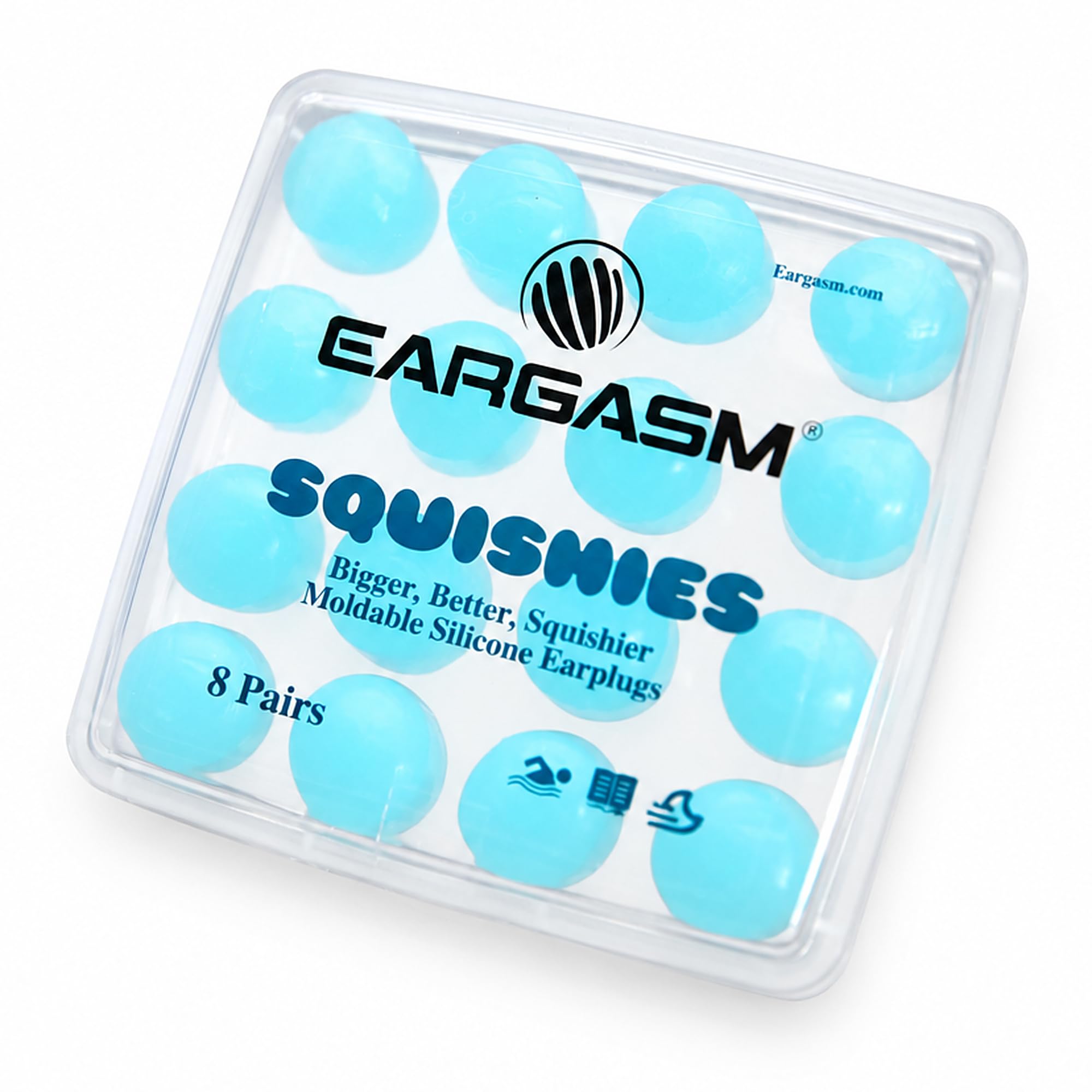
2. Eargasm Squishies — Blue Moldable Multipurpose Earplugs
No canal pressure, no expanding foam — just soft silicone you press over the ear opening.
For a side-sleeper, the enemy is pressure. A plug that pushes against the pillow and jams deeper into the canal is the reason a lot of people give up on earplugs entirely. Squishies sidestep that by working differently: you roll the moldable silicone into a ball and press it over the ear opening rather than shoving anything down the canal. The rating is NRR 22 dB (Noise Reduction Rating — a different scale from SNR, so do not line it up against the 35 dB figure on the Dison box).
Each plug carries 50% more moldable silicone than many competing brands, so there is more material to work with per ear. Each plug is 50% larger than many competing moldable brands, so there is more material to work with per ear. Smaller ear canals are not locked out — the silicone breaks apart cleanly, and one route buyers take is snapping off roughly a third and splitting it between both ears. Eight pairs come in the box, plus a sealed carry case that keeps dust and pocket lint off the material between uses.
Reviewers mention comfort most often, then all-night wear. The recurring scene is the same: plugs that stay in all night, block the garbage truck and the neighbour’s gate, and do not leave the ear aching by morning. The waterproof, airtight seal is the bonus — the same plug that muffles a snoring room also keeps water out of the canal in the pool.
Here is the catch, and it is a tactile one rather than a performance one. Fresh moldable silicone is sticky enough to cling to fingers on insertion, and it leaves residue on fabric — pillowcases and hair are the usual casualties, and blue marks are a known annoyance. It also picks up hair and fibres as it ages. Plan on replacing a pair roughly every few days to a week of clean-ear use, and keep a dedicated spot for the case so the plugs stay clean.
The sleep case: moldable silicone that presses over the opening instead of into the canal is the shape that side-sleepers tend to keep wearing, and the 50% larger size gives small ears material to trim down rather than a plug that is simply too big.
The mess factor: sticky residue on pillowcases and hair is the honest cost of the moldable format — it is a handling quirk, not a failure of the seal.
Reach for these if: you sleep on your side, swim, or find that foam’s expanding pressure is what makes you take plugs out at 2 a.m.
Look elsewhere if: you cannot tolerate anything tacky near your skin or your bedding.
3. Adjustable Ear Plugs
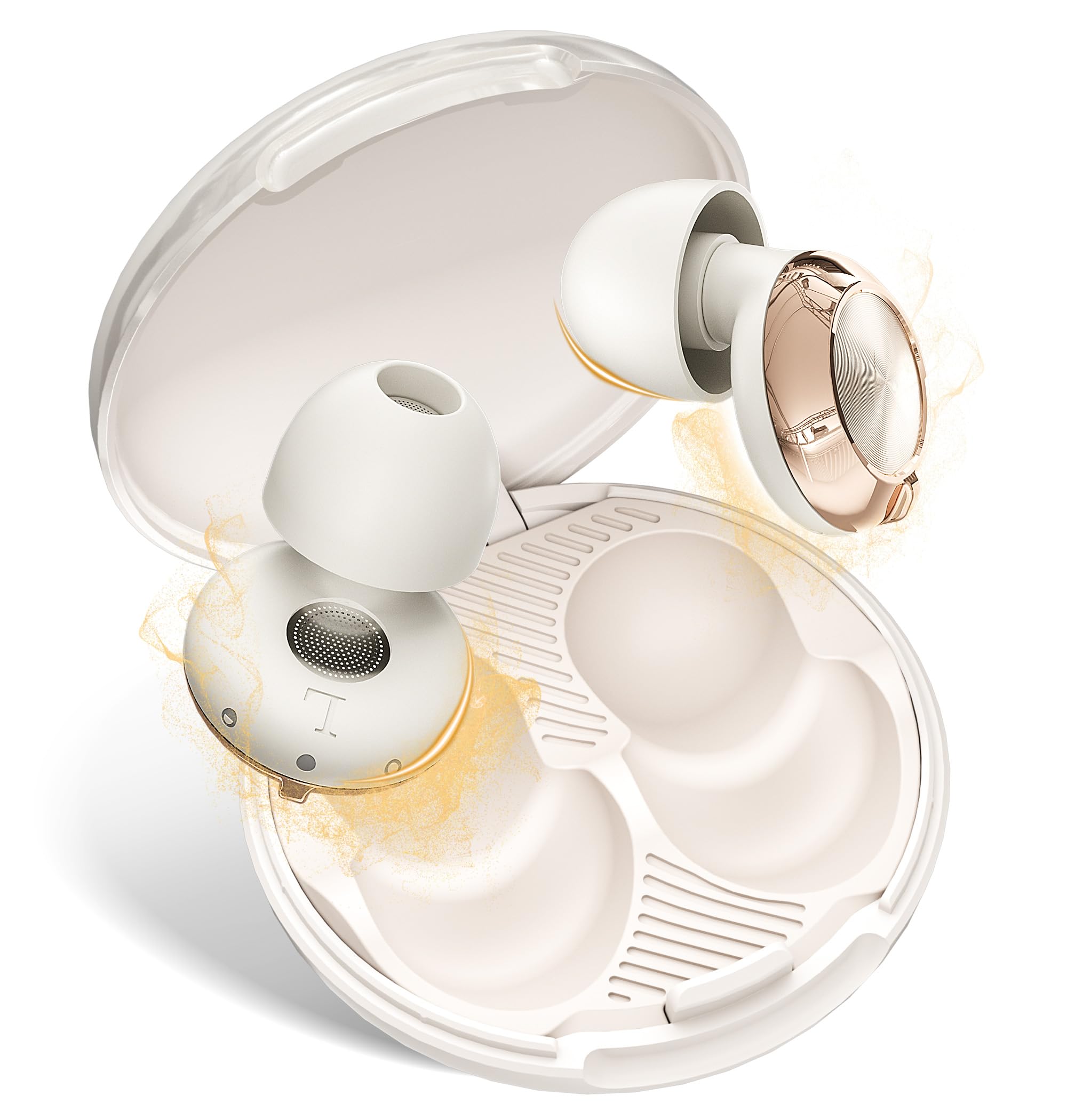
One pair, three levels of quiet — the plug you switch rather than swap.
Sensory needs change hour to hour. A classroom might need the heavy setting; a quiet café might only need the edge taken off. This pair is built around that idea: High, Medium and Low modes let you change how much sound gets through without taking the plug out and reaching for a different set. The published range runs from 14 dB to 35 dB SNR, so the lightest setting and the heaviest setting are meaningfully different experiences.
The body is flexible silicone rather than foam, which is the important structural choice. Foam expands and pushes outward against the canal wall; silicone holds its shape and seals by molding to your ear instead. That is why the maker positions it for hours of wear without the pressure build-up, and why the universal fit is meant to hold a seal without the plug working its way loose. The kit includes a carrying case and multiple bud sizes, so you are not stuck with one diameter.
Owners who wear them for long stretches describe exactly that — a plug that takes harshness out of household noise without cutting the room off entirely, and a fit that holds through a workday. One factory-floor buyer found the reduction substantial without being total. And the mode switch earns its keep: the adjustable setting is the feature buyers single out as the reason the pair stayed in rotation. As one buyer put it after using theirs for a while, “The adjustable mode was super helpful, only wish the case was sturdier.”
That case is the weak link, and it is worth taking seriously because a lost plug is a lost pair. The lid opens more easily than it should, and more than one owner has lost the plugs out of it. Treat the case as a pouch rather than armour — a small zip bag does the job. Separately, this is a light-reduction tool at its lower setting, not a silencer: snoring in a shared room is outside what the medium and low modes will handle.
Why the modes matter: 14–35 dB SNR in one pair means you can go heavy for a crowd and light for a quiet office without carrying two sets — a practical advantage the fixed-reduction picks above and below do not offer.
The weak point: the case opens too readily and plugs go missing; a sturdier pouch solves it.
Best match for: anyone whose noise exposure swings between loud and mild in a single day, and who wants one pair to cover both.
Not the one for: you if you need serious blocking against snoring or machinery at the lowest setting.
4. Yawsoy High Fidelity Concert Ear Plugs 2-Pack
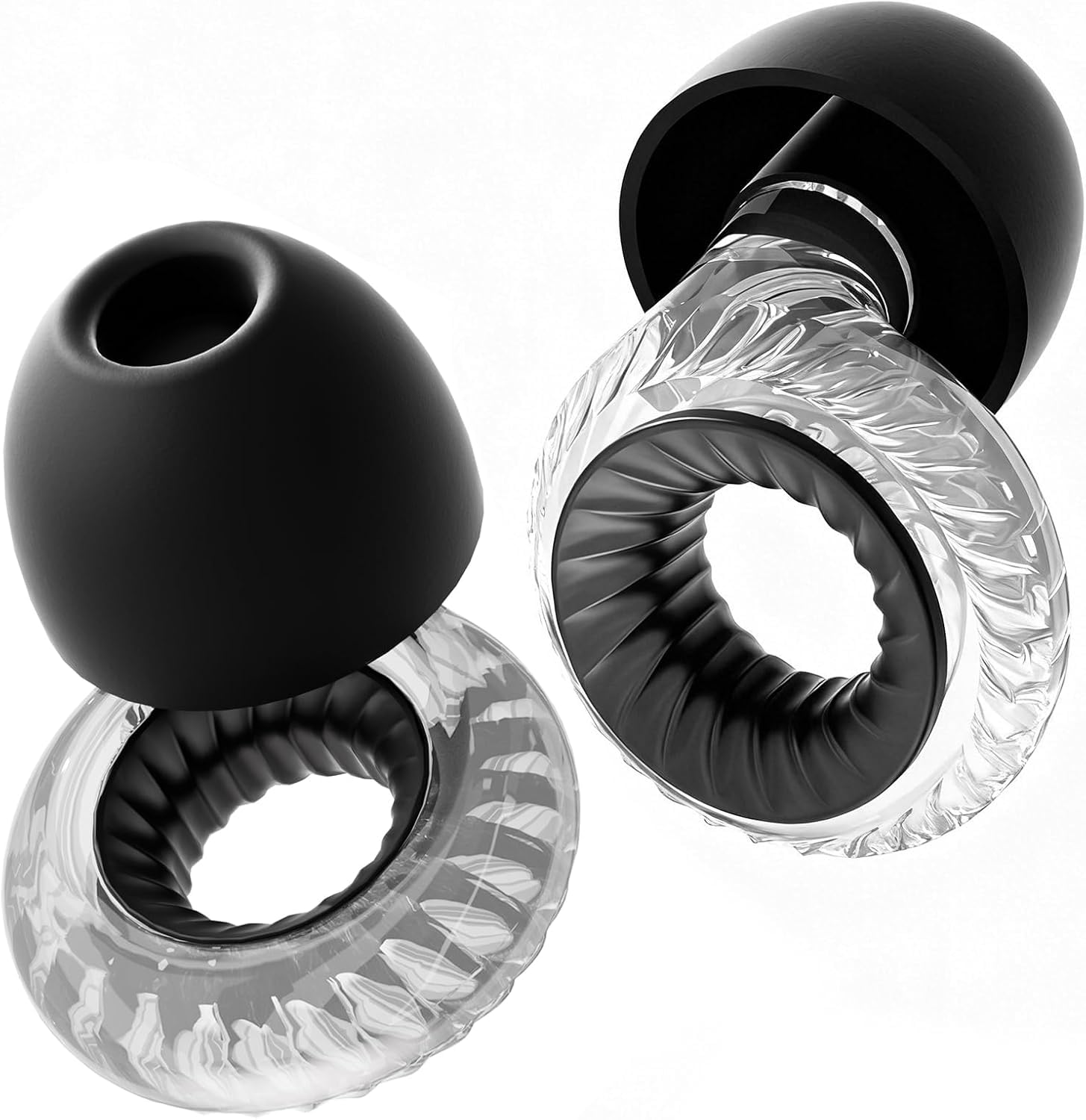
Plugs that turn the volume down instead of pulling the plug on the music.
Some situations need muffling and some need filtering. A concert, a wedding, a busy restaurant — you want the harshness gone but the voices still there. Yawsoy takes the filtering route with acoustic mesh that is designed to cut harmful frequencies while leaving the sound intact, rated for up to 20 dB of protection. That is a lighter reduction than the Dison foam’s 35 dB SNR, and deliberately so: the point is to stay in the moment rather than exit it.
The kit is the practical argument. You get two complete pairs, six pairs of interchangeable eartips in small, medium and large, and a storage case with a lanyard you can clip to a bag. Two pairs means one for you and one for whoever you bring — which is exactly how these get used in practice, with the second set passed to a friend or family member at the door. The soft silicone eartips are built to stay flexible through a long night of moving around, and the reinforced shape is meant to hold position without constant re-seating.
Concert reviews describe no ringing ears on the drive home and clearer, not muddier, music with the plugs in. No ringing ears on the drive home. Music that sounds clearer, not muddier, with the plugs in. A fit that holds for a full show without aching, even in smaller ears, and comfort that survives sweating in a crowd. The clip-on case gets its own share of appreciation because it stays attached to a bag rather than vanishing into a pocket.
Be clear-eyed about what this is not. Twenty decibels of filtering is the wrong tool for blocking a snoring partner or a leaf blower — for that, foam or a high-reduction silicone plug does the job. A small number of buyers also find the filtering too light to register at all. If your goal is silence rather than better sound, this pair will disappoint; if your goal is staying at the event without your ears ringing afterward, it delivers.
The event-night case
- Acoustic mesh filtering keeps music and speech audible while cutting harshness
- Two pairs plus six eartip sets in S/M/L — one for you, one to share
- Clip-on lanyard case that stays with your bag instead of getting lost
- Soft silicone eartips designed to stay comfortable through a long, sweaty show
Its honest limits
- Up to 20 dB is light reduction — not a sleep or machinery plug
- A minority of buyers find the filtering too subtle to notice
The right call when: the plan is a gig, a festival, a wedding or a loud restaurant and you want to hear the room, just not at full force.
Skip these for: overnight sleep or blocking a snorer — the filtering design is not built for that job.
5. Loop Quiet 2 Ear Plugs

Four ear tip sizes in one box — the fit is the feature, not an afterthought.
Most earplugs give you one size and hope. Loop Quiet 2 ships with four sets of ear tips — XS, S, M and L, with M pre-installed — because the seal is what determines whether a plug works at all. A plug that fits badly leaks sound and slides out overnight; the same plug in the right tip does neither. It is rated up to 24 dB (SNR) in flexible silicone, and the maker states the plugs are certified hearing protection and should not stick out when inserted correctly.
The shape is built around sleep. Lightweight, flexible silicone and a low profile mean side-sleepers can lie on it without the plug digging into the pillow, and the four sizes cover smaller ears that standard plugs leave out. Cleaning is a rinse and a dry, and a carry case comes in the box alongside the spare tips. That combination — reusable, washable, sized — is what separates it from the disposable box at the top of this list.
Sleep reviewers single out waking up without sore ears. The recurring theme across the review pages is that the plug stays comfortable through the night and takes the sharpness out of background noise — upstairs neighbours, traffic, a droning appliance — while leaving enough awareness that a smoke alarm or a voice still registers. It is also small enough to disappear in a bag for travel.
Fit is where opinions split: the small tip can lose its seal when side-lying while the large holds snug, so the size you pick matters more than the plug. Some people find the small tip loses its seal when lying on their side, while the large holds snug — so getting the tip right is not optional, it is the whole job. A few also find that very high-pitched sounds cut through more than low hums. This is a premium price for a pair, and the honest note is that the Dison box has far more total ratings behind it while this one carries the higher star score. Neither fact should decide it for you; the fit trial should.
The size advantage: four tip sets (XS through L) in one box is the most thorough fit system here, and for an autistic adult whose comfort threshold is low, that is the spec that does the most work.
One caution: the plug is only as good as the tip you settle on — test every size before you judge it, because the wrong one will slide out at night.
Worth it for: all-night wearers and side-sleepers who want one reusable pair with enough tip sizes to actually find a seal.
Consider the Eargasm instead if: foam or canal-inserted plugs are the thing your ears reject — the moldable format sidesteps that entirely.
Know the Specs
SNR versus NRR
Both are single numbers describing how much sound a plug removes, but they are measured on different scales — so a 35 dB SNR plug and a 22 dB NRR plug cannot be compared directly. Use each figure only within its own listing to judge relative blocking. For sensory use, remember that a higher number means more isolation, which is not always more comfortable.
Foam versus silicone
Foam expands inside the ear canal to create the seal, which blocks a lot but generates pressure over time. Silicone holds its shape and seals at the opening or with a soft tip, which sensitive ears usually tolerate longer. Moldable silicone sits between the two: it molds to the outer ear with no canal intrusion, but leaves residue and needs replacing more often.
Ear tip sizing
Seal comes from the tip, not the body of the plug. A tip that is too small leaks sound and slips out overnight; too large feels tight. Reusable plugs that ship with several tip sizes let you keep testing until the seal holds without pressure — which is why the four-size kit on the Loop Quiet 2 matters more than its reduction figure.
Adjustable noise modes
Some reusable plugs let you switch between reduction levels rather than change plugs. A wide range — like 14–35 dB SNR — means you can use the heavy setting in a crowd and the light one in a quiet room. It is a flexibility feature, not a power feature: even the top setting on an adjustable plug may not match a heavy foam plug for total blocking.
Common Questions
Are foam or silicone earplugs better for noise sensitivity?
Will earplugs block out a snoring partner completely?
How do I know which ear tip size I need?
Can I wear reusable earplugs every night?
What does SNR 35 dB actually mean in real life?
Is it safe to wear earplugs overnight while sleeping?
Do high-fidelity earplugs muffle music?
How often should I replace moldable silicone earplugs?
Can I still hear an alarm or someone talking with earplugs in?
The Bottom Line
For most people starting out with the earplugs for autistic adults shortlist, the Dison 200Pairs Foam Ear Plugs is the sensible first buy because 200 individually wrapped pairs let you find your insertion technique and your tolerance without risking much — and the SNR 35 dB rating is the strongest blocking here. If sleeping is the priority, the Loop Quiet 2 is the one to reach for: four ear tip sizes and up to 24 dB SNR in a shape built for side-sleepers. And for events where you still want to hear the music, the Yawsoy 2-Pack filters rather than blocks, with a spare pair to hand to whoever came with you.
How we choose
We do not accept paid placement. Every pick is matched to a real buyer and a real use-case; we do not hands-on test units.
Sources
Specifications: manufacturer listings and product documentation. Review insights: verified customer reviews, as of October 2026. Pricing: not shown on this page (it changes often); check the current price via the retailer link.
As an Amazon Associate, Aappliancez earns from qualifying purchases. This does not affect which products we feature.