Disclosure: Some links in this post are affiliate links. As an Amazon Associate I earn from qualifying purchases, at no extra cost to you. Learn more
Specs are compiled from manufacturer listings and verified buyer reviews and can change over time — please confirm the key details on the product page before buying.
If your ears ring in a quiet room, the fix is rarely more volume — it is the right steady sound at the right level, delivered comfortably for hours. That is why the shortlist below mixes two very different tools: open-ear earbuds you can wear all day, and dedicated masking devices built around continuous overnight playback. Choose by when your ringing peaks — daytime wear or overnight masking — not by which box lists the most sounds.
This guide is built by comparing the manufacturers’ published specifications and the patterns across verified customer reviews, so you get each pick’s real strengths and trade-offs instead of marketing spin.
Ringing that spikes at 3 a.m. calls for a different device than ringing you notice at your desk at noon. Fit, battery runtime, and masking sound selection change what each device can actually do for you. All-day wear and overnight masking are two different jobs, so match the device to the hours your ringing is loudest.
Top Picks
How To Choose The Best Earbuds for Tinnitus
The first thing to settle is when the ringing gets loudest for you. Daytime wear calls for something light enough to forget and open enough to keep you aware. Night-time masking calls for a device that can run for hours without a recharge and hold a steady, low-level sound. Those are two different shopping lists.
Open-ear versus sealed in-ear fit
An open-ear design rests outside the ear canal and lets air through, so you stay aware of traffic, doorbells and conversation while soft sound plays. Sealed in-ear tips push sound directly into the canal, which blocks more outside noise but can feel stuffy after an hour. If you plan to wear the device from morning to evening, open-ear comfort usually wins. If you need to shut out a noisy room, the sealed fit does more work.
Total playtime versus single-charge runtime
Manufacturers quote two very different battery numbers, and mixing them up is the most common buying mistake. Total playtime counts the charging case, so a device rated at 50 hours may only run 12 hours before it needs to go back in the case. Single-charge runtime is the figure that matters overnight. Check which number you are reading before you decide a device can last until morning.
Sound selection is the real masking tool
Ringing often sits at a high pitch, so a bright, hissy track can sit right on top of it and make things worse rather than better. Lower, steady textures and nature recordings tend to blend over the tone instead of competing with it. More built-in tracks simply give you more chances to find the one that covers your particular pitch. A device with 30 sounds is not automatically better than one with 25 — what counts is whether one of them disappears your ringing.
Controls you can work half-asleep
Physical buttons beat touch panels for anyone adjusting sound in the dark. Touch controls require a precise tap, while a raised button can be found by feel. If you plan to change volume or tracks at 3 a.m., put real weight on this detail — it is the difference between a quiet night and a frustrating one.
Side-by-Side Comparison
| Model | Best For | Form Factor | Stated Playtime | Built-In Sounds | Amazon |
|---|---|---|---|---|---|
| SHOKZ OpenFit Pro★ Best Overall | All-day open-ear wear | Open-ear hook | Up to 50H with case | — | Amazon |
| Sound Oasis BST-150TBedside Standout | Bedside masker and alarm | Speaker clock | 7–16 hours per charge | 30 | Amazon |
| Sound Oasis BST-80-20T | Portable masking on the go | Compact speaker | 12-hour tracks | 25 | Amazon |
| TTQ OTC Hearing Aids | Speech clarity plus Bluetooth | In-ear dome | 18 hours | — | Amazon |
| AXIL XCOR PRO | Loud environments and range days | In-ear tip | 12 hours | — | Amazon |
| Nova iB-Nb-Bra | Simple TV listening | In-ear aid | — | — | Amazon |
| JLab Hear OTC | Budget hearing aid and earbud crossover | Traditional earbud | 10 hours with Bluetooth off | Four hearing modes | Amazon |
Detailed Reviews
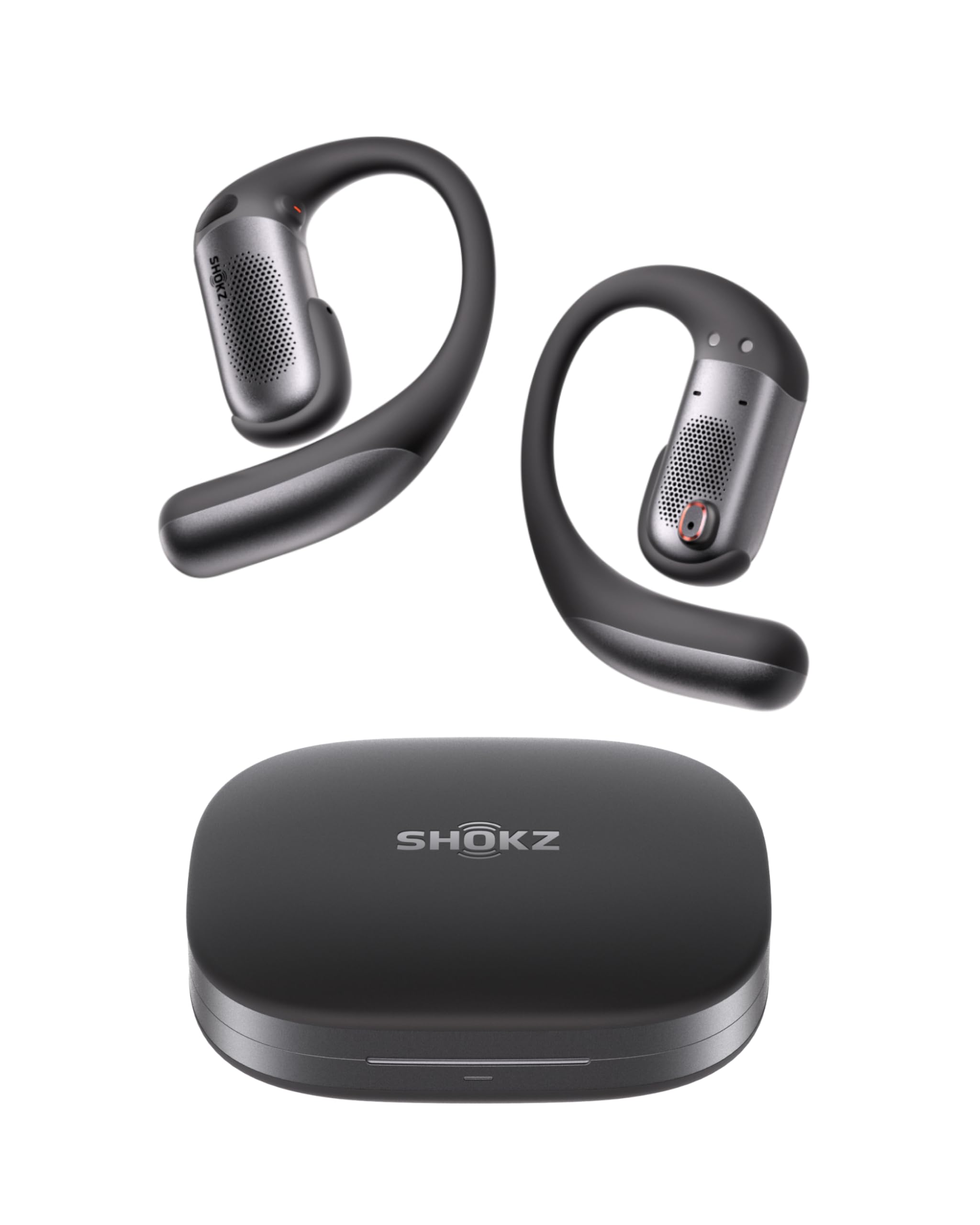
1. SHOKZ OpenFit Pro Open-Ear Earbuds
Our pick — 4.5+★ from 1,000+ verified ratings; the strongest balance of quality and price.
The open-ear hook you can forget about from breakfast to bedtime.
These sit outside your ear canal on flexible nickel-titanium alloy hooks rather than plugging it, so air keeps moving and your ringing never feels trapped behind a sealed tip. The driver is an ultra-large 11 × 20 mm dual-diaphragm unit — a twin-layer speaker that gives soft music real depth instead of thin, scratchy tone. That matters for masking, because a thin, scratchy tone at low volume just adds a second layer of noise over the ring.
Where this pick pulls ahead of the dedicated white-noise boxes is in its day-to-day wearability. It carries Bluetooth 6.1 — the newest version in this lineup, and one step above the 5.3 on the JLab Hear OTC — for a more stable link to your phone or laptop. MultiPoint Pairing holds two devices at once, and the battery is rated at up to 50 hours with the case. Turn noise reduction off and you get up to 12 hours on a single charge, which is enough to carry you through a full workday of quiet background sound.
Sound quality is the most-praised feature in owner reviews of this model, and the dual-diaphragm driver is why. Owners wear it for 16+ hours a day and still call the fit secure through workouts. The catch is the noise reduction itself: it draws mixed reactions, with some hearing an occasional static. Treat that feature as a bonus, not the reason to buy — the open-ear comfort and steady sound are the real story.
What Sells It
- Open-ear hooks let air through, so your ears never feel plugged or pressurized
- Up to 12 hours per charge with noise reduction off, plus up to 50 hours total from the case
- A 10-minute top-up gives up to 4 hours of play — enough to rescue a low battery before bed
- IP55 rating resists sweat, splashes and dust, so daily wear and workouts are fine
Where It Asks Patience
- The noise reduction feature draws mixed reactions, with occasional static reported
- Larger ears may need the included support accessories to dial in the fit
- It is the priciest pick in this lineup, so it is a commitment
Made for: anyone who wants one pair to mask ringing during the day, take calls, and stay aware of what is happening around them.
Think twice if: you want a dedicated bedside machine with a catalogue of built-in nature tracks — this plays your own audio instead.
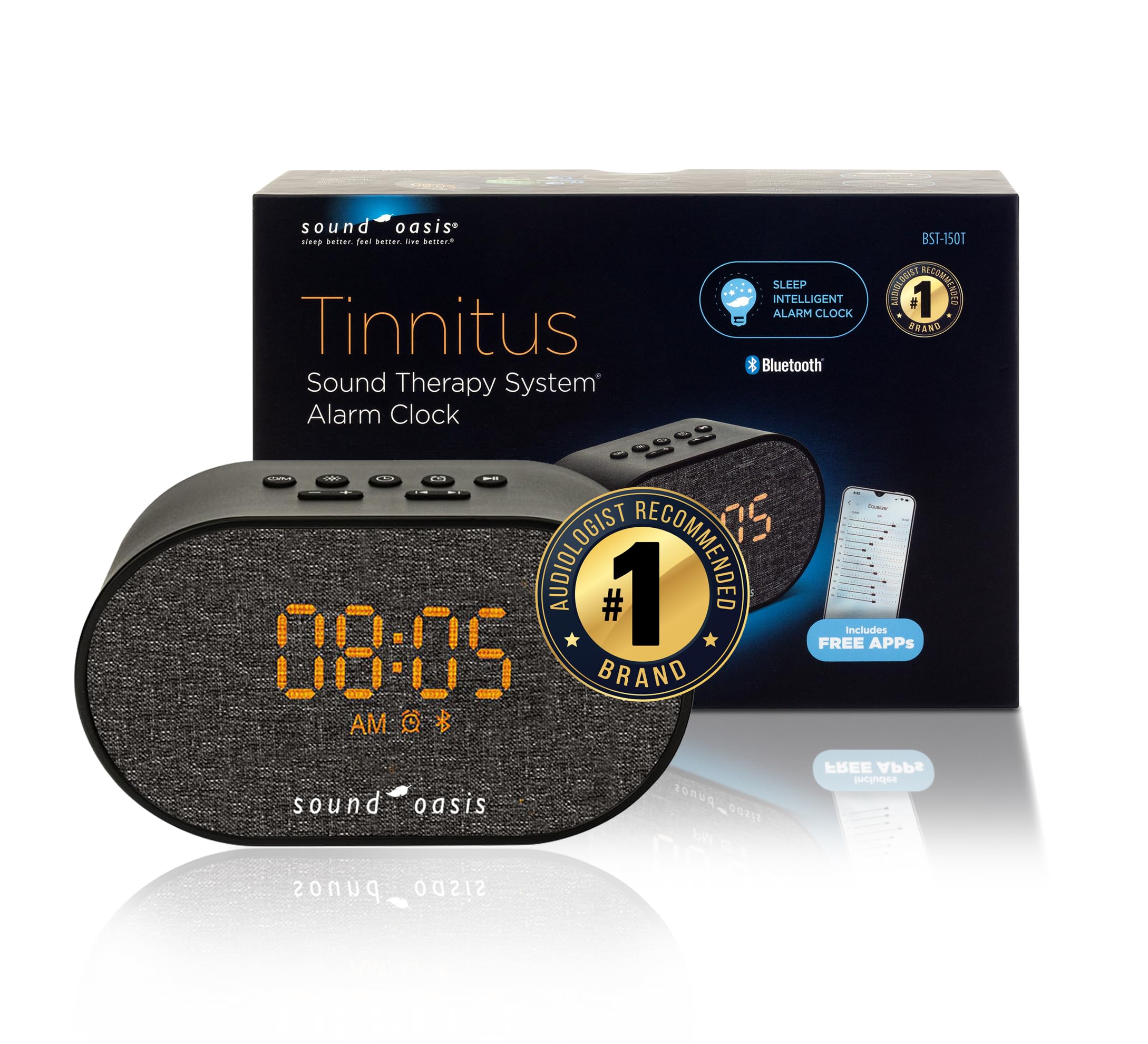
2. Sound Oasis BST-150T Alarm Clock
Thirty masking tracks, a gentle alarm and a dim orange clock built for the nightstand.
This is the device for the person whose ringing gets loudest the moment the lights go out. It holds 30 built-in sounds aimed at pulling your attention away from the tone, and a rear-facing speaker paired with a subwoofer gives those tracks real low-end weight. Low, rumbly sound is exactly what blends over a high-pitched ring rather than fighting it.
The clock side is unusually thoughtful for a masking device. The backlit display runs in 12 or 24 hour format, glows a sleep-friendly orange, and dims across 31 brightness settings including full off — so it will not light up your bedroom. There are 3 alarm sounds and a 30, 60 or 90 minute sleep timer with gradual fade, which lets the masking sound taper off as you drift under rather than cutting out abruptly.
It runs 7 to 16 hours on a charge, and you can keep it plugged in with the included USB-C cable for all-night sessions. The removable sound card is a genuinely different idea: you can buy extra sounds and swap them in when you tire of the originals. What buyers keep returning to is how well the sound masking hides a high-pitched ring, and several describe finally falling asleep without the tone in charge. The honest limit is the track quality — some listeners find a few pre-loaded sounds thin or crackly — so plan on cycling through until you find your two or three keepers.
Nightstand logic: a clock, a masker and a Bluetooth speaker rolled into one 9.4 oz unit that fits a crowded nightstand without a fight.
The fair warning: buttons are not illuminated, so adjusting settings in the dark takes some fumbling at first.
Reach for this if: you want one box on the nightstand that masks the ring, wakes you gently and dims to near-nothing.
Look elsewhere if: you need per-day alarm scheduling — the timer is limited to continuous, 90, 60 or 30 minutes.
3. Sound Oasis BST-80-20T

A pocket-sized sound box that runs long tracks instead of looping short clips.
The number that defines this unit is 12 — as in 12-hour sound tracks, designed for extended continuous playback with fewer restarts. That is the quiet engineering win for overnight masking: a track that runs all night means no sudden silence at 2 a.m. that jolts your ringing back into focus. It carries 25 built-in masking and relaxation sounds, and Bluetooth lets you stream your own audio from a phone or tablet up to 30 ft away.
Where it separates from the bigger BST-150T clock is portability. This one is a compact rechargeable speaker you can drop in a bag for a hotel room or a relative’s spare bedroom, with the included charging cable for longer bedside sessions. The silicone base ring keeps it from sliding around a nightstand, and it streams EQ adjustments through the Sound Oasis app.
Owner experience here is genuinely split on battery. Some get plenty of life from a charge; others find it runs under two nights and needs a nightly top-up. Set your expectations by plugging it in at home and treating the battery as a travel bonus. Owners single out the cricket track for its high pitch, which sits in the same zone as a lot of tinnitus and covers it well. If your ring is high and thin, that is the track to try first.
Quiet Wins
- 12-hour tracks mean fewer interruptions through the night
- 25 built-in sounds give you a wide range to match your pitch
- Battery or plugged-in power, so it works bedside or on the road
- Compact footprint with a silicone base ring that stays put
Owner Gripes
- The SD card sometimes needs reseating before it plays
- Volume steps feel coarse at the very low end, where masking usually happens
- No display, so you cycle through sounds to find the one you want
Good match for: travellers and light sleepers who want long, unbroken masking tracks in a bag-friendly shell.
Less ideal if: you need a dimmable clock face or an alarm built in — this unit does neither.
4. TTQ OTC Hearing Aids

An amplifier that lifts voices first and lets you stream from your phone.
If your tinnitus comes with hearing loss, masking the ring is only half the job — you also need conversation to come through. The TTQ handles that with a built-in intelligent DSP chip, which is a small processor that picks out the human voice and turns down the room around it. That is different from simply making everything louder, and it is the reason voices sound closer to natural here.
Battery is where this one stands apart from the smaller aids in the lineup: 18 hours of hearing on a 2-hour charge, with overcharge protection so you can leave it on the charger. The charging box adds a dehumidification function that vaporises sweat inside the case, and an LED display shows the box’s remaining power. Six ear domes in different sizes let you find a canal fit, and each aid weighs 0.01 lb — so light you stop noticing it.
Setup is handled through a single button, and the companion app runs a hearing test, then adjusts the levels of different frequency bands automatically. Owners most often praise the build and function, describing the aids as bringing hearing back into daily conversation. The recurring frustration is the fit: unless the dome sits just right, feedback creeps in, and it worsens as you move. In restaurants and large spaces, background clatter gets over-amplified.
Where it earns its place: pairing voice enhancement with Bluetooth streaming and a genuinely long 18-hour run time per charge.
Where it bites: feedback shows up when the dome is not perfectly seated, and noisy rooms remain hard — the aids lift everything, not just the person across the table.
Pick it when: the ring sits alongside real hearing loss and you want clearer speech plus phone streaming from one pair.
Consider an alternative if: your hearing is fine and you only need masking sound — a dedicated masker does that job with less fuss.
5. AXIL XCOR PRO Wireless Bluetooth Earbuds
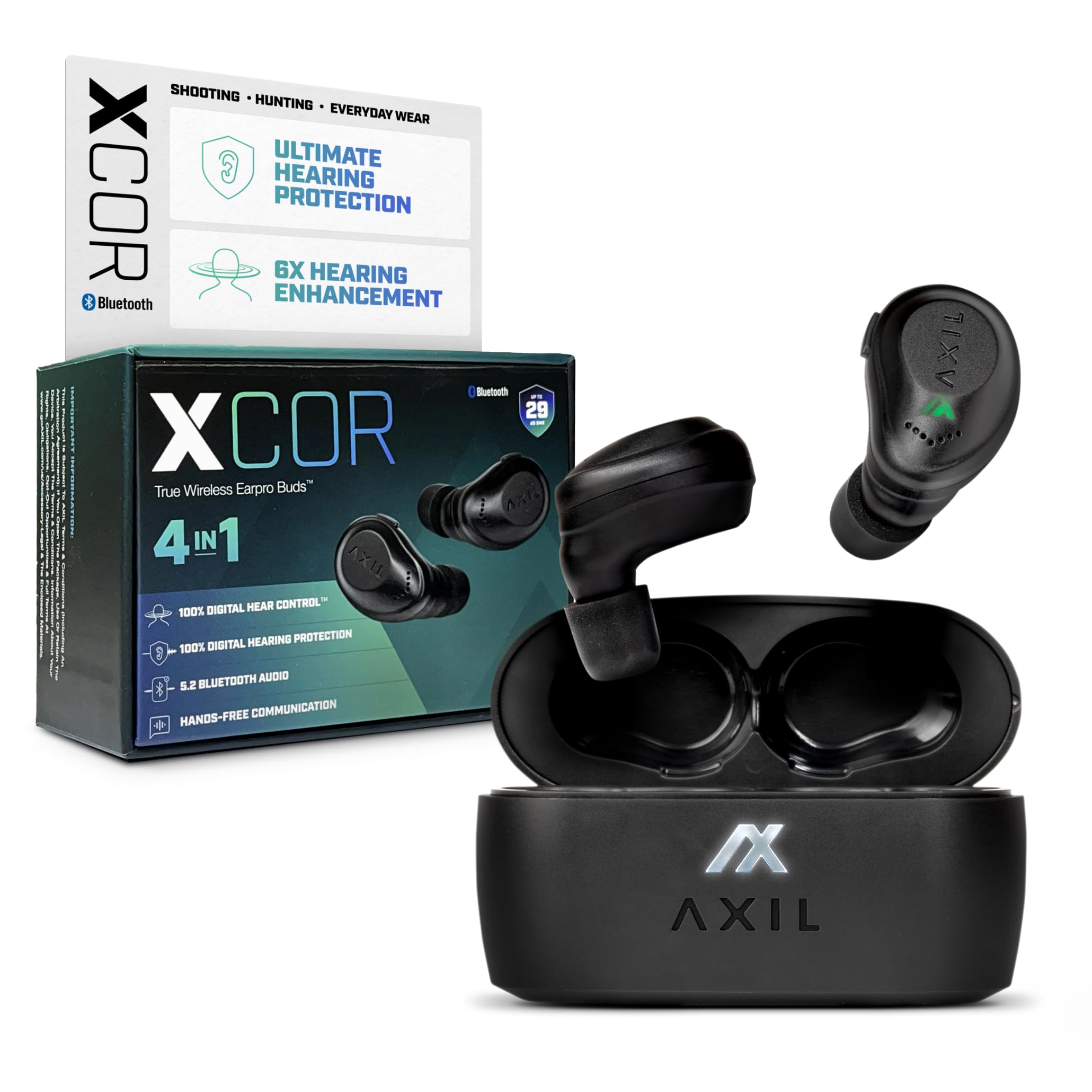
Built for the person whose ears already took a beating at the range or on the job.
Tinnitus often starts with loud noise, so for some buyers the smarter purchase is protection first and enhancement second. These in-ear buds compress loud sounds rather than cutting them off, so a gunshot or a power tool gets squashed while you keep hearing the talk around you. The automatic compression kicks in above 85db, and Bluetooth 4 streams music and calls between sessions.
The battery rating is 12 hours, and the charging case recharges the buds several times over. Multiple tip sizes come in the box, and the magnetic seat in the case holds each bud firmly. In-ear tips seal the canal, which is a very different feel from the open-ear SHOKZ at the top of this list — you will hear less of the room, and more of the sound you chose.
Owners say the sound boost and cut-off work smoothly, so you can talk without pulling the buds out during indoor range days and live conversation. Music quality is fine but not the draw, and the foam tips that block the most noise are the least comfortable. The most-discussed weakness is reliability over time: buyers report power-on failures and occasional dropouts, and long-term battery life is finite. If you need these for daily hearing support, budget for a replacement eventually.
Why It Holds Up
- Compresses loud noise above 85db instead of muting everything
- 12-hour battery with a case that recharges the buds multiple times
- Multiple tip sizes with a secure magnetic seat in the case
- Doubles as a Bluetooth music and call earbud between sessions
Known Limits
- Occasional power-on failures and dropouts over regular use
- Foam tips block the most noise but are the least comfortable
- Microphone quality leaves callers straining to hear you
Best suited to: shooters, tradespeople and anyone protecting ears that already ring from past noise.
Skip the upgrade if: your priority is all-day comfort with awareness — the open-ear hook design does that better.
6. Nova Hearing Aids for Seniors Adults, iB-Nb-Bra
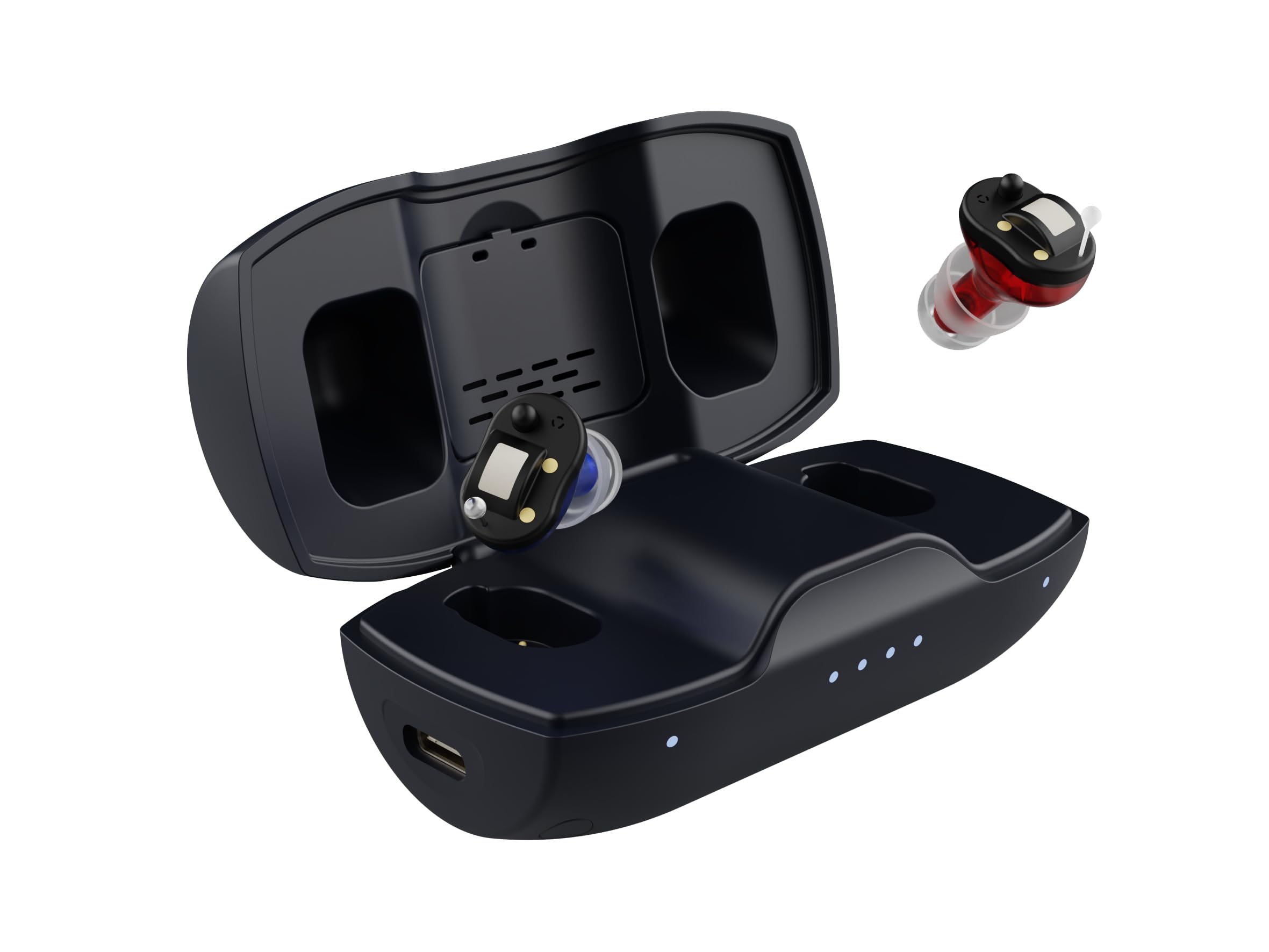
The simple aid for watching television without rattling the whole house.
If the main job is hearing the TV without cranking the volume, this pair keeps things refreshingly basic. It has 9 volume settings stepped with the top button, switches on automatically when you lift it from the charger, and tops up over USB — so there is no fiddling with tiny batteries. The small, discreet shell is designed to look less like a hearing aid and more like a plain earbud.
The intended use is quiet listening, and that is exactly where it performs. It picks out voices and pushes down room noise, so a programme at a normal level stays clear. Comfort holds up for long stretches, and the manual is straightforward enough for someone who does not want a phone app in the loop.
The honest fit note is crowds. The same boost that makes television pleasant also lifts the clatter of a busy room, so a restaurant or a family gathering is hard going — the amplification does not know which sounds to leave behind. For tinnitus specifically, treat this as a hearing support companion rather than a masker; there is no library of masking sounds on board.
Best use case: a calm living room where clarity matters and no one wants to touch an app.
The honest catch: crowded, noisy settings overwhelm it, and shifting volume with the button is tedious.
Worth it if: you want a fuss-free pair for TV and quiet conversation with simple button controls.
Not the tool for: masking ringing at night or cutting through a busy restaurant.
7. JLab Hear OTC Hearing Aid & Earbuds, Graphite
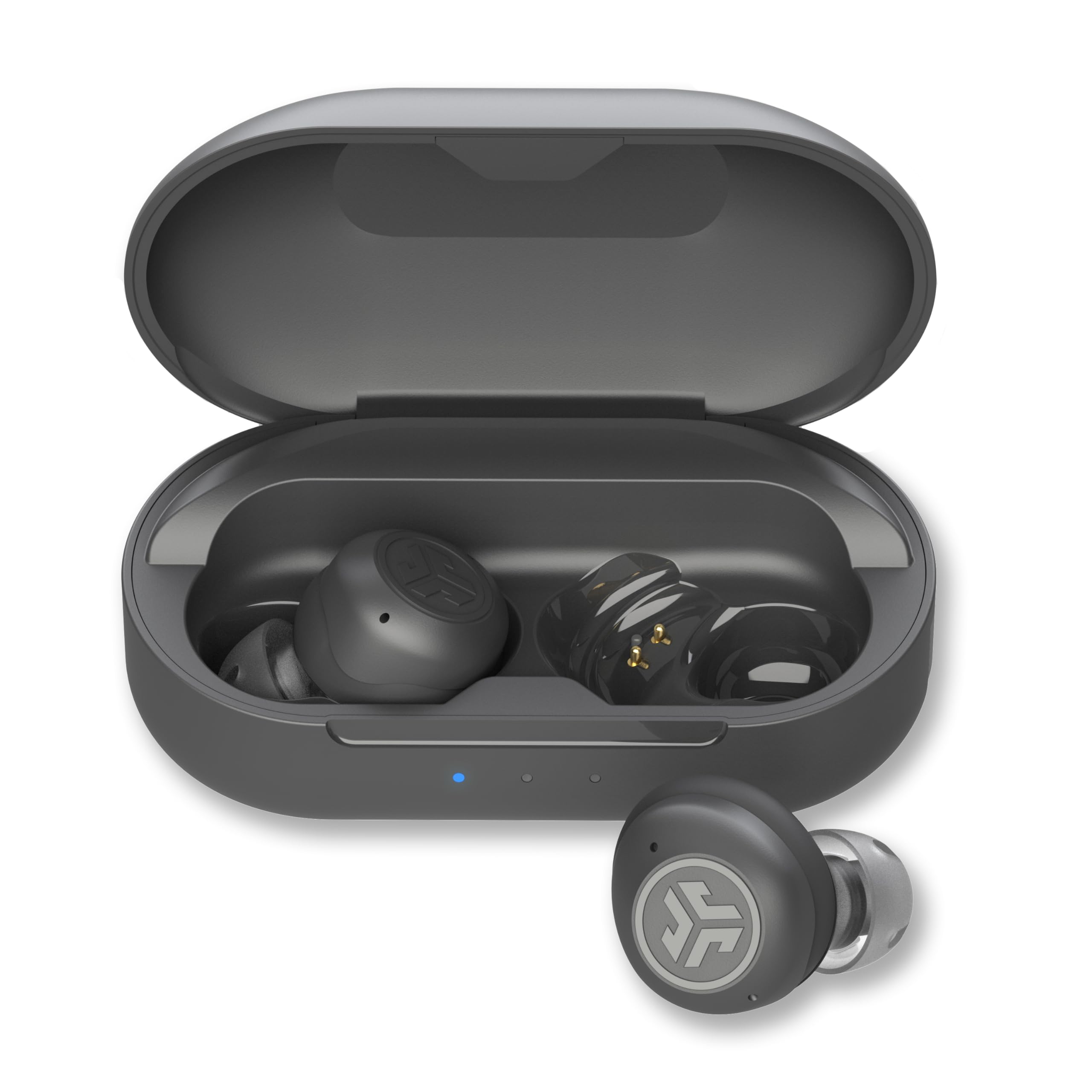
Four hearing modes and a familiar earbud shape, without a phone-based setup.
The appeal here is one product that behaves like a normal pair of earbuds and a hearing aid at the same time. It runs Bluetooth 5.3 — an older wireless version than the 6.1 on the SHOKZ up top — for streaming music and taking calls, then switches to hearing-aid-only mode when you want nothing but the room. The four preset modes cover Loud Environment, Restaurant, Conversation and Quiet Environment, and you tap between them on the bud instead of opening an app.
Six sets of tips are included, some vented to let natural sound through, and in-ear detection switches the aid function on and off as you put them in or take them out. Independent left and right volume control is a useful touch for one-sided loss, and built-in feedback suppression keeps the squeal down when the tips seal well. Run time is rated at 10 hours with Bluetooth off.
The mixed reports come from fit and from what the ear pieces actually deliver. The shells are chunkier than a slim hearing aid, and on some ear canals they will not sit deep enough to stay put through a head tilt — which makes the volume drift. The mode system also cuts the hearing boost when a phone notification sounds in Bluetooth mode. Used at home for one-on-one conversation or the television, it holds up well; in a packed restaurant at full volume, it struggles.
The Reasonable Case
- Four tap-switched modes cover quiet rooms, conversation and restaurants
- Bluetooth 5.3 pairs with a phone for calls and music, then switches back
- Six tip sets including vented options for a natural, unplugged feel
- Independent left and right volume, handy for one-ear loss
Where It Wobbles
- Larger shells that may not sit deep enough to stay put in smaller canals
- In Bluetooth mode, notifications briefly cut the hearing boost
- The charging case’s built-in USB-C arm is short, so plugging into a wall outlet needs a workaround
Right pick for: a first step into hearing support where the earbud shape feels familiar and the modes are a tap away.
Weigh this first: if your ear canals are small, the larger shell is the reason to try before committing.
Know the Specs
Open-Ear vs In-Ear Fit
An open-ear design sits over or beside the ear canal on a hook and lets air through, so nothing feels sealed or stuffy — good for all-day wear and for staying aware of your surroundings. An in-ear tip pushes into the canal and blocks more outside noise, which means the sound you play is more focused. For tinnitus, the open-ear approach usually suits long daytime sessions, while the in-ear approach helps when you need to shut out a noisy room.
Total Playtime vs Single-Charge Runtime
Total playtime counts the charging case, so a rating like 50 hours may only mean 12 hours on a charge plus top-ups from the case. If a device is quoted by the hour with no mention of a case, that is usually the single-charge figure. For overnight masking, look for the single-charge number and check it clears a full night’s sleep. A quoted range like 7 to 16 hours tells you the spread between maximal and minimal use.
Masking Sound Tracks
Masking works by giving your attention a pleasant sound to follow instead of the ring. Lower, steady textures such as rain or rumble blend over a high-pitched tone, while bright, hissy tracks can sit right on top of it and make things worse. A device with more built-in tracks simply offers more chances to find the one that covers your pitch. Long-duration tracks, like the 12-hour ones on the Sound Oasis BST-80-20T, reduce the interruptions that break a night’s masking.
IP Ratings and Wearing Comfort
An IP rating tells you how well a device resists dust and water; a rating like IP55 means it handles sweat, splashes and dust, so ordinary wear and workouts are fine. Comfort specs matter just as much — flexible nickel-titanium alloy hooks adapt to different ear shapes, and ultra-soft silicone touches the skin gently. If you plan to wear a device for hours, these details decide whether it stays comfortable through the day.
Common Questions
Can earbuds actually stop the ringing in my ears?
Are open-ear or in-ear earbuds better for tinnitus?
How many hours of playback do I need for overnight masking?
Which masking sounds work best for high-pitched tinnitus?
Will a hearing aid work for tinnitus without hearing loss?
Can I wear a Bluetooth earbud to bed?
What does the IP rating on a masking device tell me?
Do I need a phone app to set up these devices?
How loud should I set a masking device?
Is it better to buy earbuds or a dedicated sound machine?
The Bottom Line
The pick that wins for most people is the SHOKZ OpenFit Pro. Its open-ear hooks let air keep moving through the canal, so your ears stay comfortable during long wear. With noise reduction off, its 12 hours per charge cover a full working day of quiet masking while keeping you aware of the room. That combination is why it takes the top spot, and its strong owner feedback backs it up. If the ring gets worst at night, the Sound Oasis BST-150T masks a high ring with its built-in tracks and dims to near-nothing for sleep. And if your tinnitus sits alongside hearing loss, the TTQ OTC aids lift voices over the room while streaming from your phone.
One honest word on timing: maskers are a comfort tool and not a cure, so the value comes from trying a device and finding the track that covers your specific pitch. Start with the one that matches your worst hour, and give yourself a few nights to find the sound that finally lets you stop listening for the ring.
How we choose
We do not accept paid placement. Every pick is matched to a real buyer and a real use-case; we do not hands-on test units.
Sources
Specifications: manufacturer listings and product documentation. Review insights: verified customer reviews, as of October 2026. Pricing: not shown on this page (it changes often); check the current price via the retailer link.
As an Amazon Associate, Aappliancez earns from qualifying purchases. This does not affect which products we feature.